2026-08-08
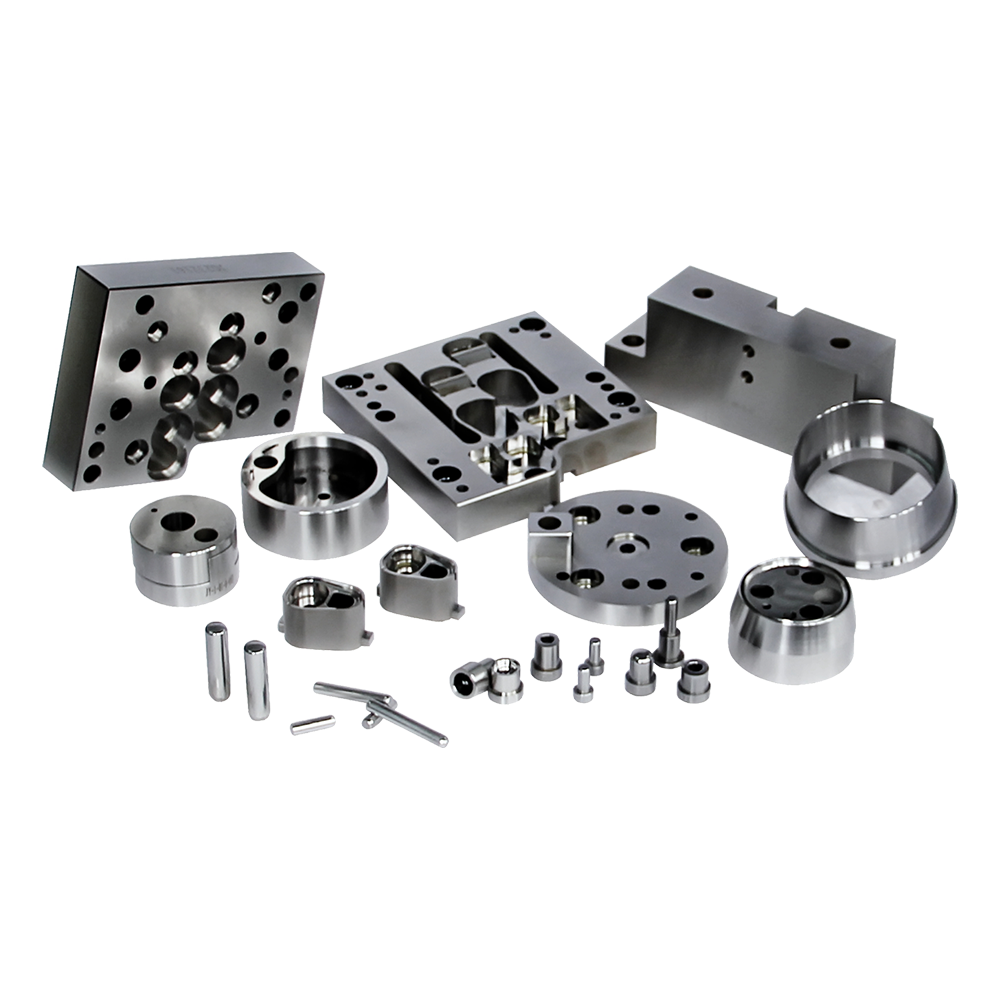
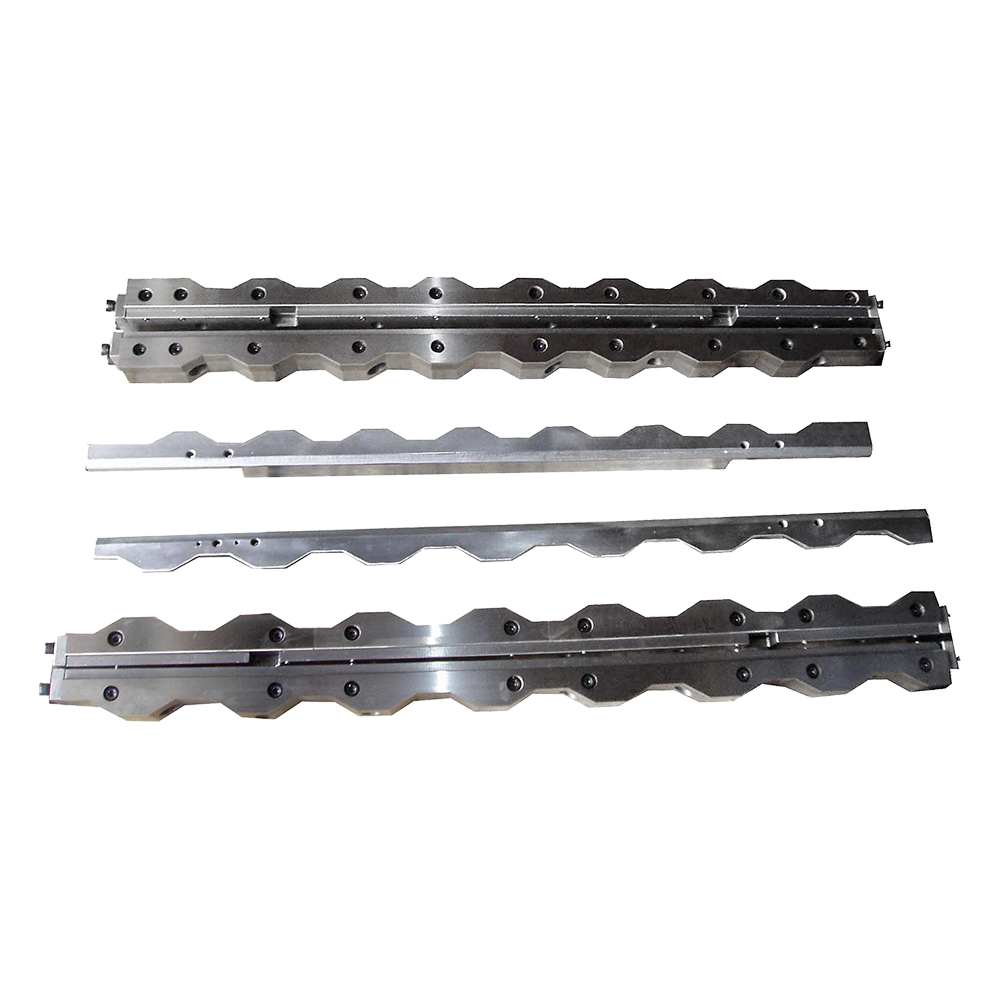
A conversion press seaming roller die is a precision mold component used in the forming and seaming stages of metal can lid production. Although relatively compact compared with a complete can-making machine, the die has a direct influence on dimensional accuracy, seam consistency, production speed, tool life, and the overall appearance of finished can ends. A properly designed seaming roller die helps a conversion press transform flat or partially formed metal components into accurately shaped lids that can later be joined securely to can bodies.
For food cans, beverage cans, aerosol containers, chemical packages, and other tinplate applications, the quality of the lid is essential. A poorly formed lid may lead to uneven sealing, excessive material stress, leakage, wrinkling, unsuitable countersink depth, or difficulty during subsequent filling and seaming operations. For this reason, manufacturers need a conversion press seaming roller die that combines accurate geometry, stable material performance, smooth operation, and reliable resistance to repeated mechanical loads.
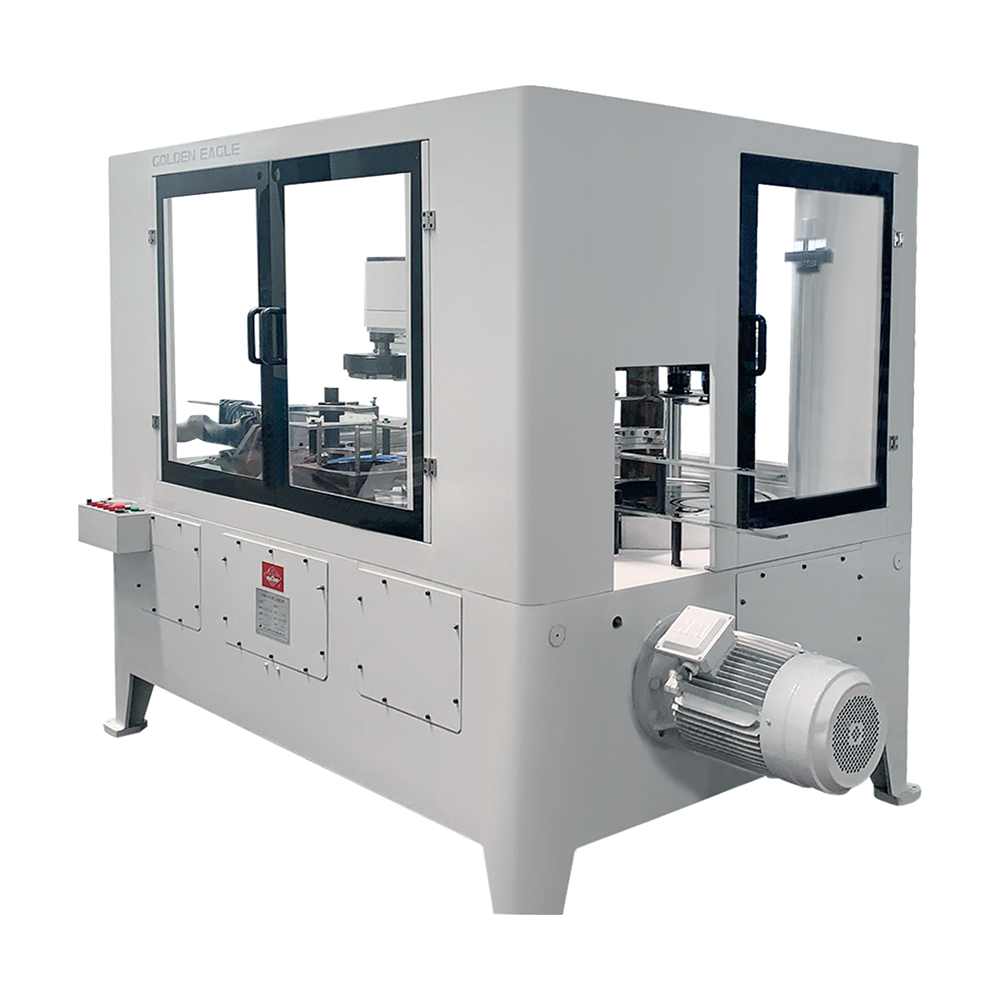
The conversion press seaming roller die supplied by Zhejiang Golden Eagle Food Machinery Co., Ltd. is developed for the demanding requirements of modern can-making operations. The company specializes in can-making machinery and molds, with a manufacturing history dating back to 1978. Its experience covers food can production lines, beverage can equipment, can lid production lines, chemical tank production lines, aerosol canister machinery, two-piece can production lines, pop can production lines, and related tooling.
By combining extensive practical experience with CNC high-precision machining and systematic quality control, the manufacturer provides tooling designed for stable performance in industrial production. The product can be used as part of a wider conversion press system and can also be developed according to the technical requirements of specific can sizes, materials, press configurations, and production conditions.
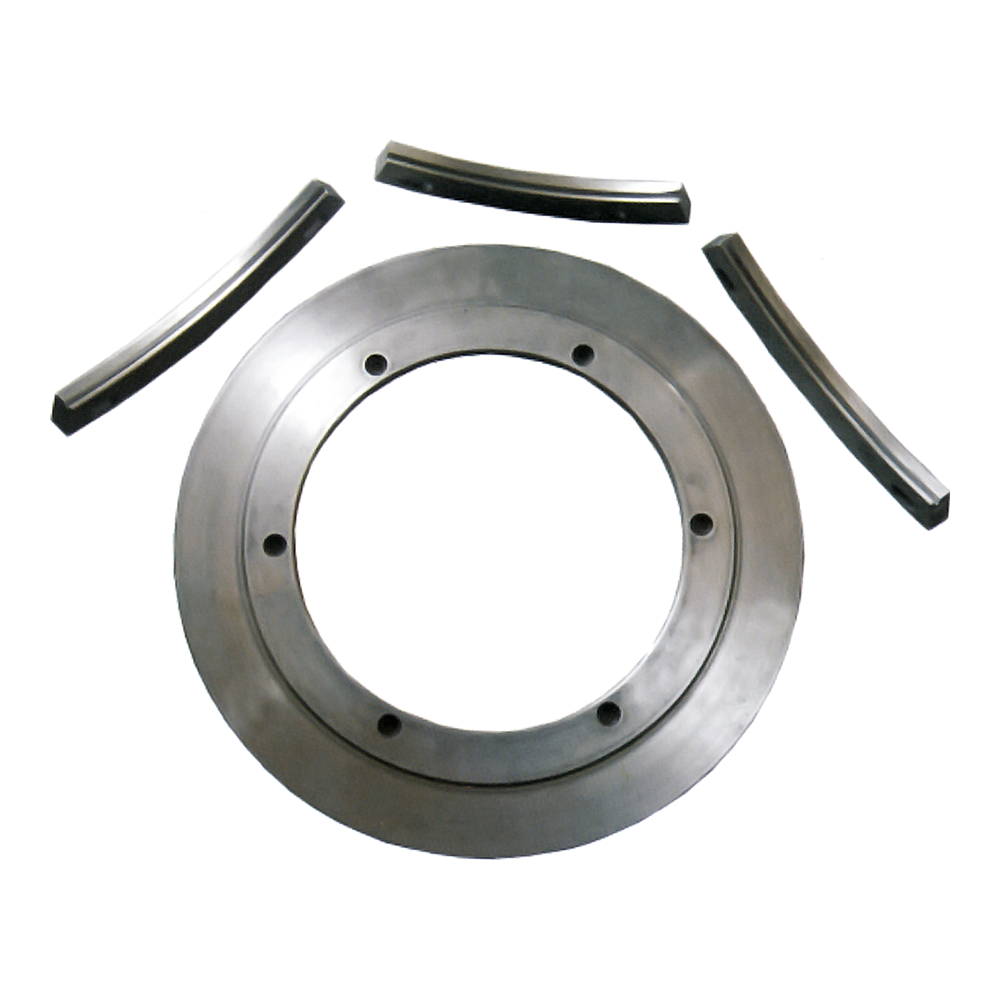
Conversion Press Seaming Roller Die
A conversion press is a multi-stage production machine used to convert metal sheets or pre-cut blanks into finished can components. During the process, the material may pass through several forming operations, including drawing, shell forming, curling, embossing, countersinking, panel forming, and other operations required by the final lid design. The seaming roller die is one of the precision tooling elements that supports the shaping and preparation of the lid for reliable attachment to the can body.
Depending on the machine structure and the product specification, the roller die may work with other tools such as punches, pressure pads, forming rings, curling tools, embossing tools, and guide components. The interaction between these parts must be carefully controlled. Even a small deviation in the working profile can affect the relationship between the lid curl, the can body flange, and the final double seam.
The working surface of the roller die is formed to guide and shape the metal gradually rather than forcing the material into an unsuitable profile in a single aggressive movement. This controlled forming action reduces unnecessary stress and helps create a more uniform edge. The die must also be manufactured with sufficient concentricity and surface quality to maintain stable operation as the press continues through long production cycles.
In practical applications, a conversion press seaming roller die is not simply a generic rotating part. It is a purpose-designed tool matched to the can end specification, production equipment, material thickness, forming sequence, and required seam performance. Correct selection and accurate installation are therefore important for achieving the intended result.
Can lids must satisfy several requirements at the same time. They need to maintain the designed diameter and height, provide a suitable curl or flange profile, withstand handling and transportation, and allow the final can seam to be formed without leakage. These requirements place high demands on the forming tools used in the conversion press.
A high-quality seaming roller die contributes to consistent production in several ways. First, it supports accurate forming of the lid edge. Second, it helps control the distribution of stress in the tinplate or other metal material. Third, it reduces the possibility of local deformation that could interfere with the closing process. Fourth, it promotes stable operation over extended production cycles.
Tool quality also affects the economics of a can-making line. If the working surface wears quickly, operators may need to stop the machine frequently for adjustments or replacement. Unstable tooling can increase scrap, consume more material, and create additional inspection work. In contrast, a carefully manufactured die can support longer production runs, predictable maintenance intervals, and improved production efficiency.
For manufacturers producing large quantities of food cans, beverage cans, aerosol containers, or chemical packages, these benefits are particularly important. Small improvements in dimensional consistency can produce significant savings when multiplied across thousands or millions of lids.
The working profile of a seaming roller die must correspond closely to the intended lid geometry. The profile controls how the material moves during forming and how the edge is prepared for later seaming. The product is manufactured with attention to profile accuracy, concentricity, and the relationship between different working surfaces.
Accurate profile control helps reduce variation from one lid to another. It also supports a smoother transition between forming stages, reducing the likelihood of sudden material deformation. This is especially valuable when the production line operates at a high speed or when the material has limited forming tolerance.
Can-making tools operate under repeated mechanical contact and frequent acceleration and deceleration. A seaming roller die must therefore maintain its geometry under continuous use. The die is designed and processed to withstand the working conditions associated with industrial conversion presses.
Stable performance helps operators maintain the same machine settings for longer periods. It can also reduce the need for constant manual correction. When the tool and the press are properly matched, production personnel can focus on routine monitoring, lubrication, inspection, and planned maintenance rather than frequent emergency adjustments.
The surface finish of the working area has a direct relationship with friction, material movement, and the appearance of the formed can lid. A smooth and accurately finished surface helps the metal move in a controlled manner and reduces the risk of scratches or unwanted marks.
Surface quality is also relevant to tool cleaning and maintenance. A properly finished tool is less likely to retain forming residues and may be easier to inspect during scheduled maintenance. The final surface treatment and finishing requirements can be selected according to the application, material, production volume, and operating environment.
The die is intended for use in can-making production systems where accurate forming and seaming preparation are required. Applications may include food cans, beverage cans, aerosol cans, chemical containers, and other tinplate packages. The exact design should be confirmed according to the can specification and the conversion press model.
Because can products differ in diameter, height, end design, opening structure, material thickness, and sealing requirements, tooling must be matched to the intended application. Professional technical communication before production helps ensure that the final tool is suitable for the customer's equipment and product requirements.
One of the advantages of purchasing directly from an experienced mold and machinery manufacturer is the possibility of customized tooling. The customer may provide drawings, samples, press information, can-end specifications, or other technical details. Engineers can then evaluate the required geometry, installation dimensions, material requirements, and production conditions.
Customized production is useful when a customer is developing a new can size, replacing an obsolete tool, upgrading a production line, or adapting equipment to a different tinplate specification. It is also helpful when the customer operates machinery with non-standard mounting arrangements or requires a particular forming sequence.
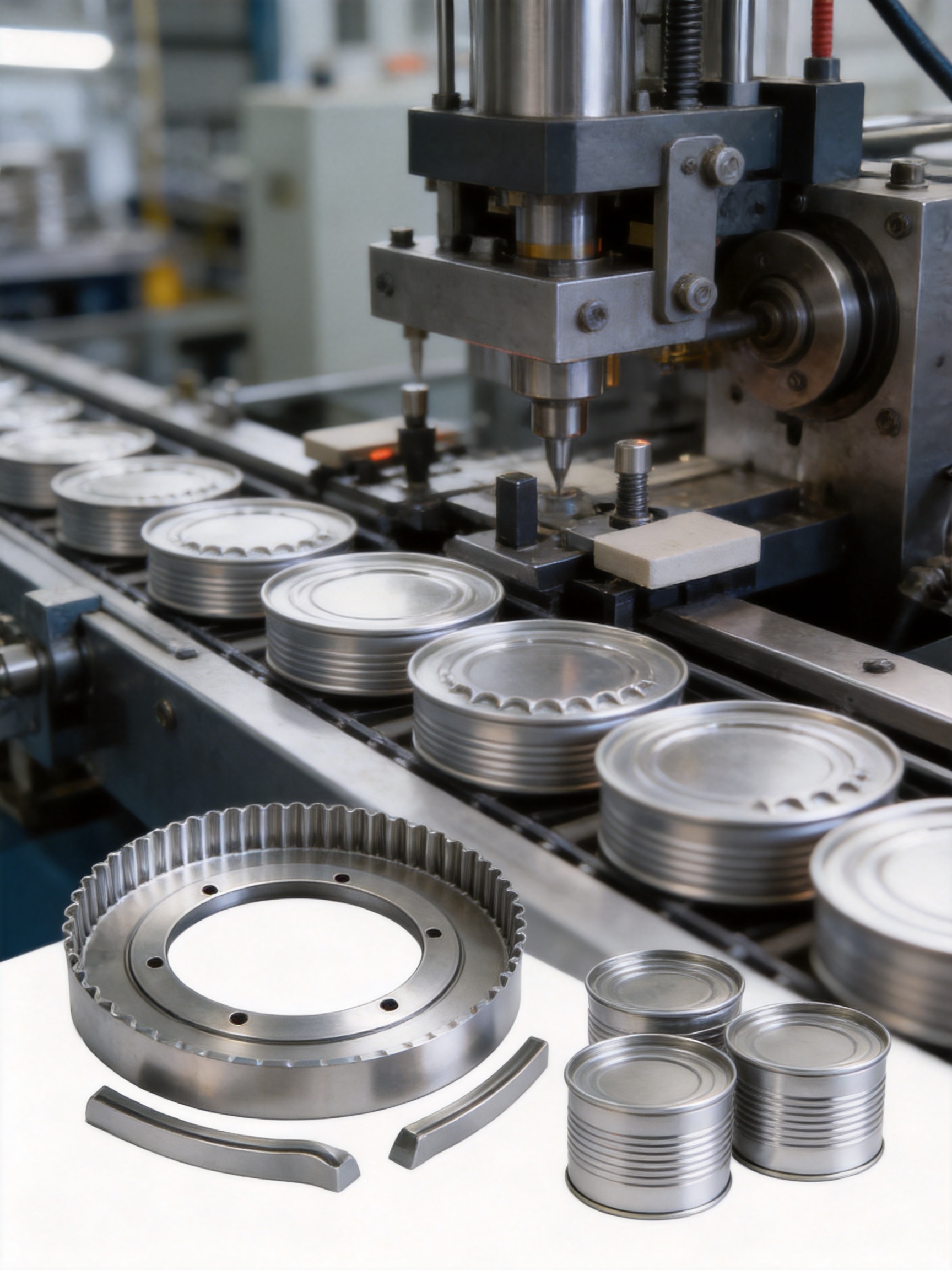
The performance of a conversion press seaming roller die depends on more than the visible shape of the tool. Several design factors must be considered during engineering and production.
The diameter, countersink, curl, panel, bead, opening, and other design features of the can end determine the working profile of the die. The tool must be developed to support the required relationship between the lid and the can body. If the geometry is not correctly coordinated, the later double-seaming operation may produce an unsuitable seam.
Different products also have different functional requirements. A food can may require strong resistance to internal and external pressure. A beverage can may prioritize high-speed production and precise opening performance. An aerosol container may require specific strength and sealing characteristics. Chemical packaging may require robust construction and compatibility with the filling contents.
Tinplate and related metal materials are available in different thicknesses and grades. The material's yield strength, elongation, coating, temper, and surface condition influence forming behavior. A die profile suitable for one material specification may not be ideal for another.
During the design stage, the manufacturer can consider the customer's material conditions when determining the forming geometry and working clearances. This approach helps reduce excessive strain and supports consistent material flow. It also helps the customer avoid relying on a one-size-fits-all solution for applications that require more careful engineering.
The structure, stroke, speed, feeding arrangement, station layout, and mounting method of the conversion press all influence tool design. The die must fit the available installation space and work correctly with associated punches, pads, guide components, and other tooling.
Information about the existing press is therefore important. Relevant data may include the machine model, station number, tool mounting dimensions, nominal production speed, material specification, and current production problems. Detailed technical information allows the engineering team to develop or verify the tool more accurately.
The purpose of the forming operation is not limited to producing a visually attractive lid. The formed edge must be appropriate for the subsequent seaming process. The relationship between the lid curl and the can body flange is critical to the quality of the final double seam.
A well-designed roller die helps create a repeatable edge profile. This can support better control of seam thickness, seam length, tightness, and hook formation during the closing operation. Final seam quality also depends on the seaming chuck, seaming rolls, can body dimensions, compound application, machine settings, and operator control.
The manufacturer applies a structured manufacturing process to produce can-making molds and machinery components. The process begins with technical review and continues through material preparation, precision machining, finishing, inspection, assembly where required, and final verification.
Before machining begins, the product requirements are reviewed. Engineers examine the drawing, sample, can specification, and equipment information. Important points include the working profile, reference dimensions, mounting features, material requirements, tolerances, and inspection standards.
This review helps prevent errors caused by incomplete information. It also provides an opportunity to identify possible conflicts between the requested tool and the customer's existing machine. When necessary, the engineering team can communicate with the customer to confirm dimensions and recommend suitable adjustments.
Tool material must be selected according to the expected load, wear conditions, operating speed, and maintenance requirements. The material should provide a suitable balance of hardness, toughness, dimensional stability, and machinability.
Proper material preparation is important because the tool may experience continuous contact with metal stock and repeated mechanical loading. Material quality, heat treatment, and final hardness all contribute to service performance. The manufacturing process can be adapted to the selected material and the specific working requirements of the die.
The company uses CNC high-precision machining equipment together with complete mechanical machining capabilities. CNC processing helps control complex profiles and maintain repeatability between tooling components. It also supports accurate production of circular and contoured working surfaces.
Compared with less controlled manual processing, modern CNC machining can reduce variation and improve consistency. Digital programming allows the same verified geometry to be reproduced more reliably when replacement tools or matched tooling sets are required.
Precision machining is especially important for a roller die because errors in concentricity, profile, or alignment may be transferred directly to the finished can lid. Careful machining helps create a better foundation for later grinding, polishing, surface treatment, and inspection.
After rough and intermediate machining, critical working surfaces may undergo grinding or other finishing operations. These processes refine the profile, improve dimensional accuracy, and achieve the required surface condition.
Finishing must be controlled carefully. Removing too little material may leave unwanted machining marks, while removing too much may change the designed profile. Experienced technicians and appropriate measuring equipment are necessary to maintain the intended geometry throughout the finishing stage.
Inspection is carried out to verify key dimensions, profile accuracy, surface condition, mounting features, and general workmanship. Depending on the product requirements, inspection may include dimensional measurement, profile checking, concentricity verification, surface inspection, and functional matching with related tooling.
The company's manufacturing systems are supported by ISO9001 quality management certification and ISO14001 environmental management certification. These systems provide an organized framework for production control, documentation, process management, and continual improvement.
Before shipment, the tool is prepared to protect precision surfaces from impact, moisture, and contamination. Identification and packaging should allow the customer to confirm the product specification and install it correctly. Technical documentation may include drawings, inspection information, installation guidance, or maintenance recommendations according to the order requirements.
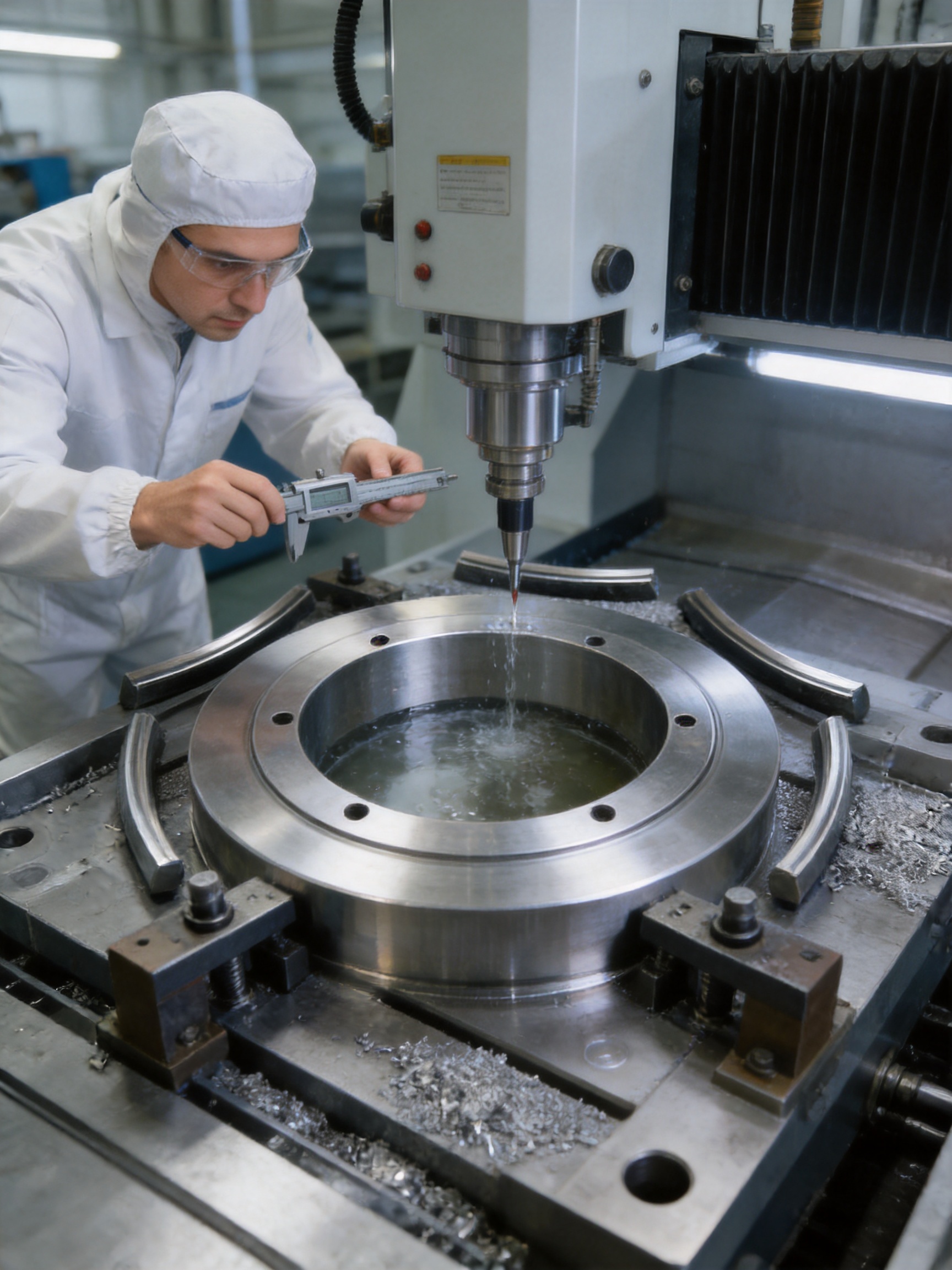
Not all seaming roller dies provide the same level of performance. A low-cost tool may appear attractive during initial purchasing, but the total cost of ownership can be higher if it causes frequent downtime, unstable dimensions, excessive scrap, or premature replacement.
| Evaluation Area | Precision-Engineered Roller Die | Basic or Poorly Matched Tooling |
|---|---|---|
| Working profile | Developed according to can geometry and forming requirements | May use a generalized or insufficiently verified profile |
| Dimensional consistency | Supported by CNC machining and controlled inspection | May vary between batches or individual tools |
| Surface quality | Finished for controlled material movement and reduced marking | May contain rough areas or inconsistent finishing |
| Equipment compatibility | Can be matched to press dimensions and related tooling | May require unplanned modification or compromise |
| Production stability | Designed for repeated industrial operation | May require frequent adjustment or replacement |
| Technical support | Backed by engineering, installation, and after-sales service | Support may be limited or unavailable |
| Long-term value | Can reduce scrap, downtime, and maintenance disruption | Lower purchase price may be offset by operating problems |
The principal advantage of specialized tooling is not merely a higher level of machining accuracy. It is the coordination of design, material, manufacturing, inspection, and application support. A die that is accurate but not matched to the press may still produce unsatisfactory results. Similarly, a tool with suitable dimensions but inadequate surface finishing may wear quickly or mark the metal.
An experienced manufacturer can evaluate the complete operating situation rather than treating the die as an isolated component. This broader approach improves the probability that the tool will perform as expected after installation.
Stable tooling supports consistent can-end dimensions and edge profiles. This makes downstream inspection easier and reduces the likelihood of variation during filling and closing. Consistent lids also help packaging manufacturers maintain a uniform appearance across different production batches.
Defective lids may be rejected because of dimensional errors, wrinkles, scratches, unsuitable curls, or problems that become visible only during final seaming. By improving forming accuracy, a suitable roller die can help reduce the number of defective parts entering later stages.
Lower scrap rates provide direct material savings. They also reduce the energy, labor, and machine time associated with processing products that cannot be sold.
A properly made die can support more predictable maintenance. Operators can monitor the tool according to a planned schedule instead of replacing it only after a sudden performance failure. Predictable maintenance makes production planning easier and helps avoid unexpected interruptions.
Conversion presses are often integrated into high-output production lines. When tooling performs consistently, the press can operate closer to its intended production conditions. Fewer stops for adjustment or tool replacement can improve overall equipment utilization.
Manufacturers frequently need to introduce new package sizes, promotional designs, opening features, or specialized containers. A mold supplier with engineering and machining capabilities can support these changes by developing new tools or modifying existing tooling.
This flexibility is valuable for companies that serve multiple markets. Instead of purchasing unrelated tools from several suppliers, the customer may be able to obtain coordinated dies and can-making equipment from one experienced source.
Zhejiang Golden Eagle Food Machinery Co., Ltd. was established in 1978 and was formerly known as Zhejiang Food Machinery Factory and Zhoushan Mold Factory. Over more than four decades, the company has focused on the manufacture of can-making machinery and can-making molds.
The company has more than 350 trained personnel, including experienced design and development engineers. This workforce supports the complete process from product development to machining, assembly, inspection, delivery, and after-sales service.
More than 10,000 pieces of can and can-lid equipment have been produced by the company. This accumulated production record provides practical knowledge of the operating conditions found in can manufacturers and canning factories. It also helps the company understand common issues involving material forming, tooling wear, machine integration, and production maintenance.
The company's product design principles are similar to those associated with established international can-making equipment manufacturers. At the same time, the company combines these principles with its own practical manufacturing experience and continuous technical improvement. This approach allows the products to be developed for real production conditions rather than only theoretical specifications.
The company's machinery and tooling are exported to customers in Europe, Asia, Africa, North America, South America, and Oceania. Its international service experience supports communication with customers using different equipment standards, production methods, quality systems, and packaging requirements.
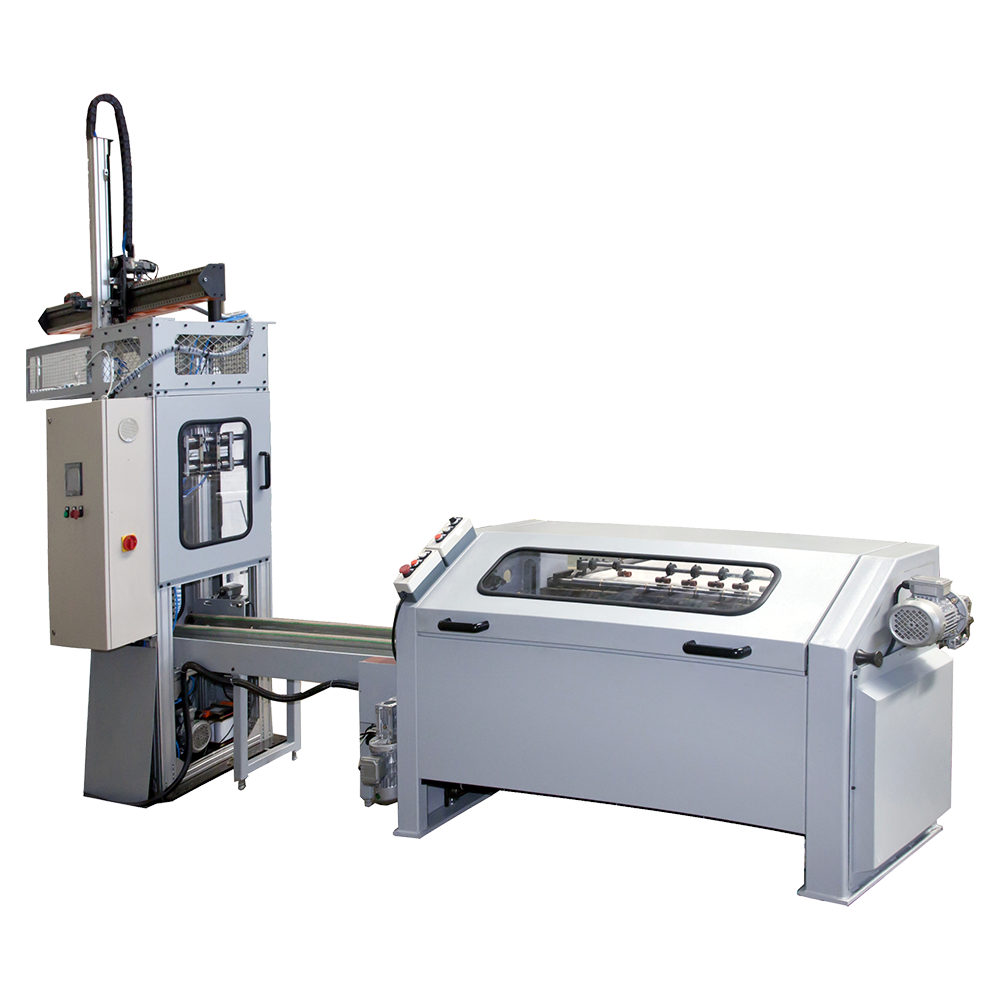
In addition to individual molds, the company supplies complete series of equipment, including food can production lines, beverage can production lines, can lid production lines, chemical tank production lines, aerosol canister production lines, two-piece can production lines, and pop can production lines. This broad range is an advantage when a customer needs coordinated equipment and tooling rather than a single replacement component.
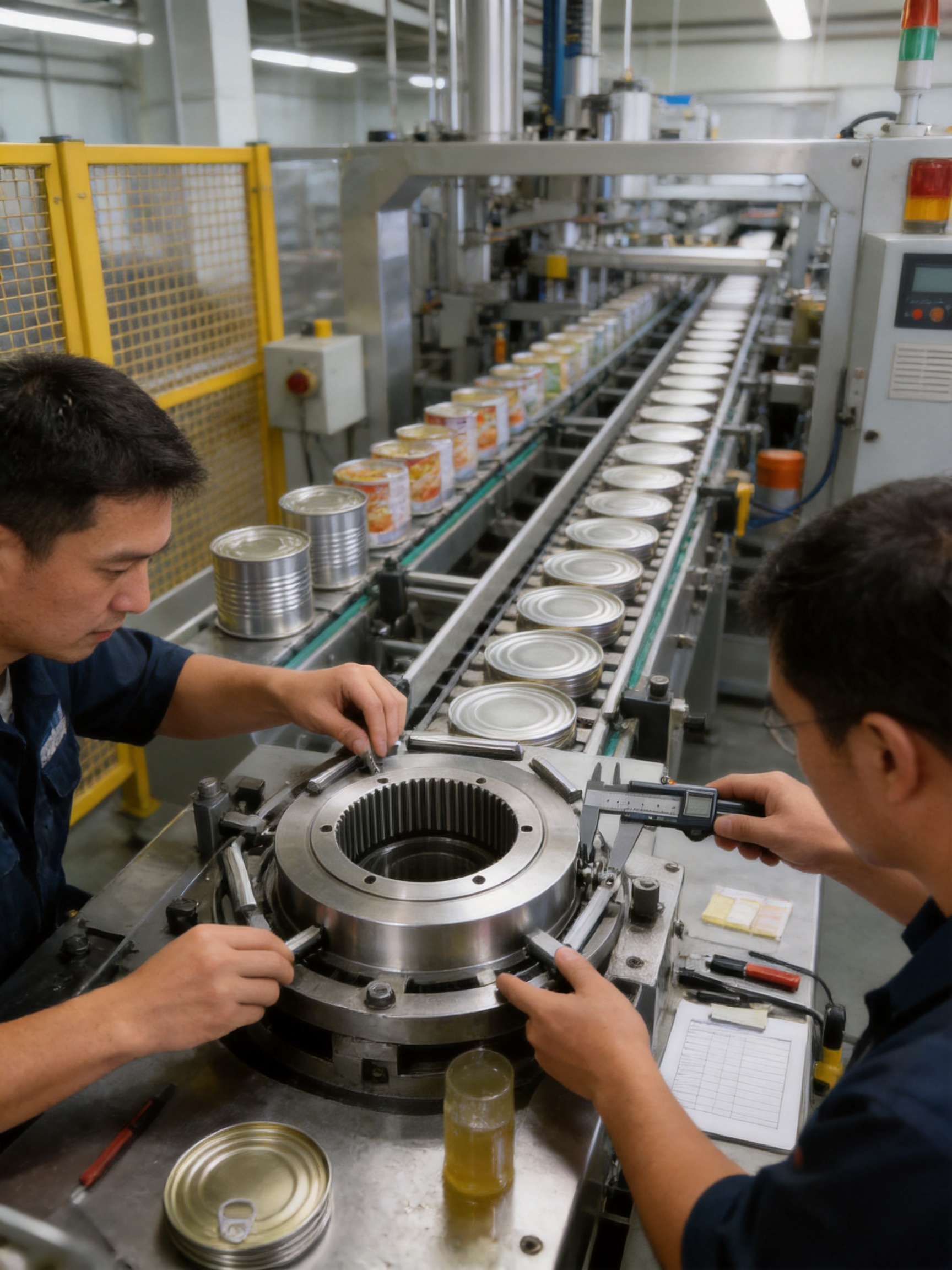
Correct installation is essential to achieving the intended performance of a conversion press seaming roller die. Before installation, the operator should confirm that the tool specification corresponds to the press, can size, station position, and related components.
The mounting surfaces should be clean and free from burrs, chips, oil deposits, or other contamination that could affect alignment. The die should be handled carefully to avoid impact damage to the working profile. Suitable lifting and handling methods should be used when the tooling weight or installation position requires additional support.
After installation, the alignment, clearance, rotation, and interaction with adjacent tooling should be checked. The press should be run at a controlled speed during the initial trial. Operators can then inspect the formed lid for dimensions, edge condition, surface marks, wrinkles, and other signs of incorrect adjustment.
Production speed should be increased gradually after the initial samples meet the required standard. If abnormal noise, vibration, excessive friction, or irregular forming is detected, the machine should be stopped for inspection. Continuing to operate with an incorrectly installed or damaged tool may affect both the die and the surrounding press components.
Proper lubrication helps control friction and heat during operation. The recommended lubricant and application method should be selected according to the press design, material, production conditions, and factory safety requirements. Excessive lubricant may contaminate the product or attract debris, while insufficient lubrication can accelerate wear.
Working surfaces should be cleaned at suitable intervals. Metal particles, forming residue, and other contaminants can affect material movement and damage the tool surface. Cleaning should be performed with methods that do not scratch or deform precision areas.
Operators should inspect the roller die for wear, scratches, dents, profile changes, loose mounting, and unusual surface conditions. Inspection frequency can be based on production volume, material type, operating speed, previous maintenance records, and the manufacturer's recommendations.
It is useful to record tool usage and maintenance activities. A simple record can include installation date, production quantity, inspection findings, adjustments, cleaning, lubrication, and replacement date. These records help identify wear trends and support better planning.
The service life of a seaming roller die depends on multiple factors. These include tool material, heat treatment, surface finish, tinplate quality, production speed, lubrication, installation accuracy, alignment, and the cleanliness of the production environment.
Even a precision tool can experience premature wear if the press is misaligned or if metal stock contains contamination. Excessive force, incorrect clearance, or contact with a damaged adjacent component can also shorten service life. Maintenance must therefore address the complete forming system.
When wear begins to affect the lid profile or seam performance, the tool should be evaluated. Depending on the condition, the manufacturer may recommend adjustment, refurbishment, regrinding, or replacement. Attempting to extend the life of a tool beyond acceptable limits may increase scrap and create quality risks.
Replacement tooling should be checked against the original drawing or approved sample. If the customer has changed material, can dimensions, press speed, or production method, the new tool should be reviewed rather than ordered solely by an old part number.
The conversion press seaming roller die is one element within a larger quality system. Finished can lids should be inspected using procedures appropriate to the product. Typical checks may include outside diameter, countersink dimensions, curl or flange condition, panel depth, visual appearance, opening performance, and compatibility with the can body.
For products that will undergo double seaming, seam testing is also important. Depending on the packaging application, quality personnel may examine seam thickness, seam width, body hook, cover hook, tightness, overlap, and the presence of defects. Internal pressure or leakage tests may be required for specific products.
Inspection results can provide useful feedback about the condition of the roller die. If the same defect appears repeatedly, the tool may need to be checked for wear, contamination, misalignment, or an incorrect profile. Early feedback allows corrective action before a large quantity of defective lids is produced.
A well-organized tool management system should connect incoming material inspection, machine setup, tooling inspection, process control, and final product inspection. This coordinated approach improves traceability and supports continuous improvement.
Food cans require reliable sealing, dimensional stability, and resistance to handling during filling, sterilization, storage, and transportation. Conversion press tooling must support accurate lid formation so that the final seam remains secure and consistent.
Beverage packaging generally involves high-volume production and demanding speed requirements. Small differences in lid geometry can affect feeding, opening, seaming, and pressure resistance. A precision roller die helps support stable performance in high-output lines.
Aerosol products require carefully controlled container strength and sealing performance. Depending on the container design, the forming operation may involve specific lid or dome geometries. Tooling must be matched to the required shape, material, and subsequent assembly process.
Chemical tanks and containers may require robust construction and reliable sealing under challenging storage conditions. The can-end forming process must create a strong and consistent component that is suitable for the final container design and contents.
The same principles apply to many other tinplate packages, including specialty food products, industrial containers, promotional packages, and customized metal cans. The tooling solution should be selected according to the product rather than assuming that all can ends have identical requirements.
Customers should provide as much technical information as possible when requesting a conversion press seaming roller die. Useful information includes the can-end drawing, product sample, material specification, material thickness, press manufacturer, press model, station location, current tool details, production speed, and any existing quality problems.
If the tool is intended to replace an existing die, photographs and measurements may help, but an approved drawing or sample is preferable. Important mounting and reference dimensions should be verified before manufacturing begins.
The customer should also explain the intended production objective. For example, the main requirement may be improved dimensional accuracy, longer service life, adaptation to a new tinplate grade, increased production speed, reduced marking, or replacement of an obsolete part. Clear objectives help the engineering team select an appropriate design and inspection focus.
A professional ordering process normally includes technical clarification, quotation, drawing confirmation, production scheduling, inspection, packaging, and delivery. For customized tooling, drawing approval is especially important. It ensures that both parties agree on the working profile and installation dimensions before machining starts.
Customers may communicate with the manufacturer by email or through other commercial channels to discuss specifications, samples, delivery requirements, and after-sales support. The manufacturer's technical and service teams can assist with installation, commissioning, technical guidance, operation training, and spare-parts supply.
For international customers, technical communication should include the units of measurement, applicable quality standards, packaging expectations, delivery terms, and any special documentation requirements. Clear communication reduces delays and makes installation easier after the tool arrives at the factory.
Tooling performance depends on proper use, so after-sales support is an important part of the product value. The manufacturer provides assistance that may include installation guidance, commissioning support, technical instruction, operation training, and the supply of replacement parts.
When a customer reports a production problem, useful information includes photographs of the formed lids, measurements of defective parts, production speed, material details, machine settings, and the operating history of the tool. This information helps technical personnel distinguish between tooling issues, machine adjustment problems, material variation, and downstream seaming conditions.
Experienced support can reduce the time needed to solve production problems. It also helps operators use the tool correctly, protect the working surfaces, and establish appropriate maintenance practices.
Its main function is to help form and prepare the edge and related geometry of a metal can lid during conversion press operations. The formed profile must be suitable for later attachment to the can body through a controlled seaming process.
A roller die is normally designed for a specific can-end geometry and press arrangement. It should not be assumed that one die can be used for multiple sizes without verification. Customers should provide the can drawing and machine information so that compatibility can be confirmed.
Yes. Customized tooling can be developed according to drawings, samples, can specifications, material requirements, press models, and installation dimensions. Customization is useful for new products, replacement tools, non-standard machines, and special forming requirements.
The material depends on the expected load, wear conditions, production speed, forming material, and service-life requirements. Tool material, heat treatment, hardness, and surface finishing should be selected by the manufacturer according to the application.
CNC high-precision machining helps reproduce complex profiles accurately and consistently. It supports control of dimensions, concentricity, and repeatability, which are important for stable can-lid forming and reliable interaction with related tooling.
Operators should install the die correctly, maintain suitable alignment and clearance, use appropriate lubrication, keep the working area clean, avoid impact damage, and inspect the tool regularly. Press misalignment and contaminated material should be corrected promptly.
The operator should check mounting security, alignment, rotation, clearance, interaction with adjacent components, lubrication, and initial sample quality. Trial production should begin at a controlled speed before the press is returned to normal operating conditions.
Possible signs include dimensional drift, inconsistent lid edges, scratches, wrinkles, increased adjustment frequency, abnormal noise, vibration, excessive friction, and deterioration in final seam quality. Any unusual change should be investigated before extensive production continues.
No. Final seam quality also depends on the lid and body dimensions, seaming chuck, first- and second-operation seaming rolls, compound, machine adjustment, material condition, and operator control. The roller die is an important upstream component within the complete process.
An inquiry should include the can-end drawing or sample, material type and thickness, press manufacturer and model, tool station, production speed, required quantity, installation dimensions, and the customer's target delivery schedule. Photos of the current tool or production issue can also be useful.
The conversion press seaming roller die is a small but critical component in the can-making process. Its geometry, material, surface quality, and dimensional accuracy influence the consistency of formed can lids and the reliability of the final container seam. For high-volume manufacturers, the right tool can contribute to reduced scrap, fewer interruptions, improved product quality, and more predictable maintenance.
The product benefits from the manufacturing capabilities of Zhejiang Golden Eagle Food Machinery Co., Ltd., an established producer of can-making machinery and molds. With a history beginning in 1978, more than 350 trained personnel, experienced engineering teams, CNC high-precision machining equipment, complete mechanical processing capabilities, and ISO9001 and ISO14001 management systems, the company is equipped to support both standard and customized tooling requirements.
Its experience in complete can-making production lines gives the manufacturer a broader understanding of how individual molds operate within food, beverage, aerosol, chemical, and other packaging systems. Technical design, precision machining, inspection, installation guidance, commissioning, training, and spare-parts supply can be coordinated to support the customer's production objectives.
When selecting a conversion press seaming roller die, customers should evaluate more than the initial purchase price. Profile accuracy, equipment compatibility, material selection, finishing quality, expected service life, technical support, and total operating cost are all important. A professionally designed and manufactured die provides a stronger foundation for stable can-lid production and long-term manufacturing efficiency.
1. General principles of metal forming and deep-drawing operations for tinplate packaging.
2. Industrial practices for double-seam formation, seam inspection, and leakage prevention in metal cans.
3. Quality management principles based on ISO9001 manufacturing systems.
4. Environmental management principles based on ISO14001 production systems.
5. Technical guidance for CNC machining, grinding, finishing, and dimensional inspection of precision molds.
6. General engineering practices for can-making machinery, conversion presses, can ends, and tinplate production lines.
Related Products

Founded in 1978, the company is one of the largest can-making machinery well-known companies at home and abroad.
Product Categories
Contact Information
Zhongshatou Shenjiamen Zhoushan Zhejiang China
+86-580-3056646

 English
 中文简体
中文简体
 русский
 عربى
عربى
 Español