2026-08-12
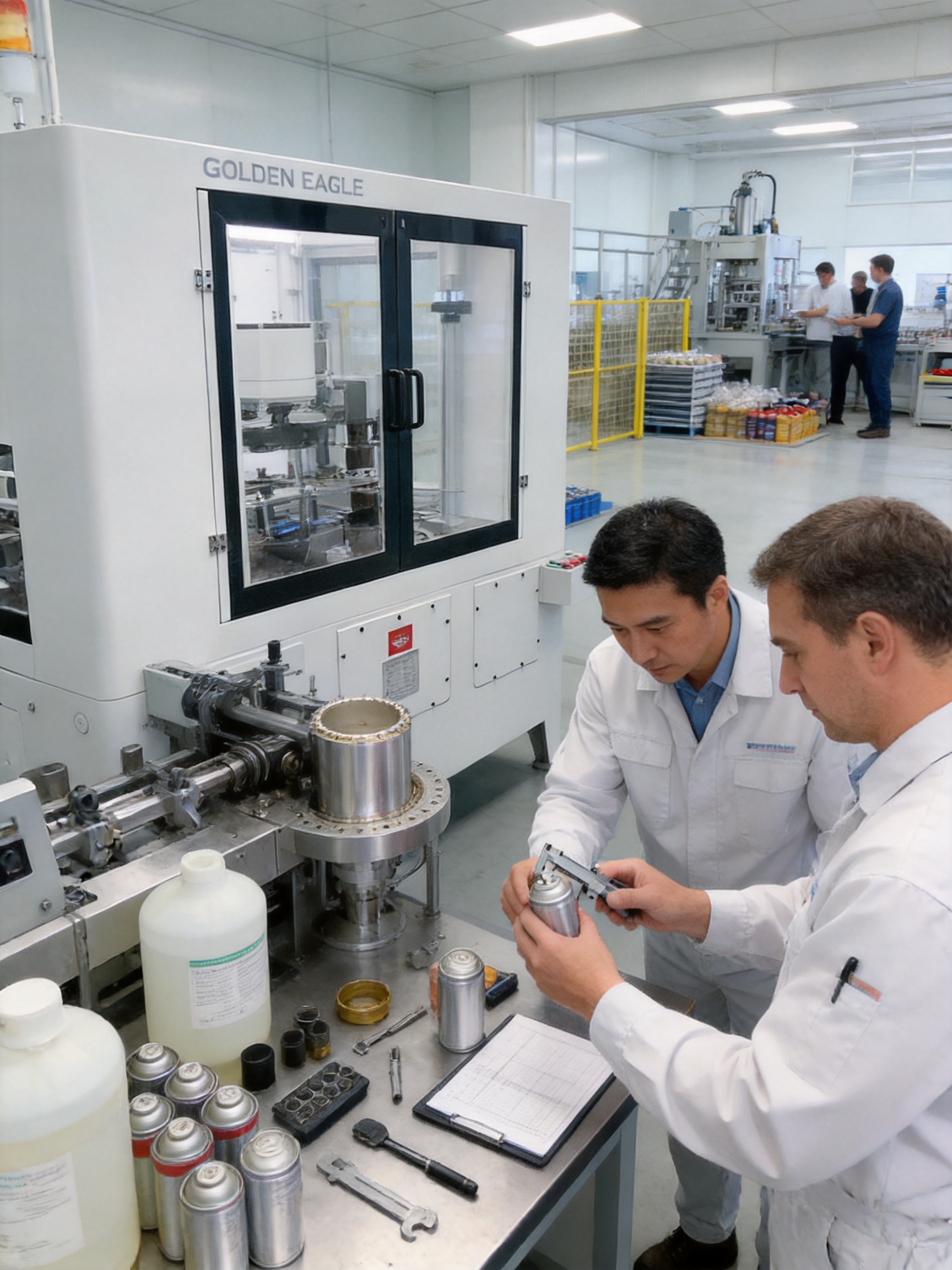
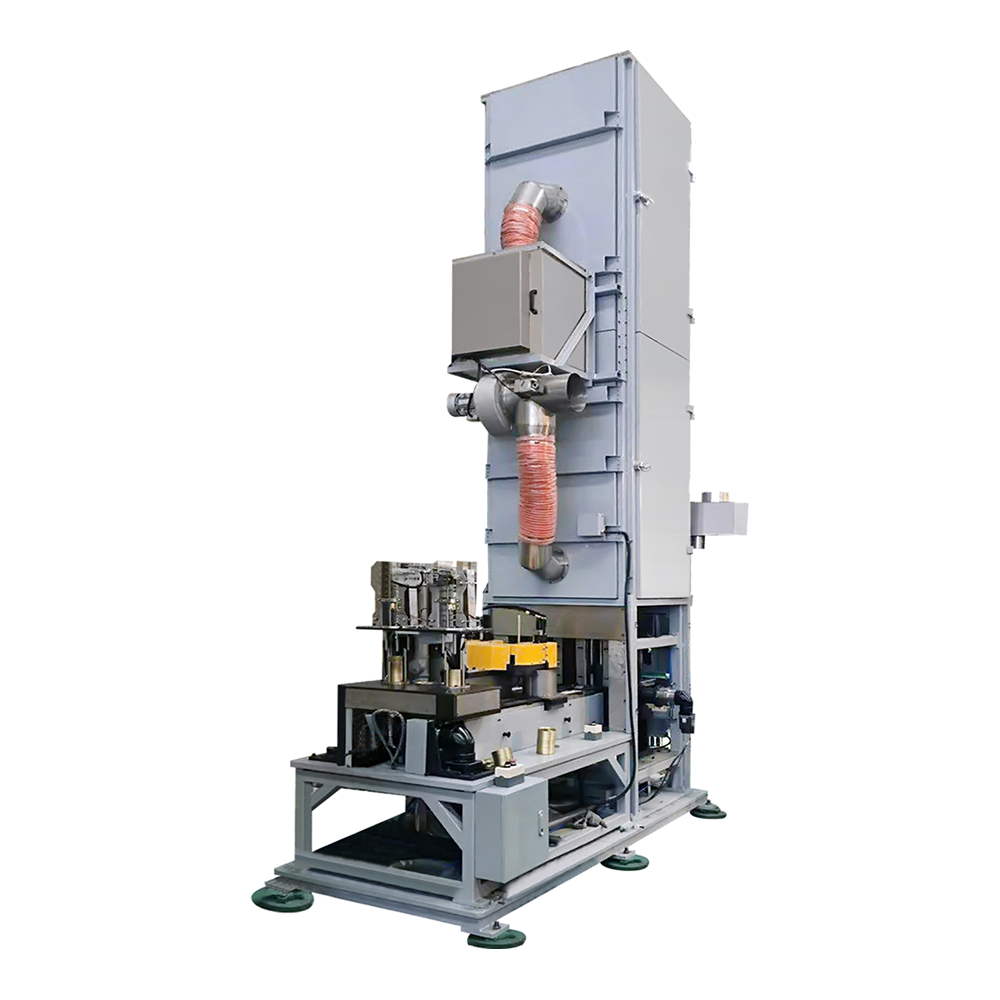
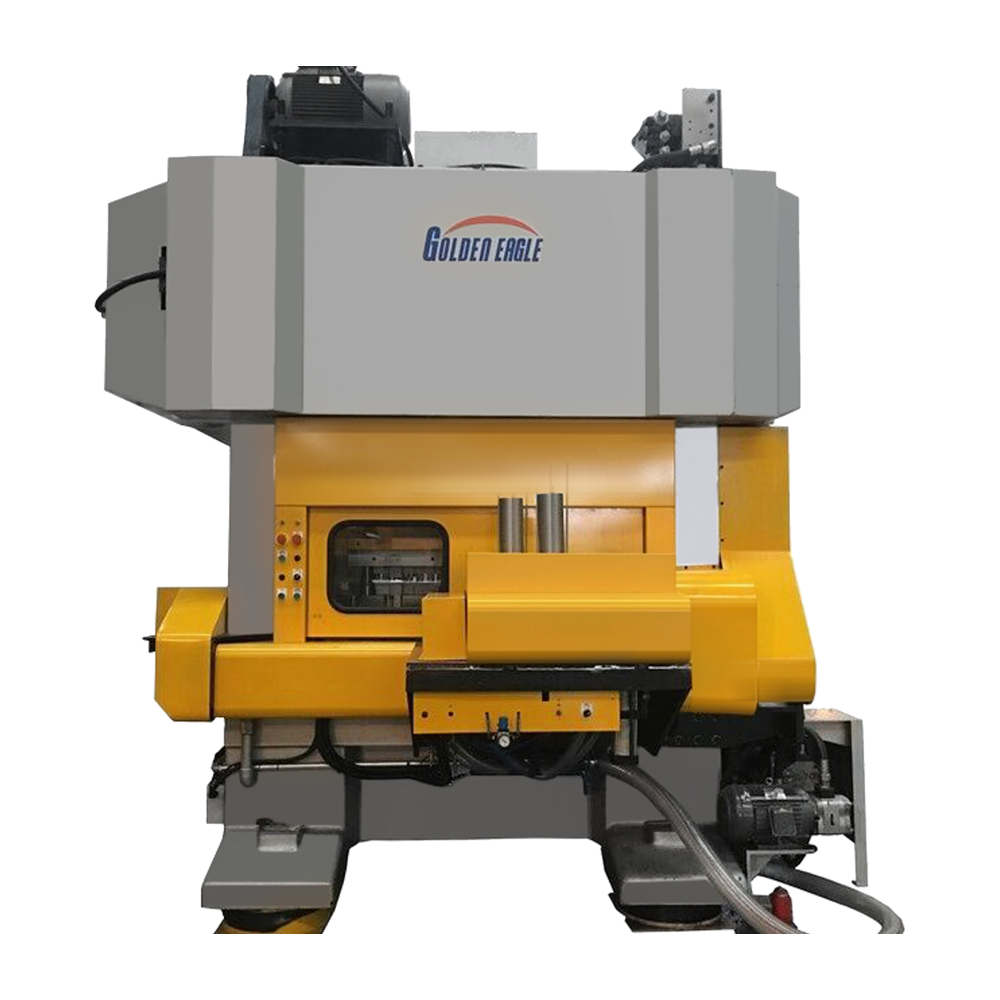
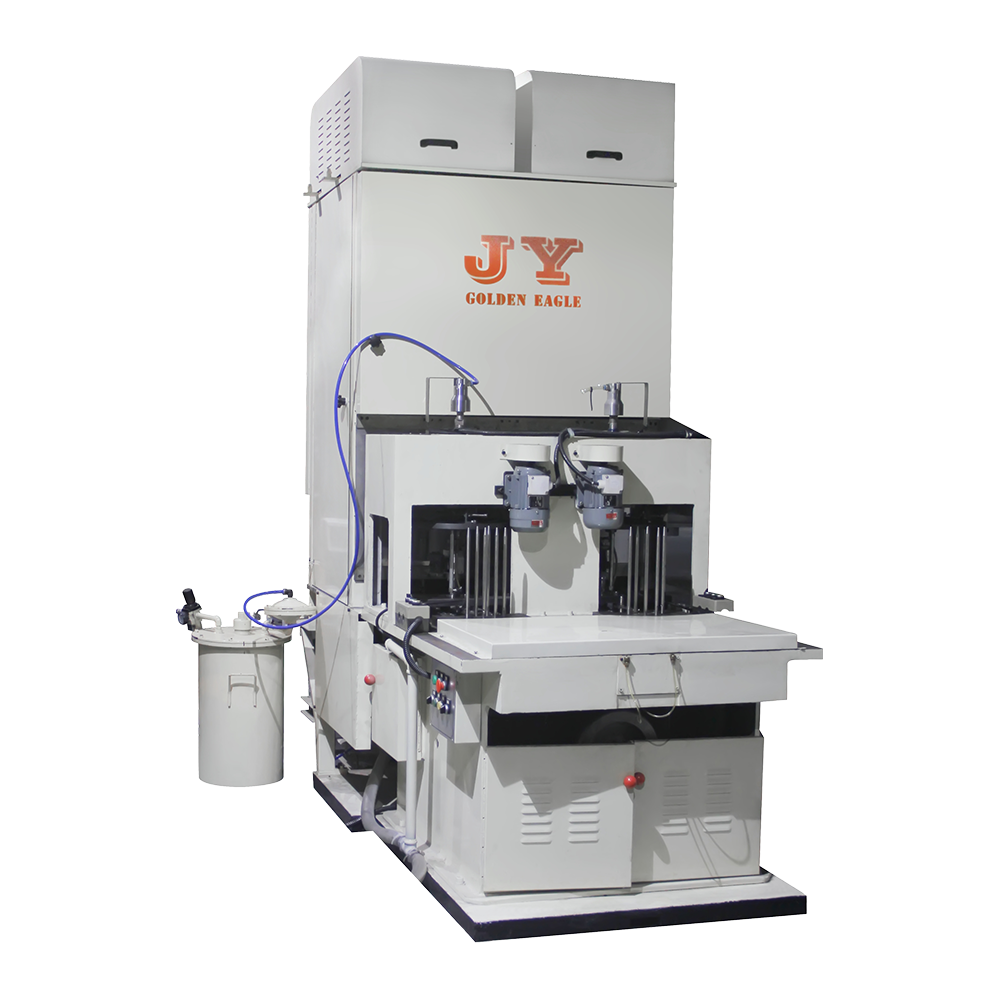
The automatic chemical can line is designed for manufacturers that need flexible, reliable, and efficient equipment for producing aerosol cans and chemical containers in different diameter and height ranges. By combining flanging, top seaming, and seaming functions in purpose-built configurations, the line supports the production requirements of chemical packaging plants, aerosol container manufacturers, industrial filling companies, and tinplate can producers.
Chemical and aerosol containers must meet demanding requirements. They need accurate dimensions, strong seams, consistent flanges, reliable mechanical performance, and stable production quality. A can-making line must also operate continuously while maintaining repeatable results across thousands of containers. The equipment described in this article is developed for these conditions, offering automatic operation, multiple machine configurations, broad size compatibility, and production speeds of up to 150 containers per minute for smaller diameters.
The line includes models for containers from approximately 52 mm to 190 mm in diameter, as well as larger containers from 250 mm to 275 mm. Depending on the selected configuration, the equipment can perform flanging, top seaming, and seaming. This modular approach allows manufacturers to choose machinery according to the design of the container, the required closure structure, the production speed, and the intended application.
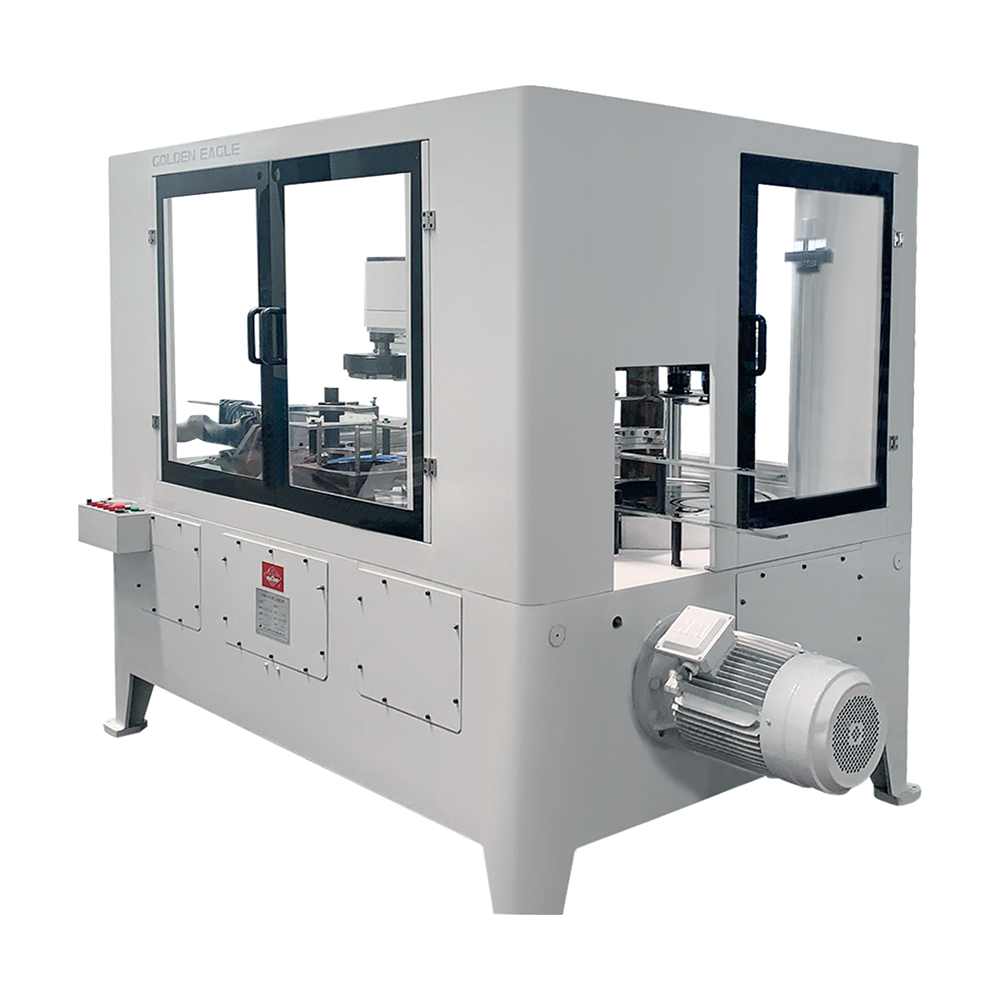
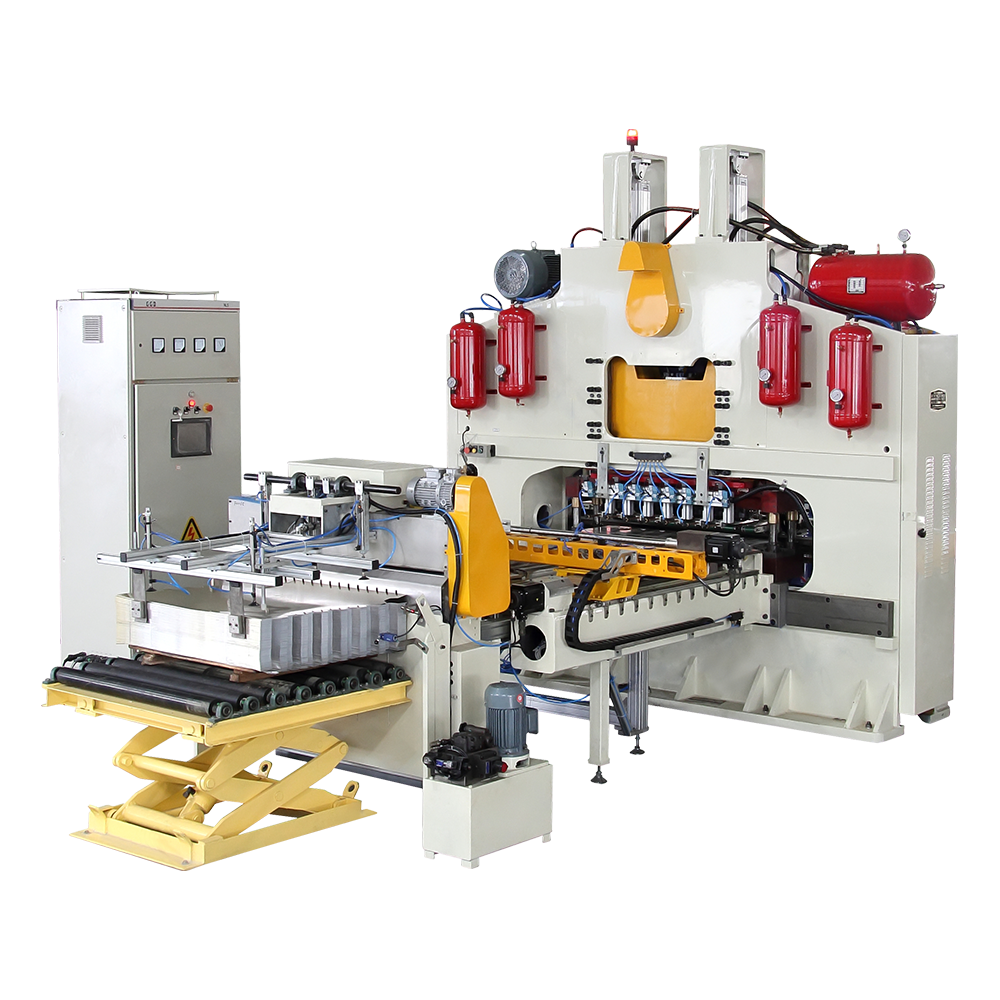
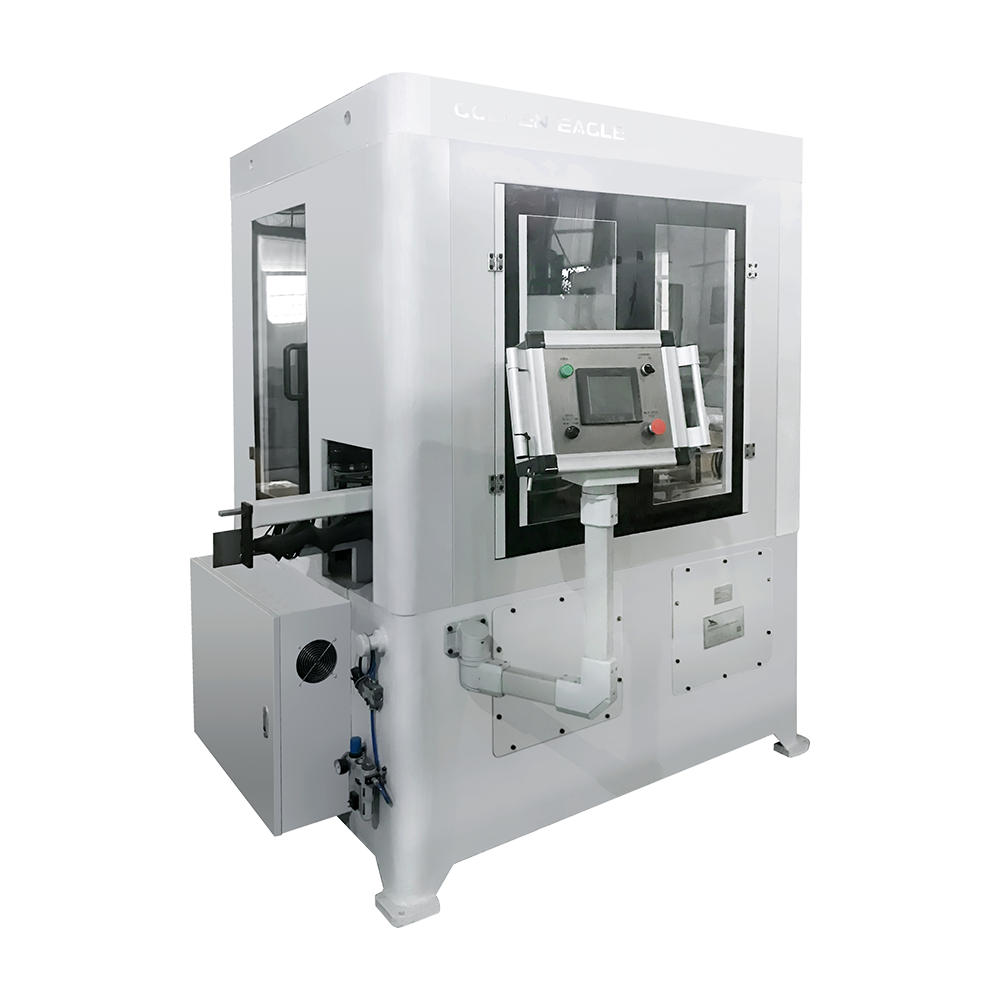
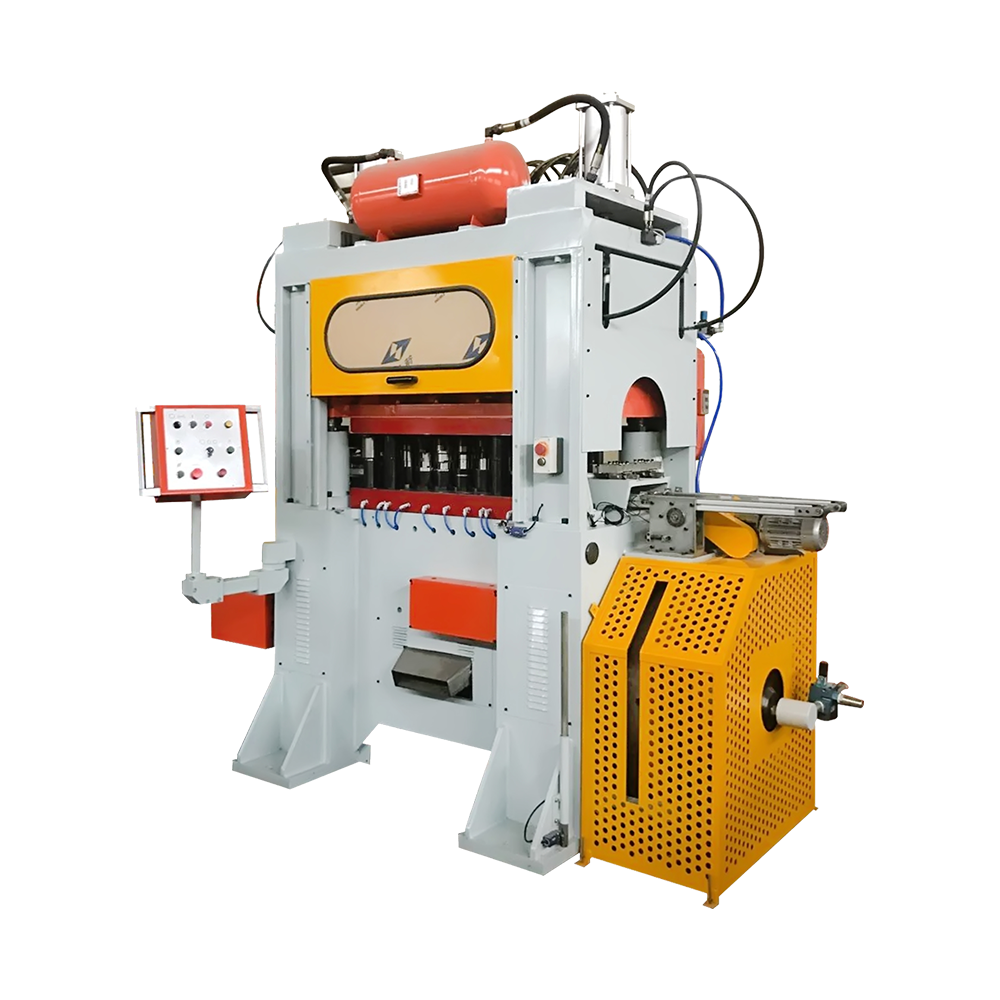
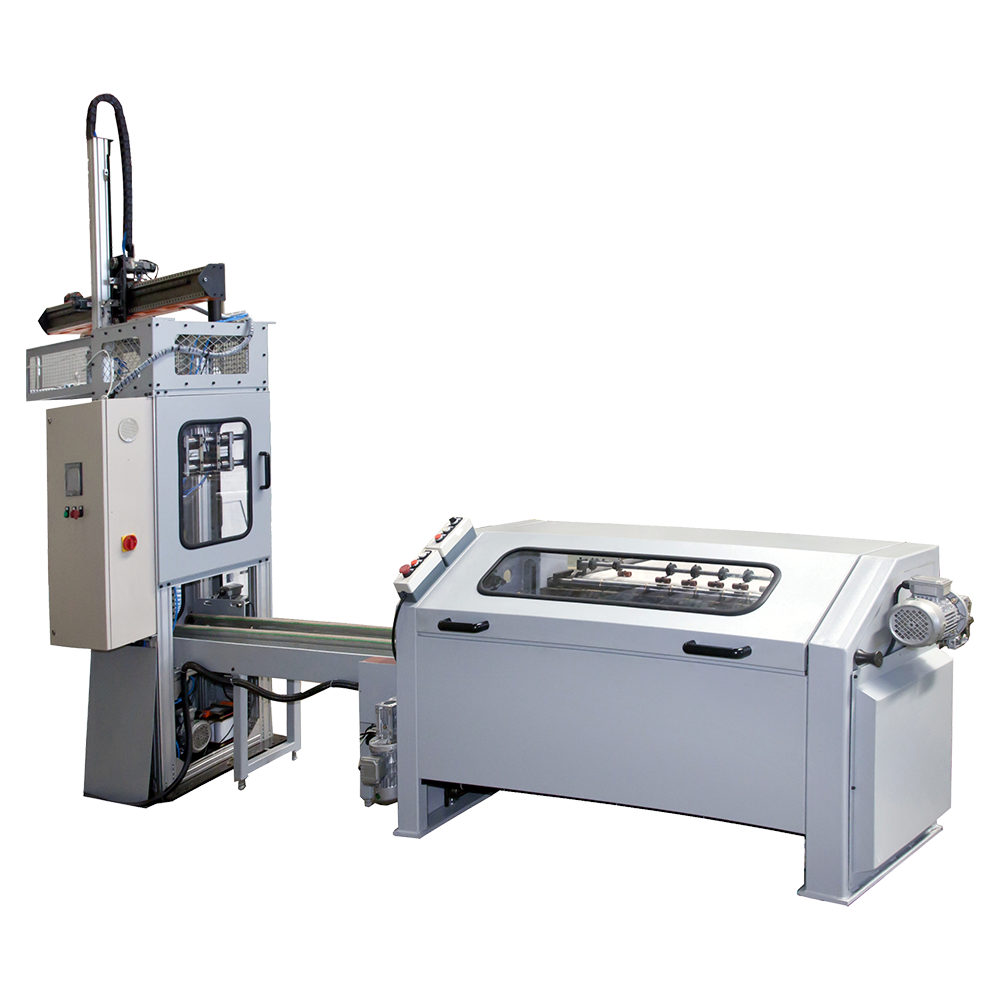
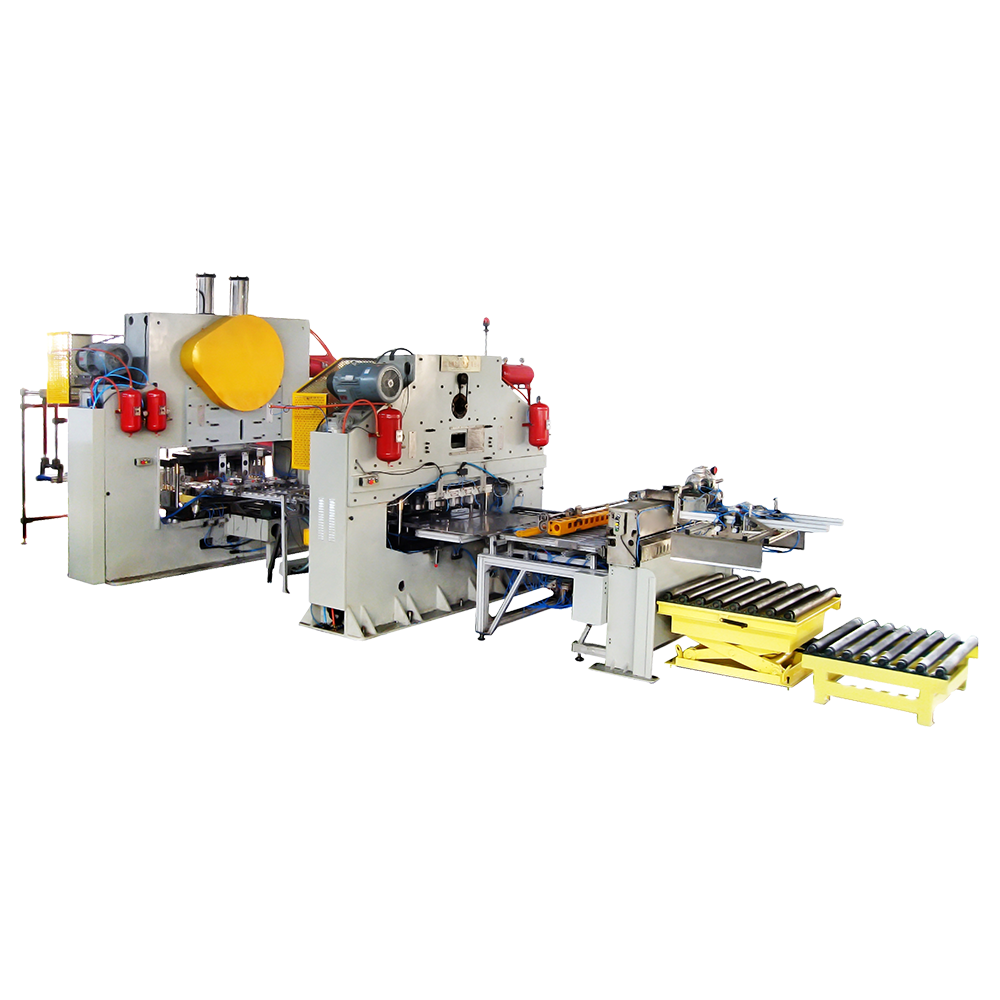
Chemical Can Line both for Aerosol can and Chemical can
A chemical can production line is a group of machines used to complete essential forming and closing operations on tinplate or similar metal containers. In the product range presented here, the central equipment is used for the finishing and closing stages of cans. These stages are critical because the quality of the flange and seam directly affects container strength, appearance, leakage resistance, and suitability for industrial filling.
The equipment is available for two broad size groups. The first group covers relatively small and medium containers with diameters ranging from 52 mm to 190 mm. These machines are generally designed for higher output, with production capacities between 80 and 150 containers per minute. The second group covers larger containers with diameters from 250 mm to 275 mm. These machines typically operate at 20 to 50 containers per minute because the larger container body and closure components require different handling and forming conditions.
The line is identified as suitable for both aerosol cans and chemical cans. This makes it useful for manufacturers that produce several types of metal packaging rather than focusing on one fixed can specification. Instead of investing in completely separate production systems for every container size, a manufacturer can select compatible machines from the same equipment family and organize production around its product portfolio.
Automatic operation reduces the need for continuous manual intervention. Once the equipment has been correctly set up for the selected container specification, the forming and seaming processes can be carried out in a continuous production sequence. Automatic production also helps improve process repeatability, reduce operator fatigue, and support more stable output during extended manufacturing shifts.
Flanging forms the edge of the can body into a controlled profile before the lid or end is attached. The quality of this operation is essential for proper engagement between the body flange and the end component. An accurately formed flange helps ensure that the end is positioned correctly and that the subsequent seaming operation can produce a consistent closure.
In chemical and aerosol packaging, flange quality is especially important because the finished container may be exposed to internal pressure, chemical contents, handling impacts, and transportation vibration. A poorly formed flange can cause sealing problems, visual defects, or reduced mechanical strength. The dedicated flanging configurations in this product range are intended to provide a stable preparation stage for the final closure.
Top seaming is used to join a can end to the body in a controlled mechanical process. The operation must coordinate the end component, the body flange, and the seaming tools. Consistent positioning and pressure are necessary to produce a uniform seam around the entire circumference of the container.
Several configurations in the range combine flanging and top seaming. This combination is useful where the can body requires flange formation followed by the attachment of a top end. The integrated arrangement can reduce material transfer between separate operations and may simplify the overall production layout.
Seaming completes the mechanical closure between the can body and the end. The operation is available as a standalone function on some models and as part of combined flanging and seaming machines on others. The correct choice depends on the can body design, the stage at which the equipment is installed, and the production process used by the customer.
For larger containers, standalone seaming or combined flanging-and-seaming configurations are available. These machines operate at lower speeds than the smaller-can models, but they are designed for larger diameters and heavier container formats. This allows the same general equipment family to cover both high-volume smaller containers and larger chemical packaging.
The stated operating range for the chemical can line includes can diameters of 52 to 190 mm and 250 to 275 mm. The corresponding height information is presented as 80 to 320 mm and 280 to 400 mm for the broader product application. Individual machine specifications may vary, and the model table provides the specific working dimensions listed for each configuration.
For small and medium diameters, the output capacity is generally 80 to 150 containers per minute. This speed range is suitable for manufacturers that require efficient production of aerosol containers and compact chemical cans. For larger diameters, the output capacity is generally 20 to 50 containers per minute. The lower speed reflects the larger size of the product and the different mechanical requirements of large-format containers.
Production capacity should always be evaluated together with the container specification, metal thickness, end design, seam requirements, feeding arrangement, and quality-control standards. A machine’s nominal speed is an important reference, but actual production results depend on the complete line configuration and operating conditions.
| Model | Function | Can Diameter | Can Height | Output Capacity | Power |
|---|---|---|---|---|---|
| GT3B51-S-C5, 6-head | Flanging; top seaming | 52–99 mm | 80–220 mm | 80–150 cpm | 4 kW |
| GT3B53-FSS-C1A, 6-head | Flanging; top seaming; seaming | 52–105 mm | 60–160 mm | 80–150 cpm | 7.5 kW |
| GT3B53-FSS-C1B, 6-head, high lid | Flanging; top seaming; seaming | 52–105 mm | 60–160 mm | 80–150 cpm | 7.5 kW |
| GT3B53-FSS-C, 6-head | Flanging; top seaming; seaming | 99–190 mm | 60–160 mm | 80–150 cpm | 7.5 kW |
| GT3B51-S-CB | Seaming | 250–270 mm | 60–160 mm | 20–50 cpm | 5.5 kW |
| GT3B52-FS-CB | Flanging; seaming | 250–275 mm | 60–160 mm | 20–50 cpm | 7.5 kW |
The table demonstrates the range of available configurations. The GT3B51-S-C5 model is a lower-power solution for flanging and top seaming in containers from 52 to 99 mm in diameter. The GT3B53-FSS models provide more functions and are available for smaller diameters, high-lid applications, and containers up to 190 mm in diameter. For large containers, the GT3B51-S-CB and GT3B52-FS-CB models provide seaming or combined flanging and seaming.
One of the main advantages of this product family is its configuration flexibility. Chemical packaging manufacturers rarely produce only one container size throughout the year. Customer orders may require different diameters, heights, lid structures, and closure arrangements. A fixed-purpose machine can create limitations when the product range expands, while a configurable equipment family makes it easier to select a suitable production solution.
The available models cover small aerosol-type diameters, medium chemical container diameters, and large industrial container diameters. This creates a practical choice for companies that need to manufacture different product categories. The 6-head configurations are intended for high-output applications within their specified size range, while the large-diameter models address containers that require a different production speed and mechanical format.
The GT3B53-FSS-C1B model is identified as a high-lid configuration. This is important for manufacturers whose container design includes a raised or higher-profile lid structure. Rather than treating every top closure as identical, the equipment range recognizes that end geometry affects machine selection and production setup.
Manufacturers can also distinguish between a machine that performs only seaming and a machine that performs both flanging and seaming. This allows the equipment to be integrated into different production arrangements. A customer with an existing flanging process may require a seaming machine, while a new production line may benefit from a combined machine that completes more than one operation.
Manual or heavily operator-dependent production can introduce variation in positioning, timing, and applied force. Automatic machinery provides a more consistent production cycle. When the equipment is properly adjusted and maintained, each can passes through the same basic sequence, helping reduce variation between individual containers.
Consistency is particularly valuable for chemical and aerosol cans because the closure must perform reliably after filling. A stable flange and seam support improved quality control and can reduce the likelihood of leakage, malformed ends, and rejected products. Automatic operation also makes it easier for supervisors to monitor output and identify process deviations.
The smaller-can configurations offer output capacities of up to 150 containers per minute. This provides a significant productivity advantage over purely manual or semi-manual methods. High-speed production is important for aerosol containers and other products manufactured in large quantities, where the cost per container is strongly influenced by the speed and utilization of the line.
The larger-can models provide a practical solution for container sizes that cannot be processed at the same speed as small cans. Their capacity of 20 to 50 containers per minute is suitable for larger packaging formats while maintaining a dedicated machine structure for the required diameter range.
Automatic equipment reduces the number of repetitive manual actions required during production. Operators can focus more on line supervision, material supply, inspection, adjustments, and preventive maintenance. This may improve workplace organization and reduce the physical burden associated with repetitive can handling.
Reduced manual intervention can also help improve production hygiene and protect the finished container from unnecessary handling marks. For chemical packaging, controlled handling is useful because containers often need to maintain a clean and professional appearance before filling, labeling, and shipment.
A single narrow-purpose machine may be efficient for one can size but unsuitable for other products. The equipment family described here offers multiple diameter ranges and functional combinations. This makes it easier for a manufacturer to plan production capacity around a broader product catalog.
The availability of small, medium, and large diameter configurations also supports gradual expansion. A factory may begin with equipment for its core product and later add machinery for larger containers or additional closure operations. This approach can be more practical than replacing an entire production system whenever the product range changes.
When flanging and seaming functions are combined in one machine, the production layout may require fewer separate workstations. A more compact arrangement can simplify material flow and reduce unnecessary transfer between machines. The exact space requirement depends on the complete line, but integrated functions generally provide more flexibility in factory planning than completely separate operations.
The equipment is manufactured by Zhejiang Golden Eagle Food Machinery Co., Ltd., a company with a history in can-making machinery and can-making molds dating back to 1978. The company was formerly associated with Zhejiang Food Machinery Factory and Zhoushan Mold Factory. Its long operating history provides experience in the design, production, installation, and servicing of machinery used in metal can manufacturing.
The company has more than 350 trained personnel, including experienced design and development engineers. This engineering team supports the development of equipment for food cans, beverage cans, can lids, chemical tanks, aerosol containers, two-piece cans, pop cans, and related products. Such a broad product range is relevant to the chemical can line because many machine functions and production challenges are shared across different tinplate container categories.
Over more than four decades of development, the company has produced more than 10,000 pieces of can and can-lid equipment. This installed production base indicates extensive practical experience with different factory environments, customer requirements, container formats, and operating conditions.
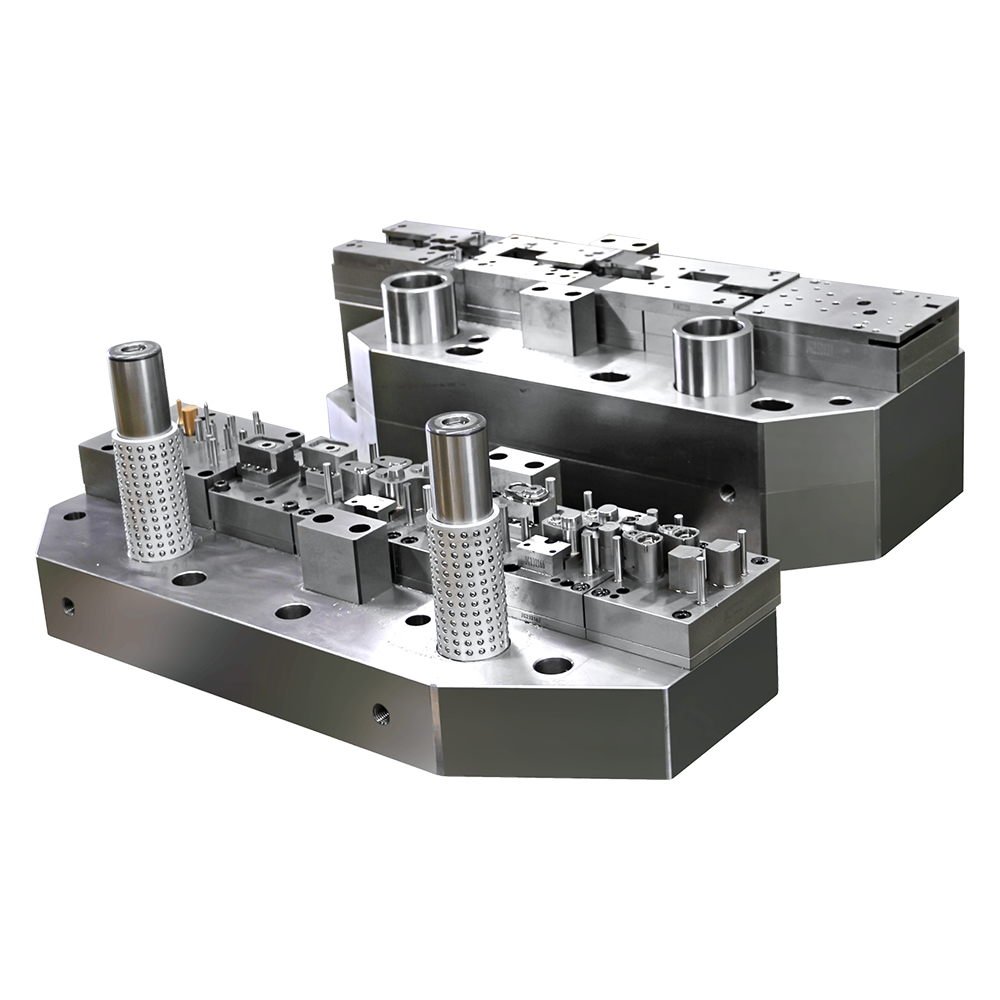
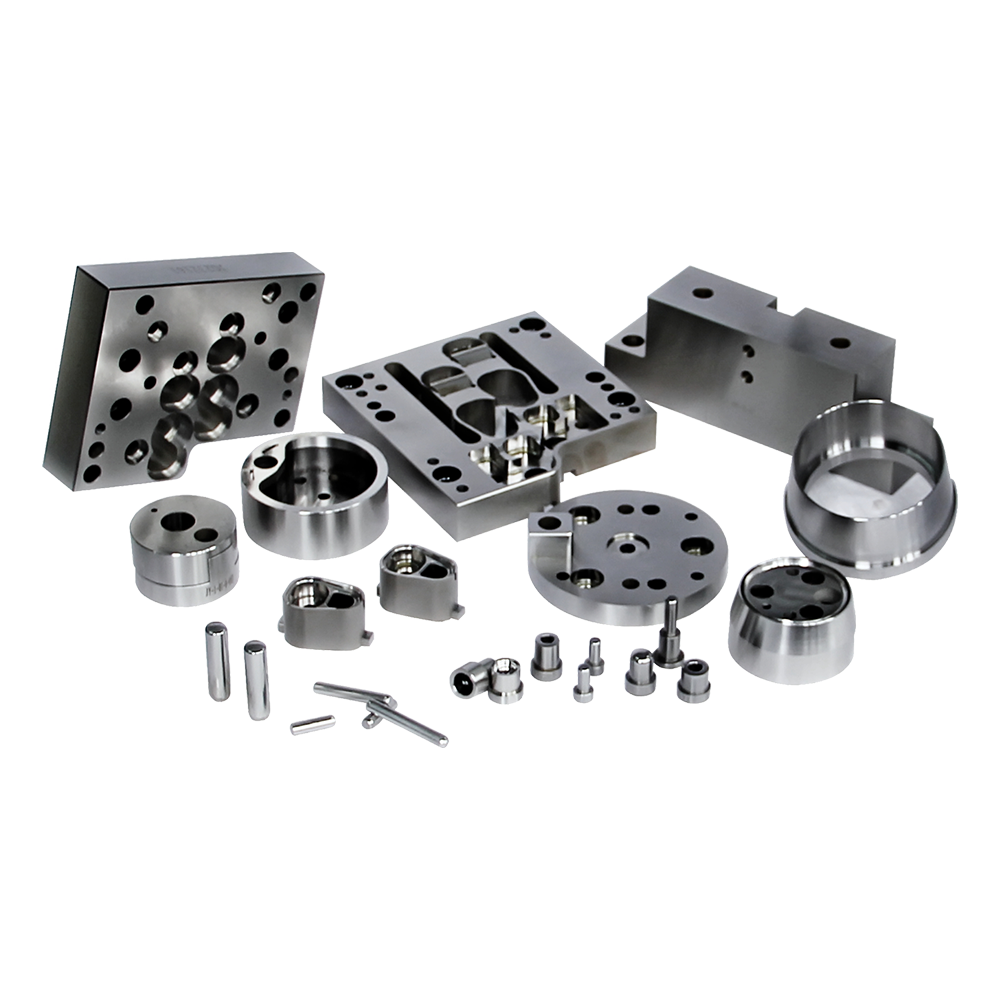
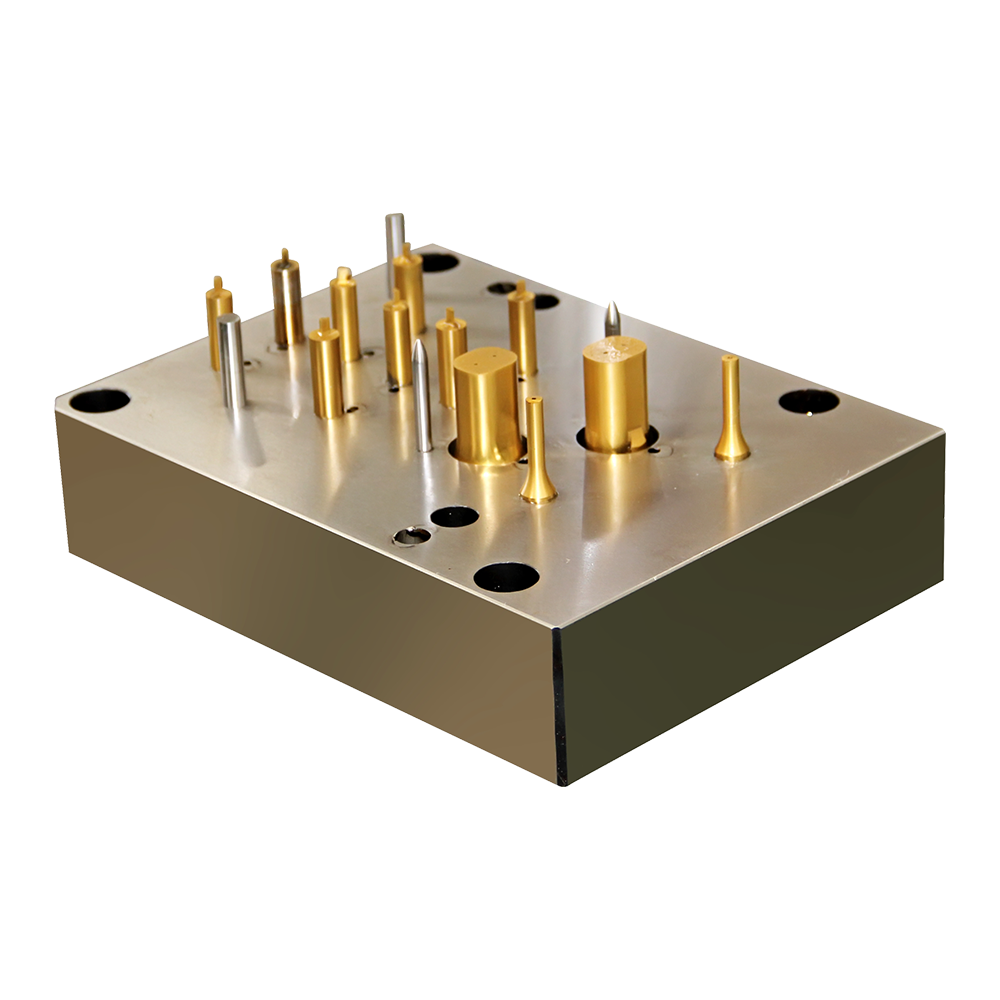
The manufacturing process uses CNC high-precision machining equipment together with complete mechanical processing equipment. High-precision machining is important for parts that influence alignment, forming accuracy, tool positioning, and repeatable operation. In can-making machinery, small dimensional deviations in critical components can affect the quality of flanges and seams, so controlled machining is a central part of equipment reliability.
CNC manufacturing also supports repeatability during the production of replacement parts and machine assemblies. When components are made according to controlled digital specifications, it becomes easier to maintain consistency between machines and to produce compatible parts during later maintenance or upgrades.
The company states that its product design principles are similar to those used by internationally recognized manufacturers such as KRUPP, SOUDRONIC, and ALFONS-HAAR. Its own production experience is combined with continuous improvement and practical feedback from manufacturing applications. This approach allows the equipment to evolve through both engineering development and real-world production use.
The company has been certified according to the ISO9001 quality management system and the ISO14001 environmental management system. ISO9001 supports the use of controlled quality processes, while ISO14001 reflects attention to environmental management practices. For an industrial machinery buyer, these certifications provide additional information about the manufacturer’s formal approach to production control and organizational management.
Quality is not limited to the final assembly of a machine. It also involves material control, machining accuracy, component inspection, assembly procedures, testing, documentation, and after-sales support. A manufacturer with established quality and environmental systems is better positioned to organize these activities in a consistent manner.
The chemical can line is intended for manufacturers of metal containers used in chemical and aerosol applications. Typical product categories may include aerosol containers, industrial chemical cans, paint-related containers, household chemical packaging, maintenance-product containers, and other tinplate packages that require a mechanically closed top.
Aerosol cans place particular demands on dimensional control and closure integrity. The container must accommodate the selected valve and end design, maintain a suitable internal structure, and withstand the handling conditions associated with filling and distribution. The product range includes configurations for smaller diameters and a high-lid option, making it suitable for certain aerosol-oriented container designs.
Chemical cans may be produced in a wide range of sizes. Some are compact containers for consumer or professional products, while others are larger containers for industrial use. The availability of models for diameters up to 275 mm gives manufacturers options for larger-format chemical packaging.
The equipment can also form part of a wider production line that includes body-making, welding, testing, feeding, end-making, filling, labeling, and packing. The manufacturer supplies other can-making systems, including food can production lines, beverage can production lines, can lid production lines, aerosol canister production lines, two-piece can production lines, and pop can production lines. This broader capability can simplify sourcing when a customer needs several types of can machinery from one experienced supplier.
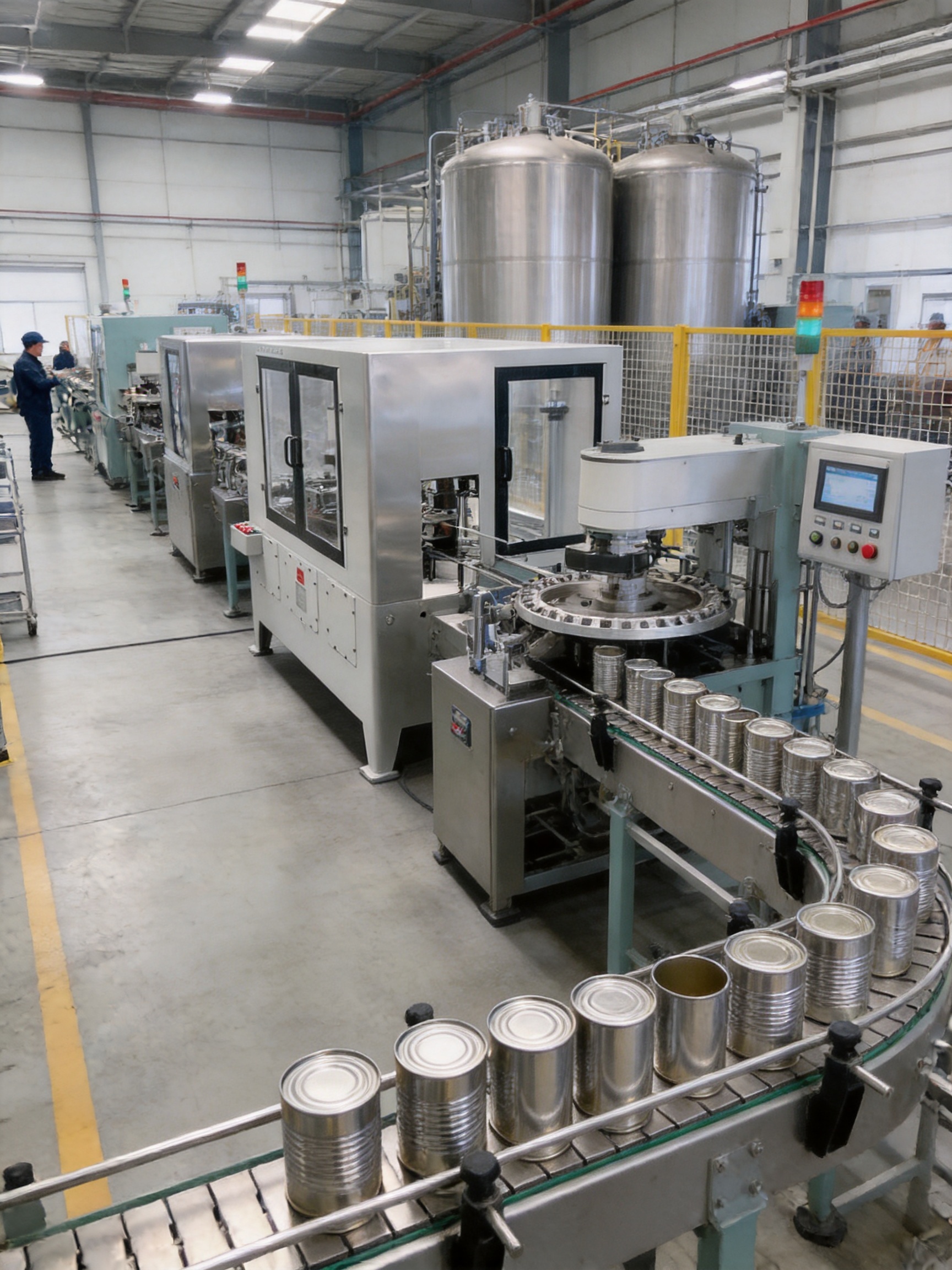
Flanging and seaming require the can body and end component to be positioned accurately. Automatic equipment helps guide the workpiece through a controlled mechanical path. Proper positioning reduces the risk of uneven contact, incomplete formation, and inconsistent seam appearance.
For high-volume production, even a small quality problem can become significant when repeated across hundreds or thousands of containers. Stable machine operation therefore contributes not only to individual can quality but also to the overall efficiency of the factory.
A reliable seam depends on repeatable movement and suitable tool adjustment. The machine must provide the necessary forming action consistently around the container circumference. When the process is stable, quality personnel can establish inspection criteria and monitor the process more effectively.
Manufacturers should still define their own seam-quality requirements according to the container design, material specification, filling application, and relevant standards. The machine provides the forming platform, while correct tooling, setup, maintenance, and inspection complete the quality system.
Automatic equipment makes production behavior easier to observe. Operators can monitor the running condition of the machine, inspect finished containers, and respond to abnormal noise, material feeding problems, seam changes, or output interruptions. A structured monitoring routine can help prevent small issues from developing into larger production losses.
It is recommended that users establish inspection procedures covering flange dimensions, seam appearance, can height, can diameter, end positioning, and overall container condition. Depending on the application, additional leakage, pressure, or mechanical tests may be required after the can-making process.
The listed machine power ratings range from 4 kW to 7.5 kW. The GT3B51-S-C5 model is rated at 4 kW, while the combined-function small-can machines are rated at 7.5 kW. The large-diameter standalone seaming model is rated at 5.5 kW, and the large-diameter flanging-and-seaming model is rated at 7.5 kW.
These ratings provide an initial reference for factory utility planning. Before installation, the customer should confirm the complete electrical requirements, including voltage, frequency, starting conditions, control systems, auxiliary equipment, conveyors, feeders, and other machines in the production line. The final power demand of a complete chemical can line will be higher than the rating of one individual machine.
Factory layout planning should also consider operator access, material movement, maintenance clearance, ventilation, lighting, safety protection, and the arrangement of inspection stations. A well-planned layout helps reduce unnecessary movement and supports a smooth flow from body preparation to final closure.
The manufacturer provides after-sales services that include installation, commissioning, technical guidance, operation training, and parts supply. These services are important because the performance of can-making equipment depends on correct installation, accurate alignment, suitable tooling, and proper operating procedures.
During installation, the machine should be placed on an appropriate foundation or support structure according to the installation requirements. Electrical connections, safety devices, feeding systems, and material paths should be checked before production begins. Alignment and trial operation should be completed before the line is released for continuous manufacturing.
Commissioning allows the machine to be adjusted for the customer’s actual can specification. Operators and technicians can learn how to install or change tooling, adjust production parameters, identify common defects, perform cleaning, and carry out routine maintenance. Training is particularly valuable for factories that are introducing automatic can-making equipment for the first time.
Fast parts supply is another important advantage. Can-making machines operate in production environments where unplanned downtime can be costly. Access to compatible replacement parts helps the customer restore equipment operation more quickly and maintain a predictable maintenance schedule.
Training should cover start-up and shutdown procedures, material loading, safe operation, routine inspection, emergency stopping, product changeover, and basic fault identification. Operators should also understand which adjustments they are authorized to make and when a qualified maintenance technician should be called.
Good training helps protect both the equipment and the finished containers. Incorrect adjustment can cause excessive wear, poor seam quality, material damage, or unnecessary downtime. A clear operating procedure allows different shifts to use the machine in a consistent manner.
Preventive maintenance should include regular cleaning, lubrication where required, inspection of forming tools, checking of fasteners, examination of moving parts, and verification of safety devices. Wear components should be monitored and replaced before they cause a major quality problem or mechanical failure.
The maintenance interval should be established according to operating hours, production volume, material characteristics, and the manufacturer’s technical instructions. Records of maintenance, tooling changes, defects, and repairs can help the factory identify recurring issues and improve equipment availability.
Selecting the correct model begins with confirming the can diameter and height. The customer should provide accurate drawings or samples of the can body and end, together with information about the material, thickness, lid profile, seam structure, and production target.
For diameters from 52 to 99 mm, the GT3B51-S-C5 offers flanging and top seaming at 80 to 150 containers per minute. For diameters from 52 to 105 mm where flanging, top seaming, and seaming are required, the GT3B53-FSS-C1A or C1B may be considered. The C1B version is identified for high-lid applications.
For diameters from 99 to 190 mm, the GT3B53-FSS-C provides the same general three-function arrangement within its specified working range. For larger diameters from 250 to 270 mm, the GT3B51-S-CB provides seaming. If both flanging and seaming are needed for containers from 250 to 275 mm, the GT3B52-FS-CB is the relevant configuration listed in the product information.
The customer should also determine whether a standalone machine or an integrated machine is more appropriate. An integrated machine may simplify the layout and reduce transfers, while a standalone machine may be preferable when the factory already has upstream or downstream equipment that performs one of the required operations.
Output requirements should be calculated from actual demand rather than nominal speed alone. The calculation should include planned working hours, changeover time, maintenance time, material availability, quality rejects, and any upstream or downstream bottlenecks. A balanced line is usually more productive than a fast machine connected to slower equipment.
Can-making machinery combines mechanical design, precision machining, tooling, material handling, process engineering, and after-sales service. A supplier that focuses only on one machine may not be able to support the complete production environment. An experienced can-making manufacturer can provide more relevant guidance because it understands how individual machines interact within a broader can production line.
The manufacturer described here has experience with can bodies, can ends, molds, chemical tanks, aerosol containers, food cans, beverage cans, and other metal packaging systems. This range is useful when customers require equipment for more than one product category or plan to expand their factory in the future.
International market experience is also valuable. The company reports that its machinery has been exported to countries in Europe, Asia, Africa, North America, South America, and Oceania. Working with customers in different regions requires attention to varied production practices, technical expectations, documentation requirements, and service arrangements.
A supplier’s ability to provide installation, commissioning, training, technical guidance, and replacement parts can influence the long-term value of the machine. The initial purchase price is only one part of the total cost of ownership. Reliable support can help reduce downtime, shorten the learning period, and improve the useful life of the equipment.
The automatic chemical can line can be integrated with other machines used in a complete can-making process. Depending on the product, a factory may require tinplate cutting, body forming, welding, beading, flanging, end production, feeding, seaming, testing, labeling, and packing.
The manufacturer’s product categories include automatic welding machines, cutting machines, automatic feeding machines, aerosol can-making machines, two-piece can-making machines, end-making machines, and molds. This broad portfolio can support a coordinated production system in which the equipment is selected according to a consistent approach to container design and manufacturing capacity.
Integration should be planned at the beginning of the project. Conveyor height, product orientation, transfer speed, control signals, feeding direction, operator access, and inspection locations should be coordinated across the line. Correct integration helps prevent accumulation, material shortages, and unnecessary manual transfer between machines.
For a chemical can factory, testing may also be important. Depending on the container application, the line may be connected to visual inspection, seam inspection, leakage testing, pressure testing, or other quality-control equipment. The required testing method should be determined by the container design and the characteristics of the chemical product that will be filled into it.
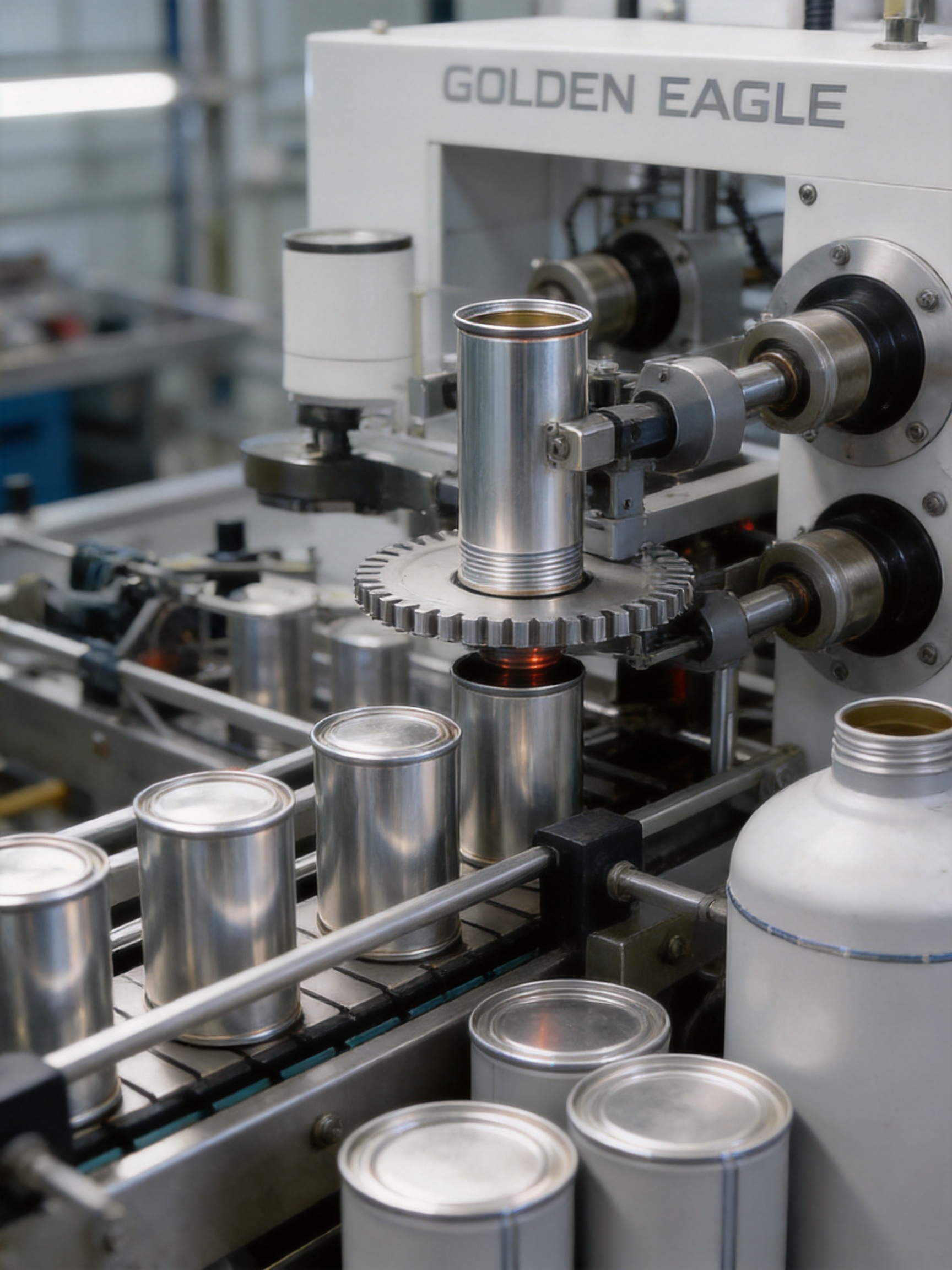
The automatic chemical can line offers several operational benefits. First, it supports continuous production at defined output levels. Second, it provides machine choices for different container diameters and functions. Third, it reduces repetitive manual operations. Fourth, it can be supported by installation, commissioning, training, and parts services from an established machinery manufacturer.
These benefits can contribute to more predictable production planning. When the machine operates within its specified range, the factory can estimate output more accurately and coordinate material supply, end-component production, filling schedules, and packing operations.
Production flexibility is also important in contract manufacturing. A factory may receive orders for different aerosol or chemical products, each with a different container specification. Having access to several compatible machine models can help the manufacturer respond to new orders without redesigning its entire production system.
Another benefit is the potential to standardize equipment across several production areas. When machinery comes from the same product family, operators and maintenance personnel may find it easier to learn common principles, maintain similar procedures, and organize spare parts. The degree of standardization depends on the selected models, but the common design background can be useful.
Automatic machinery should be operated only by trained personnel and installed according to the manufacturer’s instructions and applicable local requirements. Guards, emergency stops, protective devices, and access controls should be checked before production. Operators should not bypass safety systems or reach into moving mechanisms during operation.
Because the line is intended for chemical and aerosol containers, the factory should also consider the safety requirements associated with the materials being processed and the products eventually filled into the containers. Can-making operations and chemical filling operations may have different risks, and the complete facility should be assessed as an integrated workplace.
Good housekeeping supports both safety and quality. Metal scraps, oil, dust, damaged ends, and rejected containers should be removed from the working area according to the factory’s procedures. Clean equipment is easier to inspect, and a clean production area helps operators identify abnormalities more quickly.
The long-term value of a can-making machine depends on more than its initial output specification. Durability, maintainability, spare-parts availability, changeover requirements, operator training, and technical support all influence the total return on investment.
A machine that produces consistent containers can help reduce scrap and customer complaints. A machine that is easy to maintain can shorten planned service periods. A machine family with several compatible configurations can support future product expansion. These factors may be more important than choosing equipment solely on the basis of the highest theoretical speed.
The manufacturer’s experience in producing more than 10,000 can and can-lid machines provides a substantial background for continued equipment support. Its use of CNC precision machining and its quality-management certifications further strengthen the basis for long-term industrial operation.
For customers comparing suppliers, a complete evaluation should include technical conformity, production capacity, energy requirements, tooling, installation, training, maintenance, spare parts, delivery arrangements, and after-sales response. This broader evaluation helps ensure that the selected equipment meets the actual needs of the factory rather than only the requirements of a product brochure.
The line is designed for chemical cans and aerosol cans made in the specified diameter and height ranges. The exact suitability depends on the can body, end design, lid profile, material, and required forming process.
The small and medium diameter configurations have listed output capacities of 80 to 150 containers per minute. The large-diameter configurations have listed output capacities of 20 to 50 containers per minute.
The listed models cover diameters from 52 to 190 mm for smaller and medium containers and from 250 to 275 mm for larger containers. Each model has its own specific diameter range, so selection should be based on the exact can drawing.
The GT3B53-FSS-C1B is identified as a 6-head high-lid model. Customers should confirm the lid dimensions and profile with the manufacturer before final selection.
No. Some models perform flanging and top seaming, some perform flanging, top seaming, and seaming, and others perform seaming only. The required functions should be matched to the customer’s production process.
The listed power ratings are 4 kW, 5.5 kW, and 7.5 kW, depending on the model and function. The complete factory electrical requirement should be confirmed during project planning.
Yes. The equipment can be integrated with other can-making machinery, including body-forming, welding, feeding, end-making, testing, filling, and packing equipment. The final layout should be designed according to the customer’s can specification and production capacity.
The manufacturer provides after-sales services including installation, commissioning, technical guidance, operation training, and parts supply. The exact service arrangement should be confirmed in the commercial and technical agreement.
The choice depends on whether flanging is already completed upstream, whether the line requires an integrated process, the available factory space, the can design, and the desired production arrangement. A combined machine may reduce transfers, while a standalone machine may fit better into an existing line.
Customers should provide can diameter, can height, body and end drawings, lid profile, material information, required functions, target output, electrical conditions, factory location, and any special quality or testing requirements. Complete technical information helps the manufacturer recommend the correct configuration.
The automatic chemical can line provides a flexible equipment solution for manufacturers producing aerosol cans and chemical containers. Its model range covers small, medium, and large diameters, with options for flanging, top seaming, seaming, or combined operations. Output capacities reach 80 to 150 containers per minute for smaller cans and 20 to 50 containers per minute for larger formats.
Compared with conventional manual or narrowly specialized equipment, the line offers greater automation, more consistent processing, reduced repetitive handling, and broader product compatibility. The available high-lid configuration and large-diameter machines further expand its application range.
Its value is supported by the manufacturer’s long history in can-making machinery, more than 350 trained personnel, experienced engineering team, CNC precision machining equipment, ISO9001 and ISO14001 certifications, and production record of more than 10,000 can and can-lid machines. Installation, commissioning, technical guidance, operator training, and parts supply provide additional support throughout the equipment’s service life.
For a chemical packaging manufacturer, the best machine choice should be based on the complete container design and the intended production process. With the correct configuration, tooling, installation, and maintenance program, this equipment family can form a reliable foundation for efficient aerosol and chemical can manufacturing.
1. Product specification information for the automatic chemical can line, including model functions, diameter ranges, height ranges, output capacities, and power ratings.
2. Manufacturer information concerning can-making machinery, can-making molds, production capabilities, engineering personnel, and export experience.
3. ISO 9001 quality management system principles for manufacturing organizations.
4. ISO 14001 environmental management system principles for industrial manufacturers.
5. General engineering principles for metal can flanging, end attachment, mechanical seaming, and production-line integration.
6. General industrial guidance on preventive maintenance, operator training, machine safety, and quality inspection for automated manufacturing equipment.
Related Products

Founded in 1978, the company is one of the largest can-making machinery well-known companies at home and abroad.
Product Categories
Contact Information
Zhongshatou Shenjiamen Zhoushan Zhejiang China
+86-580-3056646

 English
 中文简体
中文简体
 русский
 عربى
عربى
 Español