2026-05-16
In modern metal packaging, the quality of a can cap is not a small detail; it is a critical element that affects sealing performance, stacking strength, product safety, filling efficiency, shelf appearance, and long-term brand reliability. A tin can cap production line must therefore combine high-speed output with stable precision, flexible tooling, efficient sheet feeding, repeatable press performance, and safe automatic operation. The Tin Can Cap Production Line described here is engineered for metal can manufacturers that require dependable cap forming for aerosol cone and dome applications, tin can lids, metal closures, and other customized cap structures.
This production line is centered on O-frame pressing technology for metal can making. It is designed to perform automatic punch pressing with tailor-made can sizes and a production speed range that can match different output requirements. Depending on cap size, die configuration, and production arrangement, the line can support operating speeds from approximately 80 to 500 caps per minute, while the main press can reach up to 150 strokes per minute in suitable configurations. For manufacturers seeking a balance between productivity, forming stability, and long-term machine durability, this system provides a practical and competitive solution.
The product is especially suitable for companies involved in aerosol cone and dome making, metal cap manufacturing, tinplate can packaging, and can component production. It is also relevant for factories that need to upgrade from semi-automatic processes to fully automatic production, reduce labor dependence, improve cap consistency, and support higher-volume orders. With multiple model options, different working pressures, various ram stroke distances, flexible die quantities, and large sheet compatibility, the production line can be adapted to diverse manufacturing layouts and product specifications.
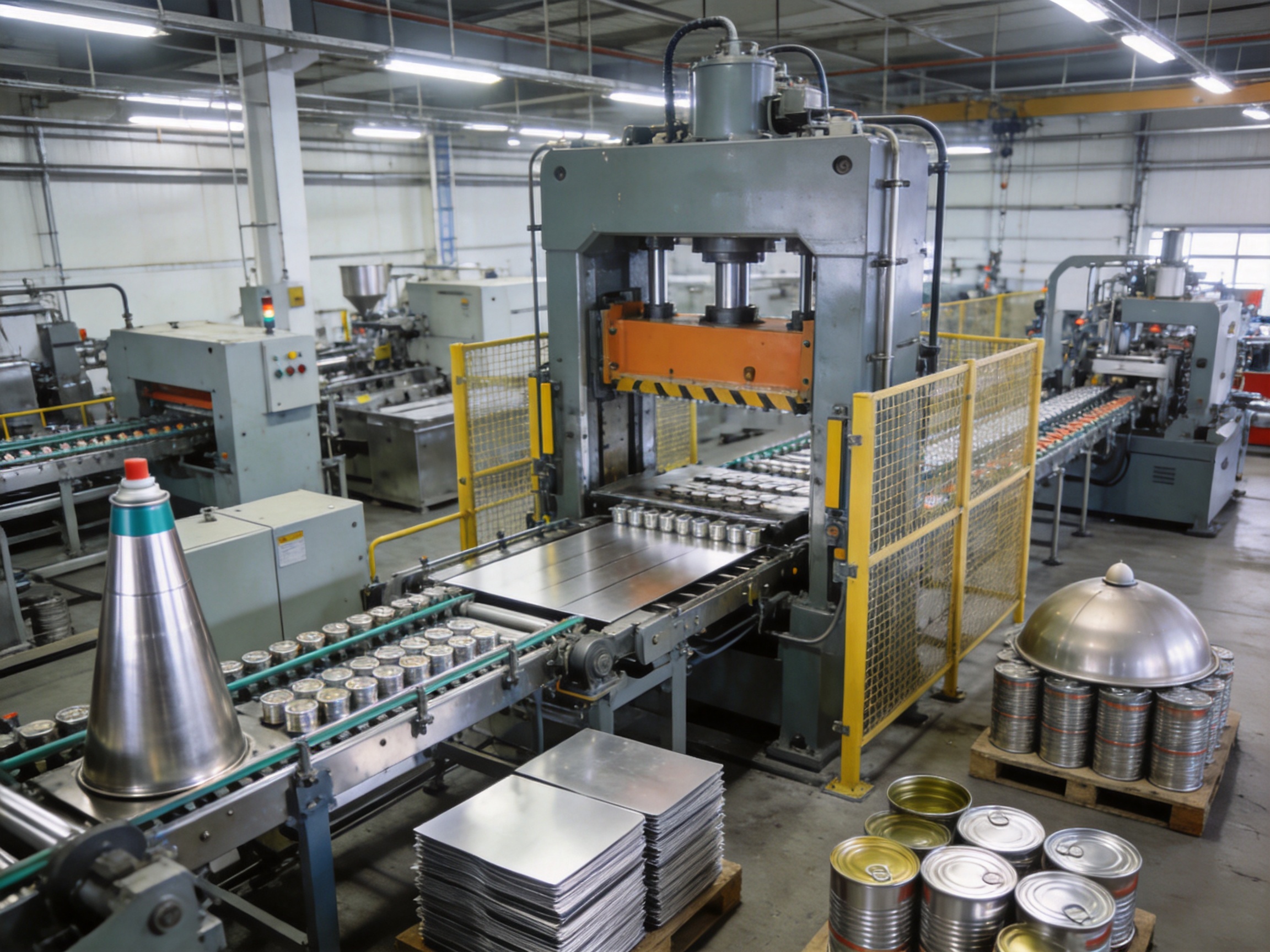
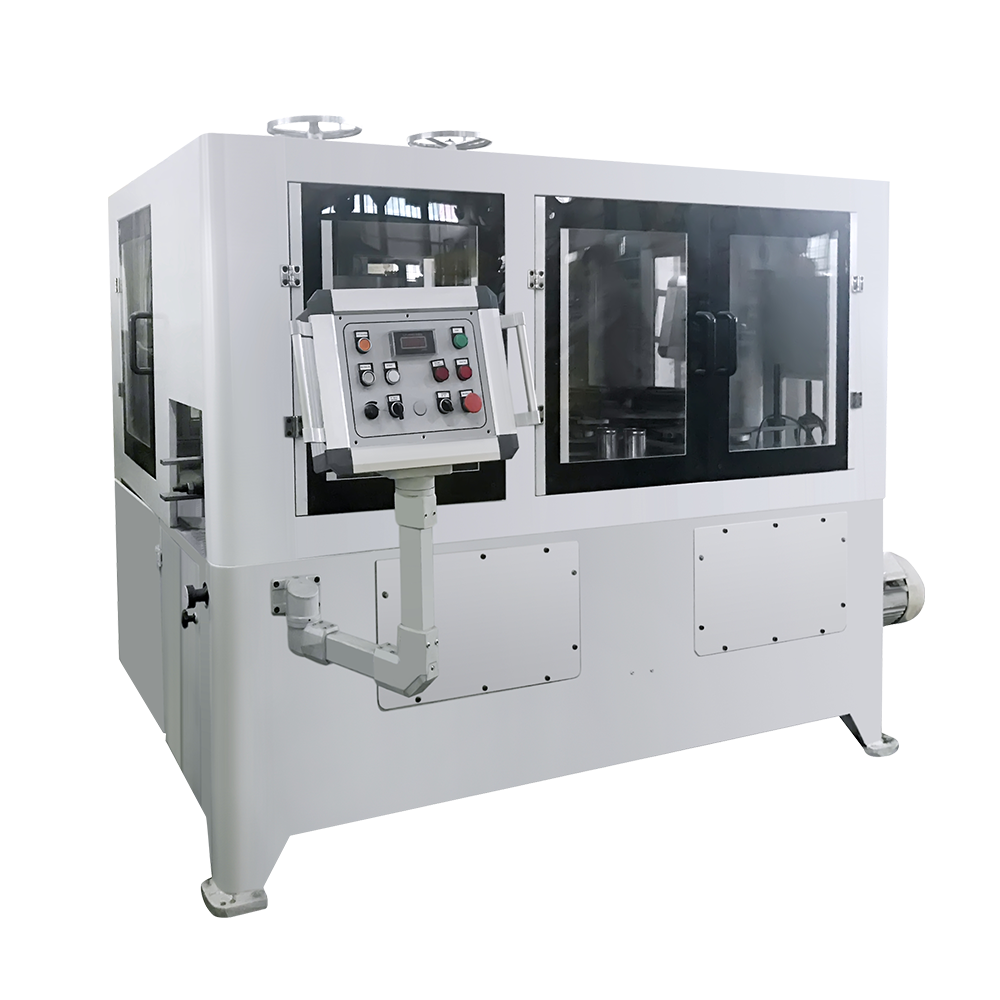
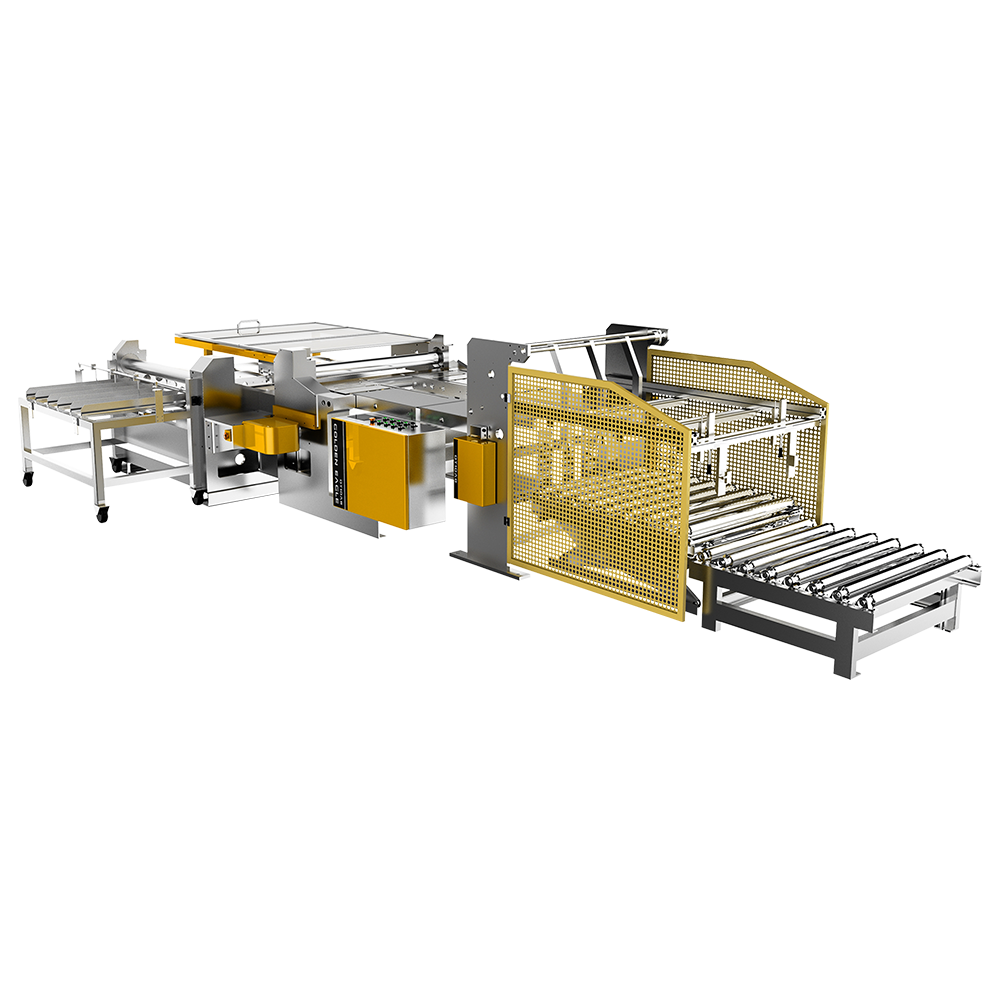
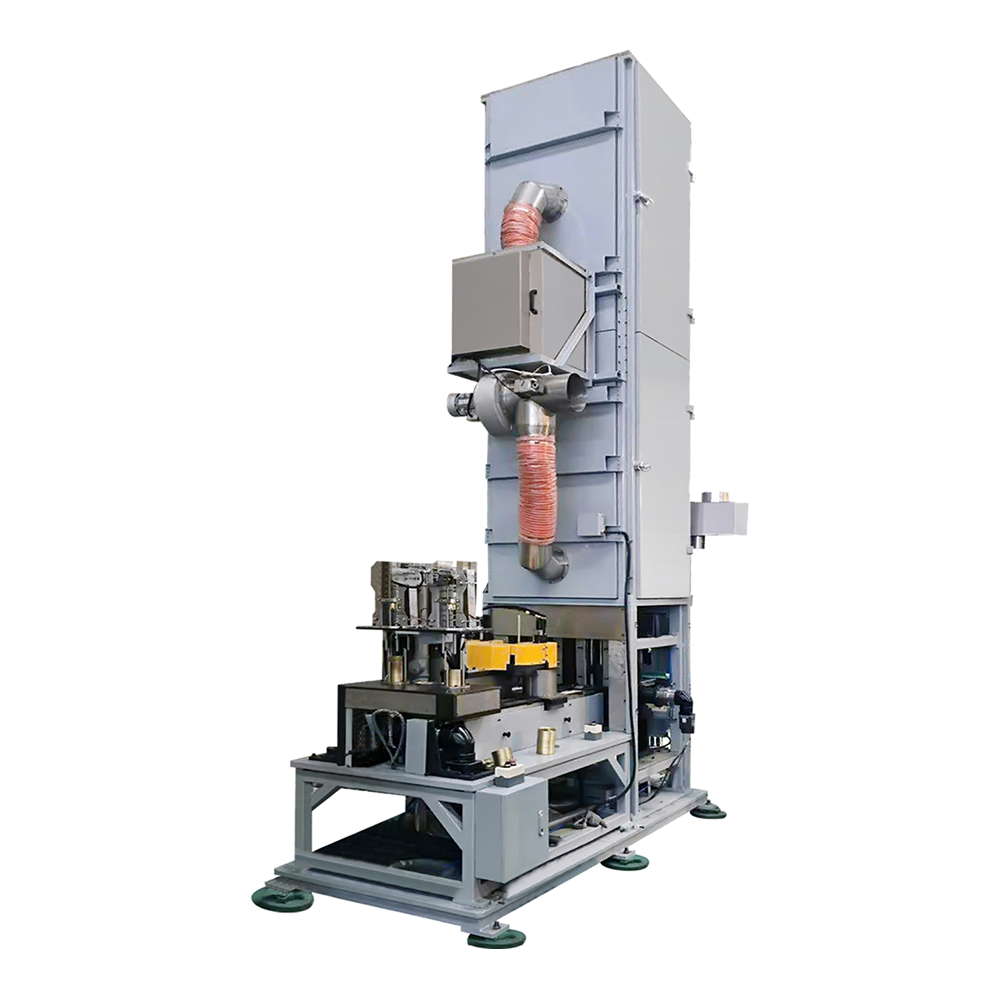
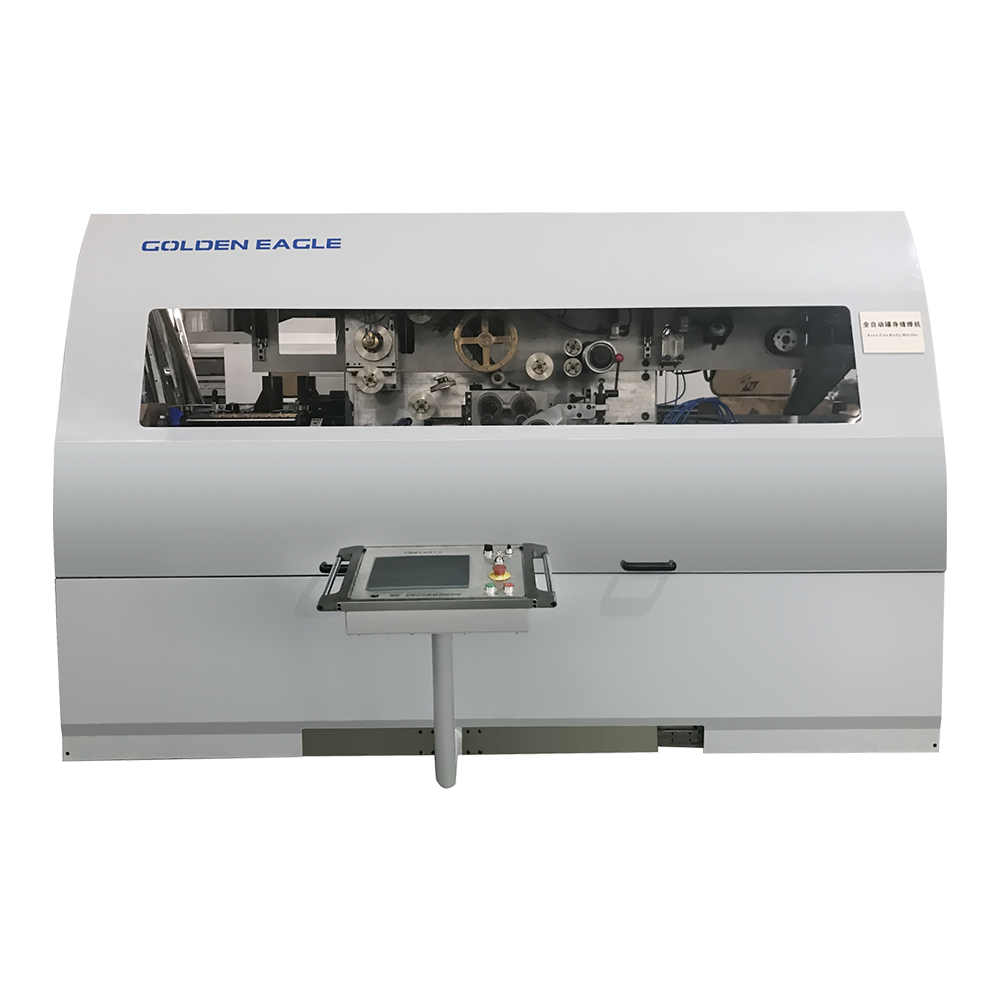
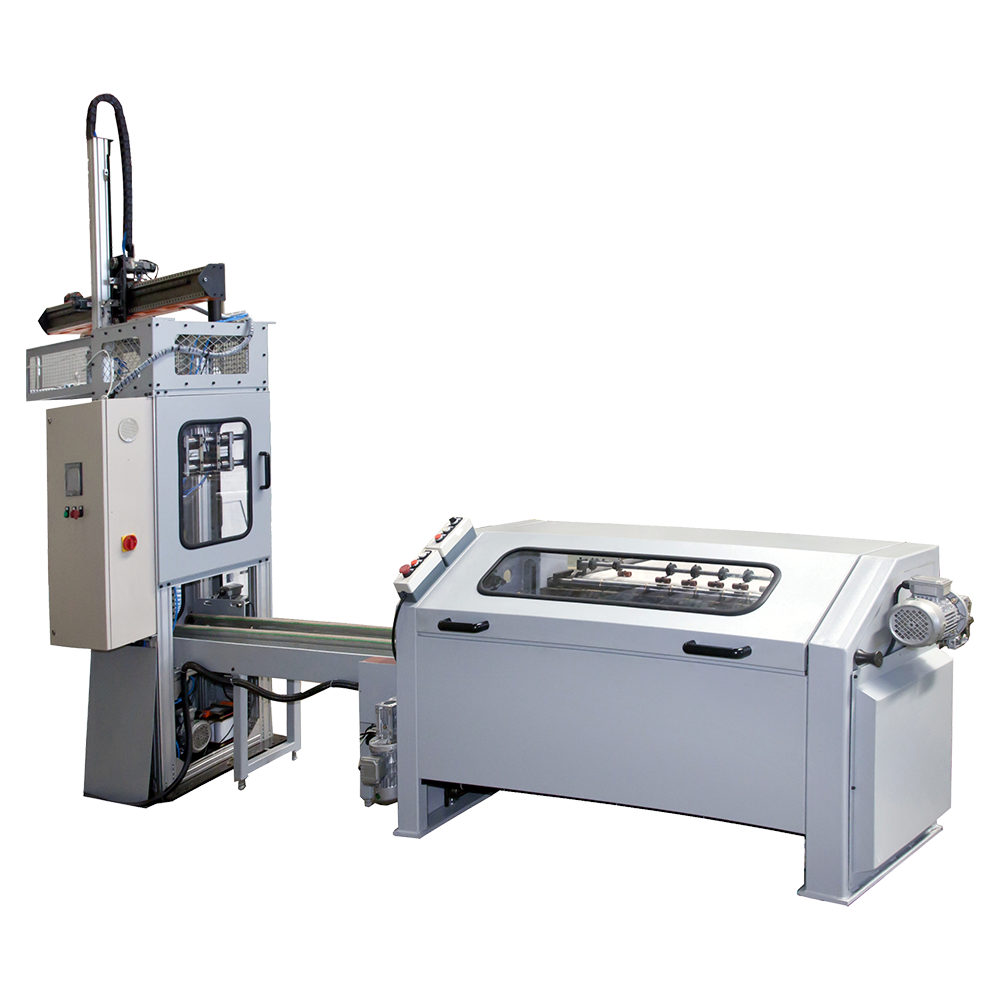
The Tin Can Cap Production Line is an automatic punch pressing solution developed for the forming of metal can caps. Its core process involves feeding sheet material, positioning it accurately, pressing or punching the cap shape through dedicated tooling, and coordinating the movement of the press and auxiliary systems to achieve consistent output. The line is suitable for a variety of tailor-made can sizes, allowing customers to configure the production system according to market needs, container designs, and end-user requirements.
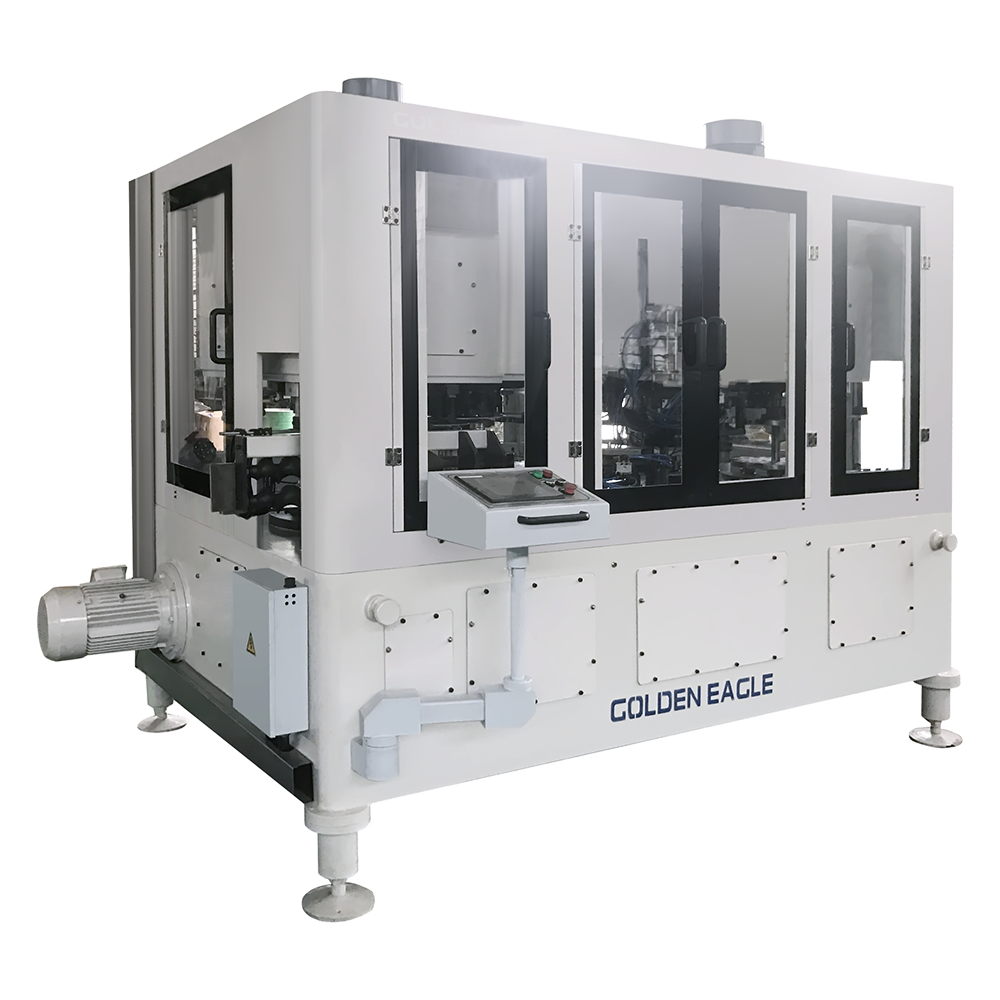
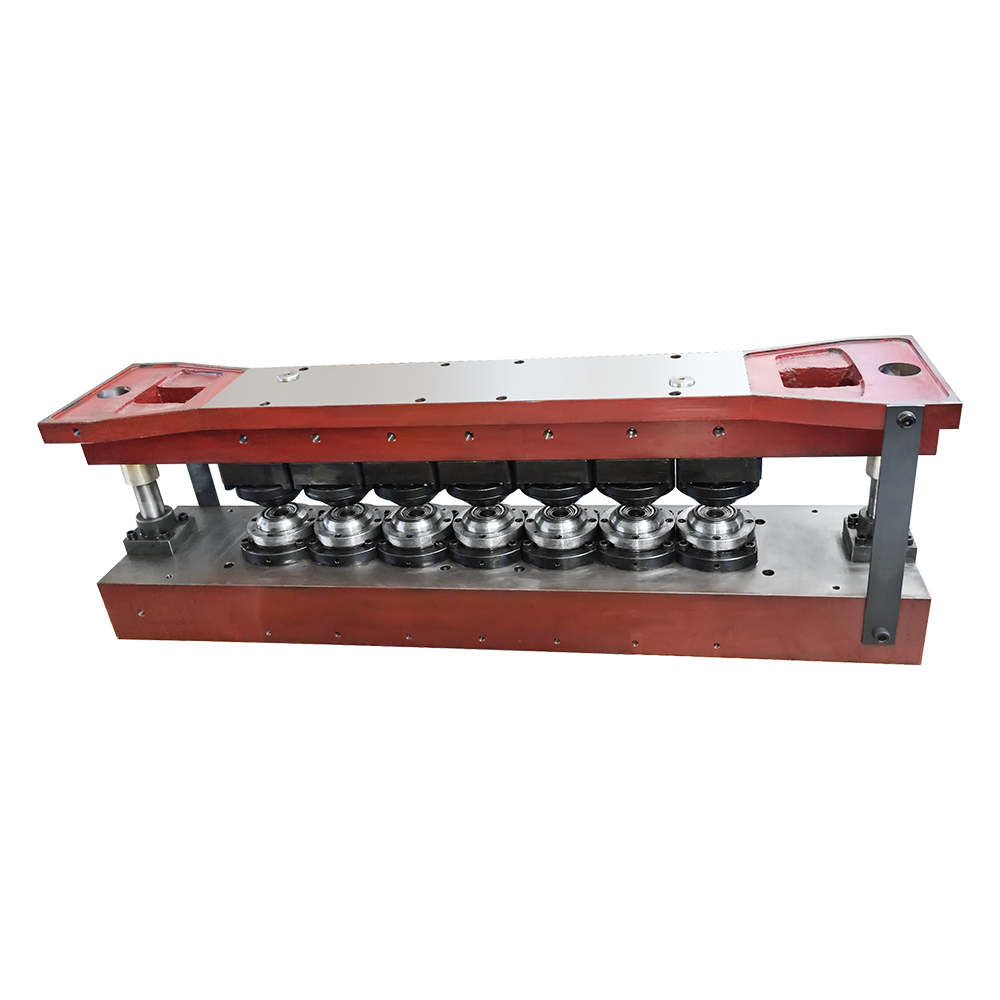
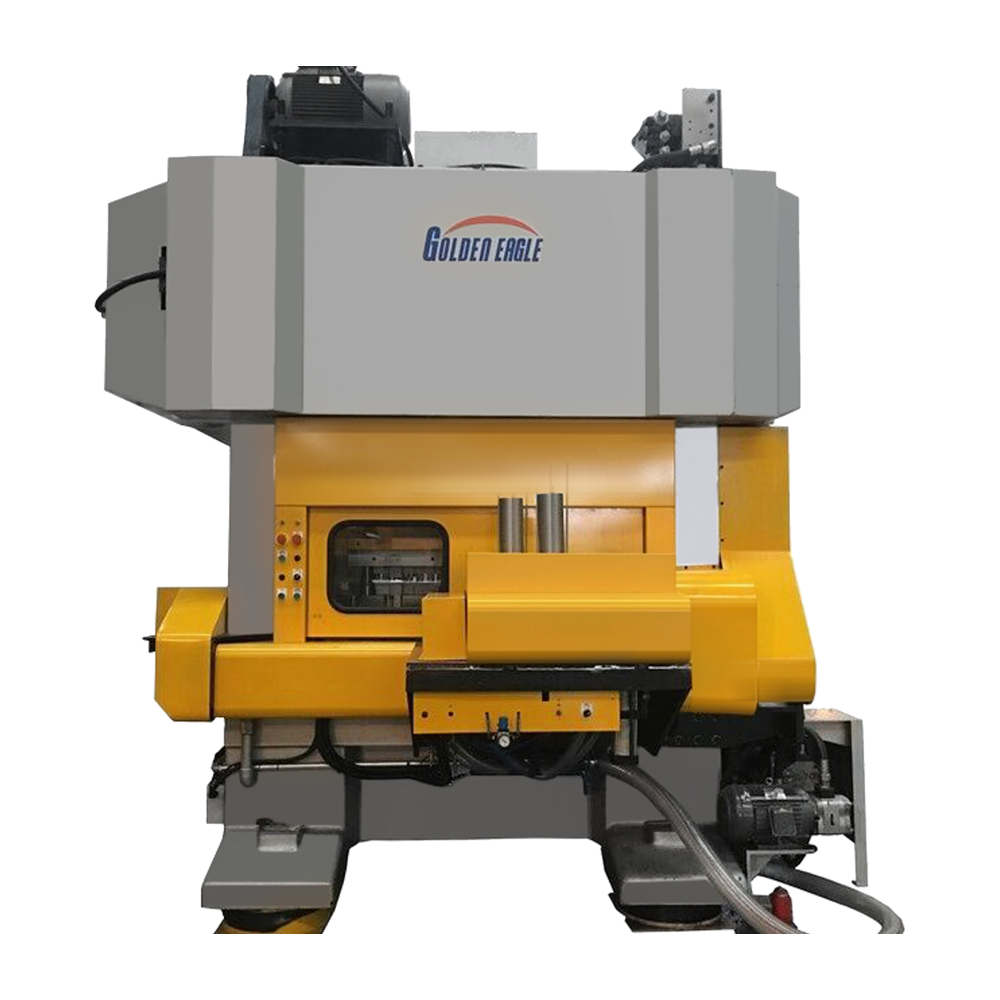
At the heart of the system is an O-frame press structure. Compared with lighter or less rigid frame designs, an O-frame configuration provides strong structural support around the pressing area, helping to maintain alignment during repeated high-load operation. This is especially important when producing caps that require accurate forming depth, uniform edge quality, precise panel geometry, and stable dimensions across long production runs. A stable press frame helps reduce deflection, protects the tooling, and supports repeatable product quality.
The model family includes configurations such as CNC-C2L, CNC-C2H, CNC-C1B-L, CNC-C1H-2, CNC-CVI-L, CNC-C3, CNC-CVI-H, and CNC-C9. These configurations are designed to provide different combinations of working pressure, stroke distance, die capacity, lift depth, shut height, power, total weight, and machine dimensions. This model variety allows manufacturers to choose the equipment that best fits their desired cap size, production speed, factory space, and budget planning.
The line is built for automatic operation. This is a major advantage for modern packaging plants because automatic operation improves production continuity, reduces the chance of manual handling errors, and helps create a safer working environment. Automatic feeding and synchronized punching reduce the need for direct operator contact with moving press components. When properly installed, commissioned, and maintained, an automatic line can provide stable output across long shifts, supporting higher utilization of factory capacity.
Aerosol cans place demanding requirements on their cone and dome components. These parts must withstand internal pressure, support reliable crimping or seaming, and maintain dimensional accuracy for downstream filling and assembly processes. A poorly formed cone or dome can cause sealing defects, line stoppages, material waste, and quality complaints. Therefore, the cap production line used for aerosol applications must offer both robust forming capability and consistent accuracy.
The Tin Can Cap Production Line is categorized under aerosol cone and dome making because it is able to support precision metal component forming for these applications. However, its practical use can extend to related tin can cap and metal lid production tasks, depending on tooling and configuration. Since the can size is available as various tailor-made options, customers can work with the manufacturer to develop the most suitable press and die solution for their cap geometry.
In aerosol packaging, production volume can vary widely. Some factories focus on specialty products and require moderate-speed lines with excellent flexibility, while large-volume producers need high-capacity systems capable of continuous output. This equipment family addresses both ends of the production spectrum by offering functional capacities ranging from approximately 80 to 100 caps per minute with one die, 160 to 200 caps per minute with two dies, 240 to 300 caps per minute with three dies, and up to 400 to 500 caps per minute with five dies, depending on the selected model and product conditions.
This flexibility gives producers an important commercial advantage. Instead of purchasing a single standard machine that may be too small for future growth or too large for current needs, customers can select a configuration that matches their present orders and future development plans. The availability of different die arrangements also makes it easier to plan capacity increases without changing the entire production philosophy.
The production line is designed around several important technical principles: rigidity, precision, automation, adaptability, and productivity. Each of these factors contributes to the final performance of the machine in industrial production.
Rigidity is delivered by the O-frame press structure. During high-speed punching and forming, the press must resist deformation and maintain the correct relationship between the ram, die, and worktable. A rigid frame helps maintain forming quality and reduces the risk of uneven wear on the tooling.
Precision comes from careful mechanical design, accurate machining, controlled assembly, and reliable adjustment mechanisms. The maximum shut height and shut height adjustment range allow the machine to be set according to die requirements. Proper shut height control is essential for achieving stable forming depth and avoiding excessive die stress.
Automation is reflected in the line’s automatic operation and coordinated feeding process. Automatic systems help reduce manual intervention and improve production rhythm. For cap manufacturing, a stable production rhythm is vital because inconsistent feeding can cause misalignment, material waste, or die damage.
Adaptability is provided through tailor-made can size support and multiple model choices. The line can be configured for various cap sizes and production layouts. This allows customers to meet specific packaging designs, whether for aerosol components, metal caps, or other tinplate products.
Productivity is supported by high-speed press operation and multi-die configurations. The maximum stroke time can reach 150 strokes per minute in selected configurations, while the effective cap output depends on the number of dies and product dimensions. This means the line can be used for both precision-focused and volume-focused manufacturing strategies.
| Item | CNC-C2L | CNC-C2H | CNC-C1B-L | CNC-C1H-2 | CNC-CVI-L | CNC-C3 | CNC-CVI-H | CNC-C9 |
| Working Pressure | 450 KN | 450 KN | 900 KN | 900 KN | 120 KN | 120 KN | 120 KN | 160 KN |
| Ram Stroke Distance | 140 mm | 190 mm | 140 mm | 190 mm | 150 mm | 190 mm | 150 mm | 190 mm |
| Maximum Stroke Time | 150 spm for suitable cap sizes | 100 spm | 150 spm for suitable cap sizes | 100 spm | 150 spm for suitable cap sizes | 100 spm | 150 spm for suitable cap sizes | 100 spm |
| Punch Die Number | 1 die | Up to 2 dies | Up to 3 dies | Up to 5 dies | Configurable | Configurable | Configurable | Configurable |
| Maximum Lift Depth | 35 mm | 55 mm | 35 mm | 55 mm | 35 mm | 55 mm | 35 mm | 55 mm |
| Maximum Shut Height | 485 mm | 466 mm | 485 mm | 466 mm | 505 mm | 466 mm | 505 mm | 466 mm |
| Maximum Sheet Size | 1150 x 1150 mm | 1150 x 1150 mm | 1150 x 1150 mm | 1150 x 1150 mm | 1150 x 1150 mm | 1150 x 1150 mm | 1150 x 1150 mm | 1150 x 1150 mm |
| Main Power | 7.5 kW | 7.5 kW | 11 kW | 11 kW | 15 kW | 18.5 kW | 15 kW | 22 kW |
| Typical Output Function | 80 to 100 cpm at 1 die | 160 to 200 cpm at 2 dies | 240 to 300 cpm at 3 dies | 400 to 500 cpm at 5 dies | Application dependent | Application dependent | Application dependent | Application dependent |
The specification range shows that the production line is not a single-purpose press but a configurable cap manufacturing platform. Customers can compare their production requirements with model features and select the best technical solution. For example, a producer focusing on moderate-volume precision caps may choose a one-die or two-die arrangement, while a high-volume aerosol component manufacturer may prefer a multi-die configuration for stronger output capacity.
One of the strongest advantages of this cap production line is the combination of speed and forming stability. Some competing machines may offer high theoretical output but lose accuracy or reliability during long continuous operation. Others may provide stable quality but remain limited in output capacity. This line is engineered to balance both requirements by using a strong O-frame press, automatic operation, and model options that support different die quantities.
Another advantage is customization. Many standard machines in the market are designed around fixed product dimensions, which can limit a manufacturer’s ability to respond to new packaging requests. The Tin Can Cap Production Line supports various tailor-made can sizes, allowing users to adapt to different cap designs. This is particularly important in metal packaging, where customer requirements may vary by region, product category, filling process, and brand design.
The equipment also offers a practical upgrade path. A manufacturer does not need to jump immediately into the highest-output solution. The model family includes lower, medium, and higher-output configurations. This makes it easier for customers to match investment scale with actual production demand. As orders increase, the customer can plan additional lines or more advanced configurations based on the same general production concept.
Durability is another competitive strength. In cap production, the press must perform thousands or millions of strokes over extended service periods. If the frame, ram, bearings, adjustment systems, or die area are not sufficiently robust, accuracy will decline and maintenance costs will rise. A strong press design and high-quality manufacturing process help extend machine service life and reduce unexpected downtime.
Compared with manual or semi-automatic cap forming, automatic production offers a major labor-saving advantage. It reduces dependence on operator skill for each individual piece, improves consistency, and supports safer production management. This is valuable in regions where labor cost is increasing or where skilled press operators are difficult to recruit.
Compared with low-cost machines that may rely on simpler construction, this line emphasizes industrial reliability, technical service, and long-term production value. The initial investment in a well-built line can be offset by reduced scrap, fewer production interruptions, improved product quality, and better customer satisfaction.
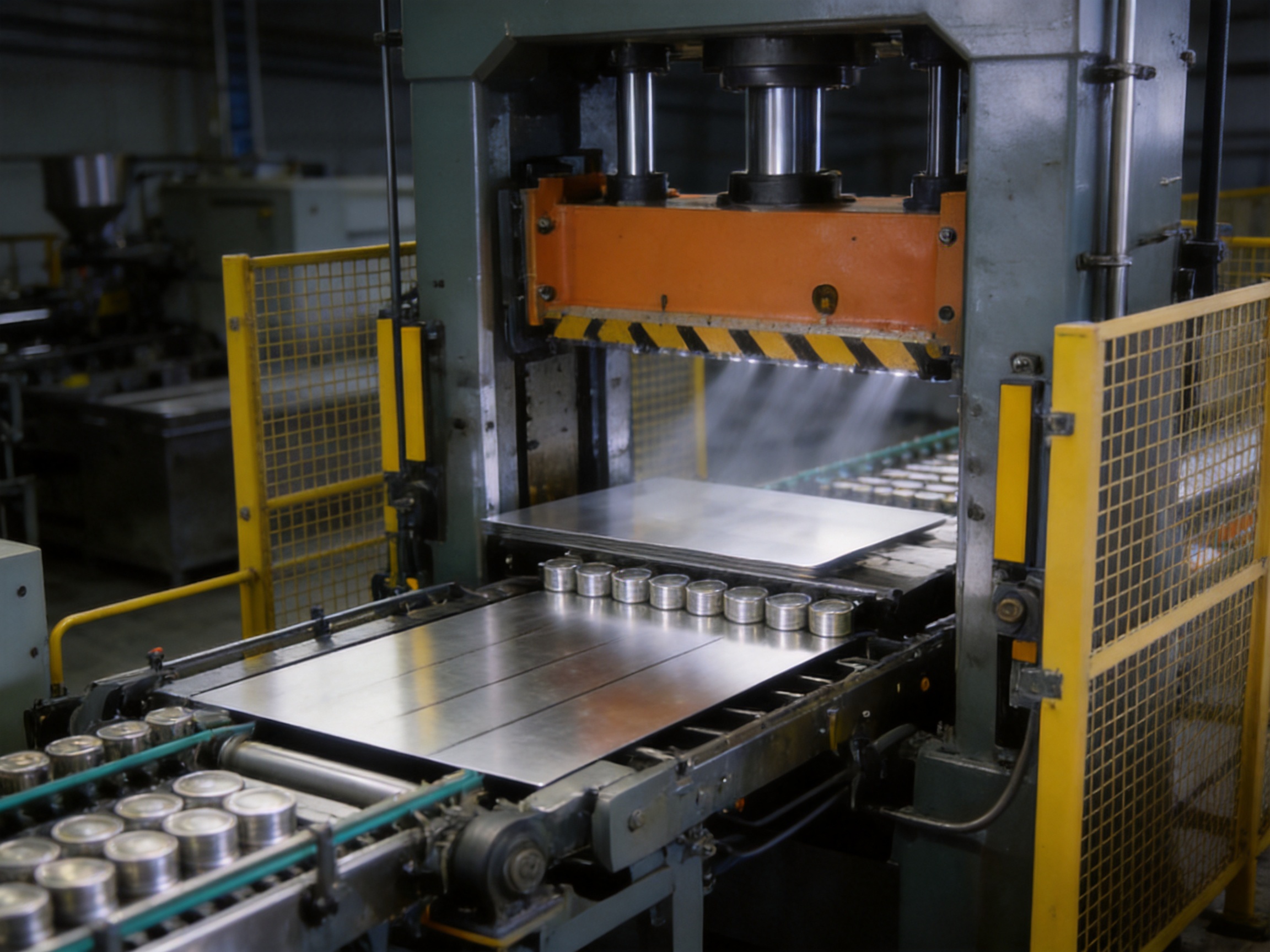
A high-performance cap production line depends not only on design drawings but also on the manufacturing capability of the company that builds it. Zhejiang Golden Eagle Food Machinery Co., Ltd. has been engaged in can-making machinery and can-making mold manufacturing since 1978. With more than four decades of experience, the company has developed a broad understanding of metal packaging processes, customer production needs, tooling behavior, and industrial equipment reliability.
The company’s manufacturing foundation includes advanced CNC high-precision machining equipment and complete mechanical machining facilities. Precision machining is essential for press components because any deviation in flatness, parallelism, concentricity, or alignment can affect forming accuracy. By using CNC machining processes, the company can control key dimensions and improve the consistency of critical machine parts.
The company also has a team of more than 350 trained personnel, including experienced design and development engineers. This engineering capability supports product customization, technical communication, mold development, mechanical optimization, and after-sales support. For cap production, engineering knowledge is especially important because the machine and die must work together as a complete system. Even a strong press cannot produce excellent caps if the tooling, feeding, and adjustment systems are not properly matched.
The company has produced more than 10,000 pieces of can and can lid equipment. This production history gives it practical experience across many customer conditions, material types, can structures, and production environments. Equipment used in real factories must withstand variations in tinplate quality, operator habits, maintenance discipline, ambient temperature, factory layout, and production schedule. Long-term field experience helps improve design details that may not be obvious in theory alone.
The company is certified to ISO9001 quality management and ISO14001 environmental management systems. These certifications indicate that quality control and environmental management are integrated into the company’s operations. For customers purchasing capital equipment, a certified management system provides additional confidence that production, inspection, documentation, and continuous improvement are controlled through established procedures.
The production of a cap making line begins with engineering analysis. Customer requirements such as cap size, output target, material specification, factory layout, tooling needs, and downstream processes must be understood before the final configuration is determined. This requirement analysis helps avoid mismatches between machine capability and production demand.
After technical confirmation, mechanical design and process planning are carried out. Important elements include press force selection, stroke distance, ram guidance, die space, sheet feeding method, power arrangement, safety protection, operating controls, maintenance access, and overall line dimensions. The objective is to build a machine that is not only powerful but also practical for daily operation.
Precision machining is then used to manufacture key structural and moving components. CNC processing helps ensure that surfaces, holes, mounting areas, and connection points are produced within controlled tolerances. Accurate machining supports stable assembly and reduces the need for excessive correction during installation.
Assembly quality is a decisive factor. Even well-machined components must be installed with proper alignment, secure fastening, accurate adjustment, and careful inspection. The press ram, die mounting area, feeding mechanism, drive components, and control elements must work together smoothly. During assembly, technicians check movement accuracy, lubrication points, safety systems, and operating stability.
Testing and commissioning are important stages before delivery. The machine must be operated to verify stroke performance, feeding coordination, press stability, control response, and functional output. For customized cap production, tooling trials may be arranged to confirm forming results. This process helps identify and solve possible issues before the line reaches the customer’s factory.
Quality control continues after installation. The company provides after-sales service including installation, commissioning, technical guidance, operation training, and spare parts support. This service capability is crucial because a cap production line is a long-term industrial asset. Proper installation and operator training help customers achieve stable production more quickly and reduce the risk of misuse.
The O-frame press structure is one of the most important technical features of this production line. In metal forming, pressing force creates stress throughout the machine frame. If the frame is not rigid enough, it may deflect slightly under load. Even small deflections can affect cap dimensions, forming depth, edge quality, and die life. An O-frame design surrounds the working area and distributes force more evenly, helping maintain stability under repeated press cycles.
For cap manufacturing, consistent forming pressure is especially important. A cap must meet dimensional requirements so it can be used in later assembly or sealing processes. If the cap is too shallow, too deep, uneven, or distorted, it may not perform correctly. The O-frame structure helps ensure that the ram approaches the die in a stable and repeatable manner.
The press structure also contributes to tooling protection. Dies are among the most valuable consumable assets in cap production. If a press has poor alignment, the die may wear unevenly or be damaged. A rigid and accurate press helps extend tooling life, reduce maintenance frequency, and lower production cost per cap.
In high-speed operation, stability becomes even more important. A machine running at 100 to 150 strokes per minute experiences repeated dynamic loads. Structural vibration, poor balance, or insufficient rigidity can create quality problems and reduce operator confidence. The O-frame design supports smoother operation and improved production reliability.
The line can be configured with different numbers of punch dies, making it possible to adjust output capacity according to actual needs. A single-die configuration can be suitable for lower-volume production, specialty caps, trial production, or factories prioritizing flexibility. With one die, typical output can reach approximately 80 to 100 caps per minute depending on product conditions.
A two-die configuration can significantly increase output, typically reaching approximately 160 to 200 caps per minute. This option is suitable for manufacturers with stable demand but moderate production volume. It provides a practical balance between investment, output, and operation complexity.
A three-die configuration can support approximately 240 to 300 caps per minute. This is a strong option for factories that need higher throughput but still require manageable tooling and maintenance arrangements. It can help reduce unit production cost by increasing output per press cycle.
A five-die configuration can reach approximately 400 to 500 caps per minute under suitable conditions. This high-output arrangement is designed for large-scale producers that need to fulfill major orders and maintain strong production efficiency. For high-volume aerosol cone and dome manufacturing, this level of output can be a major competitive advantage.
Die configuration should be selected based on product size, material thickness, forming complexity, quality requirements, and planned production volume. The ability to choose from multiple die arrangements makes the line more adaptable than machines with fixed output designs.
The maximum sheet size of 1150 x 1150 mm provides useful flexibility for cap production planning. Larger sheet compatibility allows manufacturers to optimize material usage, reduce handling frequency, and improve feeding efficiency. In metal packaging production, sheet utilization is an important cost factor because tinplate and other metal sheets represent a significant portion of product cost.
Accurate sheet feeding is essential for maintaining cap quality and reducing scrap. If the sheet is not positioned correctly, the punched caps may be misaligned, leading to waste or potential die damage. An automatic feeding system helps maintain consistent positioning and smooth production rhythm.
For manufacturers working with different cap sizes, sheet layout optimization can further improve material economy. The machine’s tailor-made capability allows tooling and feeding arrangements to be coordinated with the chosen cap design. This helps customers achieve better material yield and more predictable production cost.
In addition to sheet size, material characteristics must be considered. Tinplate thickness, hardness, coating type, surface finish, and lubrication condition can influence forming behavior. Experienced machine and mold engineering support helps customers select proper tooling parameters and production settings for their materials.
The machine models have main power values ranging from 7.5 kW to 22 kW, depending on configuration. Total power and machine weight also vary according to model size and output capability. Selecting the correct power configuration is important because underpowered equipment may struggle with demanding forming tasks, while oversized equipment may not be economically necessary for smaller production volumes.
Production efficiency should not be measured only by maximum speed. True efficiency includes stable output, low scrap rate, reduced downtime, easy maintenance, quick adjustment, and long tooling life. A machine that runs slightly slower but produces consistently acceptable caps may outperform a faster machine that frequently stops for correction.
This cap production line is designed to support practical efficiency. Its automatic operation reduces manual delays, while model selection allows customers to match equipment capacity with real demand. The O-frame press structure supports stable forming, and the company’s manufacturing experience helps improve reliability.
Energy efficiency is also related to production planning. A machine running at a suitable load with stable feeding and minimal stoppage uses energy more effectively than a poorly matched line. By selecting the correct model and maintaining it properly, customers can improve output per unit of energy consumed.
The value of a cap production line depends greatly on proper installation and commissioning. Even a well-designed machine may not perform correctly if it is not leveled, connected, adjusted, and tested according to technical requirements. The company provides installation and commissioning services to help customers bring the equipment into operation efficiently.
During installation, technicians check foundation conditions, machine positioning, electrical connections, mechanical alignment, safety devices, lubrication systems, and control functions. Once the line is installed, commissioning verifies that the machine can operate according to the expected performance range. Trial production may be used to confirm cap quality and feeding stability.
Operator training is another important service. Operators need to understand machine startup, shutdown, adjustment, safety procedures, routine inspection, lubrication, troubleshooting, and basic maintenance. Proper training reduces the risk of incorrect operation and helps factories achieve stable production faster.
Technical guidance also supports maintenance teams. Maintenance personnel should understand wear points, adjustment areas, lubrication schedules, spare part replacement, and inspection routines. A clear maintenance program can prevent minor issues from becoming major failures.
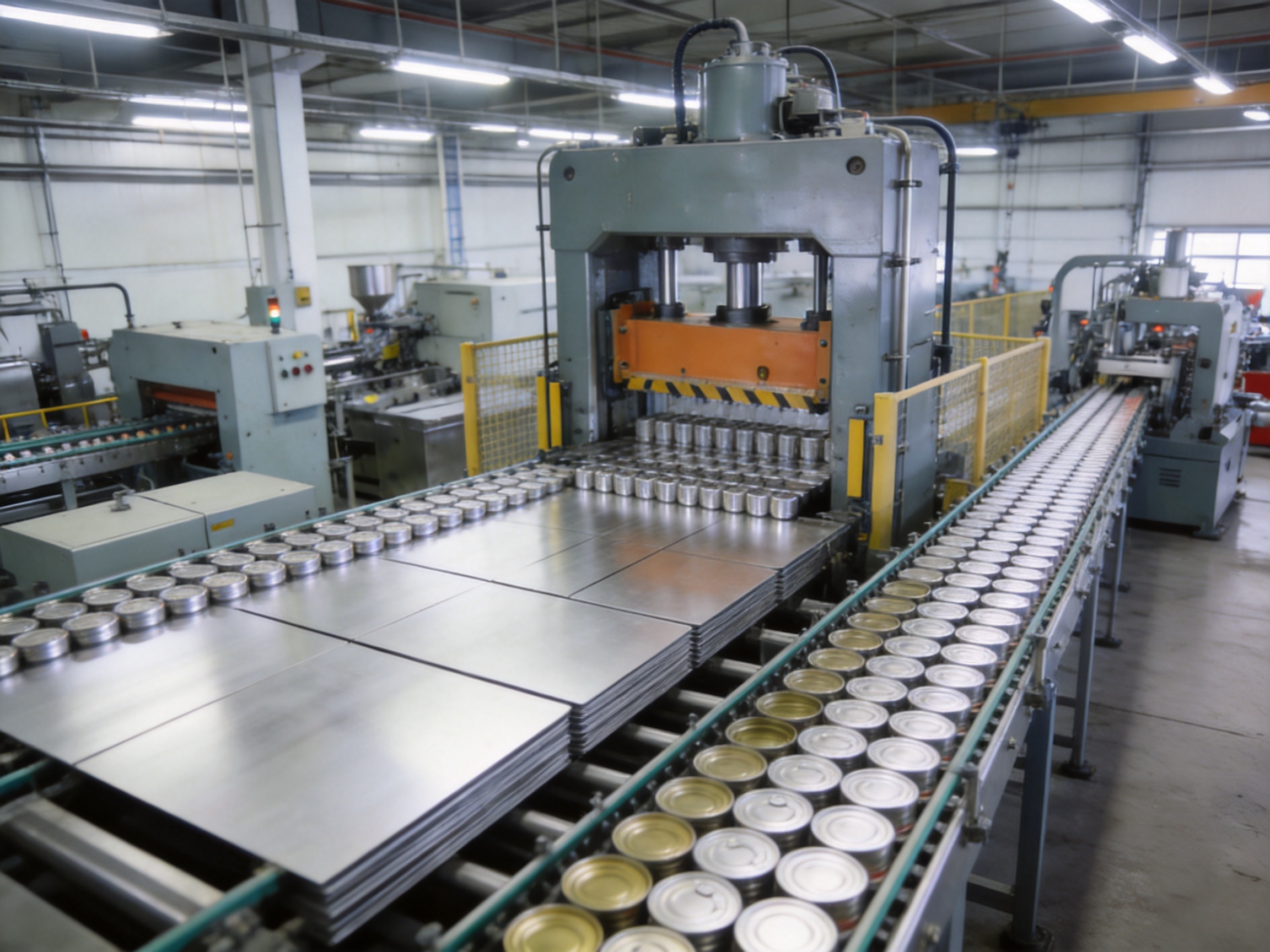
In industrial metal packaging, equipment reliability directly affects delivery schedules and customer trust. A cap production line that stops unexpectedly can delay downstream assembly, filling, and shipping. Therefore, long-term reliability is one of the most important purchasing considerations.
This production line is designed with durability in mind. The strong press structure, quality machining, controlled assembly, and practical engineering experience contribute to stable operation. The availability of spare parts support further improves long-term service value.
Preventive maintenance should include regular inspection of moving components, lubrication points, electrical systems, feeding mechanisms, fasteners, safety systems, and tooling condition. Operators should monitor unusual noise, vibration, temperature, cap defects, feeding errors, and stroke irregularities. Early detection of problems can prevent costly downtime.
Tooling maintenance is also essential. Dies should be cleaned, inspected, sharpened or repaired when necessary, and stored correctly. Proper die care improves cap quality and extends die life. Because the company has experience in both can-making machinery and molds, it can support customers in understanding the relationship between machine condition and tooling performance.
The equipment is suitable for a wide range of markets, including food packaging, beverage packaging, aerosol packaging, chemical container production, and general tinplate component manufacturing. Metal packaging continues to be valued for its durability, recyclability, barrier performance, and premium appearance. As global demand for safe and reliable packaging grows, efficient cap production equipment becomes increasingly important.
Zhejiang Golden Eagle Food Machinery Co., Ltd. has exported products to many regions, including Europe, Asia, Africa, North America, South America, and Oceania. Export experience is important because international customers often require different voltage configurations, safety expectations, documentation formats, production standards, and service communication. A company with global experience is better prepared to support diverse customer needs.
The production line can help manufacturers improve competitiveness in both domestic and export markets. By producing caps with stable dimensions and reliable quality, factories can meet stricter customer requirements and reduce complaints. By increasing output capacity, they can accept larger orders and improve delivery speed. By adopting automatic production, they can reduce labor intensity and improve production management.
Purchasing a tin can cap production line is not only a machinery decision; it is a strategic investment in manufacturing capability. A good line can influence product quality, labor structure, production cost, customer confidence, and future business growth. The right equipment allows a factory to respond quickly to market demand, improve standardization, and expand into higher-value packaging segments.
This production line offers several strategic benefits. First, it improves production capacity through high-speed automatic pressing. Second, it supports product flexibility through tailor-made size capability. Third, it provides stable forming quality through O-frame press technology. Fourth, it offers multiple model options, allowing investment to be matched with production goals. Fifth, it is backed by an experienced manufacturer with strong machining, engineering, and service capabilities.
For manufacturers currently using manual or low-speed equipment, upgrading to an automatic cap production line can significantly improve workflow. It can reduce bottlenecks, improve consistency, and make factory management more predictable. For established high-volume producers, adding a high-capacity line can improve order fulfillment and reduce dependence on older equipment.
The line is also valuable for companies that want to build a more integrated can-making operation. Since the manufacturer supplies related product series such as food can production lines, beverage can production lines, can lid production lines, chemical tank production lines, aerosol canister production lines, two-piece can production lines, and pop can production lines, customers can develop broader equipment solutions with coordinated technical support.
The finished cap is the final measure of machine performance. A well-made cap should show accurate dimensions, clean forming, stable depth, proper edge quality, and reliable compatibility with downstream operations. The production line supports these objectives through stable press motion, accurate die positioning, automatic feeding, and appropriate model selection.
Dimensional stability improves assembly performance. When caps are consistent, downstream machines can run more smoothly with fewer jams or rejects. This is especially important in automated can production plants, where one defective component can disrupt an entire line.
Surface quality is also important. Metal caps may be coated or printed, so forming must avoid unnecessary scratches, deformation, or surface damage. Proper tooling and controlled pressing help protect the material surface and maintain the appearance of the finished component.
Edge quality affects safety and sealing performance. Poor punching can create burrs or irregular edges, which may interfere with assembly or create handling risks. A well-adjusted press and maintained die system help produce cleaner edges and reduce post-processing problems.
The production line can be supplied with OEM or ODM support for customers requiring specific technical arrangements. Customization may include cap size adaptation, tooling design, line layout, feeding configuration, control preferences, safety requirements, and production capacity planning. This approach is valuable because metal packaging is rarely one-size-fits-all.
Before customization, customers should provide detailed product drawings, material information, target output, factory space conditions, and downstream process requirements. The engineering team can then recommend suitable press models, die quantities, and line arrangements. Clear communication during the early stage reduces the risk of later modification and helps ensure that the delivered system matches the intended production process.
Customization also helps customers differentiate their products. Unique cap designs may require special forming features, and the ability to develop suitable machinery and molds can support packaging innovation. Manufacturers that can offer customized cap solutions may gain an advantage over competitors limited to standard products.
Pressing equipment requires careful safety management. Automatic operation reduces direct manual handling, but operators must still follow proper procedures. Safety devices, guards, emergency stop systems, training, and maintenance discipline are essential. A well-designed production line should support safe operation by minimizing unnecessary contact with moving parts and providing clear control functions.
Production management should include standard operating procedures, inspection records, maintenance schedules, tooling logs, spare part planning, and operator training records. These practices help maintain consistent output and reduce the likelihood of accidents or quality problems.
Managers should also track production data such as output quantity, scrap rate, downtime reasons, maintenance time, and tooling life. This information can be used to improve efficiency and identify areas for improvement. When combined with a reliable machine, good management practices can produce excellent long-term results.
The main function is automatic punch pressing and forming of metal can caps, including components used in aerosol cone and dome making. It is designed to produce caps with stable dimensions, reliable quality, and efficient output.
The O-frame structure provides strong support around the working area, helping reduce frame deflection during pressing. This improves forming stability, protects tooling, and supports consistent cap quality during long production runs.
Depending on cap size, model, die configuration, and production conditions, the line can support output levels from approximately 80 to 500 caps per minute. Certain configurations can reach up to 150 strokes per minute.
Yes. The line supports various tailor-made can sizes. Customers can work with the manufacturer to configure the machine and tooling according to their cap drawings and production requirements.
The line is suitable for aerosol can component production, tin can cap manufacturing, metal lid production, food and beverage packaging components, and other tinplate or metal packaging applications.
It offers a strong combination of automatic operation, O-frame pressing stability, flexible die configurations, high-speed output options, tailor-made size support, and experienced manufacturing service. These advantages help reduce scrap, improve consistency, and support long-term production reliability.
Customers should consider cap size, material thickness, target output, required die quantity, factory space, power conditions, investment budget, and future production growth. The manufacturer can recommend a suitable configuration based on these details.
Yes. Service support can include installation, commissioning, technical guidance, operation training, and spare parts supply. These services help customers achieve stable production and maintain the equipment over time.
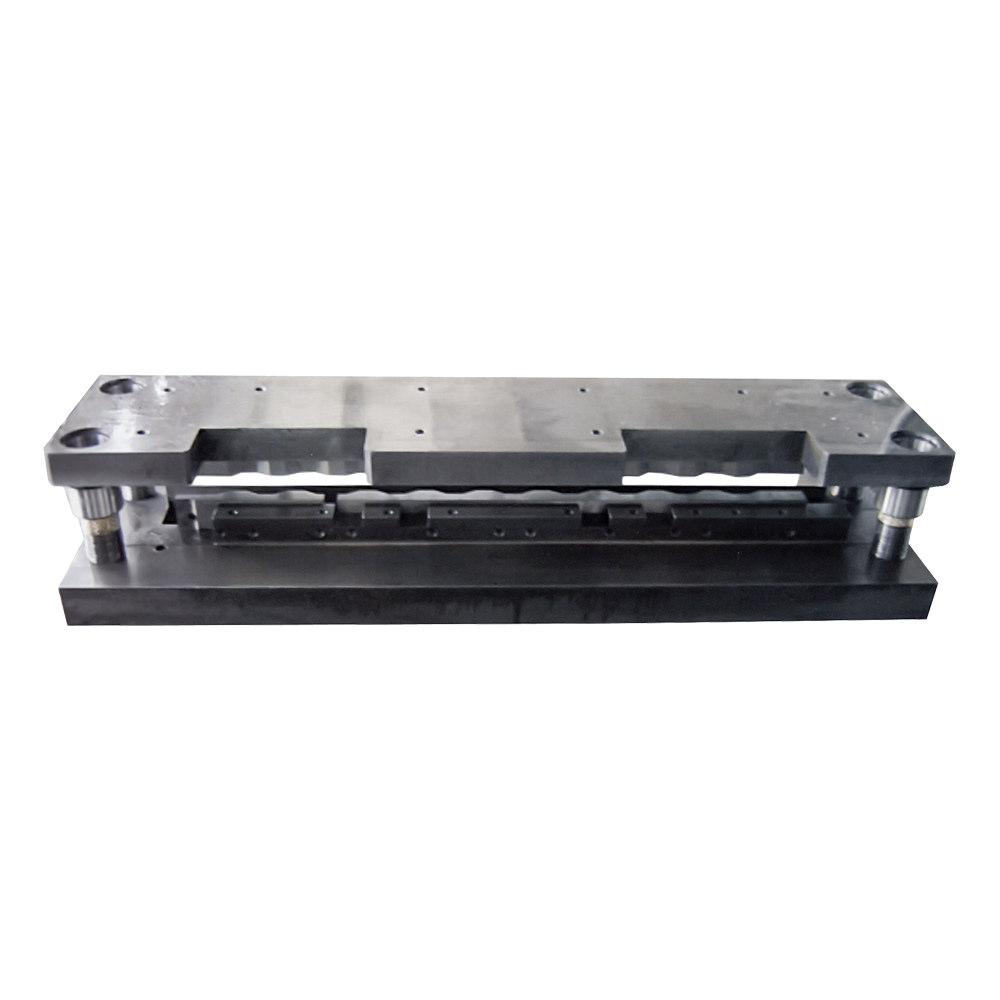
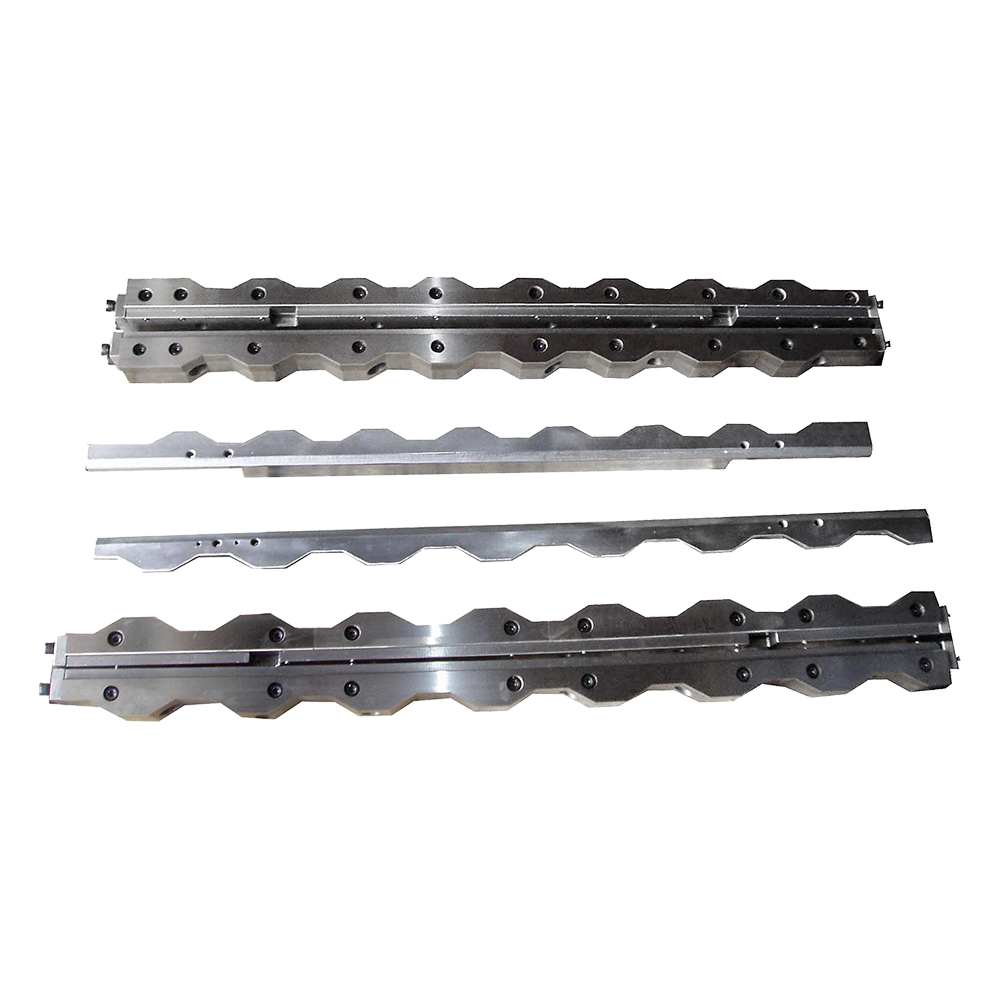
Tooling directly determines cap shape, edge quality, forming depth, and dimensional accuracy. A high-quality press must be matched with suitable dies to produce consistent caps and reduce maintenance problems.
Yes. Multi-die configurations can support high output, with suitable arrangements reaching approximately 400 to 500 caps per minute. This makes the line suitable for large-scale cap and aerosol component manufacturers.
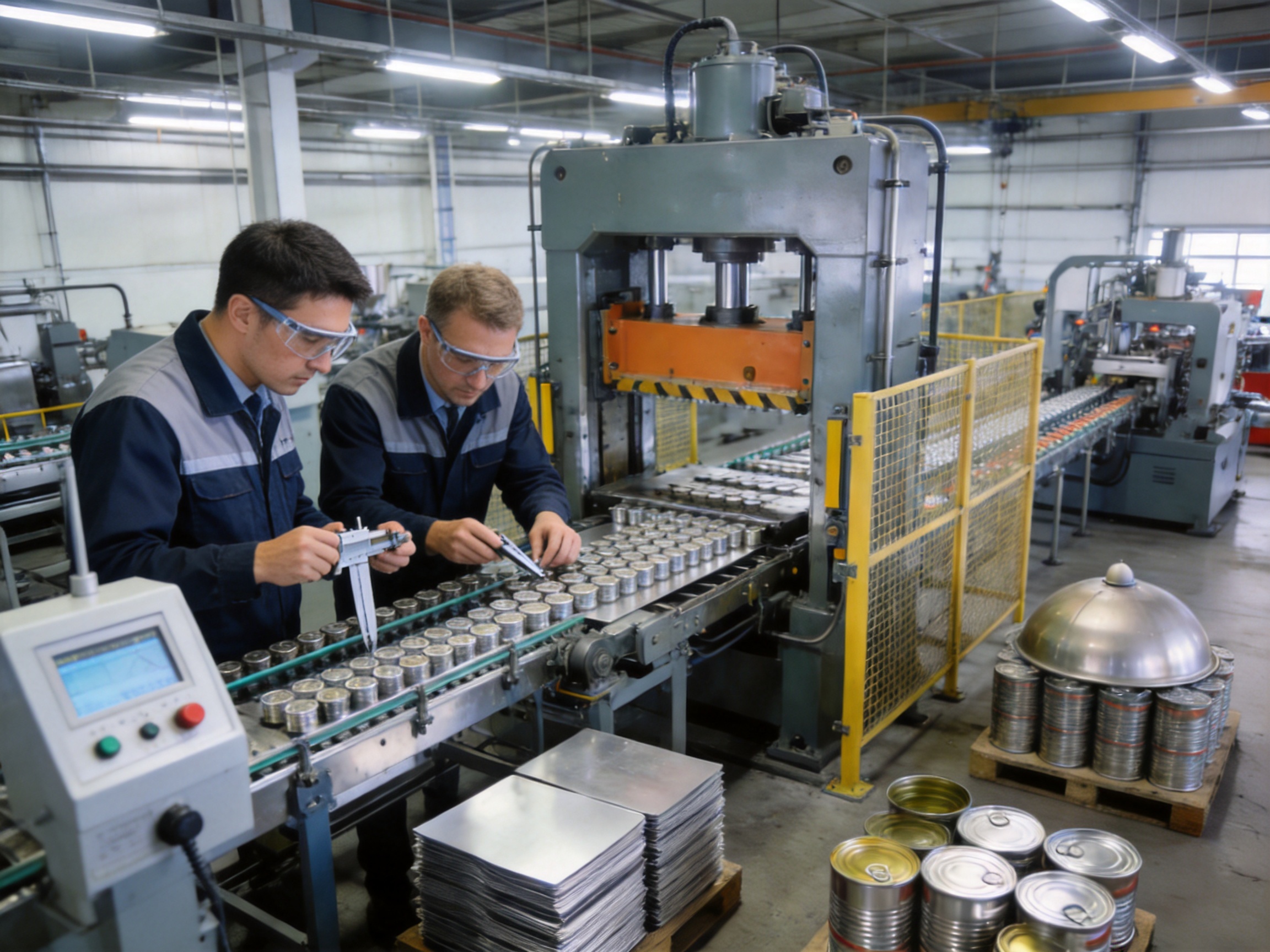
The Tin Can Cap Production Line is a high-value solution for manufacturers that need reliable, automatic, and flexible metal cap production. By combining O-frame press stability, automatic punch pressing, multiple model configurations, tailor-made can size capability, and high-speed output potential, it addresses the core needs of modern aerosol cone and dome making and related tinplate cap manufacturing.
Its advantages over ordinary competing equipment are clear: stronger forming stability, broader customization potential, scalable die configurations, improved production efficiency, and support from a manufacturer with decades of experience in can-making machinery and molds. The company’s advanced CNC machining capability, trained engineering team, ISO-certified management systems, and global export experience further strengthen the value of the production line.
For factories seeking to improve cap quality, reduce labor dependence, increase output, and build long-term competitiveness in metal packaging, this production line offers a practical and technically mature investment. Whether used for moderate production, specialized cap manufacturing, or high-volume aerosol component output, it provides the stability and flexibility required in today’s demanding packaging market.
1. Metal Packaging Manufacturers Association. Technical Principles of Metal Container Components and Closures.
2. Society of Manufacturing Engineers. Pressworking and Sheet Metal Forming Technology Handbook.
3. International Organization for Standardization. ISO9001 Quality Management Systems: Requirements and Application Guidance.
4. International Organization for Standardization. ISO14001 Environmental Management Systems: Requirements and Implementation Guidance.
5. Packaging Machinery Industry Technical Review. Automation Trends in Metal Packaging Component Manufacturing.
6. Industrial Press Engineering Manual. Mechanical Press Structures, Stroke Control, and Tooling Alignment.
Related Products

Founded in 1978, the company is one of the largest can-making machinery well-known companies at home and abroad.
Product Categories
Contact Information
Zhongshatou Shenjiamen Zhoushan Zhejiang China
+86-580-3056646

 English
 中文简体
中文简体
 русский
 عربى
عربى
 Español