2026-06-13
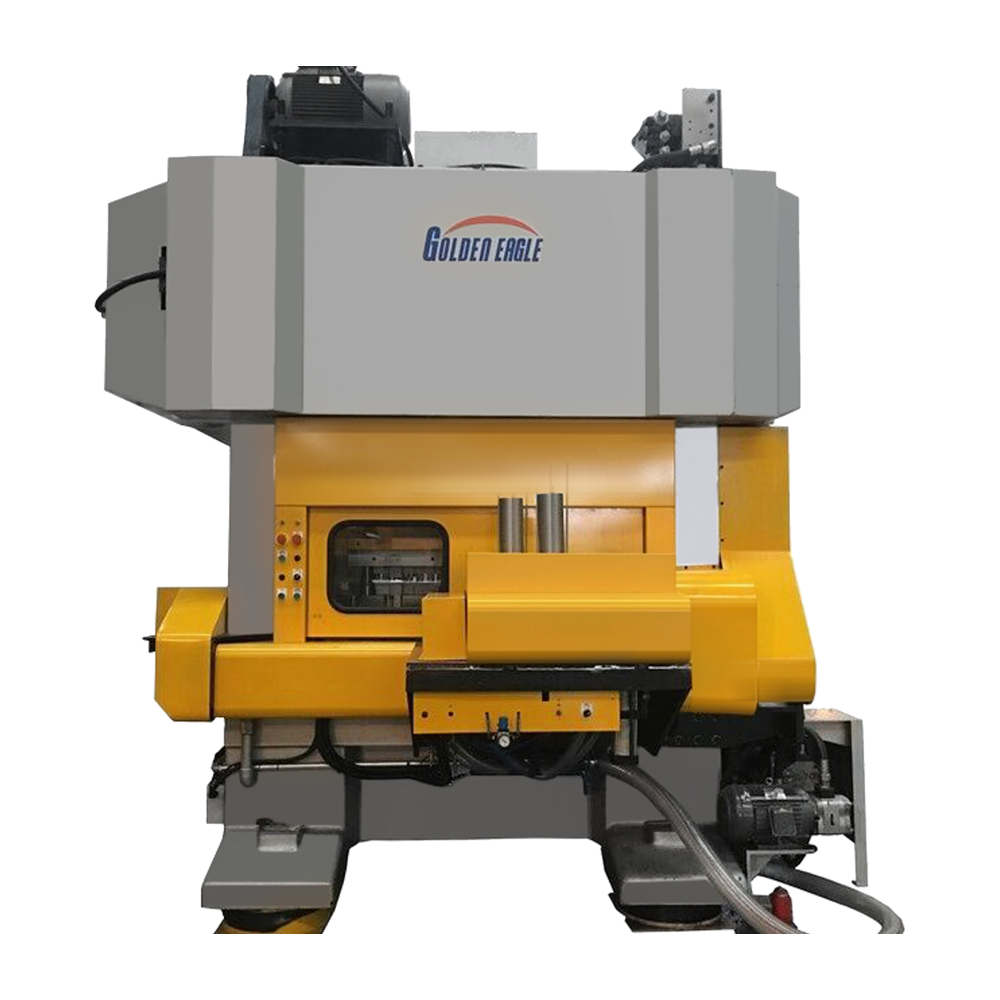
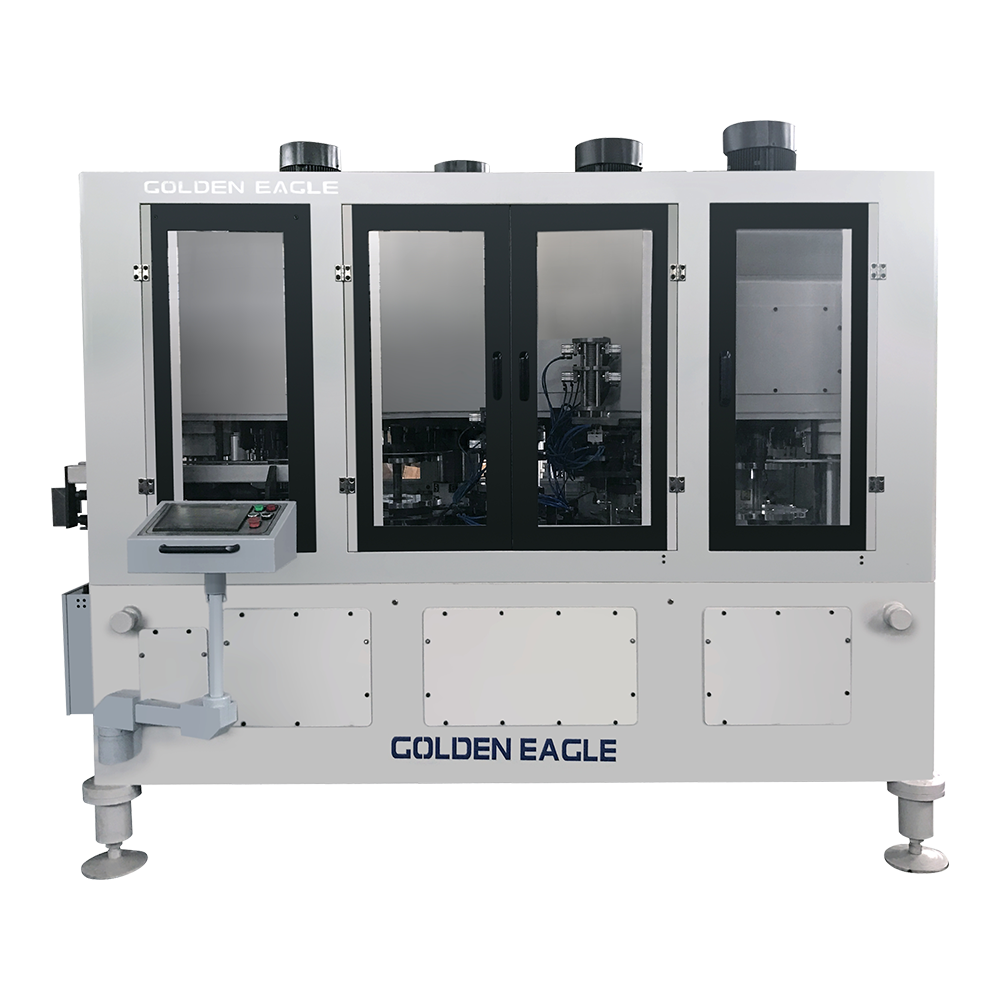
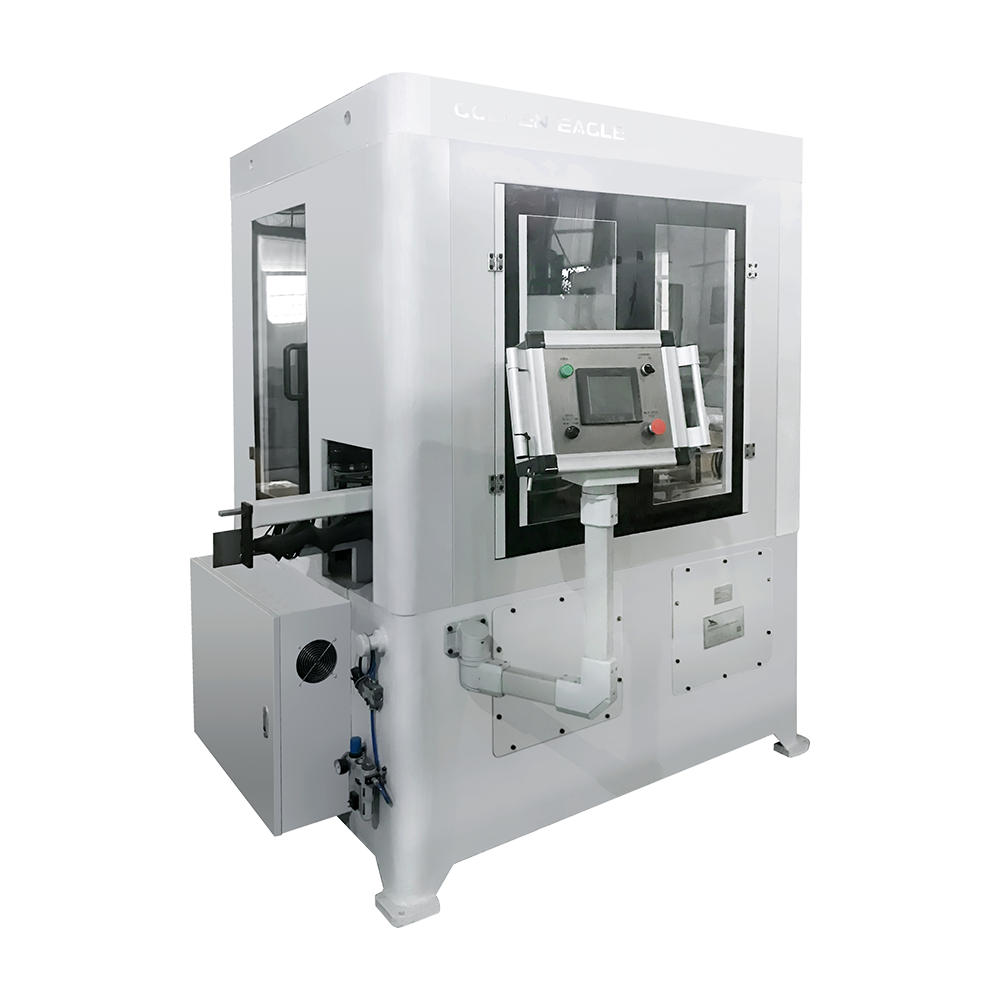
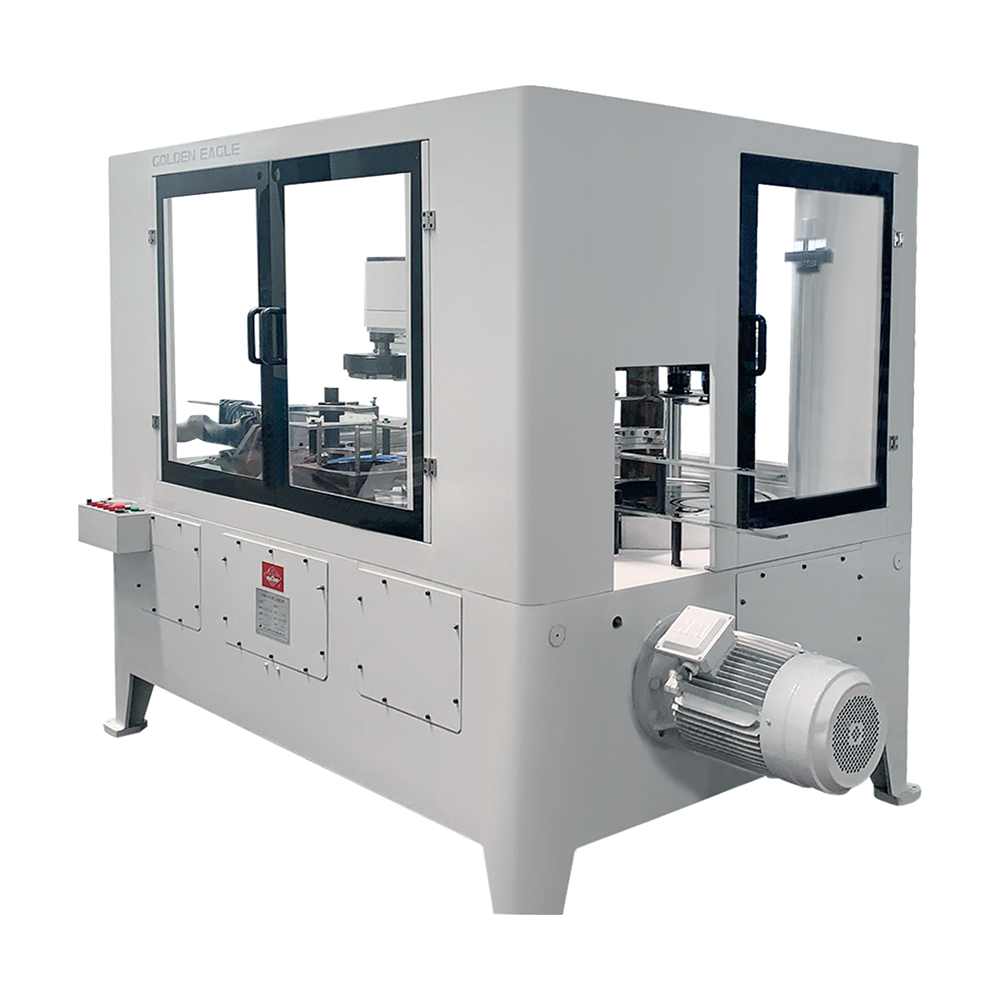
In modern metal packaging, the easy-open end has become one of the most important components for food, beverage, and consumer goods cans. It provides convenience, safety, clean opening performance, and reliable sealing strength, while also supporting high-volume production requirements. A conversion press designed for easy-open end manufacturing is therefore not simply a press machine; it is an integrated forming, scoring, riveting, tab-feeding, detecting, separating, and conveying system built to transform plain can ends into finished easy-open lids with consistent quality. The conversion press described here is engineered for high-speed production, multi-lane output, compact tab layout, excellent material utilization, and dependable process control.
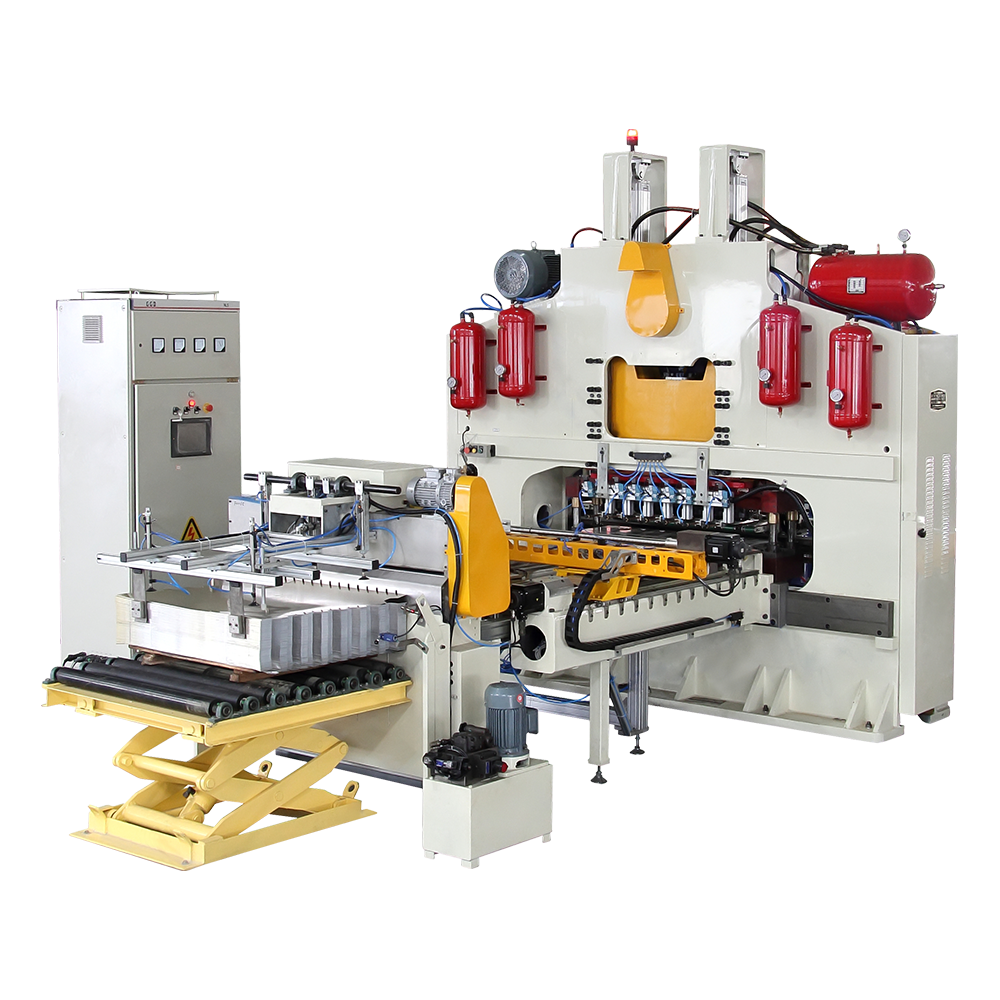
This conversion press is used in the EOE lids making process, where precision and stability are essential. It can be configured according to customer requirements with different press options, including well-known international or regional press platforms, and it can be equipped with two, three, or four lanes depending on production capacity needs. The system is designed to combine strong mechanical performance with advanced tooling, pneumatic and oil systems, vacuum assistance, automatic feeding, multi-layer safety detection, and electrical control. For can manufacturers and can lid producers seeking higher throughput, better consistency, and stronger operational safety, this conversion press offers a practical and competitive solution.
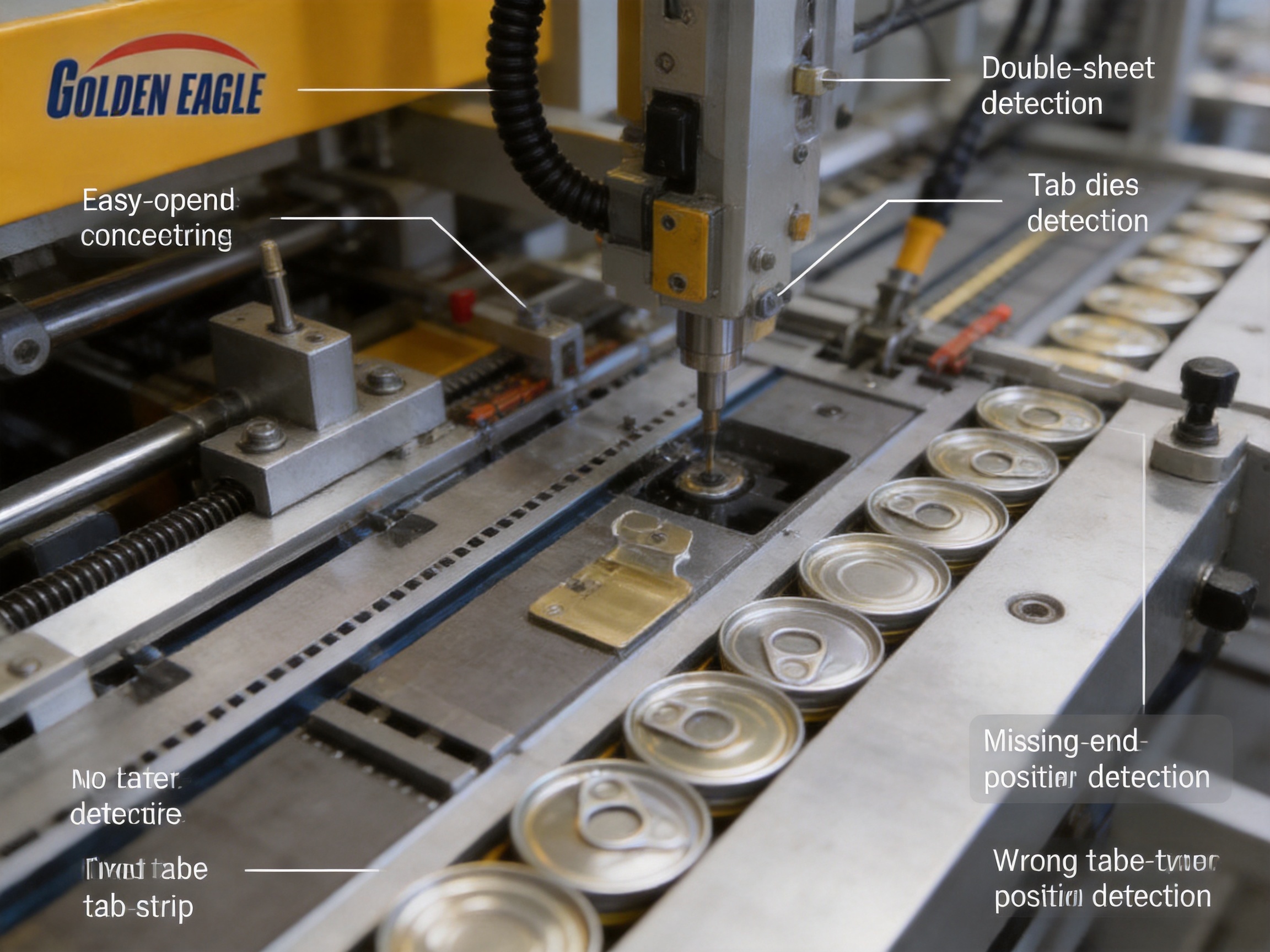
The value of a conversion press lies in its ability to maintain accurate motion at very high speed. The machine must repeatedly form precise features on thin metal ends, place tabs accurately, form rivets securely, create controlled score lines, and separate finished ends without damaging the coating, shape, or opening performance. Even a small error in tab position, double-sheet feeding, end detection, or scoring depth may result in product failure, leakage risk, consumer safety problems, or production downtime. For this reason, the conversion system integrates multiple detection and protection units, including double sheet detection, no ends detection, tab wrong position detection, no tab detection, and multiple safety protection devices.
The conversion press is a key machine in the production line for easy-open ends. It converts prepared can ends into easy-open ends by completing operations such as tab feeding, tab positioning, rivet forming, scoring, lane processing, separation, and discharge. It is designed for 2 to 4 lanes and can operate at 200 to 600 strokes per minute, depending on product specifications, tooling configuration, press selection, end diameter, material, and production conditions. With a tonnage range of 75 to 125 tons, it provides sufficient forming force for stable, high-speed conversion of tinplate, aluminum, or other suitable can end materials.
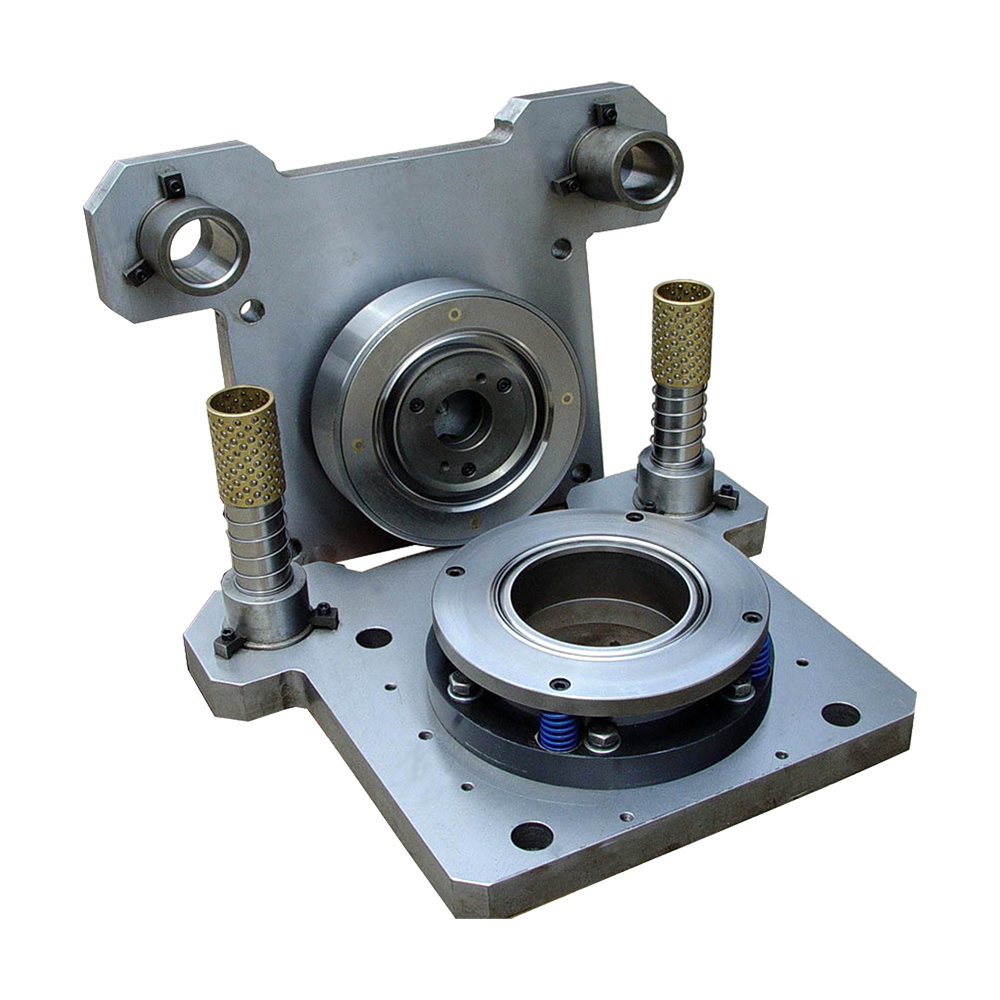
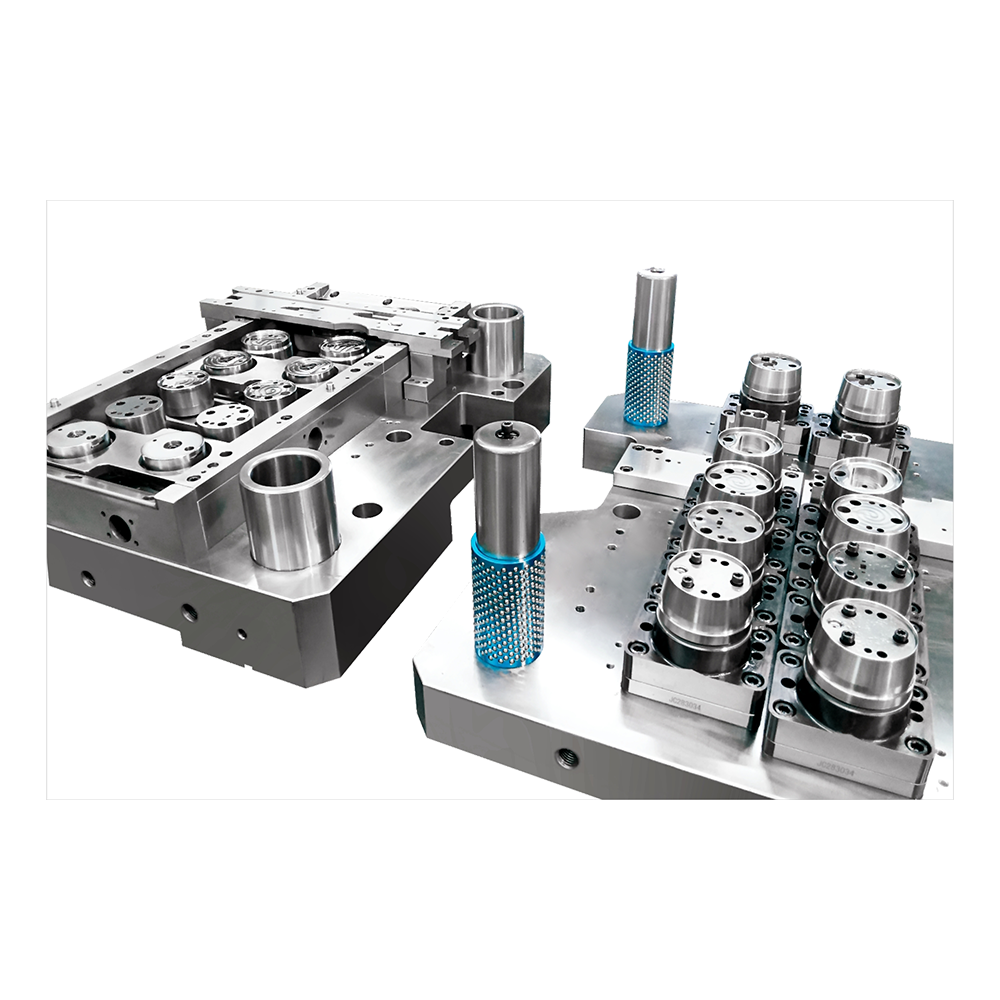
The system is not a single-purpose press alone; it is a complete conversion unit composed of tab dies, lane dies, end separators, related tooling, mechanical transmission units, oil and pneumatic systems, transmission division unit, tab material feeder, vacuum system, and electric control system. This integration is essential because easy-open end production requires synchronized motion among the press slide, tab strip feeding, end feeding, positioning, forming, and separation. Every sub-system must operate in coordination to achieve continuous high-speed production.
A major advantage of this conversion press is the compact tab layout. In easy-open end production, tab material cost is an important part of total manufacturing cost. A compact tab layout improves material usage, reduces scrap, and helps manufacturers achieve better cost control over long-term production. In high-volume factories, even a small improvement in material utilization can generate significant annual savings. Compared with less optimized systems that may waste more tab strip material or require less efficient nesting, the compact tab layout of this conversion press supports both sustainability and profitability.
Another practical advantage is flexible configuration. The press can be matched with different press brands and adapted to customer production requirements. Some factories prioritize ultra-high-speed performance; others prioritize lower initial investment, simplified maintenance, or compatibility with existing production lines. The ability to configure the system with two, three, or four lanes gives users a scalable solution. A producer can select two lanes for moderate output, three lanes for balanced capacity, or four lanes for high-volume manufacturing.
| Parameter Name | Specification |
| Tonnage | 75 to 125 tons |
| Stroke of Slide | 38.1 to 63.5 mm |
| Strokes per Minute | 200 to 600 spm |
| Number of Lanes | 2 to 4 lanes |
| Main Power | 38.5 to 46.5 kW |
| Net Weight | 20 to 30 tons |
These specifications show that the conversion press is designed for industrial production rather than small-batch manual operation. The tonnage range supports forming operations required for different easy-open end formats. The slide stroke range provides suitable motion for tooling actions such as scoring, rivet forming, tab attachment, and end conversion. The speed range of 200 to 600 strokes per minute allows the system to meet different production strategies, from stable medium-speed operation to high-speed mass manufacturing. The 2 to 4 lane design makes capacity planning more flexible.
The main power range of 38.5 to 46.5 kW reflects a system that balances productivity and energy consumption. Because a conversion press runs for long shifts in many factories, efficient power design matters. The net weight of 20 to 30 tons demonstrates the strong machine structure required to absorb dynamic forces, maintain alignment, and reduce vibration at high speed. A heavier and more rigid frame generally contributes to better stability, longer tool life, and more consistent product accuracy.
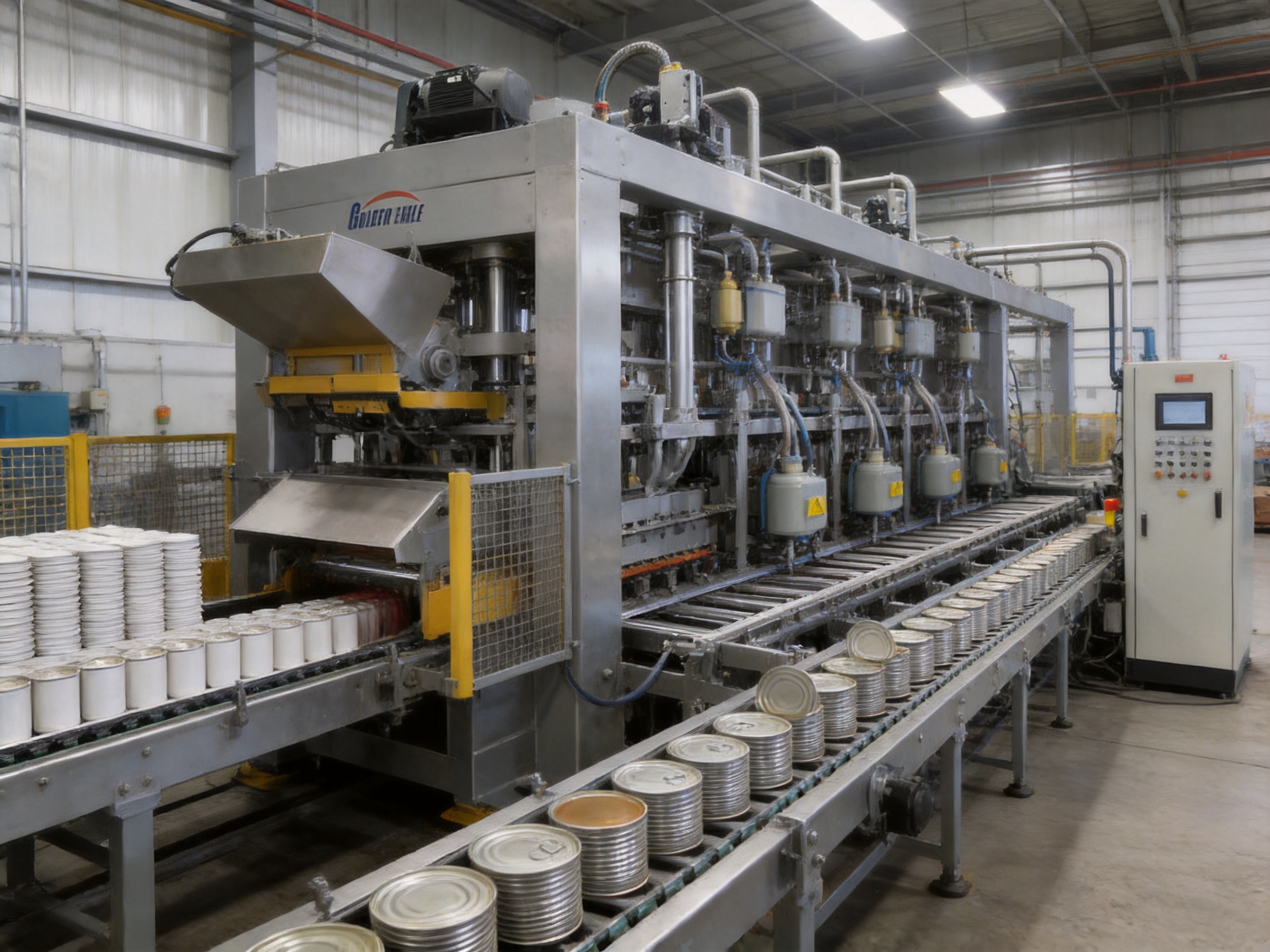
The conversion process begins with end feeding. Prepared can ends are delivered to the working area through a controlled feeding system. Accurate end feeding is essential because each end must arrive at the die position in the correct orientation and timing. If an end is missing, doubled, incorrectly positioned, or delayed, the press operation may produce scrap or damage tooling. For this reason, the system includes no ends detection and double sheet detection, reducing the risk of misoperation.
At the same time, tab material is fed from the tab material feeder. The tab material feeder supplies the metal strip used to produce the pull tabs. The compact tab layout allows tabs to be formed with high material efficiency. The tab strip must be advanced accurately in synchronization with the press stroke. Any mismatch can lead to incorrect tab geometry, wrong placement, or waste. A stable feeder system therefore supports both product quality and cost control.
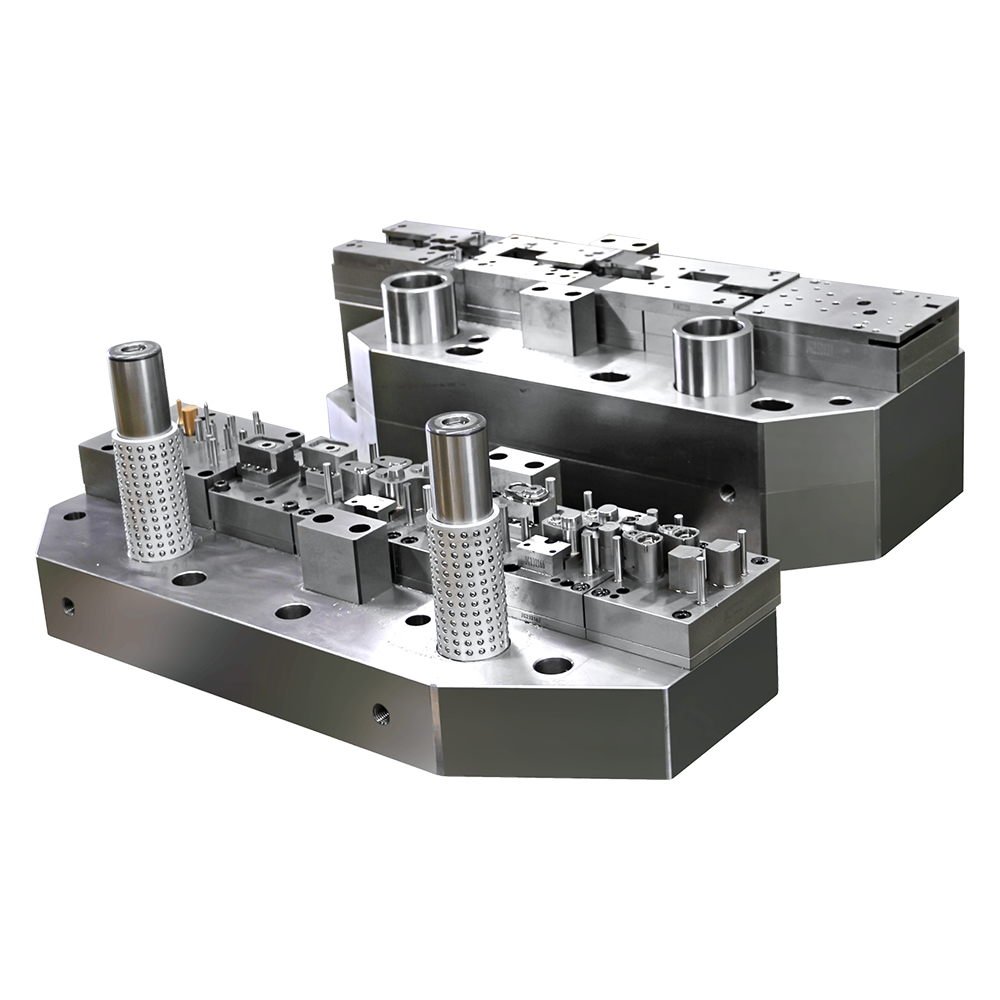
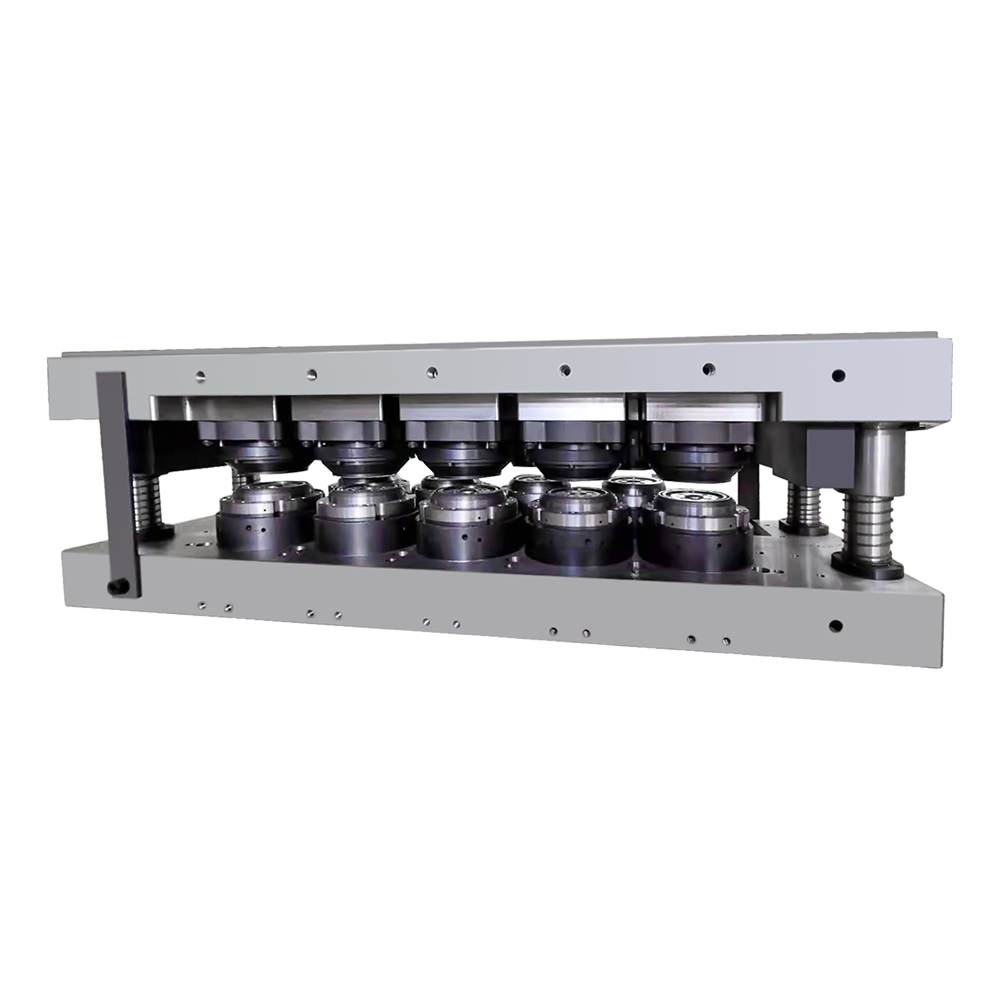
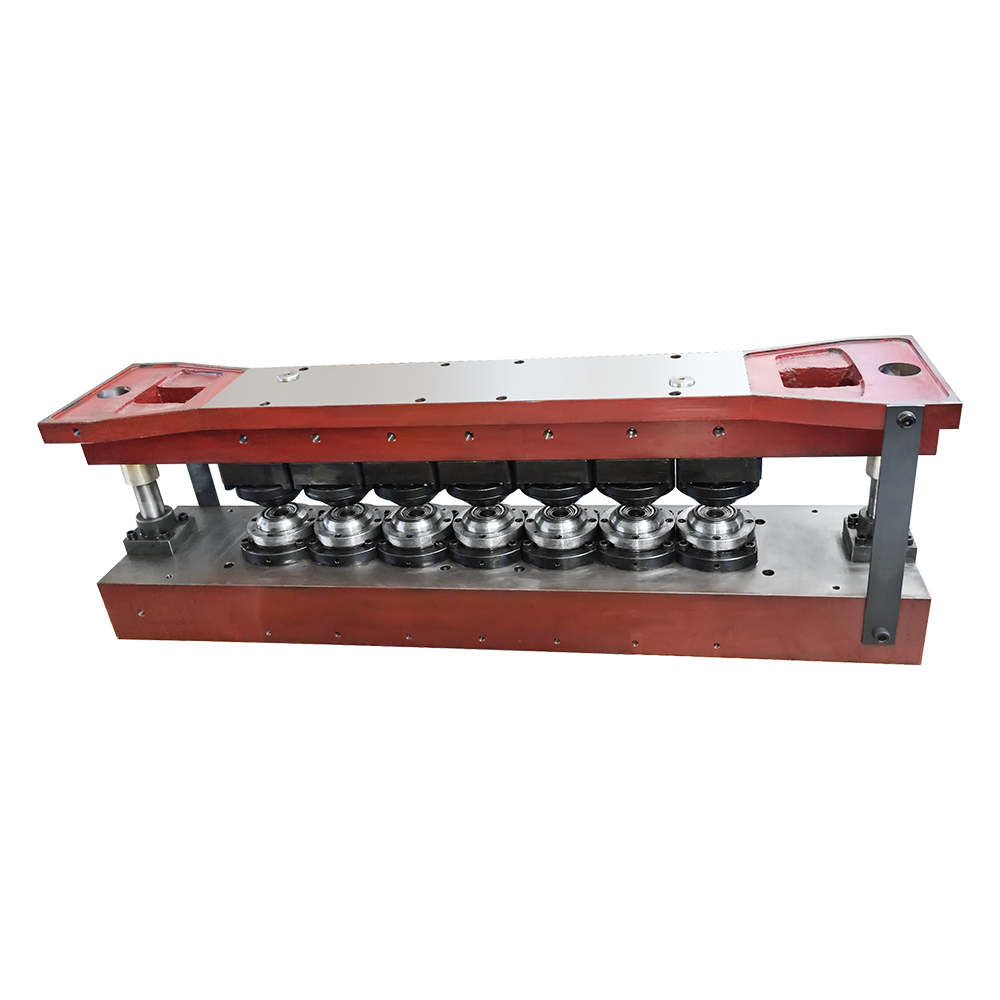
Inside the tooling system, tab dies and lane dies complete the core conversion actions. The tab die forms and prepares the pull tab, while the lane dies process multiple lanes of ends simultaneously. Depending on the selected configuration, the conversion press can process two, three, or four lanes. Multi-lane operation significantly increases output without requiring multiple separate presses, saving floor space and simplifying line management.
The press then forms the rivet area, attaches or forms the tab position, creates the controlled score line, and prepares the end for easy opening. The scoring operation is one of the most critical steps. The score must be deep enough to allow the consumer to open the end easily, but not so deep that it causes leakage, corrosion risk, or weakness during handling, sterilization, transportation, or storage. Stable press motion, precise tooling, and accurate adjustment are therefore essential.
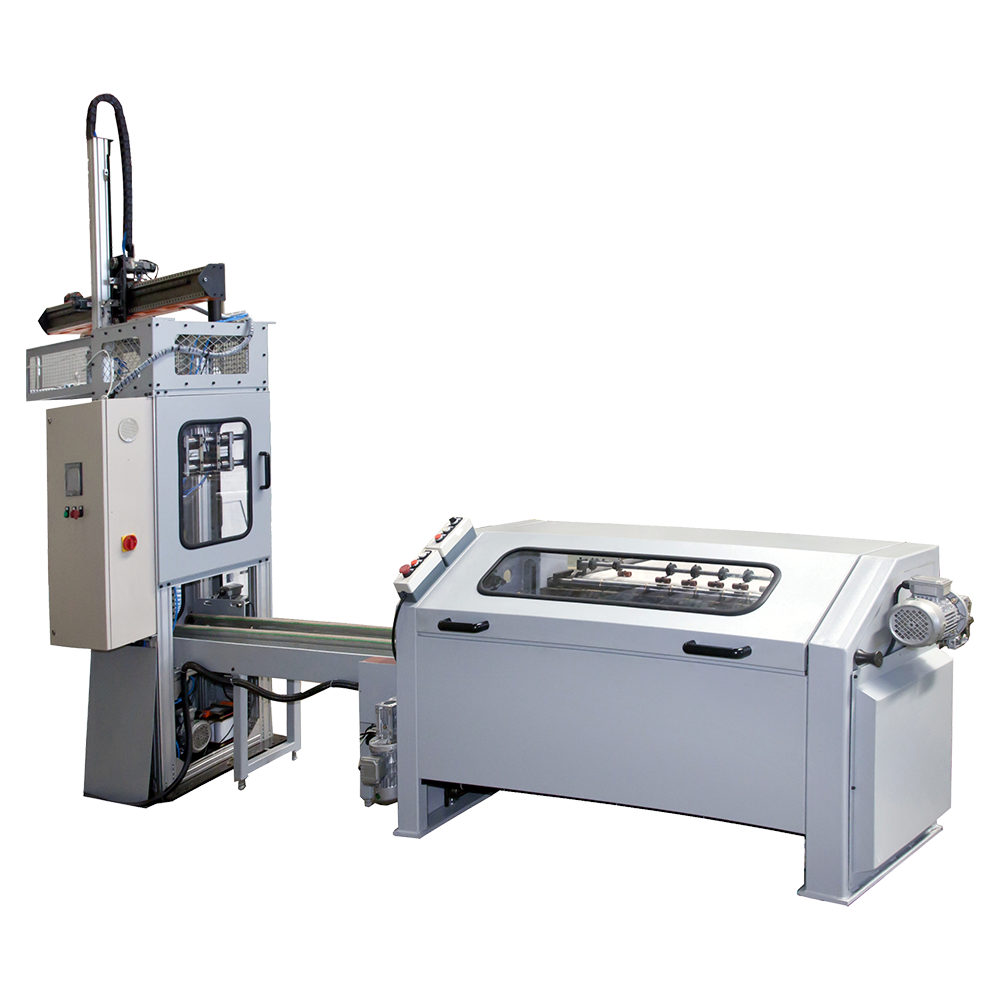
After forming, the ends separator and discharge system separate finished ends and transfer them to the next process. A vacuum system assists in handling and positioning, especially during high-speed operation. Vacuum support helps control lightweight metal ends and tabs, reducing instability caused by air movement, vibration, or rapid acceleration. The entire process is monitored by the electric control system and safety detection units, which help maintain production continuity and prevent defective output.
The press platform provides the mechanical force and motion required for the conversion process. Depending on user requirements, the system can be equipped with different high-performance press options. The press must provide stable tonnage, accurate slide movement, sufficient rigidity, and reliable high-speed operation. Since easy-open end conversion can run at hundreds of strokes per minute, the press structure must be robust enough to resist deformation and maintain precision over time.
Tab dies are responsible for forming the pull tab features. The tab is the consumer interface of the easy-open end, so its shape, strength, curl, finger access, and opening performance must be reliable. Poor tab formation can lead to discomfort, tab breakage, improper opening, or customer complaints. High-quality tab dies help produce uniform tabs with stable dimensions and smooth edges.
Lane dies process multiple lanes of ends. Multi-lane die design is a core factor in production efficiency. A four-lane system can deliver significantly higher output than a two-lane system, provided that feeding, detection, transmission, and separation are all synchronized. Lane die accuracy also affects product consistency across lanes. A well-designed conversion press should not only produce high output but also ensure that every lane meets the same quality standard.
Ends separators help discharge and organize converted ends after the forming process. They prevent mixing, jamming, scratching, and stacking irregularities. In high-speed lid production, discharge reliability directly influences line efficiency. If finished ends are not separated smoothly, the line may stop frequently, reducing actual production capacity despite high theoretical speed.
The mechanical transmission system synchronizes the movement of the press, feeder, tooling, and transfer components. It must withstand repetitive load, high-speed cycling, and continuous industrial use. Strong transmission design helps minimize timing errors, mechanical wear, and vibration. Compared with machines that rely on less stable transmission structures, a well-engineered mechanical transmission system provides better long-term accuracy.
The oil and pneumatic system supports lubrication, actuation, cushioning, and auxiliary movement. Effective lubrication reduces friction and extends the life of moving parts. Pneumatic components may be used for feeding, clamping, ejecting, or assisting specific actions. Stable pressure, clean air supply, and reliable oil circulation are important for uninterrupted operation.
The transmission division unit distributes motion and timing to different parts of the conversion system. Its function is especially important in multi-lane configurations. The unit ensures that each lane receives synchronized movement and that the conversion actions occur at the correct moment during the press cycle.
The tab material feeder supplies the tab strip accurately and continuously. Since the tab layout is compact, feeding precision must be high to maintain material savings without affecting tab quality. The feeder contributes directly to cost efficiency, because tab material waste can become a major expense in large-scale production.
The vacuum system improves the handling stability of light and thin parts. It helps control tabs and ends during high-speed movement, preventing displacement and reducing the risk of feeding errors. Vacuum assistance is especially valuable when the machine operates near the upper speed range.
The electric control system coordinates the machine’s operation and protection functions. It integrates detection for double sheets, missing ends, incorrect tab position, missing tabs, and other safety conditions. A reliable control system reduces operator workload, protects tooling, and improves product qualification rate. For modern can end production, intelligent detection is a major competitive advantage because it prevents defects before they multiply into large batches of waste.
The conversion press offers several advantages over conventional or less integrated machines. The first advantage is system integration. Some machines depend on separate feeding, forming, detection, and discharge modules that may not be fully optimized as a complete system. In contrast, this conversion press is designed as a coordinated conversion system that includes tooling, transmission, feeding, vacuum, pneumatic, oil, and electrical control. Integrated design reduces compatibility problems and improves production stability.
The second advantage is flexible lane configuration. Manufacturers do not all have the same capacity requirement. A smaller plant may not need a four-lane high-output system, while a large can end factory may require maximum productivity. By offering two, three, and four lanes, the conversion press allows customers to match investment with market demand. Competitor machines with fixed lane formats may force customers to overinvest or underproduce.
The third advantage is compact tab layout and high material usage. Material savings are a direct and measurable benefit. Tab stock can represent a significant ongoing cost. A conversion system that improves tab material usage helps reduce cost per thousand ends. In competitive packaging markets, where margins can be tight, this advantage supports long-term profitability.
The fourth advantage is high-speed capability. With a speed range of 200 to 600 strokes per minute, the machine can meet demanding production requirements. High speed alone is not enough; the speed must be combined with stable detection, reliable feeding, and strong mechanical structure. This conversion press is designed to maintain dependable operation under high-frequency production conditions.
The fifth advantage is comprehensive detection. Double sheet detection, no ends detection, tab wrong position detection, and no tab detection help prevent defective production and protect expensive tooling. In high-speed manufacturing, a few seconds of undetected malfunction can create a large quantity of scrap. Detection systems reduce this risk and help operators respond quickly.
The sixth advantage is manufacturing know-how. The producer of this conversion press has decades of experience in can-making machinery and can-making molds. Long-term practical experience is important because can end production involves many details that are not always visible in basic specifications. Tooling life, coating protection, feeding stability, noise reduction, maintenance access, and operator safety all benefit from accumulated manufacturing knowledge.
The seventh advantage is complete production line understanding. Since the company supplies food can production lines, beverage can production lines, can lid production lines, chemical tank production lines, aerosol canister production lines, two-piece can production lines, and related molds, it understands how the conversion press fits into the broader factory system. This enables better integration with upstream and downstream equipment.
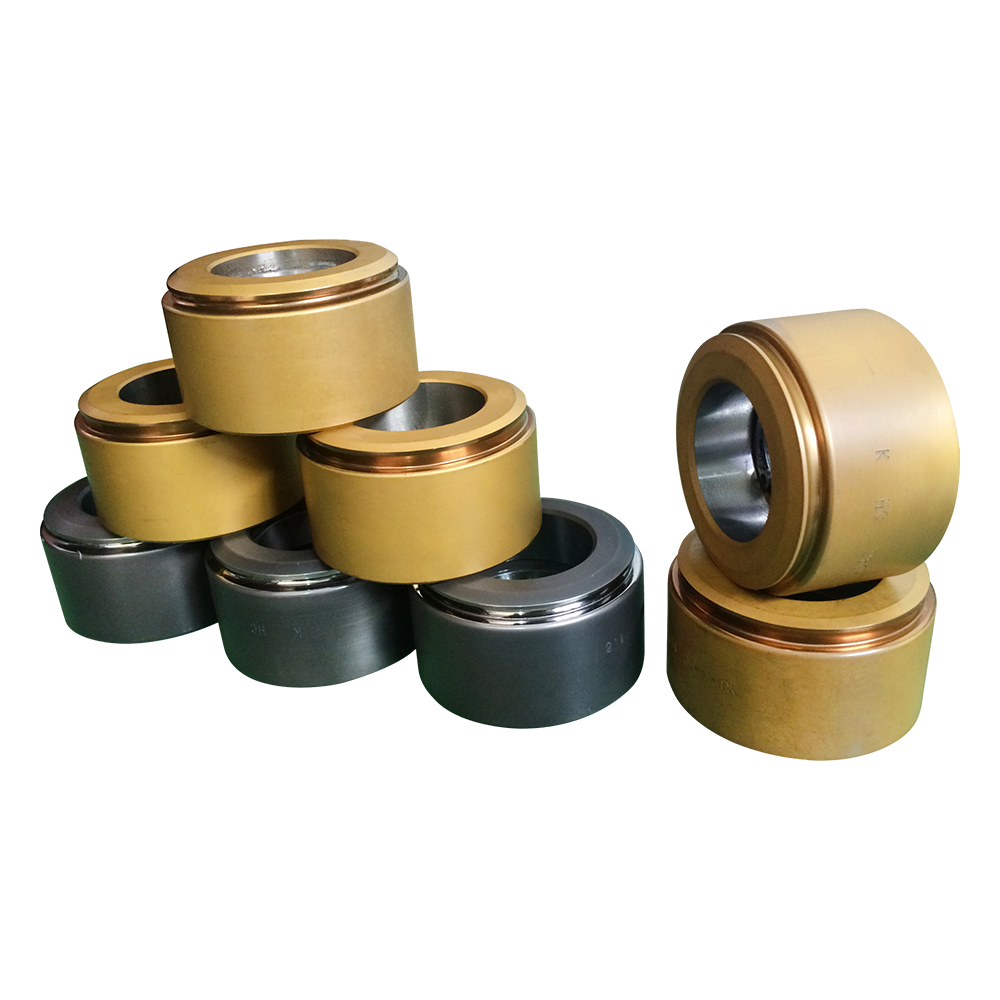
Easy-open end conversion depends heavily on tooling. The press may provide power and motion, but the dies determine the final geometry of the lid. The score profile, rivet formation, tab shape, opening force, residual metal thickness, and lane-to-lane consistency are all influenced by tooling design and machining accuracy. A company with strong mold manufacturing capability has a clear advantage in this field.
The manufacturer behind this conversion press has a long history in can-making molds as well as can-making machinery. This combination is important because equipment and tooling must be designed together. When a machinery supplier lacks mold expertise, customers may face longer debugging time, inconsistent product quality, or difficulty adapting to different end sizes. When tooling capability is built into the equipment manufacturer’s core strength, the conversion press can be delivered with better process compatibility.
Advanced manufacturing equipment, including CNC high-precision machining and complete mechanical machining facilities, supports the production of accurate components. CNC machining improves dimensional consistency, surface finish, and repeatability. In high-speed presses, small deviations in die components, guide surfaces, or transmission parts can create vibration, uneven wear, or product defects. Precision manufacturing helps reduce these risks.
The company’s design principles draw inspiration from established international concepts in can-making equipment while incorporating practical production experience. This combination of reference design and field improvement helps create machines that are not only theoretically advanced but also suitable for real factory conditions. Practical experience matters because can factories often operate in demanding environments, with long shifts, varying materials, different product sizes, and strict delivery schedules.
The company responsible for producing this conversion press was established in 1978 and has been engaged in can-making machinery and molds for more than four decades. This long history gives it a strong foundation in mechanical design, tooling, machining, assembly, installation, commissioning, and after-sales service. Over the years, it has produced more than 10,000 pieces of can and can lid equipment used by can manufacturers and canning factories in many regions.
A workforce of more than 350 trained personnel, including experienced design and development engineers, supports the production process. In machinery manufacturing, human expertise remains essential. Engineers must understand forming mechanics, material behavior, press dynamics, lubrication, sensor logic, safety design, and user operation. Skilled technicians must assemble, align, test, and adjust each machine carefully. The combination of engineering and workshop experience contributes to dependable equipment quality.
The company uses advanced manufacturing equipment and CNC high-precision machining equipment. This supports the accurate production of parts for presses, feeding systems, transmission systems, dies, and molds. Precision machining is especially important for high-speed conversion equipment because the machine must run with minimal vibration and consistent alignment. Any looseness, eccentricity, or dimensional error can be magnified during high-speed operation.
Quality management is reinforced by certification to ISO9001 quality management standards and ISO14001 environmental management standards. ISO9001 reflects systematic quality control across design, purchasing, manufacturing, assembly, inspection, and service. ISO14001 reflects attention to environmental management, which is increasingly important in modern industrial supply chains. These certifications provide customers with additional confidence that production is controlled and documented.
The company’s export record also demonstrates its international application experience. Its products have been exported to countries across Europe, Asia, Africa, North America, South America, and Oceania. Experience with diverse markets helps improve adaptability because customers in different regions may have different materials, can sizes, electrical standards, safety requirements, and operating habits. A supplier with global experience can better support installation, commissioning, training, and spare parts service.
For a can end manufacturer, the real value of a conversion press is measured by output, yield, material efficiency, downtime reduction, maintenance cost, and product consistency. This conversion press addresses these factors through multi-lane operation, high-speed performance, compact tab layout, integrated detection, and robust mechanical design.
Multi-lane operation increases output per press stroke. A two-lane system processes two ends per stroke, a three-lane system processes three, and a four-lane system processes four. When combined with high strokes per minute, this can create substantial capacity. However, the benefit is only realized if the system maintains stable feeding and discharge. The conversion press is designed with synchronized systems to support this requirement.
Material efficiency reduces direct production cost. The compact tab layout helps users obtain more tabs from the same quantity of tab material. Over millions or billions of ends, this saving becomes highly significant. It also supports environmental goals by reducing metal scrap. Although scrap metal may be recycled, reducing waste at the source is usually more economical and more sustainable.
Detection systems reduce hidden costs. Without reliable detection, errors may continue unnoticed until a large quantity of defective ends is produced. Defects may include missing tabs, incorrectly positioned tabs, double-sheet damage, improper scoring, or jam-related deformation. Sorting and reworking are costly, and some defects may not be repairable. By detecting problems quickly, the machine protects both material and production time.
Robust construction reduces downtime. The net weight of 20 to 30 tons indicates a strong machine body suitable for high-speed industrial work. A stable structure helps maintain tooling alignment, reduce vibration, and protect mechanical components. Competitor machines with lighter or less rigid structures may appear economical initially but can suffer from greater vibration, more frequent adjustment, or shorter tool life in demanding production.
Easy-open ends must satisfy both industrial and consumer requirements. Industrial requirements include sealing performance, stackability, resistance to deformation, compatibility with filling and seaming operations, and stable performance during pasteurization or sterilization. Consumer requirements include safe opening, comfortable tab lifting, predictable tear path, and reduced risk of sharp hazards. A conversion press contributes to these outcomes through precise forming and consistent tooling action.
The score line is a crucial quality feature. It must allow easy opening while preserving package integrity before use. If the residual metal is too thick, the consumer may find the lid difficult to open. If it is too thin, the end may leak, crack, or fail under pressure. Accurate scoring requires stable press motion, high-quality die components, and careful adjustment. The conversion press is built to support these requirements.
Tab position is also critical. If the tab is misaligned, the opening force may be uneven, the rivet may be stressed incorrectly, or the consumer may not be able to open the can smoothly. Tab wrong position detection and no tab detection help ensure that defective ends are not produced continuously. These functions protect both product quality and brand reputation for the can maker’s customers.
Surface protection is another quality factor. Food and beverage cans often use coated metal to prevent corrosion and protect product taste and safety. During conversion, the machine must handle ends without excessive scratching or coating damage. Stable feeding, accurate tooling, and controlled separation help reduce surface defects.
The conversion press is mainly used in easy-open end production lines. Easy-open lids are widely used for food cans, beverage cans, milk powder cans, pet food cans, and other metal packaging products that require convenient opening. The machine may be adapted for different lid specifications based on tooling and production requirements.
In food can applications, easy-open ends are valued because consumers can open the can without a separate opener. This improves convenience and supports retail competitiveness. In beverage applications, high-speed production and consistent opening performance are especially important. For powdered food or nutritional products, clean opening and reliable sealing are both essential. In all these applications, the conversion press must produce ends with consistent geometry and safe opening behavior.
The machine is part of a broader family of can-making technologies, including food and beverage can making machines, tin can lid and end making machines, duplex slitters, milk powder can making machines, automatic feeding machines, aerosol can making machines, chemical tank making machines, two-piece can making machines, welding machines, and molds. This broad machinery background gives the manufacturer a deeper understanding of the packaging industry as a whole.
Every can end factory has different requirements. Some customers need a machine for a specific lid diameter, while others need flexible tooling for multiple products. Some factories focus on maximum output, while others emphasize stable production with easy maintenance. The conversion press can be configured according to customer requirements, including press platform selection and lane number. This customization capability is an important advantage.
Line integration includes matching the conversion press with upstream shell making equipment, end feeding systems, inspection units, packing systems, and downstream handling. Proper integration reduces bottlenecks. A high-speed conversion press is most valuable when the surrounding equipment can supply and receive products at the required rate. Because the manufacturer has experience in complete can lid and can production lines, it can provide better technical guidance for overall line planning.
Electrical and control integration also matters. Different factories may use different voltage standards, safety systems, operator interfaces, and maintenance practices. A flexible supplier can adapt the control system to suit customer needs while maintaining core detection and safety functions. Proper control design improves operator confidence and reduces training difficulty.
Industrial machines require more than delivery. Installation, commissioning, technical guidance, operator training, and spare parts support are essential for long-term success. The company provides after-sales service including installation, commissioning, technical guidance, operation training, and timely parts supply. This support is especially important for high-speed conversion presses because correct installation and adjustment directly affect product quality.
During installation, the machine must be positioned, leveled, connected to power and air supply, and integrated with surrounding equipment. During commissioning, engineers adjust feeding timing, tab feeding, die settings, detection sensors, vacuum performance, lubrication, and discharge stability. Trial production is used to verify product dimensions, opening performance, tab position, score quality, and production speed.
Operator training helps the customer’s team understand daily operation, fault response, lubrication, tooling care, sensor checking, safety procedures, and basic maintenance. A well-trained operator can prevent many production problems. Training also helps reduce dependence on outside service for routine adjustments.
Spare parts support is important because production lines often operate under tight delivery schedules. Quick access to parts reduces downtime and protects customer production plans. A supplier with long-term experience and a wide installed base is better positioned to support spare parts over the machine’s service life.
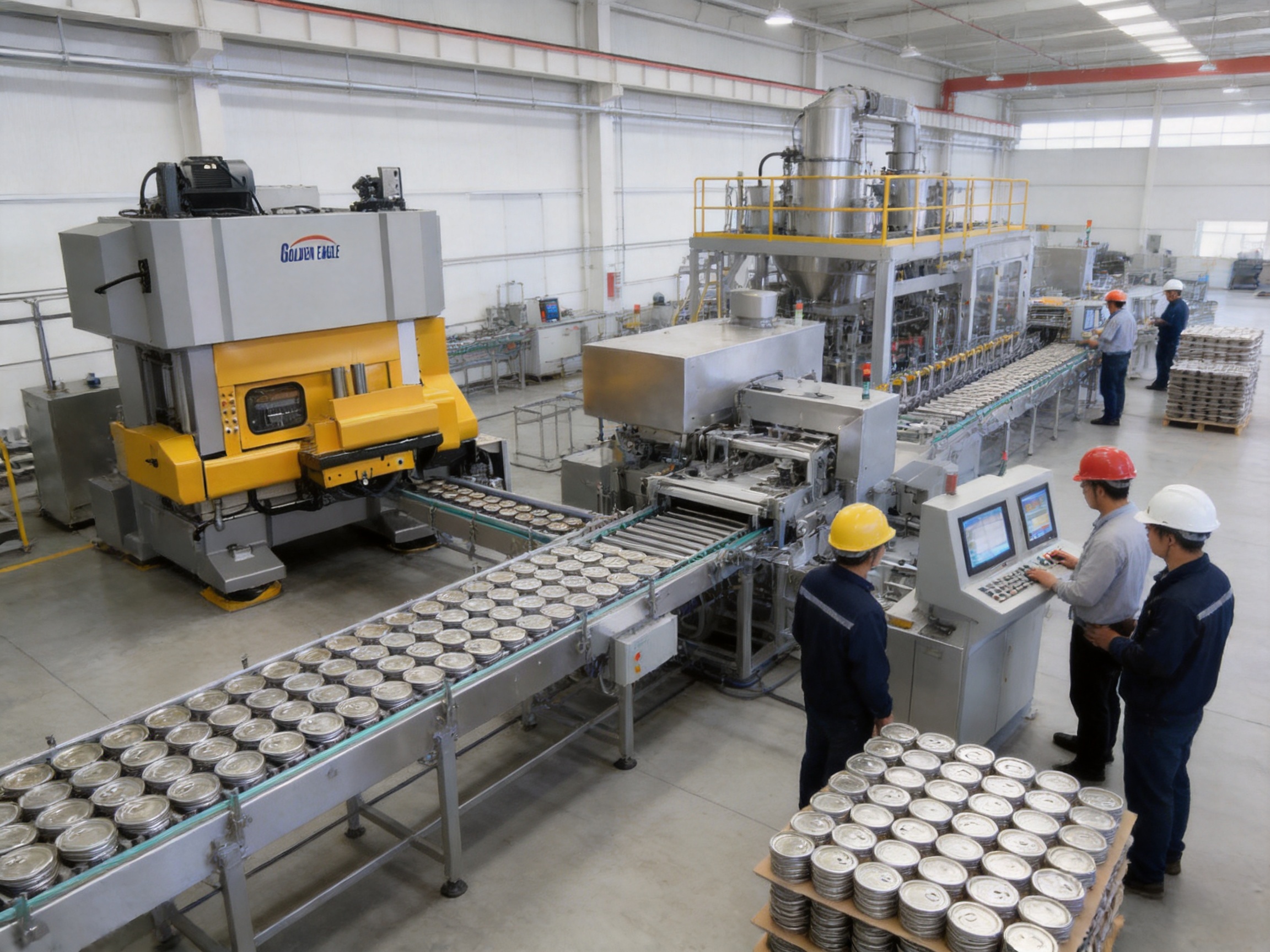
A conversion press is a strategic investment because it influences production capacity, product quality, cost structure, and customer competitiveness. When selecting a machine, buyers should consider not only purchase price but also output, yield, tool life, material usage, service support, spare parts availability, and adaptability to future products.
This conversion press offers strong strategic value through its high-speed capability, multi-lane options, integrated detection, compact tab layout, and robust construction. It is suitable for manufacturers that want to increase production efficiency while maintaining quality control. The ability to configure the system according to customer requirements reduces the risk of mismatch between machine capacity and market demand.
Compared with machines that focus only on basic pressing functions, this conversion press provides a more complete conversion solution. It includes the related tooling, feeding, detection, transmission, pneumatic, oil, vacuum, and control systems needed for reliable operation. This complete-system approach helps customers reduce engineering complexity and shorten the path from installation to stable production.
The manufacturer’s long history, skilled workforce, CNC machining capability, quality management certification, and export experience add further value. A machine is only as reliable as the organization that designs, builds, installs, and supports it. Decades of experience in can-making machinery and molds provide practical knowledge that benefits machine performance and customer service.
To obtain the best performance from the conversion press, users should pay attention to several operational factors. First, raw material quality must be stable. Variations in metal thickness, hardness, coating, or flatness can affect scoring, rivet forming, and tab performance. Second, tooling must be maintained carefully. Worn tooling can cause burrs, incorrect score depth, weak rivets, or inconsistent tab shape. Third, lubrication should be managed according to maintenance requirements. Proper lubrication reduces wear and supports stable high-speed operation.
Fourth, sensors should be checked regularly. Detection systems are valuable only when they are clean, aligned, and functioning correctly. Fifth, operators should record production data, faults, adjustments, and maintenance actions. Good records help identify trends and prevent recurring problems. Sixth, spare parts planning should be proactive. Keeping essential wear parts in stock reduces downtime.
The conversion press is designed to support high efficiency, but successful production also depends on disciplined factory management. When machine quality and operating management work together, customers can achieve high output, stable product quality, and lower total production cost.
The conversion press is used to convert prepared can ends into easy-open ends. It performs operations related to tab forming and feeding, rivet forming, score creation, lane processing, separation, and discharge. It is a key machine in easy-open end production lines.
The conversion press can be equipped with 2, 3, or 4 lanes according to customer requirements. This allows users to choose a production capacity that matches their market demand and investment plan.
The machine can operate at 200 to 600 strokes per minute, depending on configuration, product size, tooling, material, and production conditions.
Compact tab layout improves tab material usage and reduces scrap. Since tab material cost is significant in mass production, better material utilization can reduce cost per end and improve long-term profitability.
The electric control system can include double sheet detection, no ends detection, tab wrong position detection, no tab detection, and multiple safety protection units. These functions help prevent defects, protect tooling, and improve production reliability.
The machine has a tonnage range of 75 to 125 tons, slide stroke of 38.1 to 63.5 mm, speed of 200 to 600 strokes per minute, 2 to 4 lanes, main power of 38.5 to 46.5 kW, and net weight of 20 to 30 tons.
It offers stronger system integration, flexible lane configuration, compact tab material layout, comprehensive detection, high-speed capability, and support from a manufacturer with extensive can-making machinery and mold experience. These advantages help reduce downtime, improve yield, and lower long-term production costs.
Tooling determines score quality, tab shape, rivet strength, and product consistency. High-precision tooling helps ensure easy opening, safe performance, and reliable sealing. A manufacturer with both machine and mold expertise can better optimize the whole conversion process.
Support can include installation, commissioning, technical guidance, operation training, and spare parts supply. This helps customers start production smoothly and maintain stable operation over time.
Can end manufacturers, food can producers, beverage can producers, and packaging companies that require high-speed easy-open end production can benefit from this machine. It is especially suitable for factories seeking higher output, better material efficiency, and more reliable quality control.
The conversion press is a high-value machine for easy-open end manufacturing. It combines high-speed press performance, multi-lane production, compact tab material layout, precision tooling, synchronized mechanical transmission, pneumatic and oil systems, vacuum handling, automatic feeding, and intelligent detection. These features make it suitable for modern can end factories that need reliable output, consistent quality, and efficient material usage.
Its advantages over conventional or less integrated competitor machines include better system coordination, flexible lane configuration, improved material economy, comprehensive safety detection, and strong manufacturing support. The machine is supported by a company with decades of experience in can-making machinery and molds, advanced CNC machining capability, trained technical personnel, quality and environmental management certifications, and international export experience.
For producers of easy-open ends, the conversion press is more than a production machine. It is a long-term investment in capacity, quality, cost control, and market competitiveness. With proper installation, tooling maintenance, operator training, and production management, it can help manufacturers achieve stable high-speed conversion and deliver easy-open lids that meet demanding industrial and consumer expectations.
1. Metal Packaging Manufacturers Association. Technical Guide to Metal Packaging and Can Ends.
2. The Canmaker. Handbook of Canmaking Technology and Easy-Open End Production.
3. ISO 9001 Quality Management Systems. International Organization for Standardization.
4. ISO 14001 Environmental Management Systems. International Organization for Standardization.
5. ASTM International. Standards Related to Metallic Sheet Materials for Packaging Applications.
6. Food and Beverage Packaging Technology. Industry Reference for Metal Can Manufacturing Processes.
Related Products

Founded in 1978, the company is one of the largest can-making machinery well-known companies at home and abroad.
Product Categories
Contact Information
Zhongshatou Shenjiamen Zhoushan Zhejiang China
+86-580-3056646

 English
 中文简体
中文简体
 русский
 عربى
عربى
 Español