2026-06-17
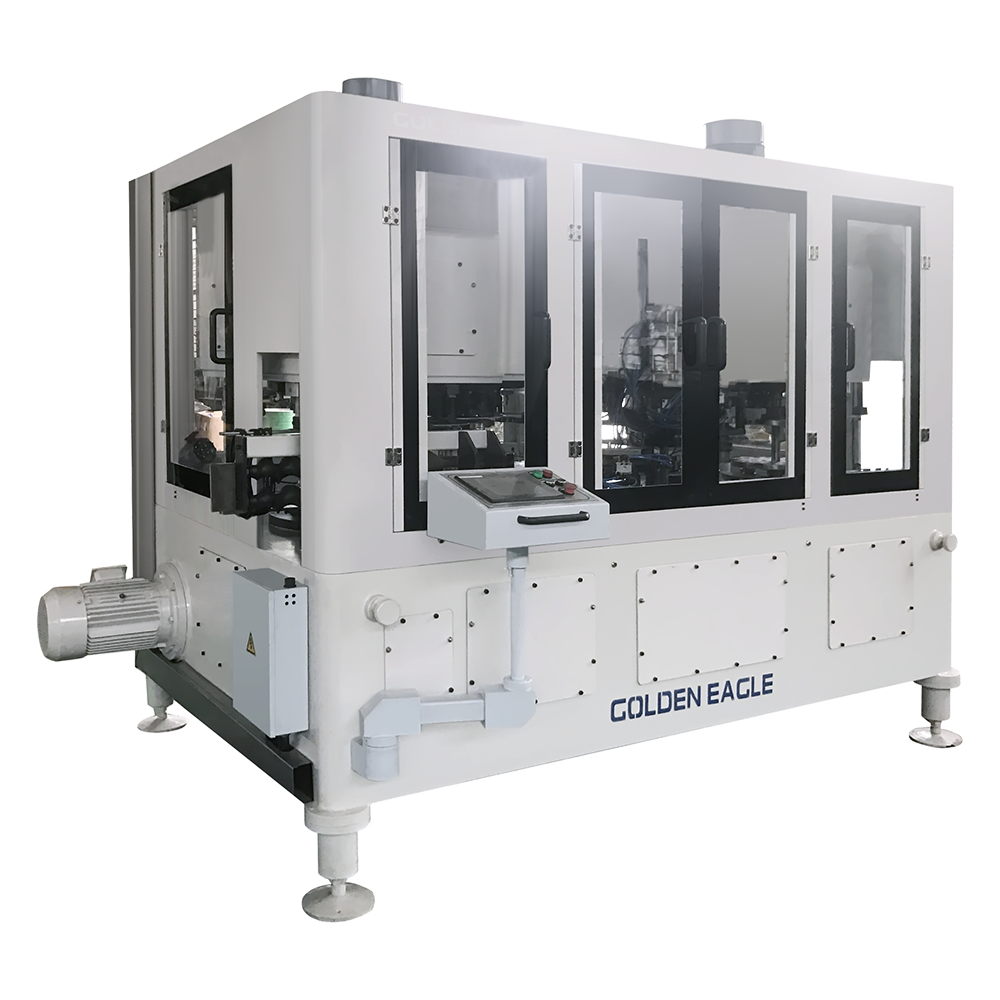
The CNC Automatic Digital Controlling Punch is a core production machine for modern tin can lid and end manufacturing. Designed for automatic sheet pressing, multi-mold operation, stable output, and accurate control, it supports can makers that require high productivity, reliable quality, and efficient material utilization. In the competitive field of tinplate can making, end-making equipment must do more than simply press metal sheets. It must coordinate feeding, positioning, punching, safety protection, mold compatibility, and production continuity. This machine is built to address those requirements through automatic operation, PLC-based control, multiple configuration options, and strong mechanical construction.
As part of the tin can lid end making machine category, the CNC Automatic Digital Controlling Punch is suitable for producing bottom covers, base covers, large tank covers, chemical tank covers, and certain special caps depending on model selection. The machine series includes configurations with different working pressures, strokes, mold capacities, installed power, installation dimensions, and functional focuses. This allows manufacturers to select equipment according to lid diameter, production volume, plant layout, and product type.
For can factories, food packaging producers, beverage packaging manufacturers, chemical container makers, and tinplate component suppliers, the quality of the lid or end directly affects sealing performance, filling reliability, shelf stability, and finished can appearance. A lid with inconsistent forming accuracy can lead to leakage, seaming problems, rejected cans, or downstream stoppages. Therefore, an automatic digital controlling punch is not only a forming machine; it is an important quality-control point in the entire can-making production line.
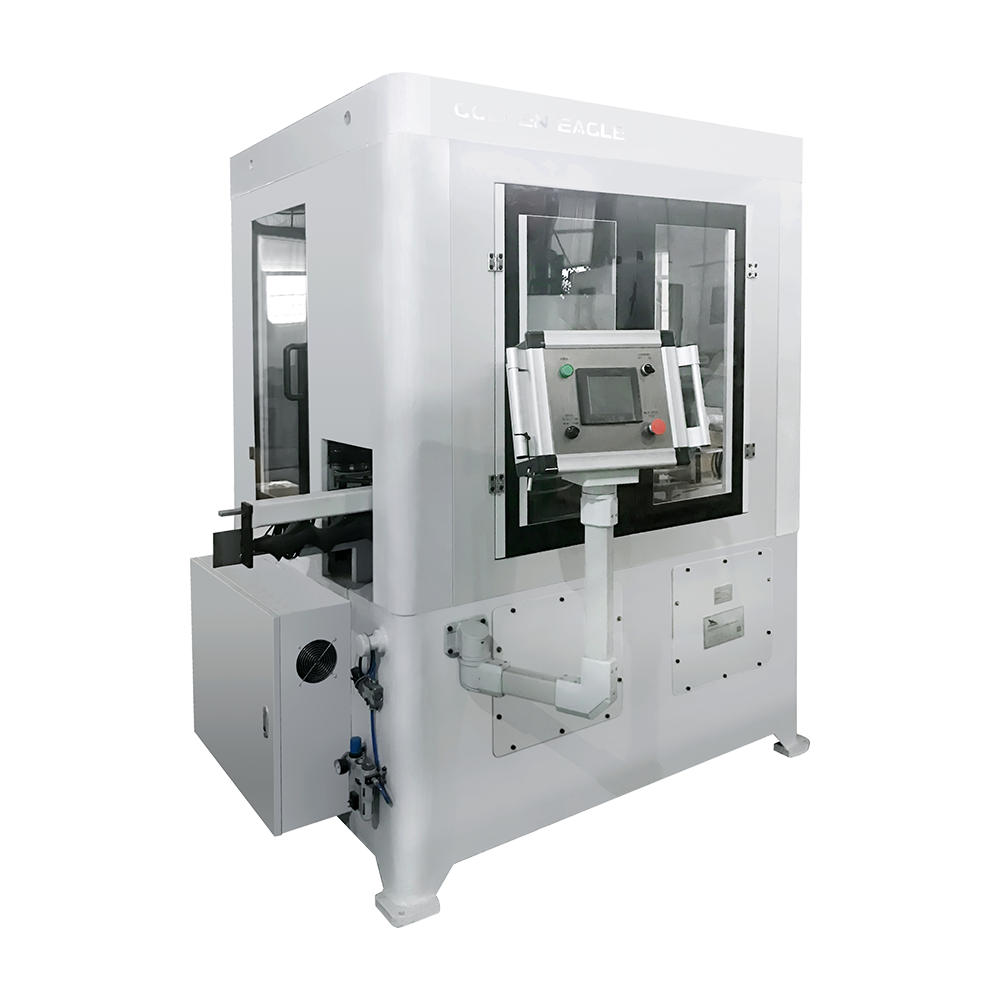
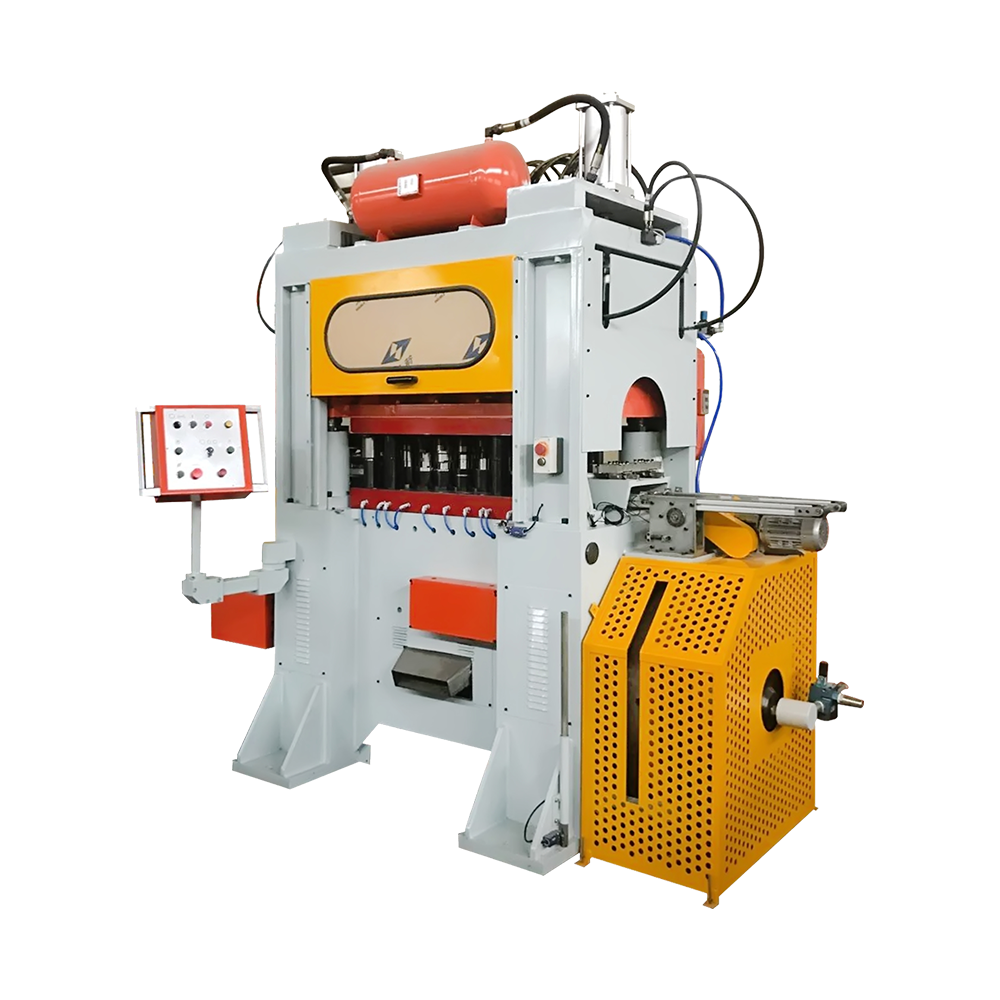
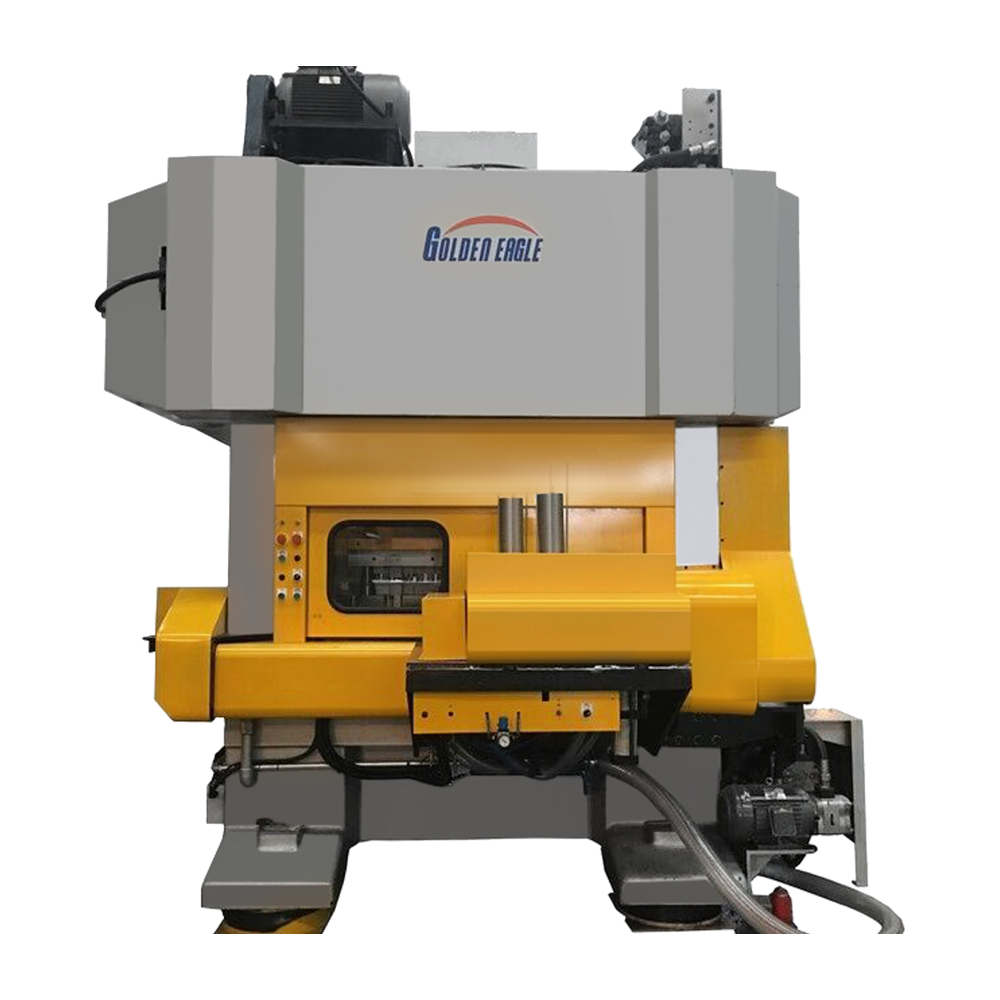
CNC Automatic digital controlling punch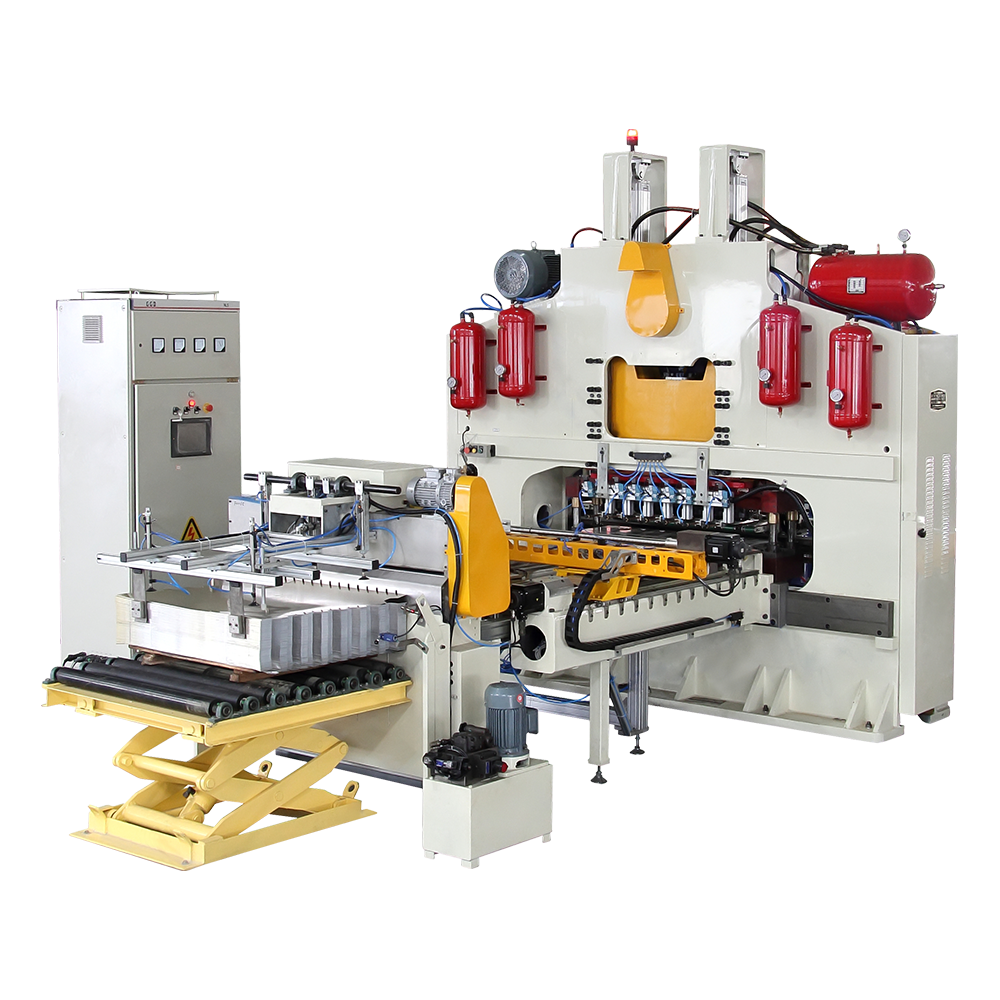
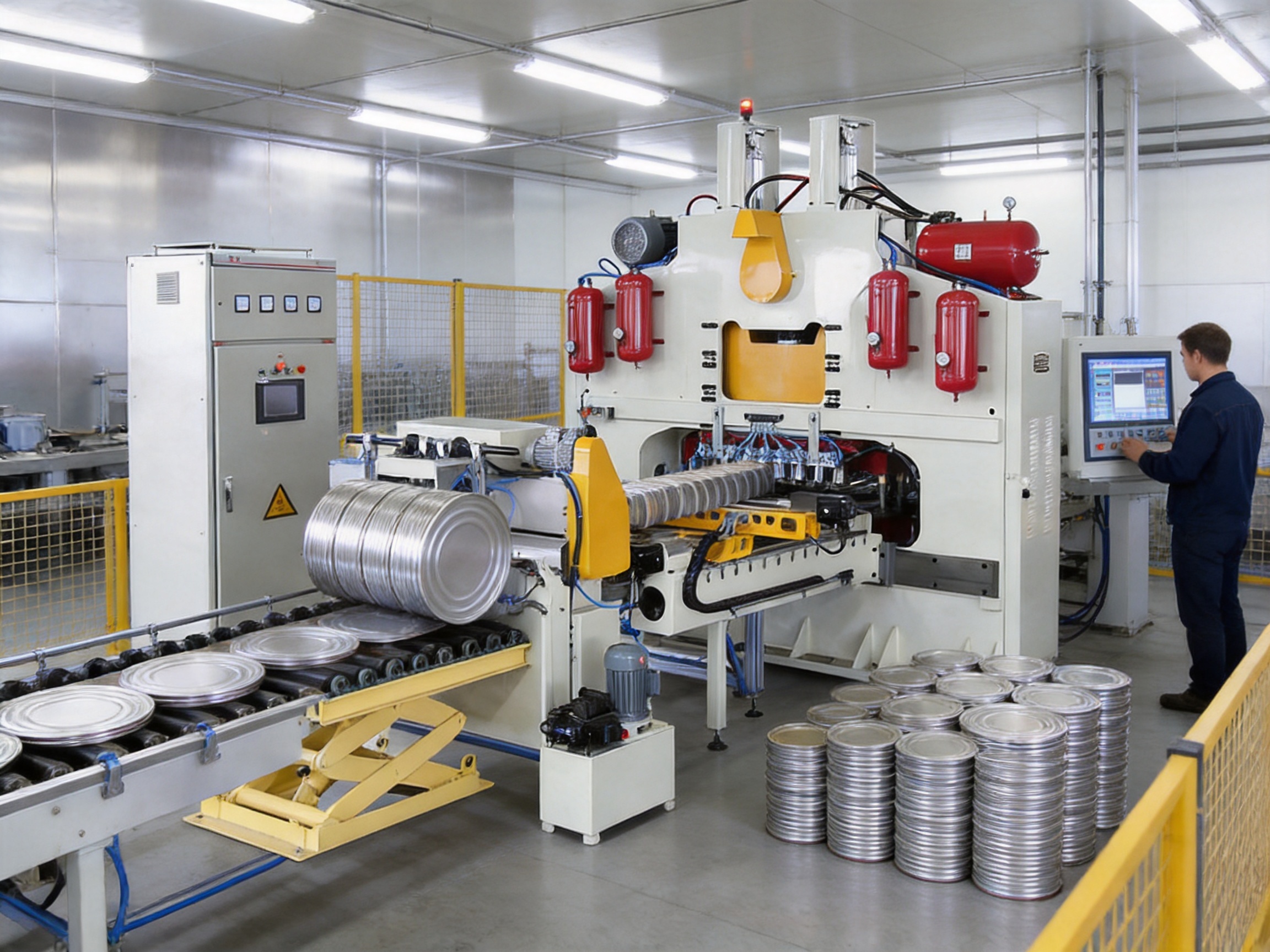
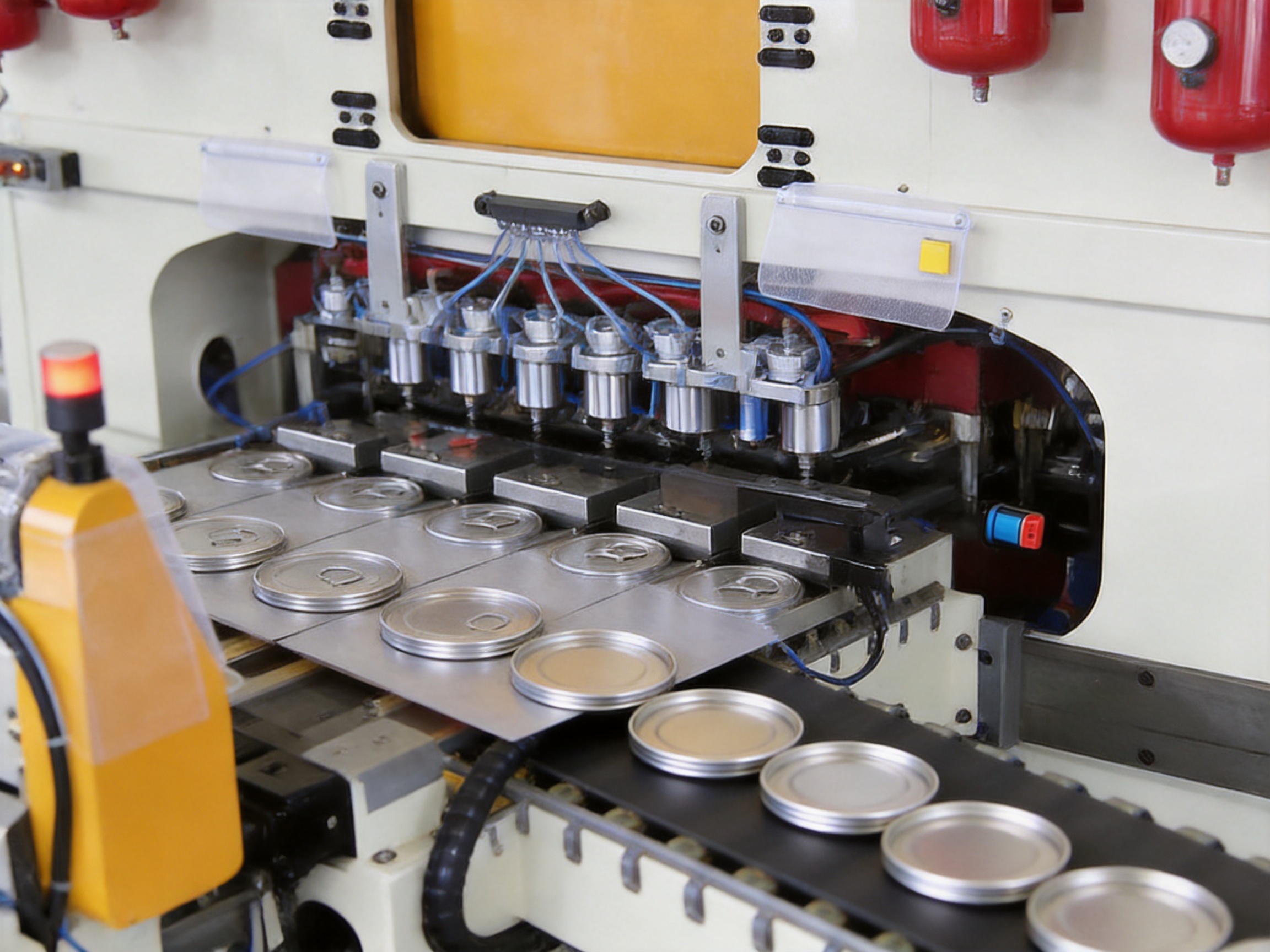
The CNC Automatic Digital Controlling Punch realizes automatic sheet pressing through a coordinated mechanical and electronic control system. The complete process is automatic, reducing manual intervention while improving production efficiency. The machine is designed with a high-efficiency structure that helps save tinplate material by improving sheet utilization and reducing unnecessary waste. Depending on the selected model and application, the number of mold heads can range from 1 to 15, offering flexibility for small-batch production, medium-volume operation, and high-output industrial production.
Safety and process reliability are key features of the machine. It is equipped with a double sheet detector, overload protection, and other protective systems. These functions help prevent damage caused by incorrect feeding, stacked sheets, excessive mechanical load, or unexpected production abnormalities. In automated metal forming, such protection is essential because a single incorrect stroke can damage expensive dies, interrupt production, and create safety risks. By integrating these safety measures, the machine provides a more stable and reliable operating environment.
The machine is suitable for different end-size pressing. This versatility is important because can manufacturers often need to produce different can ends for food cans, milk powder cans, chemical cans, aerosol components, and other tinplate containers. With proper molds and model selection, the CNC Automatic Digital Controlling Punch can support a range of end diameters and cover structures. The PLC controller provides digital coordination and simplifies operation, parameter management, and production control.
Compared with conventional manual or semi-automatic presses, the automatic digital controlling punch offers major advantages in labor saving, repeatability, throughput, and process stability. Manual sheet positioning can introduce errors, increase scrap, and slow production. Semi-automatic equipment may still require significant operator attention. In contrast, automatic control enables consistent feeding and pressing cycles, helping the factory maintain predictable output and reduce production variation.
In a complete can manufacturing system, lids and ends are produced separately from the can body and later assembled or seamed during filling or packaging operations. The lid end production process normally includes sheet preparation, feeding, punching, forming, curling, lining or sealing compound application, drying, inspection, and packing. The CNC Automatic Digital Controlling Punch performs one of the most critical early stages: pressing and blanking the sheet into accurately formed components.
The precision of this stage influences every subsequent process. If the blank is not correctly shaped, later forming operations may be unstable. If the end profile is inconsistent, compound application and double seaming may become unreliable. If material waste is high, production cost increases. Therefore, a machine that can press sheets efficiently and accurately has direct value across the whole production chain.
The automatic punch is especially useful in factories producing large quantities of standard tin can ends. In these environments, stable cycle time and low scrap rate are crucial. It is also valuable for plants that need flexible mold arrangements. The availability of models with different loading module capacities enables the machine to serve both compact production and high-capacity production. For example, models with greater working pressure and more loading modules can support larger-scale output, while smaller models may be suitable for special caps, limited production runs, or products requiring fewer mold stations.
Because the machine supports different cover types, it can be integrated into food can production lines, beverage can lid production lines, chemical tank production systems, aerosol can component production, and other tinplate packaging equipment systems. Its performance contributes not only to production speed but also to the finished package’s safety and commercial quality.
The first major advantage of the CNC Automatic Digital Controlling Punch is its automatic sheet pressing capability. Automatic operation reduces operator fatigue, improves repeatability, and helps maintain consistent production rhythm. In many factories, labor availability and skill consistency are ongoing concerns. A machine that automates repetitive pressing tasks can reduce dependence on manual handling and improve overall line efficiency.
The second advantage is material saving. Tinplate is a significant cost in can production. A machine that supports efficient sheet use can reduce the cost per lid or end. High-precision feeding, stable positioning, and compatible mold layouts help optimize material usage. Even small reductions in scrap can produce substantial savings in high-volume production environments.
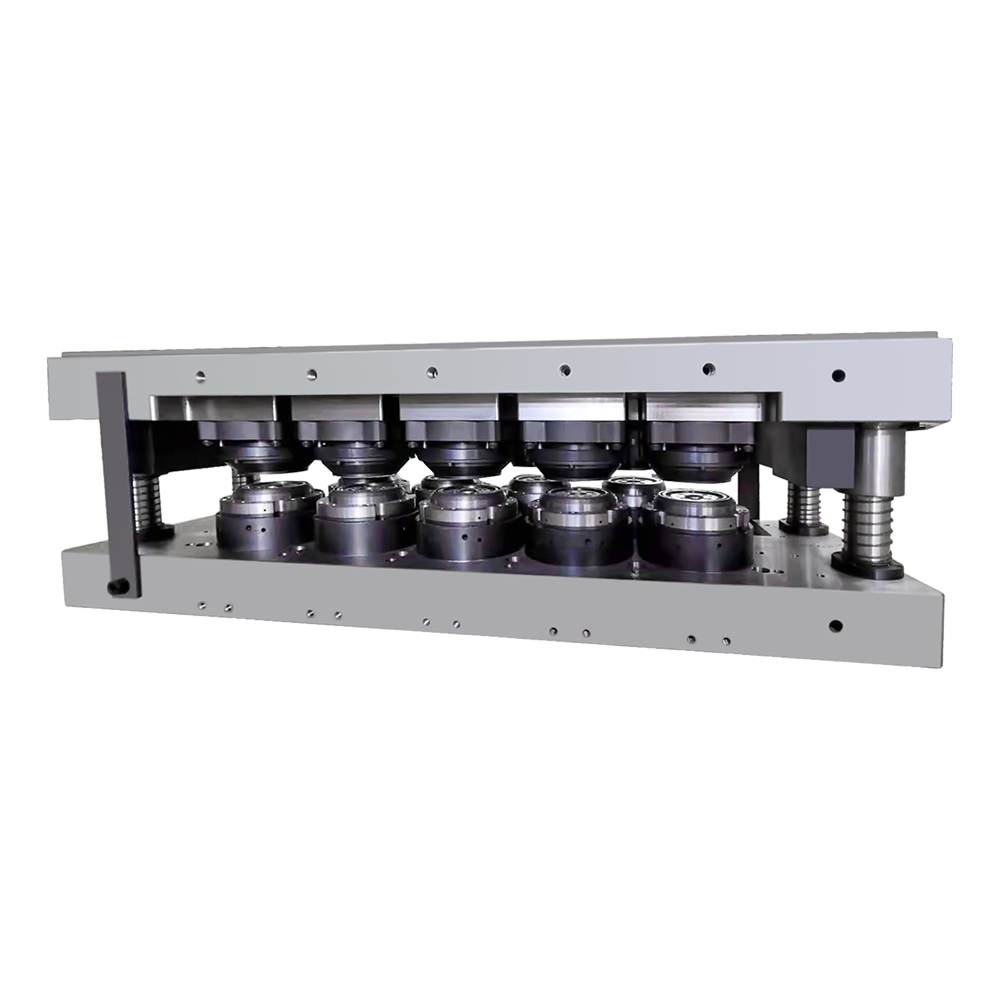
The third advantage is mold flexibility. The number of molds can range from 1 to 15 heads depending on the model. This flexibility allows manufacturers to match the machine to their production target. A single-head or low-module setup may be suitable for large covers, special shapes, or lower production volumes. Multi-module arrangements increase output by producing more components per cycle, making them suitable for mass production of common can ends.
The fourth advantage is integrated protection. The double sheet detector helps prevent two sheets from entering the press at the same time, which could cause die damage or defective products. Overload protection helps avoid excessive stress on the machine and mold. These systems improve machine safety, reduce downtime, and protect the investment in tooling. In competitive production, avoiding unplanned shutdowns is often as valuable as increasing theoretical output.
The fifth advantage is PLC control. A PLC controller gives the operator a structured control platform for machine operation. Digital control improves coordination between feeding, punching, and safety monitoring. It also makes the machine easier to manage in a modern production environment, where stable parameters, repeatable settings, and clear operation procedures are important.
Finally, the model range provides broad application coverage. Working pressures range from lighter configurations for special cap production to heavy-duty configurations for high-output bottom and base cover production. Installation dimensions, power requirements, stroke options, and mold capacity vary across the series, allowing a plant to select a machine suited to its available space and production plan.
The CNC Automatic Digital Controlling Punch series includes multiple models such as CNC-C1B, CNC-C1D, CNC-C1W, CNC-C1H, CNC-C2, CNC-C12, CNC-C6, CNC-C6D, CNC-C6W, and CNC-C8. Each configuration is designed for different production needs. Some models focus on bottom cover and base cover production, while others are intended for large tank covers, chemical tank covers, double-row dies, or four-screw caps.
The following table summarizes selected model characteristics to help users compare the series. Actual machine selection should be based on product diameter, material thickness, mold design, production speed requirement, factory utilities, and the intended production line arrangement.
| Model | Working Pressure | Stroke | Maximum Loading Module | Main Power | Main Application |
| CNC-C1B | 900 KN | 105 mm | Up to 7 modules for diameter 52 to 99 mm, or 2 modules for diameter 153 mm | 7.5 kW | Bottom cover and base cover production |
| CNC-C1D | 900 KN | 105 mm | Up to 7 modules for diameter 52 to 99 mm, or 2 modules for diameter 153 mm | 7.5 kW | Bottom cover and base cover production with two-empty configuration |
| CNC-C1H | 900 KN | 140 mm | 1 module | 11 kW | Large tank covers and chemical tank covers |
| CNC-C2 | 450 KN | 100 mm | Up to 2 modules for diameter 52 to 99 mm, or 1 module for diameter 153 mm | 5.5 kW | Bottom cover and base cover production |
| CNC-C12 | 2500 KN | 80 mm | 15 modules | 22 kW | High-output bottom and base cover production with double-row die |
| CNC-C6 | 1200 KN | 105 mm | Up to 8 modules for diameter 52 to 99 mm, or 3 modules for diameter 153 mm | 15 kW | Bottom cover and base cover production |
| CNC-C6D | 1200 KN | 105 mm | Up to 8 modules for diameter 52 to 99 mm, or 3 modules for diameter 153 mm | 15 kW | Bottom and base cover production with two-empty configuration |
| CNC-C8 | 120 KN | 190 mm | 1 module | 4 kW | Four-screw cap production |
The CNC-C12 model stands out for high-pressure operation and up to 15 loading modules. It is suitable for manufacturers requiring a high-capacity solution for bottom and base cover production. Its 2500 KN working pressure and 30-ton host weight indicate a heavy-duty design. The maximum closed height of 425 mm and closed height adjustment of 25 mm provide additional setup capability for demanding tooling arrangements.
The CNC-C6 series offers a balanced configuration with 1200 KN working pressure and support for up to 8 modules for smaller diameters. It is suitable for can makers that require higher capacity than the 900 KN class while maintaining a standard installation footprint. The CNC-C6D and CNC-C6W versions provide additional configuration choices for two-empty production requirements.
The CNC-C1 series is a practical option for bottom cover and base cover production where 900 KN working pressure is sufficient. These models share similar installation dimensions and closed-height specifications, helping plants standardize layout and maintenance. The CNC-C1H version is designed for large tank covers and chemical tank covers, making it suitable for industrial packaging applications where cover size and forming requirements differ from ordinary food cans.
The CNC-C2 model provides a smaller 450 KN configuration for bottom and base covers. It may be appropriate where production requirements do not demand the heaviest frame or highest module count. The CNC-C8 model, with 120 KN working pressure and a 190 mm stroke, is specialized for four-screw cap production. This variety across the series gives manufacturers the ability to match investment level and technical capability to actual market demand.
In can lid manufacturing, precision and efficiency are closely connected. A precise machine reduces scrap, minimizes rework, and enables stable downstream processing. Efficient material utilization is not achieved only through sheet layout; it also depends on feeding accuracy, mold alignment, press stability, and control response. The CNC Automatic Digital Controlling Punch is designed to improve these areas through automatic sheet pressing and digital control.
When material is fed consistently, the mold can operate closer to the intended layout. This helps reduce edge waste and prevents misaligned blanks. With multi-module configurations, each stroke can produce several components, increasing productivity without requiring additional press cycles. The result is improved output per unit time and better energy use per finished component.
Material saving is particularly important for tinplate because sheet cost directly affects the profitability of can manufacturing. In large production runs, even a small percentage reduction in scrap may create meaningful savings over time. A stable automatic punch helps control this cost by reducing human error and improving repeatability. For factories competing on both quality and price, this can be a decisive advantage.
High efficiency also improves delivery reliability. Can makers often supply customers in food, beverage, chemical, and aerosol industries, where production schedules are strict. A lid production bottleneck can delay complete can assembly or finished product filling. By using an automatic digital controlling punch with suitable module capacity, manufacturers can increase throughput and better support downstream operations.
Compared with older presses that rely heavily on manual adjustment and operator judgment, a PLC-controlled automatic punch allows a more standardized production method. Operators can follow defined procedures, supervisors can monitor performance more easily, and maintenance teams can diagnose issues more systematically. This supports stable quality over multiple shifts and helps reduce dependence on individual operator skill.
Safety is an essential part of modern can-making machinery. Metal forming equipment works with high pressure, moving parts, sharp sheet edges, and heavy tooling. The CNC Automatic Digital Controlling Punch incorporates protective systems such as double sheet detection and overload protection to help reduce risk and protect machine components.
The double sheet detector is especially valuable in sheet-fed production. If two sheets enter the press together, the combined thickness may exceed the mold clearance and cause serious tooling damage. It may also produce defective parts that cannot be used in later operations. Detecting this condition before a damaging stroke occurs helps protect molds, reduce downtime, and maintain process stability.
Overload protection is another key reliability feature. During operation, abnormal resistance can occur because of incorrect material, misfeeding, tooling obstruction, or mechanical problems. Overload protection helps prevent excessive force from damaging the press, drive system, or mold. For manufacturers using expensive multi-module dies, this function has strong practical value.
Reliable equipment also improves worker confidence. Operators can focus on monitoring production quality and workflow rather than constantly correcting mechanical instability. This is especially important in high-output environments where the machine operates continuously for long periods. A stable and protected system reduces stress for production teams and supports safer shop-floor management.
The machine’s mechanical construction, host weight, closed-height design, and installation dimensions also contribute to reliability. Heavy-duty frames and suitable structural rigidity help maintain forming accuracy under repeated load. Proper closed-height adjustment supports mold setup and helps ensure that forming conditions remain within the intended range. These characteristics are essential for consistent end quality.
The CNC Automatic Digital Controlling Punch offers several advantages over many competing lid-end presses, especially older manual, semi-automatic, or less flexible systems. The most visible advantage is automation. Fully automatic sheet pressing reduces labor intensity and improves cycle consistency. In factories where labor costs are increasing or skilled operators are difficult to retain, automation provides both economic and operational benefits.
Another competitive advantage is the broad model range. Some competing machines may be designed for only one production scale or one lid type. This series covers lower-pressure special cap production, medium-pressure standard cover production, high-pressure multi-module production, and large tank or chemical tank cover production. Such diversity allows users to choose the best configuration rather than forcing production needs to fit a single machine type.
The multi-mold capability is also a strong advantage. With up to 15 mold heads in certain configurations, the machine can significantly increase output per stroke. This reduces the need for multiple separate presses and can lower floor-space requirements, operator requirements, and maintenance complexity. In large-scale production, increasing output per cycle is one of the most effective ways to improve production economics.
Material-saving performance gives the machine another edge. Competitors that lack accurate feeding, stable pressing, or optimized mold compatibility may create higher scrap rates. Over time, scrap becomes a hidden cost that reduces profit. A machine designed for efficient sheet pressing and precise control can help manufacturers produce more finished lids from the same amount of tinplate.
Integrated safety protection further distinguishes the machine. Presses without double sheet detection or overload protection expose users to greater tooling risk. When molds are damaged, the cost is not limited to repair; the factory may lose production time, delay deliveries, and create scheduling pressure. Protective systems help reduce these risks and improve total equipment value.
The PLC controller also provides a competitive advantage. Digital control supports repeatable operation and easier integration into organized production management. Compared with machines that rely mostly on mechanical timing and manual settings, PLC-based equipment is easier to standardize, train, and operate. This helps plants improve production discipline and quality consistency.
The performance of a punch press depends not only on its design but also on the manufacturer’s machining capability, quality-control culture, and practical experience. Zhejiang Golden Eagle Food Machinery Co., Ltd. has a long history in can-making machinery and can-making molds. Founded in 1978 and formerly known as Zhejiang Food Machinery Factory and Zhoushan Mold Factory, the company has developed extensive experience in machinery design, mold engineering, production, and customer service.
The company is located in Zhoushan City, Zhejiang Province, an area with industrial resources and manufacturing experience. Over decades of development, the company has built a professional team of trained personnel, engineers, designers, and production technicians. This human resource base is important because can-making machinery requires both mechanical precision and practical knowledge of actual can factory operation.
Advanced manufacturing equipment is another strength. The company uses CNC high-precision machining equipment and complete mechanical machining equipment. For a machine such as the CNC Automatic Digital Controlling Punch, precision machining affects frame accuracy, moving component alignment, guide quality, mold mounting reliability, and long-term production stability. When key parts are machined accurately, the assembled machine can provide better repeatability and lower vibration.
The company’s product design principles are influenced by international can-making machinery concepts associated with leading industrial technology. At the same time, the company combines these principles with practical experience gained from long-term production and customer feedback. This combination of engineering reference, local manufacturing expertise, and field-proven improvement helps create equipment that is practical, maintainable, and suitable for a wide range of factories.
Quality management and environmental management are also part of the company’s strength. Certification to ISO9001 quality management and ISO14001 environmental management indicates a structured approach to production control, process management, and responsible manufacturing. For customers purchasing industrial equipment, such systems can provide additional confidence in consistency and accountability.
The company has produced more than 10,000 pieces of can and can lid equipment. This production history reflects broad market experience and accumulated know-how. Equipment has been used by many can manufacturers and canning factories, and exported to markets across Europe, Asia, Africa, North America, South America, and Oceania. International application experience helps the manufacturer understand different customer requirements, plant standards, material conditions, and product specifications.
Producing a reliable automatic digital controlling punch requires a controlled manufacturing process from design to final assembly. The machine’s frame, transmission components, feeding mechanism, electrical system, safety devices, and mold interfaces must work together under repeated high-load conditions. Any weakness in machining, assembly, or inspection can affect production accuracy and machine life.
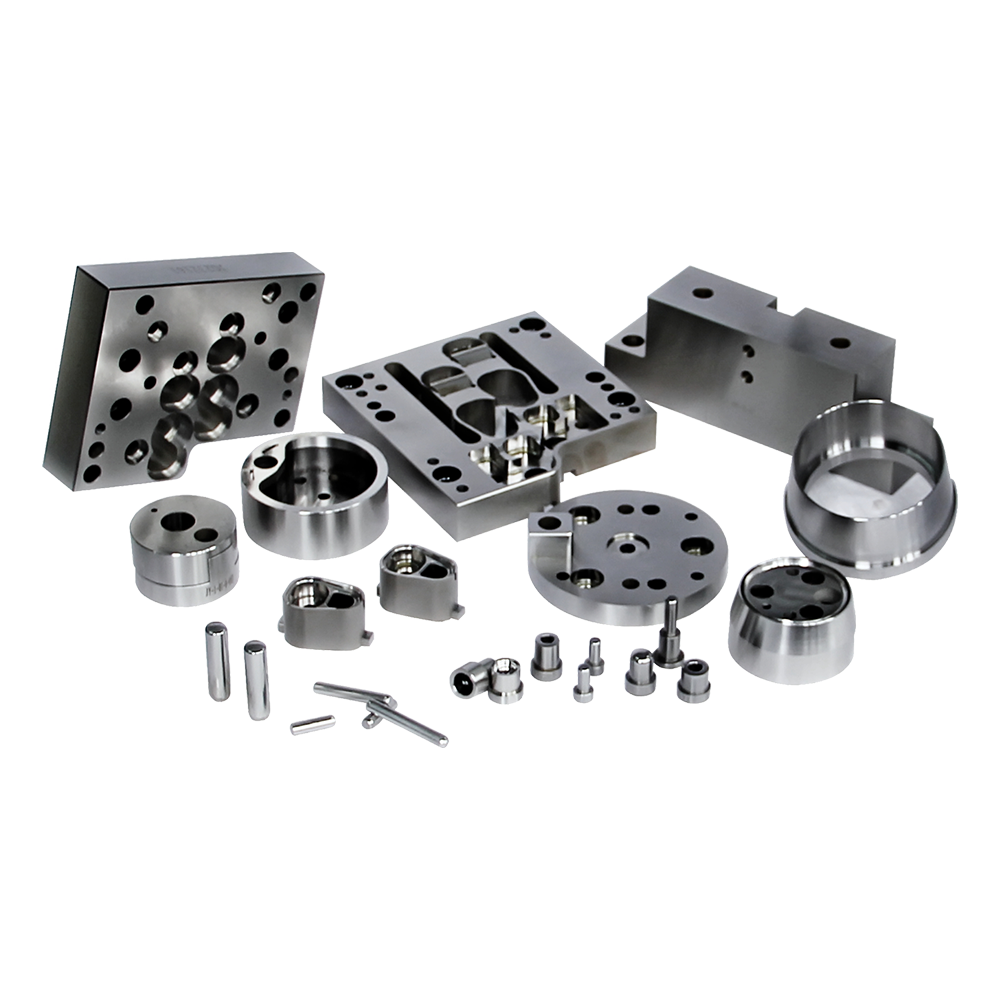
CNC high-precision machining is central to the production process. Critical components must be machined to accurate dimensions so that moving parts remain aligned during operation. In a press machine, alignment is essential because uneven loading can accelerate wear, reduce mold life, and cause inconsistent lid forming. Accurate machining also supports smoother installation of molds and more reliable closed-height adjustment.
Complete mechanical machining capability allows the manufacturer to control more of the production process internally. This can improve consistency and reduce dependence on external suppliers for critical parts. When machining, assembly, and inspection are coordinated within one manufacturing system, engineering adjustments can be made more efficiently. Feedback from testing and customer use can also be incorporated into future production.
Quality control involves checking dimensional accuracy, structural integrity, component compatibility, and system performance. For automatic equipment, electrical control inspection is as important as mechanical inspection. PLC operation, sensors, double sheet detection, overload protection, and machine response must be verified before delivery. A machine that performs well during factory testing is more likely to start smoothly after installation at the customer site.
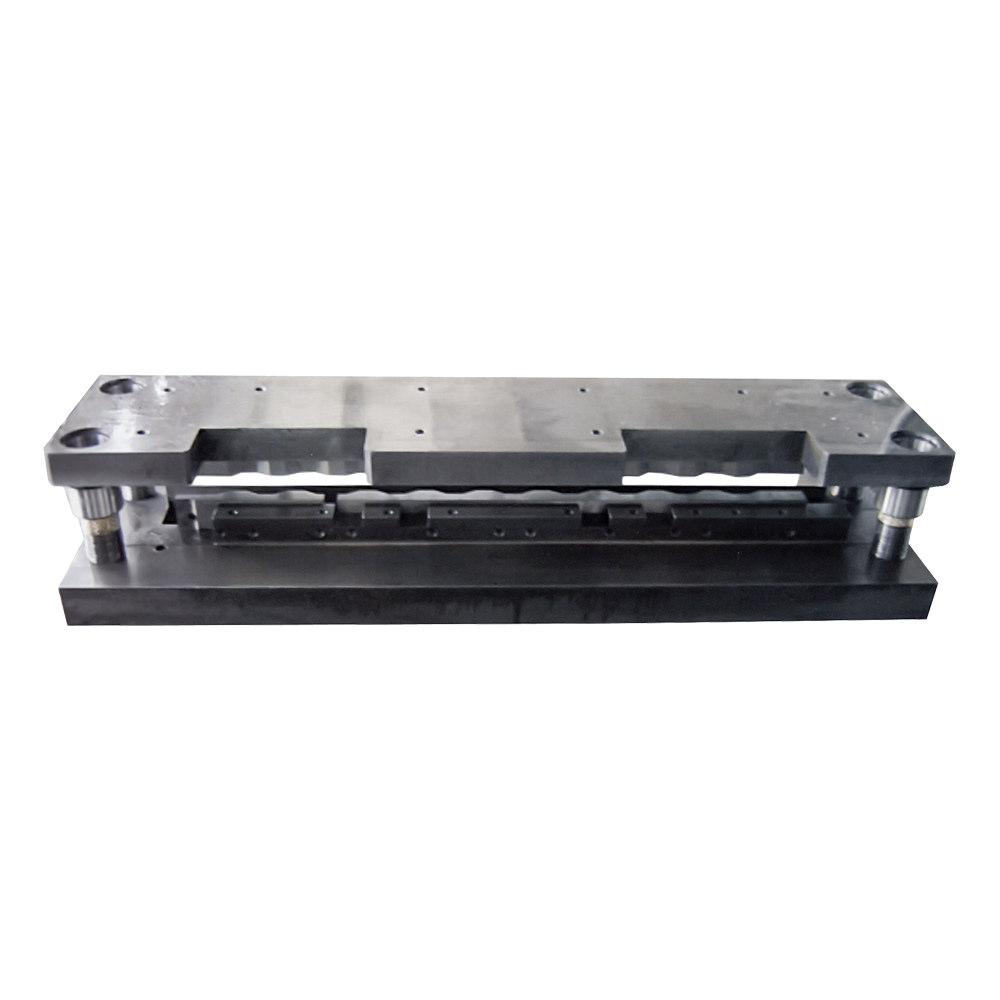
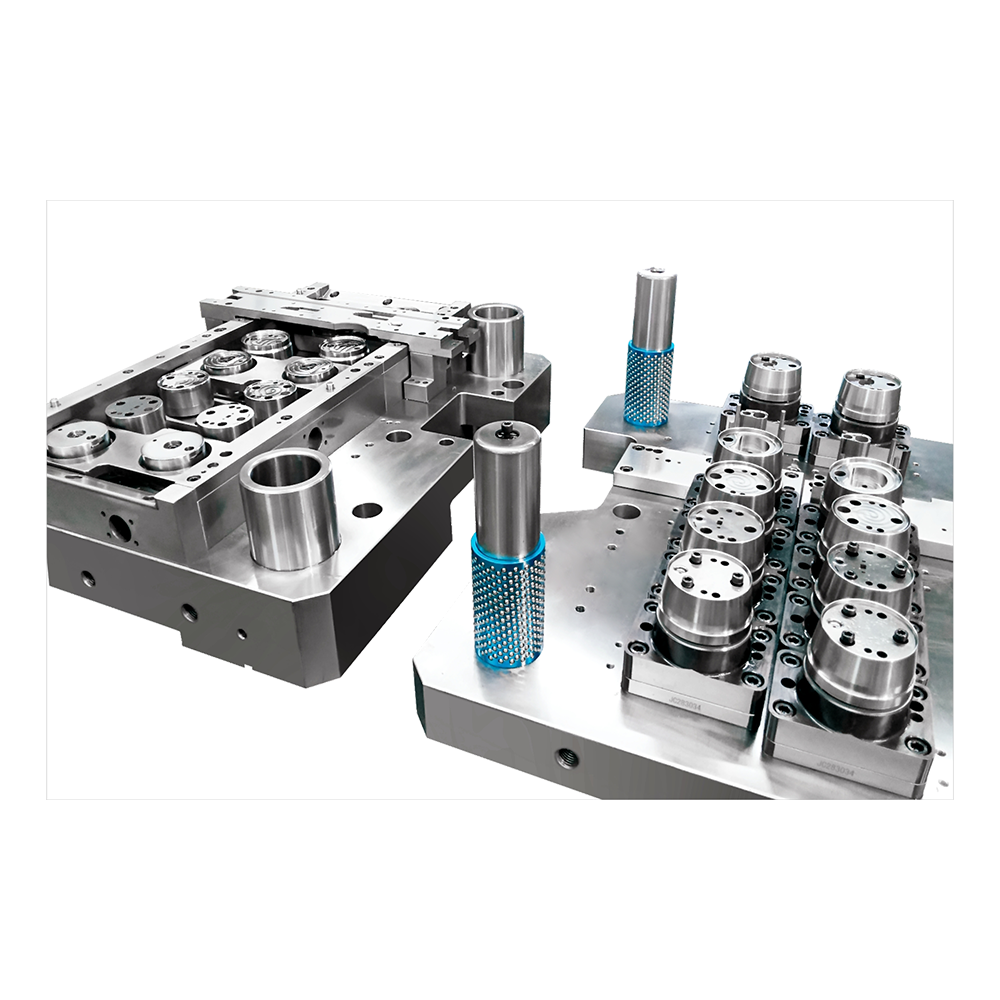
In addition to manufacturing quality, mold capability is a major advantage. Because the company has long experience in can-making molds as well as machinery, it can better understand the relationship between press design and tooling performance. This is valuable for customers because the press and mold must be matched correctly. A high-quality press cannot perform well with unsuitable tooling, and good tooling cannot reach full performance on an unstable press.
The company’s continuous innovation approach also benefits the CNC Automatic Digital Controlling Punch. Can-making requirements change as customers demand lighter materials, different lid profiles, higher output, and improved safety. Equipment must evolve to support these changes. By combining decades of production experience with modern machining and control systems, the manufacturer can improve equipment performance while maintaining practical usability.
The CNC Automatic Digital Controlling Punch is primarily used in tin can lid and end production. Its main applications include bottom covers and base covers for food cans, beverage cans, milk powder cans, chemical tanks, aerosol can components, and other tinplate containers. Depending on model selection, it can also support large tank covers, chemical tank covers, and four-screw caps.
Food can production requires hygienic, reliable, and accurately formed lids. The lid must support proper sealing and withstand processing conditions such as sterilization or pasteurization. A stable press helps ensure that the lid geometry remains consistent, which is important for sealing compound application and final seaming.
Milk powder can production often requires high-quality appearance and reliable sealing performance. The package is associated with food safety, product freshness, and brand presentation. Consistent lid forming helps maintain the visual and functional quality expected in this market. The punch can be part of a broader milk powder can making system including body making, welding, flanging, seaming, and lid production.
Chemical tank and industrial container production may require larger covers and stronger structures. The CNC-C1H model is designed mainly for large tank covers and chemical tank covers, with a configuration suited to heavier-duty production. In these applications, strength, dimensional accuracy, and durability are important because containers may hold paints, coatings, solvents, oils, or other chemical products.
Aerosol can component production may involve cones, domes, and related components. Although the punch described here focuses on lid and end making, its automatic pressing principle and mold compatibility are relevant to metal component forming in aerosol packaging systems. When integrated with the correct production line, accurate pressing helps maintain component consistency.
The machine can also support producers that manufacture lids and ends as components for other factories. Such suppliers often need high throughput and stable quality across different customer specifications. The model range allows them to select machines that match standard product families and special orders.
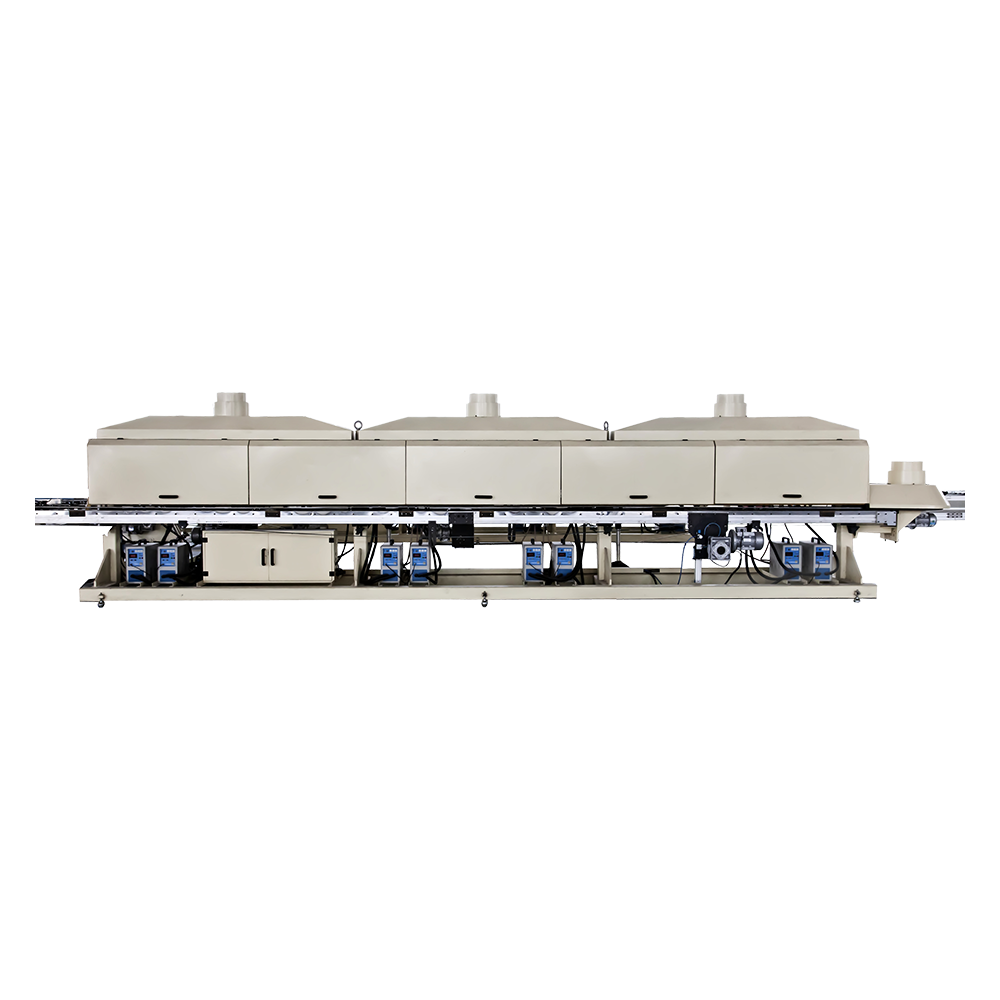
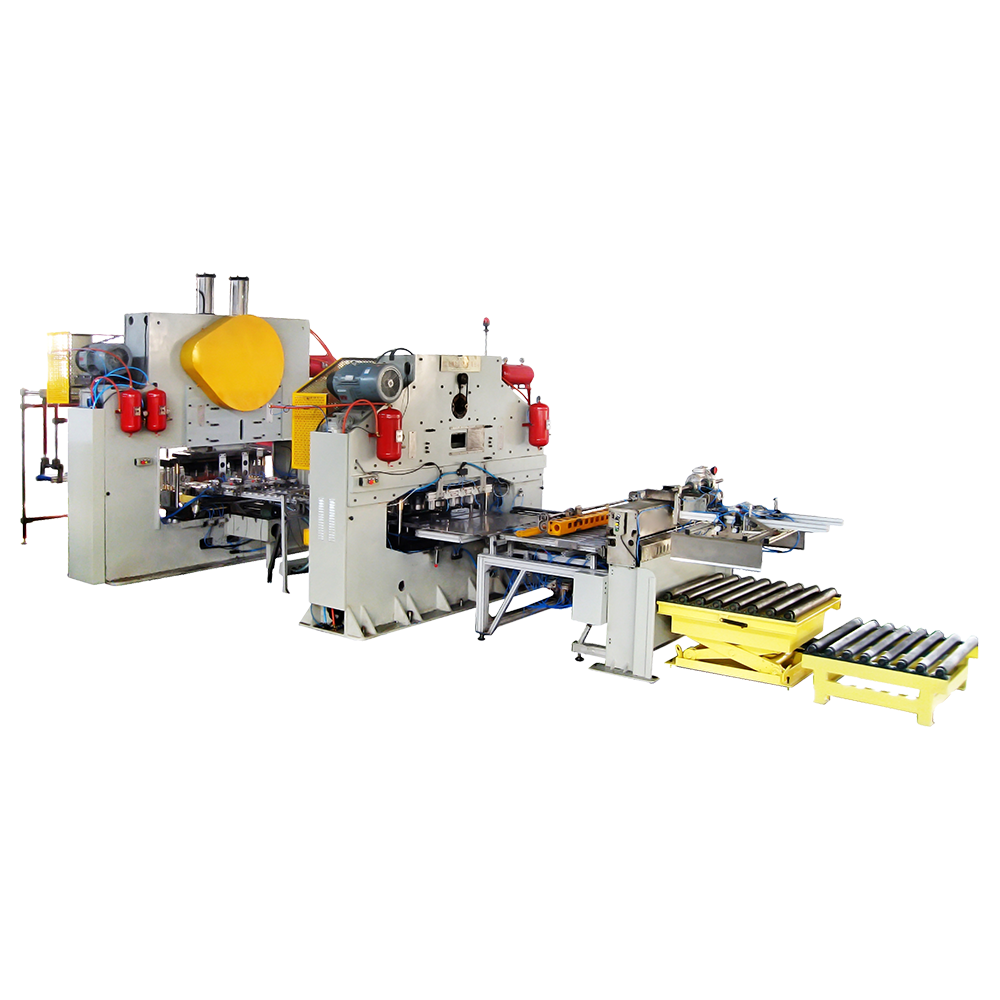
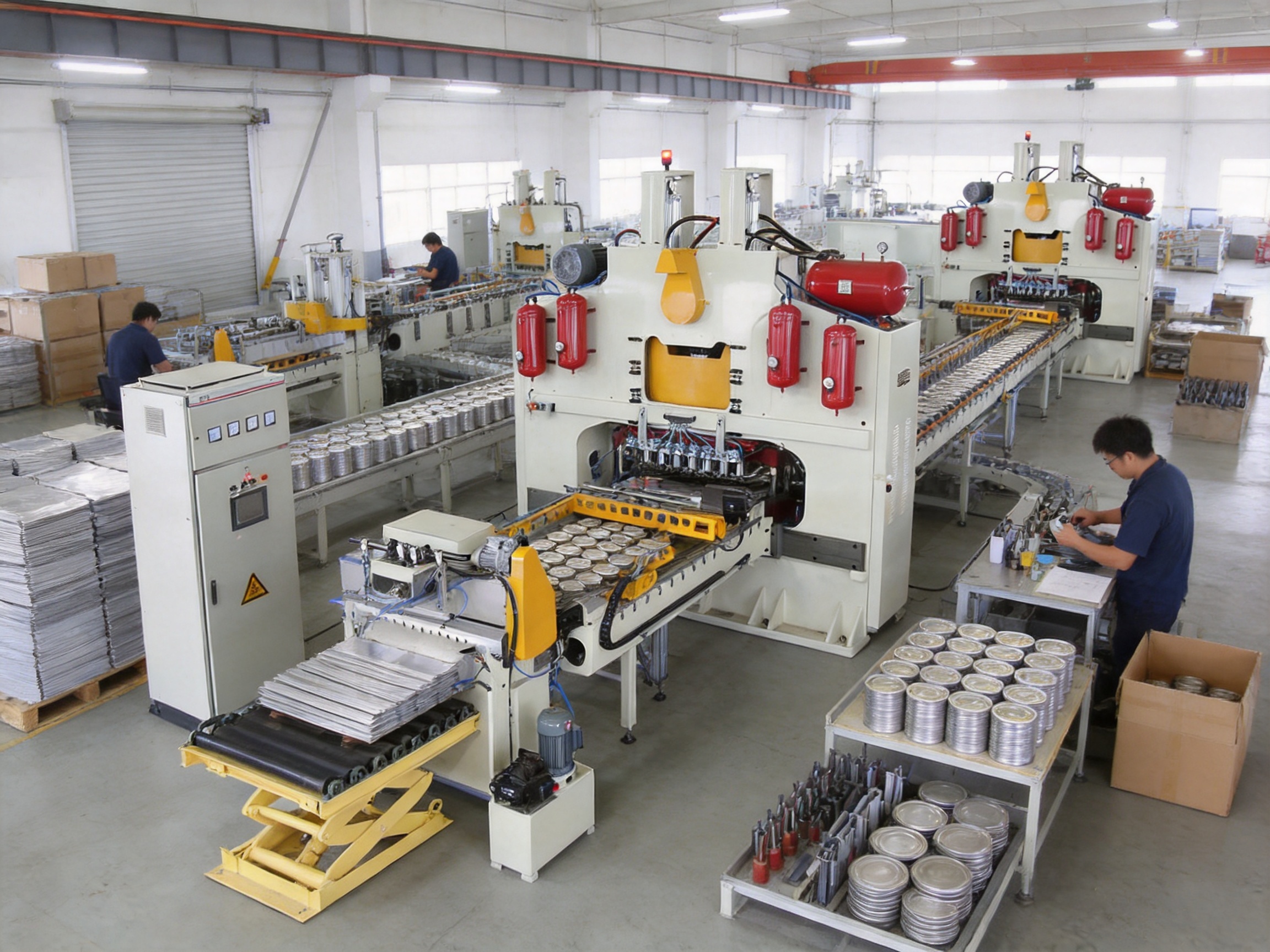
A single machine’s value increases when it can fit smoothly into a complete production system. The CNC Automatic Digital Controlling Punch can be integrated with other can-making machinery such as cutting machines, duplex slitters, automatic feeding machines, welding machines, lid curling machines, compound lining machines, drying ovens, and inspection systems. This makes it suitable for factories building complete can lid production lines or upgrading existing lines.
In a typical workflow, tinplate sheets are prepared and cut to required dimensions before entering the lid-end production section. The automatic punch then presses the sheets into blanks or formed ends according to the mold design. These parts may then move to subsequent forming, curling, lining, drying, and packing processes. The more stable the punching stage, the easier it becomes to maintain flow across the complete line.
Automatic feeding is especially important when production volume is high. The punch’s automatic operation is most effective when matched with stable upstream sheet handling and downstream transfer. Coordinated automation reduces waiting time between operations and helps maintain continuous production. It also reduces physical handling of sharp metal sheets, improving worker safety and reducing surface damage.
For manufacturers planning a complete tinplate can making machinery production line, compatibility between machines is essential. Equipment should match in capacity, product size range, electrical requirements, and maintenance approach. A supplier with experience in food can lines, beverage can lines, lid lines, chemical tank lines, aerosol canister lines, two-piece can lines, and pop can lines can provide better guidance during line planning.
After-sales support is also important for integration. Installation, commissioning, technical guidance, operation training, and spare parts supply affect how quickly a new machine reaches stable production. A technically capable manufacturer can help users reduce startup time and avoid common setup problems.
From a management perspective, the CNC Automatic Digital Controlling Punch offers benefits in productivity, cost control, quality consistency, labor organization, and maintenance planning. Automatic operation allows managers to estimate output more accurately and organize production schedules with greater confidence. Stable equipment reduces unexpected interruptions and supports on-time delivery.
Cost control is improved through material saving and reduced tooling risk. Tinplate waste, mold repair, downtime, and rejected products are significant cost factors in can manufacturing. By supporting accurate pressing and integrated protection, the machine helps reduce these hidden losses. The result is not only lower direct production cost but also better control of production uncertainty.
Quality consistency improves customer confidence. Can buyers expect lids and ends that meet specifications batch after batch. If a factory can maintain stable dimensions, smooth forming, and reliable output, it is more likely to retain customers and win repeat orders. The automatic digital controlling punch supports this by reducing variation in a critical production step.
Labor organization becomes easier because automatic machines reduce the need for constant manual intervention. Operators can focus on monitoring, quality checks, and material flow. Training can be standardized around PLC operation, safety procedures, mold change preparation, and routine inspection. This helps create a more professional and efficient production team.
Maintenance planning also benefits from a robust machine structure and protective systems. While all industrial machines require routine maintenance, overload protection and double sheet detection can help prevent sudden severe damage. A plant can focus more on planned maintenance rather than emergency repairs. Planned maintenance is usually less expensive and less disruptive than unplanned shutdowns.
Selecting the right CNC Automatic Digital Controlling Punch requires a careful review of product type, size range, production volume, mold plan, available space, power supply, and long-term business goals. A factory producing large quantities of standard bottom covers may choose a high-module configuration, while a factory producing larger chemical tank covers may require a model designed for heavier or larger workpieces.
Working pressure is one of the first considerations. Higher working pressure supports more demanding forming operations and multi-module production. However, higher pressure models may also require greater investment, stronger foundations, and more power. The selected pressure should match actual production needs rather than simply choosing the largest available model.
Stroke and closed height are also important. These parameters affect tooling compatibility and forming capability. The mold designer and machine supplier should confirm that the intended dies can operate properly within the machine’s closed-height range and adjustment capability. Incorrect matching can lead to poor forming results or mechanical interference.
Maximum loading module capacity affects output. A machine with more modules can produce more parts per stroke, but it also requires suitable molds, feeding accuracy, and sufficient working pressure. Manufacturers should consider whether their production volume justifies a higher module count. For high-volume factories, multi-module production can significantly improve efficiency. For lower-volume or specialized production, a smaller configuration may be more economical.
Installation dimensions must be reviewed during plant planning. Several models have installation dimensions around 8000 by 6310 by 3170 mm, while the CNC-C8 uses a smaller footprint of about 5400 by 4000 by 2500 mm. Factory layout should allow space for material loading, operator access, maintenance access, electrical cabinets, safety zones, and downstream transfer.
Power requirements should also be confirmed. Main power and total power vary by model. The factory should ensure that electrical supply, wiring, control environment, and safety systems meet the machine’s requirements. Proper installation helps protect electrical components and supports stable operation.
Long-term value depends on machine durability, maintainability, spare parts availability, and operator discipline. The CNC Automatic Digital Controlling Punch is designed for industrial production, but its performance depends on correct use and regular maintenance. Operators should follow the recommended procedures for startup, lubrication, inspection, material loading, mold setup, and shutdown.
Routine inspection should include checking feeding accuracy, sensor function, mold condition, guide components, lubrication points, fasteners, electrical connections, and safety systems. The double sheet detector and overload protection should be kept in good working condition. If safety devices are bypassed or ignored, the risk of damage and injury increases significantly.
Mold maintenance is equally important. Multi-module dies are valuable assets and must be cleaned, inspected, and stored correctly. Worn or damaged mold parts can cause defective lids and may create abnormal load on the press. Regular mold inspection helps maintain product quality and protects the machine.
Spare parts supply is another part of long-term value. A machine supplier with after-sales service, technical guidance, and spare parts support can reduce downtime when replacement components are needed. For production equipment, the availability of service support often matters as much as the original purchase price.
Training also contributes to long-term value. Operators who understand machine control, safety logic, mold change procedures, and quality inspection can prevent many common problems. Maintenance personnel who understand the mechanical and electrical systems can identify early signs of wear before they become serious failures.
When properly selected, installed, and maintained, the CNC Automatic Digital Controlling Punch can serve as a high-value production asset. Its contribution includes direct output, lower scrap, improved reliability, safer operation, and better customer satisfaction.
The can-making industry is highly competitive. Customers expect stable quality, reasonable price, fast delivery, and the ability to support different packaging designs. Manufacturers must therefore improve efficiency while maintaining strict quality control. The CNC Automatic Digital Controlling Punch supports these goals by combining automatic production, mold flexibility, material saving, PLC control, and safety protection.
Its advantages are not limited to a single feature. The machine’s value comes from the combined effect of multiple strengths. Automatic sheet pressing improves throughput. Multi-module capability increases output per stroke. Material saving reduces cost. Double sheet detection and overload protection protect tooling and reduce downtime. PLC control supports standardized operation. A wide model range allows suitable selection for different products. Strong manufacturing capability supports machine accuracy and durability.
For new can factories, this machine can be part of a modern production system from the beginning. For existing factories, it can upgrade production capacity and improve quality consistency. For component suppliers, it can support reliable lid and end production across different customer orders. For manufacturers of food, beverage, chemical, and aerosol containers, it helps establish a stronger foundation for downstream can assembly and filling.
The machine also reflects the importance of specialized manufacturing knowledge. Can lid and end production requires understanding of metal materials, forming pressure, mold design, sheet feeding, safety protection, and production-line balance. A manufacturer with decades of experience in can-making machinery and molds can provide equipment that is more closely aligned with real production needs.
It is used for automatic sheet pressing in tin can lid and end production. Depending on the model and mold configuration, it can produce bottom covers, base covers, large tank covers, chemical tank covers, and certain special caps.
The machine offers automatic operation, PLC control, double sheet detection, overload protection, and flexible mold configurations. Compared with conventional manual or semi-automatic presses, it provides better production consistency, lower labor intensity, improved material utilization, and stronger safety protection.
The number of mold heads can range from 1 to 15 depending on the selected model and product requirement. High-capacity models can support multi-module production for greater output per stroke.
Double sheet detection helps prevent two sheets from entering the press together. This protects the mold, reduces defective production, and helps avoid costly downtime caused by incorrect feeding.
The CNC-C12 model is suitable for high-output bottom and base cover production because it offers 2500 KN working pressure and up to 15 loading modules. Final selection should still be confirmed according to product diameter, material thickness, and mold design.
The CNC-C1H model is designed mainly for large tank covers and chemical tank covers. It features a configuration intended for heavier industrial cover applications.
Yes. The machine is designed for efficient sheet pressing and stable production, helping reduce waste caused by misfeeding, inconsistent positioning, or defective pressing. Improved material utilization can reduce production cost over long-term operation.
The PLC controller coordinates machine operation and supports digital control of the automatic production process. It helps improve repeatability, simplify operation, and support standardized production management.
Yes. It can be integrated with sheet cutting, feeding, lid forming, curling, compound lining, drying, inspection, and packing equipment. It is suitable for use in complete tin can lid end production systems and related can-making lines.
Important support includes installation, commissioning, technical guidance, operator training, maintenance advice, and spare parts supply. These services help the machine reach stable production faster and maintain long-term performance.
The CNC Automatic Digital Controlling Punch is a practical and advanced solution for tin can lid and end manufacturing. It combines automatic sheet pressing, multi-mold flexibility, PLC control, double sheet detection, overload protection, and a wide selection of model configurations. These features help manufacturers improve productivity, reduce material waste, protect tooling, and maintain consistent lid quality.
Its value is strengthened by the manufacturing capability behind it. Zhejiang Golden Eagle Food Machinery Co., Ltd. brings decades of experience in can-making machinery and molds, advanced CNC machining capability, quality management systems, and international market experience. This background supports the machine’s precision, durability, and practical usability in real factory conditions.
For manufacturers seeking to improve tinplate lid and end production, the machine offers a strong balance of efficiency, safety, flexibility, and long-term reliability. Whether used for food cans, beverage cans, milk powder cans, chemical containers, aerosol-related components, or specialized tinplate caps, the CNC Automatic Digital Controlling Punch provides a dependable foundation for modern can-making operations.
1. Kalpakjian, S., and Schmid, S. R. Manufacturing Engineering and Technology. Pearson Education.
2. Lange, K. Handbook of Metal Forming. Society of Manufacturing Engineers.
3. Hosford, W. F., and Caddell, R. M. Metal Forming: Mechanics and Metallurgy. Cambridge University Press.
4. Paine, F. A., and Paine, H. Y. A Handbook of Food Packaging. Springer.
5. Soroka, W. Fundamentals of Packaging Technology. Institute of Packaging Professionals.
6. International Organization for Standardization. ISO 9001 Quality Management Systems: Requirements.
7. International Organization for Standardization. ISO 14001 Environmental Management Systems: Requirements with Guidance for Use.
Related Products

Founded in 1978, the company is one of the largest can-making machinery well-known companies at home and abroad.
Product Categories
Contact Information
Zhongshatou Shenjiamen Zhoushan Zhejiang China
+86-580-3056646

 English
 中文简体
中文简体
 русский
 عربى
عربى
 Español