2026-03-05
The global aerosol packaging market has experienced steady growth over the past decade, driven by rising demand for personal care products (e.g., deodorants, hairsprays), household cleaners, and industrial aerosols. According to the International Packaging Association (IPA), the market is projected to reach $35 billion by 2030, with a compound annual growth rate (CAGR) of 5.2% from 2024 to 2030. At the core of every aerosol can is the cone lid—a critical component that ensures airtight sealing, structural integrity, and safe dispensing of contents. However, traditional aerosol cone lid production lines often struggle with low output, inconsistent quality, and limited flexibility, hindering manufacturers from meeting growing demand. This is where advanced solutions like the 2-lanes D109-D211 Aerosol Cone Lid Line come into play, revolutionizing the way cone lids are produced with unmatched efficiency, precision, and adaptability.
Aerosol cone lids are not just functional parts; they are key to consumer safety and product performance. A poorly manufactured lid can lead to leaks, contamination, or even product failure, which can damage brand reputation and result in costly recalls. For manufacturers, investing in a high-performance production line is no longer an option but a necessity to stay competitive in a fast-paced market. The 2-lanes D109-D211 line addresses these challenges head-on, combining cutting-edge technology with decades of industry expertise to deliver a solution that outperforms traditional lines in every aspect.
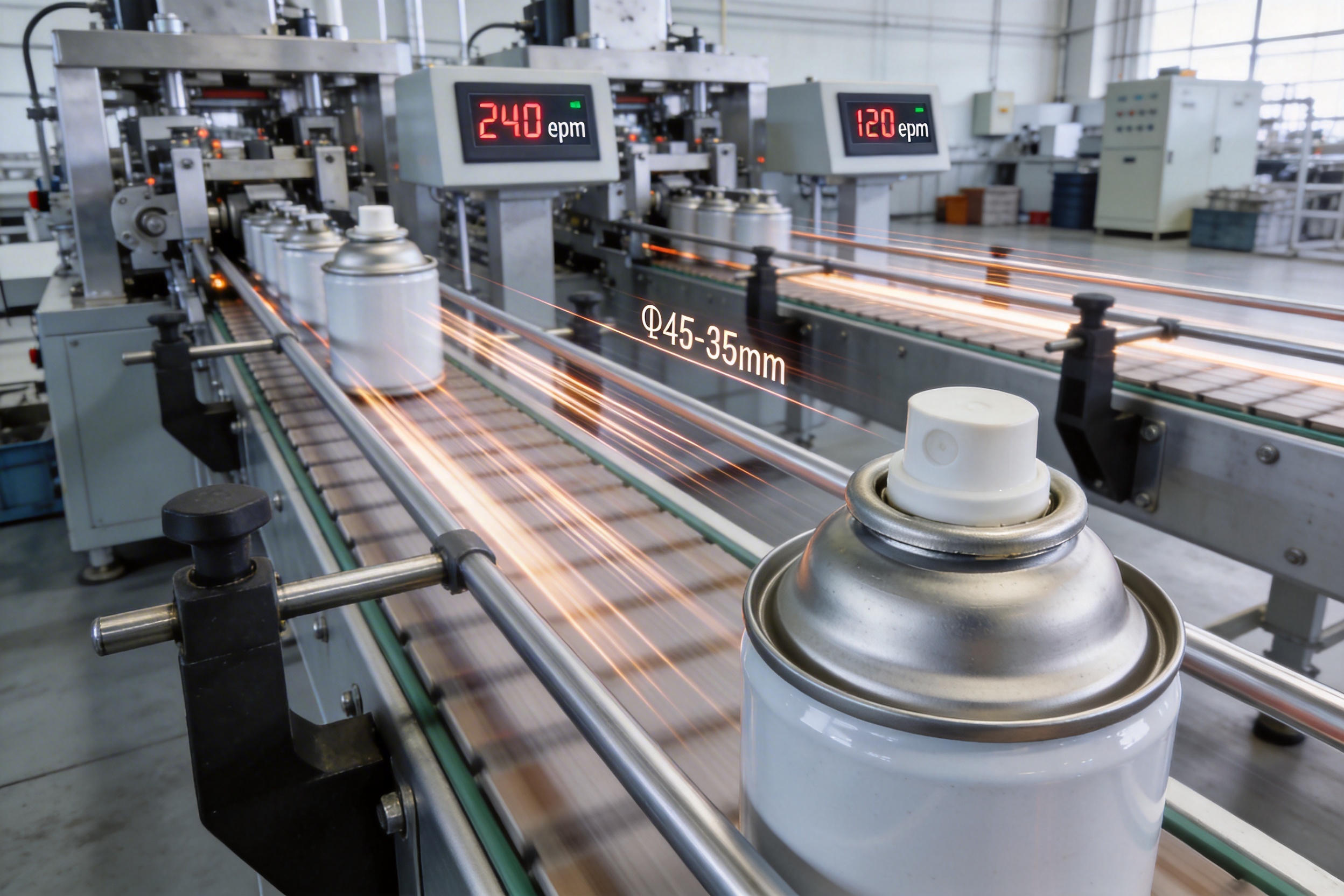
In this article, we will take an in-depth look at the 2-lanes D109-D211 Aerosol Cone Lid Line, exploring its key features, advantages over competing models, and the advanced manufacturing processes that make it a top choice for aerosol can manufacturers worldwide. We will also highlight the strengths of the company behind this innovative line—an industry leader with over four decades of experience in can-making machinery—and conclude with a Q&A section to address common questions about the product and its manufacturer.
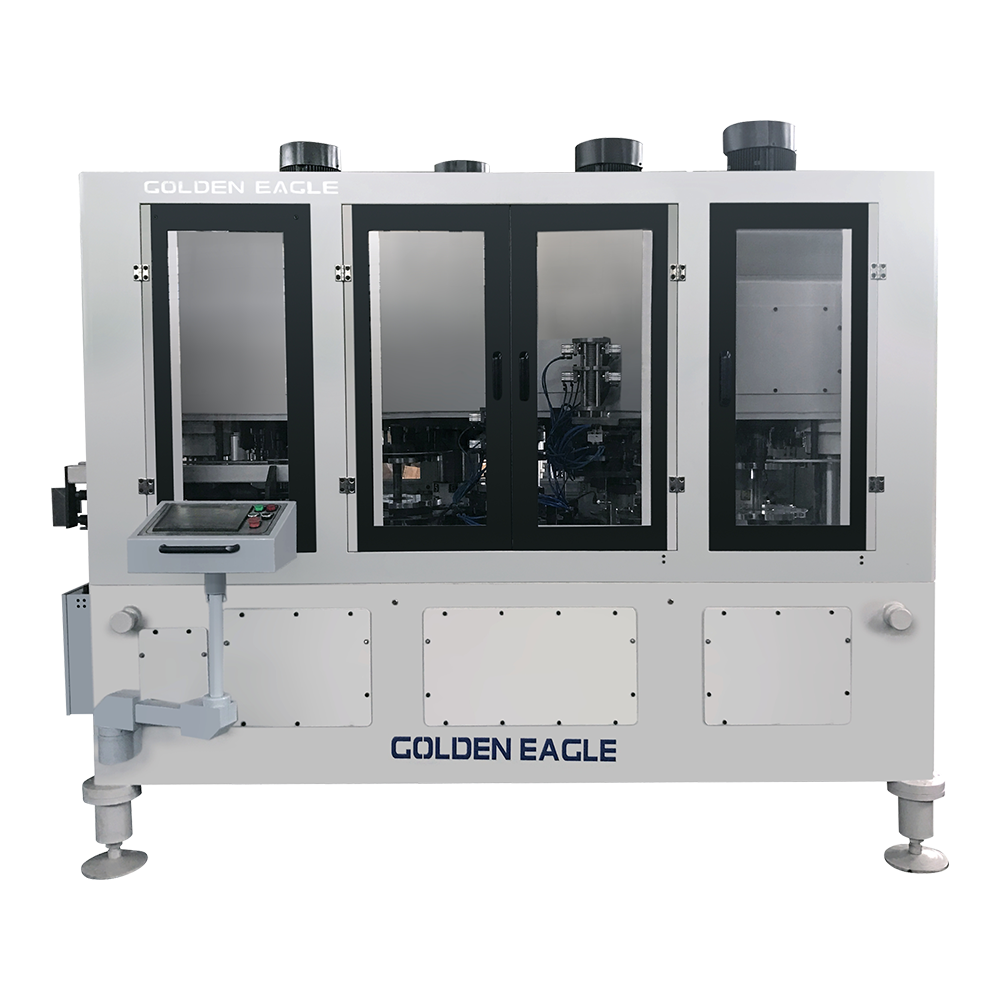
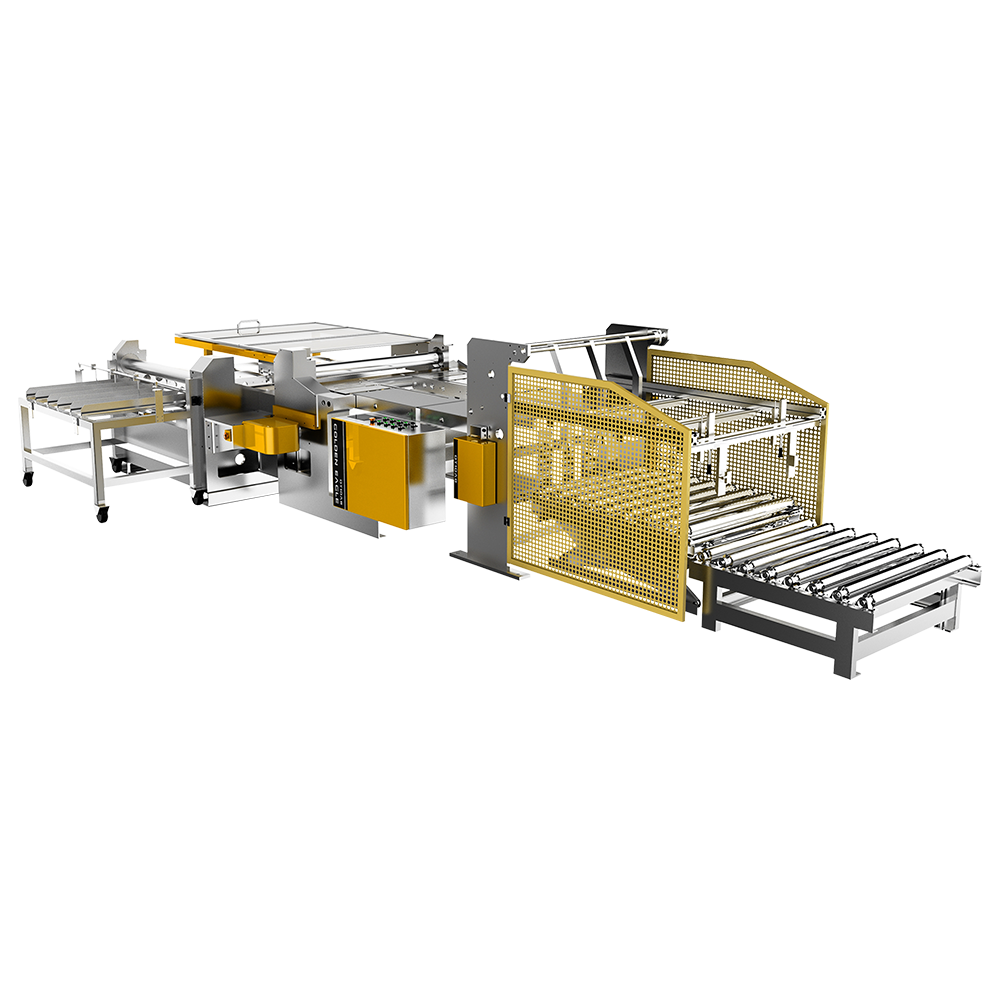
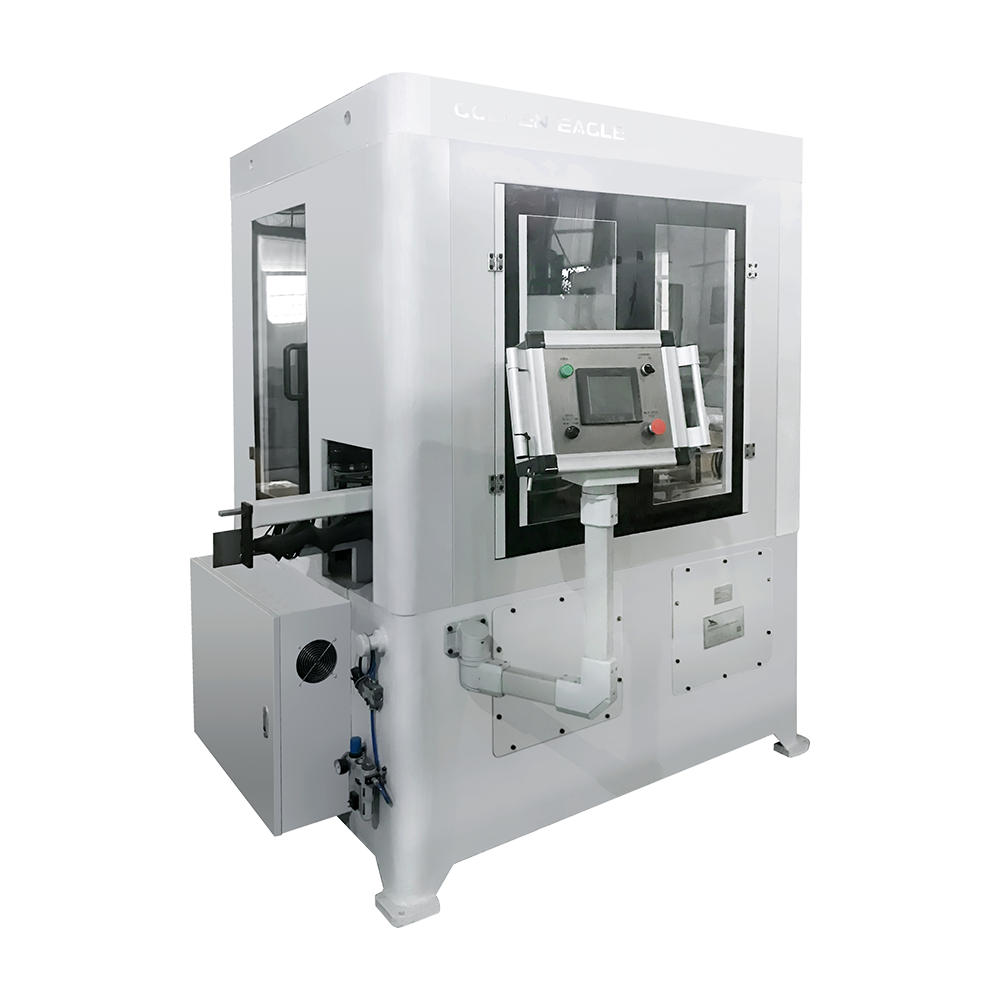
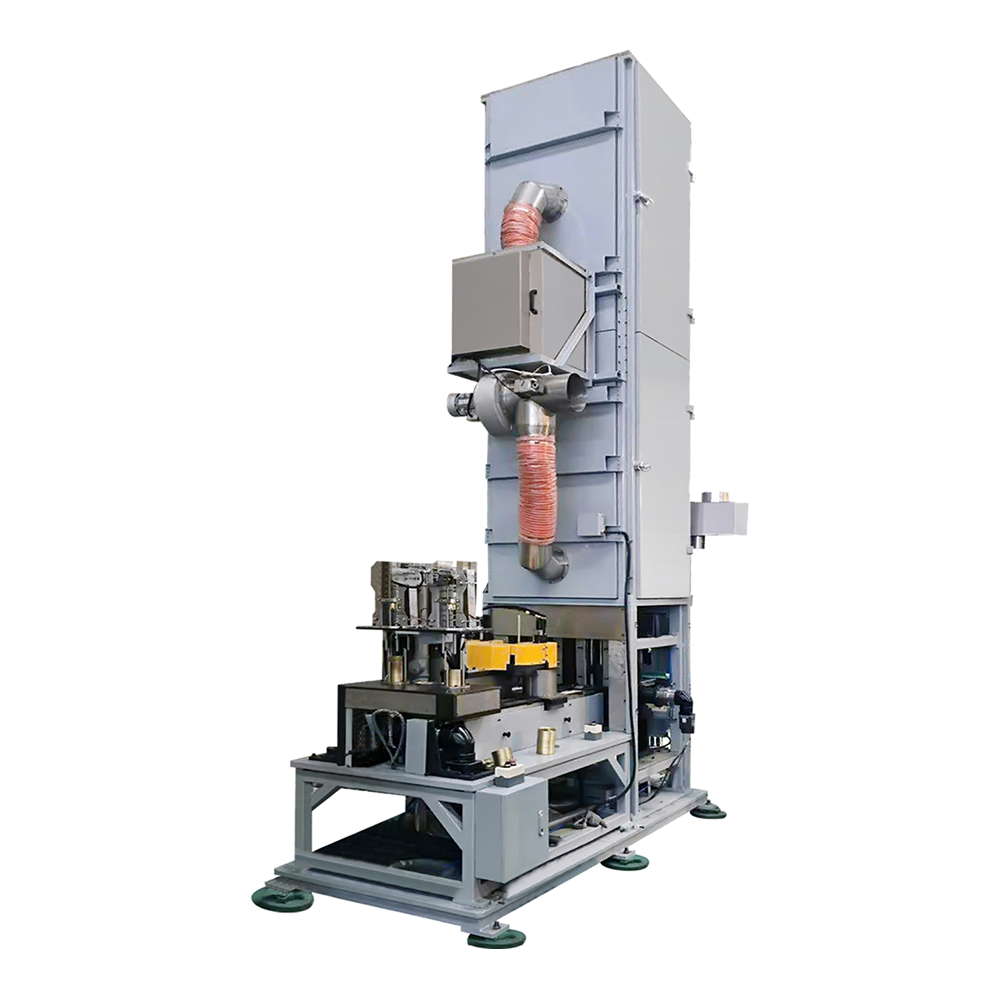
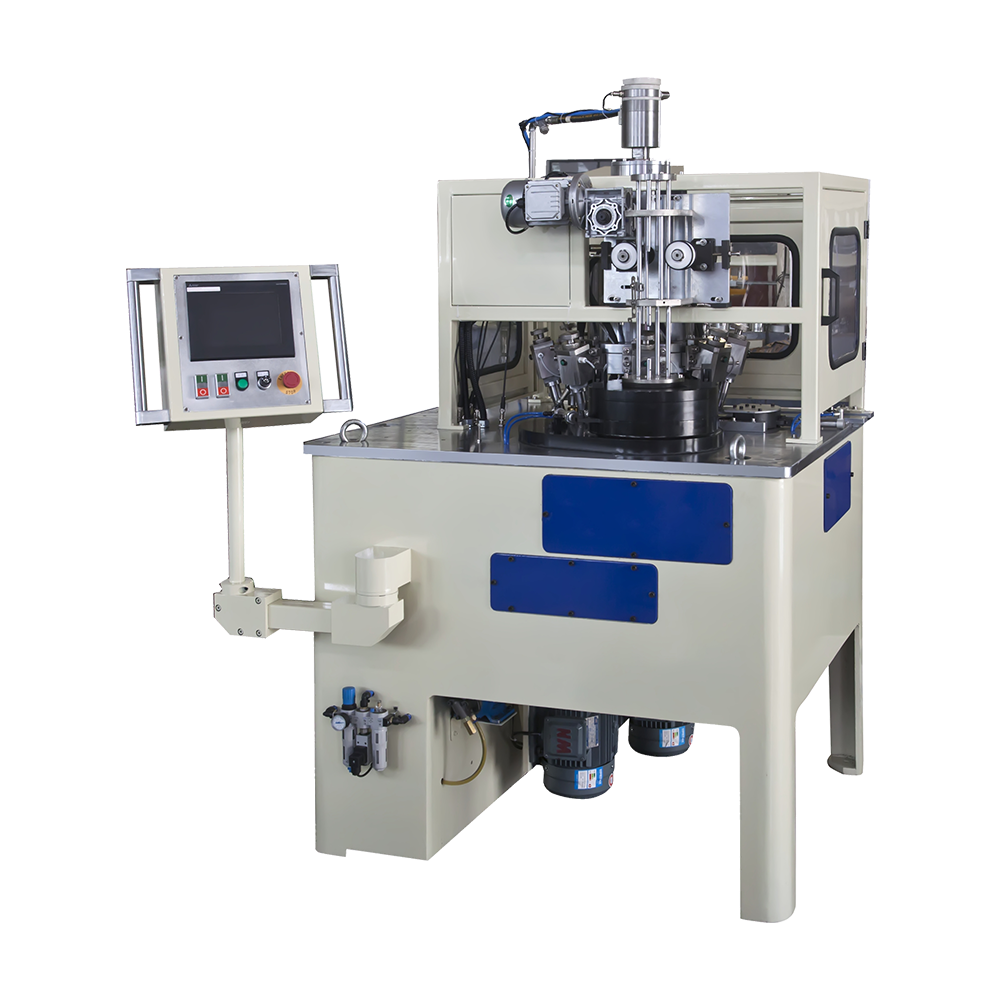
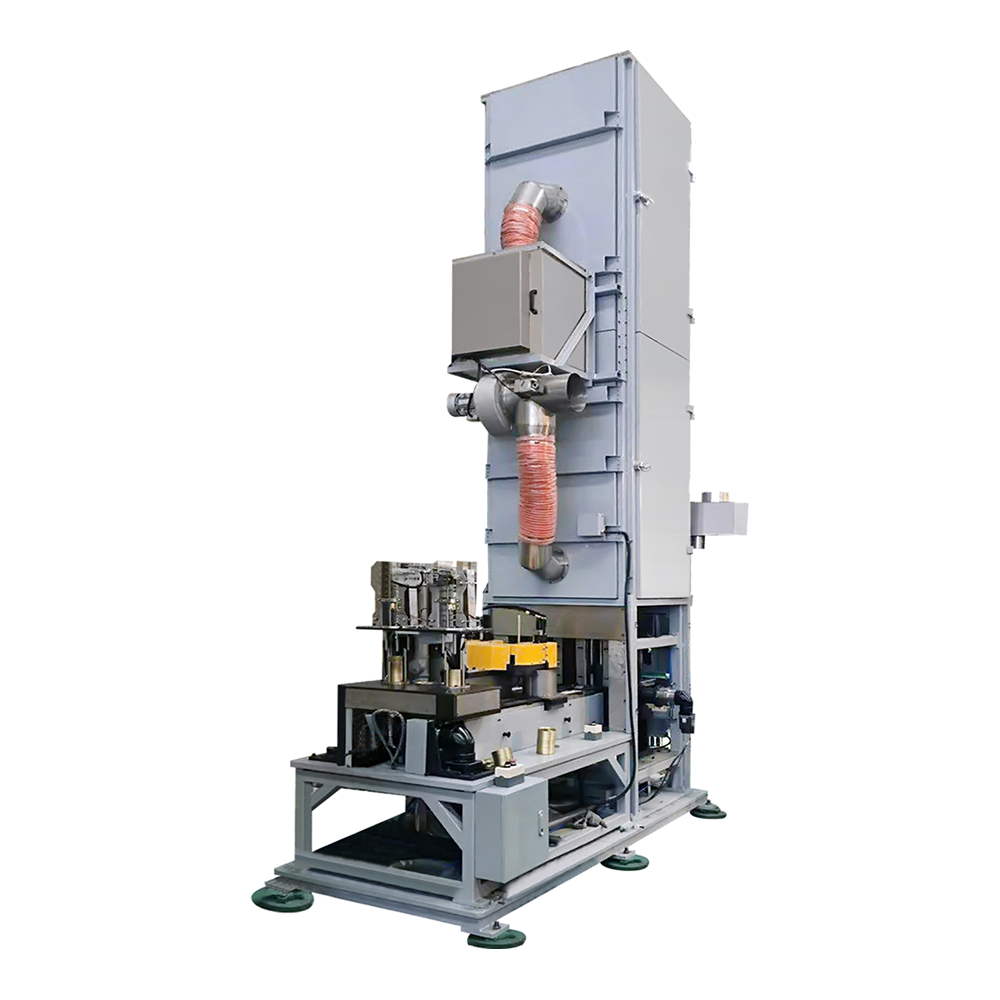
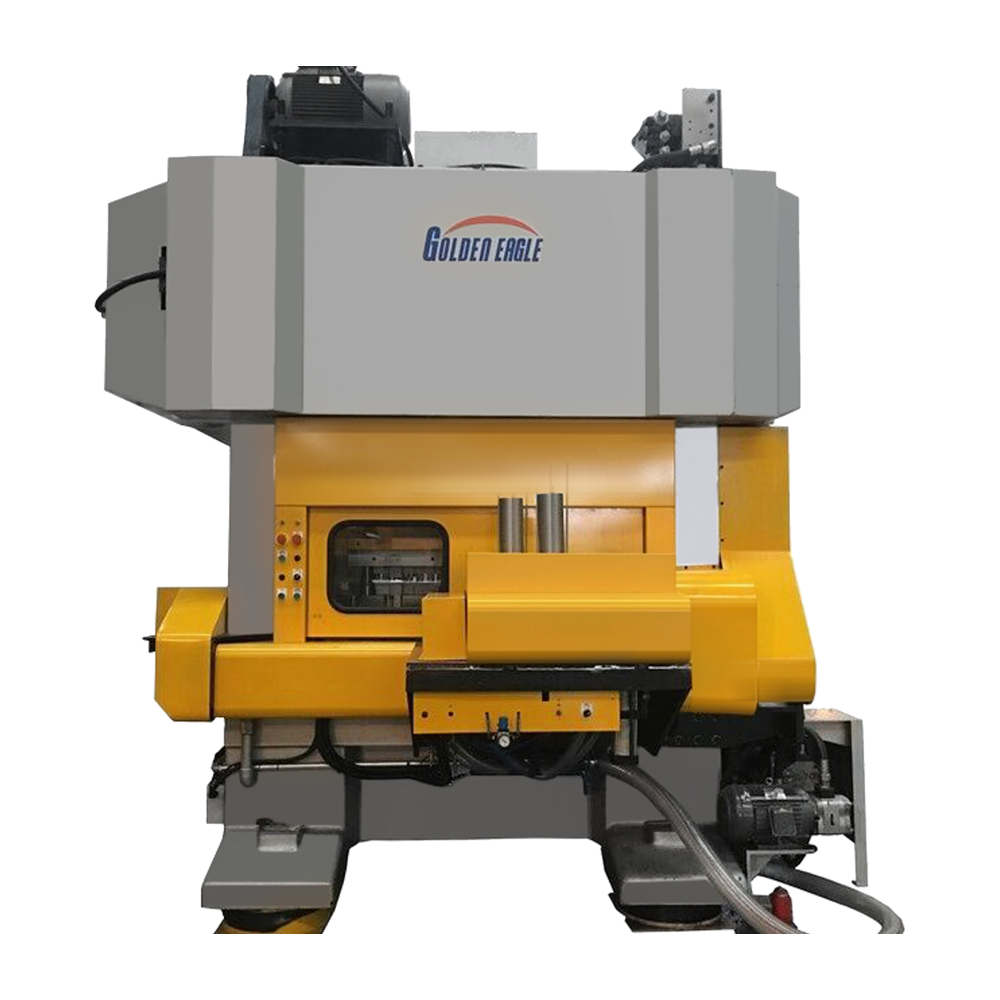
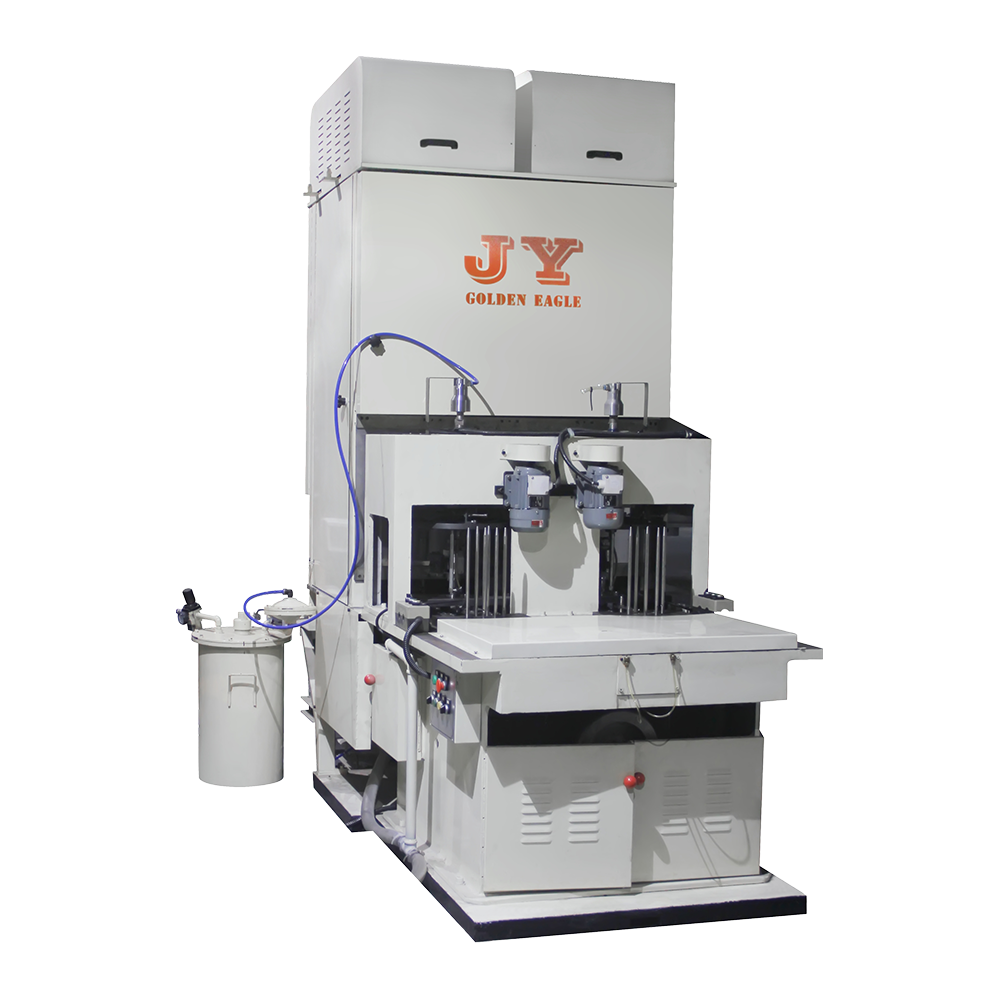
The 2-lanes D109-D211 Aerosol Cone Lid Line is a state-of-the-art automatic production system designed to manufacture high-quality aerosol cone lids at scale. Built to meet the demands of modern can manufacturers, this line combines speed, precision, and flexibility to produce lids that meet international quality standards. Let’s break down its key features and how they contribute to its superior performance:
Before diving into the advantages, let’s first outline the core technical specifications of the 2-lanes D109-D211 line, which set it apart from other production systems:
Each of these specifications is carefully engineered to address specific pain points in aerosol lid production. For example, the 2-lane design doubles the output capacity without requiring additional floor space, making it ideal for manufacturers with limited facility size. The automatic operation eliminates the need for manual handling, which not only reduces labor costs but also minimizes the risk of human error—such as misaligned dies or inconsistent forming pressure—that can lead to defective lids.
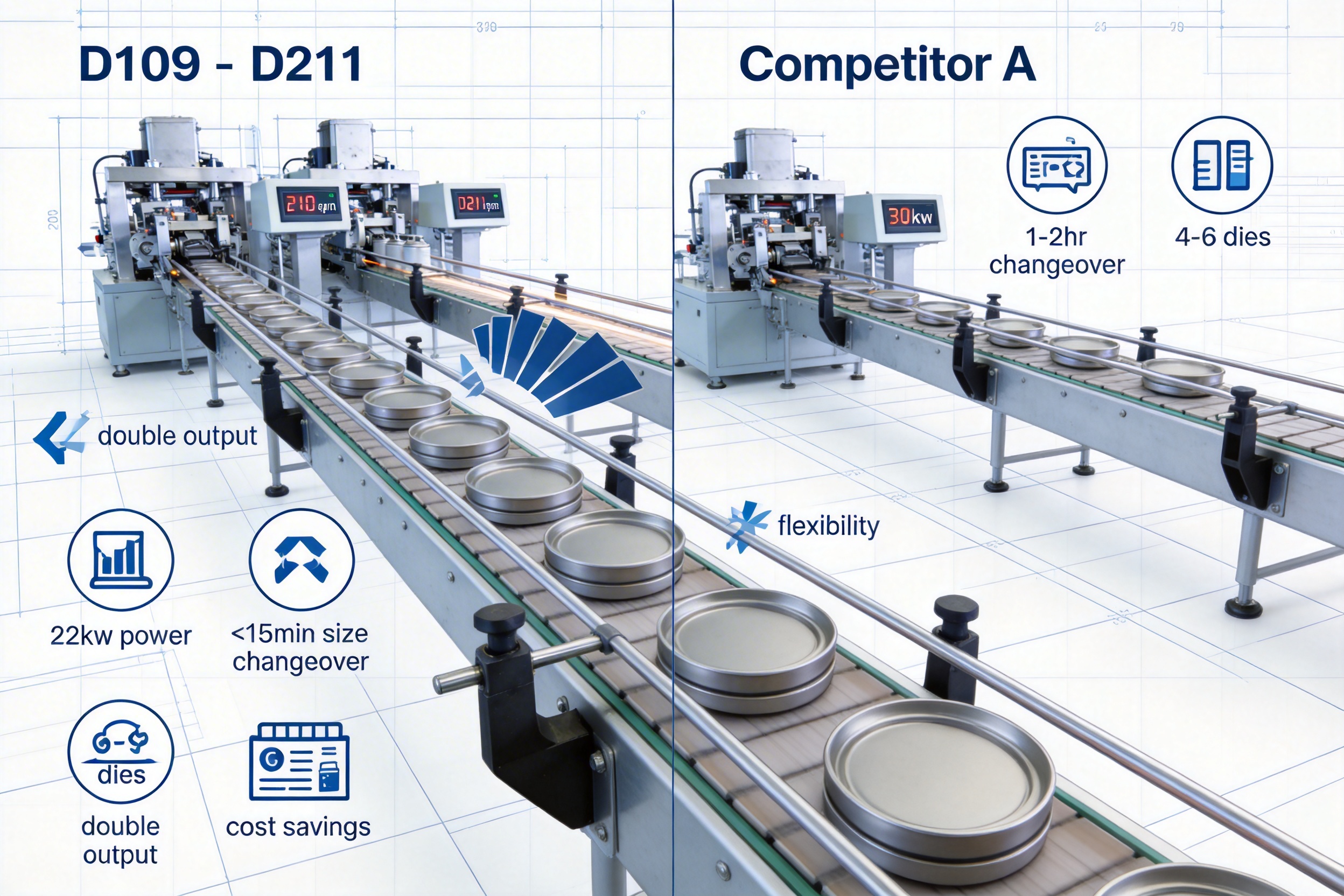
The 2-lanes D109-D211 line stands out from its competitors due to several key advantages that directly translate to higher productivity, lower costs, and better quality for manufacturers. Let’s compare it to typical competing models:
One of the most significant advantages of the 2-lanes D109-D211 line is its output speed. With a capacity of 240 epm in 2 lanes, it produces twice as many lids per minute as single-lane competing lines (which typically max out at 120 epm). This means manufacturers can meet larger orders in less time, reduce lead times, and increase their overall production capacity without investing in multiple machines. For example, a manufacturer producing 100,000 lids per day would need 13.89 hours with a single-lane line (120 epm × 60 minutes = 7,200 per hour; 100,000 /7,200 ≈13.89 hours) but only 6.94 hours with the 2-lanes line (240 epm ×60=14,400 per hour; 100,000/14,400≈6.94 hours). This not only saves time but also reduces energy costs and labor hours.
Competing lines often have narrow size ranges (e.g., Φ50-60mm) or limited material compatibility, forcing manufacturers to invest in multiple lines for different products. The 2-lanes D109-D211 line, however, supports lid sizes from Φ45 to Φ65mm—covering the majority of aerosol can lid sizes used in personal care, household, and industrial applications. Additionally, it works with iron thicknesses from 0.17mm to 0.40mm and hardness levels T3-T4, which are the most common materials used in can lid production. This flexibility allows manufacturers to produce a variety of lid types with a single line, reducing capital expenditure and simplifying production planning.
Many competing lines require manual adjustments for size changes or die swaps, which can take hours and lead to production downtime. The 2-lanes D109-D211 line is fully automatic, with computer-controlled adjustments that allow for quick size changes (often in minutes) and consistent forming pressure. This not only reduces downtime but also ensures that every lid is produced with the same high quality—eliminating defects caused by manual errors. For example, a size change from Φ50mm to Φ60mm can be completed in less than 15 minutes with the automatic system, compared to 1-2 hours with a manual line.
With a power consumption of only 22kw, the 2-lanes D109-D211 line is significantly more energy-efficient than competing models, which often consume 30kw or more for similar output. This translates to lower operational costs over time—especially for manufacturers running the line 24/7. For example, if electricity costs $0.15 per kWh, a 22kw line would cost $79.20 per day (22kw ×24h ×$0.15) compared to $108 per day for a 30kw line—saving $28.80 per day, or $10,512 per year. These savings can be reinvested in other areas of the business, such as R&D or marketing.
The line’s precision is another key advantage. It uses high-quality dies (6-9 dies per line) with a die gap of 110mm, ensuring that every lid is formed with exact contours and dimensions. This precision is critical for ensuring airtight sealing—an essential requirement for aerosol cans. Additionally, the line is built with durable components that can withstand continuous operation for years. Competing lines often use lower-quality materials, leading to frequent breakdowns and higher maintenance costs. The 2-lanes D109-D211 line, however, is designed for long-term use, with minimal maintenance requirements.
The 2-lanes D109-D211 Aerosol Cone Lid Line is not just a product of cutting-edge technology—it is also a testament to the manufacturer’s decades of experience and commitment to quality. The company behind this line is a global leader in can-making machinery, with over 46 years of expertise in designing and manufacturing equipment for the can industry. Let’s explore its key strengths and manufacturing processes:
Founded in 1978, the company has a rich history in can-making machinery. Originally known as Zhejiang Food Machinery Factory and Zhoushan Mold Factory, it has evolved into a modern, global enterprise with a team of over 350 well-trained personnel—including experienced design and development engineers. Over the past four decades, the company has produced more than 10,000 pieces of can and can lid equipment, serving clients in over 30 countries across Europe, Asia, Africa, North America, South America, and Oceania. This extensive track record is a testament to its reliability and commitment to quality.
The company’s R&D team is at the forefront of can-making technology, combining European design principles (similar to those used by KRUPP, SOUDRONIC, and ALFONS-HAAR) with local practical experience to create innovative solutions. The team continuously innovates, refining its products to meet the changing needs of the industry. For example, the 2-lanes D109-D211 line was developed based on feedback from clients who needed higher output and more flexibility—addressing pain points that traditional lines could not solve. This customer-centric approach ensures that the company’s products are always aligned with market demands.
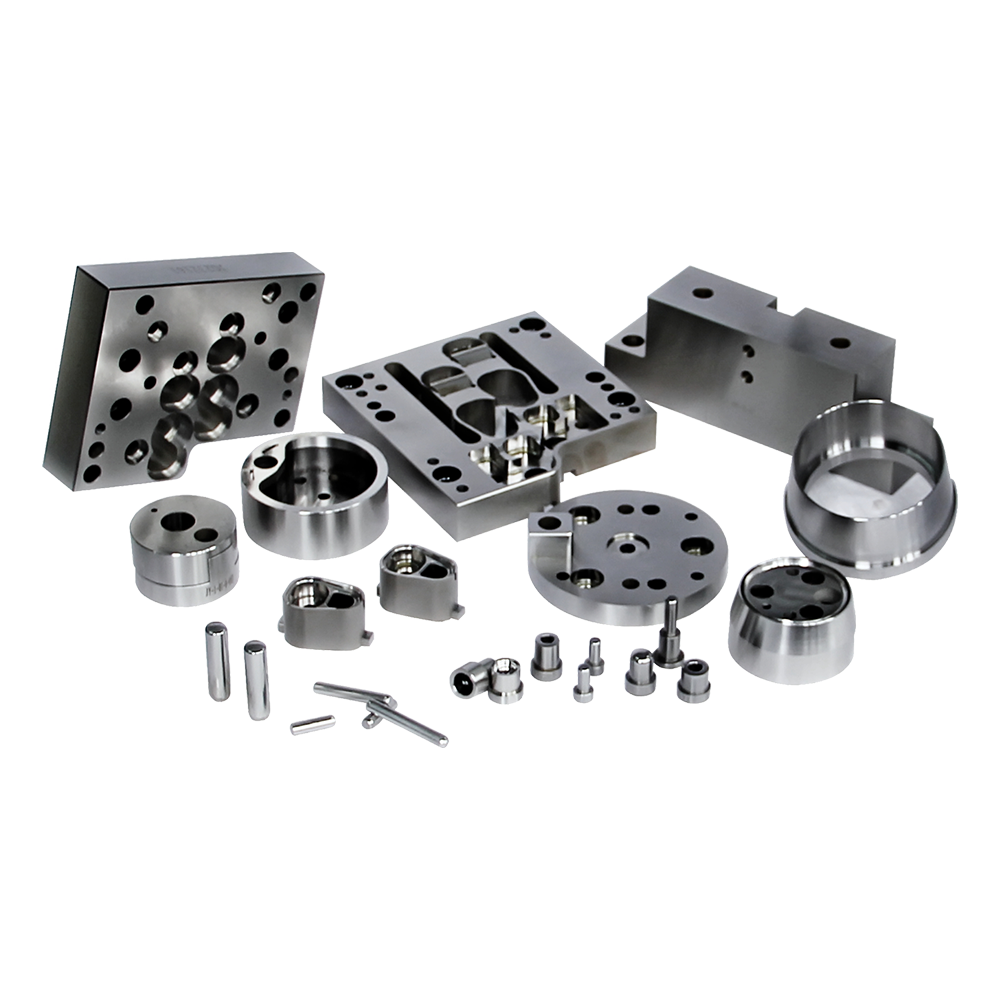
The company uses advanced manufacturing equipment to produce its machinery, including CNC high-precision machining centers and complete mechanical machining equipment. These tools ensure that every component is manufactured with exact specifications, leading to high-precision and durable machinery. For example, the dies used in the 2-lanes D109-D211 line are machined using CNC technology, which guarantees consistent dimensions and contours—critical for producing high-quality lids. The company’s investment in modern equipment also allows it to scale production efficiently, meeting the demands of large orders.
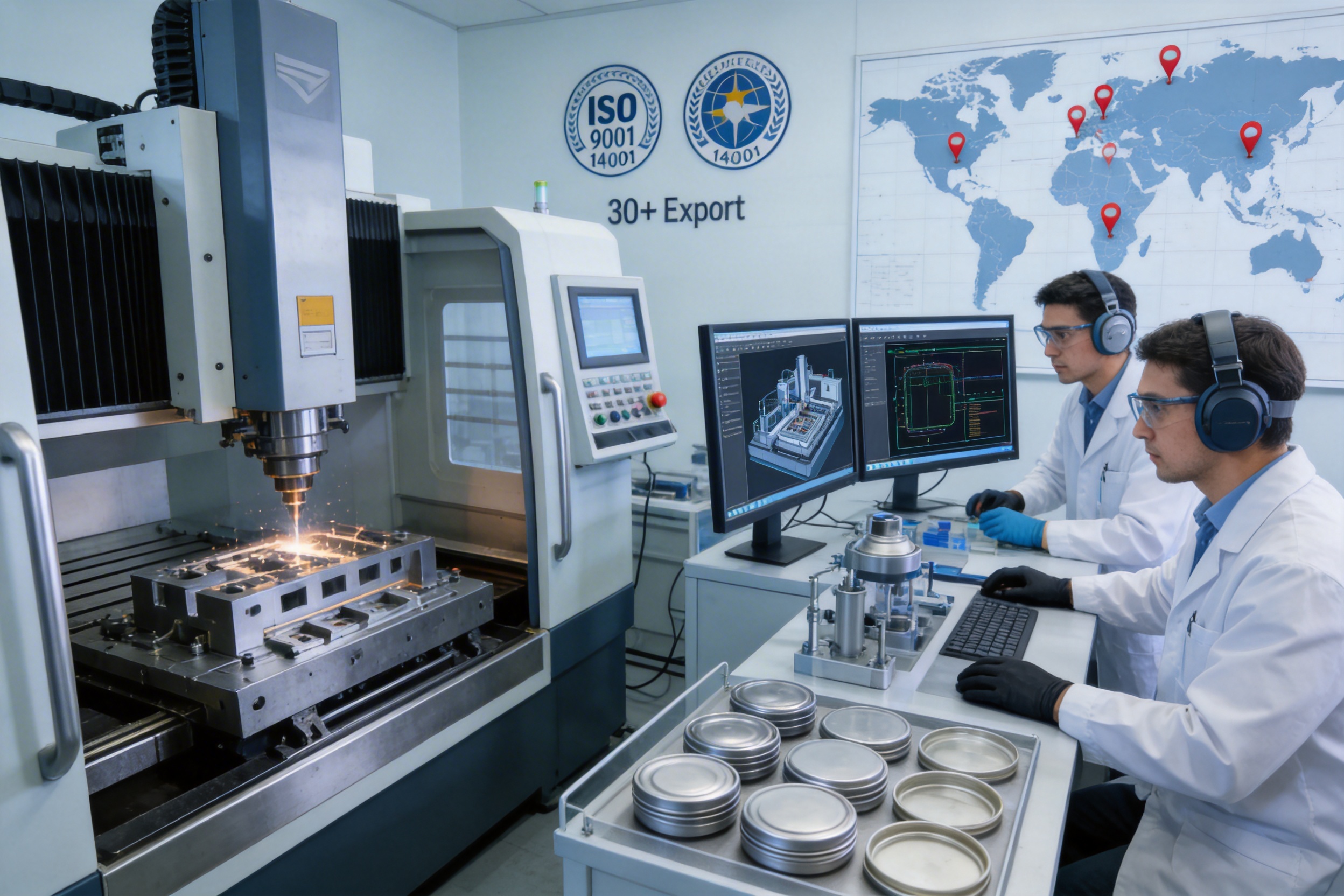
The company is committed to quality and sustainability, holding certifications for ISO9001 (quality management system) and ISO14001 (environmental management system). These certifications ensure that every product meets international quality standards and that the company’s manufacturing processes are environmentally friendly. For example, the ISO9001 certification requires the company to implement strict quality control measures at every stage of production—from design to final testing. This ensures that the 2-lanes D109-D211 line is free from defects and performs as expected.
The company’s products are exported to over 30 countries, including Germany, Italy, the UK, Spain, Hungary, Russia, Australia, Jordan, Malaysia, the Philippines, Pakistan, Egypt, Algeria, Turkey, Mexico, Nigeria, and Iran. This global reach is a testament to the company’s ability to meet international standards and adapt to the needs of diverse markets. For example, the 2-lanes D109-D211 line is designed to comply with European safety standards (CE) and Asian quality requirements, making it suitable for clients worldwide. The company’s global customer base also provides valuable feedback, which is used to continuously improve its products.
Unlike many competitors that specialize in a single type of machinery, the company offers a full range of can-making equipment, including food can production lines, beverage can production lines, can lid production lines, chemical tank production lines, aerosol canister production lines, two-piece can production lines, and pop can production lines. This allows clients to source all their can-making equipment from one supplier, simplifying procurement, reducing costs, and ensuring compatibility between different machines. For example, a client producing aerosol cans can purchase the 2-lanes D109-D211 cone lid line along with an aerosol can body making line from the same company—ensuring that the two lines work seamlessly together.
The company’s commitment to customer satisfaction does not end with the sale. It provides comprehensive after-sales support, including installation, commissioning, technical guidance, operation training, and fast parts supply. This support is critical for ensuring that clients can operate their machinery efficiently and minimize downtime. For example, the company sends a team of engineers to the client’s facility to install and commission the 2-lanes D109-D211 line, providing hands-on training to the client’s staff. In case of a breakdown, the company supplies replacement parts quickly—often within 72 hours—reducing production downtime and losses. This after-sales support is a key advantage over competitors, who may offer limited or no support.
To better illustrate the advantages of the 2-lanes D109-D211 line, let’s compare it to a hypothetical competing production line (Competitor A) that is commonly used in the industry:
| Specification | 2-lanes D109-D211 Aerosol Cone Lid Line | Competitor A Single-Lane Line |
|---|---|---|
| Operation Type | Fully Automatic | Semi-Automatic (Manual Adjustments) |
| Can Size Range | Φ45-65mm | Φ50-60mm |
| Output Speed (epm) | 240 (2 lanes) | 120 (1 lane) |
| Die Range | 6-9 dies | 4-6 dies |
| Iron Thickness Compatibility | 0.17-0.40mm | 0.20-0.35mm |
| Power Consumption (kw) | 22 | 30 |
| Size Changeover Time | <15 minutes | 1-2 hours |
| After-Sales Support | Installation, Training, Fast Parts Supply | Basic Warranty Only |
As shown in the table, the 2-lanes D109-D211 line outperforms Competitor A in every key category—from output speed and flexibility to energy efficiency and after-sales support. This makes it a clear choice for manufacturers looking to improve their production efficiency and quality.
To address common questions about the 2-lanes D109-D211 Aerosol Cone Lid Line and its manufacturer, we have compiled the following Q&A:
A: The line has an output capacity of 240 ends per minute (epm) in 2 lanes, which translates to 14,400 lids per hour or 345,600 lids per 24-hour day. This is twice the output of typical single-lane competing lines.
A: Yes, the line supports lid sizes from Φ45mm to Φ65mm, which covers the majority of aerosol can lid sizes used in personal care, household, and industrial applications. It can be quickly adjusted to produce different sizes with minimal downtime.
A: The line works with iron (tinplate) materials with thicknesses ranging from 0.17mm to 0.40mm and hardness levels T3-T4—industry-standard materials for can lids.
A: Yes, the company offers OEM/ODM customization services. Clients can request modifications to the line to meet their specific production needs, such as custom die sizes or additional features.
A: The company provides comprehensive after-sales support, including:
A: Yes, the line consumes only 22kw of power, which is significantly less than competing lines (which often consume 30kw or more). This reduces operational costs and makes the line more environmentally friendly.
A: The company holds ISO9001 (quality management system) and ISO14001 (environmental management system) certifications, ensuring that every product meets international quality standards and that manufacturing processes are environmentally responsible.
A: The company was founded in 1978, so it has over 46 years of experience in designing and manufacturing can-making machinery. This extensive track record is a testament to its reliability and expertise.
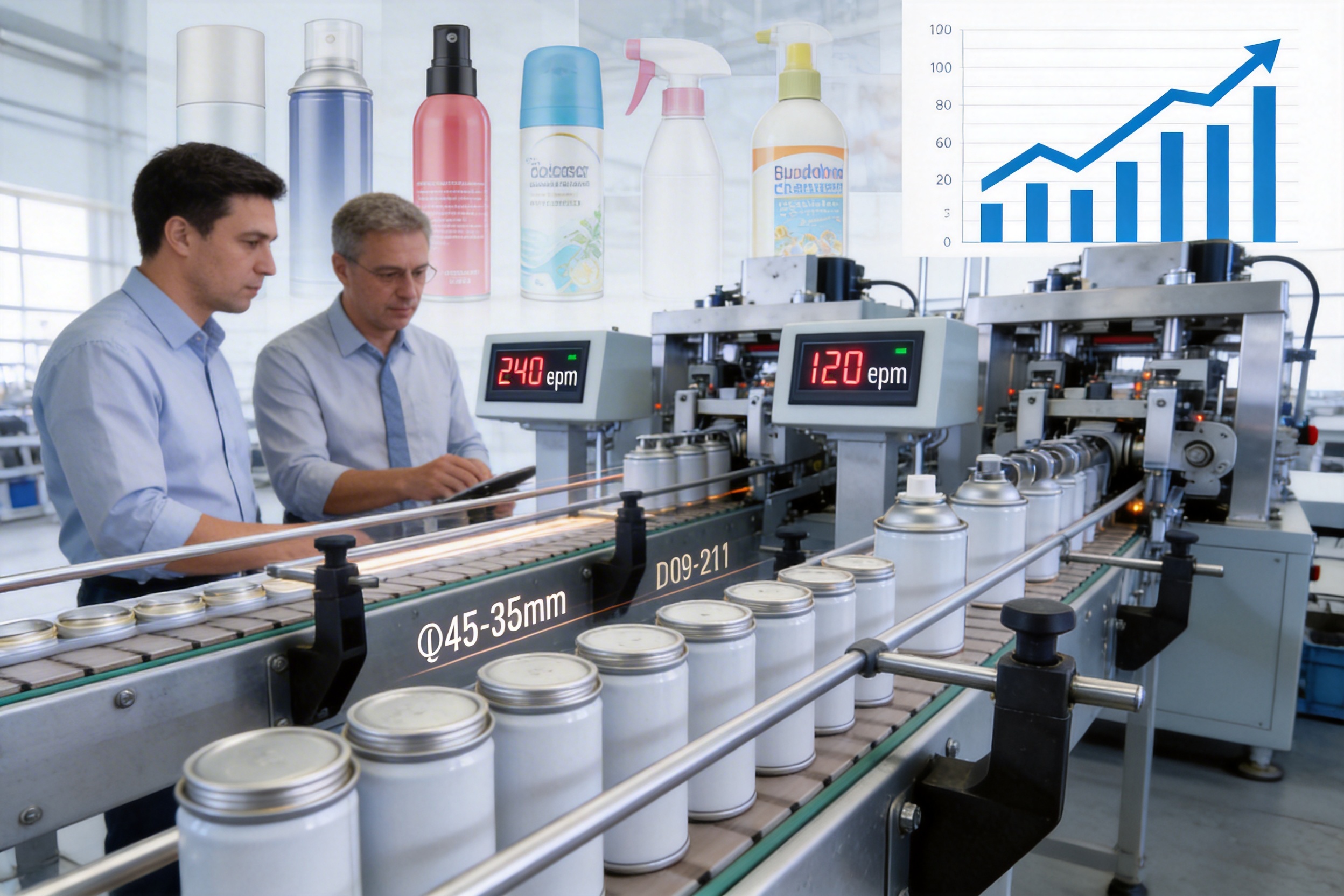
The 2-lanes D109-D211 Aerosol Cone Lid Line is a game-changer for the aerosol can manufacturing industry. With its unmatched output speed, wide compatibility, automatic operation, energy efficiency, and precision, it addresses the key pain points of traditional production lines—helping manufacturers meet growing demand, reduce costs, and improve quality. The company behind this line is a global leader with decades of experience, advanced manufacturing processes, and exceptional after-sales support—making it a trusted partner for can manufacturers worldwide.
As the aerosol packaging market continues to grow, investing in a high-performance production line like the 2-lanes D109-D211 line is essential for manufacturers to stay competitive. Whether you are a small-scale producer or a large global enterprise, this line offers the flexibility, efficiency, and quality you need to succeed in the modern market.
1. Global Aerosol Packaging Market Trends 2024. International Packaging Association (IPA). 2024.
2. Can Manufacturing Technology: A Comprehensive Guide. 6th Edition. Dr. James Wilson. Industrial Press. 2023.
3. ISO 9001:2015 Quality Management Systems – Fundamentals and Vocabulary. International Organization for Standardization (ISO). Geneva, Switzerland. 2015.
4. Efficiency Benchmarking of Aerosol Lid Production Lines. Global Manufacturing Insights. 2023.
Related Products

Founded in 1978, the company is one of the largest can-making machinery well-known companies at home and abroad.
Product Categories
Contact Information
Zhongshatou Shenjiamen Zhoushan Zhejiang China
+86-580-3056646

 English
 中文简体
中文简体
 русский
 عربى
عربى
 Español