2026-10-03
Reliable lid lining is an essential stage in the manufacture of food cans, beverage containers, and easy-open ends. The lining compound forms a sealing layer between the metal lid and the can body, helping protect the product from leakage, contamination, oxidation, and loss of freshness. When the lining operation is unstable, even a well-formed lid can fail during filling, sealing, sterilization, transportation, or storage. For this reason, can manufacturers need equipment that combines high output, consistent compound application, accurate feeding, and dependable long-term operation.
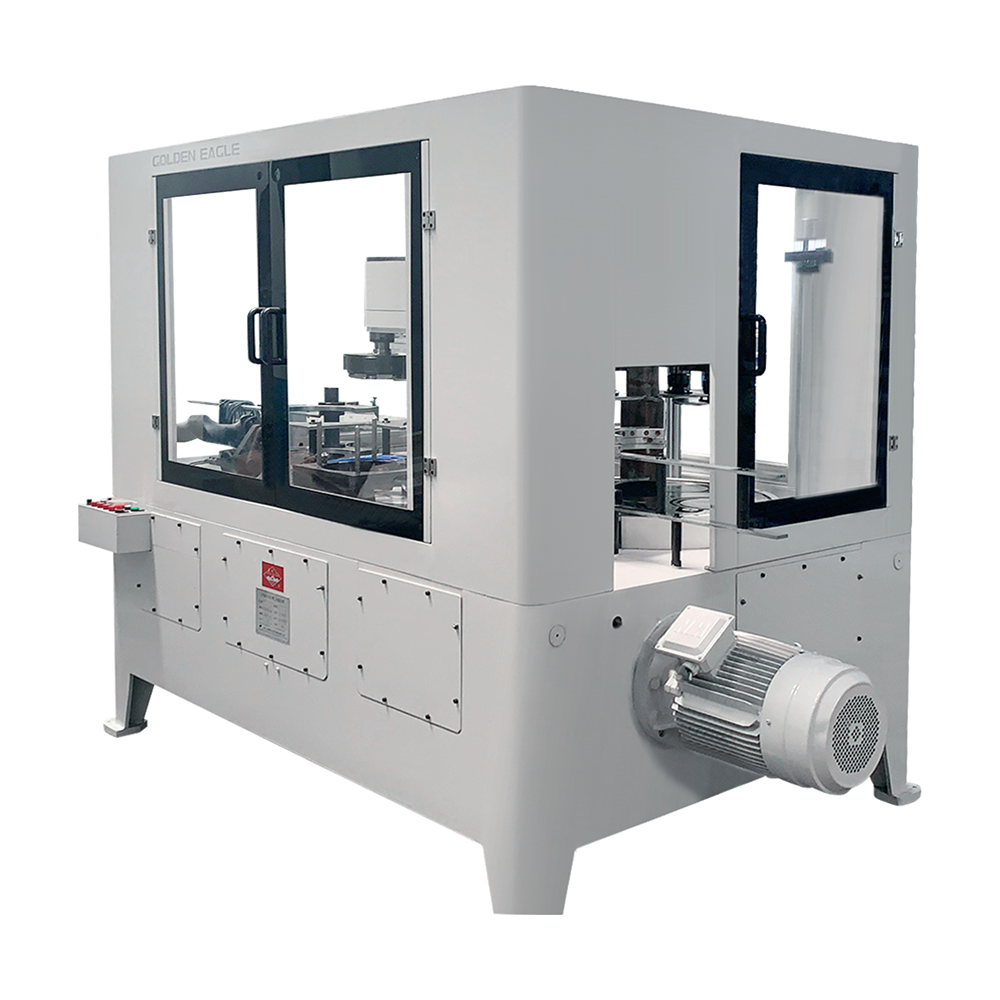
The GT3B51 high-speed rotary lining machine is designed for automatic lining of general lids and easy-open ends. It is suitable for can-making factories that require continuous production in a compact, industrial machine platform. The standard GT3B51-L-3 configuration handles lid diameters from 52 to 73 millimeters and provides an output capacity of approximately 800 to 1,200 pieces per minute. Other configurations extend the applicable diameter range and offer production capacities suited to different lid sizes and factory requirements.
As a specialized can-making equipment manufacturer, Zhejiang Golden Eagle Food Machinery Co., Ltd. combines practical experience in can machinery, mold manufacturing, mechanical processing, and production-line engineering. The company has manufactured can-making machinery and molds since 1978 and has supplied more than 10,000 pieces of can and can-lid equipment. Its experience supports the development of machines that are not only fast, but also adapted to real production conditions in food, beverage, chemical, aerosol, and other metal-container industries.
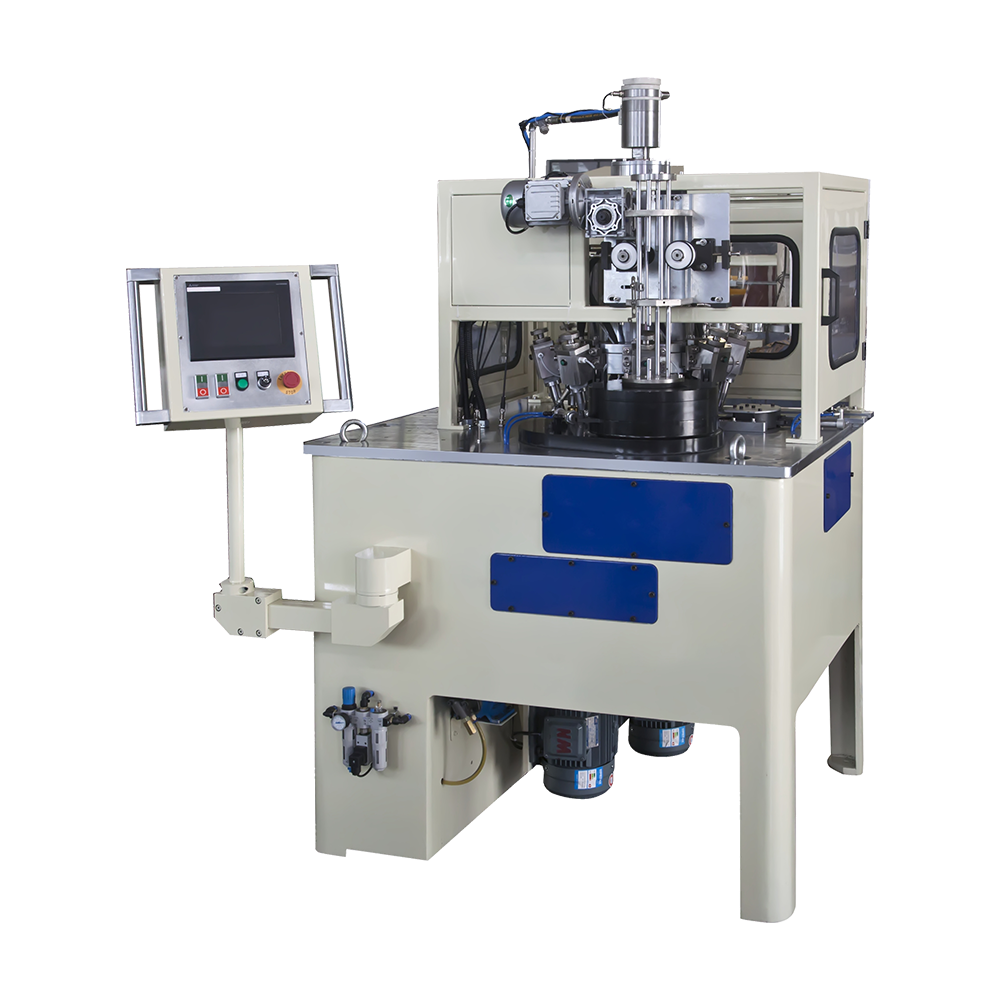
Rotary Lining Machine
The rotary lining machine applies lining material to the sealing area of metal lids as they move through a continuous rotary production process. Unlike manually operated or intermittent equipment, a rotary system is designed to maintain a steady product flow. Lids are transferred through the machine, positioned for lining, treated by dedicated nozzles, and discharged for subsequent inspection, curing, stacking, or assembly.
The machine is automatic in operation and is primarily used for general lids and easy-open ends. Its eight-head configuration supports repeated application around the lid sealing area. The rotary structure allows the machine to perform multiple operations within a controlled cycle, helping manufacturers achieve a high production rate without requiring a large amount of floor space.
The equipment is available in several configurations. The GT3B51-L-3 model is intended for lids with diameters of 52 to 73 millimeters and offers a stated capacity of 800 to 1,200 cans or lids per minute, depending on material, product design, and operating conditions. The GT3B51-L-3A supports a broader diameter range of 52 to 99 millimeters, with an output of approximately 500 to 1,000 pieces per minute. The GT3B51-L-5 is designed for larger lids from 83 to 153 millimeters and provides an output range of approximately 350 to 600 pieces per minute.
Each listed model uses eight lining heads, a machine power rating of 5.6 kilowatts, a machine weight of approximately 2,500 kilograms, and overall dimensions of about 1,100 by 1,250 by 2,000 millimeters. These common structural characteristics simplify equipment planning for factories that may operate different lid sizes across the same production department.
The principal application of the machine is the lining of food-can lids. Lining may be required for conventional round lids, specialty lids, and easy-open ends. The exact lining compound and application pattern depend on the product being packed, the metal substrate, the sealing method, the sterilization process, and the technical requirements of the can manufacturer.
In addition to food packaging, similar lining technology can be relevant to beverage ends, general-purpose metal containers, and selected industrial packaging applications. However, the compound, application quantity, curing conditions, and hygiene requirements should always be confirmed according to the final product and applicable packaging regulations.
The following table summarizes the principal configurations of the rotary lining machine.
| Specification | GT3B51-L-3 | GT3B51-L-3A | GT3B51-L-5 |
|---|---|---|---|
| Output capacity | 800–1,200 cpm | 500–1,000 cpm | 350–600 cpm |
| Number of nozzles or heads | 8 heads | 8 heads | 8 heads |
| Applicable lid diameter | 52–73 mm | 52–99 mm | 83–153 mm |
| Machine power | 5.6 kW | 5.6 kW | 5.6 kW |
| Machine weight | Approximately 2,500 kg | Approximately 2,500 kg | Approximately 2,500 kg |
| Machine dimensions | 1,100 × 1,250 × 2,000 mm | 1,100 × 1,250 × 2,000 mm | 1,100 × 1,250 × 2,000 mm |
| Operating mode | Automatic | Automatic | Automatic |
| Primary application | General lids and easy-open ends | General lids and easy-open ends | General lids and easy-open ends |
Actual output can vary according to lid geometry, lining material, compound viscosity, line integration, feeding stability, operator settings, and quality-control requirements. The stated capacity should therefore be regarded as a production reference rather than a universal guarantee for every lid design.
A rotary lining machine normally operates as part of a larger lid production line. Before entering the machine, metal lids are formed, trimmed, scored, or fitted with opening features according to the product design. The lids are then conveyed or fed into the lining machine in a controlled orientation.
The feeding system transfers each lid into the rotary mechanism. Correct spacing and positioning are important because the lining compound must be deposited at a precise location. If a lid is tilted, misplaced, or inadequately separated from the following lid, the application may become irregular. Automatic feeding and controlled movement help reduce these risks and maintain a continuous operating cycle.
As the lid passes through the lining station, the dedicated nozzles apply the required compound to the sealing channel or other specified area. The eight-head arrangement distributes the work across multiple application points. This arrangement supports continuous production and reduces the need for repeated manual intervention.
After application, the lined lid moves toward the next process. Depending on the compound and production method, the next stage may involve drying, curing, inspection, stacking, packing, or integration with a can assembly line. The lining machine must therefore be coordinated with upstream and downstream equipment so that product flow remains stable.
For high-speed production, the quality of the application is as important as the number of lids processed per minute. A suitable lining system should provide a consistent bead or coating, minimize splashing and waste, prevent contamination of non-lining areas, and support convenient adjustment when the lid specification changes.
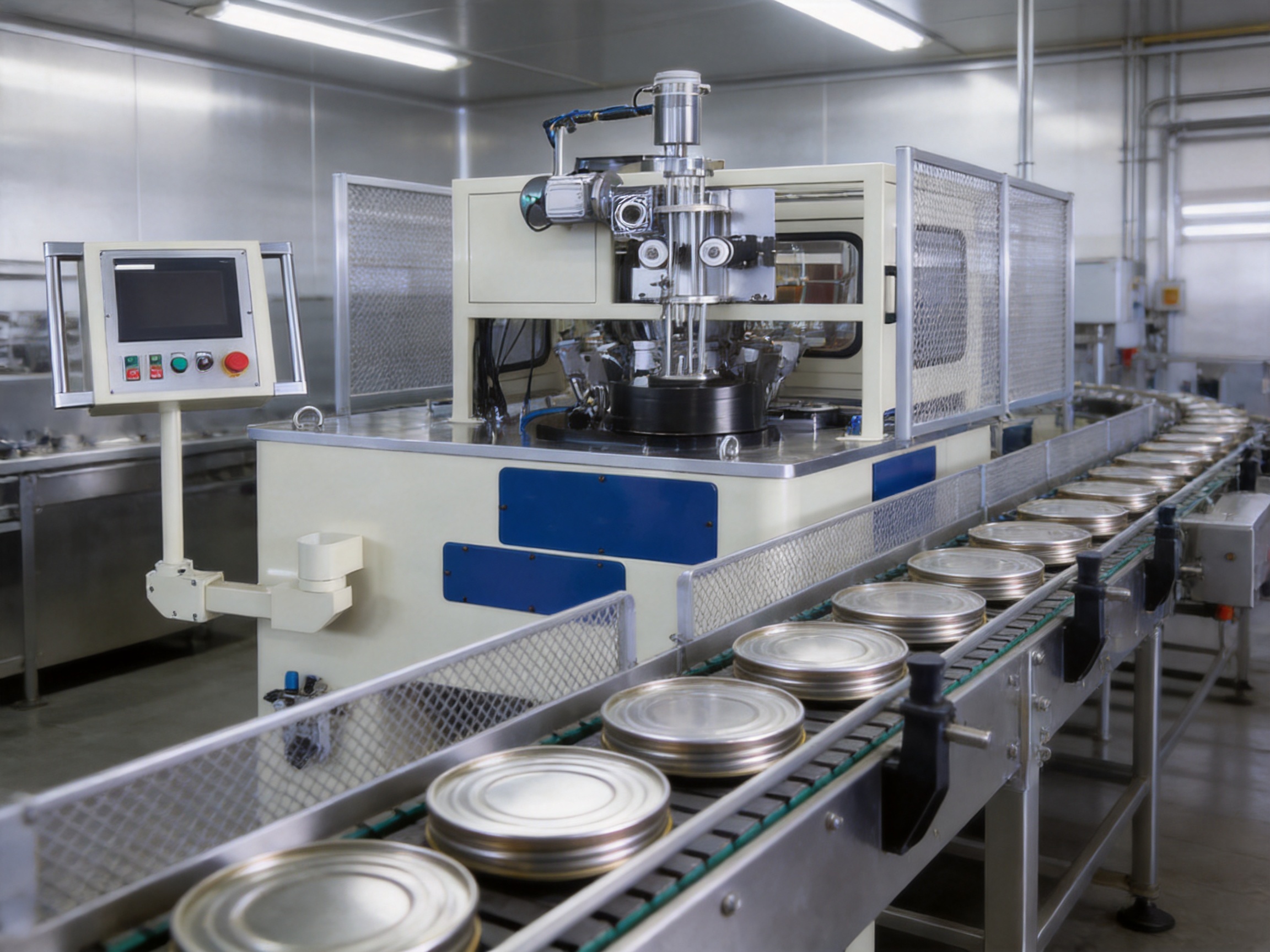
The most visible advantage of the GT3B51 platform is its high-speed automatic operation. The GT3B51-L-3 configuration can reach a stated output range of 800 to 1,200 pieces per minute for applicable lids. This level of performance is intended for industrial production environments where the lining stage must keep pace with high-volume lid forming and can assembly equipment.
High throughput can improve the utilization of upstream presses, forming machines, and lid-handling systems. It can also reduce the number of machines required to achieve a target production volume. For manufacturers, this may contribute to more efficient use of floor space, labor, utilities, and maintenance resources.
The appropriate model should be selected according to the lid diameter and required line speed. Choosing a machine with a suitable range is generally more beneficial than selecting a nominally faster machine that is not optimized for the actual product. The three configurations provide flexibility for small, medium, and larger lid sizes.
Automatic operation reduces dependence on manual placement and manual lining. Operators can focus on material supply, process monitoring, quality inspection, preventive maintenance, and production coordination rather than repeatedly handling individual lids.
Continuous rotary movement also helps create a predictable production rhythm. When the feeding system, lining heads, and discharge arrangement are properly adjusted, lids can move through the machine with limited interruption. This is especially valuable in factories that run multiple shifts or connect the lining machine directly with other automatic equipment.
The eight-head configuration is designed to support stable and efficient application. Multiple heads allow the machine to distribute the lining operation around the rotary cycle rather than relying on a single application point. This can support higher production speeds while maintaining a controlled process.
Multiple-head equipment also provides a practical basis for process adjustment and maintenance. If a nozzle requires cleaning or replacement, maintenance personnel can follow a defined procedure for the relevant head. Proper synchronization and regular inspection are essential to ensure that every head applies material consistently.
The model range covers lid diameters from 52 to 153 millimeters, depending on the selected configuration. This range allows the equipment platform to serve different packaging programs, from smaller food and beverage lids to larger container formats.
The GT3B51-L-3A is particularly useful for manufacturers that handle several lid sizes between 52 and 99 millimeters. The GT3B51-L-5 is intended for larger products from 83 to 153 millimeters. Using model-specific equipment can provide better mechanical matching between the lid, tooling, feeding path, and lining position.
With dimensions of approximately 1,100 by 1,250 by 2,000 millimeters, the machine is compact relative to its production capacity. Efficient use of floor space is important in can-making factories, where forming presses, compound application equipment, conveyors, inspection systems, packing machinery, and storage areas must be arranged within a coordinated plant layout.
The machine weight of approximately 2,500 kilograms reflects a substantial industrial structure. A stable frame can help reduce vibration during high-speed operation. Correct foundation preparation, leveling, anchoring, and installation are still required to obtain the best performance.
A rotary lining machine is most valuable when integrated into a complete manufacturing flow. The equipment can be installed alongside automatic feeding systems, lid-making machines, inspection equipment, curing systems, stacking machines, and packaging lines. Its automatic mode supports the development of a continuous production solution rather than an isolated manual workstation.
The manufacturer also supplies broader categories of can-making machinery, including food can production lines, beverage can production lines, can-lid production lines, chemical tank production lines, aerosol canister production lines, two-piece can production lines, and pop-can production lines. This wider product capability can make it easier for customers to plan compatible equipment from one experienced source.
Can manufacturers may consider manual lining, semi-automatic equipment, intermittent machines, or high-speed rotary systems. Each approach has a place, but the best choice depends on output requirements, product variety, labor availability, and quality expectations.
Manual application may be suitable for samples, laboratory trials, very small production batches, or products that change frequently. However, manual work is difficult to maintain at high volumes. It may lead to differences in application quantity, positioning, and cycle time. Labor requirements can also increase significantly as production expands.
Compared with manual application, an automatic rotary machine offers more consistent product movement and a higher potential output. It can also reduce direct operator contact with the lid and lining compound, which may support cleaner production when the machine is installed and maintained correctly.
Semi-automatic machines may offer lower initial investment and simpler operation. They can be useful for smaller factories or manufacturers with limited production volume. However, their output may not match the speed of modern lid-forming and can-assembly lines. Additional manual handling can create bottlenecks between processes.
The GT3B51 rotary design is aimed at factories that require automatic, continuous production. Its higher capacity and automatic feeding concept can reduce the risk that the lining stage becomes a constraint on the complete production line.
Intermittent machines stop and start during product handling. This can provide precise control but may limit output when compared with a continuous rotary system. Repeated acceleration and deceleration may also place additional demands on mechanical components, depending on the machine design.
A rotary machine maintains a more continuous motion pattern. For high-volume standard products, this can improve production rhythm and support higher throughput. The trade-off is that the machine must be correctly synchronized and adjusted, especially when changing lid dimensions or lining materials.
Some lining machines are designed around a narrow product range. They may operate effectively for one lid diameter but provide limited flexibility for a manufacturer serving multiple markets. A model family covering several diameter ranges offers more choices during equipment planning.
The GT3B51 series provides three configurations for different lid sizes. This does not eliminate the need for format-specific tooling and adjustments, but it gives can manufacturers a clearer path to match equipment capacity with product dimensions.
The performance of a can-making machine depends not only on its published speed. Mechanical accuracy, frame stability, component quality, manufacturing discipline, assembly procedures, and technical support all influence the equipment’s service life. The manufacturer’s long-term experience in these areas is an important part of the product value.
Zhejiang Golden Eagle Food Machinery Co., Ltd., formerly associated with Zhejiang Food Machinery Factory and Zhoushan Mold Factory, was established in 1978. For more than four decades, the company has focused on can-making machinery and can-making molds.
This specialization provides practical knowledge of the relationship between containers, lids, tooling, feeding systems, sealing requirements, and production-line coordination. A lining machine cannot be evaluated separately from the lid geometry and the other machines that manufacture and handle the lid. Experience across these areas can support more effective equipment selection and engineering communication.
The company has more than 350 trained personnel, including experienced design and development engineers. A technical team of this scale can contribute to mechanical design, process development, electrical control, machining, assembly, testing, installation, and after-sales support.
Experienced engineers are particularly important when customers require non-standard formats, production-line integration, special lid dimensions, or adjustments based on local manufacturing conditions. Although every project must be reviewed according to its specific requirements, a broad engineering base provides a stronger foundation for customization and technical problem-solving.
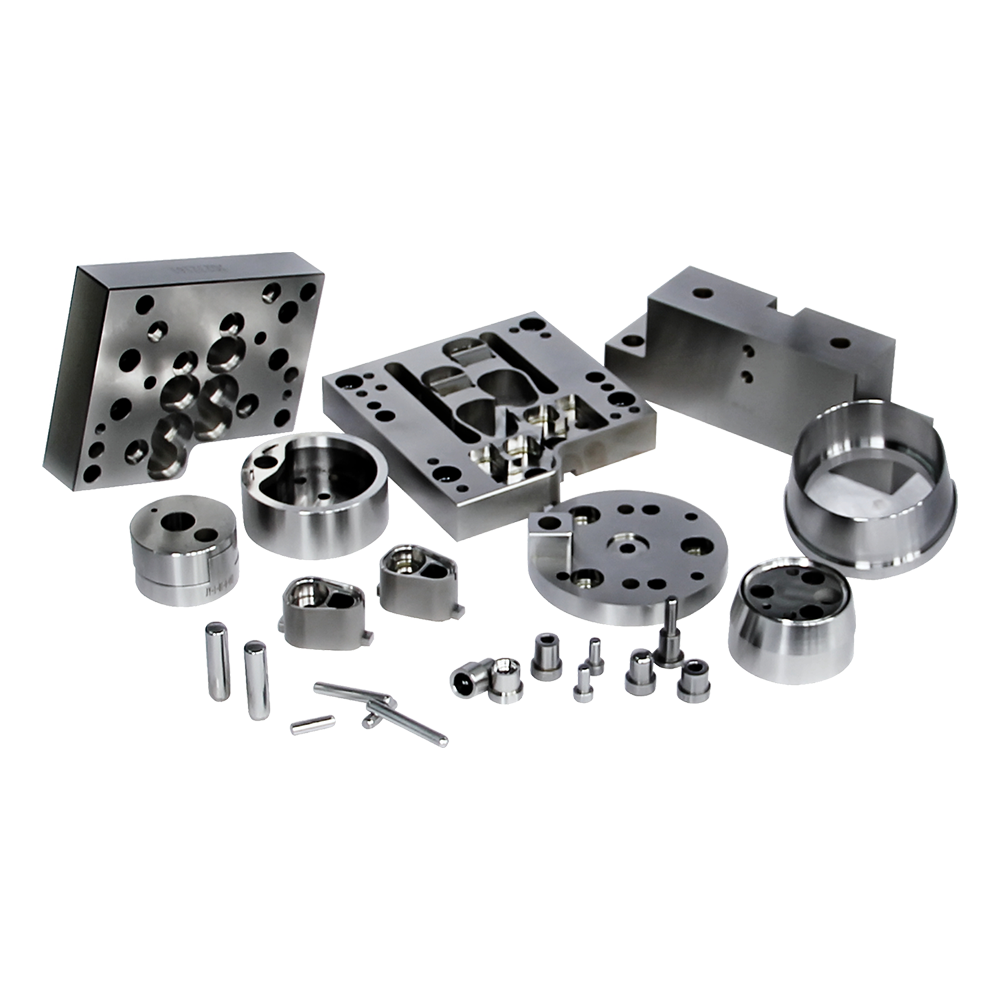
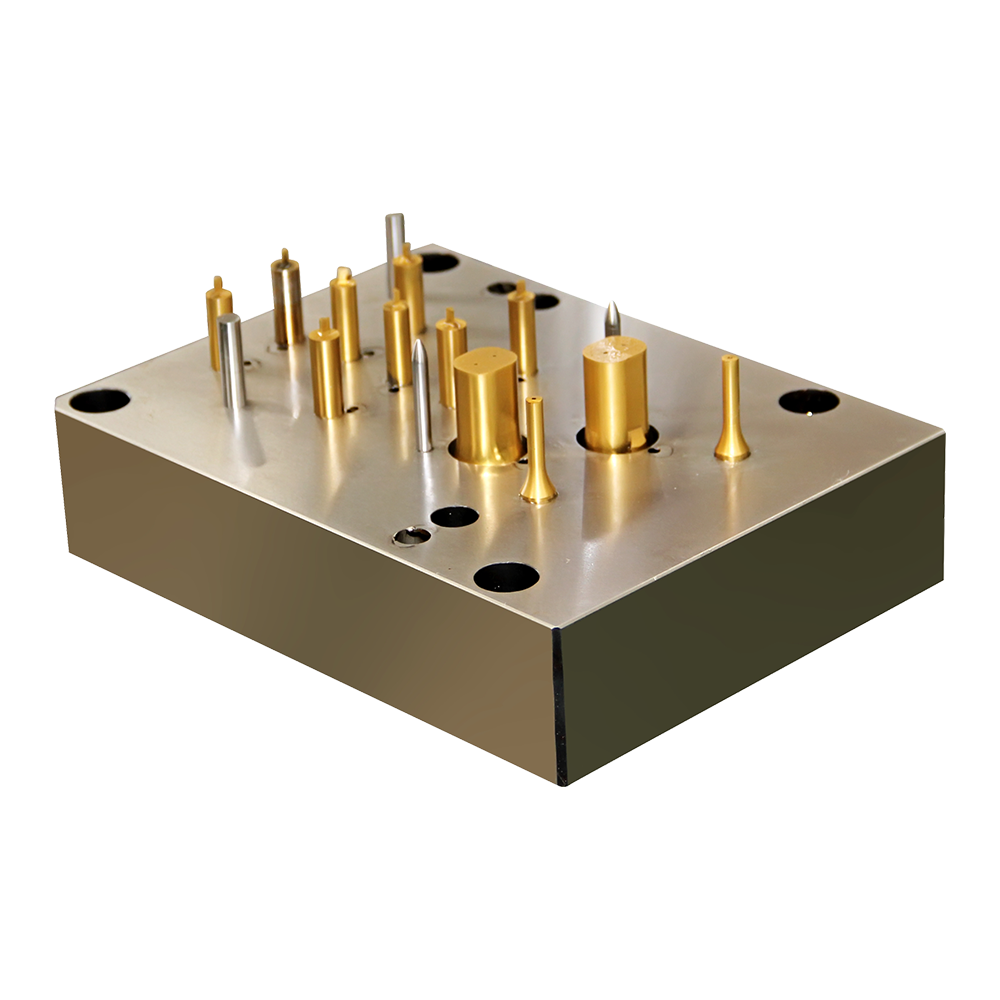
The manufacturer uses CNC high-precision machining equipment together with complete mechanical processing equipment. CNC machining supports repeatable production of important parts such as shafts, plates, fixtures, guides, housings, and other components that require dimensional accuracy.
Precision machining is valuable in a high-speed rotary machine because small dimensional errors can become more significant as operating speed increases. Accurate components help support correct alignment, smooth movement, stable feeding, and repeatable positioning. Quality machining also makes replacement parts easier to reproduce during maintenance.
Mechanical processing capability within the manufacturer’s own production system can improve control over manufacturing schedules and component consistency. It may also reduce reliance on unrelated external suppliers for critical structural or motion components.
The company states that its product design principles are similar to those associated with established European can-making machinery manufacturers, including KRUPP, SOUDRONIC, and ALFONS-HAAR. The company has also combined these principles with practical experience gained from production use and ongoing product development.
This approach is significant because can-making machinery must balance high speed with maintainability, accuracy, safety, and resistance to continuous industrial use. Applying proven design concepts while adapting equipment to actual customer requirements can lead to a more practical machine than simply copying a theoretical design.
The company has been certified according to the ISO9001 quality management system and the ISO14001 environmental management system. ISO9001 reflects the use of a structured quality-management framework, while ISO14001 addresses environmental-management practices.
Certification does not replace product testing or customer inspection, but it provides a formal management basis for documentation, process control, corrective action, and continual improvement. In international equipment purchasing, such systems can also help customers evaluate the manufacturer’s organizational reliability.
More than 10,000 pieces of can and can-lid equipment have reportedly been produced by the company. A large installed base can provide useful feedback about machine operation, maintenance requirements, component performance, and customer expectations.
The company’s equipment has been exported to Europe, Asia, Africa, North America, South America, and Oceania. Its stated export markets include Germany, Italy, the United Kingdom, Spain, Hungary, Russia, Australia, Jordan, Malaysia, the Philippines, Pakistan, Egypt, Algeria, Turkey, Mexico, Nigeria, and Iran. International delivery experience requires attention to packaging, documentation, electrical requirements, installation procedures, spare parts, and communication across different markets.
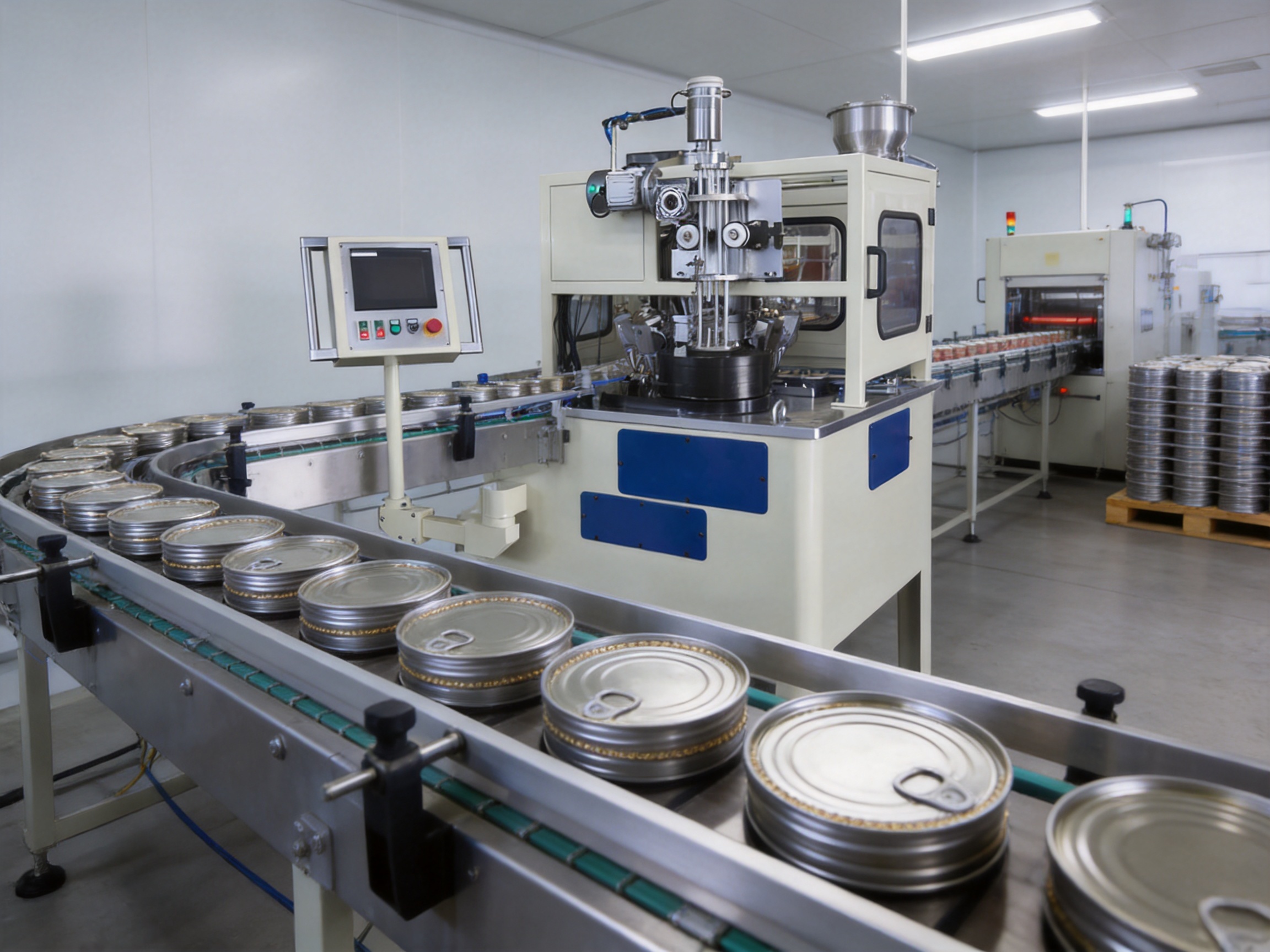
For a lid lining machine, reliability is closely connected with the consistency of each production step. The frame must remain stable, the rotary mechanism must maintain its timing, the feeding system must separate lids correctly, and the lining heads must apply material at the desired location. A fault in any one of these areas can affect output and quality.
The robust machine weight and industrial dimensions provide a stable platform for high-speed production. However, reliability also depends on correct installation and regular maintenance. The machine should be placed on a suitable foundation, leveled carefully, connected according to the specified electrical requirements, and tested before full-speed operation.
Operators should monitor the condition of nozzles, feeding components, guides, sensors, drive elements, and material-supply components. Preventive cleaning is particularly important because dried lining compound can obstruct an application point or alter the amount of material delivered. Maintenance schedules should be developed according to operating hours, material characteristics, and factory conditions.
Production records can help identify gradual changes before they become serious problems. Useful records may include output, rejected lids, compound consumption, nozzle-cleaning frequency, machine stoppages, format changes, and maintenance activities. Such information supports continuous improvement and helps technicians determine whether a problem is mechanical, material-related, or process-related.
A controlled lining process helps create a more uniform sealing layer. Consistent lining can support the performance of the double seam or other closure system, provided that the lid design, compound, and sealing parameters are also appropriate.
Uniform application may reduce defects associated with insufficient lining, excessive lining, misaligned lining, or contamination of areas that should remain clean. The machine should be used together with inspection procedures to verify that the result meets the customer’s technical standards.
Automatic operation enables operators to supervise the process rather than manually apply compound to each lid. One operator may be able to monitor more than one process area, depending on the overall line arrangement, safety requirements, and factory procedures.
Reducing repetitive manual handling can also support better workplace organization. Personnel can devote more time to quality checks, material control, planned maintenance, and production coordination.
High-speed lid production can be undermined if the lining operation is slower than the forming or feeding stages. A machine with output of up to 1,200 pieces per minute for suitable products can help maintain a balanced line.
Line balancing should include not only nominal machine speeds but also actual operating efficiency, changeover time, reject rates, material replenishment, inspection, and planned maintenance. Even so, a high-capacity rotary lining machine gives manufacturers greater flexibility when building a synchronized production system.
Food and beverage manufacturers often produce several container formats for different customers and markets. A machine family covering multiple lid diameters can support product expansion without requiring an entirely different equipment supplier for every format.
The three GT3B51 configurations provide options for small, medium, and large lid ranges. Before ordering, the customer should provide detailed lid drawings, material information, lining requirements, target output, and information about upstream and downstream machines. This allows the machine configuration and tooling to be reviewed in relation to the actual production plan.
Professional installation is important for high-speed equipment. The installation area should provide adequate space for operation, material supply, cleaning, inspection, maintenance, and safe access. The floor must be able to support the machine’s approximately 2,500-kilogram weight together with dynamic operating loads.
After positioning, technicians should check level, alignment, electrical connections, guarding, feeding paths, lining-head settings, lubrication points, and emergency-stop functions. Trial operation should begin at a controlled speed before the machine is gradually brought toward its intended production rate.
Commissioning should include product testing under actual or representative operating conditions. The technical team may evaluate lid transfer, feeding stability, lining position, compound quantity, nozzle performance, discharge, and compatibility with the next machine. Any adjustment should be documented so that operators can repeat the approved settings.
Operator training should cover start-up, shutdown, format change, material handling, cleaning, routine inspection, fault response, and safety procedures. Maintenance personnel should receive additional training on lubrication, wear-part replacement, electrical checks, alignment, and troubleshooting.
The manufacturer provides after-sales services that include installation, commissioning, technical guidance, operation training, and spare-parts supply. These services are particularly valuable for overseas customers or factories installing high-speed can-making equipment for the first time.
Routine maintenance helps protect production continuity and lining quality. Before each shift, operators should inspect the feeding area, lining heads, guards, sensors, material supply, and visible mechanical components. Any unusual noise, vibration, leakage, or irregular application should be investigated promptly.
Nozzles and material-contact components should be cleaned according to the characteristics of the lining compound. Cleaning intervals may need to be shortened when the material cures quickly, contains solid particles, or is exposed to unsuitable temperature conditions. Cleaning procedures should prevent damage to precision surfaces and should follow the compound supplier’s recommendations.
Mechanical components should be lubricated at the required intervals using suitable lubricants. Belts, chains, bearings, guides, fasteners, and drive components should be checked for wear or looseness. Sensors and electrical cabinets should be kept clean and protected from moisture, compound contamination, and excessive dust.
When changing lid sizes, technicians should verify the feeding path, guide position, tooling, rotary timing, lining-head location, and discharge arrangement. A controlled changeover procedure can reduce setup errors and shorten downtime. Approved setup sheets are useful when the same lid formats are produced repeatedly.
Spare parts should be selected according to the machine configuration and operating environment. Frequently used consumables and wear parts should be kept available to prevent extended stoppages. The manufacturer’s technical team can help identify recommended spare parts for the specific model and production schedule.
The first selection factor is lid diameter. Customers should compare the actual product range with the applicable diameter of each machine model. The GT3B51-L-3 is intended for 52 to 73 millimeter lids, the GT3B51-L-3A for 52 to 99 millimeter lids, and the GT3B51-L-5 for 83 to 153 millimeter lids.
The second factor is required output. A factory should consider average production demand, peak demand, future expansion, product changeover, and expected operating efficiency. The stated capacity range should be reviewed alongside the lid design and lining material rather than treated as an independent number.
The third factor is compound compatibility. The customer should confirm the type of lining compound, viscosity range, curing behavior, storage conditions, application temperature, and food-contact requirements. The machine configuration and nozzle arrangement may need to be evaluated according to these characteristics.
The fourth factor is line integration. Information about the upstream lid machine, feeding system, downstream curing or inspection equipment, conveyor height, control signals, and available factory space can help determine the best installation plan.
The fifth factor is service support. A supplier with installation, commissioning, training, technical guidance, and spare-parts capabilities can reduce the risks associated with international equipment deployment. Customers should also consider documentation, response time, remote support, and the availability of replacement components.
Quality control should begin with incoming metal lids and lining material. Lids should meet the required dimensions, surface condition, and cleanliness standards. The lining compound should be stored and prepared according to its technical documentation.
During operation, inspectors may check application position, continuity, width, thickness, adhesion, and visual appearance. The appropriate inspection method depends on the compound and the final packaging specification. Production samples should be retained when required by the factory’s quality system.
Functional testing may include sealing tests, leakage tests, pressure or vacuum tests, thermal processing simulation, and storage evaluation. These tests help determine whether the lined lid performs correctly in combination with the can body and closure process.
Quality data should be linked to machine settings whenever possible. If defects increase after a format change, maintenance activity, compound replacement, or speed adjustment, the records can help identify the cause. A disciplined data approach supports more stable production and reduces repeated troubleshooting.
The rotary lining machine is one part of a broader range of can-making equipment. Zhejiang Golden Eagle Food Machinery Co., Ltd. supplies machinery and molds for food and beverage can production, can-lid production, chemical tanks, aerosol canisters, two-piece cans, pop cans, and related container applications.
The company’s product categories include can-making machines, tin can lid-end making machines, duplex slitting machines, milk powder can-making machines, easy-open-end lid-making machines, automatic welding machines, aerosol cone and dome-making equipment, chemical tank-making machines, automatic feeding machines, aerosol can-making machines, two-piece can-making machines, and molds.
This broad range allows customers to discuss individual machines as well as complete or partial production lines. A supplier with knowledge of multiple can-making stages can better understand how forming, cutting, welding, lining, feeding, inspection, and packing influence one another.
Complete-line capability can be particularly useful for customers establishing a new factory, modernizing an existing plant, or expanding into a new can format. The required engineering scope varies by project, but may include equipment selection, layout planning, production-line connection, installation, commissioning, operator training, and spare-parts planning.
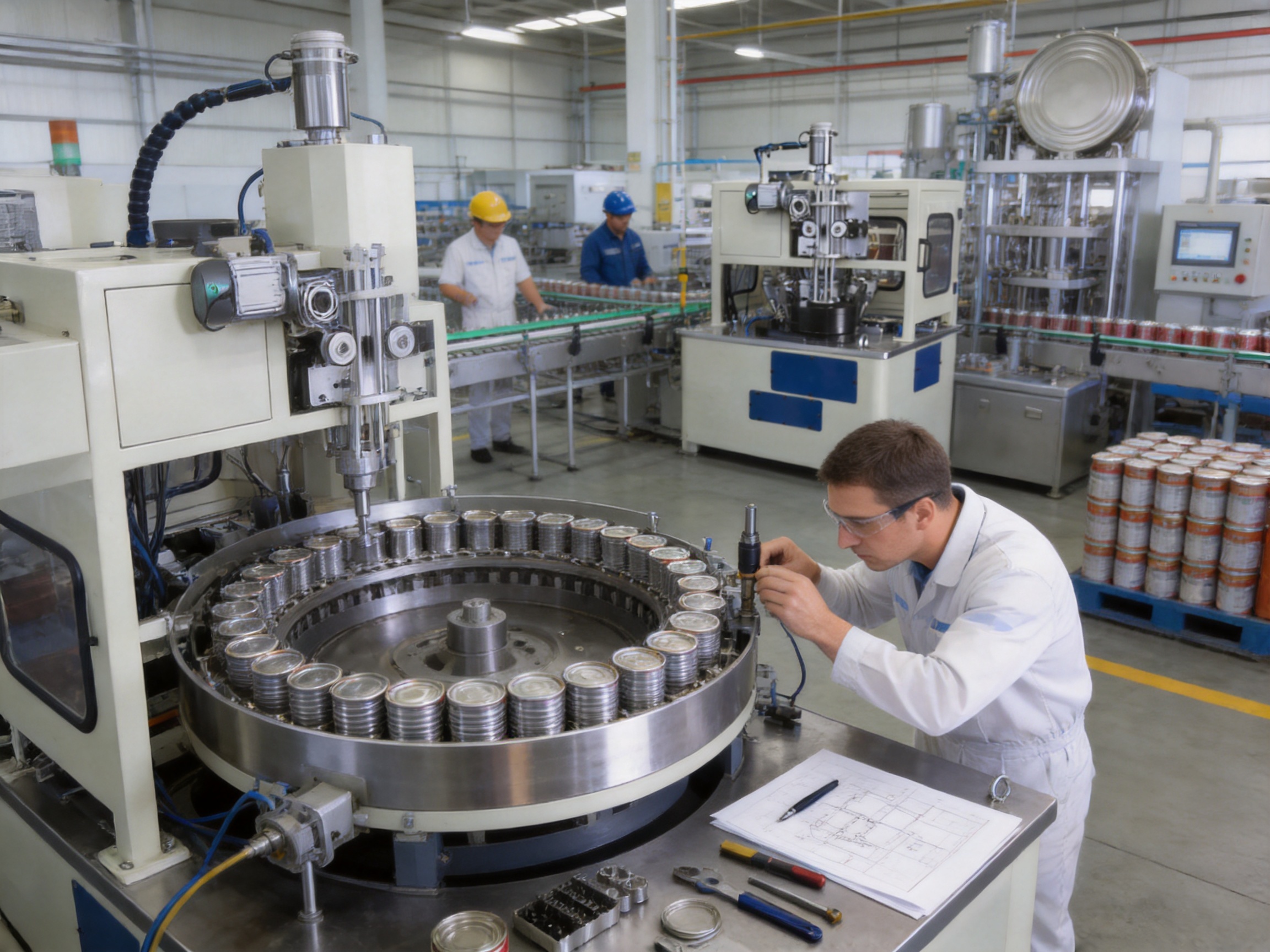
The machine is designed for lining general lids and easy-open ends. The applicable lid diameter depends on the model selected. Customers should provide product drawings and technical specifications before final equipment confirmation.
The GT3B51-L-3 model has a stated output capacity of 800 to 1,200 pieces per minute. Actual production depends on lid dimensions, material properties, feeding conditions, machine settings, inspection requirements, and line efficiency.
The listed configurations use eight heads. The multi-head arrangement supports continuous automatic lining and high-speed operation.
The GT3B51-L-3 is specified for lid diameters from 52 to 73 millimeters. It is also the configuration associated with the highest stated output range.
The GT3B51-L-5 is specified for lid diameters from 83 to 153 millimeters. Its stated output range is approximately 350 to 600 pieces per minute.
The GT3B51-L-3A is specified for lid diameters from 52 to 99 millimeters and has a stated output capacity of approximately 500 to 1,000 pieces per minute.
Yes. The machine is described as automatic and is designed for continuous production with automatic lid handling and rotary lining operation.
Each listed configuration has a machine power rating of 5.6 kilowatts. Electrical details should be confirmed according to the customer’s country, factory power supply, and final machine configuration.
The listed dimensions are approximately 1,100 by 1,250 by 2,000 millimeters, and the listed machine weight is approximately 2,500 kilograms. Installation space should include room for operation, cleaning, maintenance, material handling, and safe access.
Yes. It is intended for integration with lid-making, feeding, curing, inspection, stacking, and other can-production equipment. The exact connection method should be reviewed during project planning.
A buyer should provide lid drawings, lid diameter and height details, material information, lining compound data, target production rate, product application, upstream and downstream machine information, local electrical requirements, and any special automation or inspection requirements.
The manufacturer provides after-sales services including installation, commissioning, technical guidance, operation training, and spare-parts supply. The specific service scope should be confirmed in the commercial and technical agreement.
High-speed rotary operation requires stable alignment and repeatable movement. CNC high-precision machining and complete mechanical processing capability help produce components with consistent dimensions, which supports feeding accuracy, rotary timing, lining position, and long-term maintainability.
Maintenance should include cleaning lining heads, inspecting feeding components, checking sensors and guards, lubricating mechanical parts, monitoring vibration and noise, inspecting wear parts, and verifying settings after format changes. Maintenance intervals should be established according to operating hours and the characteristics of the lining material.
The GT3B51 high-speed rotary lining machine is a practical solution for automatic lining of general lids and easy-open ends in high-volume can production. Its key advantages include automatic operation, an eight-head lining arrangement, multiple lid-size configurations, high stated output, compact dimensions, and suitability for integration into complete production lines.
The equipment is supported by the manufacturing experience of Zhejiang Golden Eagle Food Machinery Co., Ltd., a company established in 1978 with a long history in can-making machinery and molds. Its engineering personnel, CNC machining resources, ISO9001 and ISO14001 management certifications, international delivery experience, and broad product range provide a strong foundation for supplying industrial can-making equipment.
Compared with manual, semi-automatic, or intermittent lining solutions, a high-speed rotary machine can help manufacturers improve output, reduce repetitive handling, stabilize application, and balance a modern production line. The correct model should be selected according to lid diameter, production demand, lining compound, factory layout, and upstream and downstream equipment.
With proper installation, commissioning, operator training, preventive maintenance, and quality control, the rotary lining machine can contribute to a dependable lid-production process and support the efficient manufacture of food cans, beverage containers, and other metal packaging products.
1. Zhejiang Golden Eagle Food Machinery Co., Ltd. Product information for the GT3B51 high-speed rotary lining machine.
2. Zhejiang Golden Eagle Food Machinery Co., Ltd. Technical specifications for GT3B51-L-3, GT3B51-L-3A, and GT3B51-L-5 configurations.
3. Zhejiang Golden Eagle Food Machinery Co., Ltd. Corporate profile and manufacturing capability information.
4. ISO 9001, Quality Management Systems: Requirements.
5. ISO 14001, Environmental Management Systems: Requirements with Guidance for Use.
6. General principles of metal can manufacturing, lid forming, compound application, closure performance, and packaging-line integration.
Related Products

Founded in 1978, the company is one of the largest can-making machinery well-known companies at home and abroad.
Product Categories
Contact Information
Zhongshatou Shenjiamen Zhoushan Zhejiang China
+86-580-3056646

 English
 中文简体
 русский
 عربى
 Español