2026-09-27
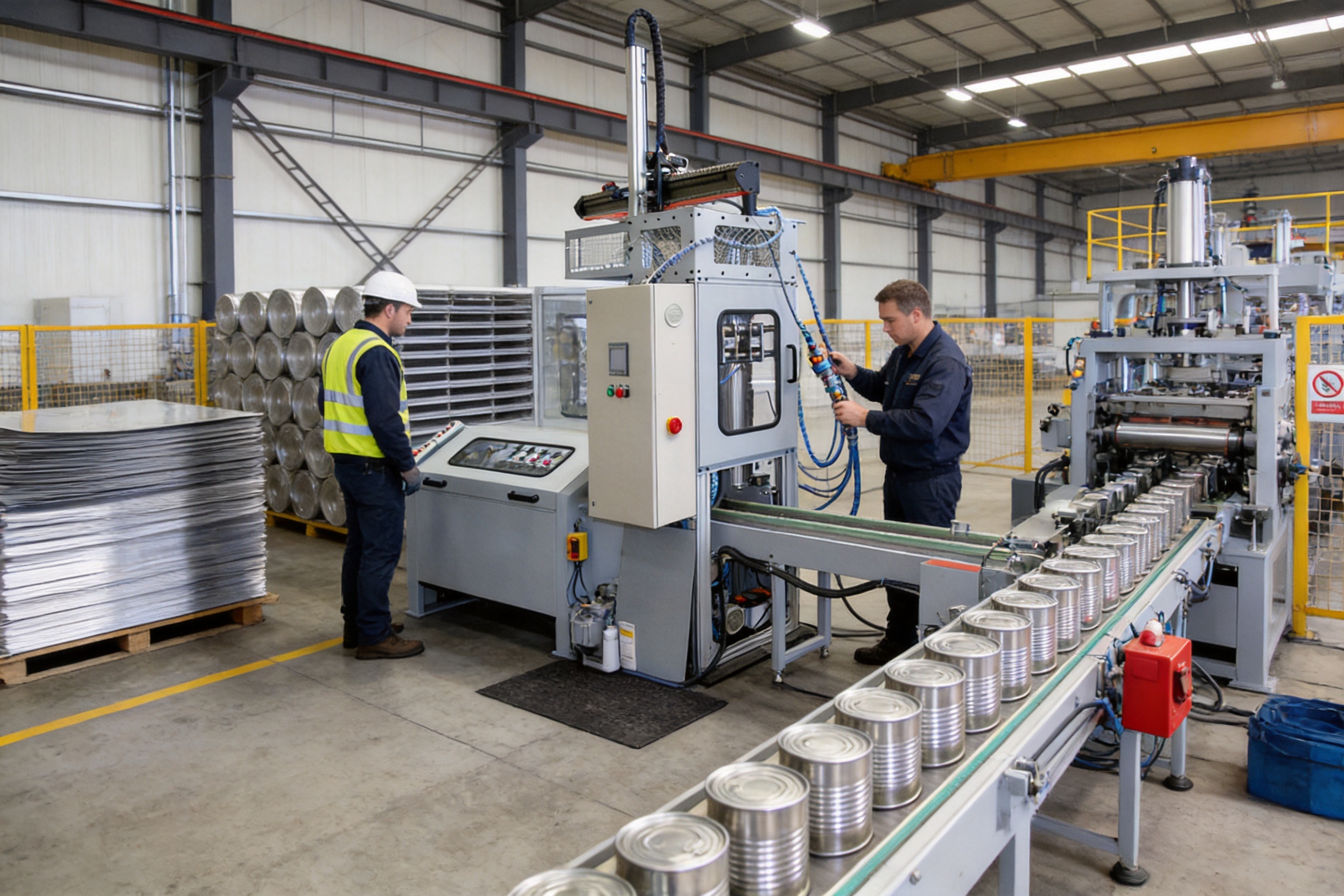
Automatic feeding is one of the most important stages in a modern can-making production line. Before forming, printing, welding, flanging, seaming, or other downstream operations can be completed, metal sheets must be delivered to the next machine in a stable, accurately timed, and continuous manner. Any interruption at this point can reduce the output of the entire line, increase labor requirements, create material handling risks, and affect the consistency of finished cans. A reliable automatic feeding machine therefore serves as much more than a simple material transfer device. It is an essential production-line component that connects processes, improves efficiency, and supports dependable long-term operation.
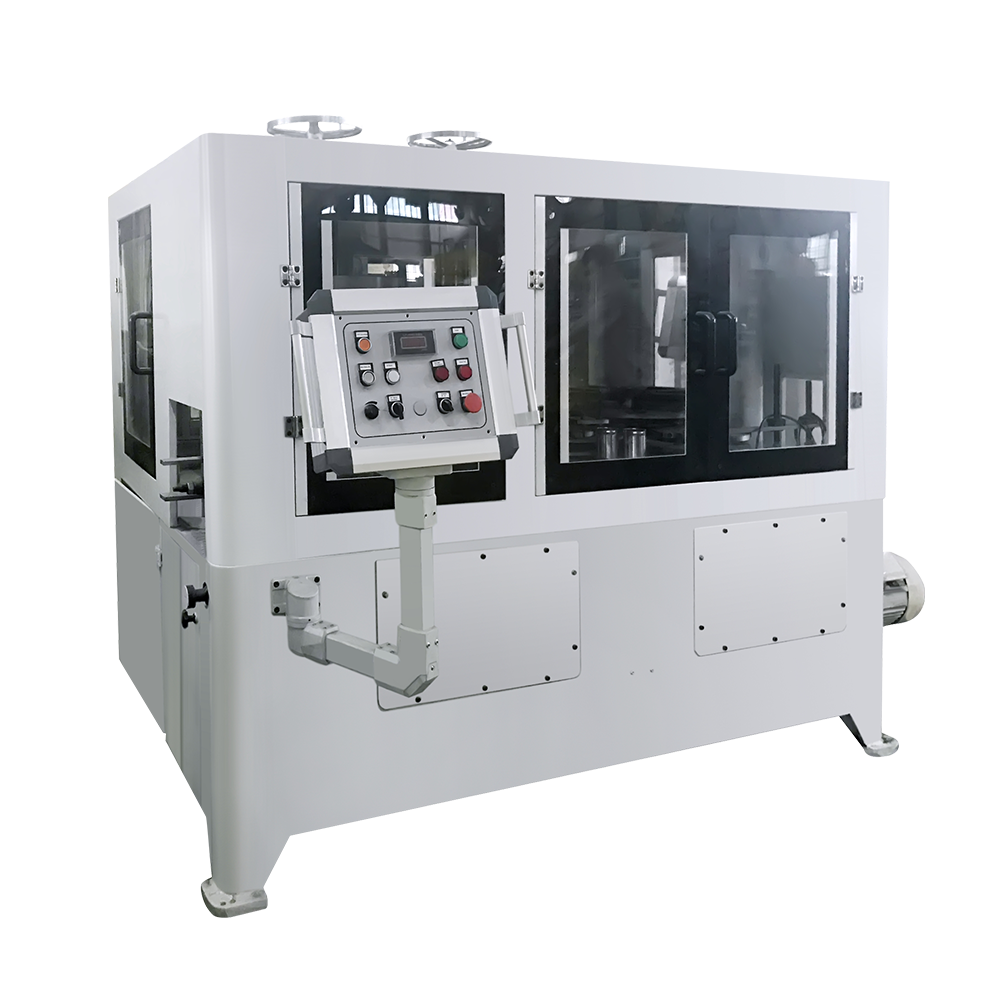
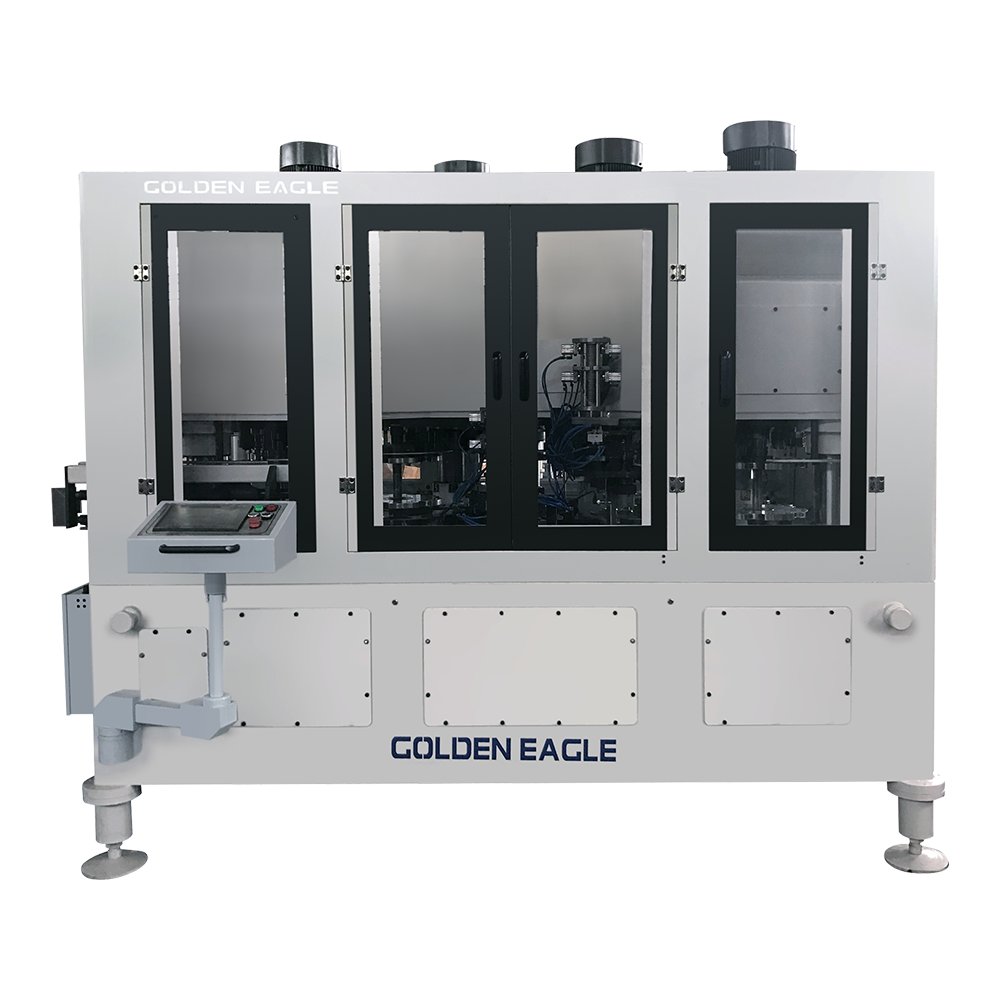
The GT10B-1 Automatic Feeding Machine is designed for high-speed sheet feeding in can-making applications. It can handle an output capacity of 600 to 1,000 pieces of sheet per minute, while supporting can diameters from 52 to 99 millimeters and can heights from 95 to 220 millimeters. With a total power requirement of 2 kilowatts, an air consumption of 50 liters per minute, and a machine weight of approximately 1,300 kilograms, the equipment combines high throughput with a solid industrial structure.
Manufactured by Zhejiang Golden Eagle Food Machinery Co., Ltd., the machine is part of a broader portfolio of equipment for food cans, beverage cans, tinplate cans, can lids, aerosol containers, chemical tanks, two-piece cans, and related metal packaging products. The manufacturer has focused on can-making machinery and molds since 1978, developing extensive experience in mechanical design, precision machining, production-line integration, installation, commissioning, and technical service.
This article explains the operating value, technical characteristics, manufacturing advantages, application suitability, maintenance considerations, and purchasing factors associated with the GT10B-1 Automatic Feeding Machine. It also compares its practical strengths with the limitations commonly found in basic or manually assisted feeding solutions.
A can-making line depends on synchronization. Individual machines may perform different operations, but they must work together at compatible speeds and with consistent material positioning. The feeder is responsible for accepting sheets or workpieces, separating them, and delivering them to the next process at a controlled rate. It must maintain a regular flow even when the production line operates continuously for long periods.
In a manual feeding arrangement, operators must repeatedly pick up, align, and transfer sheets. This method can be suitable for very small-scale production, testing, or occasional work, but it has clear limitations when output requirements increase. Human feeding speed can vary with fatigue, workload, material condition, and operator experience. Small variations in timing may create gaps or accumulation between machines. Incorrect alignment may also lead to feeding faults, surface damage, machine stoppages, or defective products.
An automatic feeder reduces these risks by controlling material movement mechanically and continuously. Once the machine has been correctly adjusted for the required product specifications, it can maintain a stable feeding rhythm with less operator intervention. This helps production managers improve line utilization and allows personnel to focus on supervision, quality control, material preparation, and other higher-value tasks.
Automatic feeding is especially important in high-speed tinplate production. Tinplate sheets can have sharp edges, reflective surfaces, and specific requirements for surface protection. Repeated manual handling may increase the chance of scratches, dents, contamination, and inconsistent orientation. A properly designed feeding system provides a more controlled route for the material and supports safer, cleaner, and more repeatable operation.
The GT10B-1 is engineered for feeding sheets at a production rate of 600 to 1,000 pieces per minute. This capacity allows it to support demanding can-making processes where the feeding stage must keep pace with high-speed forming or related equipment. Its product range covers can diameters from 52 to 99 millimeters and can heights from 95 to 220 millimeters, providing flexibility for a variety of cylindrical metal packaging applications.
The machine uses a 2-kilowatt drive system based on a 380-volt, 60-hertz electrical configuration. Its compressed-air requirement is 50 liters per minute. These specifications are important for factory planning because they allow the purchaser to prepare the correct electrical and pneumatic infrastructure before installation. The machine has a listed weight of 1,300 kilograms, reflecting a robust industrial construction intended for stable operation.
With overall dimensions of approximately 5,300 millimeters in length, 4,730 millimeters in width, and 2,750 millimeters in height, the feeder requires a properly planned installation area. The substantial footprint provides room for sheet handling, production-line connection, inspection, and operator access. Before shipment, the customer should confirm plant layout, maintenance clearances, incoming material routes, power supply, compressed-air quality, and the position of upstream and downstream machinery.
| Item | Specification |
|---|---|
| Model | GT10B-1 |
| Output capacity | 600–1,000 pieces of sheet per minute |
| Applicable can diameter | 52–99 millimeters |
| Applicable can height | 95–220 millimeters |
| Air consumption | 50 liters per minute |
| Total power | 2 kilowatts |
| Electrical configuration | 380 volts, 60 hertz |
| Machine weight | Approximately 1,300 kilograms |
| Machine dimensions | 5,300 × 4,730 × 2,750 millimeters |
The stated specifications should be considered together rather than separately. High output capacity is valuable only when feeding accuracy, material compatibility, line synchronization, and operating stability are also maintained. The GT10B-1 is intended to function as part of a complete can-making system, so final performance depends on sheet quality, downstream equipment, tooling, setup conditions, and the overall production environment.
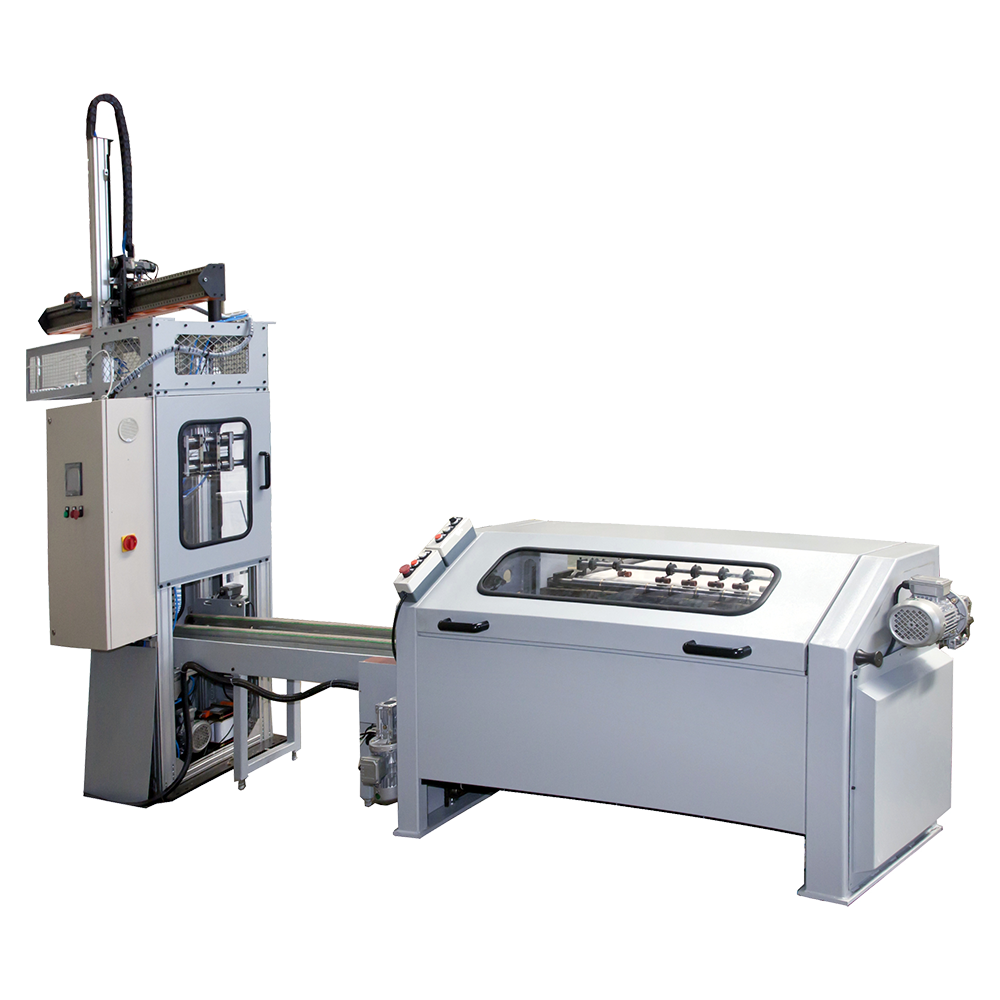
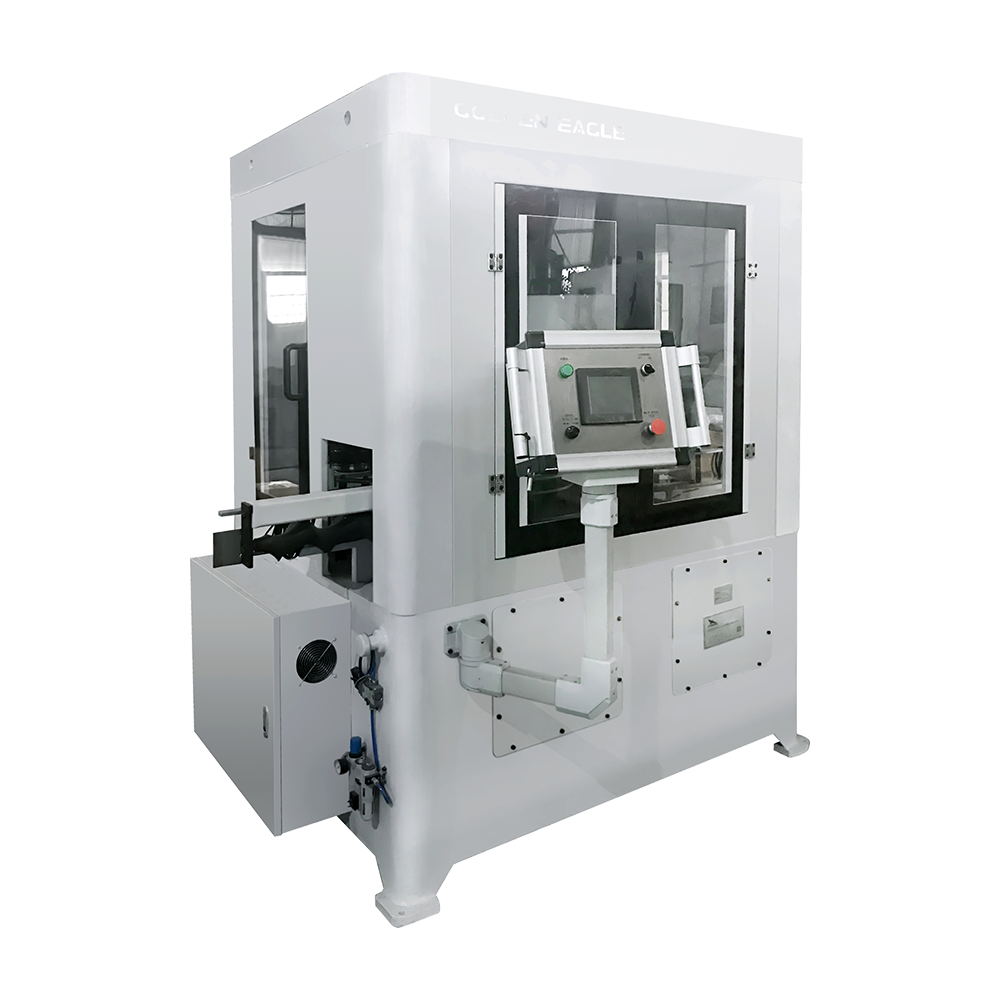
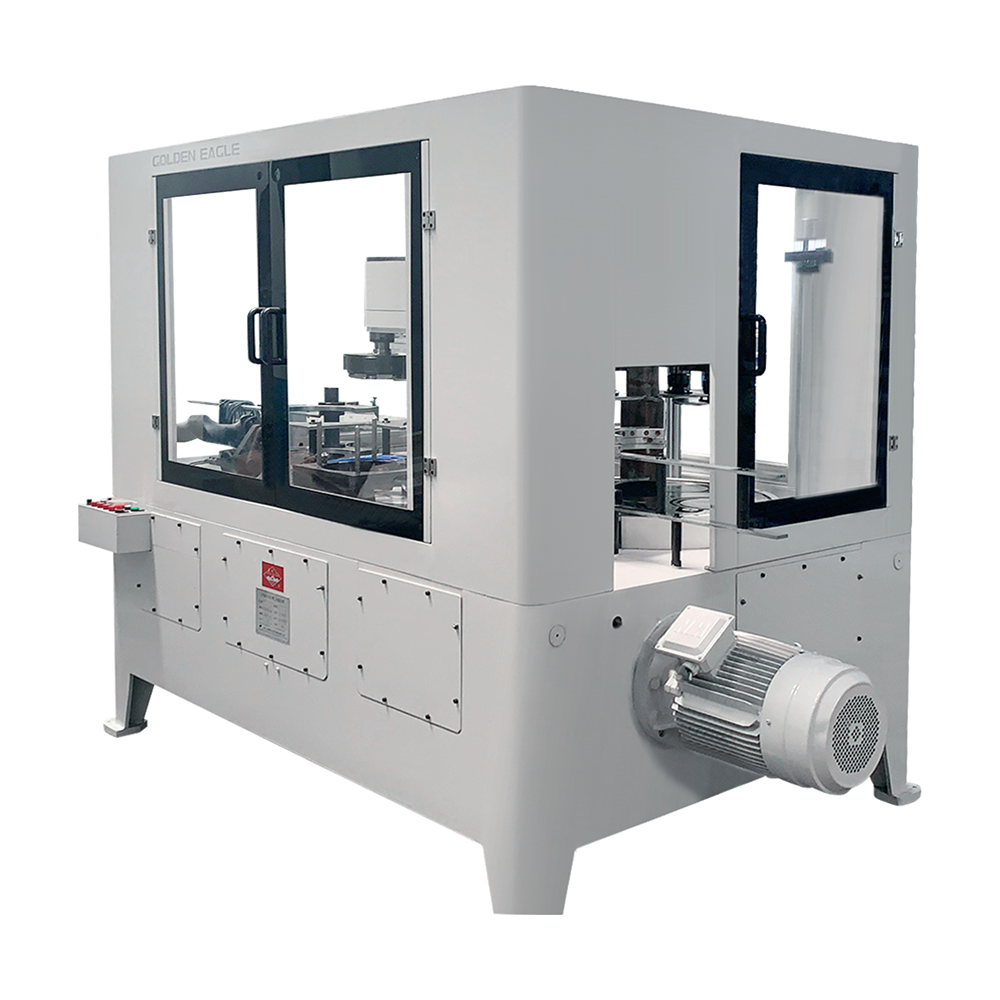
Automatic Feeding Machine
The most visible advantage of the GT10B-1 is its rated feeding speed. A capacity of 600 to 1,000 sheets per minute allows the machine to serve production lines that require continuous, high-volume material delivery. In comparison with manual feeding or low-speed semi-automatic systems, this capacity can significantly reduce bottlenecks at the entrance to the production process.
High-speed operation also improves the balance between connected machines. If a forming, cutting, welding, or other downstream machine is capable of high output but receives material irregularly, its actual productivity will be limited by the feeder. A properly matched automatic feeder helps the complete line operate closer to its planned capacity. This can improve the return on investment of other equipment already installed in the factory.
Stable feeding is just as important as maximum speed. A machine that reaches a high peak rate but frequently stops may produce less over a full shift than a machine that operates continuously at a consistent speed. Industrial feeding equipment must therefore be designed for repeatable motion, accurate timing, suitable material support, and dependable coordination with adjacent systems.
The GT10B-1 is designed around this production requirement. Its capacity range provides room for different operating conditions and product requirements. Operators can select a suitable speed according to the material, product format, line configuration, and quality target rather than forcing every job to run at one fixed rate.
The supported can diameter range of 52 to 99 millimeters and can height range of 95 to 220 millimeters makes the machine suitable for multiple can formats. This flexibility is valuable for manufacturers that produce more than one product or that need to serve different customers with different packaging specifications.
A machine with a narrow working range may be efficient for one dedicated product but can become a limitation when the factory changes formats. Frequent replacement of feeding equipment is expensive and can create unnecessary downtime. A feeder with a broader application range gives manufacturers more freedom to schedule different orders and respond to market demand.
Product compatibility must always be confirmed against the complete line configuration. The dimensions listed for the feeder should be reviewed together with the forming tooling, sheet size, material thickness, can-body design, and the requirements of the receiving machine. Proper technical communication before purchase helps ensure that the equipment is correctly configured for the intended production program.
Format flexibility also improves the value of factory expansion. When a company adds new can sizes or introduces a related product category, an adaptable feeder may continue to serve the expanded line. This can reduce the need for immediate capital expenditure and simplify equipment planning.
Manual feeding is influenced by operator skill, attention, fatigue, and working conditions. Even experienced operators may not maintain identical timing throughout a long shift. An automatic feeder delivers sheets according to a mechanical cycle, helping reduce variation in the material flow.
Consistent output supports better coordination with downstream equipment. When sheets arrive at predictable intervals, the receiving machine can operate with fewer interruptions caused by empty feeding positions or uneven material accumulation. This can improve overall line stability and make production planning more reliable.
Repetitive sheet handling can require several operators, particularly when production speed is high. Automatic feeding reduces the amount of continuous manual movement required at the line entrance. Personnel can instead monitor the equipment, replenish material stacks, conduct inspections, and respond to abnormal conditions.
Reducing repetitive handling may also improve workplace ergonomics. Although operators are still needed for supervision and maintenance, they do not need to perform the same lifting and placement motion continuously throughout the shift. This can contribute to a more organized and sustainable production environment.
Incorrect sheet placement, double feeding, missed feeding, and irregular alignment can cause stoppages or quality problems. A dedicated mechanical feeding system is designed to control these actions more consistently than a manual process. When correctly adjusted and maintained, it helps reduce the probability of errors associated with human handling.
Feeding accuracy is particularly important when the sheet proceeds directly into forming or joining equipment. A misplaced sheet can affect the position of the finished can body, create dimensional variation, or require the operator to stop the line for correction. More controlled feeding supports both productivity and product quality.
A basic standalone feeder may transfer material, but a production-grade automatic feeding machine is selected and installed as part of a wider manufacturing system. Its output rate, physical arrangement, pneumatic requirements, and electrical characteristics can be considered alongside connected can-making machinery.
This system-oriented approach is one of the important differences between a dedicated industrial feeder and a simple material handling device. The objective is not only to move sheets, but also to maintain a dependable connection between stages of production.
The GT10B-1 weighs approximately 1,300 kilograms and has a large industrial frame. A substantial structure can help resist vibration and maintain stable alignment during high-speed operation. In feeding applications, stability is important because unwanted movement may influence sheet positioning, machine timing, and the repeatability of the feeding cycle.
Heavy-duty construction also supports long-term use in a demanding factory environment. Can-making plants may operate multiple shifts and require equipment to perform repeatedly over many production cycles. The machine must therefore be designed not only for initial performance, but also for durability, accessibility, adjustment, and maintainability.
Mechanical strength alone does not guarantee performance. It must be combined with accurate machining, proper assembly, suitable components, correct installation, and regular maintenance. The manufacturer’s experience in producing can-making machinery and molds is important in this respect because feeding equipment must interact with other specialized machines and production tools.
The overall dimensions of the GT10B-1 also provide an indication of its industrial configuration. The machine is not intended as a lightweight portable unit. It is designed to become a stable part of a permanent production line, where its structure, working area, and connection points can be integrated into the factory layout.
The total power requirement of 2 kilowatts is relatively focused for a machine with a rated capacity of up to 1,000 sheets per minute. Energy consumption should always be evaluated according to actual operating conditions, production speed, duty cycle, and auxiliary equipment, but the listed power specification helps customers plan an appropriate electrical system.
The air consumption of 50 liters per minute provides a reference for selecting the factory compressor and air-treatment equipment. Clean, dry, and sufficiently stable compressed air is important for pneumatic functions. Air containing excessive moisture, oil, or particulate contamination may shorten component life and affect operating reliability.
Factory engineers should confirm voltage and frequency before ordering. The listed electrical specification is 380 volts and 60 hertz. If the machine will be installed in a region with a different electrical standard, the customer should discuss the required configuration with the supplier before production and shipment.
Energy planning should also include the connected machines. The feeder may have a modest individual power requirement, but the total line load can be much higher when presses, welders, conveyors, inspection equipment, compressors, and other systems are included. Correct planning helps avoid voltage instability and supports safe operation.
Zhejiang Golden Eagle Food Machinery Co., Ltd. has been involved in can-making machinery and can-making molds since 1978. The company was formerly associated with Zhejiang Food Machinery Factory and Zhoushan Mold Factory. Its long history provides practical experience in the design, manufacture, installation, and use of equipment for metal packaging production.
The company employs more than 350 trained personnel, including experienced design and development engineers. A qualified engineering team is valuable for a specialized product such as an automatic feeding machine because the equipment must combine mechanical movement, production-line coordination, material handling, speed control, and factory installation requirements.
Can-making machinery is a highly specialized field. Product performance depends on the interaction of material properties, tooling, machine geometry, speed, alignment, and operating procedures. A manufacturer that also produces can-making molds can develop a deeper understanding of the relationship between the equipment and the products it forms or handles.
The company reports the use of CNC high-precision machining equipment and complete mechanical processing equipment. Precision machining supports the production of accurate machine parts, mounting surfaces, transmission components, guide elements, and other assemblies. Better dimensional control during manufacturing can contribute to smoother assembly and more consistent equipment performance.
The stated design approach draws on principles similar to those associated with internationally recognized can-making machinery manufacturers, including KRUPP, SOUDRONIC, and ALFONS-HAAR. The company also states that it combines practical production experience with ongoing technical improvement. This combination of established engineering principles and manufacturing feedback can help produce equipment that is suited to real factory conditions rather than only theoretical specifications.
The supplier has obtained ISO 9001 quality management system certification and ISO 14001 environmental management system certification. ISO 9001 supports a structured approach to quality procedures, documentation, process control, and continuous improvement. ISO 14001 reflects a formal approach to environmental management. Certifications do not replace product evaluation, but they provide useful evidence that the manufacturer has established organized management processes.
More than 10,000 pieces of can and can-lid equipment have reportedly been produced by the company. This installed production experience can be beneficial when customers require technical consultation, line matching, spare parts, troubleshooting, or assistance with future expansion.
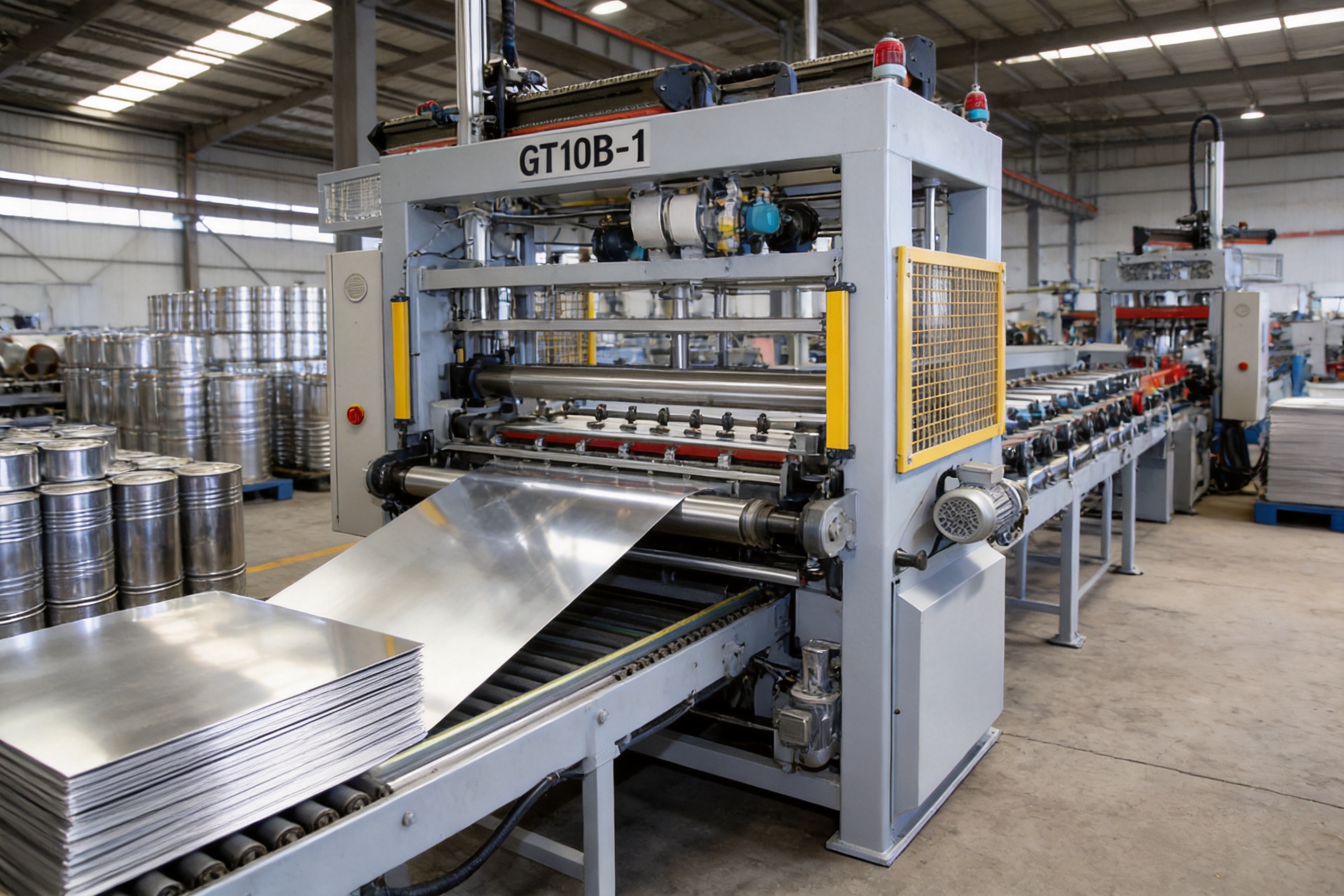
The manufacturing process begins with technical planning. Engineers review the intended can sizes, sheet specifications, feeding rate, downstream equipment, factory conditions, and customer requirements. This stage is important because a feeding machine cannot be judged independently from the production line it serves.
Engineering review may include the position of the incoming sheet stack, discharge height, line direction, material flow, operator access, maintenance space, and connection requirements. It can also include discussion of product changeover, operating speed, pneumatic supply, electrical configuration, and safety procedures.
After the design is confirmed, components are manufactured using mechanical processing equipment. CNC machining helps control the dimensions and repeatability of parts that require accurate geometry. Components with incorrect dimensions can create alignment problems, uneven movement, or premature wear, so machining quality is a central part of equipment reliability.
Machined parts may undergo inspection before entering assembly. Depending on the component, inspection can include dimensional checks, surface assessment, fit verification, and comparison with engineering drawings. Controlled processing and inspection reduce the possibility that defective or out-of-tolerance parts will move into later production stages.
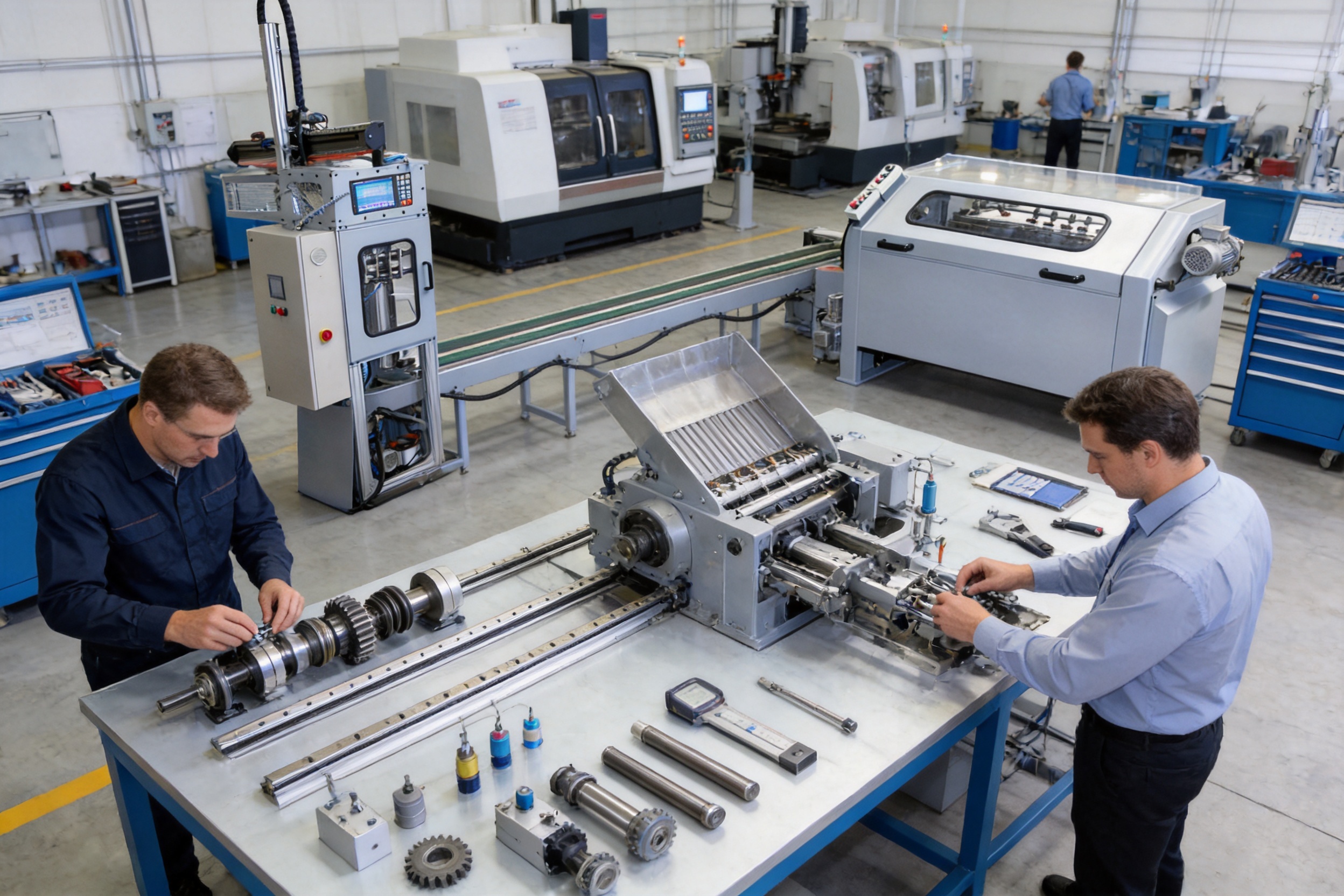
After component production, the machine is assembled into a complete feeding system. Assembly requires attention to frame alignment, transmission relationships, moving clearances, pneumatic connections, electrical wiring, and the positioning of working elements. Skilled technicians must ensure that the machine moves smoothly and that operating adjustments are accessible.
Adjustment is especially important for a feeder because its performance depends on the relationship between sheet position and machine timing. A strong assembly process helps ensure that the completed equipment is ready for commissioning and that installation at the customer’s facility can proceed efficiently.
Before delivery, industrial machinery should undergo functional testing. Testing may involve checking movement, operating speed, feeding consistency, safety functions, electrical performance, pneumatic operation, and the interaction of major assemblies. The precise testing procedure depends on the machine configuration and customer requirements.
Testing provides an opportunity to identify problems before shipment. It also creates useful information for installation and operator training. When the supplier maintains production and quality records, these records can support later maintenance and service activities.
The GT10B-1 is intended for use in can-making environments where sheets must be delivered continuously to a following operation. It can be considered for applications connected with food cans, beverage cans, tinplate packaging, and other cylindrical metal containers within its specified dimensional range.
It may also be relevant to production lines that manufacture products for household, industrial, chemical, or aerosol-related packaging, provided that the sheet format, can dimensions, machine interface, and process requirements are compatible. The supplier’s broader portfolio includes machinery for food can production lines, beverage can production lines, can-lid production lines, chemical tank production lines, aerosol canister production lines, two-piece can production lines, and pop-can production lines.
Customers should distinguish between a machine’s general application category and a confirmed production solution. Before ordering, the buyer should provide drawings, material information, expected output, can dimensions, and details of the receiving equipment. This allows the supplier to verify whether the feeder is suitable and what configuration or auxiliary equipment may be required.
For factories producing multiple formats, the feeder’s stated diameter and height range can provide useful flexibility. However, changeover procedures, tooling requirements, line speed, sheet thickness, and product-specific settings should be reviewed in detail. Product versatility is most valuable when supported by practical setup procedures and technical guidance.
Installation should begin with a review of the factory layout. Because the machine measures approximately 5,300 millimeters in length, 4,730 millimeters in width, and 2,750 millimeters in height, adequate floor space and overhead clearance are necessary. The layout should include room for operators to load sheets, inspect material flow, access control points, and carry out maintenance.
The foundation or floor should be suitable for a machine weighing approximately 1,300 kilograms. Leveling and anchoring requirements should be confirmed with the supplier. A stable installation helps maintain alignment and reduces the influence of vibration during operation.
Electrical installation must match the required voltage and frequency. The factory should provide suitable protection, grounding, and isolation according to local regulations and the supplier’s technical documentation. Pneumatic installation should include a properly sized air supply and appropriate filtration and moisture control.
Integration with the downstream machine requires attention to height, direction, timing, and transfer position. The feeder must deliver the material to the receiving equipment without creating collisions, gaps, or excessive accumulation. Trial operation should be carried out at a controlled speed before the line is moved to full production.
Zhejiang Golden Eagle Food Machinery Co., Ltd. states that it provides installation, commissioning, technical guidance, and operation training. These services can be particularly valuable for customers installing an automatic feeder as part of a complete production line or for factories upgrading from manual or semi-automatic handling.
Before starting the machine, operators should confirm that the correct product material has been loaded and that the machine settings correspond to the selected can format. Sheets should be clean, properly stacked, and free from excessive deformation. Material quality has a direct effect on feeding performance.
The operator should inspect the working area, confirm that no tools or foreign objects remain inside the machine, and verify that guards and safety devices are correctly positioned. Air pressure and electrical status should be checked according to the operating instructions.
During operation, the operator should monitor sheet flow, feeding rhythm, abnormal noise, vibration, material position, and the condition of the connected equipment. A sudden change in feeding behavior may indicate a problem with material stacking, adjustment, pneumatic supply, alignment, or a downstream blockage.
When changing from one can format to another, the machine should be stopped safely and isolated where required. Product-specific adjustments should be made according to the supplier’s instructions. After adjustment, the operator should run a trial quantity and verify the feeding position before returning to full speed.
Clear and repeatable changeover procedures help reduce downtime. They also reduce the risk of incorrect settings being used for a new product. A documented setup record can be helpful for factories that regularly alternate between several can sizes.
Preventive maintenance is essential for any high-speed feeding machine. Routine tasks may include cleaning, inspection of moving parts, checking fasteners, monitoring wear, verifying pneumatic connections, and reviewing electrical components. The exact maintenance schedule should follow the manufacturer’s instructions and the operating intensity of the factory.
Material dust, coating particles, oil, and other contaminants should not be allowed to accumulate in areas where they can influence movement or sensor function. Clean working conditions help maintain consistent feeding and make it easier to identify developing faults.
Lubrication should be performed with the correct lubricant and at the recommended intervals. Excessive or unsuitable lubrication can attract contaminants, while insufficient lubrication can increase friction and wear. Maintenance personnel should keep records of lubrication, component replacement, inspection results, and corrective work.
Spare parts availability is another important purchasing consideration. The supplier states that it provides parts and after-sales support. Customers should clarify which wear parts are recommended for initial stocking, how parts are identified, and what technical information is required when ordering replacements.
Responsive service can reduce downtime when a problem occurs. A manufacturer with experience in can-making machinery may be better positioned to understand how a feeder interacts with welders, presses, conveyors, forming equipment, and other line components. This broader knowledge can support more effective troubleshooting.
Automatic feeding can contribute to product quality by improving the regularity of material delivery. Consistent positioning helps downstream machines perform their operations more predictably. This does not eliminate the need for quality inspection, but it can reduce variation caused by irregular manual handling.
Safety is another important benefit. Sheets may have sharp edges, and repeated manual handling can expose workers to cuts, strain, and accidental contact with moving machinery. An automatic feeder reduces the amount of continuous direct handling, although operators must still follow all safety procedures and remain aware of machine movement.
Guards, emergency stops, isolation procedures, and operator training should be treated as essential elements of the complete installation. The buyer should review the machine’s safety documentation and ensure that the equipment is operated in compliance with applicable local regulations.
A cleaner and more organized feeding area can also improve factory management. When material flow is defined and repeatable, supervisors can identify abnormalities more quickly. Production data, stoppage records, and quality results can be compared more effectively across shifts and product formats.
The supplier reports that its products have been exported to markets in Europe, Asia, Africa, North America, South America, and Oceania. Its listed export destinations include Germany, Italy, the United Kingdom, Spain, Hungary, Russia, Australia, Jordan, Malaysia, the Philippines, Pakistan, Egypt, Algeria, Turkey, Mexico, Nigeria, and Iran.
International experience can help a machinery supplier understand different factory conditions, technical expectations, communication requirements, and installation environments. Export projects often require careful documentation, packaging, transport coordination, remote communication, and support for local commissioning.
Customers purchasing an automatic feeder for an overseas factory should clarify shipping dimensions, packaging, installation responsibilities, electrical standards, documentation, training arrangements, warranty terms, spare parts, and service response procedures. Early communication reduces uncertainty and makes the project easier to manage.
The company welcomes factory visits, business discussions, and cooperation opportunities. A visit can allow prospective customers to review manufacturing facilities, inspect similar machines, discuss line requirements with engineers, and evaluate the supplier’s production capabilities before placing an order.
A responsible purchase decision should begin with the production requirement rather than with the machine name alone. The customer should define the expected output, product range, material type, sheet dimensions, operating hours, number of shifts, and downstream process. These details allow the supplier to confirm whether the GT10B-1 is appropriate.
The buyer should compare the rated capacity with the actual line target. If the production line is expected to run continuously near the upper end of the capacity range, the customer should confirm the required material quality, operating conditions, changeover frequency, and maintenance schedule. Capacity should be considered as part of a complete performance assessment.
Factory space is another key factor. The machine’s dimensions should be plotted on the plant layout together with material storage, operator walkways, safety zones, conveyors, adjacent equipment, maintenance access, and finished-product routes. A machine that fits only when maintenance space is ignored may create operational difficulties after installation.
The buyer should also review the service package. Important questions include whether installation and commissioning are included, how operator training is conducted, what documents are supplied, which spare parts are recommended, how warranty claims are handled, and what technical support is available after delivery.
| Evaluation Area | Questions for the Buyer |
|---|---|
| Production capacity | Does the 600–1,000 sheet-per-minute range match the planned line output? |
| Product range | Are the required can diameters and heights within the stated working range? |
| Material compatibility | Have sheet type, thickness, surface condition, and stacking quality been confirmed? |
| Factory layout | Is there sufficient space for installation, operation, loading, inspection, and maintenance? |
| Utilities | Can the factory provide 380 volts, 60 hertz electricity and 50 liters per minute of compressed air? |
| Line integration | Can the feeder be matched correctly with the upstream and downstream equipment? |
| Service | Are installation, commissioning, training, spare parts, and technical support available? |
| Future expansion | Can the machine support planned product changes or additional production capacity? |
Automatic feeding machines may appear straightforward from the outside, but reliable high-speed feeding requires detailed engineering. The machine must control movement, timing, material separation, alignment, and transfer while operating in coordination with other production equipment.
A supplier with long experience in can-making machinery understands that production problems are often connected. An unstable feeder may affect welding, forming, printing, seaming, or inspection further down the line. Conversely, a downstream obstruction may appear to be a feeding problem. Effective technical support requires knowledge of the complete process.
The manufacturer’s experience with molds is also relevant. Molds and forming tools influence product geometry, while feeding equipment must deliver material in a repeatable position for those tools to work correctly. Experience across both machinery and tooling can support more practical equipment design and line coordination.
Continuous improvement based on production feedback is another advantage. Machinery that has been installed in different factories can provide useful lessons about material variation, operating environments, maintenance practices, and customer expectations. These lessons can be incorporated into design updates, manufacturing methods, and service procedures.
The value of an automatic feeder is measured not only by its purchase price, but also by its contribution to production efficiency, labor utilization, quality consistency, and line availability. A reliable feeder can help manufacturers produce more output with fewer interruptions and better control of the production process.
For high-volume operations, reducing small delays can produce significant gains over a full year. If manual loading causes frequent pauses or requires additional operators, automation may improve both direct labor efficiency and equipment utilization. The actual financial result depends on the factory’s operating schedule, labor costs, product mix, and line performance.
The machine may also support future growth. A company that expects increased orders can use a high-speed feeder as part of a broader capacity expansion plan. Its product range may allow the same equipment to support several formats, helping reduce the need for separate feeding systems.
Reliable feeding can contribute to lower waste by reducing errors caused by irregular sheet placement. Material savings should not be assumed automatically, because waste depends on many factors, but improved process control creates a stronger foundation for identifying and reducing avoidable losses.
The GT10B-1 Automatic Feeding Machine is designed for manufacturers that require fast, stable, and repeatable sheet delivery in can-making production lines. Its rated capacity of 600 to 1,000 sheets per minute, compatibility with can diameters from 52 to 99 millimeters, and support for can heights from 95 to 220 millimeters make it suitable for a broad range of cylindrical metal packaging applications.
Compared with manual or basic semi-automatic feeding, the machine offers greater production consistency, reduced repetitive labor, improved line coordination, and lower exposure to common handling errors. Its 2-kilowatt power requirement, 50-liter-per-minute air consumption, and heavy industrial structure provide clear reference points for factory planning and installation.
The strength of the product is supported by the supplier’s long involvement in can-making machinery and molds. Since 1978, Zhejiang Golden Eagle Food Machinery Co., Ltd. has developed manufacturing, engineering, CNC machining, assembly, testing, installation, and after-sales capabilities for the metal packaging industry. Its trained personnel, reported production of more than 10,000 pieces of can and can-lid equipment, ISO 9001 and ISO 14001 certifications, and international export experience provide a substantial foundation for equipment supply.
For the best result, the machine should be evaluated as part of a complete production system. Buyers should confirm product dimensions, sheet characteristics, line speed, factory utilities, layout, safety requirements, maintenance procedures, and service arrangements before ordering. With correct integration and regular maintenance, an automatic feeding machine can become an important foundation for efficient, high-volume, and dependable can production.
The machine automatically separates and delivers sheets to the next stage of a can-making production line. It creates a more consistent material flow than continuous manual feeding and helps connected equipment operate with fewer interruptions.
The listed output capacity is 600 to 1,000 pieces of sheet per minute. Actual performance can depend on material quality, product format, machine settings, line configuration, and operating conditions.
The stated applicable can diameter range is 52 to 99 millimeters. The customer should provide product drawings and confirm compatibility with the complete production line before purchase.
The listed can height range is 95 to 220 millimeters. The actual suitability should be confirmed together with sheet specifications, tooling, downstream equipment, and changeover requirements.
The machine has a listed total power requirement of 2 kilowatts and an electrical configuration of 380 volts and 60 hertz. Electrical requirements should be confirmed with the supplier for the customer’s installation location.
The listed air consumption is 50 liters per minute. The factory should provide clean, dry, and stable compressed air through an appropriately designed air-treatment system.
Its stated diameter and height ranges allow it to support multiple can formats within the specified limits. Product changeover procedures and the compatibility of all connected equipment should be reviewed before production.
Automatic feeding can provide more consistent timing, reduce repetitive labor, lower the risk of manual placement errors, and improve coordination with downstream machines. It is particularly valuable for high-volume or multi-shift production.
The listed machine dimensions are approximately 5,300 millimeters long, 4,730 millimeters wide, and 2,750 millimeters high. Additional space is required for material loading, operator access, safety clearances, inspection, and maintenance.
The supplier states that it provides installation, commissioning, technical guidance, and operation training. The specific scope, schedule, and responsibilities should be agreed upon before the equipment is shipped.
Typical maintenance includes cleaning, inspection of moving parts, checking fasteners and pneumatic connections, lubrication where specified, monitoring wear, and reviewing electrical components. The supplier’s maintenance schedule and operating instructions should be followed.
Feeding equipment must work in coordination with forming, welding, conveying, inspection, and other can-making processes. A supplier with long-term experience in can-making machinery and molds can provide more informed engineering, integration, commissioning, and troubleshooting support.
1. Product specification sheet for the GT10B-1 Automatic Feeding Machine, including capacity, dimensional range, utility requirements, weight, and machine dimensions.
2. Zhejiang Golden Eagle Food Machinery Co., Ltd. company information concerning can-making machinery, can-making molds, manufacturing history, engineering personnel, certifications, and after-sales services.
3. General principles of sheet-metal can manufacturing, including material handling, production-line synchronization, forming, welding, and quality control.
4. ISO 9001 quality management system principles for manufacturing process control and continual improvement.
5. ISO 14001 environmental management system principles for structured environmental management in industrial production.
6. General industrial guidelines for compressed-air quality, machine installation, preventive maintenance, operator training, and production-line safety.
Related Products

Founded in 1978, the company is one of the largest can-making machinery well-known companies at home and abroad.
Product Categories
Contact Information
Zhongshatou Shenjiamen Zhoushan Zhejiang China
+86-580-3056646

 English
 中文简体
 русский
 عربى
 Español