2026-05-12
In high-speed metal packaging, die-cutting, lid forming, and precision conversion operations, accuracy is not only a performance indicator; it is the foundation of stable production. The Conversion Press Up and Down of Pressing Die and Round Knife is a specialized mold component set designed to support precise pressing, lifting, positioning, and cutting conversion in demanding production environments. It is especially valuable where tinplate, aluminum, laminated metal, coated sheet, and other industrial materials must be processed with consistent pressure, controlled clearance, and repeatable alignment.
This product belongs to the mold category, yet its value extends far beyond a single mold part. It acts as a mechanical accuracy interface between the pressing die, the round knife, the press structure, and the material being processed. In practical production, even a small deviation in the height of a sleeve, the concentricity of a metal ring, the flatness of a flange base, or the clearance between a round knife and a pressure roller can influence cutting quality, edge smoothness, material deformation, burr formation, and tool life. The conversion press assembly is therefore engineered as a precision system, not merely as a collection of separate metal components.
Modern can making and end making lines require rapid conversion between product specifications. A production plant may need to switch from one can size to another, from a food can lid to a beverage lid, from standard tinplate to coated tinplate, or from a heavier material to a thinner material. Each change demands accurate repositioning of the die and knife system. The Conversion Press Up and Down of Pressing Die and Round Knife is designed to support this production reality by providing a reliable, repeatable, and easy-to-install mechanical basis for conversion operations.
Compared with general-purpose mold spacers, simple sleeves, or less accurately machined conversion parts, this product emphasizes higher dimensional precision, stronger structural rigidity, better installation stability, and improved compatibility with production line adjustments. The result is faster setup, lower waste, smoother machine operation, and improved quality consistency across batches.
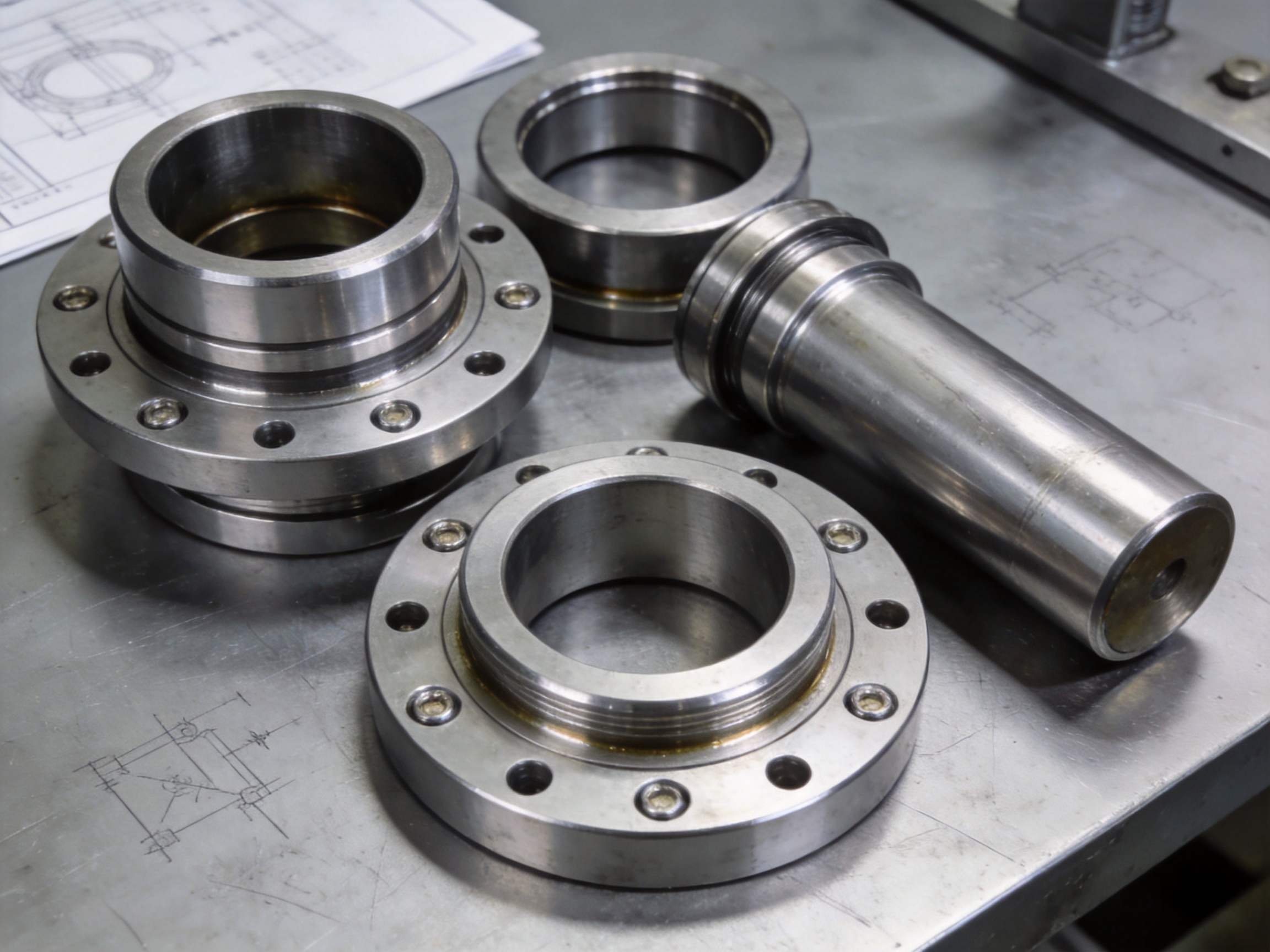
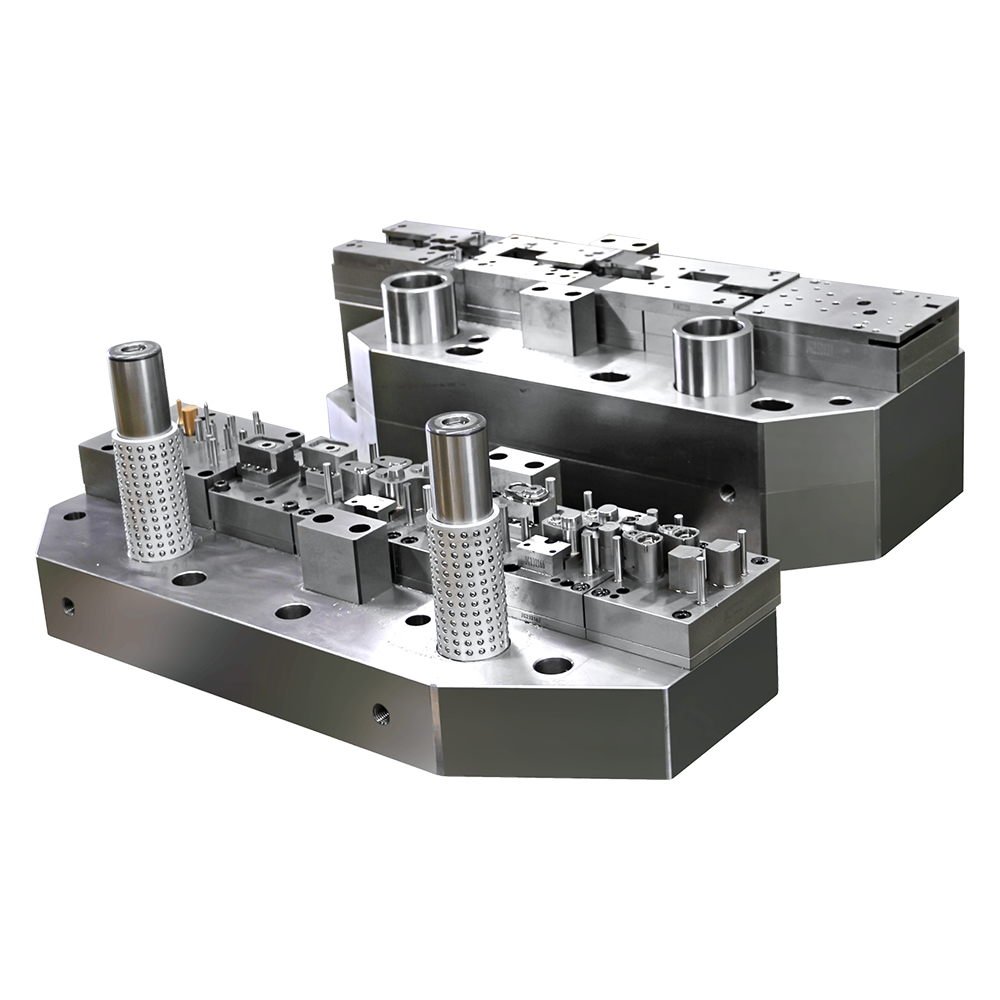
The Conversion Press Up and Down of Pressing Die and Round Knife is composed of precision-machined metal rings, sleeves, lifting parts, supporting bases, and flange assemblies with pre-drilled mounting holes. These components work together to position the pressing die and round knife in relation to the press body, pressure roller, or cutting platform. The design allows the equipment operator to perform die conversion with controlled height, stable support, and accurate alignment.
In many industrial conversion processes, the up-and-down movement of a press must be transmitted with minimal deformation. If the support part is too soft, insufficiently flat, or poorly centered, the die may tilt during operation. If the round knife is not positioned correctly, the cutting line may become uneven, and the tool may wear prematurely. This product addresses those issues through careful material selection, high-precision machining, and strict quality inspection.
The assembly is especially suitable for production lines that require frequent format changes. Instead of relying on temporary shims, manually adjusted spacers, or improvised support blocks, the production team can use a standardized precision conversion component set. This makes production adjustment more predictable and reduces the dependence on trial-and-error setup.
The product is also valuable in applications where the processing gap must remain stable under repeated pressing cycles. During high-speed operation, thermal expansion, vibration, and load variation can affect alignment. A precisely machined conversion press component provides a more stable reference surface, helping the machine maintain consistent pressure and cutting accuracy over long production runs.
The most visible feature of the product is its combination of circular precision components and flange-based mounting structures. The round geometry is important because round knives, pressure rollers, and rotating die systems require excellent concentricity. Any eccentricity can create uneven force distribution, vibration, and inconsistent cutting depth. By using accurately turned and ground round components, the assembly helps maintain balance and alignment.
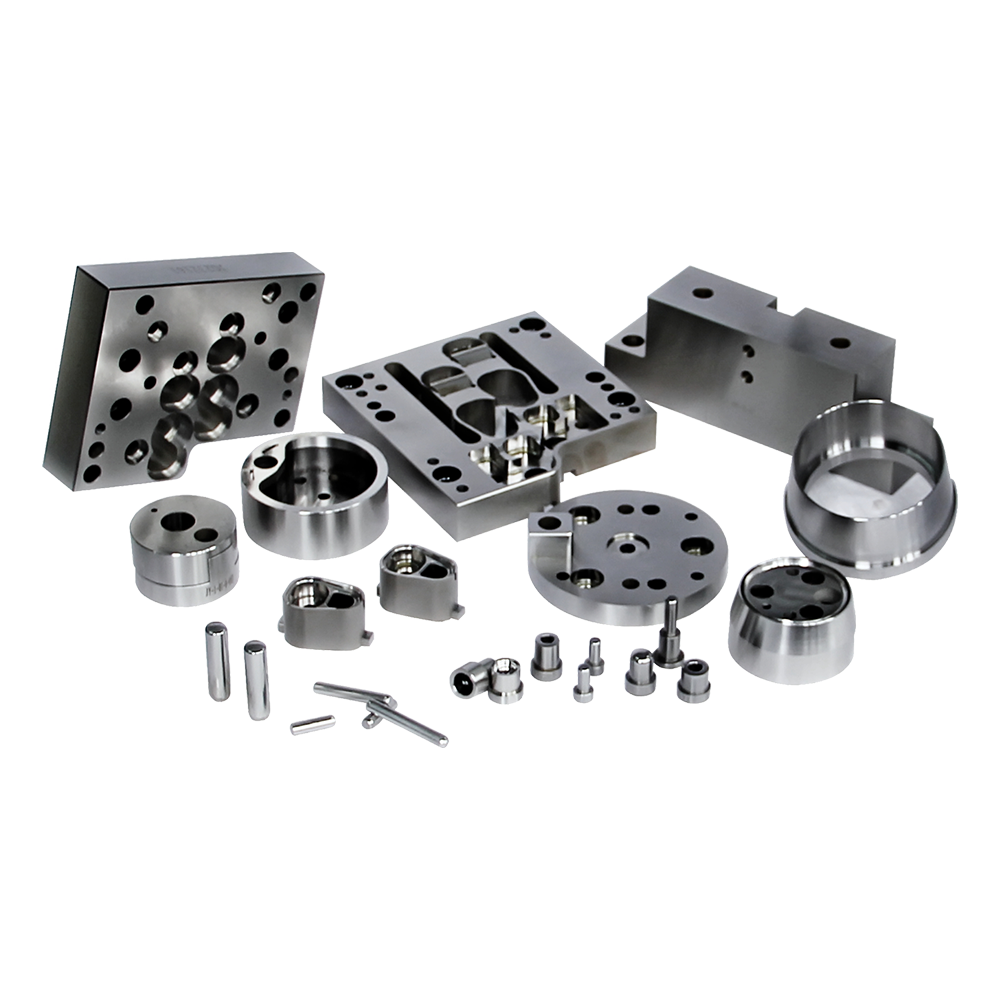
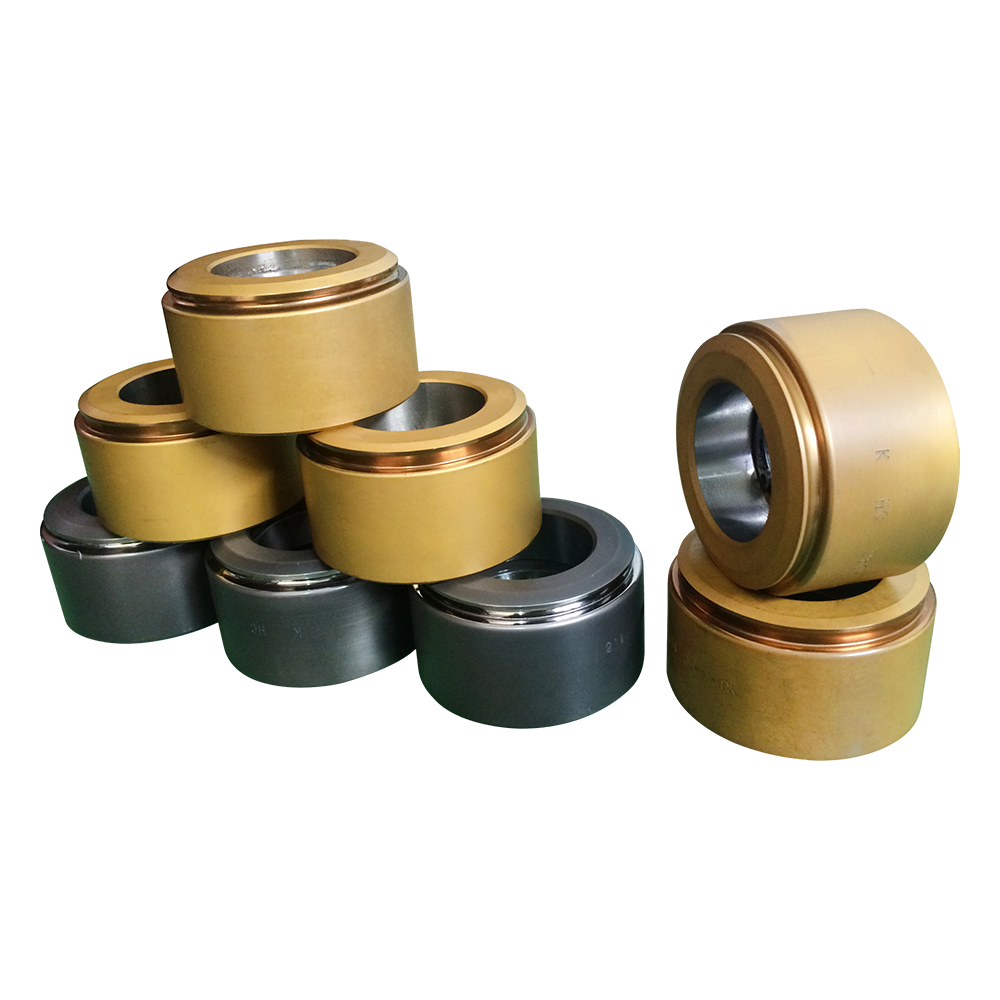
The sleeve and ring components are available in different diameters and heights, allowing the assembly to support a wide range of pressing and cutting scenarios. This diversity is essential in can making and lid production, where different diameters, profiles, and material specifications are common. A single production facility may produce food cans, beverage cans, milk powder cans, aerosol cans, chemical tanks, easy-open ends, and other packaging products. Each product type may require a different die height or conversion arrangement.
The flange base with pre-drilled holes improves installation efficiency. Operators can position the component quickly and securely without excessive manual measurement. When the mounting holes are manufactured with high positional accuracy, the flange helps maintain repeatable installation from one conversion to the next. This is particularly important in mass production, where machine downtime is costly and quality stability must be maintained.
The surfaces of the components are finished to support firm contact, low friction where required, and stable load transfer. Flatness, parallelism, perpendicularity, and surface finish all influence performance. A well-finished contact surface reduces micro-movement during operation and helps distribute force evenly across the component.
Another important characteristic is structural rigidity. During pressing or die-cutting, the component may be exposed to repeated impact and compression. If the part deforms, the cutting clearance changes. By using appropriate metal materials and controlled machining methods, the product provides the rigidity needed for continuous industrial operation.
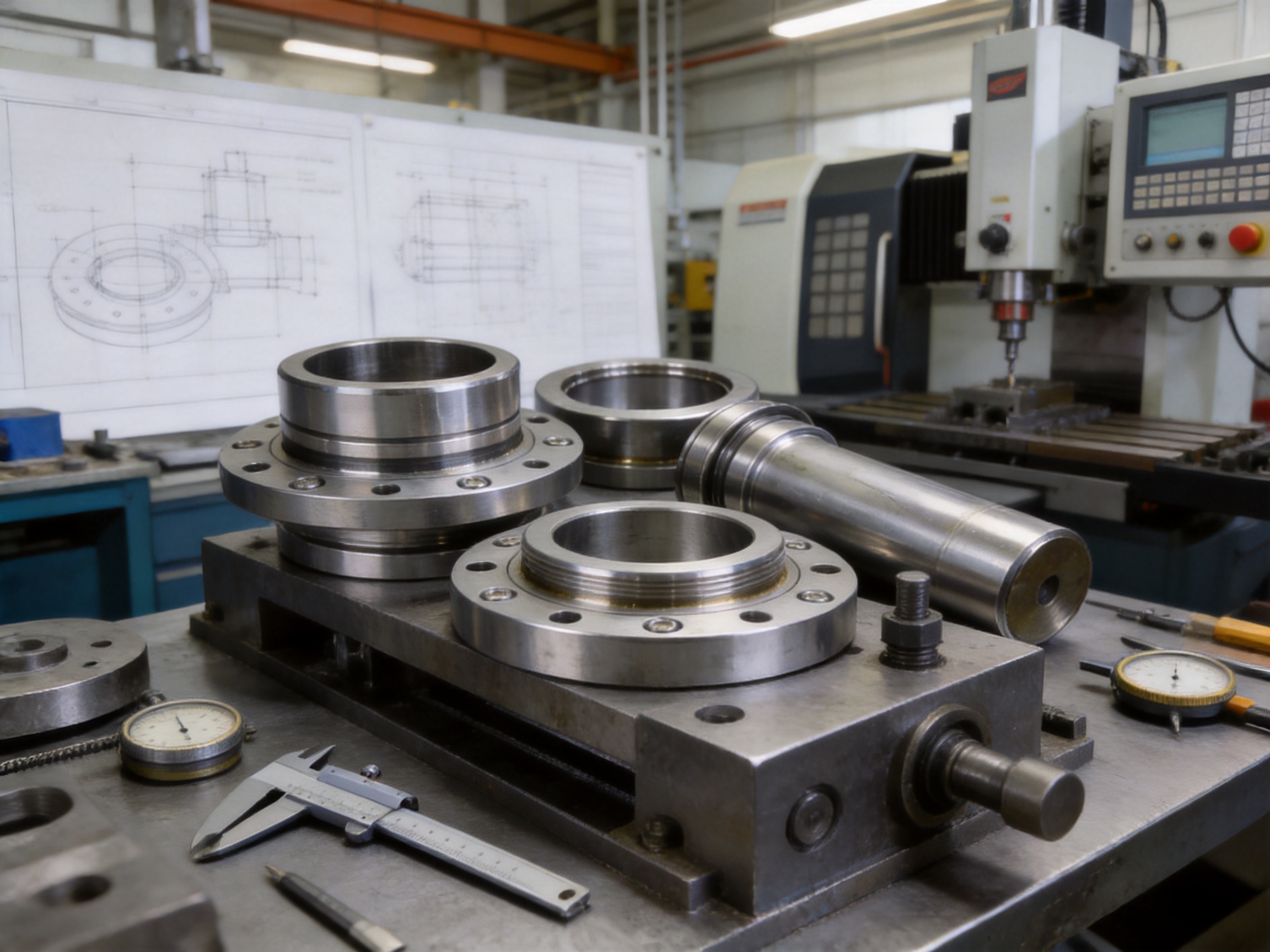
Many production facilities have historically used general spacers, simple rings, or locally fabricated supports for die conversion. While such solutions may work in low-speed or low-precision environments, they often create hidden costs in modern automated production. The Conversion Press Up and Down of Pressing Die and Round Knife offers several advantages over these conventional alternatives.
First, it improves dimensional repeatability. When a conversion part is produced with strict tolerances, operators can expect the same installation height and positioning result every time it is used. This reduces setup time and decreases the number of test runs needed after a die change. In contrast, low-precision spacers may require repeated adjustment, causing unnecessary downtime and material waste.
Second, it supports better cutting quality. Round knife conversion demands accurate clearance control. If the clearance is too small, the knife may wear quickly or damage the opposing roller. If the clearance is too large, the material may tear, wrinkle, or produce burrs. A precision conversion assembly helps maintain the intended gap and supports cleaner edges.
Third, it reduces machine vibration. Poorly balanced or unevenly machined parts can introduce vibration into high-speed equipment. Vibration affects not only product quality but also bearing life, tool life, and operator safety. Because this component set is designed with attention to concentricity and surface accuracy, it contributes to smoother machine operation.
Fourth, it supports faster production switching. In competitive manufacturing, the ability to change product formats quickly is a major advantage. A reliable conversion press assembly allows production teams to move from one specification to another with less uncertainty. The flange hole arrangement and standardized geometry simplify installation and positioning.
Fifth, it can extend die and knife service life. Tool wear is often caused by improper alignment, uneven pressure, and uncontrolled impact. By supporting more accurate contact and motion, the assembly helps reduce unnecessary stress on the pressing die and round knife. This lowers maintenance cost and improves production continuity.
Sixth, it improves process control. In a well-managed factory, production engineers want each variable to be measurable and controllable. A precisely manufactured conversion component transforms die adjustment from an approximate manual task into a repeatable mechanical procedure. This improves traceability and supports quality management.
Although the product can be used in different die-cutting and conversion environments, it is particularly relevant to can making machinery and tinplate can making machinery production lines. In metal packaging production, forming and cutting steps must remain consistent across thousands or millions of pieces. A small tooling error can lead to a large volume of defective products.
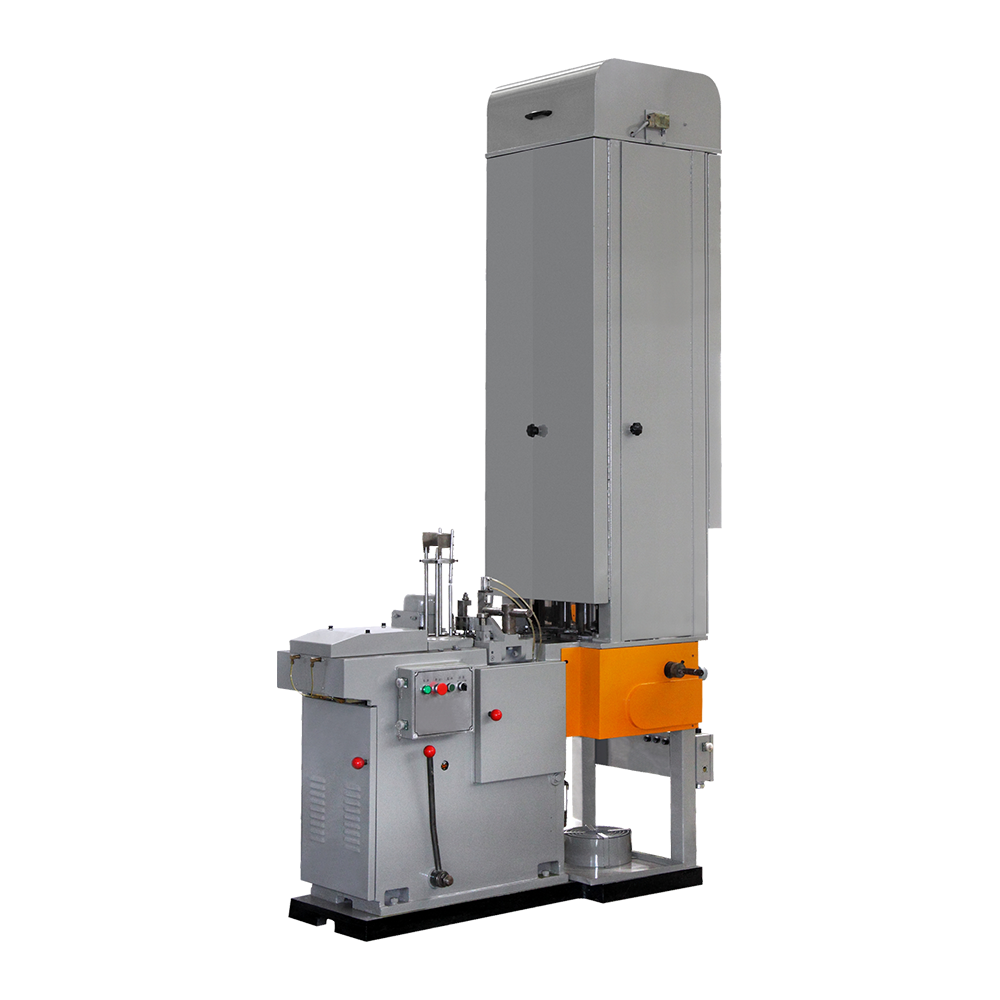
Food beverage can making machines, tin can lid end making machines, cutting machines, duplex slitters, milk powder can making machines, easy-open end lid making machines, tin can auto-welding machines, aerosol cone and dome making equipment, chemical tank making machines, automatic feeding machines, aerosol can making machines, and two-piece can making machines all depend on accurate tooling relationships. The conversion press component is one of the supporting elements that allows those relationships to be maintained during product changeover.
For example, in lid production, the end profile must be formed accurately so that the lid seals properly with the can body. If the die height changes unexpectedly after conversion, the curl, countersink, or panel profile may be affected. In round knife operations, inconsistent cutting can lead to sharp burrs or incomplete separation. The precision conversion assembly helps prevent these problems by ensuring stable die and knife positioning.
In aerosol can manufacturing, cone and dome parts require accurate forming and trimming. Uneven pressure or cutting misalignment can create defects that compromise appearance or functional sealing. Chemical tank production also requires strong dimensional consistency because the final container may be used for demanding storage conditions. The same principle applies to milk powder cans and food containers, where sealing reliability and hygiene are important.
By improving the accuracy of die conversion, the product indirectly supports the entire can making production line. It helps the operator reduce rejected parts, protects downstream equipment from receiving defective semi-finished products, and improves the overall efficiency of production planning.
The performance of a conversion press assembly depends greatly on how it is manufactured. Zhejiang Golden Eagle Food Machinery Co., Ltd. has decades of experience in can-making machinery and can-making molds, and this background supports the production of precision mold components. The company has long been engaged in the design, machining, assembly, and improvement of complete can production equipment and mold systems.
The manufacturing process begins with engineering analysis. Before a component is produced, its functional position, load condition, installation method, required tolerance, and material compatibility are considered. Because the product works with pressing dies and round knives, the design must account for both static support and dynamic operating forces. Engineers evaluate dimensions such as outer diameter, inner diameter, height, flange thickness, hole position, and contact surface requirements.
Material selection is another essential step. High-quality metal materials are selected according to strength, machinability, wear resistance, and dimensional stability. For components that must bear repeated compression, the material must resist deformation. For parts that interact with moving components, surface durability and finish are important. Proper material preparation helps ensure that the part maintains accuracy over long service periods.
CNC high-precision machining plays a central role in production. Turning, milling, boring, drilling, and grinding processes are applied according to the structure of each component. CNC machining allows tight control of circular geometry, hole position, surface flatness, and dimensional repeatability. Compared with manual machining, CNC production provides better consistency, especially when multiple components of different specifications must be produced for the same production system.
After rough machining, stress relief or intermediate processing may be applied where necessary to reduce internal stress and improve dimensional stability. Precision finishing follows, including fine turning, surface grinding, and hole finishing. These steps are important because the final product must provide stable support and accurate positioning.
Inspection is integrated throughout the manufacturing process. Critical dimensions are checked during and after machining. Concentricity, parallelism, perpendicularity, surface finish, hole position, and overall height are inspected according to engineering requirements. This inspection culture helps ensure that each component performs as intended when installed on production equipment.
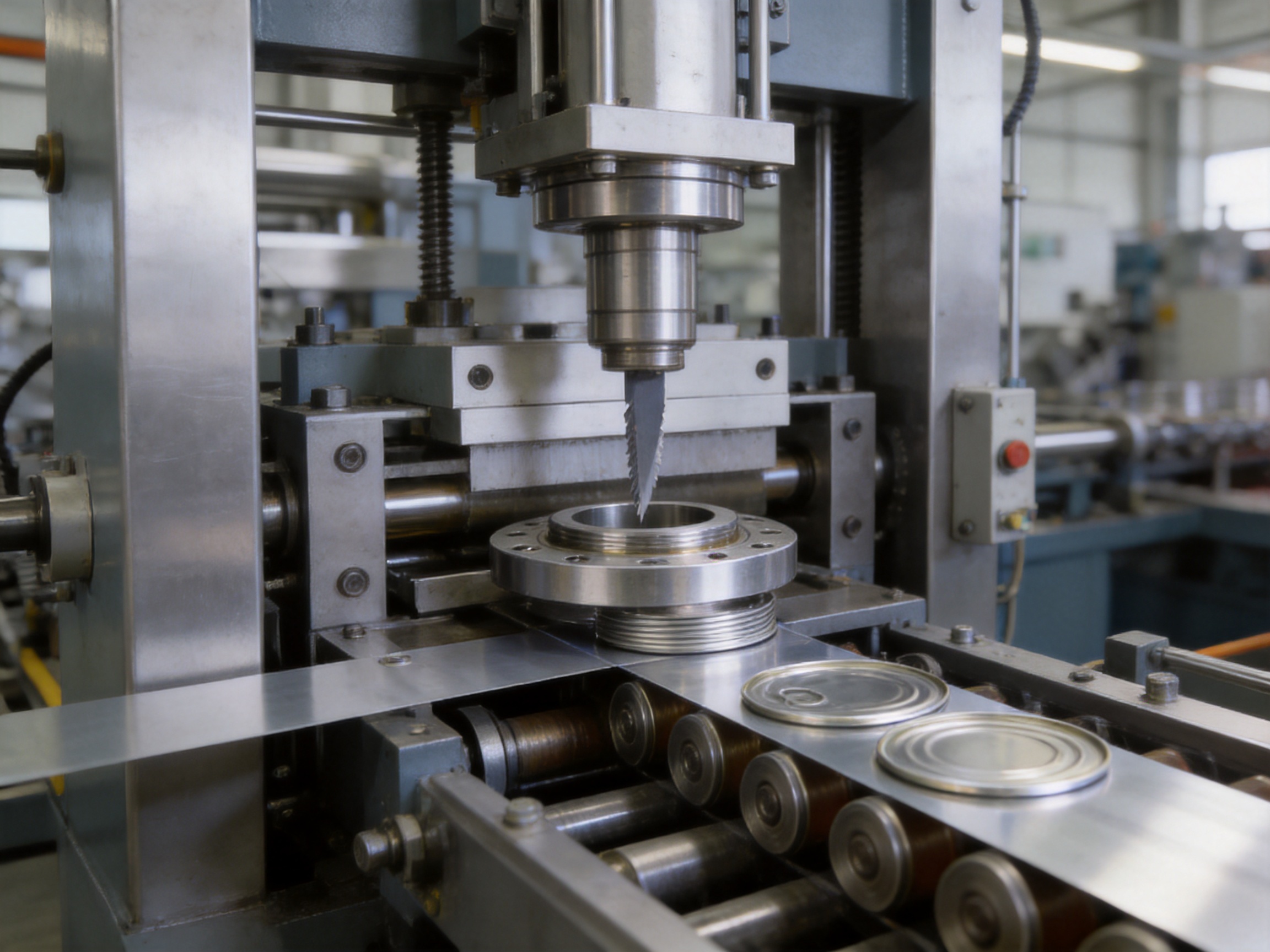
Zhejiang Golden Eagle Food Machinery Co., Ltd. was established in 1978 and has developed through more than four decades of continuous work in can-making machinery and can-making molds. Formerly known as Zhejiang Food Machinery Factory and Zhoushan Mold Factory, the company is located in Zhoushan City, Zhejiang Province, China. Its long history in the industry gives it a practical understanding of how mold components behave in real production conditions.
The company has a team of more than 350 trained personnel, including experienced design and development engineers. This combination of production workers and technical specialists is important because precision products require both theoretical design and manufacturing discipline. Engineers create workable designs, while skilled operators and machinists ensure that those designs are executed accurately.
The company uses CNC high-precision machining equipment and complete mechanical processing equipment. This enables it to manufacture not only complete can making machinery production lines but also the precision molds and conversion components that support those lines. The ability to produce both equipment and tooling provides an important advantage: the company understands the interaction between machines, dies, knives, feeding systems, welding systems, and downstream forming processes.
The product design philosophy has been developed by learning from advanced international machinery principles and combining them with extensive production experience. Rather than simply copying a concept, the company has refined its machinery and molds through long-term practice. This practical improvement process helps create products that are suitable for real factory use, where maintenance access, operator convenience, spare part availability, and long service life matter greatly.
The company has obtained ISO9001 quality management system certification and ISO14001 environmental management system certification. These certifications reflect organized management of product quality and environmental responsibility. For buyers of precision mold components, this is valuable because it indicates that production is supported by systematic procedures rather than informal workshop practices.
More than 10,000 pieces of can and can lid equipment have been produced by the company, and its products have been used by can manufacturers and canning factories in many regions. Export experience across Europe, Asia, Africa, North America, South America, and Oceania demonstrates the adaptability of its equipment and tooling to different markets and production standards.
Production changeover is one of the most important efficiency factors in modern manufacturing. Every hour spent on adjustment, test cutting, troubleshooting, and correction is an hour not spent producing saleable products. The Conversion Press Up and Down of Pressing Die and Round Knife helps reduce this loss by providing predictable mechanical references for die and knife positioning.
When a plant changes from one material thickness to another, the gap between tooling elements may need to be adjusted. If the conversion component is designed for a specific height and accurately manufactured, the operator can install it with confidence. The pre-drilled flange holes help ensure that the part is located correctly relative to the machine structure. This reduces the need for repeated manual measurement.
Fast changeover is also supported by component interchangeability. If the production line uses a family of conversion components with known dimensions, maintenance personnel can prepare the required parts in advance. During production change, the old component set can be removed and the new set installed according to the process plan. This approach improves organization and reduces operator uncertainty.
In facilities producing multiple can types, this advantage is especially important. A factory may need to produce different diameters, different lid shapes, or different container formats according to customer orders. The ability to switch quickly makes the production line more flexible and responsive to market demand.
Dimensional accuracy is often discussed as a technical specification, but its practical value is measured in production results. When the height of a conversion press component is accurate, the die reaches the intended position. When the surfaces are parallel, pressure is distributed evenly. When the round parts are concentric, rotating systems run more smoothly. When the mounting holes are precisely positioned, installation is repeatable.
These details directly affect product quality. In cutting operations, they help create clean edges and reduce burrs. In pressing operations, they help maintain consistent forming depth and profile. In high-speed production, they reduce vibration and improve machine stability. In maintenance, they simplify troubleshooting because the tooling position is more predictable.
Dimensional accuracy also supports longer tooling life. Dies and knives are expensive, and their replacement can interrupt production. If tooling is forced to operate under misaligned conditions, wear accelerates. A precise conversion assembly reduces unnecessary side loads and impact variation, helping tools perform closer to their intended design conditions.
| Feature | Technical Meaning | Production Benefit |
|---|---|---|
| Precision-machined rings and sleeves | Controlled diameter, height, and contact surfaces | Improved die alignment and repeatable conversion |
| Flange base with pre-drilled holes | Accurate installation interface | Faster setup and reduced positioning error |
| High rigidity metal structure | Resistance to compression and vibration | Stable pressing and cutting performance |
| Multiple specifications | Different diameters and heights available | Suitable for varied production formats and material thicknesses |
| Fine surface finishing | Improved flatness and contact quality | Reduced micro-movement and more even force transfer |
| CNC-based manufacturing | Consistent machining accuracy | Reliable component interchangeability and lower adjustment time |
The Conversion Press Up and Down of Pressing Die and Round Knife can be used in multiple types of equipment within the can making and metal packaging industry. Its most direct role is in equipment requiring accurate die height conversion or round knife positioning. However, its influence may be found across many production stages.
In a food beverage can making machine, the component supports precision when different can bodies, lids, or material specifications are processed. Food and beverage packaging requires reliable sealing, attractive appearance, and stable dimensions. Any forming or cutting inconsistency can influence later seaming, filling, or packaging operations.
In a tin can lid end making machine, the component helps maintain accurate die relationships for lid forming and cutting. The lid end must match the can body precisely, and the forming profile must remain stable. Good tooling support helps ensure that the lid performs correctly during seaming.
In cutting machines and duplex slitters, round knife clearance is especially important. The conversion press assembly helps maintain a controlled relationship between cutting elements, reducing burrs and uneven strips. Clean cutting improves downstream forming quality and reduces scrap.
In milk powder can making machines, product appearance and sealing quality are both important. Premium food packaging often requires smooth edges, accurate dimensions, and stable forming. The conversion component supports these requirements by improving the repeatability of tooling setup.
In easy-open end lid making equipment, precision is critical because the score line and opening structure must function correctly. While the conversion press assembly is not the scoring tool itself, stable tooling support contributes to the overall accuracy of the process.
In tin can auto-welding machines and related production lines, accurately prepared can body blanks and formed components influence welding consistency. Better cutting and forming accuracy upstream can lead to smoother welding operation downstream.
In aerosol cone and dome making, chemical tank making, and two-piece can making applications, accurate conversion components support reliable forming and trimming. These products often require strong structural performance and consistent appearance, making tooling precision highly important.
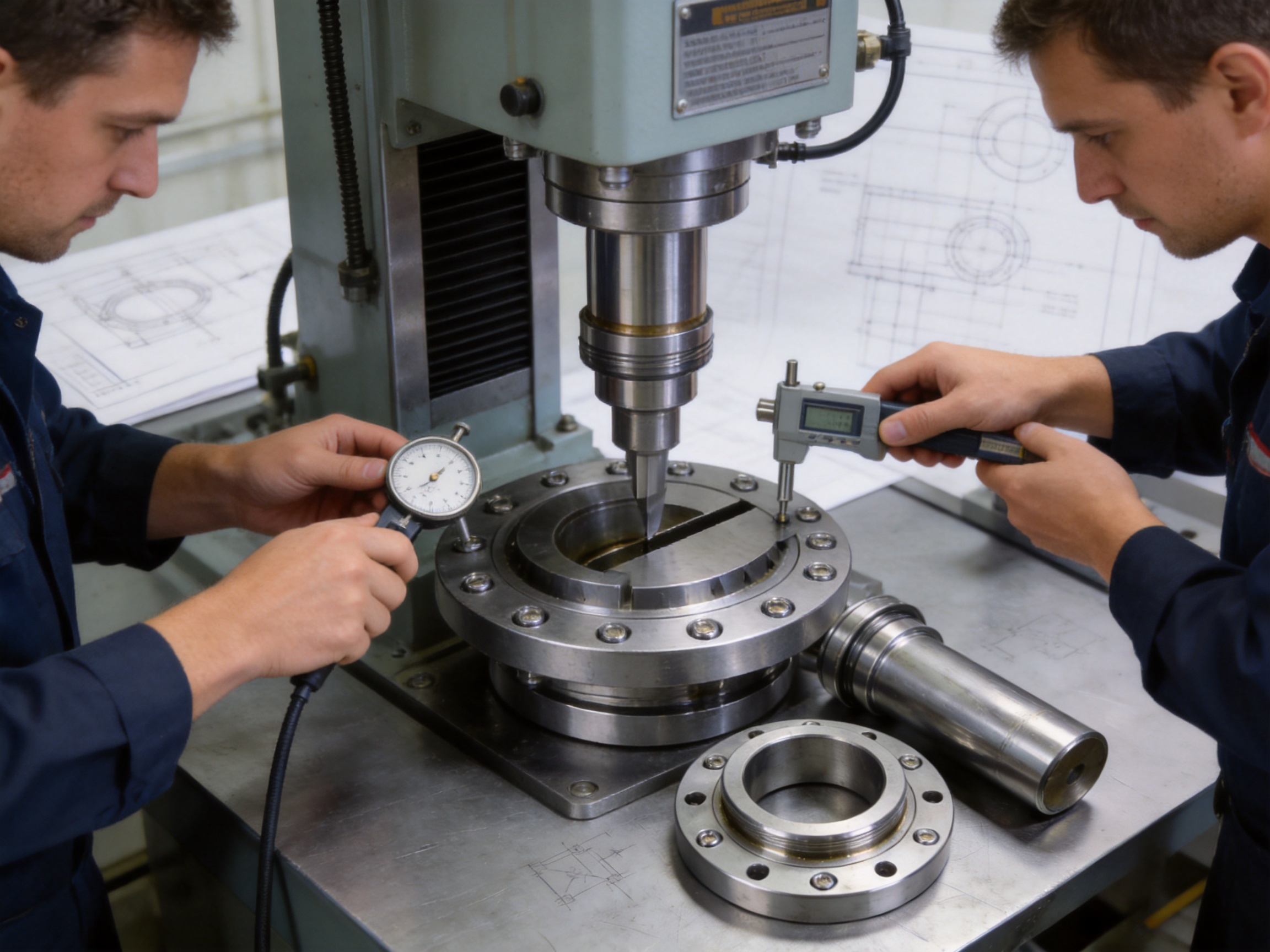
One of the important strengths of this product is its ability to support conversion between different material conditions. In metal packaging and die-cutting operations, materials may vary in thickness, hardness, coating type, temper, and surface finish. Each variation can affect forming pressure, cutting behavior, and required tool clearance.
When material thickness increases, the required clearance and pressing force may change. When material hardness changes, the round knife may need a slightly different relationship with the pressure roller. When coated materials are used, excessive pressure can damage the coating, while insufficient pressure can cause incomplete cutting. A precise conversion component allows the production team to adjust machine geometry in a controlled way.
This flexibility is valuable for manufacturers serving multiple customers. Instead of dedicating a full line to only one specification, a plant can produce different products on the same equipment by using well-planned conversion parts. This improves equipment utilization and strengthens competitiveness.
Production flexibility also reduces inventory pressure. A factory that can respond quickly to different orders does not need to rely only on large stock quantities of one product. Instead, it can adjust production according to current demand. Precision conversion assemblies support this modern manufacturing strategy.
Reliability in precision mold components is achieved through consistent design, stable materials, accurate machining, and careful inspection. The Conversion Press Up and Down of Pressing Die and Round Knife is manufactured with attention to these factors because failure or inaccuracy in such a component can affect the entire production line.
Quality control begins with the confirmation of technical drawings and specifications. Dimensions must match the requirements of the equipment and tooling system. After machining begins, intermediate inspections help identify deviations early. Final inspection confirms that the part meets the required standards before delivery.
Surface quality is particularly important. A rough or uneven contact surface may cause localized pressure concentration. Over time, this can lead to wear, indentation, or unstable positioning. Fine finishing reduces these risks and improves load distribution.
Hole accuracy is another key inspection point. Pre-drilled holes must align with the machine mounting structure. If the holes are inaccurate, installation becomes difficult, and the component may be forced into position, causing stress or misalignment. Accurate hole machining improves assembly quality and reduces installation time.
Reliability also depends on the company’s ability to provide consistent production from one batch to another. A manufacturer with mature equipment, skilled personnel, and organized management is better positioned to deliver repeatable quality. This is one reason why long-term experience in can making machinery and mold production is a major advantage.
Although the product is designed for efficient installation, correct handling remains important. Before installation, the contact surfaces of the machine, die, round knife assembly, and conversion component should be cleaned. Dirt, chips, oil residues, or damaged surfaces can affect positioning accuracy.
The operator should verify that the selected component specification matches the required production setup. Height, diameter, hole pattern, and functional position must be checked against the tooling plan. Using the wrong component can cause incorrect clearance or die height.
During installation, bolts or fastening elements should be tightened evenly according to the equipment requirements. Uneven tightening can cause slight tilting or distortion. If the flange base is used, the holes should align naturally without forcing. Forced alignment may indicate that the wrong part has been selected or that the mounting surface requires inspection.
After installation, the machine should be checked at low speed or through manual operation where possible. The operator should observe whether the die movement is smooth, whether the round knife clearance is correct, and whether any abnormal sound or vibration appears. Only after confirmation should full-speed production begin.
The service life of a conversion press assembly depends on operating conditions, material quality, load level, installation accuracy, and maintenance habits. Because the product is designed as a precision component, it should be protected from impact, corrosion, and careless storage.
When not in use, the component should be cleaned and stored in a dry, organized location. Precision surfaces should be protected from scratches. If multiple specifications are used in the same factory, each component should be clearly identified to prevent incorrect installation.
Regular inspection is recommended. Operators or maintenance personnel should check for surface wear, deformation, burrs, cracks, or hole damage. If a component shows abnormal wear, the cause should be investigated. The problem may be related to overload, misalignment, improper tightening, or machine condition.
Lubrication requirements depend on the specific installation position. If the component interacts with moving surfaces, appropriate lubrication may be needed according to the machine manual. If it is used as a fixed spacer or support, cleanliness and surface protection may be more important than lubrication.
Good maintenance improves not only the life of the component but also the stability of the entire production process. A damaged or worn conversion part can create hidden quality problems, so preventive inspection is more economical than waiting for visible defects in finished products.
Precision components can look simple from the outside. A ring, sleeve, or flange may appear to be a basic metal part. However, in real production, the difference between an ordinary part and a high-performance precision component is substantial. The correct part must account for tolerance accumulation, dynamic loading, assembly convenience, material behavior, tool wear, and production environment.
This is where manufacturing experience becomes important. A company that only produces isolated metal parts may focus mainly on dimensions. A company that manufactures complete can making machinery, tin can making machinery production lines, lid production lines, and related molds understands how those dimensions influence the final production result.
Zhejiang Golden Eagle Food Machinery Co., Ltd. has produced complete equipment series for food can production, beverage can production, can lid production, chemical tank production, aerosol canister production, two-piece can production, and pop can production. This broad production background allows the company to understand how a conversion press component fits into the larger system.
The company also provides after-sales services such as installation, commissioning, technical guidance, operation training, and parts supply. For customers, this means that the purchase of a precision component can be supported by technical knowledge of the wider production line. If a customer needs assistance with setup, adjustment, or integration, an experienced machinery manufacturer can provide more practical support than a supplier with limited application knowledge.
For buyers, the choice of a conversion press assembly is not merely a purchase of metal parts. It is a decision that affects production efficiency, tooling cost, product quality, and equipment reliability. The Conversion Press Up and Down of Pressing Die and Round Knife offers competitive value in several ways.
It provides precision suitable for demanding industrial production. This improves product consistency and reduces the likelihood of defects caused by tooling misalignment. It supports faster changeover, helping factories respond to different customer orders and reduce downtime. It is manufactured by a company with long experience in can making machinery and molds, which improves application reliability.
The product also benefits from advanced machining capability. CNC high-precision equipment and complete mechanical processing resources allow the manufacturer to control details that are difficult to achieve with simple machining methods. This is especially important for circular components, flange holes, and contact surfaces.
Another advantage is customization potential. Because production lines vary in design and specification, buyers may need different diameters, heights, hole patterns, or material choices. A manufacturer with mold and machinery design capability can better support OEM and ODM requirements. This is valuable for customers upgrading existing equipment or developing new production lines.
Finally, the product is supported by the company’s long-term industry reputation and international export experience. Equipment and mold components used across multiple countries must satisfy different operating habits, factory standards, and maintenance conditions. Experience in global markets strengthens the manufacturer’s ability to deliver practical and durable solutions.
Precision tooling components also contribute to sustainability. When a production line produces fewer defective parts, it consumes less material and energy per qualified product. Scrap reduction is one of the most direct ways to improve environmental performance in metal packaging production.
Accurate conversion also reduces unnecessary test runs during changeover. Each test run consumes material, machine time, electricity, and labor. By making setup more predictable, the conversion press assembly helps reduce these hidden costs.
Longer tool life is another sustainability factor. Dies and knives require material, machining, heat treatment, transportation, and maintenance. If accurate support extends their working life, the factory reduces replacement frequency and resource consumption.
The manufacturer’s ISO14001 environmental management system certification further reflects attention to environmental management. In modern supply chains, many buyers prefer suppliers that combine production capability with responsible management systems.
When selecting a Conversion Press Up and Down of Pressing Die and Round Knife assembly, buyers should begin by identifying the machine model and the functional position of the component. The component may serve as a lifting support, positioning sleeve, flange base, height conversion part, or round knife adjustment interface. Each function requires different dimensional priorities.
The next step is to confirm the key dimensions. These include outer diameter, inner diameter, total height, flange diameter, flange thickness, hole number, hole diameter, hole pitch circle, and any special locating surfaces. If the component works with a round knife, concentricity and clearance-related dimensions should be carefully specified.
Material requirements should also be discussed. The required strength, hardness, wear resistance, and corrosion protection may vary according to operating conditions. For heavy-duty pressing, high rigidity and deformation resistance are important. For frequent handling and conversion, surface durability may be especially valuable.
Buyers should also consider whether the component must match existing equipment or be part of a new production line. For replacement parts, accurate measurement of the original component and machine interface is necessary. For new equipment, the component can be designed together with the complete tooling system for better optimization.
Finally, buyers should select a supplier with strong technical communication ability. Precision parts require clear drawings, tolerance agreements, inspection standards, and application understanding. A supplier with can making machinery and mold manufacturing experience can help reduce misunderstandings and improve project success.
Its main function is to provide accurate positioning, height conversion, and stable mechanical support between the pressing die, round knife, pressure roller, and machine structure. It helps maintain consistent clearance and pressure during die-cutting, pressing, and production changeover.
Can making machinery depends on accurate forming, cutting, trimming, and lid production. If die or knife alignment is unstable, defects such as burrs, deformation, uneven edges, or sealing problems may occur. This precision conversion component helps maintain tooling accuracy and improves production consistency.
The component is designed with accurate dimensions and flange mounting holes, allowing faster and more repeatable installation. During product changeover, operators can install the correct component with less adjustment and fewer test runs, reducing downtime.
Ordinary spacers may lack the required flatness, parallelism, concentricity, and hole accuracy. This product is manufactured as a precision mold component, with controlled dimensions, stable surfaces, and better structural rigidity. It supports higher accuracy and more reliable production.
Yes. Different specifications can be selected according to material thickness, machine setup, and tooling requirements. By changing the corresponding conversion component, the production line can adapt more efficiently to different materials and product formats.
The component is produced through precision machining processes such as CNC turning, milling, drilling, boring, grinding, and finishing. Critical dimensions and surfaces are inspected to ensure proper alignment, fit, and performance.
A manufacturer with long experience in can making machinery and molds understands how precision components interact with complete production lines. This experience helps improve design practicality, machining accuracy, installation convenience, and after-sales technical support.
Buyers should provide drawings or detailed dimensions, including outer diameter, inner diameter, height, flange size, hole pattern, material requirement, machine model, and application description. If the part is for replacement, information about the existing equipment is also helpful.
By supporting accurate alignment and stable pressure distribution, the component reduces unnecessary side loads, impact variation, and clearance errors. This helps pressing dies and round knives operate under more suitable conditions, which can extend their service life.
Yes. Because the manufacturer has experience in machinery design, mold production, and precision machining, the component can be adapted to different production line requirements, including customized sizes, hole patterns, and application-specific configurations.
The Conversion Press Up and Down of Pressing Die and Round Knife is a precision mold component set that plays a critical role in accurate pressing, round knife cutting, and production changeover. Its value lies in the details: dimensional accuracy, flange positioning, surface finishing, rigidity, concentricity, and repeatable installation. These details directly influence production efficiency, product quality, tooling life, and machine stability.
For can making machinery, tinplate can making machinery production lines, lid making equipment, cutting machines, aerosol can production, chemical tank production, and other metal packaging systems, the product provides a practical solution to the challenges of fast conversion and stable tooling alignment. It helps manufacturers reduce waste, improve changeover speed, and maintain consistent quality across different product specifications.
Backed by decades of manufacturing experience, advanced CNC machining capability, trained technical personnel, ISO-certified management systems, and broad international market experience, Zhejiang Golden Eagle Food Machinery Co., Ltd. offers a strong foundation for producing reliable precision mold components. For buyers seeking accuracy, durability, and professional support, this conversion press assembly represents a valuable investment in more stable and efficient production.
Kalpakjian, S., and Schmid, S. R. Manufacturing Engineering and Technology. Pearson Education.
Groover, M. P. Fundamentals of Modern Manufacturing: Materials, Processes, and Systems. Wiley.
Altan, T., and Tekkaya, A. E. Sheet Metal Forming: Processes and Applications. ASM International.
Society of Manufacturing Engineers. Tool and Manufacturing Engineers Handbook: Forming. SME.
International Organization for Standardization. ISO9001 Quality Management Systems: Requirements.
International Organization for Standardization. ISO14001 Environmental Management Systems: Requirements with Guidance for Use.
Related Products

Founded in 1978, the company is one of the largest can-making machinery well-known companies at home and abroad.
Product Categories
Contact Information
Zhongshatou Shenjiamen Zhoushan Zhejiang China
+86-580-3056646

 English
 中文简体
中文简体
 русский
 عربى
عربى
 Español