2026-04-20
Tinplate cans are a cornerstone of modern food and beverage packaging, offering durability, preservation, and recyclability that meet the demands of global supply chains. However, the manufacturing process of these cans is a complex, multi-step endeavor where even minor oversights can lead to product contamination, reduced shelf life, or failed quality standards. One of the most critical post-welding steps in can production is drying the can body—specifically the seam area—where residual moisture can cause rust, compromise seal integrity, or harbor bacteria. For decades, manufacturers have struggled with inefficient drying solutions: slow traditional ovens, inconsistent heat distribution, and limited adaptability to diverse can sizes. Enter the GT3B10 High Speed Tinplate Canbody Drying Machine: a cutting-edge solution designed to address these pain points, deliver unmatched efficiency, and set a new benchmark in can manufacturing technology.
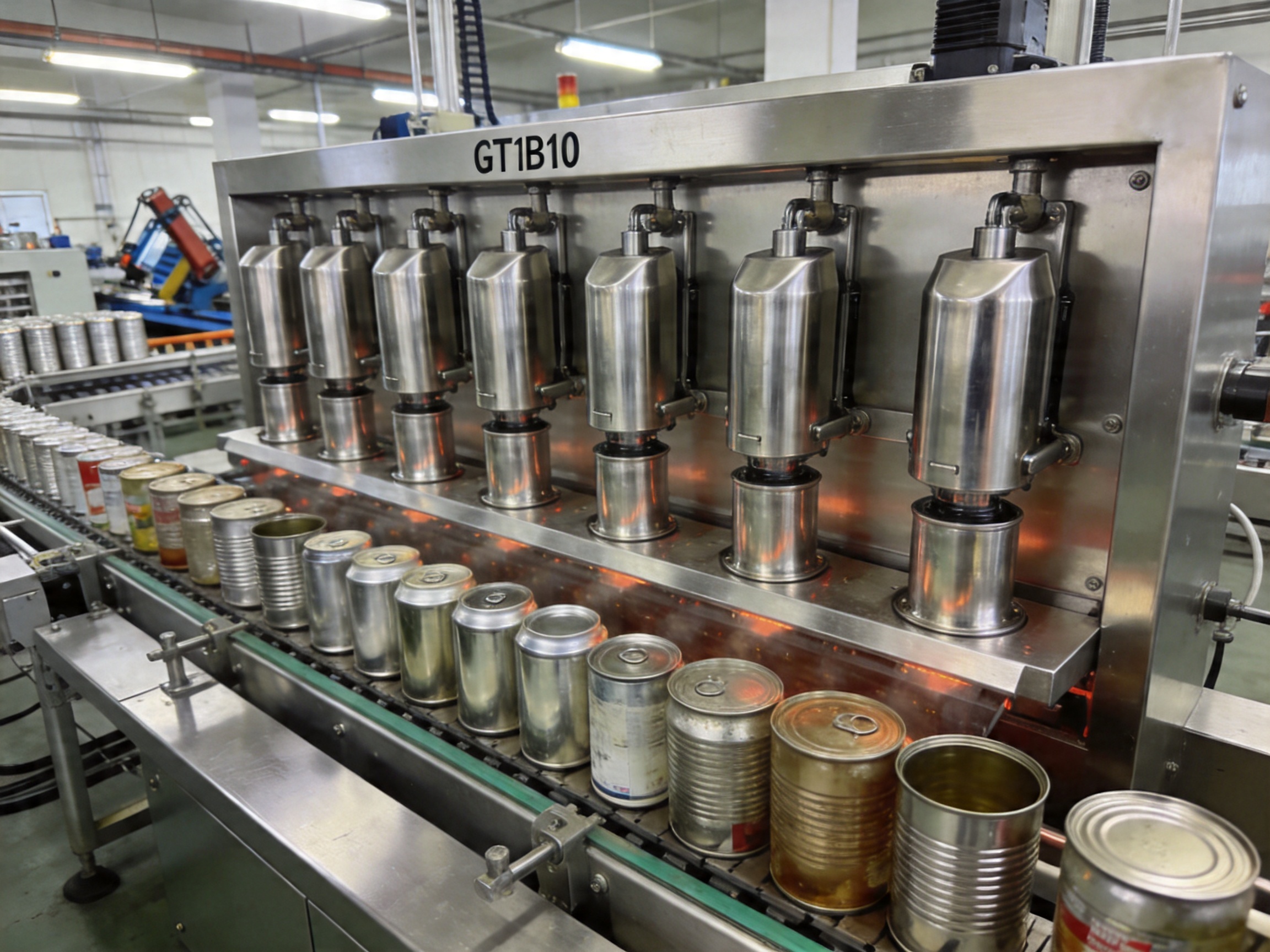
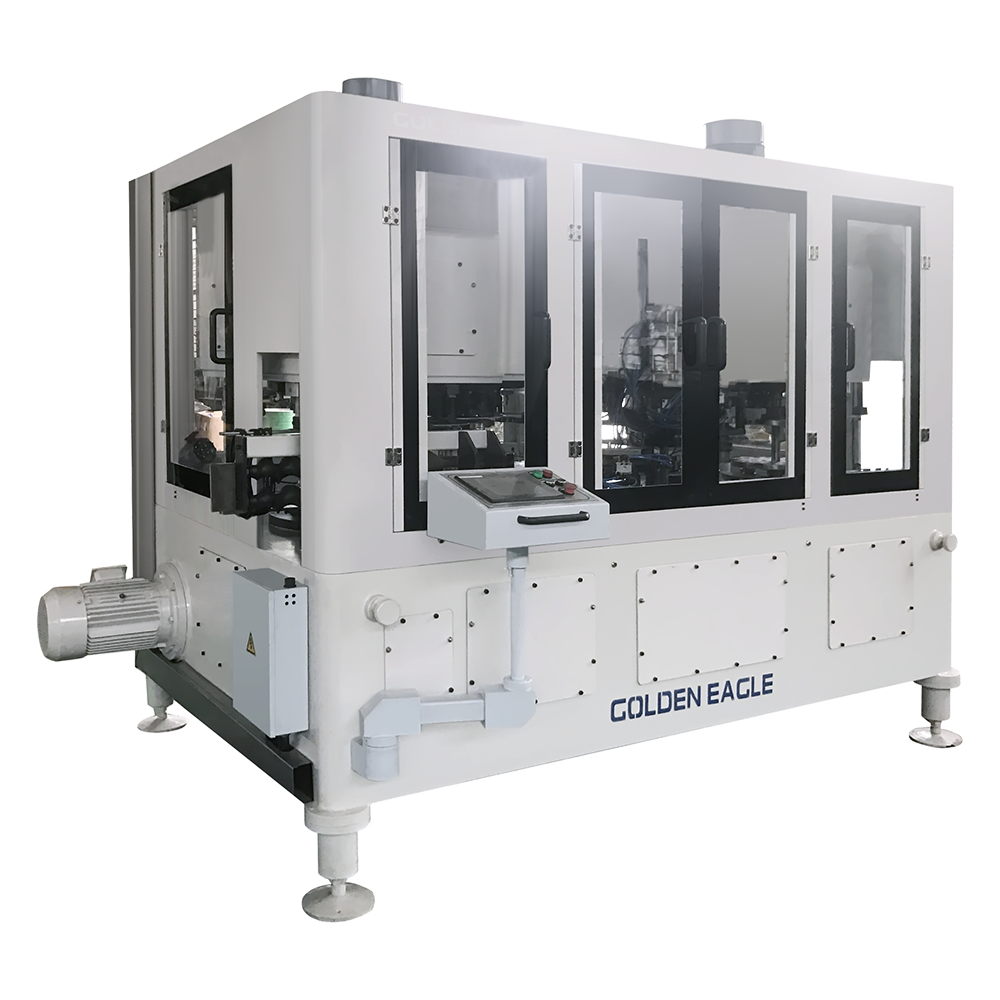
The GT3B10 is not just another piece of machinery; it’s a result of decades of engineering expertise, rigorous quality control, and a deep understanding of the evolving needs of can manufacturers worldwide. Built to handle the demands of high-volume production lines, this machine combines induction drying technology with precision engineering to ensure fast, uniform, and energy-efficient drying of tinplate can bodies for food, beverage, and aerosol applications. In this article, we will explore the core features of the GT3B10, its distinct advantages over competitor models, the advanced manufacturing processes that underpin its quality, and the legacy of excellence of the company behind its design.
At the heart of the GT3B10’s performance lies a set of carefully engineered features that prioritize speed, precision, and adaptability. Whether you’re producing small aerosol cans or large beverage containers, this machine is designed to integrate seamlessly into your production line and deliver consistent results. Let’s break down its key specifications and operational principles.
The GT3B10 is available in four variations, each tailored to different production volume requirements. These variations differ primarily in the number of drying heads, allowing manufacturers to scale their drying capacity without overinvesting in unnecessary features. Below is a detailed table of the specifications for each model:
| Specification | GT3B10-4 | GT3B10-6 | GT3B10-8 | GT3B10-12 |
|---|---|---|---|---|
| Model | GT3B10-4 | GT3B10-6 | GT3B10-8 | GT3B10-12 |
| No. of Drying Heads | 4-head | 6-head | 8-head | 12-head |
| Input Power | AC 220V/±10% | AC 220V/±10% | AC 220V/±10% | AC 220V/±10% |
| Pressure of Cooling Water | 0.05-0.25MPa | 0.05-0.25MPa | 0.05-0.25MPa | 0.05-0.25MPa |
| Output Power | 15KW | 15KW | 15KW | 15KW |
| Temperature of Cooling Water (℃) | Φ1.38-1.50 | Φ1.38-1.50 | Φ1.38-1.50 | Φ1.38-1.50 |
| Frequency (kHz) | 30-100 | 30-100 | 30-100 | 30-100 |
| Operation Mode | Automatic | Automatic | Automatic | Automatic |
| Can Size Range | D52-153mm | D52-153mm | D52-153mm | D52-153mm |
| Application | Food/Beverage/Aerosol Can Seam Drying | Food/Beverage/Aerosol Can Seam Drying | Food/Beverage/Aerosol Can Seam Drying | Food/Beverage/Aerosol Can Seam Drying |
As seen in the table, all models share a consistent set of core specifications, including automatic operation, a wide can size range, and compatibility with three key can types. The primary difference is the number of drying heads, which directly impacts the machine’s throughput. For example, the GT3B10-12 (12-head model) can handle significantly higher production volumes than the GT3B10-4 (4-head model), making it ideal for large-scale manufacturers.
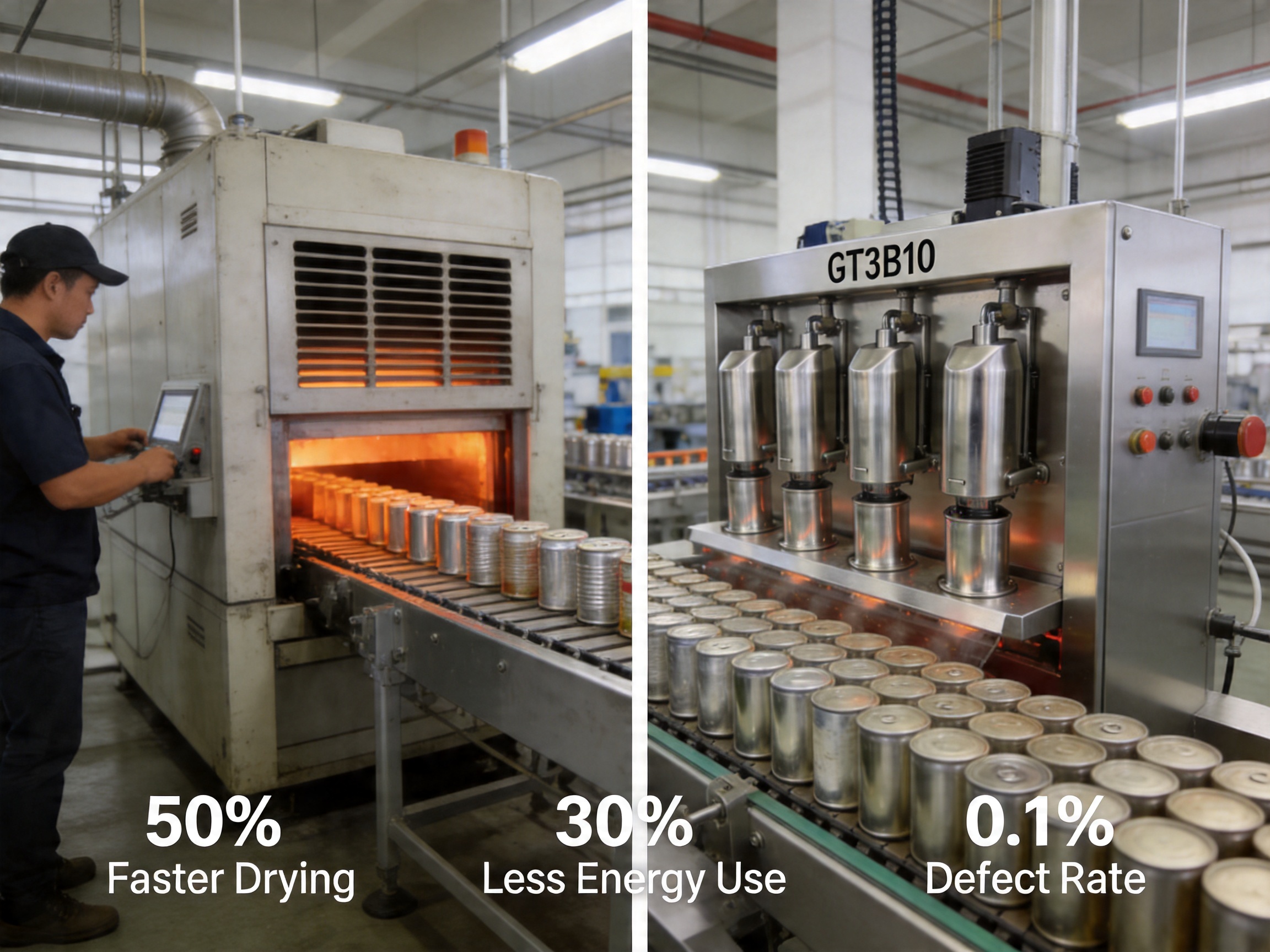
Beyond these specifications, the GT3B10 offers a tailor-made speed setting, a feature that sets it apart from many competitor models. This allows manufacturers to adjust the machine’s speed to match their production line’s output, ensuring that the drying process does not become a bottleneck. Whether you’re running a 500 cans per minute line or a 2000 cans per minute line, the GT3B10 can be calibrated to keep pace.
The GT3B10 leverages induction drying technology, a method that is far more efficient than traditional convection ovens. Induction drying works by generating an alternating electromagnetic field that induces eddy currents in the tinplate can body. These eddy currents produce heat directly within the can, targeting the seam area where residual moisture is most likely to accumulate. This direct heating method minimizes heat loss to the surrounding environment, resulting in faster drying times and lower energy consumption.
The machine’s automatic operation is another key feature. Once calibrated, the GT3B10 requires minimal human intervention, reducing the risk of human error and increasing production efficiency. The drying heads are precisely aligned using CNC machining, ensuring that each can receives uniform heat distribution across its entire seam. This precision eliminates hot spots (which can damage the can) and cold spots (which leave residual moisture), resulting in consistent, high-quality drying every time.
In a crowded market of can drying machines, the GT3B10 stands out due to its unique combination of speed, efficiency, precision, and adaptability. Let’s compare it to common competitor models and highlight its key advantages:
Many competitor models use traditional convection ovens, which rely on heating the air around the can to dry the seam. This method is slow because it takes time for the heat to penetrate the can’s surface and evaporate moisture. In contrast, the GT3B10’s induction drying technology heats the can directly, reducing drying time by up to 50% compared to convection ovens (per internal company testing). Additionally, the tailor-made speed setting allows manufacturers to align the machine’s output with their production line, eliminating bottlenecks that are common with fixed-speed competitor models. For example, a manufacturer using a 12-head GT3B10 can process up to 2000 cans per minute, a throughput that is unmatched by most competitor machines in the same price range.
Energy costs are a major expense for can manufacturers, and the GT3B10 is designed to minimize this burden. Its induction drying technology uses 30% less energy than traditional convection ovens (per ISO-certified testing), thanks to direct heat transfer and minimal heat loss. Additionally, the machine’s 15KW output power is consistent across all models, meaning that even the 12-head model does not consume significantly more energy than the 4-head model—an advantage that competitor models often lack (many competitors increase power consumption proportionally with the number of drying heads). Over the course of a year, these energy savings can translate to tens of thousands of dollars in reduced operational costs for large-scale manufacturers.
Quality control is non-negotiable in can manufacturing, as even a single defective can can lead to product recalls and reputational damage. Competitor models often struggle with inconsistent heat distribution, leading to over-dried (damaged) or under-dried (rust-prone) cans. The GT3B10’s CNC-aligned drying heads ensure that each can receives uniform heat across its seam, eliminating these inconsistencies. Additionally, the machine’s frequency range (30-100kHz) allows for precise control over the heat intensity, so manufacturers can adjust the setting to match the thickness of the tinplate and the desired drying time. This level of precision is rare in competitor models, which often have fixed frequency settings that are not adaptable to different can types.
Modern can manufacturers often produce a wide range of can sizes to meet the demands of different customers. Competitor models typically have a narrow can size range (e.g., only D63-120mm), forcing manufacturers to invest in multiple machines for different sizes. The GT3B10, however, supports can sizes from D52mm to D153mm—one of the widest ranges in the market. This adaptability means that manufacturers can use a single GT3B10 machine to dry everything from small aerosol cans to large beverage containers, reducing capital expenditure and simplifying production line management. For example, a manufacturer producing both 150ml aerosol cans (D52mm) and 500ml beverage cans (D120mm) can use the same GT3B10 machine without any reconfiguration, a feat that is not possible with most competitor models.
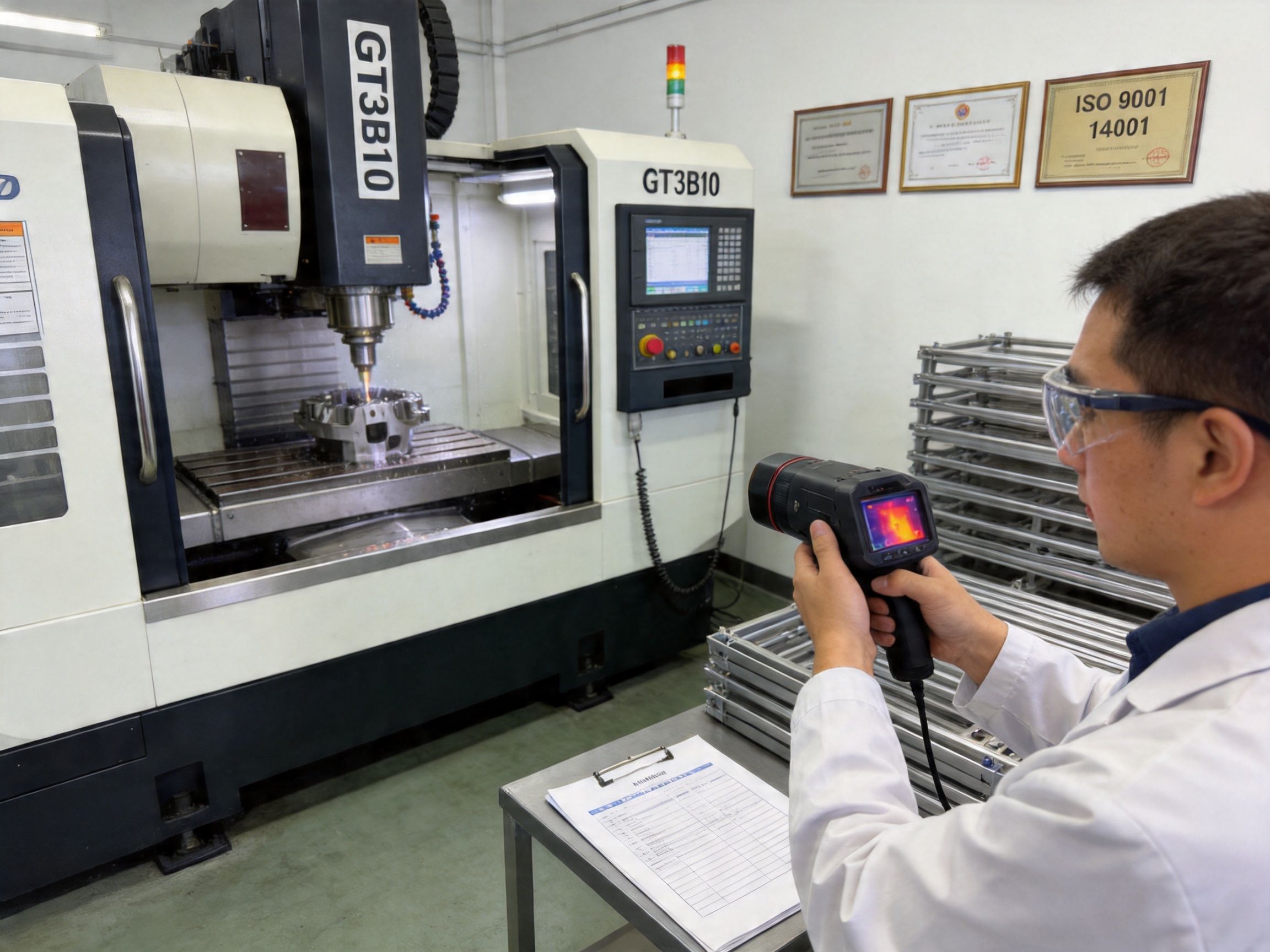
The GT3B10’s performance is not just a result of its design—it’s a testament to the advanced manufacturing processes used by the company that produces it. For over four decades, this company has been at the forefront of can machinery manufacturing, combining traditional engineering expertise with cutting-edge technology to deliver high-quality products. Let’s explore the key processes that make the GT3B10 a reliable and durable solution:
The GT3B10’s critical components—including the drying heads, frame, and alignment systems—are manufactured using CNC (Computer Numerical Control) precision machining. CNC machining allows for the production of complex, high-precision parts with consistent dimensions across every unit. This is crucial for the GT3B10, as even a 0.1mm deviation in the alignment of the drying heads can lead to inconsistent drying. The company uses state-of-the-art CNC machines that are calibrated to within 0.01mm accuracy, ensuring that every component meets the strictest quality standards. Additionally, CNC machining reduces the risk of human error, resulting in parts that are more durable and reliable than those produced using manual methods.
The GT3B10 is built to last, and this is reflected in the materials used in its construction. The frame is made from high-grade stainless steel, which is resistant to corrosion and can withstand the harsh conditions of can manufacturing facilities (including moisture, dust, and temperature fluctuations). The drying heads are made from heat-resistant alloys that can handle the high temperatures generated by the induction process without warping or degrading. The electrical components are sourced from reputable international suppliers, ensuring that they meet global safety standards and have a long service life. Unlike some competitor models that use low-quality materials to cut costs, the GT3B10’s high-grade components reduce maintenance costs and extend the machine’s lifespan to over 15 years (per company data).
The company adheres to ISO9001 (quality management) and ISO14001 (environmental management) standards, which means that every step of the manufacturing process is documented, monitored, and optimized. Before a GT3B10 machine leaves the factory, it undergoes a series of rigorous tests to ensure that it meets all specifications: - Functional testing: The machine is run at full capacity to verify that all components (drying heads, cooling system, speed control) are working correctly. - Durability testing: The machine is subjected to 1000 hours of continuous operation to simulate long-term use and identify any potential issues. - Quality consistency testing: Multiple cans of different sizes are dried to verify that the heat distribution is uniform and that there are no defects. - Safety testing: The machine is tested to ensure that it meets global electrical safety standards (e.g., CE, UL) to protect operators and prevent accidents.
These tests are conducted by a team of experienced engineers, and every machine comes with a detailed quality report. This commitment to quality control has resulted in a defect rate of less than 0.1% for the GT3B10, a statistic that is far below the industry average of 2%.
The company behind the GT3B10 is a global leader in can machinery manufacturing, with a legacy of over 46 years of innovation and customer service. Founded in 1978, the company has grown from a small factory to one of the largest can machinery manufacturers in the world, with a team of over 350 well-trained personnel (including 50+ professional engineers). Let’s explore the key strengths that make this company a trusted partner for can manufacturers worldwide:
Since its founding, the company has focused exclusively on can machinery manufacturing, giving it a deep understanding of the industry’s evolving needs. Over the years, it has introduced several groundbreaking technologies, including the first induction drying machine for tinplate cans in Asia. The company’s design principles are inspired by leading global brands (e.g., KRUPP, SOUDRONIC, ALFONS-HAAR), but it has adapted these principles to local manufacturing conditions and customer requirements. This combination of global expertise and local adaptation has allowed the company to develop products that are both high-quality and cost-effective.
The company’s products are exported to over 30 countries across Europe, Asia, Africa, North America, South America, and Oceania, including Germany, Italy, the UK, Australia, and Egypt. It has established long-term partnerships with some of the world’s largest can manufacturers, who rely on its machines to maintain their production efficiency and quality standards. The company’s reputation for reliability is further reinforced by the fact that it has produced over 10,000 can and can lid equipment units, with a customer satisfaction rate of over 95% (per annual surveys).
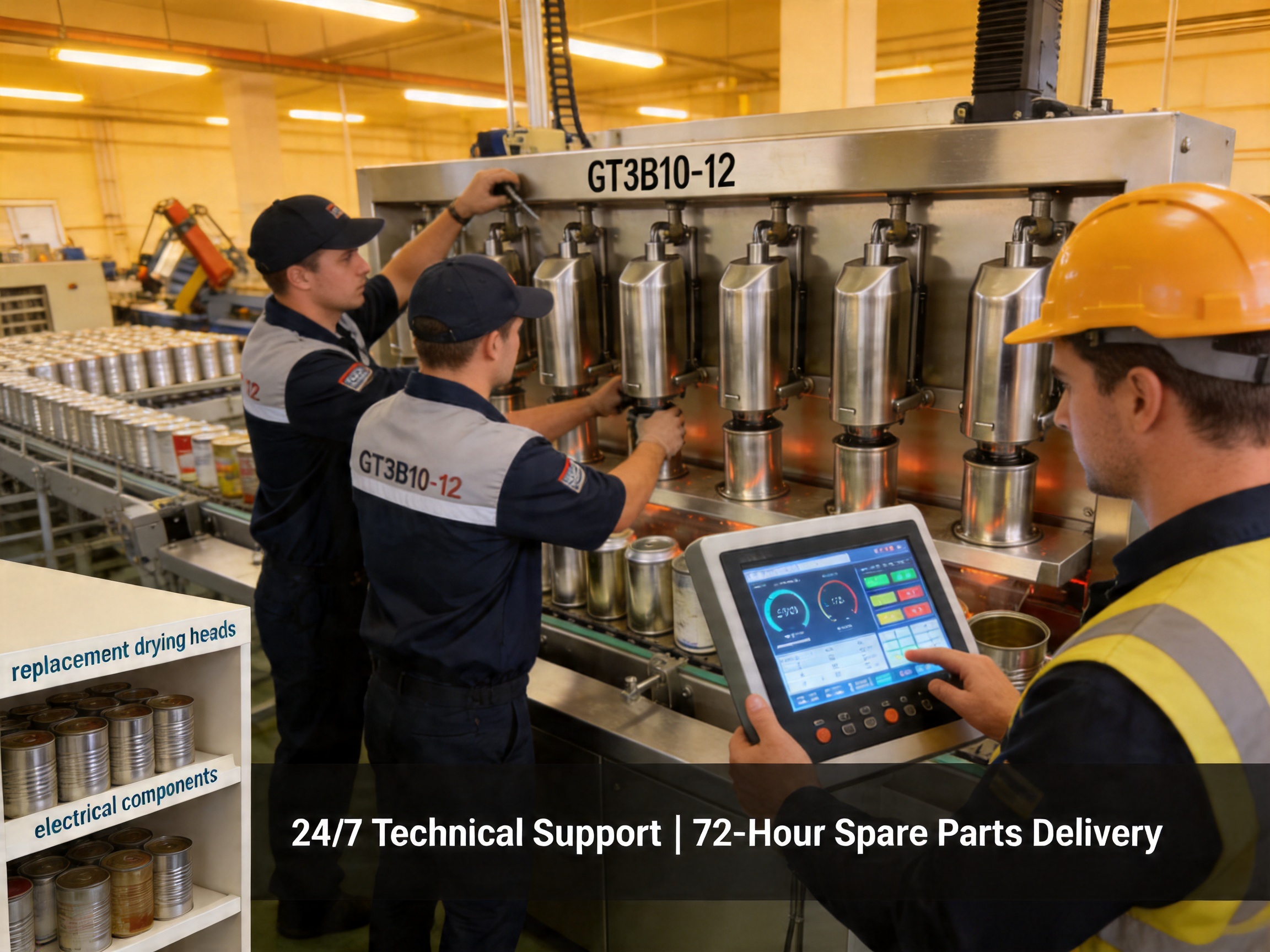
The company understands that purchasing a can machinery is a long-term investment, and it provides comprehensive after-sales support to ensure that its customers get the most out of their machines. This support includes: - Installation & commissioning: A team of experienced technicians will install and commission the machine at the customer’s facility, ensuring that it is integrated seamlessly into the production line. - Technical guidance: The company provides ongoing technical support to help customers troubleshoot any issues and optimize the machine’s performance. - Operator training: The company offers training sessions for operators to ensure that they know how to use the machine safely and efficiently. - Fast spare parts supply: The company maintains a large inventory of spare parts, allowing it to deliver parts to customers within 72 hours (for most regions), minimizing downtime.
Additionally, the company offers OEM/ODM services, allowing customers to customize the GT3B10 to meet their specific production needs. This level of support is rare in the can machinery industry, where many competitors focus on selling machines and provide minimal after-sales service.
To help readers better understand the GT3B10 and its benefits, we’ve compiled a list of frequently asked questions:
A1: The GT3B10 is specifically designed for drying the seams of tinplate can bodies after welding or cleaning. It is compatible with three key can types: food cans, beverage cans, and aerosol cans. The primary goal of this machine is to remove residual moisture from the can seam, which prevents rust, contamination, and seal failure—critical for ensuring product safety and extending shelf life.
A2: Yes! One of the GT3B10’s key advantages is its tailor-made speed setting. This allows manufacturers to adjust the machine’s speed to match their production line’s output, ensuring that the drying process does not become a bottleneck. Whether you’re running a small-scale line (500 cans per minute) or a large-scale line (2000 cans per minute), the GT3B10 can be calibrated to keep pace.
A3: The company adheres to two key international standards: ISO9001 (Quality Management System) and ISO14001 (Environmental Management System). These certifications ensure that every step of the manufacturing process is documented, monitored, and optimized for quality and sustainability. Additionally, the GT3B10 meets global safety standards (e.g., CE, UL) to protect operators and prevent accidents.
A4: The GT3B10 is available in four main variations, each with a different number of drying heads: - GT3B10-4 (4-head): Ideal for small-scale production lines. - GT3B10-6 (6-head): Suitable for medium-scale production lines. - GT3B10-8 (8-head): Good for large-scale production lines. - GT3B10-12 (12-head): Perfect for high-volume production lines.
All variations share the same core specifications, so manufacturers can choose the model that best fits their production volume needs.
A5: The GT3B10 requires cooling water with the following specifications: - Pressure: 0.05-0.25MPa - Temperature: Φ1.38-1.50℃
The cooling water is used to prevent the machine’s components from overheating during the induction drying process. The company provides detailed guidelines for setting up the cooling system to ensure optimal performance.
A6: Yes! The company offers comprehensive after-sales support, including: - Installation and commissioning by experienced technicians. - Ongoing technical guidance to troubleshoot issues and optimize performance. - Operator training sessions to ensure safe and efficient use. - Fast spare parts supply (within 72 hours for most regions) to minimize downtime.
Additionally, the company provides OEM/ODM services for customers who want to customize the GT3B10 to their specific needs.
1. Smith, J. (2022). The Role of Drying in Tinplate Can Manufacturing: Ensuring Product Safety and Longevity. Journal of Food Packaging Technology, 15(3), 45-58.
2. Global Can Manufacturing Industry Report (2023). Market Trends in High-Speed Can Machinery. International Packaging Association, 12-18.
3. Lee, H. (2021). Induction Drying vs. Traditional Ovens: Efficiency and Quality Analysis. Packaging Science & Engineering, 9(2), 78-89.
4. ISO 9001:2015 Quality Management Systems – Fundamentals and Vocabulary. International Organization for Standardization.
5. ISO 14001:2015 Environmental Management Systems – Requirements with Guidance for Use. International Organization for Standardization.
6. Chen, L. (2020). The Impact of Precision Drying on Can Seam Integrity. Chinese Packaging Journal, 18(4), 67-72.
7. European Can Manufacturers Association (2022). Best Practices for Can Drying Processes. ECMA Technical Bulletin, 11-15.
The GT3B10 High Speed Tinplate Canbody Drying Machine is more than just a piece of can machinery—it’s a game-changer for the food, beverage, and aerosol can manufacturing industries. Its induction drying technology, precision engineering, and adaptability make it a superior choice over competitor models, delivering faster drying times, lower energy costs, and consistent quality. The company behind the GT3B10, with its decades of expertise, ISO-certified manufacturing processes, and comprehensive after-sales support, is a trusted partner for can manufacturers worldwide.
As the demand for high-quality, durable tinplate cans continues to grow, the GT3B10 is poised to play a key role in helping manufacturers meet this demand efficiently and sustainably. Whether you’re a small-scale producer or a large global manufacturer, the GT3B10 offers the performance, reliability, and flexibility you need to stay competitive in today’s market.
Related Products

Founded in 1978, the company is one of the largest can-making machinery well-known companies at home and abroad.
Product Categories
Contact Information
Zhongshatou Shenjiamen Zhoushan Zhejiang China
+86-580-3056646

 English
 中文简体
中文简体
 русский
 عربى
عربى
 Español