2026-06-19
Modern food and beverage packaging demands speed, dimensional accuracy, stable sealing performance, and long-term reliability across every stage of can production. The Necking Flanging Beading Seaming Four-Station Can Making Machine is engineered for manufacturers that need an integrated, high-efficiency solution for shaping and preparing tinplate or metal cans for final use. Designed for food and beverage can production, this machine series combines multiple critical processes, including necking, flanging, beading, and top seaming, into coordinated equipment configurations that support consistent output, improved can strength, and dependable production flow.
This article presents a detailed overview of the machine series, its operating advantages, available models, competitive strengths, application value, and the manufacturing capability behind it. It also explains why the equipment is suitable for can makers that require stable performance in high-volume production environments. By combining proven engineering concepts, precision manufacturing, and practical production experience, this machine series provides an effective solution for companies seeking to improve can quality, reduce production interruptions, and achieve efficient production line integration.
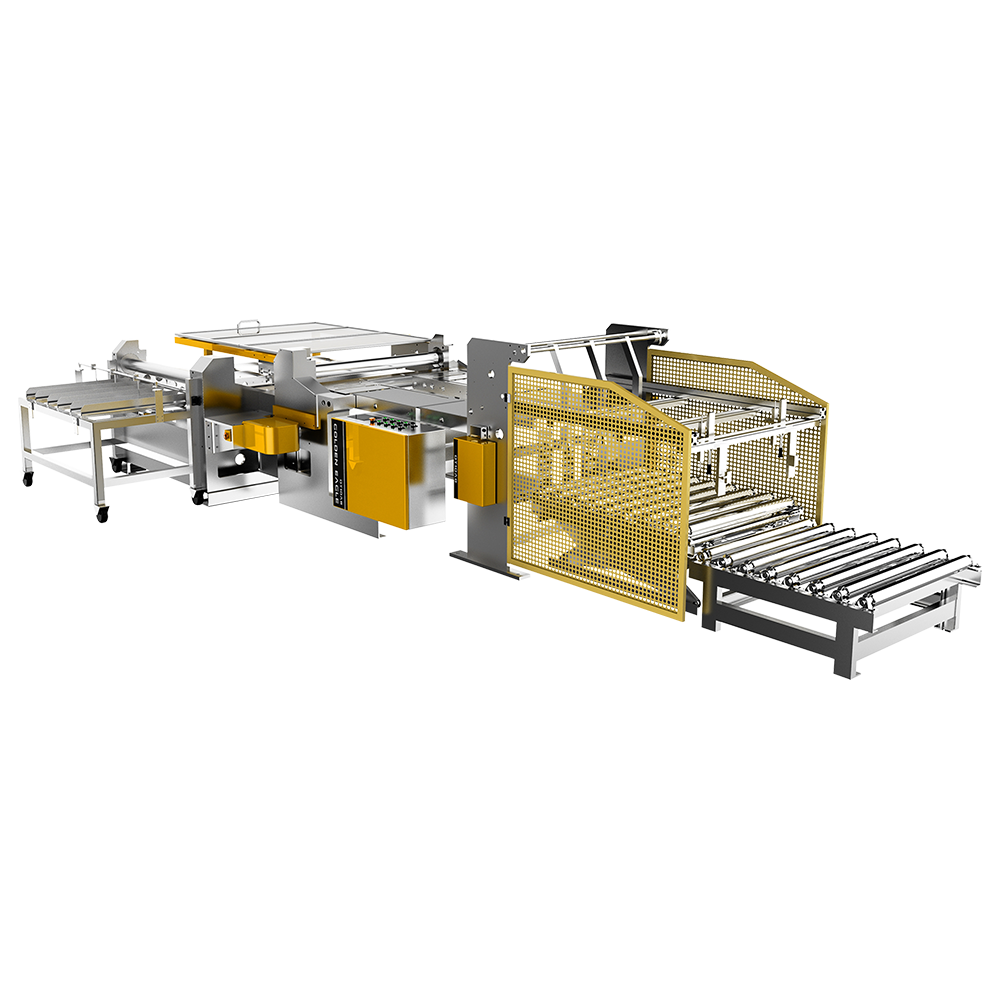
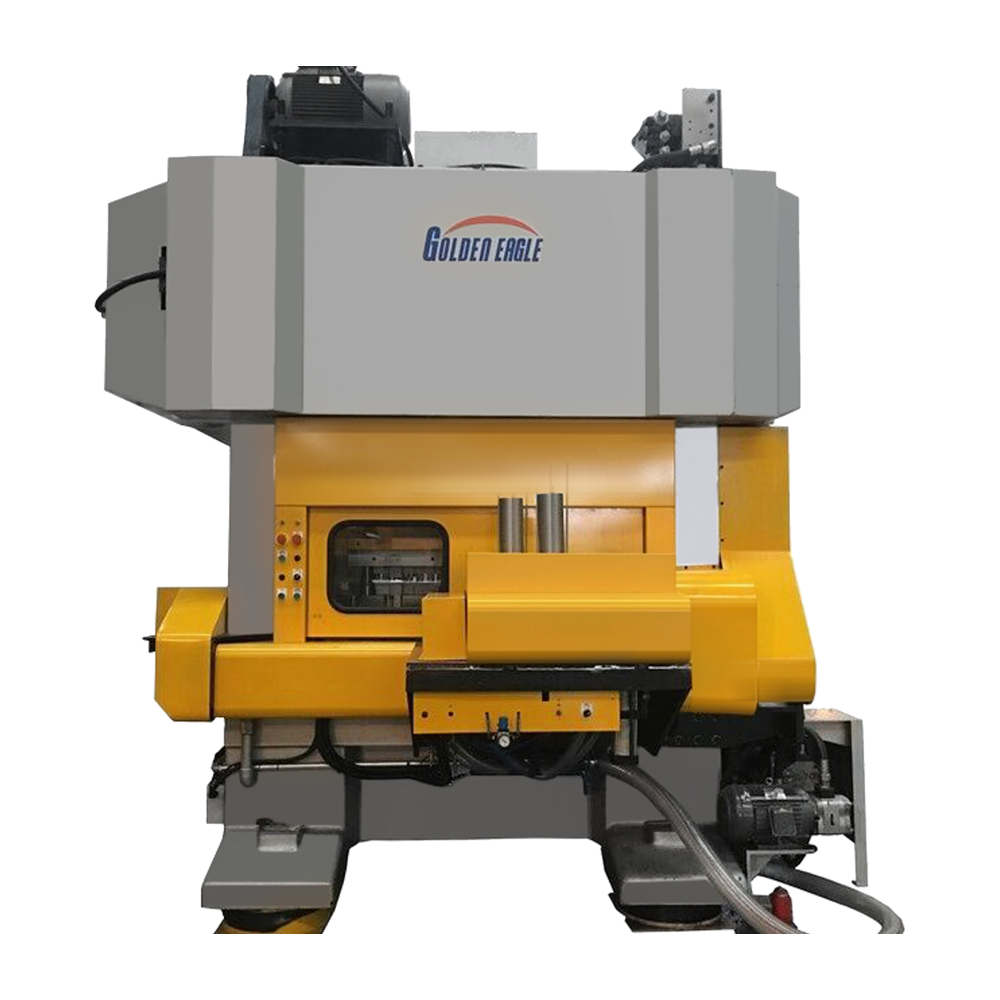
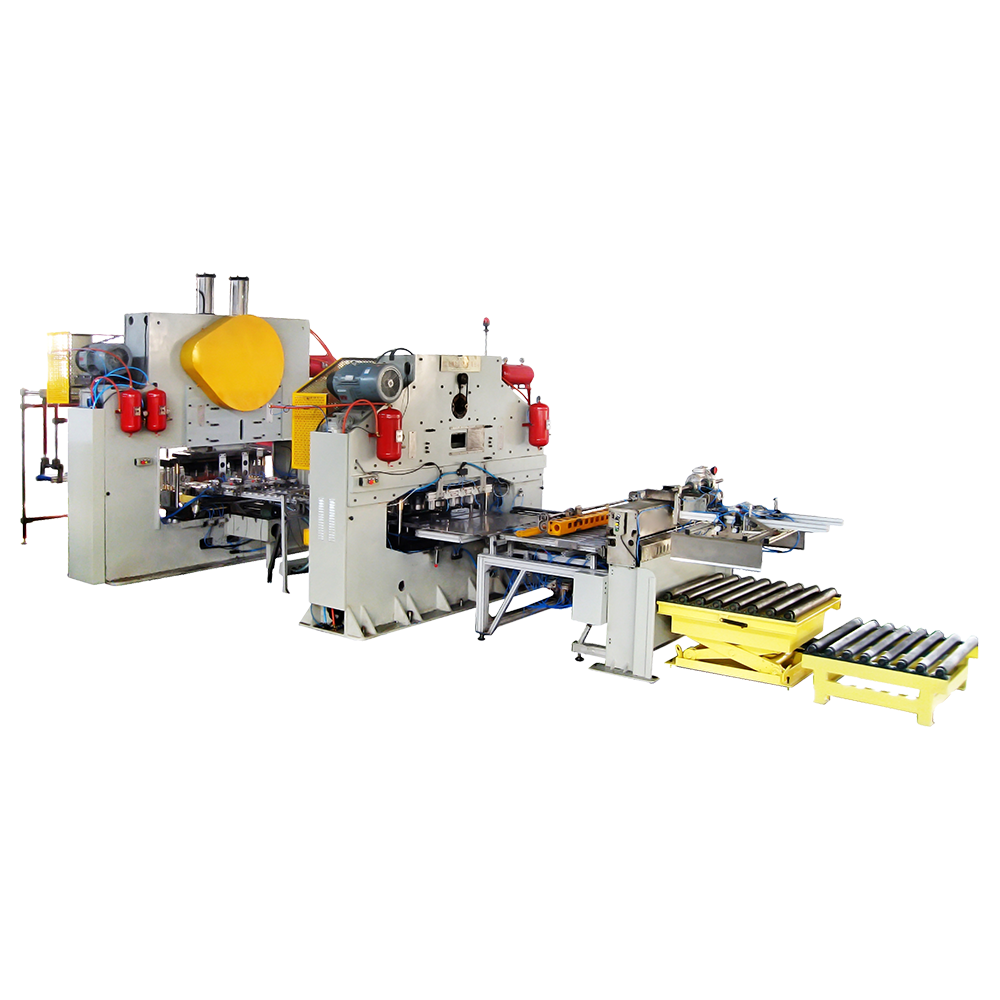
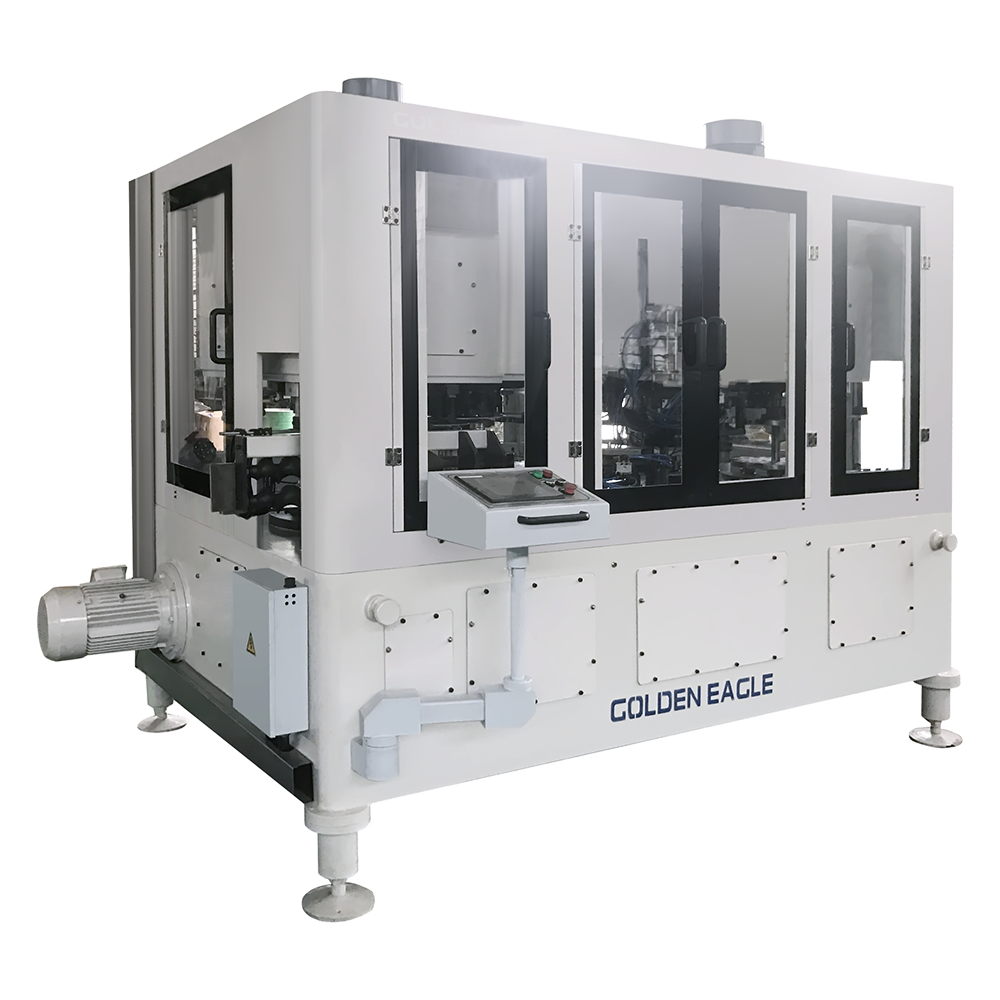
Necking Flanging Beading Seaming Four station Can Making Machine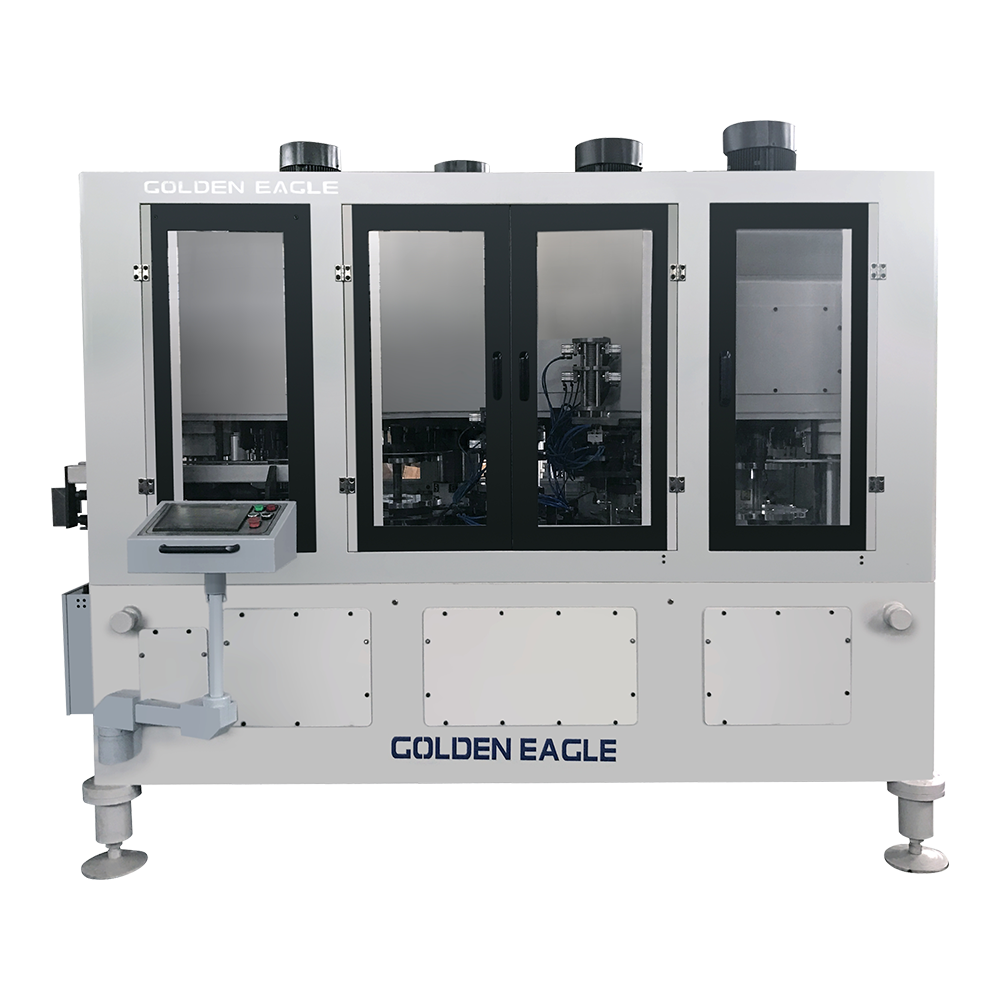
The Necking Flanging Beading Seaming Four-Station Can Making Machine belongs to the food and beverage can making machine category. It is used for shaping can bodies after welding or body forming, preparing them for lid connection, pressure resistance, structural reinforcement, and final sealing. In typical tinplate can production, processes such as necking and flanging are essential because they determine whether the can body can properly match lids or ends. Beading improves can body strength and resistance to deformation, while seaming completes a key sealing step required for product safety and packaging integrity.
Instead of relying on fragmented, low-efficiency equipment arrangements, this machine series is designed around production continuity. It supports different can diameters, can heights, and output capacities, making it suitable for multiple food and beverage packaging formats. The machine series includes configurations with four-head, six-head, and eight-head structures, allowing customers to select the appropriate model according to production scale, can specifications, and line speed requirements.
One of the important values of this machine series is its ability to meet the needs of manufacturers producing standard food cans, beverage cans, and other cylindrical metal containers. The equipment is designed to handle can diameters from approximately Φ52 mm to Φ99 mm, with applicable can heights ranging from about H60 mm to H220 mm depending on model configuration. This range covers many common packaging sizes used in food processing, beverage filling, and related metal container industries.
The machine series is especially useful for manufacturers who need a balance between productivity and precision. Depending on the model, output capacity can range from 80 to 150 cans per minute, and certain high-speed configurations can reach 200 to 500 cans per minute. This allows the equipment to serve both medium-output production environments and large-scale industrial can production lines.
Can manufacturing is not simply a matter of forming a cylindrical body. A can must be shaped precisely so that it can be filled, sealed, transported, stored, and opened without failure. Each forming operation contributes to the final performance of the container. The four-station concept integrates several of the most important body-finishing operations into one coordinated production solution.
Necking is the process of reducing the diameter of the can opening or shaping the upper portion of the can body. It is commonly used in food and beverage containers to match the can body with the required lid size or to create a specific structural profile. High-quality necking requires accurate tooling alignment, smooth material flow, and stable mechanical motion. Poor necking can cause wrinkling, cracking, uneven diameter, or lid fitting problems.
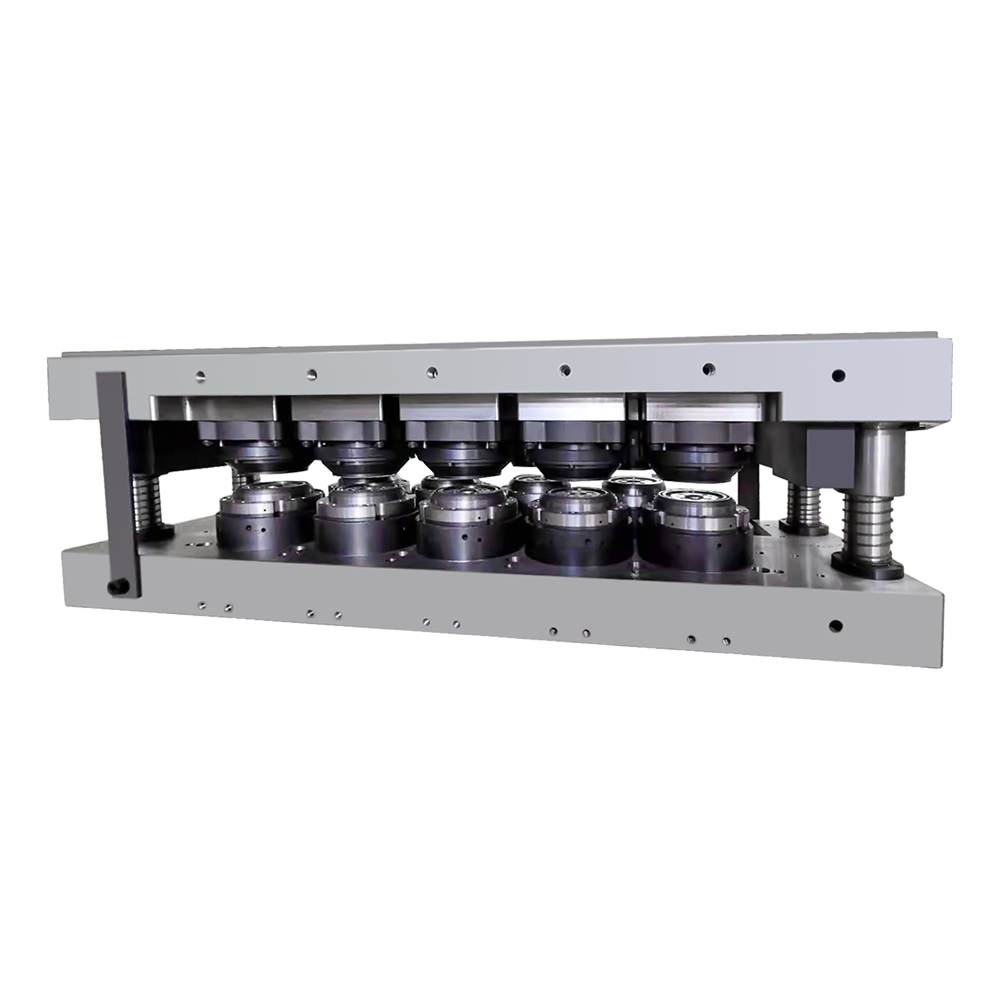
The machine series provides necking configurations suitable for different production needs. Some models perform top necking, while others are designed for multi-stage necking and combined necking and flanging. Multi-stage necking is particularly useful when the material must be gradually shaped to avoid excessive stress. By distributing the forming process across multiple steps, the machine helps protect the can body from damage and improves dimensional consistency.
Flanging forms an outward rim at the open end of the can body. This rim is essential for double seaming with a lid or end. A good flange must be uniform, smooth, and accurately dimensioned. If the flange is too narrow, uneven, cracked, or incorrectly angled, the final seam may be weak or unsafe. In food and beverage packaging, sealing quality is directly connected with hygiene, shelf life, leakage prevention, and compliance with production standards.
The necking and flanging configurations in this machine series are designed to support reliable lid compatibility. The equipment helps produce consistent flange geometry across high-speed production, reducing rework and improving the stability of downstream seaming operations. For manufacturers seeking higher yield and lower rejection rates, accurate flanging is one of the most valuable equipment capabilities.
Beading creates reinforcing ribs on the can body. These beads increase the can’s mechanical strength and help prevent deformation caused by internal pressure, external stacking loads, handling impact, or thermal processing. Food cans may be exposed to sterilization, pasteurization, transportation, and storage pressure. Without sufficient body strength, cans may buckle, dent, or lose their marketable appearance.
The beading model in this series is designed for can diameters from Φ52 mm to Φ99 mm and heights from H70 mm to H220 mm. With an output capacity of 80 to 150 cans per minute and a total power of 4 kW, it provides an efficient balance of forming strength and energy consumption. For food can manufacturers, stable beading contributes to packaging reliability, product presentation, and logistical safety.
Top seaming is one of the most critical stages in can production. It joins the lid or end to the can body through a mechanical seam. The quality of this seam determines leakage resistance, food safety, shelf stability, and customer trust. A poorly controlled seam can lead to product loss, contamination risk, or failure during distribution.
The top seaming configuration in this series supports can diameters from Φ52 mm to Φ99 mm and can heights from H60 mm to H220 mm. With a six-head structure and an output capacity of 80 to 150 cans per minute, it is built for stable production. The use of multiple heads improves throughput while maintaining repeatable seaming action, allowing manufacturers to achieve consistent sealing quality over long production runs.
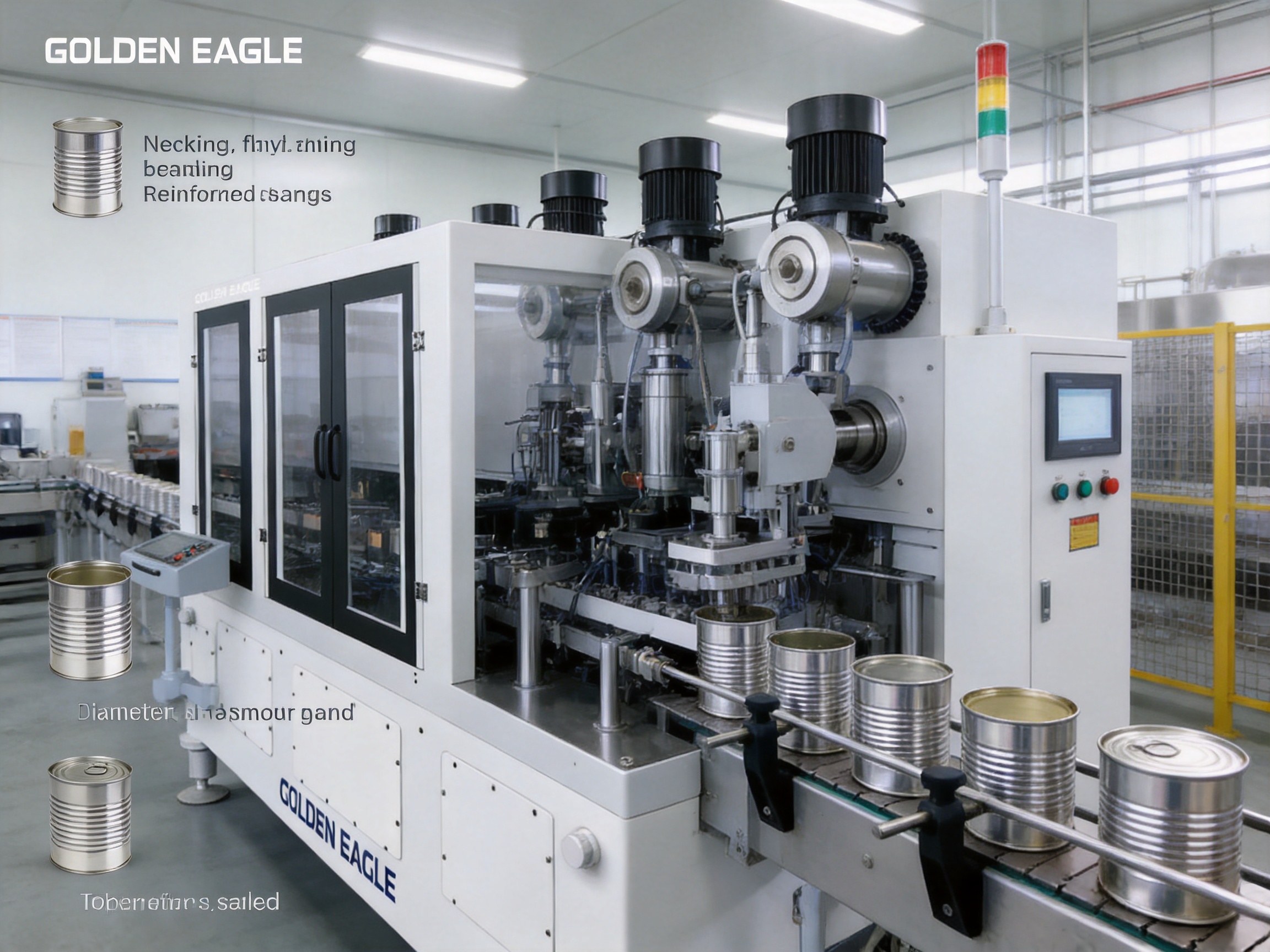
The following table summarizes the main model configurations and performance parameters of the Necking Flanging Beading Seaming Four-Station Can Making Machine series. These specifications provide an overview of available functions, applicable can sizes, output capacity, and power requirements.
| Model | Configuration | Main Function | Can Diameter | Can Height | Output Capacity | Total Power |
| GT3B21B-T | 8-Head, Three-Stage Shrinkage | Necking, Necking, Necking and Flanging | Φ52-99 mm | H70-160 mm | 200-500 cans/min | 7.5 kW |
| GT351-N-L | 4-Head | Top Necking | Φ52-99 mm | H80-220 mm | 80-150 cans/min | 7.5 kW |
| GT3B54-NNNF | 4-Head, One-Stage Shrinkage | Necking, Necking, Necking and Flanging | Φ52-99 mm | H70-220 mm | 80-150 cans/min | 7.5 kW |
| GT3B51-B-L | 4-Head | Beading | Φ52-99 mm | H70-220 mm | 80-150 cans/min | 4 kW |
| GT3B51-S-C | 6-Head | Top Seaming | Φ52-99 mm | H60-220 mm | 80-150 cans/min | 4 kW |
Manufacturers comparing can making equipment often consider speed, quality, flexibility, operating stability, maintenance cost, tooling accuracy, and supplier reliability. The Necking Flanging Beading Seaming Four-Station Can Making Machine series offers several advantages that make it competitive in modern food and beverage can production.
One of the strongest advantages of this machine series is its ability to support integrated production planning. By coordinating necking, flanging, beading, and seaming processes within a compatible machine family, the production line becomes easier to arrange and operate. Compared with using unrelated machines from multiple suppliers, integrated equipment reduces communication problems between process stages and improves overall line balance.
In a conventional production environment, mismatched machines can create bottlenecks. For example, a high-speed body welder may feed cans faster than a slow flanging machine can process them. Similarly, unstable beading may cause interruptions before seaming. This machine series helps solve such issues by offering matched output ranges and application specifications. The high-speed GT3B21B-T model can support 200 to 500 cans per minute, while other models support 80 to 150 cans per minute, allowing the user to design a production line according to actual capacity requirements.
Food and beverage cans require tight dimensional tolerances. Even small differences in neck diameter, flange width, bead depth, or seam profile can affect the performance of the final container. This machine series is designed for stable forming quality through carefully engineered mechanical structures and precision tooling. The result is improved consistency from can to can.
Compared with lower-grade machines, which may suffer from vibration, poor synchronization, or tooling misalignment, this equipment emphasizes stable operation. Precision in forming is especially important when handling tinplate materials, because excessive stress may create cracks or coating damage. Smooth forming movement reduces the risk of defects and supports better appearance and functional reliability.
Many can manufacturers need to serve different customers and packaging requirements. A machine that only handles a narrow size range may limit business opportunities. This series covers common can diameters from Φ52 mm to Φ99 mm and a wide height range up to H220 mm depending on model. Such flexibility allows manufacturers to produce multiple food and beverage can formats on suitable production lines.
This size compatibility is valuable for companies producing canned vegetables, fruit cans, milk powder cans, coffee cans, beverage containers, and other metal packaging products. With the right tooling and line configuration, the machine can help manufacturers adapt to changing market demand without purchasing entirely separate production systems for every can format.
The GT3B21B-T model offers a high-speed solution with an output capacity of 200 to 500 cans per minute. This is particularly important for large-scale food and beverage can manufacturers that need to reduce unit cost through volume production. Higher output can improve factory productivity, shorten order delivery cycles, and support more competitive pricing in the packaging supply chain.
At the same time, not every factory needs ultra-high speed. The 80 to 150 cans per minute models provide practical performance for medium-sized production lines, specialty cans, or factories that prioritize versatility. This range of capacity options gives manufacturers greater freedom when planning investment and expansion.
The machine series uses power ratings of 4 kW or 7.5 kW depending on function and configuration. In comparison with oversized or inefficient equipment, appropriate power design helps reduce unnecessary energy consumption. For factories operating multiple shifts, energy efficiency can make a meaningful difference in production cost over time.
The beading and top seaming models use 4 kW power, while necking and combined necking-flanging models use 7.5 kW. This distribution reflects the mechanical requirements of each operation. Efficient power matching supports reliable performance without excessive energy use.
Can production defects are costly. A defective flange can cause seaming failure. An inaccurate neck may prevent proper lid fitting. Poor beading can weaken the can body. Unstable seaming can create leakage risk. Each rejected can represents wasted material, labor, energy, and production time. The machine series is designed to reduce these problems through stable mechanical forming and precision manufacturing.
Compared with older machines or low-precision alternatives, a well-built forming and seaming machine can reduce line stoppages and quality complaints. Stable equipment also reduces the burden on operators, who otherwise must frequently adjust settings or inspect defective cans. In competitive production environments, these operational benefits can be as important as nominal speed.
The food and beverage industries have strict packaging requirements. Cans must protect products from external contamination, preserve flavor and nutritional quality, withstand thermal processing, and maintain a clean appearance on retail shelves. The Necking Flanging Beading Seaming Four-Station Can Making Machine supports these requirements by improving body shaping and sealing preparation.
For food cans, the combination of accurate flanging and secure seaming is essential. Canned foods may undergo sterilization at high temperatures and pressures. During this process, the can body and seam must remain stable. Beading also contributes to structural resistance, helping the can maintain shape during retort processing and transportation.
For beverage cans or beverage-style metal containers, necking and flanging accuracy affects lid application and final appearance. Smooth necking can also contribute to material efficiency when smaller ends are used. In high-volume beverage-related production, the speed of the GT3B21B-T model can help match the pace of demanding production schedules.
The equipment is also suitable for factories that produce cans for powdered products, such as milk powder, nutrition powder, coffee powder, and similar dry food packaging. These cans often require a high-quality appearance, stable body strength, and reliable sealing performance. The ability to process different heights up to H220 mm supports these taller container formats.
Zhejiang Golden Eagle Food Machinery Co., Ltd. is a manufacturer with a long history in can-making machinery and can-making molds. Established in 1978, the company has accumulated decades of experience in equipment design, production, and service. Its background includes the development of complete can production lines, can lid production lines, chemical tank production lines, aerosol canister production lines, two-piece can production lines, and related mold systems.
The company’s manufacturing strength is an important reason why the Necking Flanging Beading Seaming Four-Station Can Making Machine can achieve stable performance. Can-making machinery requires accurate parts, reliable transmission systems, durable forming components, and precise assembly. A manufacturer with deep technical experience can better understand the relationship between machine design and actual can production challenges.
The company has more than 350 trained personnel and experienced engineering staff. This technical team supports design, development, manufacturing, quality control, installation, commissioning, technical guidance, and operator training. Such a complete service capability is valuable for customers because can production lines often require careful installation and adjustment before reaching optimal performance.
The company adopts CNC high-precision machining equipment and complete mechanical processing equipment. This is especially important for can making machinery because forming accuracy depends directly on component precision. Tooling seats, transmission parts, forming heads, shafts, cams, and related assemblies must meet strict dimensional requirements. If these parts are inaccurate, the machine may produce unstable can dimensions or experience premature wear.
CNC machining improves repeatability and surface quality. It allows complex parts to be produced with high consistency, reducing human error and improving assembly precision. For customers, this means the equipment is more likely to maintain stable operation over long production cycles.
The product design principle is described as being similar to well-known international engineering concepts used in the can-making machinery industry, while also being improved through long-term production practice. This combination of reference to mature design principles and continuous practical innovation is valuable. Can-making machinery must perform under real industrial conditions, not just theoretical design conditions.
Over many years, the company has continuously improved products by combining engineering knowledge with field experience. Problems observed during actual customer production can lead to improvements in structure, tooling, adjustment convenience, maintenance accessibility, and operational stability. This experience-based development helps the machine series remain practical and reliable.
The company has been certified to the ISO9001 quality management system and ISO14001 environmental management system. These certifications reflect structured management practices in quality assurance and environmental responsibility. In machinery production, quality management helps ensure that processes are controlled, parts are inspected, and final equipment meets expected standards.
For international customers, such certifications can provide additional confidence. When investing in can-making machinery, buyers need assurance that the supplier has organized production systems rather than relying only on individual craftsmanship. Quality management also supports long-term consistency when customers purchase multiple machines or replacement parts.
The company has produced more than 10,000 pieces of can and can lid equipment. This production record indicates extensive experience across many equipment types and customer applications. A manufacturer that has delivered a large number of machines is more likely to understand common installation issues, production challenges, and maintenance requirements.
This experience also supports spare parts supply and after-sales service. Customers benefit when the manufacturer understands the lifecycle of its equipment and can provide technical advice based on many real-world cases. For can makers, machine reliability is not only about the first year of operation; it is about stable production over many years.
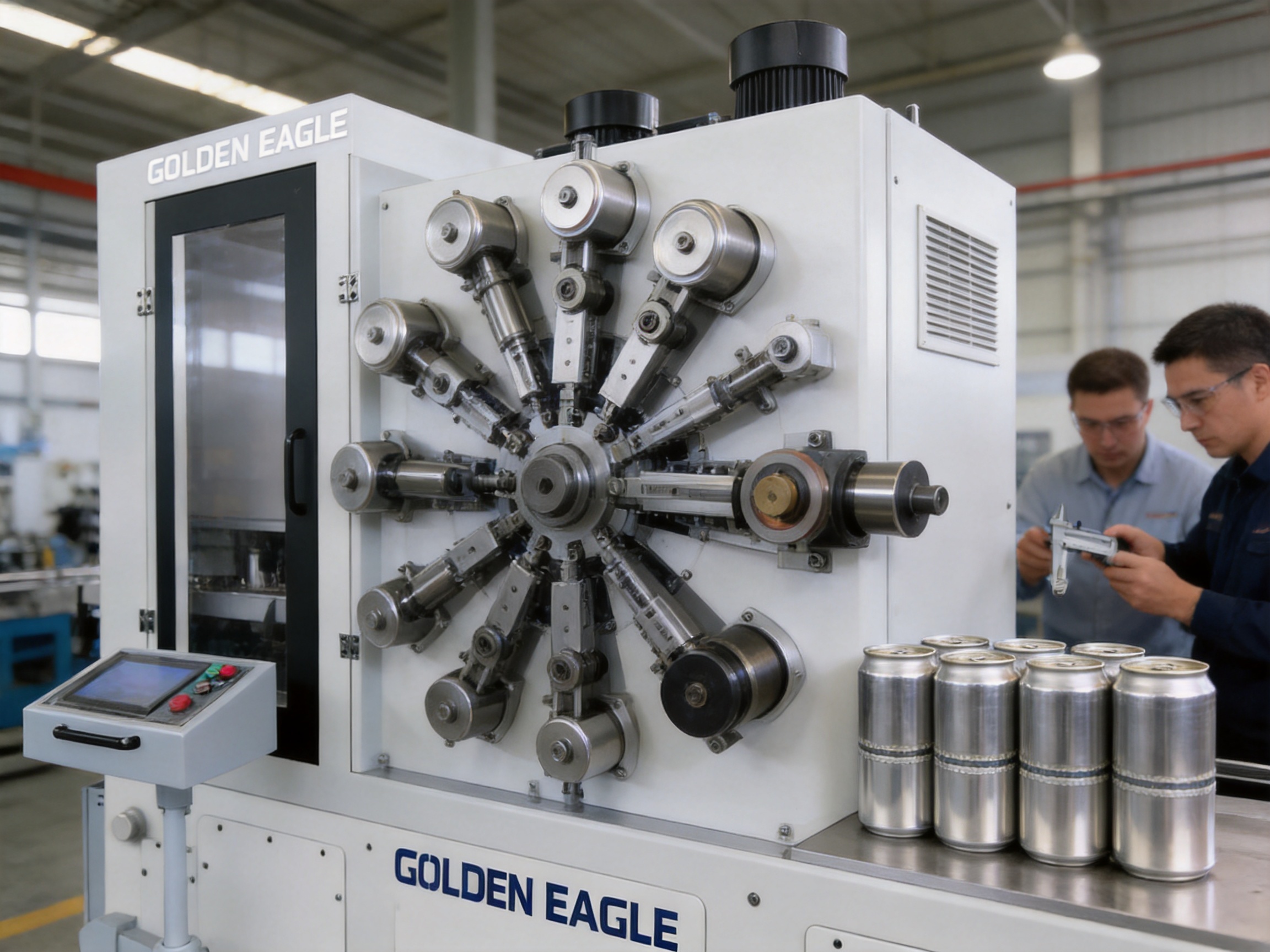
In the can-making machinery market, buyers may encounter many equipment options, ranging from low-cost basic machines to highly automated production systems. The Necking Flanging Beading Seaming Four-Station Can Making Machine series offers a strong balance between cost-effective production, industrial reliability, and technical capability.
Compared with basic machines that perform only one operation with limited speed, this series supports coordinated production across multiple key processes. Manufacturers can select models for necking, necking-flanging, beading, and top seaming within the same technical platform. This makes line planning easier and reduces the risk of incompatibility.
Compared with low-cost equipment that may lack precision machining, the machine series benefits from CNC high-precision manufacturing and experienced engineering. Better component accuracy helps maintain production consistency and reduces the need for frequent adjustment. Over time, this can lower maintenance pressure and reduce hidden costs associated with downtime and rejected cans.
Compared with imported high-end machinery that may be costly and difficult to service in some regions, this equipment provides a practical alternative supported by a manufacturer with global export experience. The company’s products have been exported to many regions, including Europe, Asia, Africa, North America, South America, and Oceania. This international experience helps the company understand different customer standards, installation conditions, and production expectations.
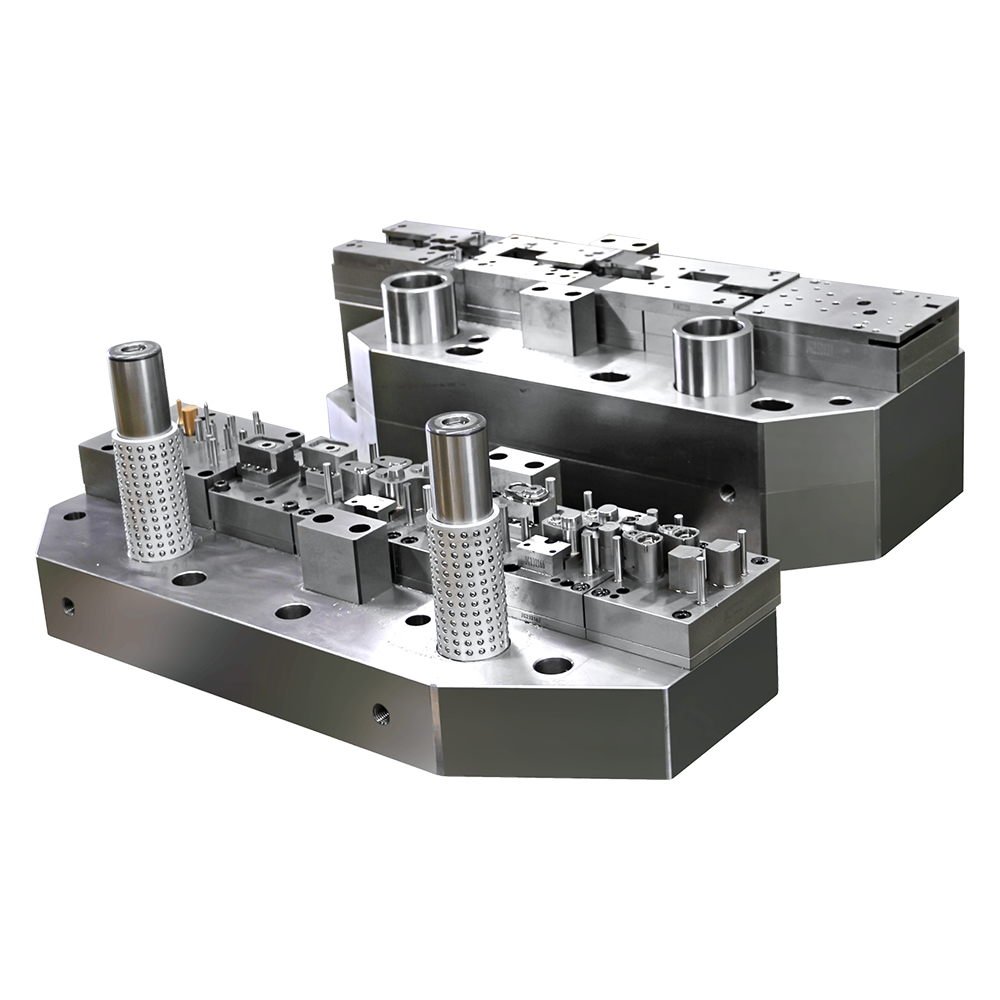
Another advantage is the combination of machinery and mold expertise. Can forming quality depends heavily on tooling design and mold accuracy. A supplier with both machine manufacturing and mold manufacturing capability can better coordinate the relationship between equipment movement and forming tools. This is especially important for necking, flanging, and beading operations, where tooling geometry directly affects the finished can body.
Reliability is a major concern in food and beverage can production. A single machine stoppage can interrupt an entire production line. If cans accumulate before a stopped machine, upstream equipment may need to stop. If downstream equipment lacks cans, filling or packing schedules may be affected. Therefore, a stable forming and seaming machine contributes to the productivity of the entire factory.
The machine series is designed for continuous industrial operation. Multi-head configurations distribute work efficiently, supporting stable output while reducing the load on each individual forming station. With proper installation, lubrication, tooling maintenance, and operator training, the equipment can serve as a dependable part of a can production line.
Stable operation also improves product traceability and quality control. When a machine runs consistently, quality inspection results are more predictable. Operators can make controlled adjustments rather than constantly responding to random defects. This helps factories improve production management and reduce quality variation.
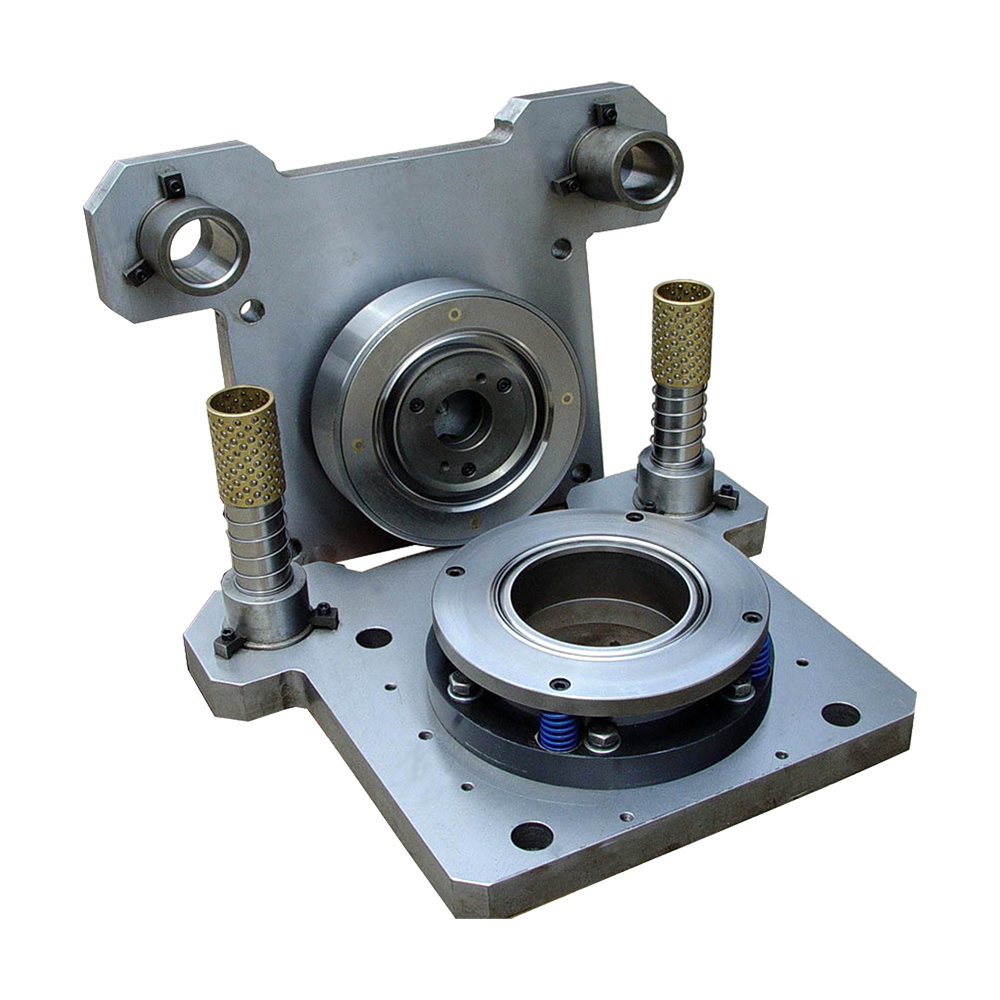
In can-making machinery, the quality of tooling is as important as the machine frame and drive system. Necking tools, flanging rollers, beading tools, and seaming chucks must be designed according to material thickness, can diameter, height, lid type, and production speed. Even a powerful machine cannot produce good cans if tooling is inaccurate or poorly matched.
The company’s background in can-making molds gives it an advantage in developing effective tooling solutions. Tooling can be designed to support smooth material flow, reduce scratching, prevent cracking, and maintain consistent dimensions. This is particularly important for tinplate cans, where surface coating integrity and appearance are important.
Precision tooling also helps reduce changeover problems. When tools are accurately manufactured and properly matched to machine positions, operators can complete adjustments more efficiently. This improves flexibility for manufacturers that produce several can sizes or need to switch between orders.
A can-making machine does not deliver full value only by arriving at the factory. It must be installed correctly, aligned with other equipment, commissioned under real production conditions, and operated by trained personnel. The company provides after-sales service including installation, commissioning, technical guidance, operation training, and timely spare parts supply.
This support is important for customers introducing new production lines or upgrading older equipment. During commissioning, technicians can help adjust can feeding, forming quality, tooling position, speed synchronization, and safety operation. Operator training helps factory personnel understand machine control, inspection points, lubrication, basic troubleshooting, and maintenance routines.
Good after-sales support reduces the learning curve for customers and helps the equipment reach stable production more quickly. For manufacturers working under delivery pressure, shorter commissioning time can have a direct commercial benefit.
Metal packaging production is sensitive to material cost. Tinplate and related metal materials represent a significant portion of can manufacturing cost. Any reduction in rejected cans, damaged bodies, or defective seams helps improve material efficiency. The Necking Flanging Beading Seaming Four-Station Can Making Machine series supports this goal by promoting accurate forming and reducing process instability.
Quality control in can production usually includes checking can diameter, flange width, bead profile, seam dimensions, leakage resistance, visual appearance, and structural strength. Stable machine performance makes it easier to maintain these parameters within acceptable limits. When defects occur, they can often be traced to specific tooling or adjustment conditions, allowing corrective action.
The machine’s wide can size range also supports efficient production planning. Manufacturers can use compatible equipment for multiple product lines, reducing the need for redundant machinery and improving factory space utilization. This can be especially useful for companies expanding gradually or serving customers with varied packaging requirements.
The machine series can be integrated into a broader can production line. A typical three-piece food or beverage can production process may include tinplate cutting, body forming, welding, side seam coating or curing, necking, flanging, beading, seaming, inspection, and packaging. Each stage must be coordinated to ensure continuous flow.
Because the company supplies whole-set series products, including food can production lines, beverage can production lines, can lid production lines, aerosol canister production lines, chemical tank production lines, and two-piece can production lines, it can support customers beyond a single machine purchase. This capability helps customers build or upgrade complete manufacturing systems.
For customers planning a new factory, purchasing compatible machinery from a supplier with complete line experience can reduce integration risk. For customers upgrading an existing line, the supplier’s technical team can help evaluate how the new machine should match current equipment, available space, production speed, and can specifications.
The design philosophy behind this machine series can be understood through three keywords: practical, durable, and production-oriented. Practical means the equipment is built to solve real manufacturing problems rather than simply presenting theoretical specifications. Durable means the machine is manufactured with strong mechanical structures and reliable components suitable for continuous use. Production-oriented means the machine is designed with attention to output, adjustment, maintenance, and long-term operation.
In the can-making industry, equipment buyers often learn that the lowest purchase price does not always produce the lowest total cost. A cheaper machine may require more frequent maintenance, produce higher rejection rates, or operate at lower actual speed than advertised. A production-oriented machine provides value by maintaining stable performance over time.
The Necking Flanging Beading Seaming Four-Station Can Making Machine series is positioned to support this long-term value. Its combination of speed options, can size flexibility, precise forming, and manufacturer support makes it suitable for companies that view machinery investment as part of a long-term production strategy.
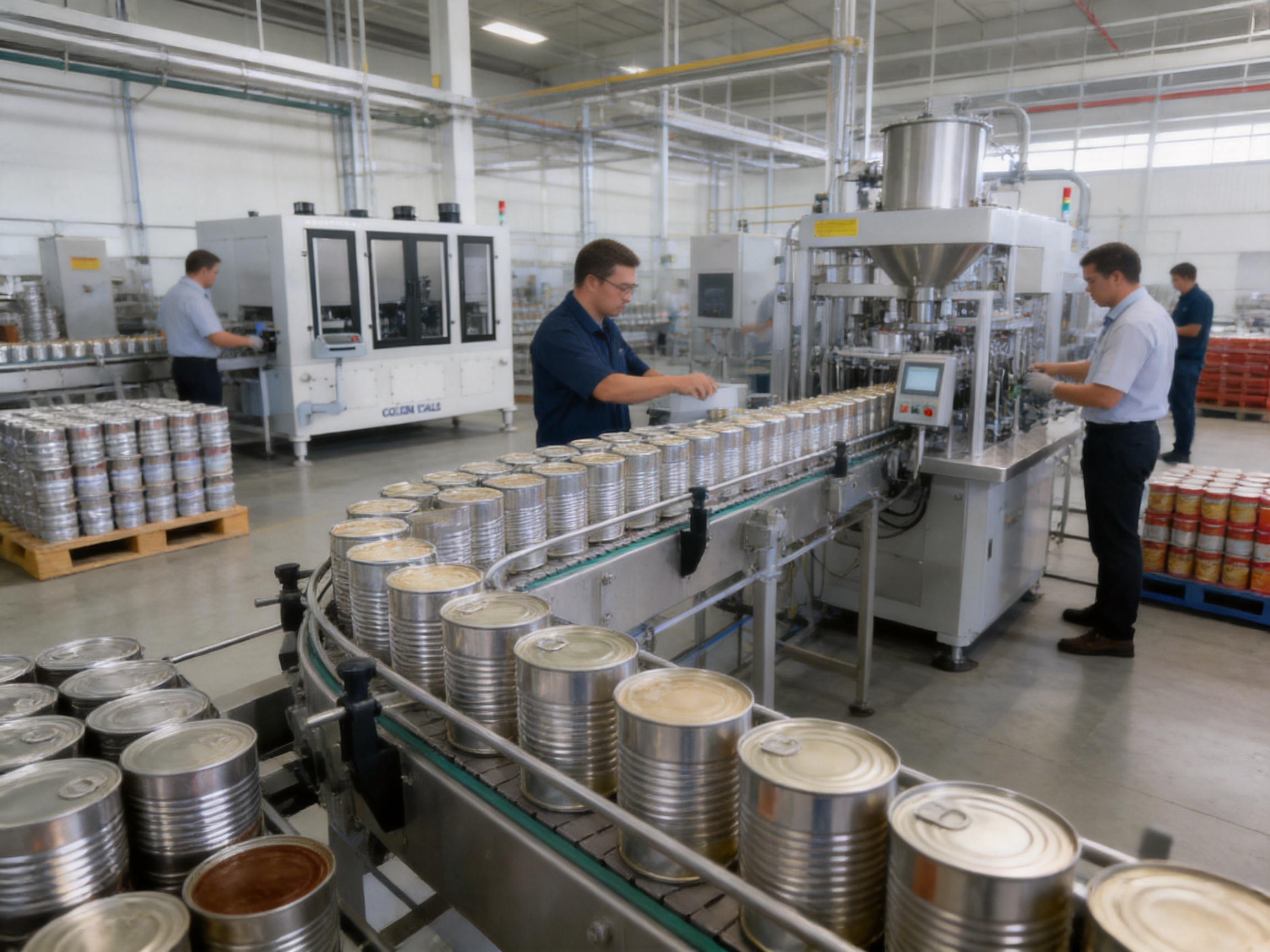
This machine series is suitable for food and beverage can manufacturers that need reliable body finishing and sealing preparation equipment. It is also suitable for factories producing tinplate cans for powdered food, dry goods, processed food, and similar applications. Companies building new production lines can use the machine series as part of a complete equipment plan, while established manufacturers can use it to upgrade older forming or seaming stations.
The high-speed GT3B21B-T model is especially appropriate for manufacturers with large-volume production requirements. Its 8-head structure and 200 to 500 cans per minute output capacity make it a strong option for high-throughput lines. The GT351-N-L top necking model is suitable for production requiring accurate top neck formation across taller cans. The GT3B54-NNNF model is useful where multiple necking operations and flanging are required in one forming sequence.
The GT3B51-B-L beading model is recommended for manufacturers seeking improved can body strength and consistent bead profile. The GT3B51-S-C top seaming model is suitable for customers requiring stable lid attachment performance at practical production speeds. Together, these models provide a comprehensive solution for different body finishing requirements.
Can-making machinery is a specialized field. General machinery manufacturers may understand mechanical fabrication, but they may not fully understand the fine details of can forming, lid matching, seam control, material behavior, and production line balance. Supplier experience is therefore a major factor in equipment selection.
Zhejiang Golden Eagle Food Machinery Co., Ltd. has been engaged in can-making machinery and mold production for more than four decades. This long-term specialization supports product development and customer service. The company’s experience across food cans, beverage cans, can lids, chemical tanks, aerosol canisters, two-piece cans, and pop can production gives it a broad understanding of metal packaging requirements.
International export experience also matters. Customers in different countries may have different production habits, power conditions, factory layouts, quality standards, and maintenance resources. A supplier with global market experience is better prepared to communicate technical requirements and provide practical solutions.
Like all industrial equipment, the machine series requires proper maintenance to maintain performance. Routine maintenance may include lubrication, inspection of forming tools, checking fasteners, monitoring drive components, cleaning can contact areas, and verifying adjustment settings. Operators should also inspect finished cans regularly to identify early signs of tooling wear or misalignment.
Preventive maintenance is more effective than emergency repair. By replacing worn parts before failure and keeping the machine properly adjusted, factories can reduce downtime and protect product quality. The availability of spare parts and manufacturer support is therefore an important benefit.
Operator skill also affects maintenance results. Well-trained operators can detect abnormal noise, vibration, can deformation, or feeding irregularities before they become major problems. This is why installation and operation training are valuable parts of the supplier’s service.
The final consumer may never see the machine that produced a can, but they experience the results through packaging appearance, opening performance, and product safety. A well-formed can body looks professional, stacks properly, seals securely, and protects the product. For brand owners and food processors, packaging quality influences consumer trust.
Accurate necking helps ensure lid compatibility and product uniformity. Smooth flanging supports reliable double seaming. Proper beading improves can rigidity. Stable top seaming helps prevent leakage and contamination. Each of these benefits contributes to a better final package.
For can manufacturers, higher finished quality can strengthen relationships with food and beverage customers. It can also reduce complaints, returns, and quality disputes. In this way, investing in reliable body finishing and seaming equipment can support both production efficiency and market reputation.
The machine is used to perform key can body finishing and sealing preparation operations, including necking, flanging, beading, and top seaming. These processes help shape the can body, strengthen it, prepare it for lid application, and support reliable sealing performance.
It is especially suitable for food and beverage can production. It can also be used for related tinplate can applications such as powdered food cans, dry product cans, and other metal packaging formats that require accurate body forming and seaming.
The machine series supports common can diameters from Φ52 mm to Φ99 mm. This range covers many standard food and beverage can sizes.
The high-speed GT3B21B-T model can achieve an output capacity of 200 to 500 cans per minute. Other models in the series typically support 80 to 150 cans per minute.
Necking shapes the upper portion of the can body and helps match the can with the required lid or end. Flanging creates the rim needed for proper seaming. Both processes are essential for lid compatibility, sealing quality, and final packaging reliability.
Beading adds reinforcing ribs to the can body. These ribs improve structural strength and help the can resist deformation during processing, transportation, stacking, and storage.
Compared with lower-cost alternatives, this machine series offers stronger advantages in precision machining, stable forming quality, production speed options, size flexibility, and supplier experience. These advantages can reduce rejection rates, downtime, and long-term operating costs.
Yes. The supplier provides installation, commissioning, technical guidance, operation training, and spare parts support. This helps customers start production efficiently and maintain stable operation.
CNC precision manufacturing improves the accuracy and repeatability of critical machine components. This helps ensure stable machine operation, accurate forming results, and longer service life.
Yes. The machine can be integrated into complete food and beverage can production lines. The supplier also has experience providing whole-set can production equipment, which helps reduce line integration risk.
The Necking Flanging Beading Seaming Four-Station Can Making Machine is a practical and high-value solution for food and beverage can manufacturers seeking better productivity, stable forming quality, and reliable sealing preparation. With model options covering necking, combined necking and flanging, beading, and top seaming, the machine series supports a broad range of can body finishing requirements.
Its advantages include flexible can size compatibility, high-speed production options, stable mechanical forming, efficient power design, precision tooling support, and reduced production defects. Compared with many conventional or low-precision alternatives, it offers stronger long-term value through improved reliability and better can quality.
Behind the machine is a manufacturer with decades of specialization in can-making machinery and molds, advanced CNC high-precision machining capability, ISO-certified management systems, extensive production experience, and international market presence. These strengths support not only the equipment itself but also the customer’s complete production success.
For manufacturers producing food cans, beverage cans, milk powder cans, or other tinplate containers, this machine series provides a strong foundation for efficient, consistent, and competitive can production.
1. Soroka, W. Fundamentals of Packaging Technology. Institute of Packaging Professionals.
2. Yam, K. L. The Wiley Encyclopedia of Packaging Technology. John Wiley and Sons.
3. Robertson, G. L. Food Packaging: Principles and Practice. CRC Press.
4. Page, B., Edwards, M., and May, N. Metal Packaging: An Introduction. Woodhead Publishing.
5. ISO 9001 Quality Management Systems: Requirements. International Organization for Standardization.
6. ISO 14001 Environmental Management Systems: Requirements with Guidance for Use. International Organization for Standardization.
Related Products

Founded in 1978, the company is one of the largest can-making machinery well-known companies at home and abroad.
Product Categories
Contact Information
Zhongshatou Shenjiamen Zhoushan Zhejiang China
+86-580-3056646

 English
 中文简体
中文简体
 русский
 عربى
عربى
 Español