2026-06-23
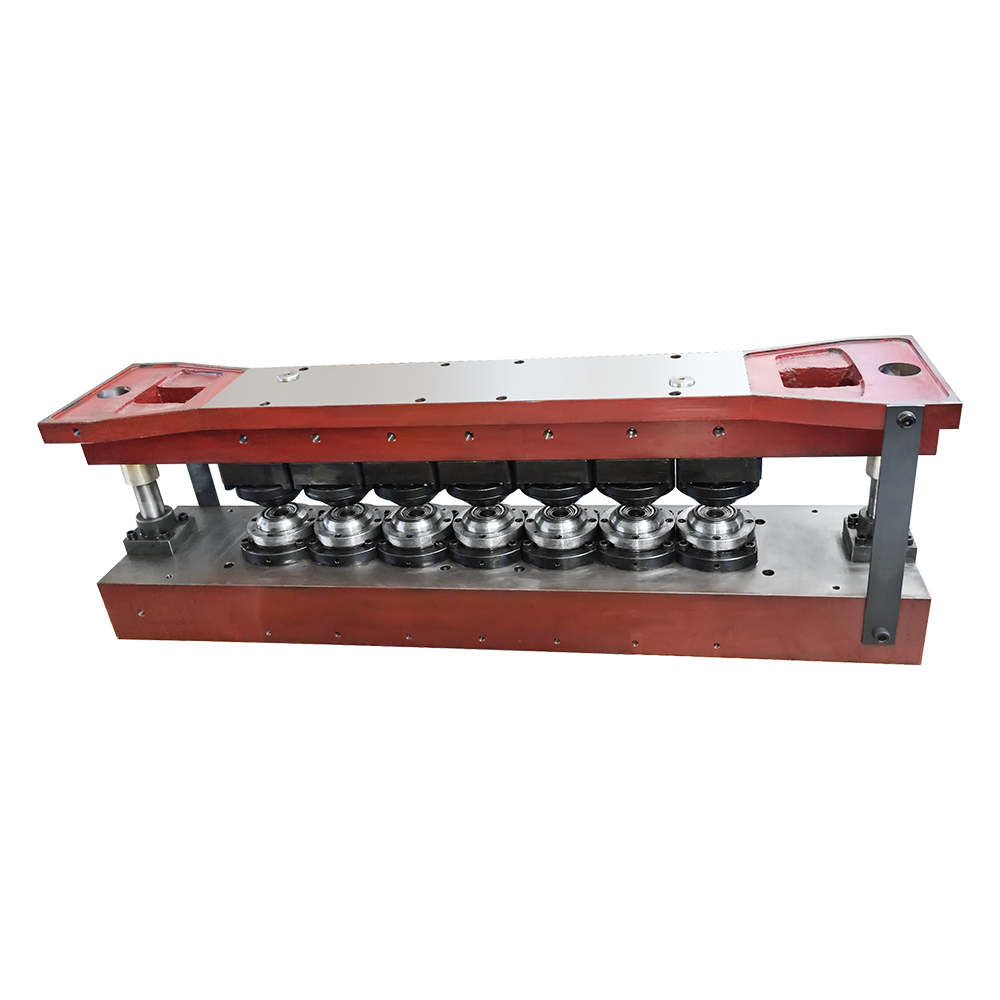
A conversion press double row die is a critical mold system used in modern tinplate and metal packaging production, especially for manufacturing can lids and easy-open ends with high output, stable quality, and repeatable precision. In a competitive can-making environment, manufacturers need tooling that can increase production capacity while maintaining strict dimensional accuracy, reliable forming performance, and long service life. The conversion press double row die is designed for exactly that purpose: it enables two rows of end components to be processed simultaneously in one press cycle, improving efficiency and reducing unit production cost.
As a specialized mold for can end production, this product supports the transformation of flat or pre-formed metal blanks into functional lid structures through operations such as forming, scoring, riveting, panel shaping, tab-related preparation, and other conversion processes depending on the end design. For factories producing food cans, beverage cans, milk powder cans, aerosol cans, chemical containers, and other tinplate packaging formats, the die is an essential part of a complete can lid or easy-open-end production line.
Compared with ordinary single-row tooling, a double row die offers a major advantage in production efficiency. By processing two lanes at once, it can help users achieve higher throughput without requiring a proportional increase in press footprint, labor, or auxiliary equipment. When engineered and manufactured with high precision, it also improves material utilization, line stability, product consistency, and long-term operational economy.
Conversion Press Double Row Die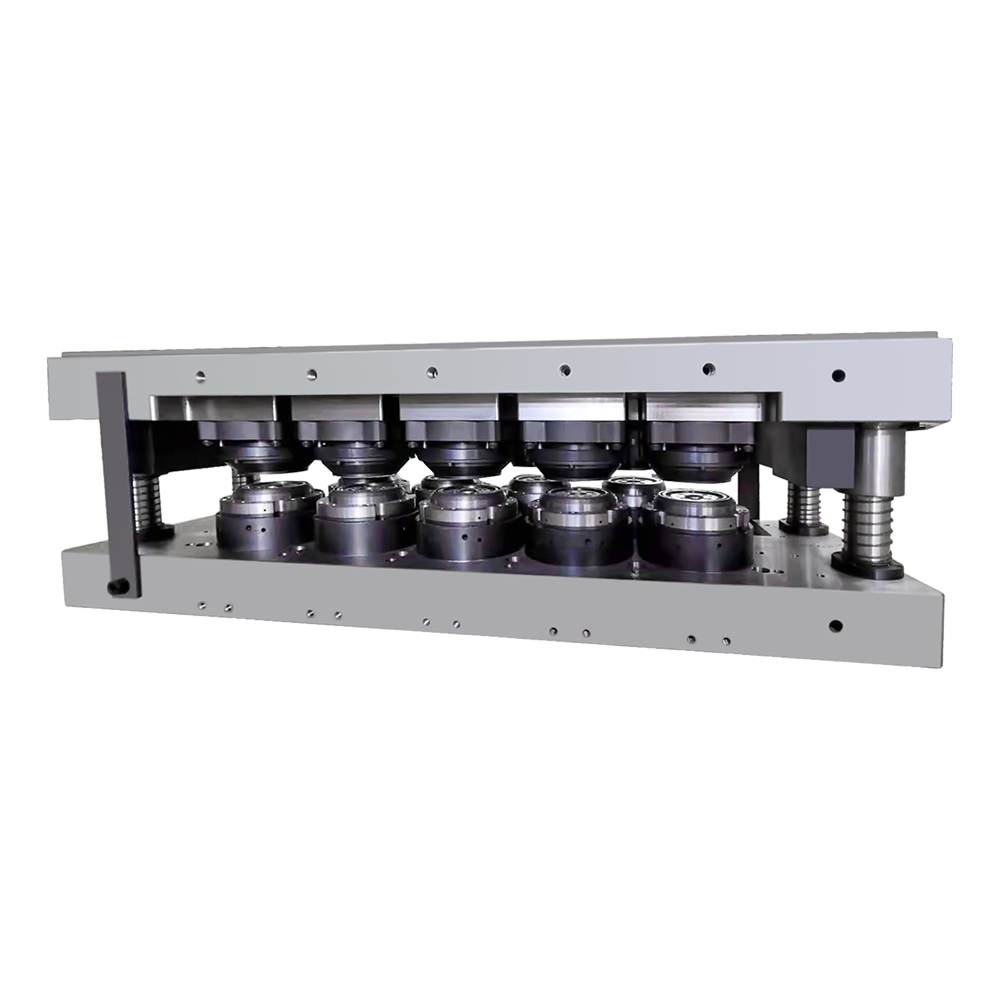
The conversion press double row die belongs to the mold category of can-making machinery. It is developed for use with conversion presses in can lid and end manufacturing. Its core function is to perform accurate and synchronized operations on two parallel rows of workpieces, converting metal sheets or shells into finished or semi-finished can ends according to specific product requirements.
In can-making production, the quality of a lid or end is directly connected to product safety, sealing performance, storage life, and the final appearance of the package. A lid must fit precisely with the can body, withstand pressure or vacuum conditions, and remain stable during filling, sterilization, transportation, and storage. For easy-open ends, the requirements are even stricter because the score line, rivet area, tab assembly, opening force, and residual metal thickness must be carefully controlled. A well-designed conversion press die is therefore not merely a piece of tooling; it is a precision production system that determines the quality of every end produced.
The double row structure is especially valuable for users seeking higher production output from a compact production layout. Instead of running two separate single-row systems, one double row die can create a more efficient production arrangement. It can also simplify equipment configuration, reduce the need for duplicate press units, and allow more stable centralized control of the conversion process.
The product is suitable for manufacturers requiring OEM or ODM can end solutions, as it can be designed according to lid diameter, material thickness, end profile, press specification, production speed, and required forming sequence. In a well-established manufacturing environment supported by CNC machining, experienced engineering personnel, and strict quality control, the die can be customized to meet diverse can-making requirements.
Can end production is a high-volume industry. A small improvement in die performance can create significant savings over millions of pieces. If a die reduces scrap by a fraction of a percent, extends maintenance intervals, or improves output per hour, the total economic value can be substantial. The conversion press double row die addresses these industrial priorities by combining speed, precision, durability, and process stability.
The double row configuration increases productivity by allowing two lanes of conversion operations during each press stroke. This design provides an immediate output advantage over traditional single-lane molds. However, increased output alone is not enough. The two rows must perform identically, with uniform forming depth, score residual, panel profile, and dimensional stability. The engineering challenge is to ensure synchronization and balance across both rows. This is where advanced mold design, precision machining, and professional assembly experience become essential.
In lid manufacturing, press load distribution is an important factor. If a die is poorly balanced, one row may wear faster than the other, or the press may experience uneven stress. A properly engineered double row die distributes load effectively across the tooling structure, improving press performance and extending the service life of both the die and the host equipment.
The die also influences downstream production. If lids are inconsistent, sealing machines may face higher rejection rates. If easy-open score quality varies, users may experience leakage, opening difficulty, or unsafe sharp edges. If tab riveting is unstable, tabs may loosen or detach. By improving the precision of conversion steps, a double row die contributes to the reliability of the entire can-making and filling chain.
The most obvious benefit of a conversion press double row die is its ability to increase production output. Because two rows are processed at the same time, a manufacturer can obtain significantly higher capacity from one press station compared with single-row tooling. This is especially valuable for high-volume can end plants that must meet large orders while controlling workshop space and investment costs.
In many factories, floor space is limited. Adding another complete press line may require more foundation preparation, electrical installation, feeding equipment, operators, and maintenance resources. A double row die allows a more concentrated production method. It can help factories expand capacity without completely redesigning the workshop layout.
By increasing output per press cycle, the die reduces the cost allocated to each lid. Labor, electricity, press depreciation, and production supervision can be spread across a larger number of finished pieces. For manufacturers producing millions or billions of lids annually, this advantage is highly important.
Cost efficiency also comes from reduced downtime. A robust die manufactured with high-quality material and accurate processing can run longer between maintenance cycles. When a die maintains stable production for extended periods, users can reduce unplanned stoppages and improve delivery reliability.
A premium double row die must ensure that both lanes produce identical results. This means the left and right rows must match in forming dimensions, cutting accuracy, scoring condition, and end profile. Advanced machining and careful assembly are required to achieve this consistency.
Consistency across rows helps reduce sorting requirements and prevents quality differences between production lanes. It also supports automated downstream inspection and packing systems, because the lids produced from both rows have stable and predictable dimensions.
Easy-open ends require extremely precise scoring. If the score is too deep, the end may leak or break during processing. If it is too shallow, the consumer may find the lid difficult to open. The rivet area must be strong enough to hold the tab while allowing proper opening performance. The panel must be formed without wrinkles, cracks, or uneven stress.
The conversion press double row die can be designed to control these important areas with high accuracy. This makes it suitable for manufacturers producing high-quality easy-open ends for food, beverage, and other packaging applications.
Die life is a major factor in total ownership cost. A die used in high-speed can end production must withstand repeated impact, friction, and forming pressure. High-quality tool steel, heat treatment, surface finishing, and precision alignment all contribute to service life.
Compared with ordinary molds that may wear quickly or require frequent adjustment, a professionally manufactured double row die can provide longer operating intervals and more stable performance. This reduces spare parts consumption and maintenance labor.
Can ends vary by diameter, shape, material, thickness, end profile, and opening design. Therefore, conversion tooling must often be customized. A strong manufacturing team can develop dies according to customer samples, drawings, production goals, and press specifications.
Customization may include the number of stations, end diameter, tooling material, coating selection, feeding pitch, forming sequence, discharge method, and integration with existing production equipment. This flexibility allows the die to serve diverse product categories such as food can lids, beverage ends, milk powder can ends, aerosol can components, and chemical container closures.
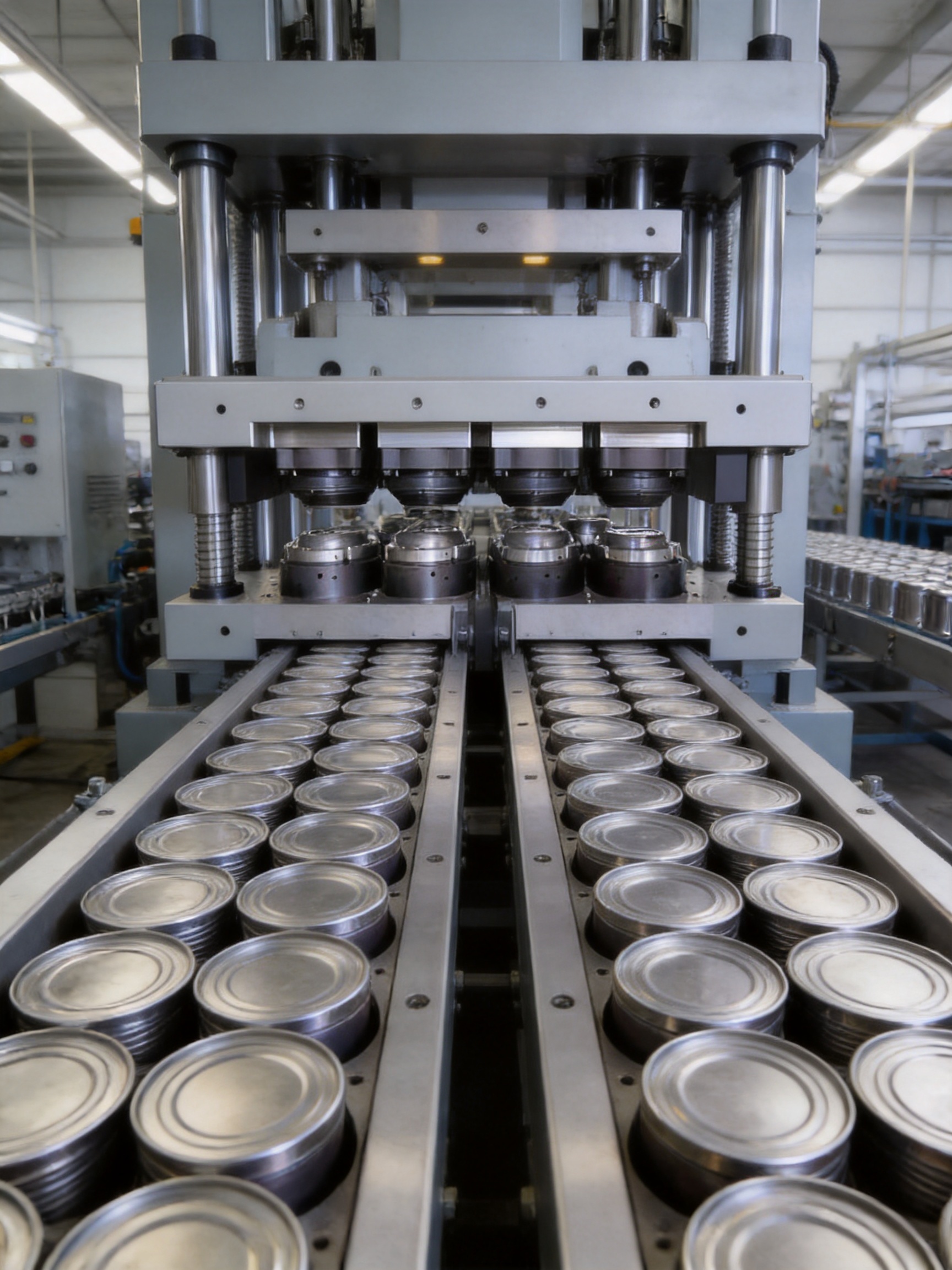
The can-making industry includes many types of tooling, from simple single-operation molds to advanced multi-station conversion dies. The conversion press double row die is positioned as a high-efficiency solution for manufacturers that need both productivity and precision. The following table summarizes typical advantages compared with conventional single-row or lower-precision tooling.
| Comparison Item | Conversion Press Double Row Die | Conventional Single Row or Basic Tooling |
|---|---|---|
| Production Output | Processes two rows simultaneously for higher capacity per press cycle | Processes one row or fewer pieces per cycle, limiting output |
| Workshop Space Efficiency | Higher output from a compact press arrangement | May require additional press lines to reach the same capacity |
| Product Consistency | Designed for synchronized dimensional accuracy across both rows | Quality may vary more between separate lines or older molds |
| Labor Efficiency | More pieces produced under similar operator supervision | More operators may be needed for equivalent output |
| Maintenance Economy | Longer service life when manufactured with precision materials and processes | May require more frequent adjustment, repair, or replacement |
| Suitability for Easy-Open Ends | Can support precise scoring, riveting, and forming requirements | May be less suitable for strict score and rivet control |
| Customization | Can be engineered according to lid type, press model, and production demand | Often less flexible or limited to standard designs |
This comparison shows that the double row die is not only a faster tool but also a more integrated production solution. Its value is most visible in plants where output, quality, and operating cost are measured carefully. For manufacturers competing in international markets, these advantages can directly support stronger delivery capability and product competitiveness.
A high-performance conversion press double row die depends on advanced manufacturing technology. The design must begin with a deep understanding of can-making processes, metal behavior, press dynamics, and end-user requirements. After design confirmation, the mold components must be manufactured with strict dimensional tolerance and surface quality.
The first step is engineering design. Professional designers analyze the end product, material type, forming sequence, press tonnage, feeding method, production speed, and customer requirements. For double row dies, the design must consider row-to-row balance, synchronized feeding, equal forming conditions, and convenient maintenance.
Designers also evaluate critical areas such as score geometry, rivet strength, panel depth, curl compatibility, and sealing performance. When the die is intended for easy-open ends, the engineering team must ensure that the score line has controlled residual thickness and that the tab-related area can withstand opening force without premature failure.
Modern design principles are influenced by internationally recognized can-making machinery concepts. By combining long practical experience with continuous technical improvement, advanced manufacturers can create tooling that is robust, efficient, and adaptable to real production conditions.
CNC machining is essential for producing accurate die components. In a double row die, even a small deviation can affect both product quality and tooling life. CNC high-precision machining allows complex profiles, accurate cavities, punches, inserts, and guide components to be produced with repeatable accuracy.
High-precision machining also reduces the need for excessive manual correction. When parts are made accurately from the beginning, assembly becomes more reliable, and the final die is easier to adjust. This directly improves delivery quality and shortens commissioning time.
In addition to CNC machining, complete mechanical machining capability is important. Large die sets may require milling, grinding, boring, drilling, turning, wire cutting, and surface finishing. A manufacturer with a comprehensive machining workshop can control more production steps internally, ensuring better quality management and schedule coordination.
Internal machining capability also supports customization. If a customer requires a specific lid design or press interface, the tooling team can produce special parts without depending heavily on outside suppliers. This improves responsiveness and protects technical confidentiality.
Tooling material must be selected according to wear resistance, toughness, impact strength, and machining performance. Key working parts may require premium tool steel and appropriate heat treatment to obtain the desired hardness and durability. Heat treatment must be controlled carefully because excessive hardness may create brittleness, while insufficient hardness can lead to rapid wear.
For high-volume can end production, wear parts such as punches, dies, score tools, and forming inserts must resist repeated contact with tinplate or coated metal. Proper material selection and heat treatment improve service life and help maintain stable end dimensions over long production runs.
The surface quality of die components influences metal flow, forming stability, and defect prevention. Rough surfaces may scratch coated materials, increase friction, or cause metal sticking. Precision grinding and polishing reduce friction and improve the quality of formed ends.
Surface finishing can also support maintenance efficiency. Smooth, accurate surfaces are easier to clean, inspect, and lubricate. In production environments where hygiene and appearance matter, such as food and beverage packaging, preventing scratches and surface defects is essential.
Assembly is one of the most important stages in die manufacturing. A double row die contains many components that must work together under high-speed press conditions. Guide systems, punches, cavities, springs, strippers, inserts, and fasteners must be aligned accurately.
During assembly, technicians check clearances, parallelism, feeding accuracy, and row synchronization. The die must open and close smoothly, and each working station must perform its function at the correct moment. Skilled assembly reduces vibration, uneven wear, and production instability.
Before delivery, the die should be tested to confirm product quality and operational reliability. Trial production allows engineers to inspect dimensions, forming results, score quality, rivet performance, and appearance. Adjustments can be made before the die enters customer production.
Commissioning may also include coordination with the customer’s press, feeding system, lubrication method, material specification, and downstream equipment. Strong after-sales support helps users reach stable production faster and reduces the learning curve for operators.
The conversion press double row die benefits from the manufacturing strengths of an established can-making machinery producer with decades of industry experience. Founded in 1978 and located in Zhoushan, Zhejiang Province, the company has long focused on can-making machinery and molds. Its background in both equipment and tooling gives it a comprehensive understanding of the entire production line rather than only one isolated component.
With more than 350 trained personnel and experienced design and development engineers, the company has accumulated extensive practical knowledge in can-making machinery, can lid equipment, production lines, and mold manufacturing. This professional foundation supports the development of reliable dies for demanding industrial users.
The company has produced more than 10,000 pieces of can and can lid equipment, serving many can manufacturers and canning factories. Such production history provides a valuable database of real-world experience. Every project adds knowledge about different materials, production speeds, container types, press requirements, and regional market standards.
Quality management is supported by ISO9001 certification, while environmental management is supported by ISO14001 certification. These systems help standardize production, inspection, documentation, and continuous improvement. For customers purchasing precision molds, certified management systems provide additional confidence in manufacturing consistency.
The company’s products have been exported to many countries across Europe, Asia, Africa, North America, South America, and Oceania, including Germany, Italy, the United Kingdom, Spain, Hungary, Russia, Australia, Jordan, Malaysia, the Philippines, Pakistan, Egypt, Algeria, Turkey, Mexico, Nigeria, Iran, and others. International market experience helps the company understand different technical expectations, production environments, and service requirements.
Its product range includes food can production lines, beverage can production lines, can lid production lines, chemical tank production lines, aerosol canister production lines, two-piece can production lines, pop can production lines, automatic feeding machines, tin can welding machines, cutting machines, duplex slitters, and molds. This broad capability allows the conversion press double row die to be designed with system-level compatibility in mind.
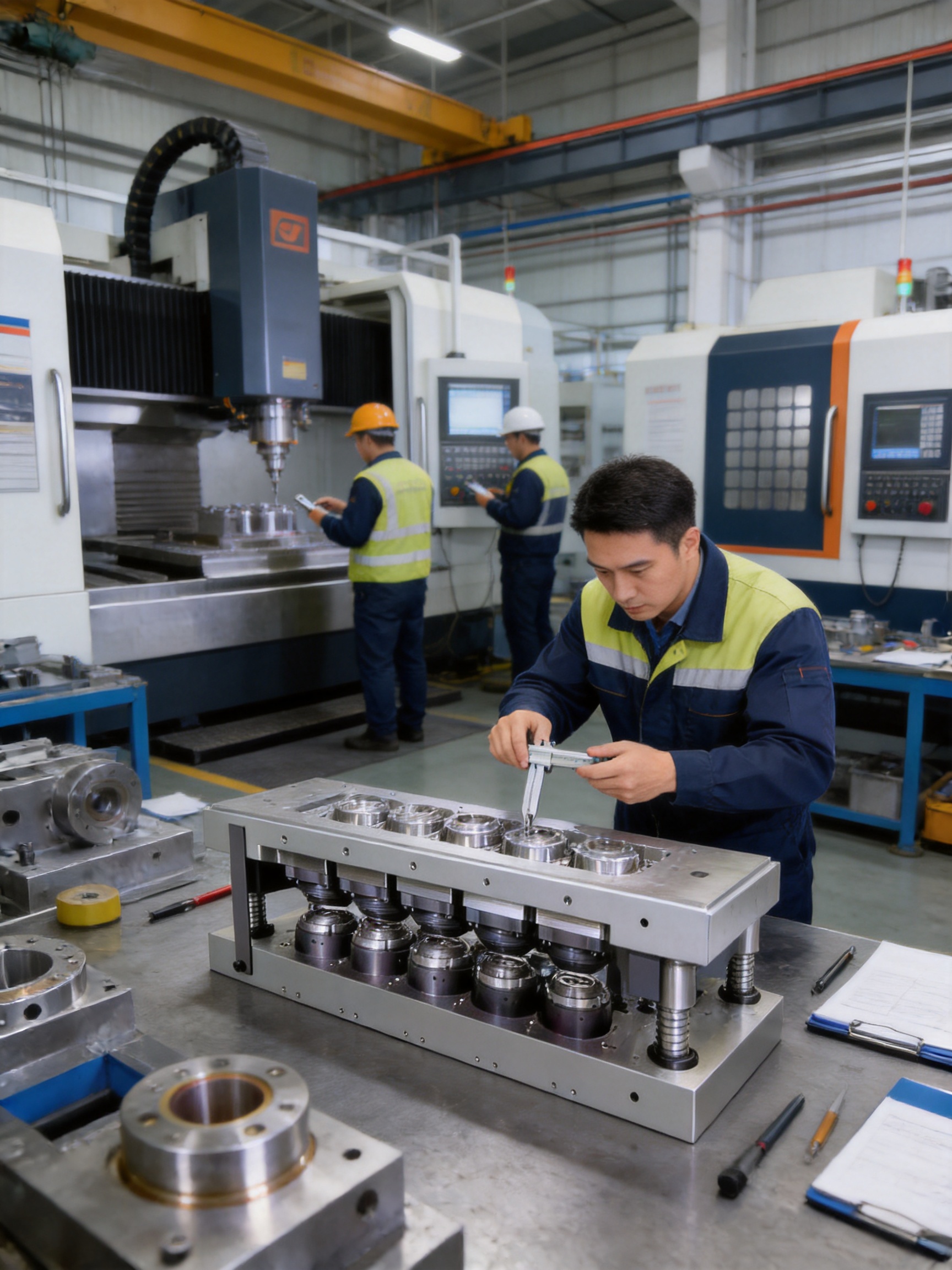
Food cans require secure sealing, sterilization resistance, and reliable storage performance. Lids must maintain dimensional stability under thermal processing and pressure changes. The conversion press double row die can support high-volume food can lid production by forming accurate end profiles and maintaining consistent sealing geometry.
For food packaging, even small defects can lead to leakage, spoilage, or customer complaints. The die’s precision helps reduce such risks by producing stable and repeatable lid structures. High output also supports large food producers that require continuous supply.
Beverage can ends often demand high-speed production and precise easy-open performance. Opening force, score safety, tab strength, and appearance must be carefully controlled. A double row die can help beverage end manufacturers increase throughput while maintaining the accuracy required for consumer-friendly opening.
In beverage markets, packaging appearance also matters. Smooth panel forming, clean score lines, and consistent tab areas contribute to a professional final product. A high-quality die helps protect brand value for downstream beverage producers.
Milk powder packaging often uses tinplate cans with strict sealing requirements to protect product freshness and hygiene. Lids and ends must fit reliably and may include special opening structures. The die can be customized for milk powder can end formats, supporting stable production for infant nutrition, dairy powder, and similar products.
Because milk powder products are sensitive to moisture and contamination, packaging integrity is essential. Accurate end forming supports airtight sealing and safe storage.
Aerosol cans require components that can withstand internal pressure. Cone and dome parts, as well as related end structures, must be formed accurately to ensure safety. While the conversion press double row die is focused on can end conversion, the same manufacturing expertise is relevant to aerosol cone and dome tooling, and the die can be part of a broader aerosol can production solution.
For pressure containers, dimensional stability and material integrity are especially important. Precision tooling reduces forming defects that could weaken the component.
Chemical tanks and industrial cans may use heavier materials or special coatings. Their lids and ends must resist deformation, corrosion, and handling stress. Custom conversion tooling can be designed for these applications, taking into account material thickness, coating protection, and required forming force.
Industrial packaging often involves diverse specifications. Flexible die design capability allows manufacturers to meet specific customer requirements without sacrificing production efficiency.
The die must be matched with the material used in production, such as tinplate, tin-free steel, aluminum, or coated sheet. Each material has different forming behavior, surface friction, springback, and hardness. Tooling geometry and clearance must be selected accordingly.
If the clearance is too tight, the material may crack, gall, or create excessive press load. If the clearance is too loose, edges may become rough, dimensions may drift, or forming may be unstable. Professional design helps find the correct balance.
The die must match the conversion press in bed size, stroke, tonnage, shut height, mounting pattern, feeding direction, and operating speed. A mismatch can reduce efficiency or create mechanical risk. Before manufacturing, engineers should confirm press specifications to ensure smooth installation and operation.
For double row operation, press rigidity and load balance are particularly important. The die should be designed to distribute force evenly so that the press can operate safely at the required speed.
Accurate feeding is essential in double row production. Both rows must receive material or shells in the correct position for each stroke. Feeding errors can cause misalignment, scrap, tool damage, or production stoppage.
The die design should coordinate with automatic feeding equipment and include features that support reliable positioning. In high-speed production, stable feeding is as important as the die itself.
Lubrication reduces friction, wear, and heat. However, excessive or unsuitable lubrication can contaminate products or create cleaning problems. The die should be designed for appropriate lubrication paths and easy maintenance.
For food and beverage packaging, clean production is important. Tooling surfaces should minimize material scratching and debris generation. Operators should be able to inspect and clean critical areas efficiently.
Even the best die requires regular inspection and maintenance. Wear parts should be accessible, and the die structure should allow efficient replacement or adjustment. A maintenance-friendly design reduces downtime and improves production planning.
For double row dies, maintenance accessibility is especially valuable because the tooling contains more working positions than a single-row mold. Clear structure, standardized components where possible, and accurate documentation all support long-term use.
Manufacturers often evaluate equipment by purchase price, but the true value of a die is determined by total production economics. A lower-priced die that produces more scrap, wears quickly, or requires frequent adjustment may become expensive over time. A high-quality conversion press double row die can provide better value through output, stability, and durability.
First, increased output reduces the fixed cost per piece. The same press and operator can produce more ends per hour. Second, stable quality reduces scrap and rework. Third, long service life lowers replacement cost. Fourth, reliable operation improves delivery schedules and customer satisfaction.
Another economic advantage is reduced production risk. When a die performs consistently, managers can plan orders with greater confidence. Emergency maintenance, delayed shipments, and quality disputes become less likely. In competitive packaging markets, this reliability can be as important as speed.
The die also supports business expansion. A can end manufacturer with higher capacity and stable quality can accept larger orders, serve demanding customers, and compete in export markets. Therefore, the die is not only a production tool but also a strategic investment in manufacturing capability.
Quality control must be present throughout the entire manufacturing process. It begins with design review and continues through material inspection, machining, heat treatment, component measurement, assembly inspection, trial production, and final acceptance.
Material inspection ensures that steel and other components meet required specifications. Machining inspection verifies dimensions, tolerances, hole positions, profiles, and surface quality. Heat treatment inspection checks hardness and stability. Assembly inspection confirms alignment, clearance, movement, and function.
During trial production, sample ends are measured and tested. Critical dimensions may include outside diameter, panel depth, countersink depth, curl area, score residual, rivet height, and tab position depending on the product type. Appearance is also inspected for scratches, wrinkles, cracks, burrs, or coating damage.
A strong quality system reduces variation and improves repeatability. For customers, this means easier installation, faster startup, and more stable production after delivery.
A precision die must be installed correctly to achieve its designed performance. Installation includes cleaning mounting surfaces, checking press condition, aligning the die, setting shut height, connecting feeding equipment, confirming lubrication, and performing slow-speed trial operation before full-speed production.
Commissioning is the stage where tooling, press, material, and feeding equipment are adjusted as one system. Experienced technicians can identify issues such as feeding deviation, insufficient lubrication, uneven forming, or abnormal sound. Early correction prevents later damage and improves production stability.
After-sales service may include installation guidance, commissioning support, technical training, operation instruction, maintenance advice, and spare parts supply. Training is important because operators and maintenance personnel must understand proper die handling. Incorrect operation can shorten tool life, even if the die itself is well made.
Fast spare parts support also matters. Wear components should be available when needed to prevent long production interruptions. A manufacturer with long experience in can-making machinery can provide practical support based on real production conditions.
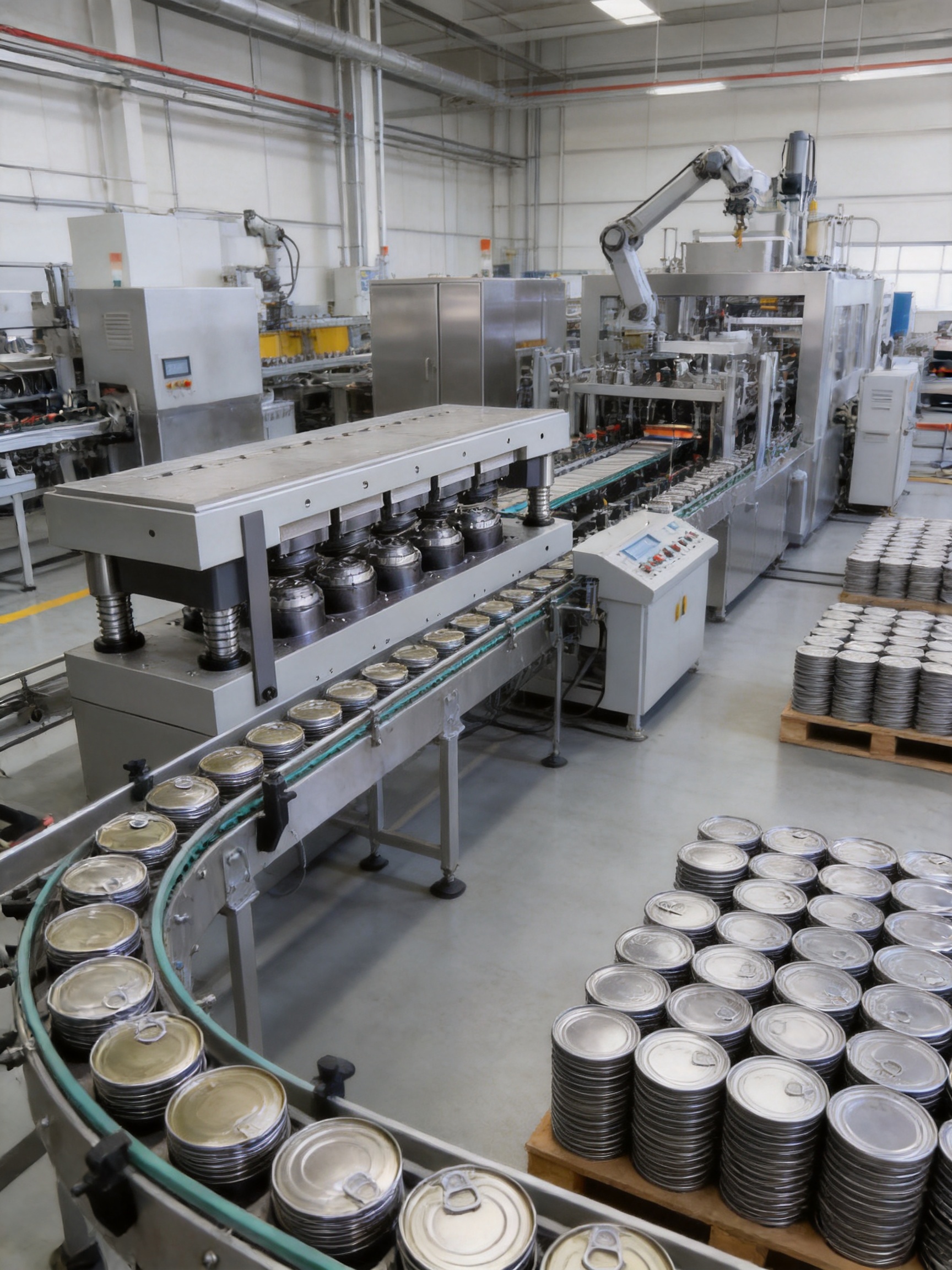
The die should be operated with materials that match the agreed specification. Variations in thickness, hardness, coating, or flatness can affect forming quality. If material changes are necessary, production engineers should evaluate whether die adjustment is required.
Before starting production, operators should inspect the die, remove foreign objects, confirm lubrication, check fasteners, and run the press slowly. Gradual startup helps detect abnormal conditions before they cause serious damage.
Regular quality checks should be performed during production. Measurements should focus on critical dimensions and functional areas. For easy-open ends, score residual and rivet condition require particular attention. Continuous monitoring allows early detection of wear or adjustment needs.
Lubrication should be applied according to process requirements. Too little lubrication increases wear, while too much may create contamination or feeding problems. The correct lubricant and application method help maintain stable operation.
Preventive maintenance is better than emergency repair. The die should be inspected after defined production intervals. Wear parts should be replaced before they cause quality problems. Maintenance records can help predict service life and plan spare parts inventory.
Personnel training is essential for safe and efficient operation. Operators should understand the function of the die, normal operating conditions, common warning signs, and emergency procedures. Maintenance technicians should know how to disassemble, inspect, clean, and reassemble key components correctly.
In the mold market, many suppliers can produce basic tooling. However, the real difference appears in long-term production. A conversion press double row die must maintain precision under high-speed, high-volume conditions. The product stands out through integrated engineering experience, advanced manufacturing equipment, and proven knowledge of complete can-making lines.
Compared with competitors that focus only on single molds, a manufacturer with complete can-making machinery capability understands how the die interacts with feeding machines, presses, welding machines, slitting machines, lid lines, and downstream inspection systems. This system-level understanding helps create tooling that performs better in actual production rather than only meeting drawing dimensions.
Compared with low-cost molds, a precision double row die offers better stability, lower scrap, fewer stoppages, and longer service life. While the initial investment may be higher than basic tooling, the long-term production savings can be greater. For customers who value output and reliability, this difference is decisive.
Compared with imported high-end tooling, the product can offer a strong balance between advanced technology, customization flexibility, practical service, and cost-effectiveness. Users can receive professional engineering support, customized design, and after-sales assistance while maintaining competitive investment costs.
The company’s long history since 1978 is another differentiating factor. Decades of experience in can-making machinery and molds provide practical knowledge that cannot be built quickly. The ability to combine traditional manufacturing expertise with CNC high-precision processing and modern quality systems strengthens the product’s reliability.
The conversion press double row die is often part of a larger can lid or easy-open-end production line. A complete line may include sheet cutting, slitting, feeding, shell press operations, curling, compound lining, drying, conversion pressing, tab production, inspection, counting, and packing. Each stage must work smoothly with the others.
When the die is designed with production line compatibility, users benefit from better synchronization. Feeding pitch, discharge direction, product transfer, and inspection requirements can be considered during design. This reduces integration problems and improves overall line efficiency.
For customers building new factories, a supplier capable of providing complete can-making machinery and molds can simplify project coordination. Instead of managing many separate suppliers, the customer can obtain equipment, tooling, installation support, and technical guidance from a more integrated source.
For customers upgrading existing lines, a customized double row die can increase output without replacing the entire production system. Engineers can evaluate the current press and line arrangement, then design tooling that fits the available equipment as much as possible.
Modern manufacturing increasingly emphasizes resource efficiency. A high-quality conversion press double row die contributes to sustainability by reducing scrap, improving material utilization, and extending tooling life. Every rejected lid represents wasted metal, energy, labor, and time. By improving consistency, the die helps reduce waste throughout production.
Longer service life also supports sustainability. A durable die requires fewer replacements and less frequent manufacturing of spare components. Efficient production reduces energy consumption per piece because more ends are produced from each press operating hour.
Environmental management certification further reflects a structured approach to responsible production. In global markets, customers increasingly prefer suppliers that can support quality and environmental expectations at the same time.
It is a precision mold system used in a conversion press to process two rows of can ends or lid components simultaneously. It is commonly used in can lid and easy-open-end manufacturing to improve output, consistency, and production efficiency.
A double row die can produce more pieces per press cycle, helping increase production capacity without requiring a proportional increase in floor space, labor, or press equipment. It is especially useful for high-volume can end manufacturers.
Yes. The die can be engineered according to lid diameter, material thickness, end profile, press model, feeding method, and production requirements. Customization is important because can ends vary widely by application.
Yes. With proper design and precision manufacturing, the die can support critical easy-open-end operations such as scoring, forming, riveting-related processes, and panel shaping. Score control and rivet strength must be carefully engineered.
It can be used in food can lid production, beverage end production, milk powder can packaging, aerosol can component manufacturing, chemical tank ends, and other metal packaging applications requiring accurate lid or end conversion.
Durability comes from suitable tool steel, controlled heat treatment, precision machining, proper surface finishing, accurate assembly, and correct operation. Preventive maintenance also plays an important role in extending service life.
It increases output per press cycle, reduces labor cost per piece, improves production stability, lowers scrap, and extends maintenance intervals. These advantages reduce the total cost of producing each can end.
Important support includes installation guidance, commissioning, operator training, maintenance advice, technical consultation, and timely spare parts supply. Proper support helps users reach stable production faster.
The conversion press double row die is a high-value mold solution for modern can end manufacturing. Its double row configuration allows two lanes of production in one press cycle, providing a strong advantage in output and cost efficiency. More importantly, when designed and manufactured with advanced processes, it delivers the precision required for stable food can lids, beverage ends, milk powder can ends, aerosol components, chemical container closures, and easy-open-end products.
The product’s advantages over conventional tooling include higher productivity, compact layout efficiency, improved consistency, better suitability for demanding end designs, long service life, and flexible customization. These benefits directly support manufacturers seeking to improve competitiveness in high-volume metal packaging markets.
Behind the die is a complete manufacturing capability that includes experienced engineering, CNC high-precision machining, mechanical processing, material selection, heat treatment, assembly, testing, and after-sales support. Supported by decades of industry experience, trained personnel, international market service, and certified quality management, the die represents a practical combination of advanced technology and real production knowledge.
For can-making companies that want to increase capacity, reduce unit cost, and maintain reliable product quality, the conversion press double row die is more than a mold. It is a strategic production asset that strengthens the entire can end manufacturing process.
1. Metal Packaging Manufacturers Association. Technical Principles of Metal Can End Manufacturing.
2. Society of Manufacturing Engineers. Precision Die Design and High-Speed Press Tooling Practices.
3. International Organization for Standardization. ISO9001 Quality Management Systems: Requirements and Industrial Application.
4. International Organization for Standardization. ISO14001 Environmental Management Systems: Guidelines for Manufacturing Enterprises.
5. Canmaking Industry Technical Review. Easy-Open-End Scoring, Riveting, and Conversion Press Process Control.
6. Tool and Die Engineering Handbook. Materials, Heat Treatment, and Maintenance for High-Volume Metal Forming Dies.
Related Products

Founded in 1978, the company is one of the largest can-making machinery well-known companies at home and abroad.
Product Categories
Contact Information
Zhongshatou Shenjiamen Zhoushan Zhejiang China
+86-580-3056646

 English
 中文简体
中文简体
 русский
 عربى
عربى
 Español