2026-03-17
The global can manufacturing industry is at a crossroads, with demand surging for efficient, versatile, and sustainable production solutions. As consumer preferences shift toward packaged food and beverages, and industries like pharmaceuticals and chemicals increasingly rely on metal cans for durability and recyclability, manufacturers face pressure to optimize output, reduce costs, and maintain high-quality standards. Enter the Necking Flanging Beading Seaming Four-Station Can Making Machine—an integrated solution that is redefining what’s possible in can production. This article explores the machine’s innovative features, its competitive edge over traditional systems, and the advanced manufacturing processes behind its creation, drawing on decades of industry expertise and cutting-edge engineering.
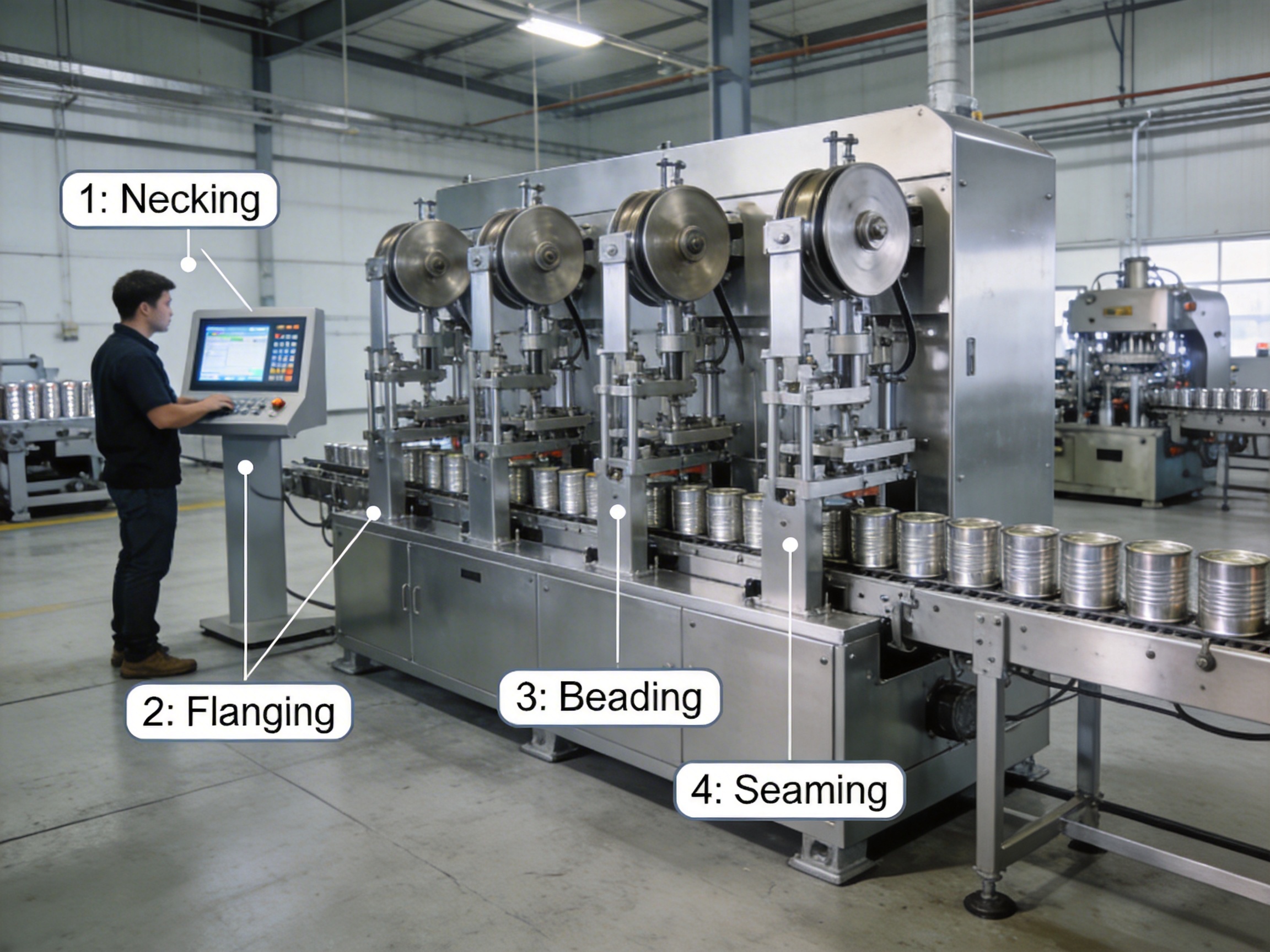
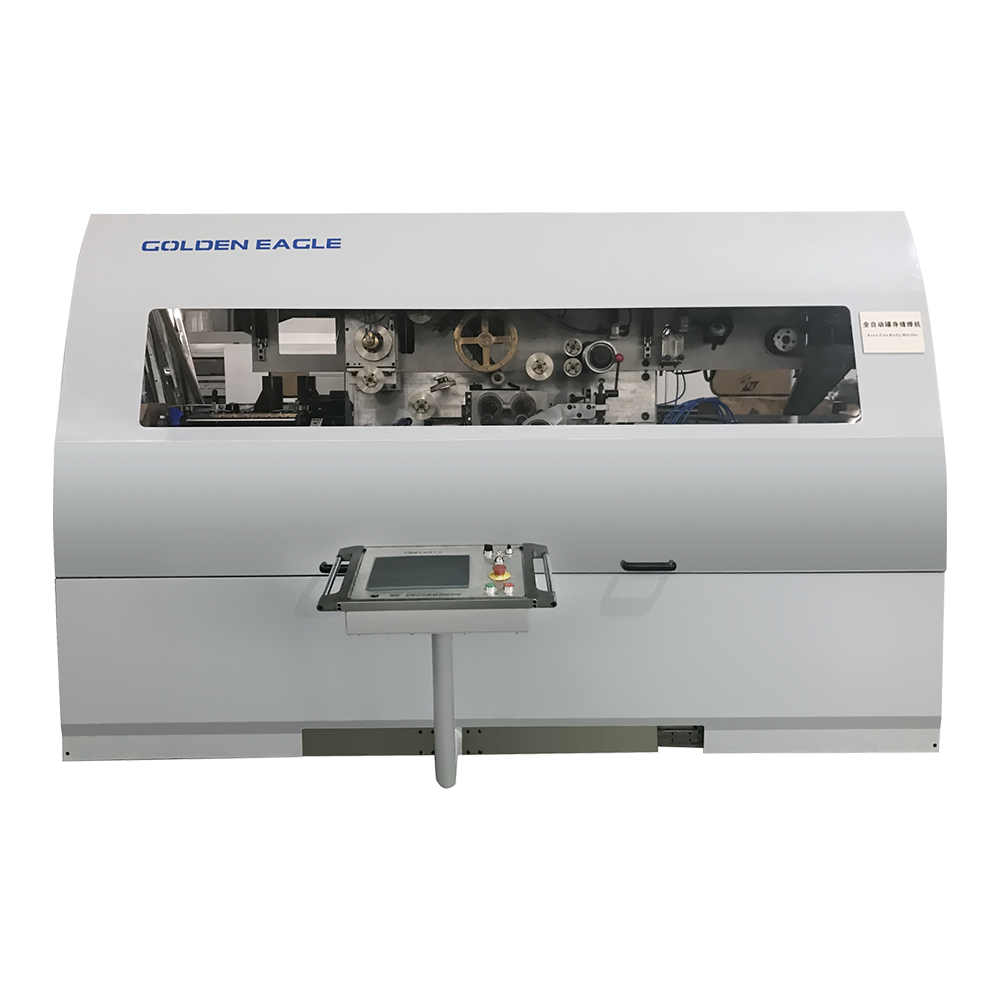
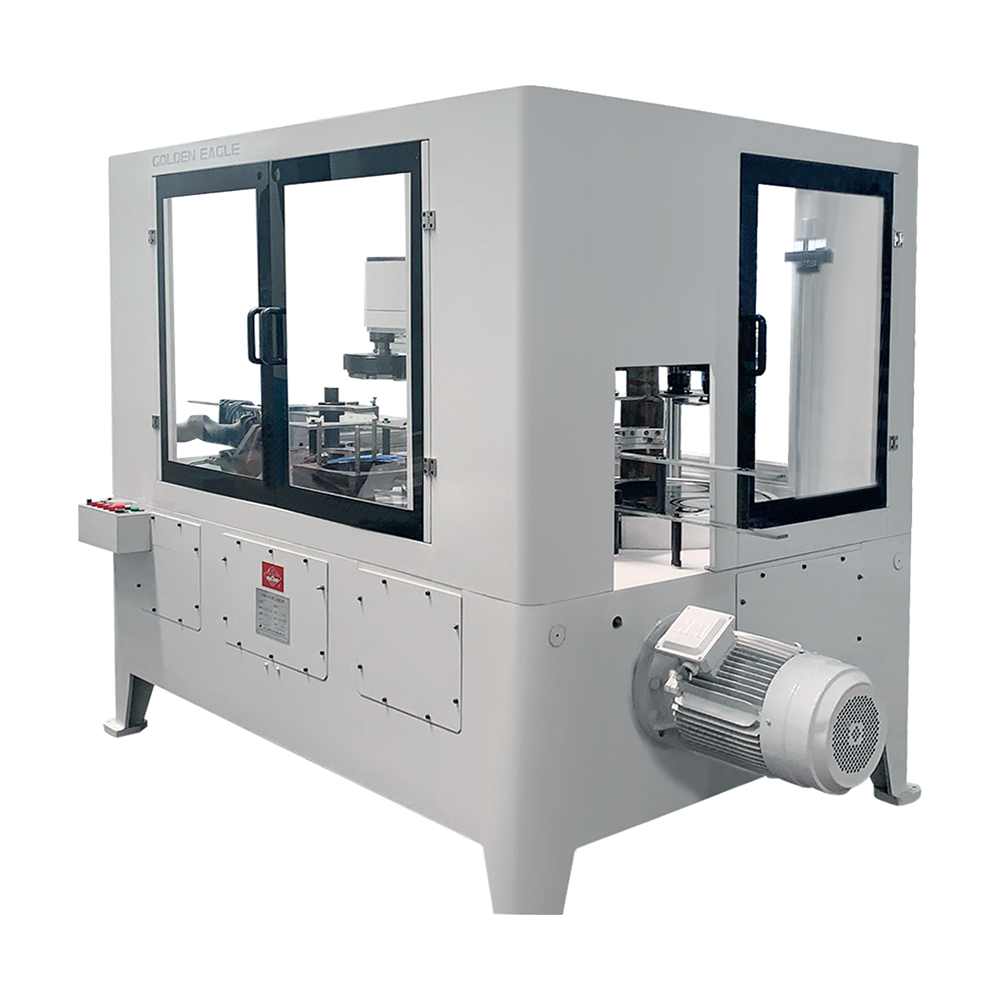
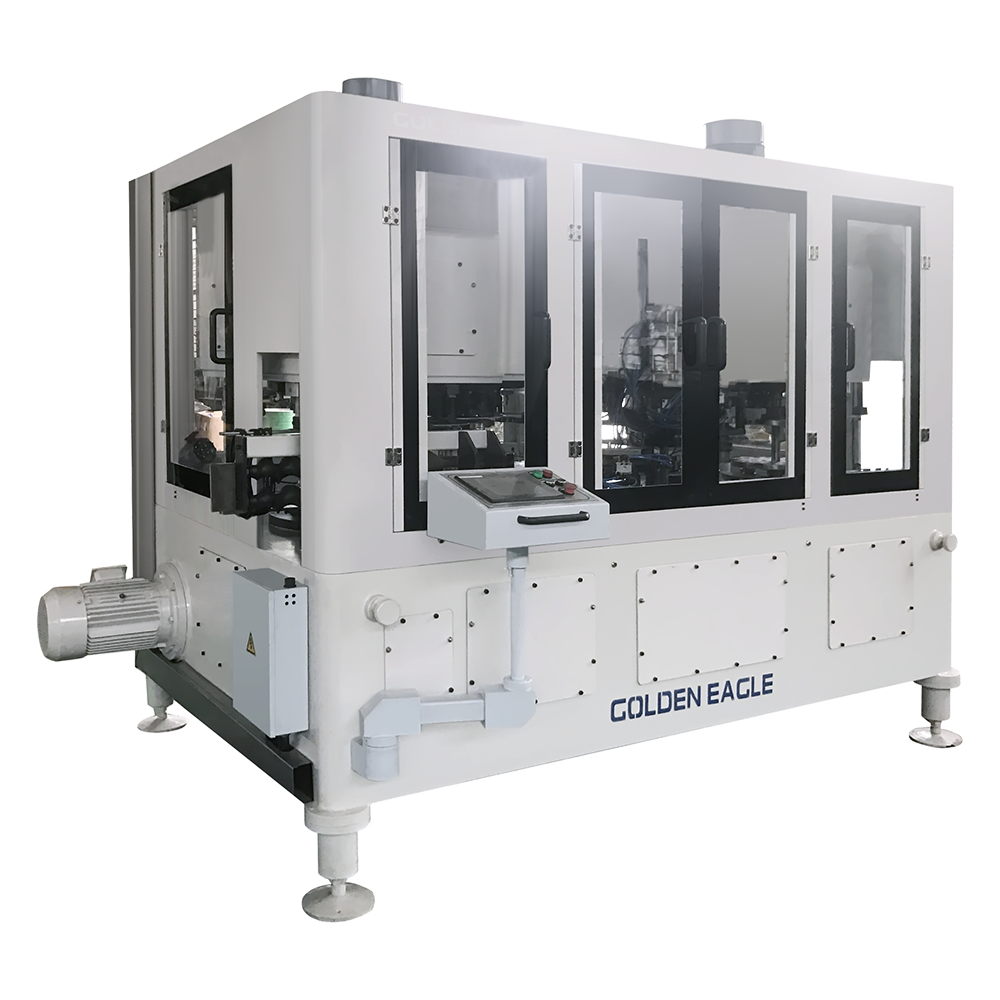
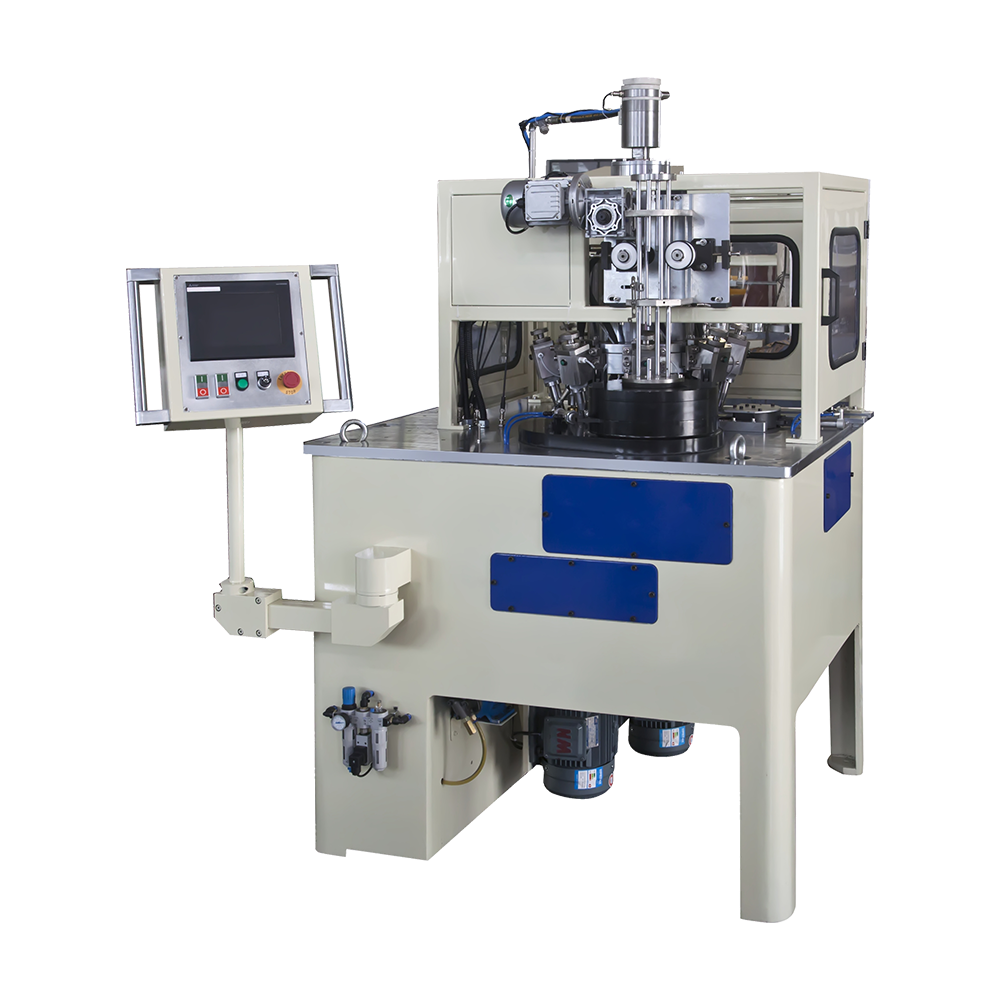
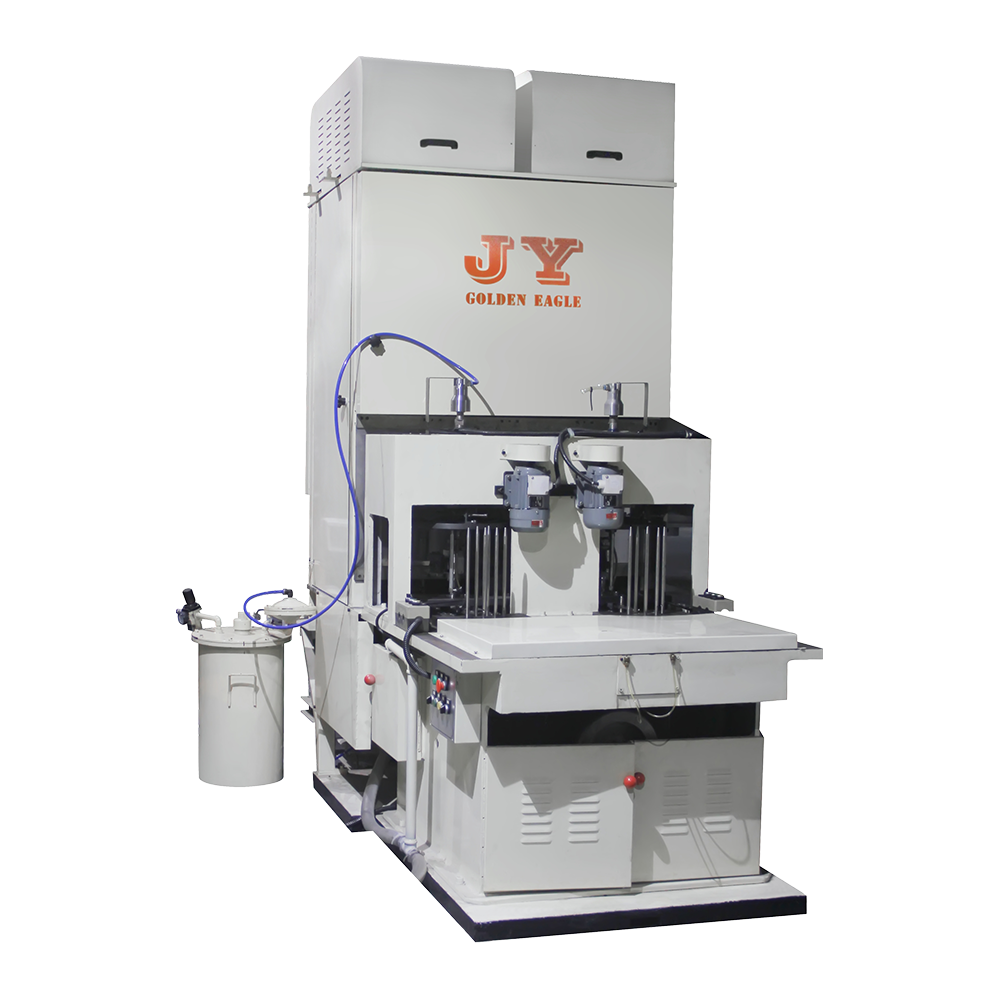
Before diving into its advantages, it’s critical to understand the core functions of the four-station machine and how it streamlines the can manufacturing process. Traditional can production often requires separate machines for each step—necking, flanging, beading, and seaming—leading to inefficiencies in floor space, labor, and material handling. The four-station machine combines all four critical operations into a single, synchronized line, eliminating bottlenecks and reducing transition time between stages.
Let’s break down each station’s role: 1. Necking Station: Reduces the diameter of the can’s top (or bottom) to create a narrow neck, essential for attaching lids (like EOE lids for beverages) and ensuring a tight seal. Advanced necking heads (up to 8 heads in some models) enable precise, consistent reductions without deforming the can body. 2. Flanging Station: Forms a small, outward-facing rim at the necked end of the can. This rim secures the lid during seaming, as it provides a surface for the lid’s curl to interlock with. Precision is key here to prevent leaks or lid detachment. 3. Beading Station: Adds small indentations (beads) around the can body to enhance structural integrity, allowing cans to withstand pressure (e.g., carbonated beverages) and prevent collapse during handling. Beading also improves aesthetic appeal. 4. Seaming Station: Attaches the lid to the flanged can body using a double seam—a hermetic seal that keeps contents fresh and contamination-free. Extreme precision is required to avoid over-seaming (cracking lids) or under-seaming (leaks).
Each station operates in perfect synchronization, with automated material handling between stages. Once a can body enters the machine, it undergoes all four processes in a continuous flow, emerging as a finished, sealed can ready for filling. This eliminates manual transfer between machines, reducing labor costs and human error risk.
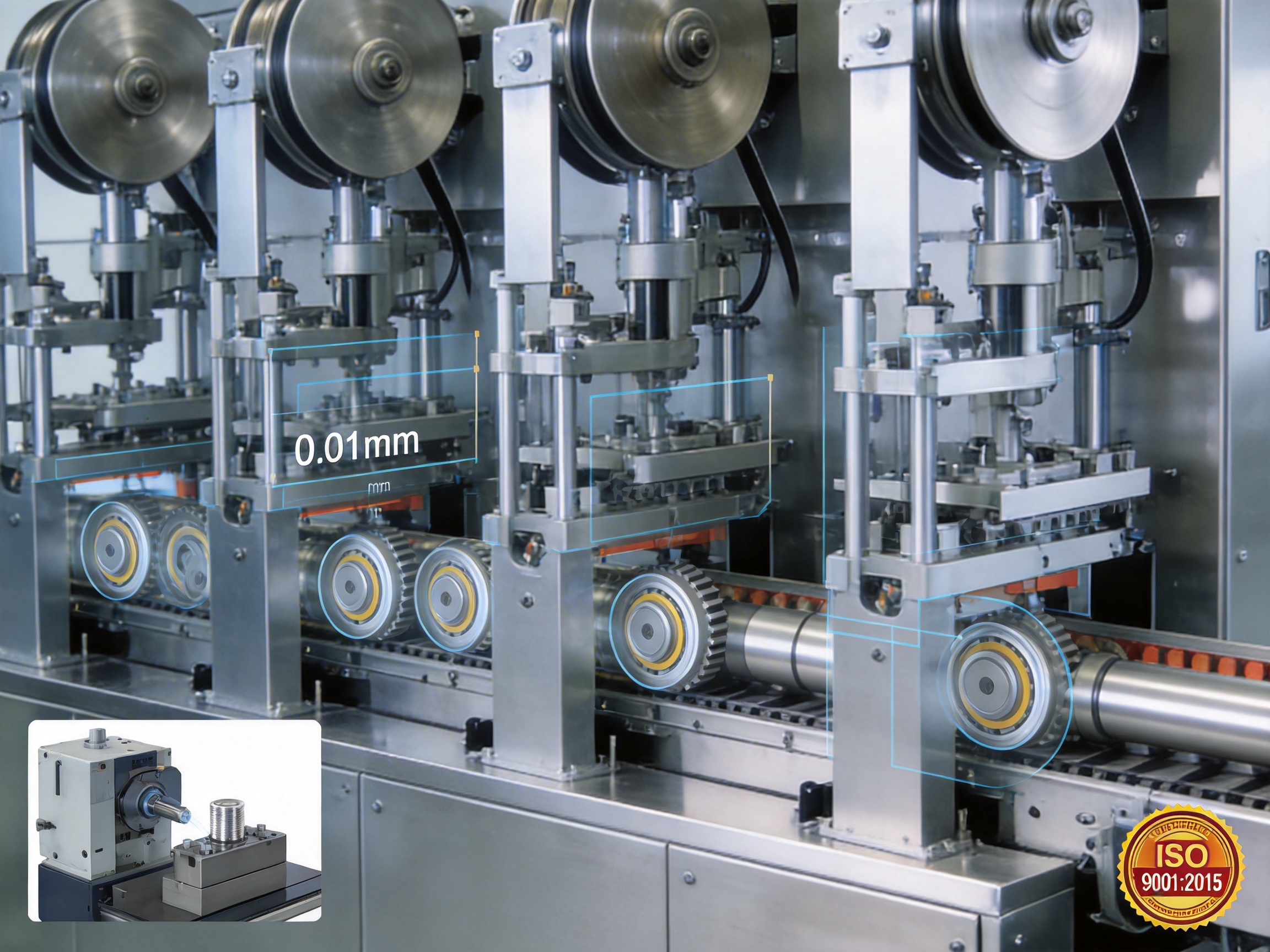
The four-station machine stands out in the market due to distinct advantages addressing traditional production pain points. Below, we compare it to common alternatives:
Traditional lines need 4–5 separate machines, each taking floor space and requiring dedicated operators. The four-station machine combines all functions into one compact unit, cutting floor space by up to 40% (industry benchmarks). This is critical for small-to-medium manufacturers with limited space and large producers optimizing floors.
Labor needs are reduced: one operator oversees the entire line instead of multiple operators for separate machines. This cuts labor costs by 25–30% and minimizes handoff errors.
The machine produces 20–150 cans per minute (cpm), with specialized models reaching 200 cpm—far exceeding single-station machines (max 80–100 cpm). For example, the GT3B21B-T model (8-head, three shrinkage) hits 200–500 cpm, outperforming most competitors.
Synchronized stations eliminate bottlenecks: each station matches the throughput of others, ensuring a smooth flow. If necking handles 100 cpm, flanging, beading, and seaming do too.
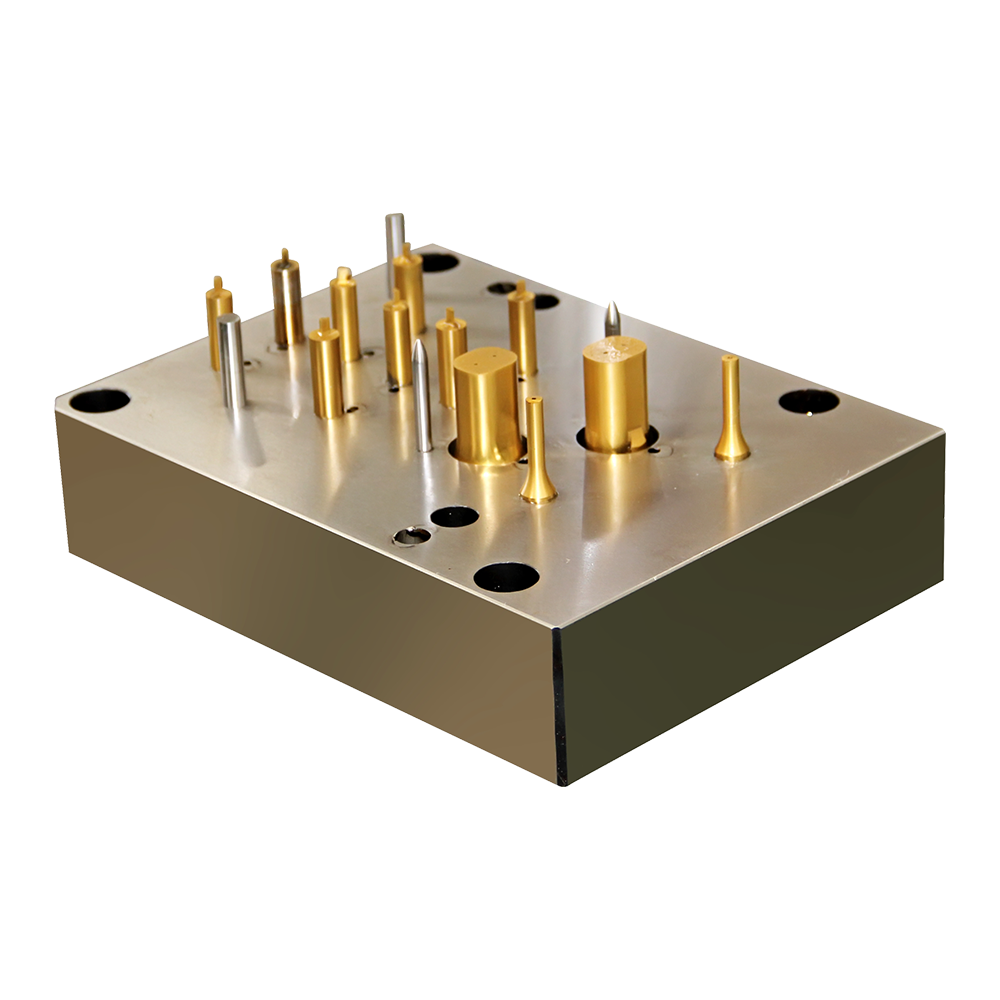
It handles can diameters Φ52–99mm and heights H60–220mm, suitable for food, beverage, chemical, and aerosol cans. Switching sizes takes 20–30 minutes via modular tooling, eliminating long downtime for reconfiguration. A beverage producer can shift from 330ml to 500ml cans quickly without separate machines.
Total power consumption ranges from 4kw to7.5kw—30–40% lower than combined separate machines (10–15kw). Features driving this: - Variable Frequency Drives (VFDs): Adjust speed to demand, cutting power during low periods. - Optimized Motor Sizing: No over-sizing, avoiding energy waste. - Regenerative Braking: Recovers energy during deceleration (advanced models).
Precision-engineered heads maintain 0.01mm tolerances, critical for hermetic seals (e.g., carbonated drinks). The frame uses heavy-duty steel, and components (bearings, gears) use wear-resistant alloys, enabling 24/7 operation with minimal maintenance. A 5-year warranty on critical components underscores durability.
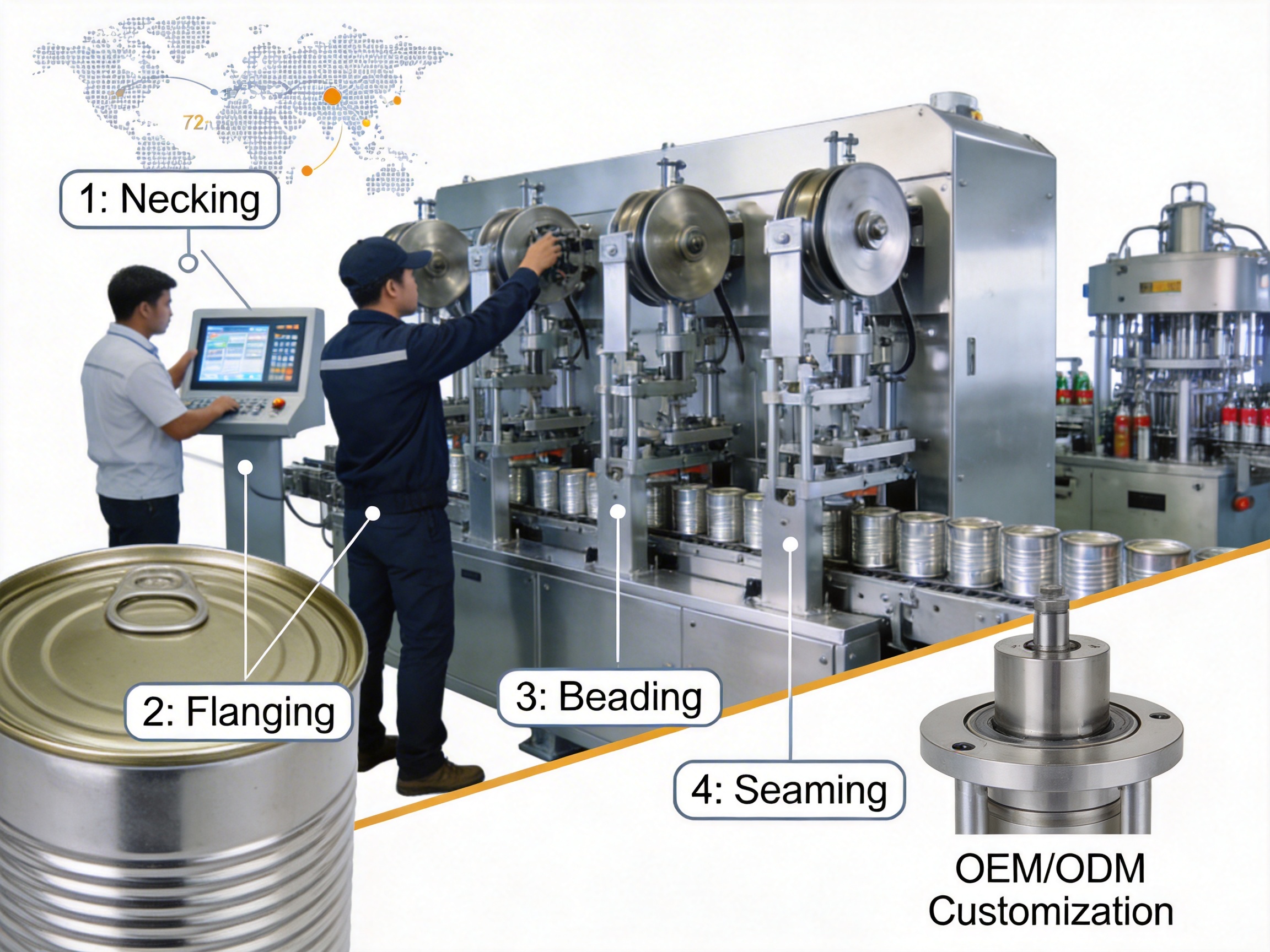
Unlike off-the-shelf machines, it offers OEM/ODM support. Manufacturers can customize size ranges, add features (automatic lid feeding), or integrate with existing lines. A chemical tank producer might request thicker material tooling; a beverage maker could add lid inspection.
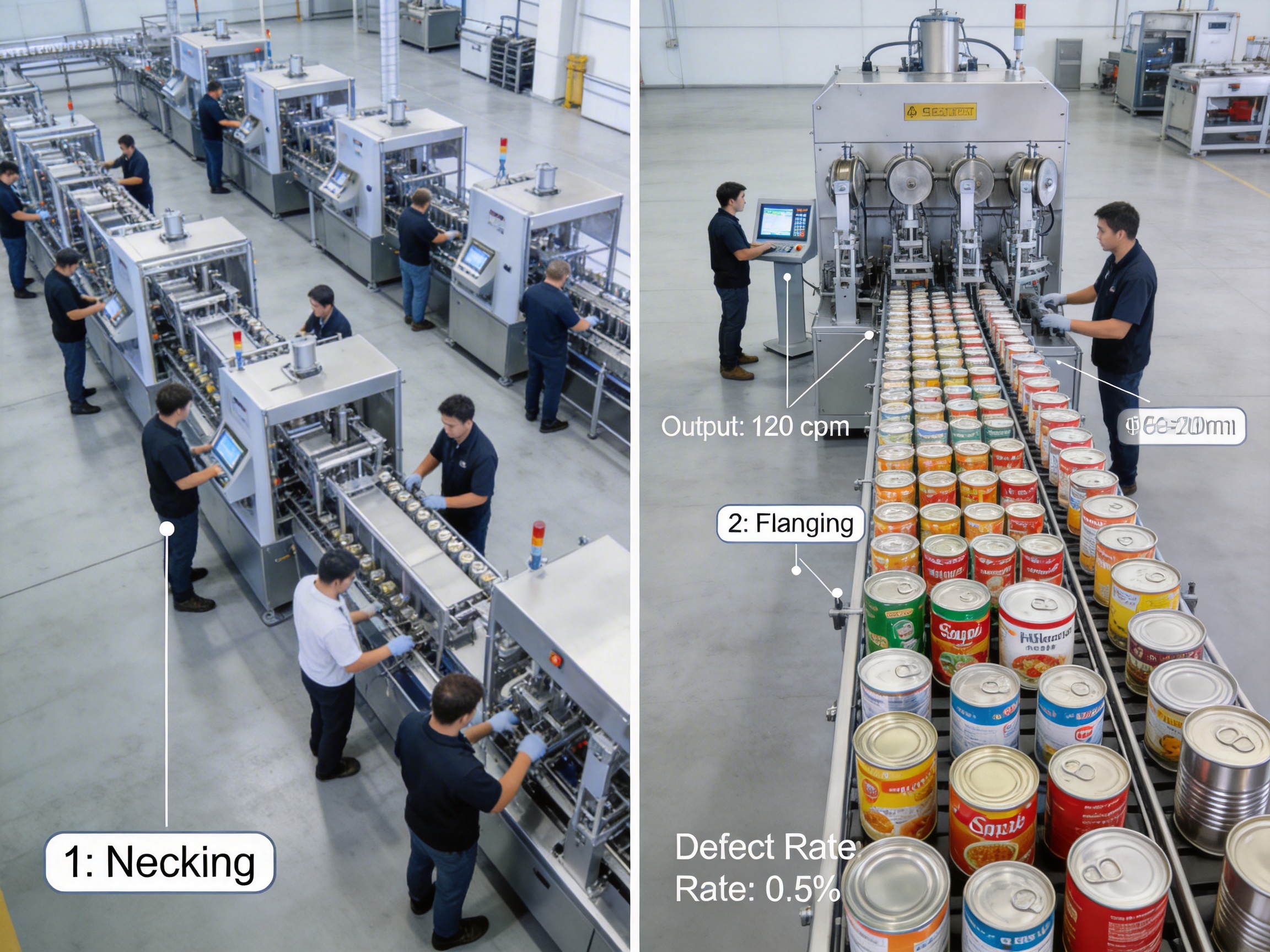
The machine’s performance stems from decades of expertise and strict manufacturing standards:
The manufacturer holds ISO 9001:2015 (quality) and ISO14001:2015 (environmental) certifications. Every component undergoes rigorous testing: seaming heads are tested for 10,000 cycles, motors for efficiency, and finished machines for defect rates.
State-of-the-art CNC equipment produces components with 0.005mm tolerances, ensuring perfect fits. This reduces human error and guarantees consistent quality across machines.
The design draws on leaders like KRUPP, Soudronic, and Alfons-Haar but adapts to local needs. A 50+ engineer R&D team combines global best practices with 46+ years of experience—e.g., modified seaming tooling for thinner Asian market materials.
Machines undergo: - 24-hour production test: Checks consistency at full capacity. - Quality inspection: 1% of cans tested for defects. - Durability test: 100,000 cycles to check wear. - Safety compliance: Meets CE/OSHA standards.
Support includes: - On-site installation/commissioning: Engineers ensure correct operation. - Operator training: Covers operation, troubleshooting, maintenance. - Fast parts supply: Global warehouses deliver within 72 hours (most regions). - 24/7 remote support: Resolves issues quickly.
Below is a detailed table of key models:
| Model | Function | Can Diameter | Can Height | Output Capacity (Cans/min) | Total Power |
|---|---|---|---|---|---|
| GT3B21B-T (8-Head)-Three Shrinkage | Necking ×3 + Flanging | Φ52–99mm | H70–160mm | 200–500 | 7.5kw |
| GT351-N-L (4-Head) | Top Necking | Φ52–99mm | H80–220mm | 80–150 | 7.5kw |
| GT3B54-NNNF (4-Head)-One Shrinkage | Necking ×3 + Flanging | Φ52–99mm | H70–220mm | 80–150 | 7.5kw |
| GT3B51-B-L (4-Head) | Beading | Φ52–99mm | H70–220mm | 80–150 | 4kw |
| GT3B51-S-C (6-Head) | Top Seaming | Φ52–99mm | H60–220mm | 80–150 | 4kw |
Note: Models can be combined into a four-station line for full functionality, customized to customer needs.
A Southeast Asian beverage maker struggled with bottlenecks from separate machines. After switching to the four-station line: - Output up 50%: From 80 to120 cpm. - Floor space down 40%: 150→90 sq.m. - Labor costs down 62.5%:8→3 operators. - Energy costs down 41.7%: $1,200→$700/month. - Defect rate down75%:2%→0.5%.
CEO: “The machine transformed our line—we meet demand without expanding, and margins are up.”
A European soup maker needed large cans (Φ99mm) with thick materials. Customizations included modified necking and integrated lid inspection: - 100% defect-free large cans. - Output up20%:100 cpm for large cans. - EU compliance: Meets FDA/CE standards.
Production manager: “OEM support was invaluable—we got exactly what we needed, and after-sales is excellent.”
A: Φ52–99mm diameter, H60–220mm height. Custom sizes via OEM.
A:20–30 minutes via modular tooling.
A:1-year full warranty,5-year on critical components.
A: Yes—engineers adapt conveyor systems and add PLC/SCADA interfaces.
A:4–6 weeks (standard),8–12 weeks (custom). Installation takes1–2 weeks.
The four-station machine is a paradigm shift in can manufacturing. Its integrated design, high output, flexibility, and precision make it an essential investment for manufacturers seeking to thrive in a competitive market. Backed by ISO-certified processes and comprehensive support, it delivers long-term value for any production line.
1. Grand View Research. (2024). Global Can Manufacturing Market Trends Report. Industry Database.
2. International Packaging Institute. (2023). Advanced Metal Forming for Can Production. Journal of Packaging Technology,15(2),45–62.
3. ISO. (2015). ISO9001:2015 Quality Management Systems. Geneva: ISO.
4. European Packaging Federation. (2022). Energy Efficiency in Packaging Machinery. Brussels: EPF.
5. Smith, J.D., & Lee, H.S. (2021). Integrated Can Machines & Production Efficiency. International Journal of Industrial Engineering,32(4),123–138.
Related Products

Founded in 1978, the company is one of the largest can-making machinery well-known companies at home and abroad.
Product Categories
Contact Information
Zhongshatou Shenjiamen Zhoushan Zhejiang China
+86-580-3056646

 English
 中文简体
中文简体
 русский
 عربى
عربى
 Español