2026-07-15
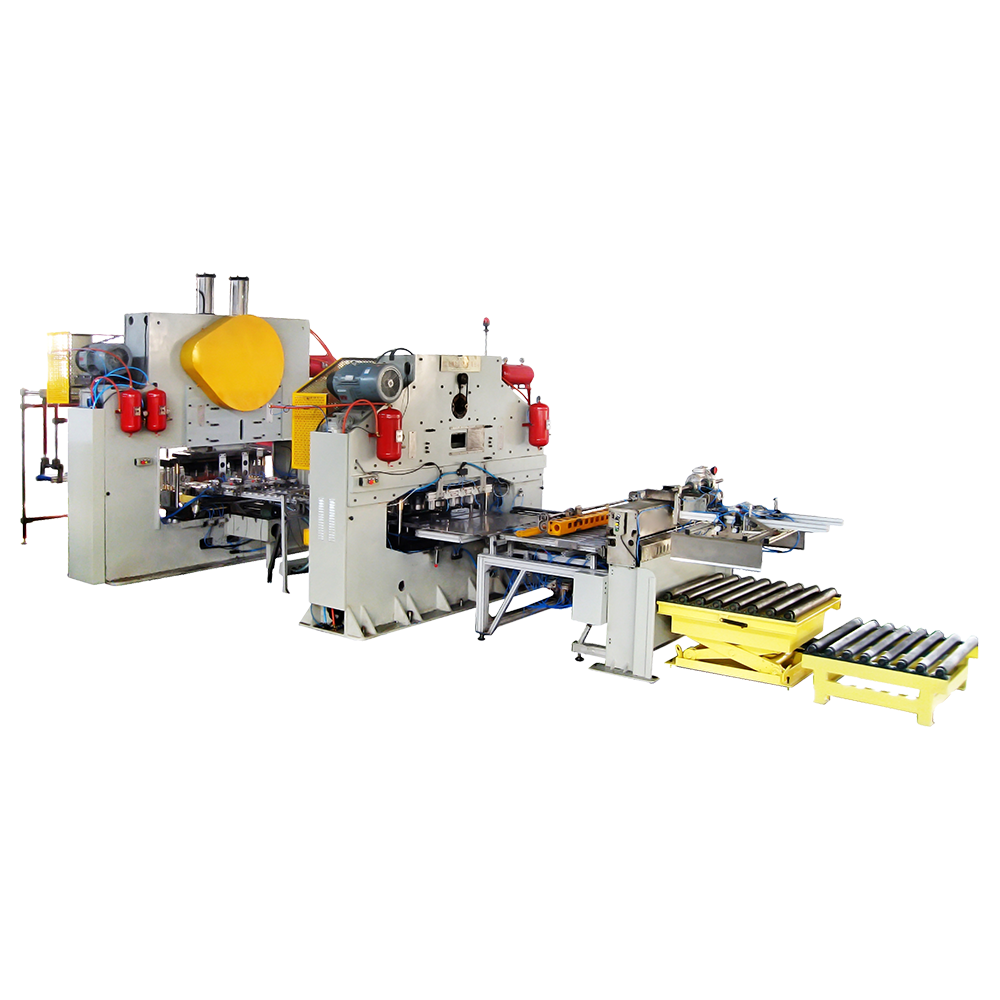
In the aerosol packaging industry, the quality of the cone lid is directly connected to the safety, stability, sealing performance, and visual consistency of the finished aerosol can. A cone lid may appear to be a small metal component, but it plays a critical role in pressure resistance, valve mounting, product protection, and consumer confidence. The 2-lanes D109-D211 Aerosol Cone Lid Line is designed for manufacturers that require automatic production, stable output, accurate forming, and dependable long-term operation for aerosol cone lid manufacturing.
This production line is built for aerosol cone lid applications in the can size range of φ45-65mm. With a two-lane configuration and an output capacity of up to 240 ends per minute, it gives can manufacturers an effective balance between high productivity and compact industrial efficiency. It is suitable for factories producing aerosol cans for personal care products, household sprays, industrial chemicals, automotive products, insecticides, air fresheners, and other pressurized packaging markets.
The line represents a professional solution within aerosol cone and dome making. It combines automatic operation, multi-die forming capability, stable mechanical transmission, precise die positioning, and compatibility with tinplate materials of 0.17-0.40mm thickness and T3-T4 hardness. Its technical structure is designed for manufacturers that need not only speed, but also repeatability, forming accuracy, and process reliability.
Zhejiang Golden Eagle Food Machinery Co., Ltd. has developed its reputation through decades of specialization in can-making machinery and can-making molds. Established in 1978 and formerly known as Zhejiang Food Machinery Factory and Zhoushan Mold Factory, the company has accumulated extensive manufacturing knowledge in food can production lines, beverage can production lines, can lid production lines, chemical tank production lines, aerosol canister production lines, two-piece can production lines, pop can production lines, and related tooling. This background gives the 2-lanes D109-D211 Aerosol Cone Lid Line strong technical support, practical field experience, and mature manufacturing standards.
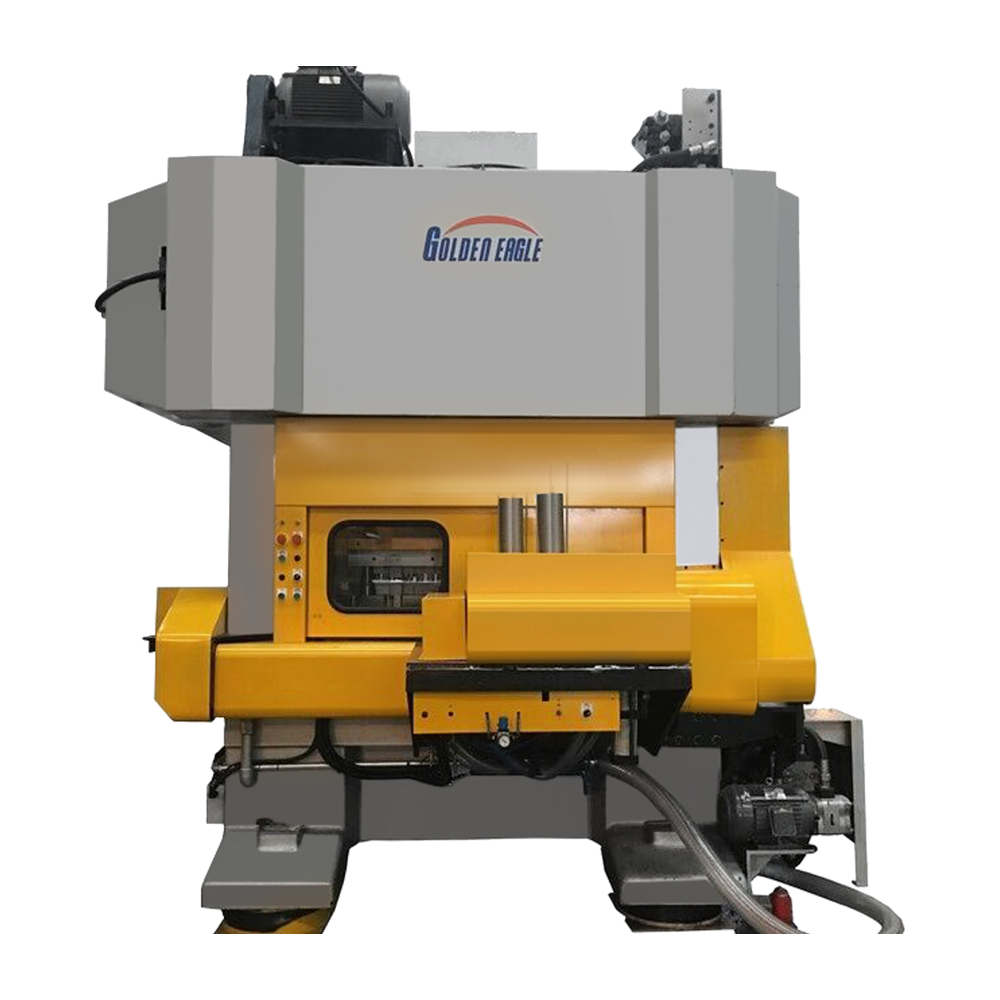
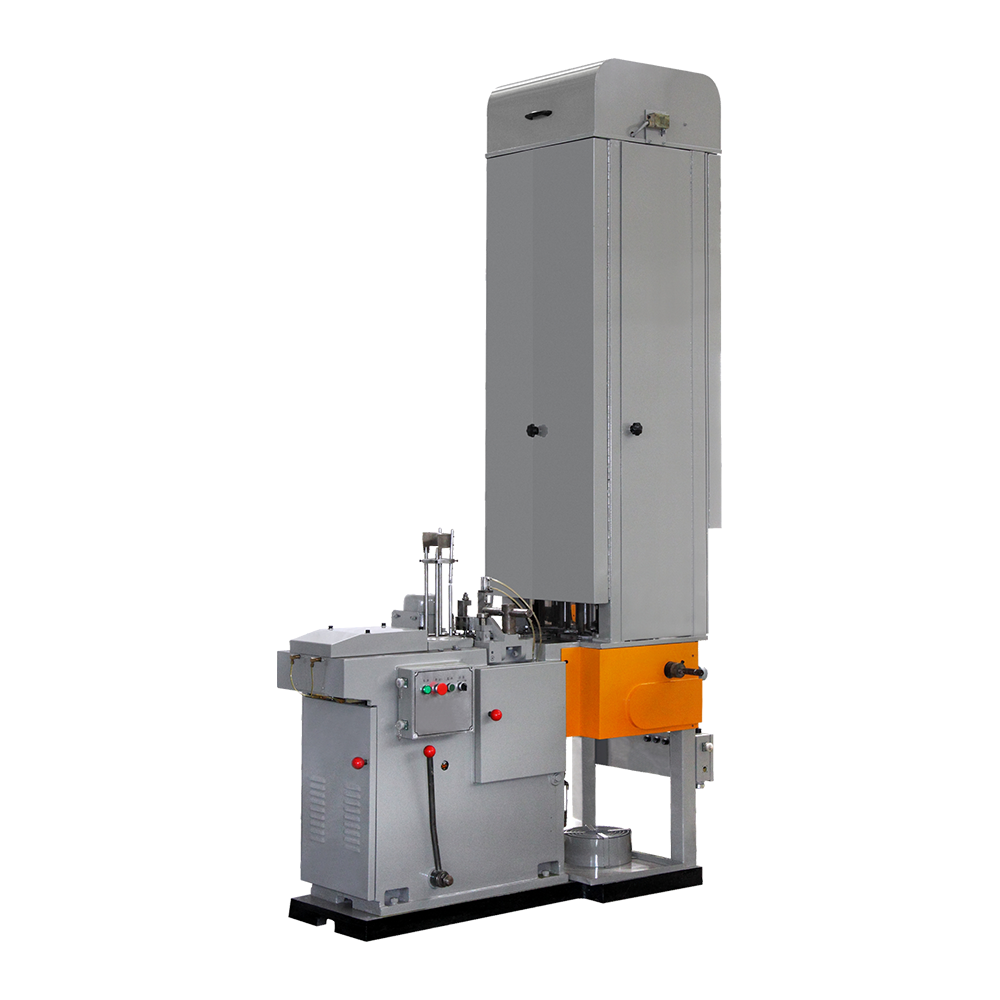
2-lanes D109-D211 Aerosol Cone Lid Line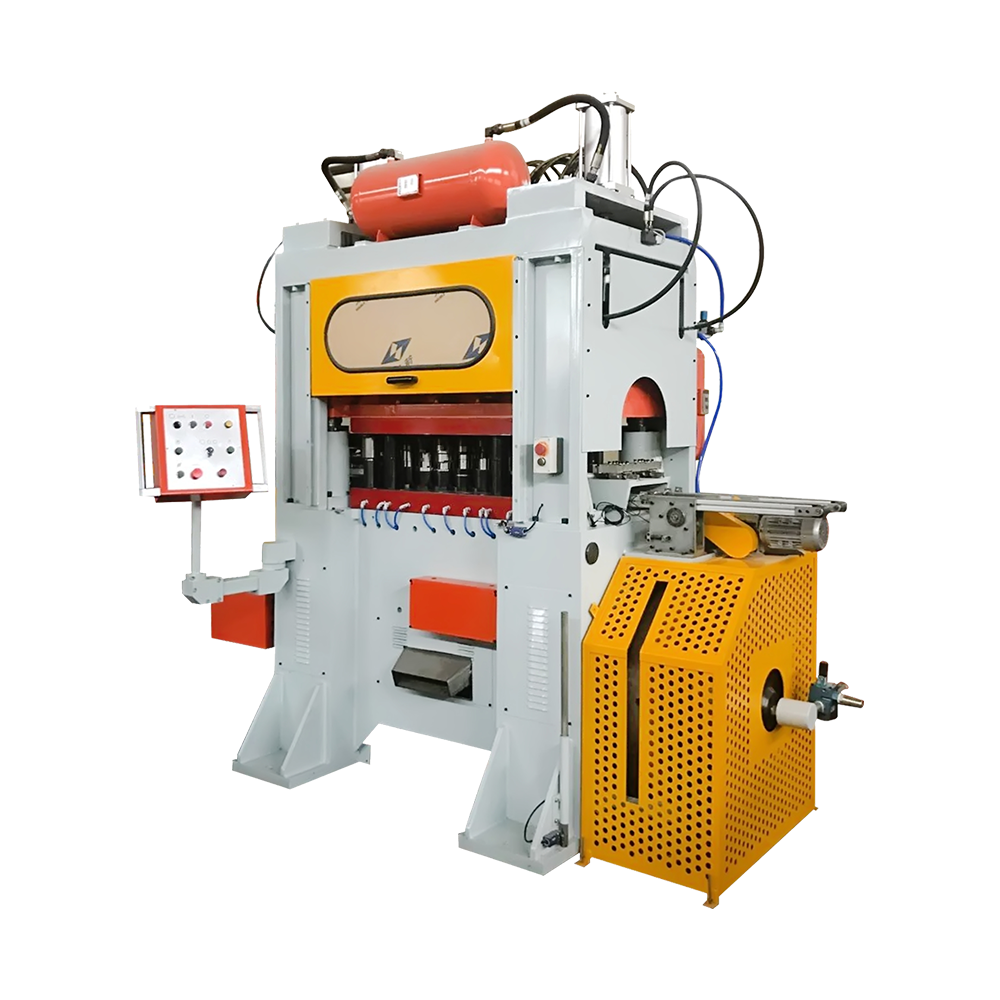
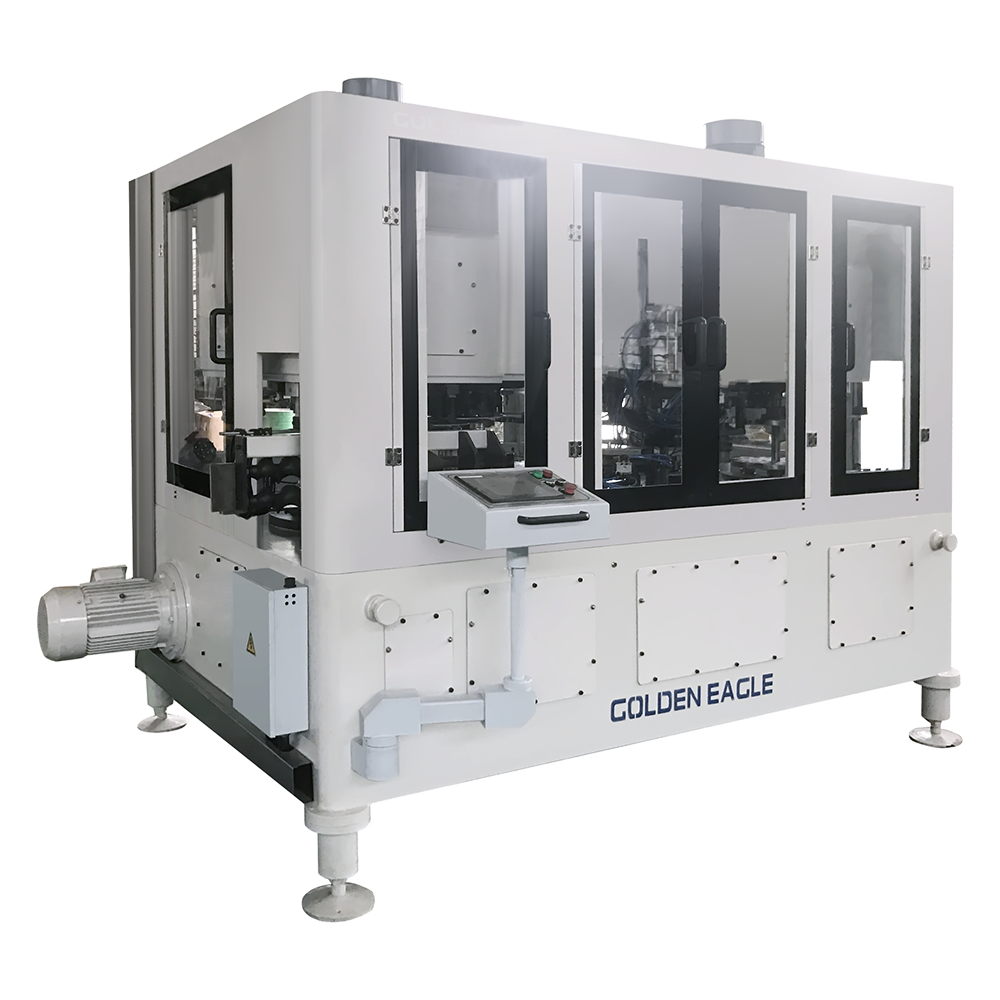
The 2-lanes D109-D211 Aerosol Cone Lid Line is an automatic production system developed to manufacture aerosol cone lids at a speed of 240 epm. The abbreviation “epm” refers to ends per minute, a key productivity indicator in lid and end production. With two lanes operating simultaneously, the system reaches high output without depending on excessive single-lane speed. This approach improves production stability because the mechanical workload is distributed across two forming lanes.
The line is designed for can sizes from φ45mm to φ65mm, covering a widely used range in the aerosol packaging sector. Aerosol cans in this size range are common in cosmetics, personal care sprays, medical sprays, household maintenance products, and industrial aerosol packaging. The system therefore serves manufacturers that supply multiple product categories and need production flexibility without sacrificing operational efficiency.
One of the central advantages of this line is its automatic operation. Automation reduces dependency on manual handling, improves forming consistency, decreases labor intensity, and supports continuous production planning. In modern can-making factories, automation is not simply a way to save labor; it is a way to control process variables. Manual feeding and manual transfer can introduce inconsistent timing, misalignment, surface scratches, and production interruption. Automatic production helps ensure that each step occurs in the correct sequence, at the correct speed, and under more stable working conditions.
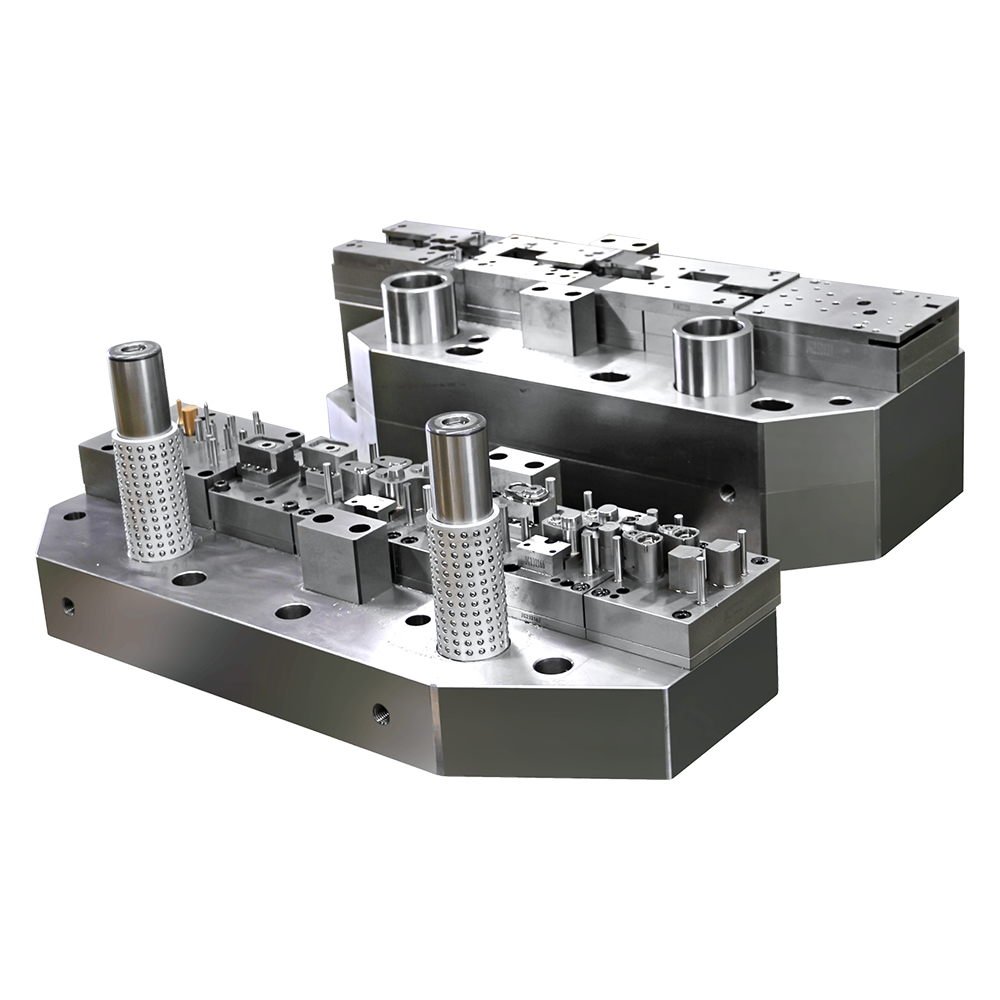
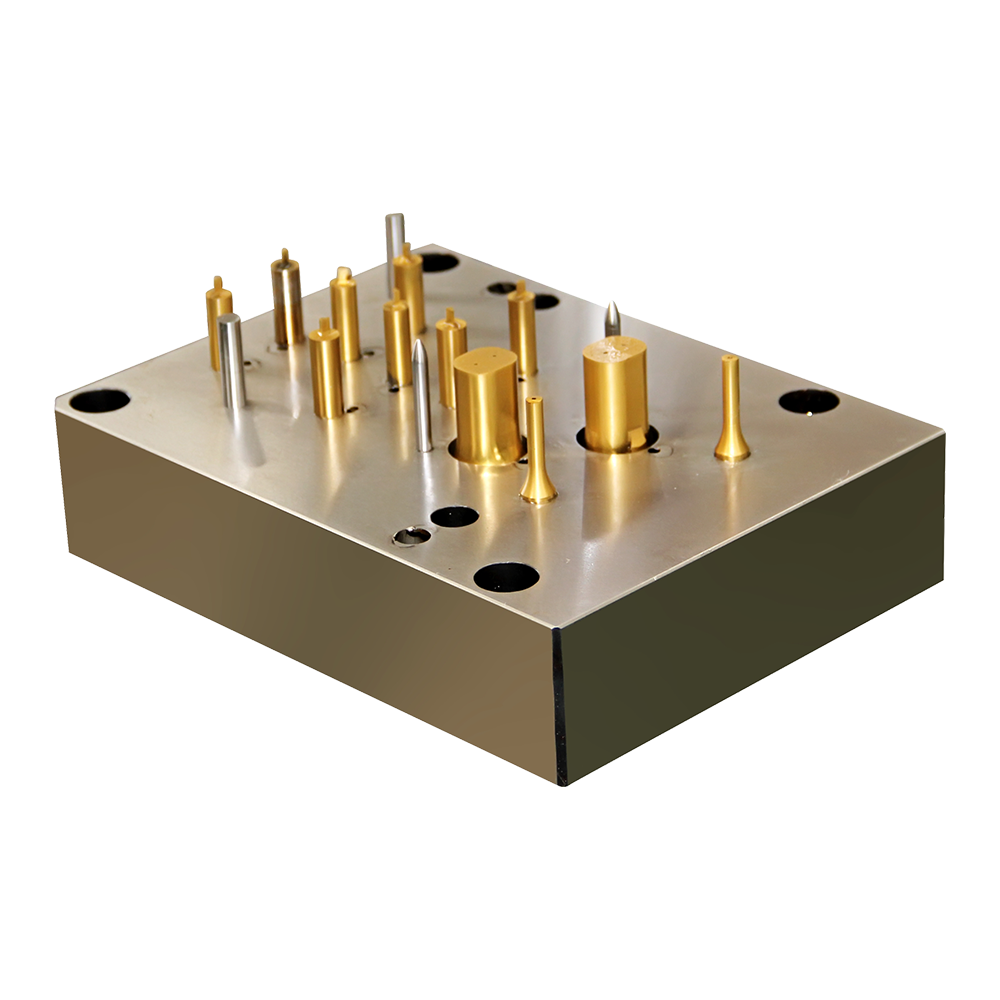
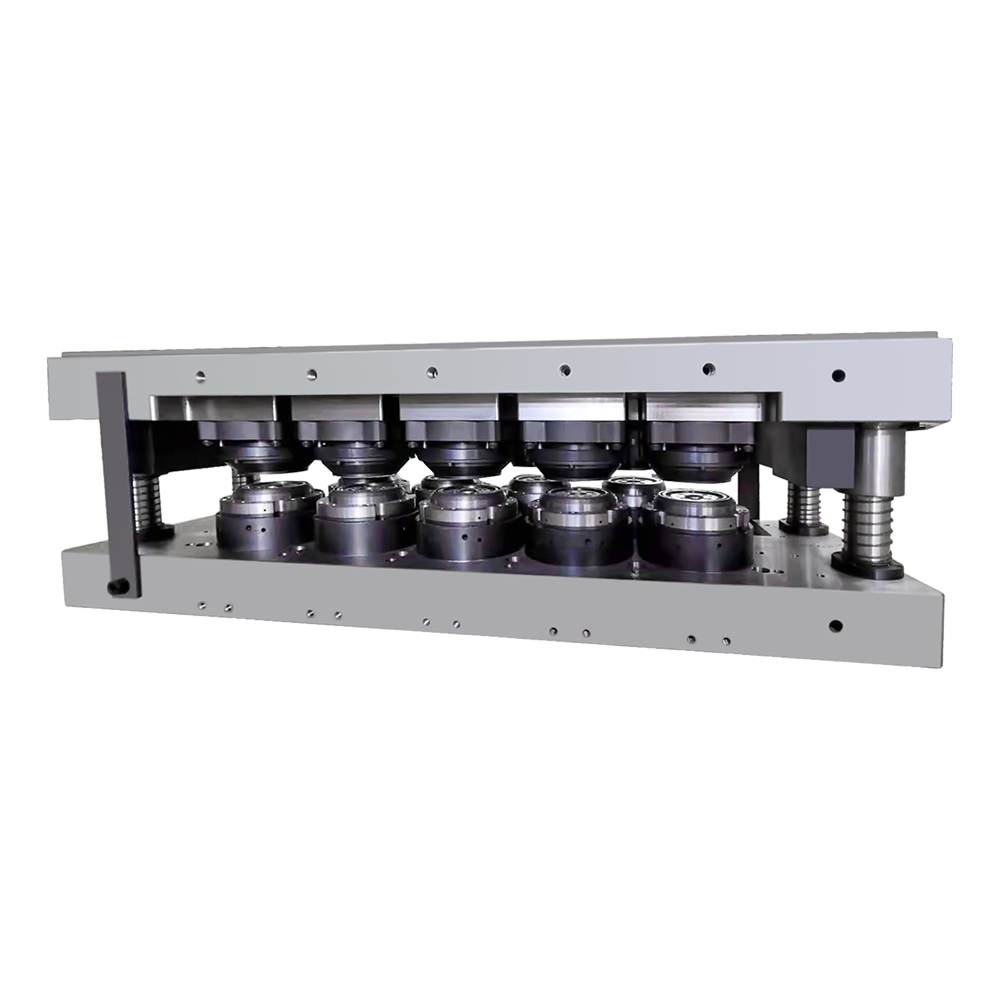
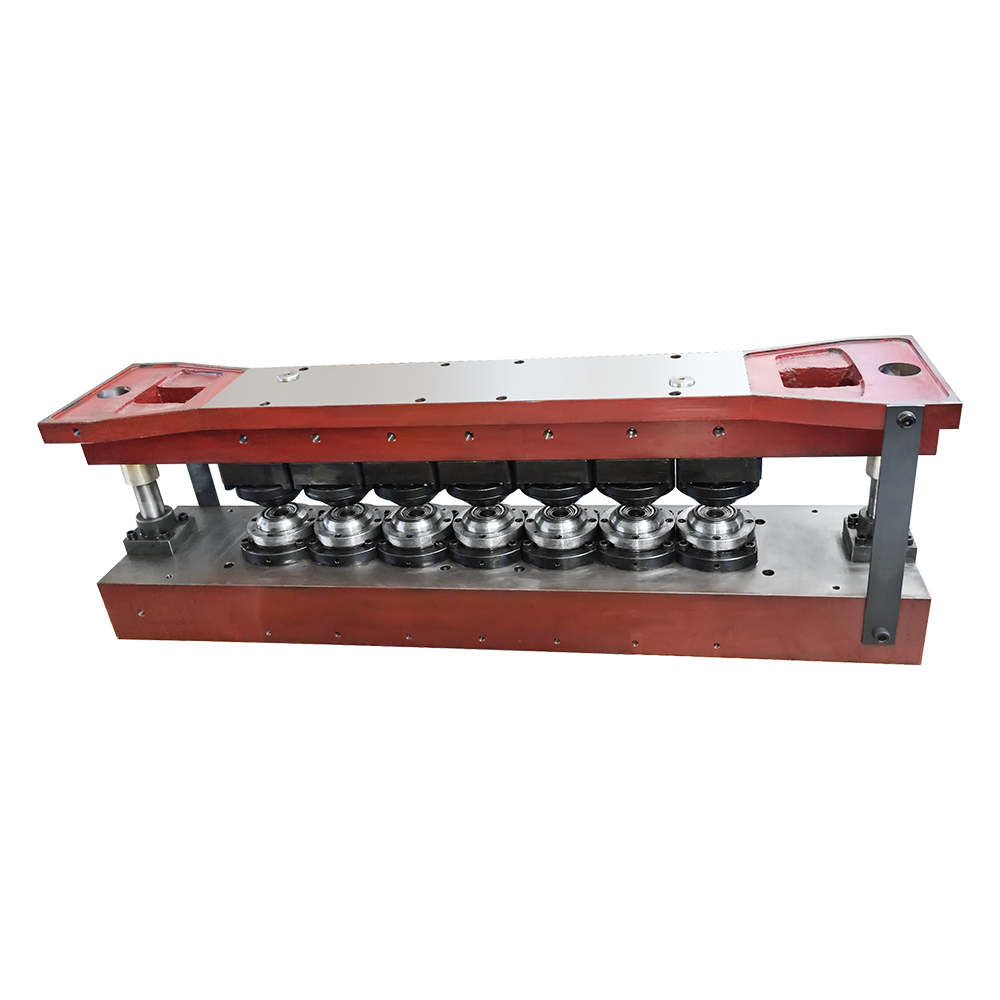
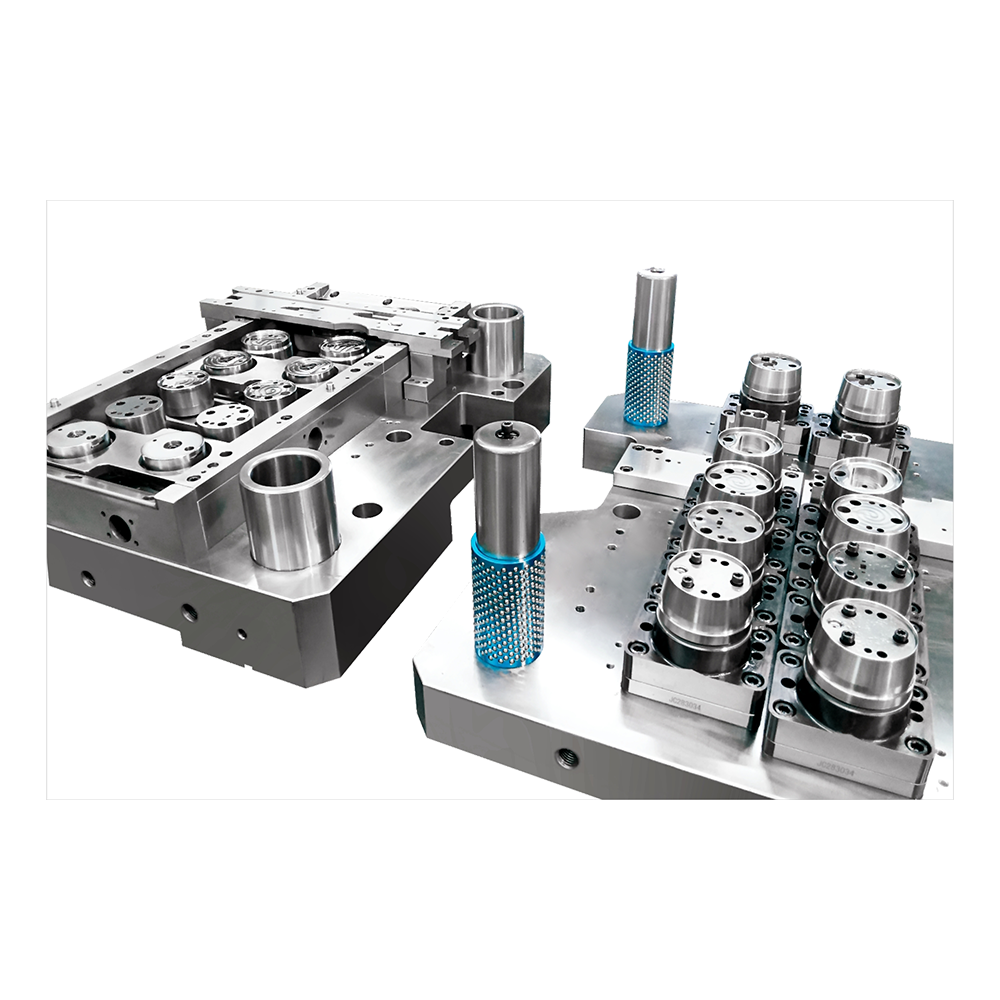
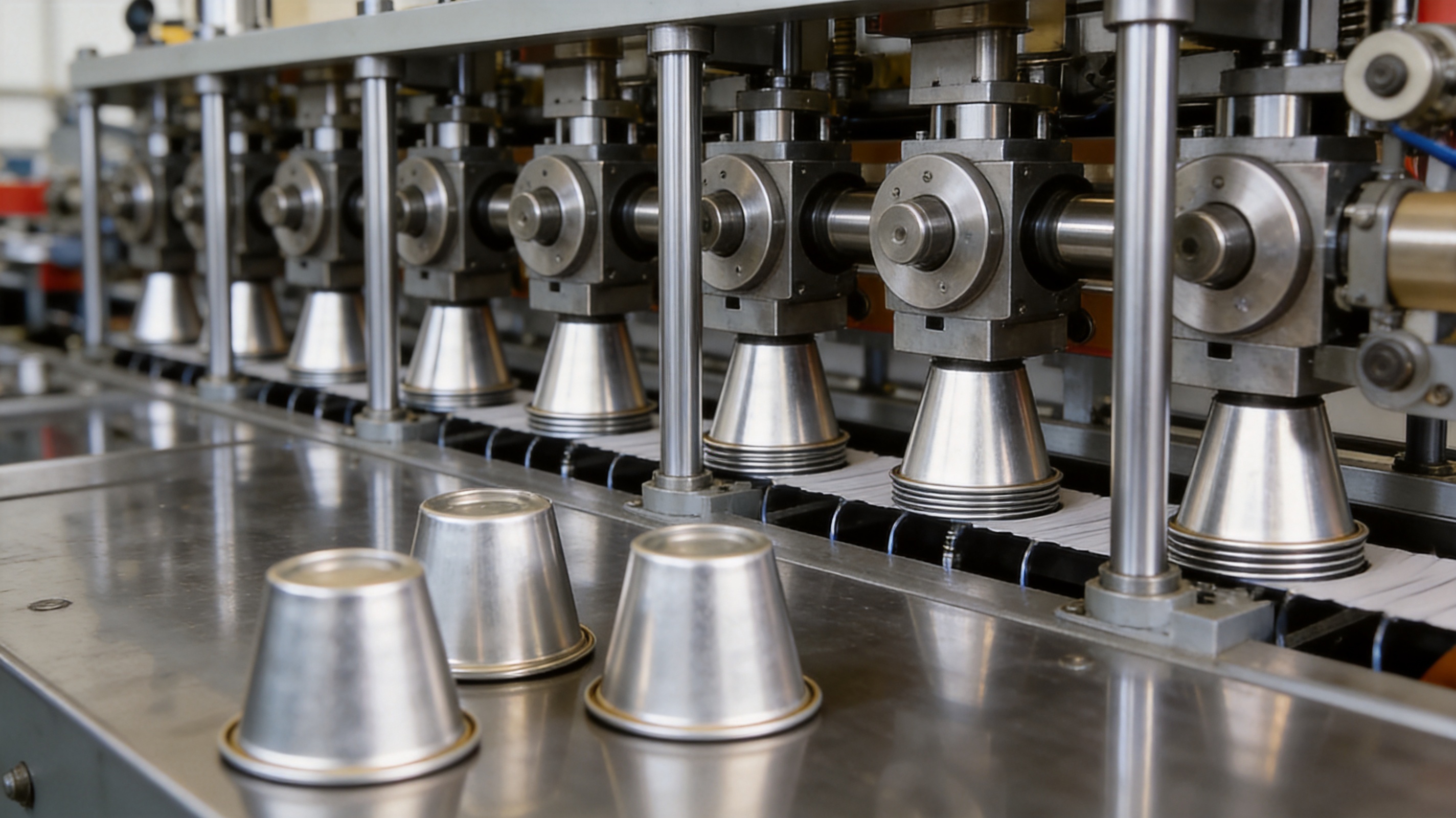
The machine is equipped for 6-9 dies, giving it strong forming process adaptability. Aerosol cone lid manufacturing usually requires several progressive forming actions, including blank positioning, shaping, drawing, curling, embossing, or other profile-forming operations depending on the design. A multi-die structure allows the line to complete these operations in a controlled sequence, improving dimensional accuracy and surface quality.
The stroke is 100mm, with the largest stroke listed as 120 spm. The die gap is 110mm, and the largest closed height is 400mm. These parameters reflect a forming system designed for stable die operation and suitable forming space. The 22kw power configuration provides the energy needed for continuous industrial operation while maintaining a practical power level for aerosol lid production plants.
Item |
Specification |
Production Significance |
Product Type |
2-lanes D109-D211 Aerosol Cone Lid Line |
Designed for high-efficiency aerosol cone lid manufacturing |
Operation |
Automatic |
Reduces manual handling and improves production consistency |
Can Size |
φ45-65mm |
Covers common aerosol can diameters for multiple markets |
Stroke |
100mm |
Supports stable forming movement and tooling operation |
Largest Stroke |
120 spm |
Enables high-speed press performance under suitable conditions |
Lane |
2 lanes |
Improves output by producing through two parallel channels |
Output Capacity |
240 epm |
Supports medium-to-high volume aerosol lid production |
Die |
6-9 dies |
Allows progressive forming and flexible lid structure design |
Die Gap |
110mm |
Provides suitable spacing for die arrangement and material transfer |
Largest Closed Height |
400mm |
Supports proper die installation and forming clearance |
Iron Thickness |
0.17-0.40mm |
Compatible with common tinplate and metal sheet requirements |
Iron Hardness |
T3-T4 |
Suitable for standard aerosol lid forming materials |
Power |
22kw |
Provides reliable power for continuous automatic production |
Aerosol packaging operates under internal pressure. Unlike many non-pressurized containers, aerosol cans must maintain structural integrity during filling, storage, transportation, and use. The cone lid is one of the most important parts of this structure because it supports the valve system and helps maintain the pressure-retaining geometry of the can. If the cone lid is not formed accurately, the final aerosol can may suffer from sealing problems, valve misalignment, leakage risk, deformation, or reduced appearance quality.
The cone lid must meet several performance requirements at the same time. It needs accurate diameter control for assembly with the can body. It must have a stable profile to resist deformation. It needs a consistent central opening or mounting geometry for valve installation, depending on the lid design. It must also have smooth surface quality because scratches, wrinkles, or cracks can affect both appearance and corrosion resistance. These requirements make aerosol cone lid production a demanding process, especially at high speed.
The 2-lanes D109-D211 Aerosol Cone Lid Line addresses these challenges through stable automatic operation and progressive die forming. The use of 6-9 dies allows forming operations to be separated into logical stages rather than forcing excessive deformation in a single step. This improves material flow and reduces the risk of cracking, wrinkling, or dimensional inconsistency. For tinplate materials between 0.17mm and 0.40mm, controlled forming is especially important because both thin and thicker materials require different process attention.
For example, thinner material may be more sensitive to buckling, surface marks, or uneven drawing force, while thicker material requires stronger forming energy and stable tooling support. The ability to work within the stated material range gives the line practical flexibility. Manufacturers can adapt production to customer requirements, lid designs, market specifications, and raw material availability.
Many aerosol cone lid manufacturers face a difficult choice between speed and stability. A single-lane machine may be simpler, but it may struggle to meet larger production targets unless operated at very high speed. Extremely high single-lane speed can increase stress on the machine, tooling, transfer system, and material. It can also make fault recovery more difficult because any interruption stops the entire output.
The two-lane structure of this line provides a practical alternative. By running two lanes, the line achieves 240 epm with better distribution of work. Each lane contributes to total output, making high productivity more manageable. This configuration is especially useful for producers that need consistent industrial output but want to maintain stable forming conditions.
Compared with lower-speed or more manually dependent competitor systems, this two-lane line offers several advantages. It improves throughput, supports continuous production, reduces operator intervention, and allows better production planning. For factories supplying aerosol can producers with large order volumes, the ability to manufacture 240 ends per minute can shorten delivery cycles and improve equipment utilization.
Another advantage is consistency. In lid manufacturing, the cost of defects is not limited to the rejected component. A defective cone lid can cause stoppages in downstream assembly, filling, seaming, or valve insertion. It can also affect the performance of finished aerosol cans. By emphasizing automatic operation and stable die forming, the line helps reduce variation between parts. This is especially valuable when customers require repeatable quality across large production batches.
Two-lane production also supports better floor-space efficiency than installing multiple smaller machines. Instead of operating several lower-capacity units with separate feeding, alignment, and maintenance requirements, manufacturers can integrate output into one professional production line. This can simplify factory layout, reduce operator coordination, and improve overall workflow.
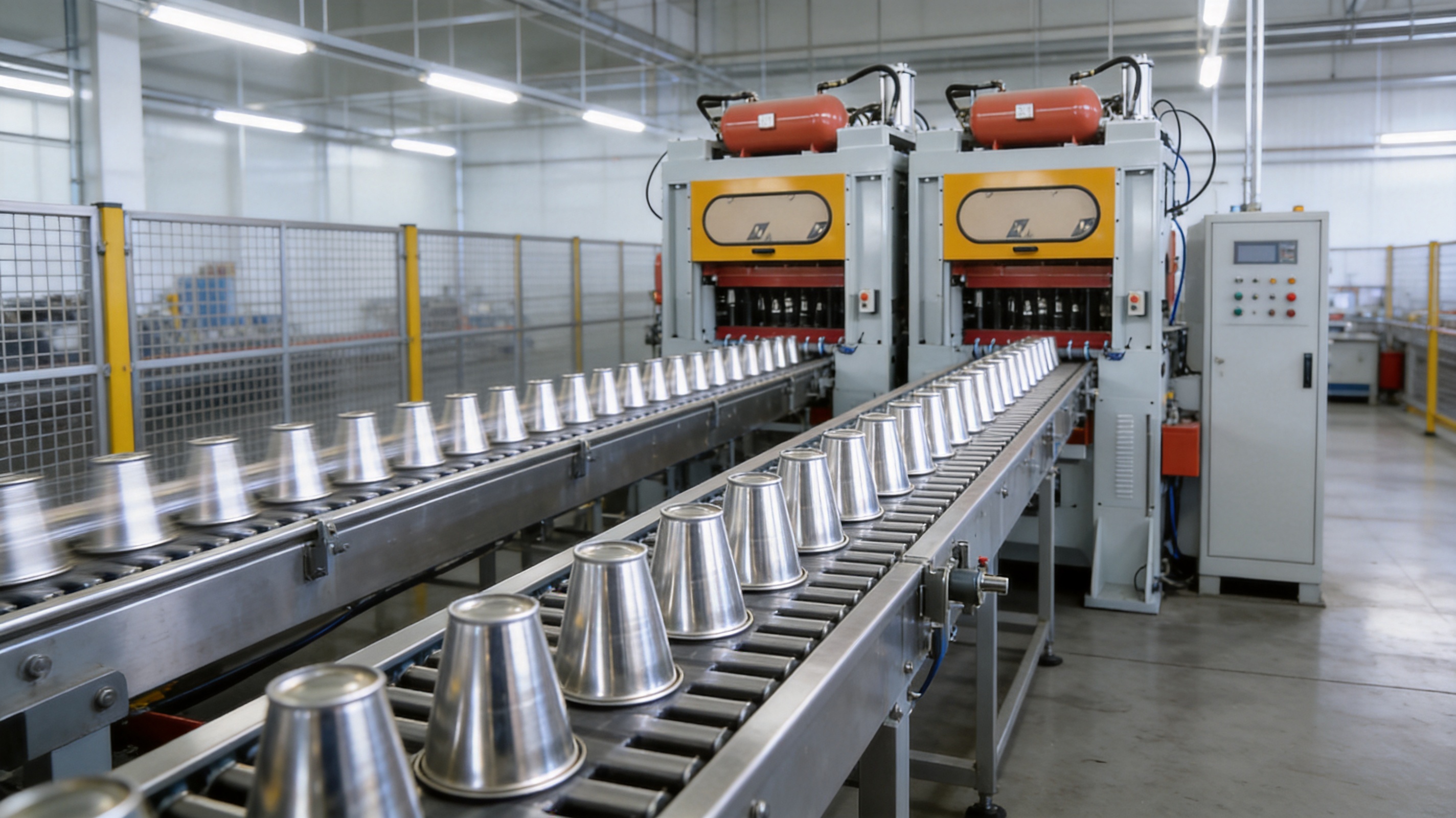
The line is specified for iron thickness from 0.17mm to 0.40mm and iron hardness of T3-T4. These specifications are important because aerosol lid production depends strongly on the relationship between material properties, die design, forming speed, and press stability. Tinplate and related coated steel materials must be formed without damaging the surface coating or causing micro-cracks that may become quality risks.
T3-T4 hardness materials are commonly used in can and lid production because they provide a useful balance of strength and formability. Materials that are too soft may deform too easily and lose dimensional stability. Materials that are too hard may crack during drawing or shaping. A well-designed forming line must apply force in a controlled way so that the material flows into the desired shape while maintaining surface integrity.
The 100mm stroke gives the press system enough working movement for controlled die engagement. The 110mm die gap provides suitable spacing for multi-stage operations. The largest closed height of 400mm supports practical tooling installation and adjustment. These parameters are not isolated numbers; they work together to support reliable forming performance.
For manufacturers, material compatibility directly affects cost control. Raw material prices fluctuate, and different customers may specify different thicknesses or hardness levels. A production line that can handle a reasonable range of materials gives factories more procurement flexibility. It also makes the equipment more suitable for long-term business because product specifications may change over time.
In addition, stable forming helps reduce scrap. Scrap reduction is one of the most important hidden advantages in can-making machinery. A machine that runs fast but creates excessive waste may not be economical. The goal is not only high speed but high usable output. The 2-lanes D109-D211 Aerosol Cone Lid Line is designed for high-speed automatic production while maintaining forming control, making it valuable for manufacturers that measure profitability through yield, uptime, and finished part consistency.
Automation has become a defining feature of modern can-making machinery. Labor costs are increasing in many regions, and skilled operators are not always easy to find. At the same time, customers expect stricter quality and faster delivery. Automatic production lines help solve these challenges by reducing manual transfer, improving rhythm, and supporting standardized operation.
The automatic operation of this aerosol cone lid line means that production can proceed with less direct manual involvement during normal operation. Operators can focus on monitoring, quality checks, material preparation, and equipment maintenance rather than repetitive manual handling. This improves workplace safety and reduces fatigue-related mistakes.
In aerosol cone lid production, manual handling can easily introduce surface defects. Tinplate components often require a clean appearance. Scratches, dents, or oil contamination may affect downstream coating, assembly, or customer acceptance. Automatic feeding and transfer reduce unnecessary contact and help preserve surface quality.
Automation also improves production data control. Even when a factory does not use a fully digital manufacturing system, automatic lines provide more predictable cycle timing and easier output calculation. Managers can plan material supply, labor shifts, tooling maintenance, and delivery schedules more accurately. A stable automatic line is therefore not only a machine investment but a management tool for the whole production process.
Compared with competitor systems that require more manual adjustment or frequent intervention, this line offers better production continuity. Reduced stoppage time improves real output. In manufacturing, rated speed is only part of the story; actual daily output depends on uptime, adjustment speed, scrap rate, and operator workload. A mature automatic design helps convert rated capacity into dependable production performance.
The line supports 6-9 dies, which is a significant feature for aerosol cone lid manufacturing. Progressive forming is essential because metal cannot always be shaped into a complex cone lid profile in one operation without quality risks. By dividing the process into several steps, the material can be gradually formed, allowing better control over stretching, compression, edge shaping, and final geometry.
Die quality is one of the strongest areas of experience for Zhejiang Golden Eagle Food Machinery Co., Ltd. The company’s history includes can-making molds as well as complete machinery. This combination is important because machine performance and tooling performance are inseparable. A press can only produce accurate parts if the die is well designed, precisely manufactured, correctly installed, and properly matched to the machine’s motion characteristics.
Advanced mold manufacturing requires high-precision machining, experienced design, heat treatment knowledge, assembly skill, and testing capability. The company uses CNC high-precision machining equipment and complete mechanical machining equipment. This supports accurate die components and repeatable machine parts. In aerosol cone lid production, even a small tooling error can lead to dimensional deviation, edge defects, or unstable forming. High-precision machining helps reduce these risks.
The design principles of the company’s products are similar to those of recognized international can-making machinery traditions such as KRUPP, SOUDRONIC, and ALFONS-HAAR. At the same time, the company combines these principles with its own practical production experience. This matters because can-making machinery must be proven in real factory conditions, not only in design drawings. Long-term experience allows engineers to understand how machines behave during continuous operation, how tooling wears, how operators make adjustments, and how different materials respond to forming.
The 6-9 die range also provides flexibility. Some aerosol cone lid designs may require fewer stations, while others may need additional forming operations. A system that can support different die configurations allows manufacturers to serve more customers and adapt to product changes. This flexibility is an advantage over machines with rigid tooling layouts that can only produce a narrow product range.
A production line is only as reliable as the company that designs, manufactures, assembles, tests, and supports it. Zhejiang Golden Eagle Food Machinery Co., Ltd. has been engaged in can-making machinery and can-making molds since 1978. More than 46 years of continuous development gives the company a deep understanding of metal packaging machinery. This long history is especially valuable in an industry where mechanical reliability, tooling accuracy, and process knowledge are built over time.
The company has more than 350 well-trained personnel, including experienced design and development professionals and professional engineers. This team structure supports the complete equipment process from product concept to mechanical design, mold development, machining, assembly, testing, installation, commissioning, and after-sales service. For customers investing in a high-speed aerosol cone lid line, this full-process capability reduces risk.
Advanced manufacturing equipment is another important strength. The company adopts CNC high-precision machining equipment and complete mechanical machining equipment. CNC machining is essential for producing accurate components, especially parts related to die alignment, press movement, transmission accuracy, and feeding systems. Precision in manufacturing reduces vibration, improves machine life, and supports stable product quality.
The company has also obtained ISO9001 quality management system certification and ISO14001 environmental management system certification. ISO9001 reflects a structured approach to quality control, process management, documentation, inspection, and continuous improvement. ISO14001 reflects attention to environmental management, which is increasingly important for international customers and responsible manufacturing.
With more than 10,000 pieces of can and can lid equipment produced, the company has accumulated extensive practical feedback from different markets. Equipment has been used by many can manufacturers and canning factories and exported to countries in Europe, Asia, Africa, North America, South America, and Oceania, including Germany, Italy, the United Kingdom, Spain, Hungary, Russia, Australia, Jordan, Malaysia, the Philippines, Pakistan, Egypt, Algeria, Turkey, Mexico, Nigeria, and Iran. This international use demonstrates the company’s ability to serve different production environments, electrical standards, operating habits, and market requirements.
The 2-lanes D109-D211 Aerosol Cone Lid Line has several advantages when compared with many competing solutions in aerosol cone and dome manufacturing. These advantages can be considered in terms of productivity, stability, tooling flexibility, manufacturing background, service support, and total production value.
First, the two-lane structure provides a strong output advantage. Some machines rely on single-lane operation and may require higher mechanical speed to reach similar output. The two-lane approach offers a more balanced path to 240 epm. This can reduce stress concentration and help maintain more stable forming rhythm.
Second, the automatic operation improves consistency. Competitor machines with more manual feeding or transfer steps can suffer from inconsistent part placement, scratches, operator fatigue, and irregular production rhythm. Automatic operation supports repeatable timing and reduces avoidable handling defects.
Third, the compatibility with φ45-65mm can sizes gives the line practical market coverage. Some machines are designed for very specific lid sizes and require costly changes for new products. A line covering this common aerosol diameter range gives manufacturers more business flexibility.
Fourth, the 6-9 die capability supports progressive forming and product adaptability. Competitors with fewer forming stages may be limited when producing more demanding cone lid profiles. More forming stages can improve shape control and reduce the chance of material failure.
Fifth, the manufacturer’s mold experience is a major advantage. A supplier that makes both machinery and molds can better understand the complete forming process. If a customer needs tooling adjustment, product development, or technical support, the supplier can evaluate both machine behavior and die design. This is more efficient than dealing with separate machine and tooling suppliers who may blame each other when problems occur.
Sixth, the company’s long operating history and large installed base provide practical reliability. New or less experienced competitors may offer attractive prices, but they may lack deep knowledge of long-term machine performance. Can-making production is continuous and demanding. Equipment must withstand repeated movement, forming force, lubrication requirements, tooling loads, and operator use. More than four decades of experience gives the manufacturer valuable insight into durable mechanical design.
Seventh, after-sales support is part of the product value. The company provides installation, commissioning, technical guidance, operation training, and spare parts supply. These services help customers bring the line into production faster and maintain performance over time. For international buyers, strong after-sales service can be as important as machine specifications.
The aerosol cone lid line is one part of a broader aerosol can-making process. A complete aerosol can production operation may include sheet cutting, body making, welding, necking, flanging, seaming, dome making, cone making, testing, and related handling systems. The cone lid line must therefore integrate with upstream and downstream production stages.
In aerosol can manufacturing, production balance is essential. If the cone lid line is too slow, it can become a bottleneck for the entire factory. If it produces inconsistent lids, downstream assembly can suffer stoppages. If changeover is too difficult, the factory may lose flexibility when switching between orders. The 240 epm output and automatic operation of this line help support balanced production planning.
The company’s product range includes food can production lines, beverage can production lines, can lid production lines, chemical tank production lines, aerosol canister production lines, two-piece can production lines, pop can production lines, automatic feeding machines, cutting machines, duplex slitters, tin can auto-welding machines, EOE lid making machines, milk powder can making machines, and molds. This broad range is important because it means customers can source complementary equipment from a supplier with a complete understanding of can-making workflows.
For aerosol can manufacturers, sourcing from a supplier familiar with complete production lines can reduce integration problems. Machine interfaces, layout planning, speed matching, tooling logic, and after-sales support can be coordinated more effectively. When a cone lid line is purchased as part of a larger equipment investment, the supplier’s complete production line experience becomes a major advantage.
Quality control in aerosol cone lid manufacturing must be systematic. It includes raw material inspection, tooling inspection, machine alignment, trial production, dimensional measurement, surface quality checks, and ongoing production monitoring. The 2-lanes D109-D211 Aerosol Cone Lid Line is designed to support stable process control by using automatic operation and precision forming mechanisms.
Important quality indicators for aerosol cone lids include outer diameter consistency, height accuracy, profile uniformity, central structure accuracy, edge quality, surface smoothness, absence of cracks, absence of wrinkles, and suitability for downstream assembly. Any deviation can influence can performance. For example, poor edge quality may affect joining or seaming, while an inaccurate profile may cause assembly issues with the aerosol valve system.
The manufacturer’s ISO9001 quality management certification supports consistent production processes during equipment manufacturing. This includes control of component machining, assembly inspection, testing procedures, and documentation. For customers, quality management certification provides confidence that the machine is built under an organized manufacturing system.
Process stability is also related to machine rigidity and component accuracy. In high-speed forming, vibration or misalignment can create repeating defects. Precision machining and careful assembly help maintain alignment under continuous load. A stable press structure, accurate die setting, and reliable feeding rhythm all contribute to finished part quality.
Another key factor is maintainability. A production line that is difficult to maintain may gradually lose accuracy. Good mechanical design should allow operators and maintenance personnel to inspect, adjust, lubricate, and replace parts efficiently. The company’s long field experience helps support practical equipment design that considers real maintenance conditions.
When evaluating a production line, manufacturers should consider not only the purchase price but also the total cost of ownership. The total cost includes output capacity, labor requirement, scrap rate, maintenance cost, energy consumption, downtime, spare parts availability, tooling life, and production flexibility. The 2-lanes D109-D211 Aerosol Cone Lid Line offers advantages in several of these areas.
The 240 epm output helps reduce unit production cost by spreading labor, energy, and overhead across a larger number of finished lids. Automatic operation reduces direct labor intensity and supports more stable shift planning. Progressive die forming helps reduce scrap caused by poor metal flow or forming defects. Compatibility with multiple material thicknesses and common can sizes gives manufacturers flexibility to accept more orders.
Downtime reduction is another important economic benefit. In can-making factories, one stopped line can disrupt the whole production schedule. A machine supported by experienced engineering, high-precision manufacturing, and available after-sales service can help reduce unplanned downtime. Spare parts supply speed is also important because waiting for parts can be costly. The manufacturer states that it provides parts at speed, which supports long-term operation.
Energy consumption is represented by the 22kw power specification. For a line with 240 epm output, this power level is practical for industrial production. Manufacturers can calculate energy cost per lid based on local electricity prices, actual operating hours, and utilization rate. In many cases, higher productivity can improve energy efficiency per finished part compared with operating several smaller or less efficient machines.
Another cost benefit comes from product consistency. Stable lids reduce downstream problems, customer complaints, and rework. In aerosol packaging, quality problems can be expensive because finished cans may contain pressurized products. Preventing lid defects at the source is therefore much more economical than discovering problems later in the production chain.
The aerosol packaging market is broad and continues to develop with consumer and industrial demand. Aerosol cans are used for deodorants, hair sprays, shaving foam, air fresheners, cleaning sprays, lubricants, paints, insecticides, medical sprays, automotive products, and many other products. Many of these applications require reliable pressure packaging and attractive external appearance.
The φ45-65mm size range is highly relevant because it covers many common aerosol formats. Smaller diameters may be used for personal care or portable products, while larger sizes may be used for household or industrial applications. A line that can manufacture cone lids across this range gives producers the ability to serve multiple end-use industries.
For personal care products, appearance quality is especially important. Consumers often associate packaging quality with product quality. Smooth, clean, consistent cone lids contribute to a professional appearance. For industrial products, structural reliability may be the primary concern. The cone lid must perform under pressure and handling conditions. This line supports both appearance and performance requirements through stable forming.
In addition, aerosol packaging customers often require consistent supply. Brand owners and filling companies may operate on strict schedules. If a lid supplier cannot deliver on time, the entire filling operation may be delayed. High-speed automatic production helps lid manufacturers meet delivery expectations and maintain customer trust.
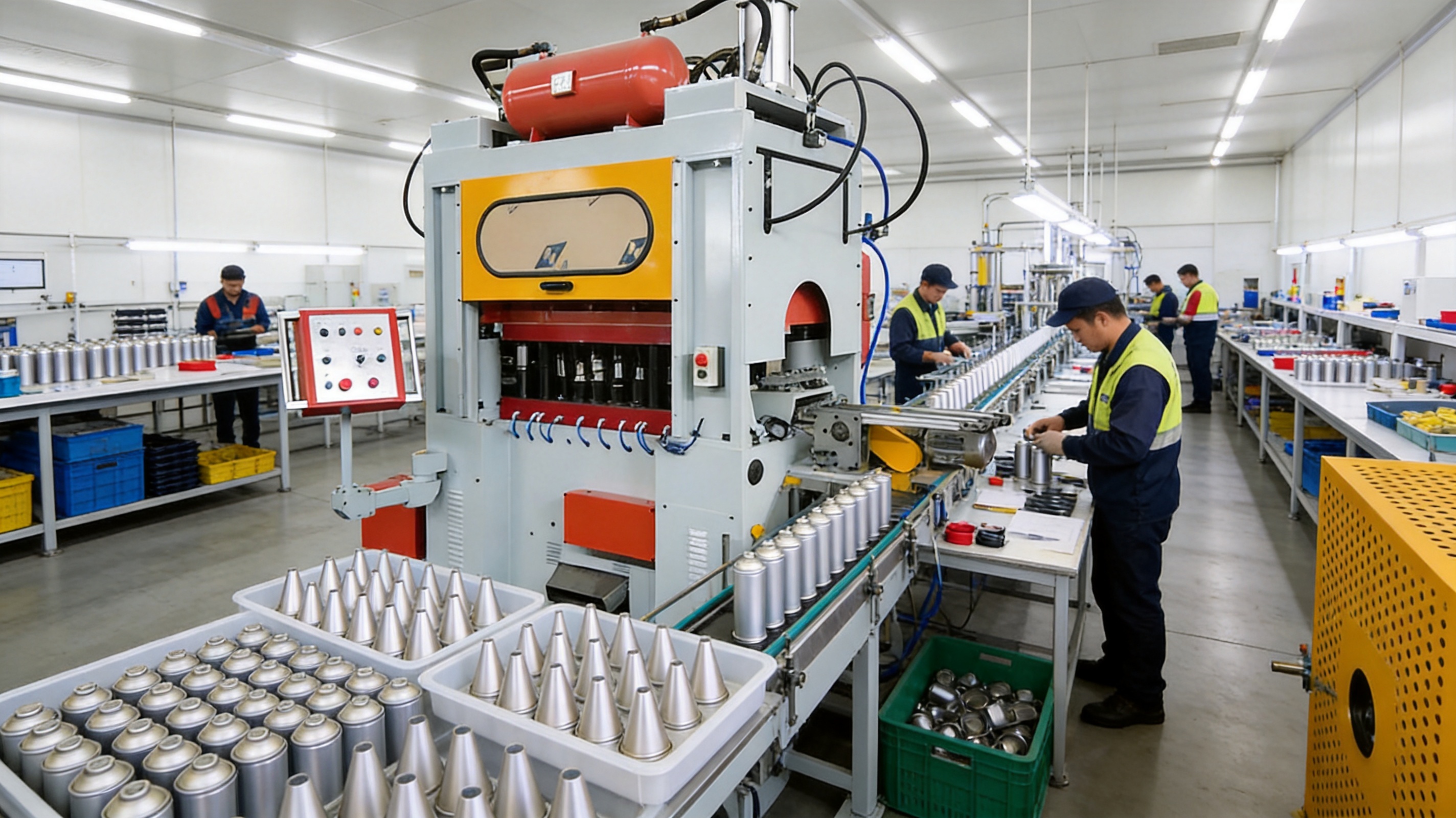
The strength of the 2-lanes D109-D211 Aerosol Cone Lid Line is closely connected to the manufacturing processes used to build it. Zhejiang Golden Eagle Food Machinery Co., Ltd. has developed a production system based on precision machining, experienced engineering, mold-making expertise, and continuous improvement. These manufacturing processes help ensure that the finished machine is not only functional but reliable in long-term industrial use.
High-precision CNC machining is essential for components that require accurate dimensions and tight tolerances. In a high-speed press line, parts such as guide structures, die mounting areas, transmission components, and adjustment mechanisms must be manufactured accurately. If these parts are not precise, the machine may vibrate, wear unevenly, or produce inconsistent lids. CNC machining reduces human error and improves repeatability.
Complete mechanical machining equipment allows the company to process a wide range of machine parts internally. This improves control over quality and production schedule. When critical components are outsourced without strong control, quality variation may increase. A manufacturer with strong in-house machining capability can inspect and refine parts more effectively.
Engineering design is another key process. The company has experienced design and development personnel who understand can-making machinery. Good design must consider mechanical strength, forming force, material flow, maintenance access, operator safety, production speed, and long-term wear. It must also consider practical factory conditions such as dust, oil, vibration, shift operation, and varying operator skill levels.
The company’s process of combining international design principles with practical production experience supports continuous product improvement. Can-making machinery has a long global history, and proven design concepts are valuable. However, every market and factory has specific needs. By learning from established machinery concepts and combining them with field experience, the manufacturer can create equipment that is both technically mature and practically adaptable.
After-sales service is a critical factor in high-speed can-making machinery. Even a well-built machine must be installed correctly, commissioned carefully, and operated by trained personnel. The company provides installation, commissioning, technical guidance, operation training, and spare parts support. These services help customers move from equipment delivery to stable production.
Installation involves positioning the machine, ensuring proper foundation conditions, connecting power, checking alignment, and preparing the production environment. Commissioning involves testing machine movement, adjusting dies, checking feeding and transfer systems, verifying output quality, and confirming safety and operating parameters. Technical guidance helps customer personnel understand how to run the line correctly and respond to common production situations.
Operation training is especially important because high-speed equipment requires disciplined operation. Operators must understand startup and shutdown procedures, material feeding, inspection points, lubrication requirements, abnormal noise identification, basic troubleshooting, and safety precautions. Proper training reduces equipment damage and improves production stability.
Spare parts supply supports long-term use. Wear parts, tooling-related components, and mechanical parts must be available when needed. Fast parts supply can reduce downtime and protect the customer’s production schedule. This is a major advantage over suppliers that cannot provide timely service after machine delivery.
For international customers, service capability also includes communication, documentation, and practical technical support. Since the company has exported equipment to many countries, it has experience working with customers across different regions and production conditions. This international experience improves its ability to support diverse users.
The 2-lanes D109-D211 Aerosol Cone Lid Line is not only a machine for current production needs; it is an investment in long-term manufacturing capability. Aerosol packaging demand is expected to remain strong in many consumer and industrial sectors. Manufacturers that invest in reliable, automatic, high-speed equipment position themselves to compete through quality, delivery speed, and production efficiency.
Long-term value comes from several factors. The line’s size range supports multiple products. Its two-lane output supports high productivity. Its automatic operation reduces labor dependence. Its progressive die capability supports forming quality. Its manufacturer has decades of experience, precision manufacturing capability, certifications, and a wide installed base. Together, these factors create a strong value proposition.
For a can manufacturer, equipment reliability affects customer relationships. If production is unstable, delivery promises become difficult to keep. If quality varies, customers may lose confidence. If maintenance is difficult, costs increase. A well-designed aerosol cone lid line helps protect the manufacturer’s reputation by supporting stable supply and consistent product quality.
The line is particularly suitable for factories that want to upgrade from lower-speed or more manual production methods. It can also serve as part of a new aerosol can production project where modern automation and reliable output are required from the beginning. In either case, the equipment can help improve production organization and market competitiveness.
Before purchasing an aerosol cone lid production line, manufacturers should evaluate several practical points. The first is product range. The buyer should confirm that the target lid designs fall within the φ45-65mm can size range and that the required material thickness and hardness match the 0.17-0.40mm and T3-T4 specifications.
The second consideration is required capacity. With a rated output of 240 epm, the line is suitable for medium-to-high volume production. Buyers should compare this capacity with their downstream assembly needs, customer order volume, and shift schedule. A line should be selected not only for maximum speed but for balanced factory operation.
The third consideration is tooling configuration. Since the line supports 6-9 dies, the exact die arrangement should be discussed according to product drawings and forming requirements. Tooling design has a major influence on final quality, so buyers should provide accurate product specifications and material information.
The fourth consideration is factory layout. The buyer should plan space for the line, material supply, finished lid collection, operator access, maintenance space, and safety zones. Good layout improves productivity and reduces operational inconvenience.
The fifth consideration is operator training and maintenance planning. Even automatic equipment requires trained personnel. Buyers should prepare a team for operation, inspection, lubrication, die maintenance, and routine troubleshooting. The manufacturer’s training and technical guide can help establish these capabilities.
The main purpose of the line is to automatically manufacture aerosol cone lids for aerosol cans in the φ45-65mm size range. It is designed for high-speed, stable, and repeatable production, with an output capacity of up to 240 ends per minute through two parallel lanes.
The two-lane design allows the machine to reach high output without relying only on extreme single-lane speed. This helps distribute mechanical workload, improve production rhythm, and support stable forming. It also improves floor-space efficiency compared with operating multiple smaller machines.
The line is suitable for iron or tinplate materials with a thickness of 0.17-0.40mm and hardness of T3-T4. This range covers common materials used in aerosol cone lid manufacturing and provides practical flexibility for different product requirements.
The output capacity is 240 epm, meaning 240 ends per minute. This makes it suitable for manufacturers that need medium-to-high volume aerosol cone lid production.
The line supports 6-9 dies. This enables progressive forming, allowing the material to be shaped through multiple stages for better dimensional accuracy, surface quality, and forming stability.
Automatic operation reduces manual handling, improves consistency, lowers labor intensity, reduces surface damage risk, and supports continuous production. It also helps factories plan output more accurately and reduce production interruptions.
Aerosol cone lid quality depends heavily on die design and tooling accuracy. Since Zhejiang Golden Eagle Food Machinery Co., Ltd. has long experience in both can-making machinery and molds, it can better coordinate machine structure and die performance, helping customers achieve stable production results.
The company provides installation, commissioning, technical guidance, operation training, and spare parts support. These services help customers start production smoothly and maintain long-term equipment performance.
Compared with lower-speed or more manual machines, this line offers higher output, better automation, more stable forming, reduced labor dependence, and stronger suitability for continuous industrial production. Its two-lane design and 6-9 die capability provide important advantages in productivity and product quality.
The line is suitable for manufacturers serving personal care aerosols, household sprays, automotive aerosol products, industrial chemicals, insecticides, air fresheners, medical sprays, and other pressurized packaging sectors.
The 2-lanes D109-D211 Aerosol Cone Lid Line is a high-efficiency automatic solution for modern aerosol cone lid manufacturing. With a can size range of φ45-65mm, two-lane operation, 240 epm output capacity, 6-9 die capability, and compatibility with 0.17-0.40mm T3-T4 materials, it provides a strong combination of productivity, precision, and flexibility.
Its advantages over many competitor machines include higher practical output, automatic operation, progressive forming capability, reduced manual handling, flexible die arrangement, and support from a manufacturer with decades of can-making machinery and mold experience. Zhejiang Golden Eagle Food Machinery Co., Ltd. strengthens the value of the line through advanced CNC machining, complete mechanical processing capability, ISO-certified management systems, a large engineering team, broad product coverage, and international service experience.
For aerosol can manufacturers seeking stable production, consistent lid quality, reduced labor intensity, and improved competitiveness, this line offers a professional and future-oriented investment. It supports both current production demands and long-term market development, making it a valuable machine for factories that require dependable aerosol cone lid output in a competitive global packaging industry.
1. Soroka, W. Fundamentals of Packaging Technology. Institute of Packaging Professionals.
2. Robertson, G. L. Food Packaging: Principles and Practice. CRC Press.
3. Yam, K. L. The Wiley Encyclopedia of Packaging Technology. Wiley.
4. Paine, F. A., and Paine, H. Y. A Handbook of Food Packaging. Springer.
5. Modern Metal Packaging Manufacturing Guidelines. Packaging Industry Technical Publications.
6. Aerosol Container Production and Quality Control Manual. Metal Packaging Engineering Reference Series.
7. ISO9001 Quality Management Systems: Requirements and Industrial Application Guidance.
8. ISO14001 Environmental Management Systems: Principles and Implementation Guidance.
Related Products

Founded in 1978, the company is one of the largest can-making machinery well-known companies at home and abroad.
Product Categories
Contact Information
Zhongshatou Shenjiamen Zhoushan Zhejiang China
+86-580-3056646

 English
 中文简体
中文简体
 русский
 عربى
عربى
 Español