2026-07-29
Modern food and beverage can manufacturers must achieve a difficult balance between speed, dimensional accuracy, production flexibility, reliability, and operating cost. A can line must perform several forming and closing operations while maintaining consistent can diameter, body height, flange quality, seam integrity, and surface appearance. If one operation is unstable, the entire production line may experience jams, rejected cans, material waste, or reduced output. The four-station can making machine is designed to address these requirements by combining essential can-end forming operations into an organized, efficient, and adaptable production system.
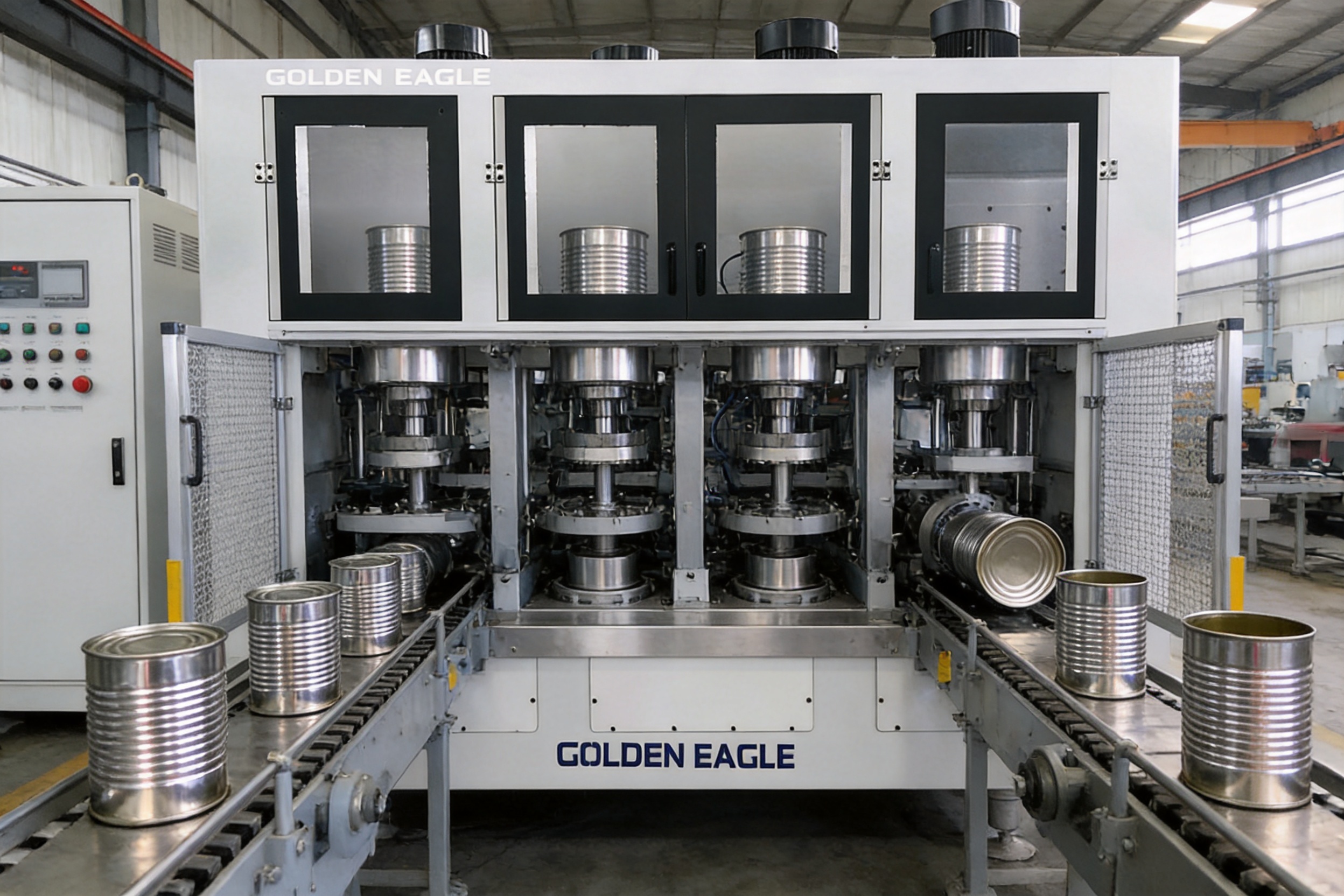
This equipment is intended for tinplate food and beverage can production. Depending on the selected model and station configuration, the machine can carry out necking, flanging, beading, or top seaming operations. The available configurations support can diameters from approximately 52 to 99 millimeters and can heights from approximately 60 to 220 millimeters. Standard listed output capacities range from 80 to 150 cans per minute for several four-head or six-head configurations, while the eight-head three-shrinkage model is listed with a capacity of 200 to 500 cans per minute. These ranges allow manufacturers to select a machine according to container dimensions, line layout, production volume, and process requirements.
The equipment is manufactured by Zhejiang Golden Eagle Food Machinery Co., Ltd., a long-established Chinese producer of can-making machinery and can-making molds. The company has manufactured this type of equipment since 1978 and has developed extensive experience in food can, beverage can, can lid, chemical tank, aerosol, two-piece can, and related production lines. Its manufacturing capabilities, engineering team, machining resources, quality systems, and international service experience support the development of equipment for both standard and customized applications.
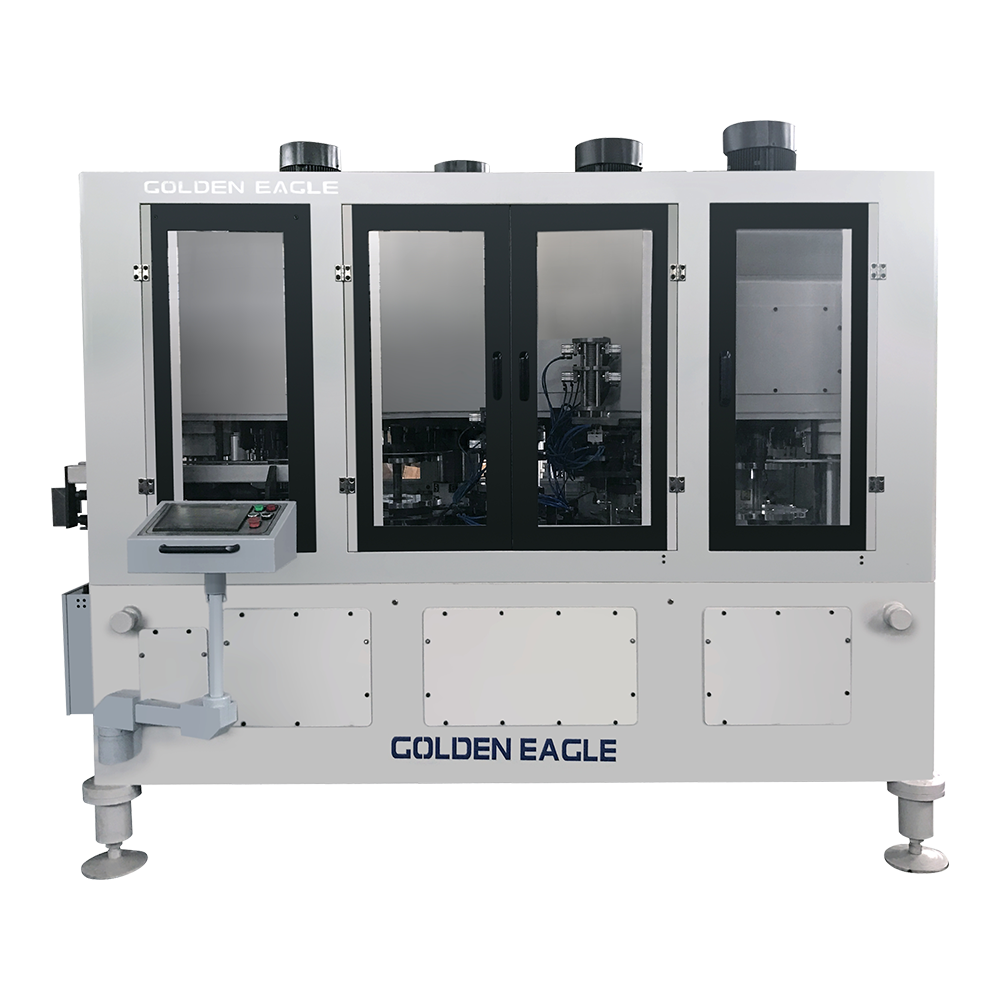
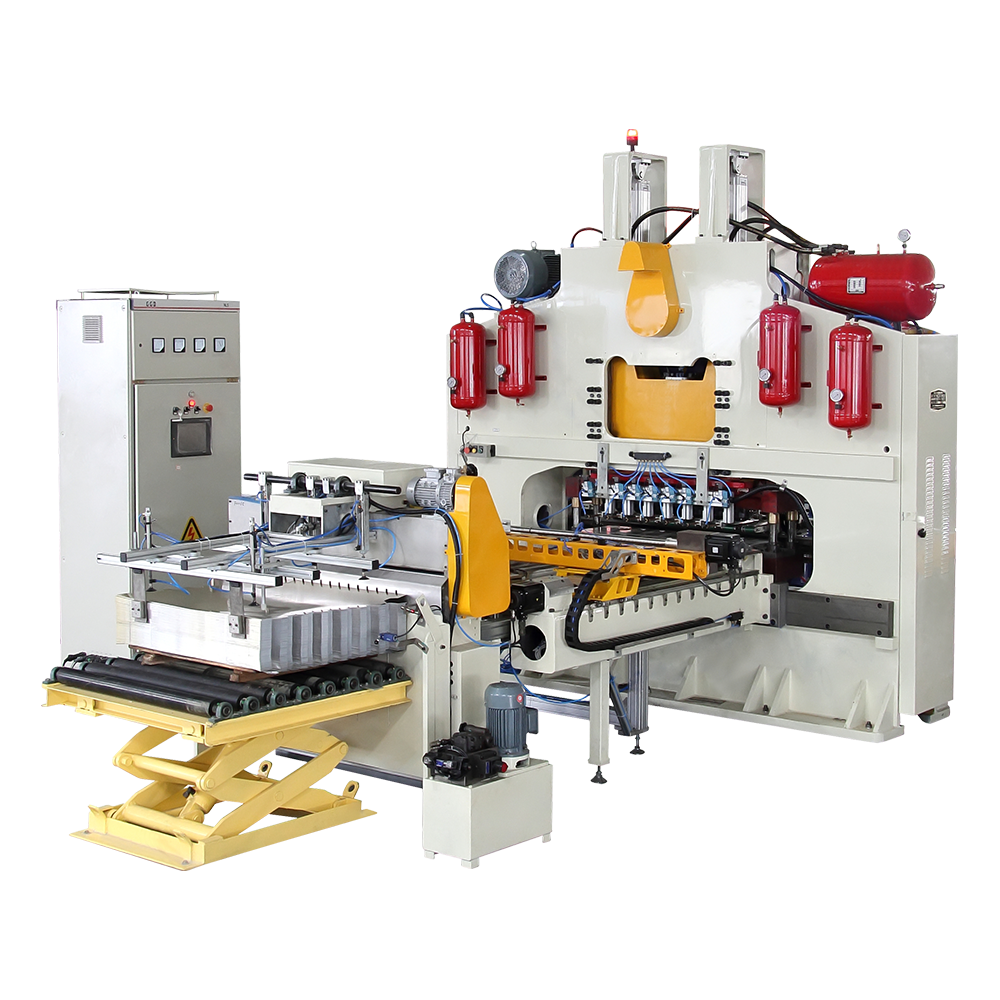
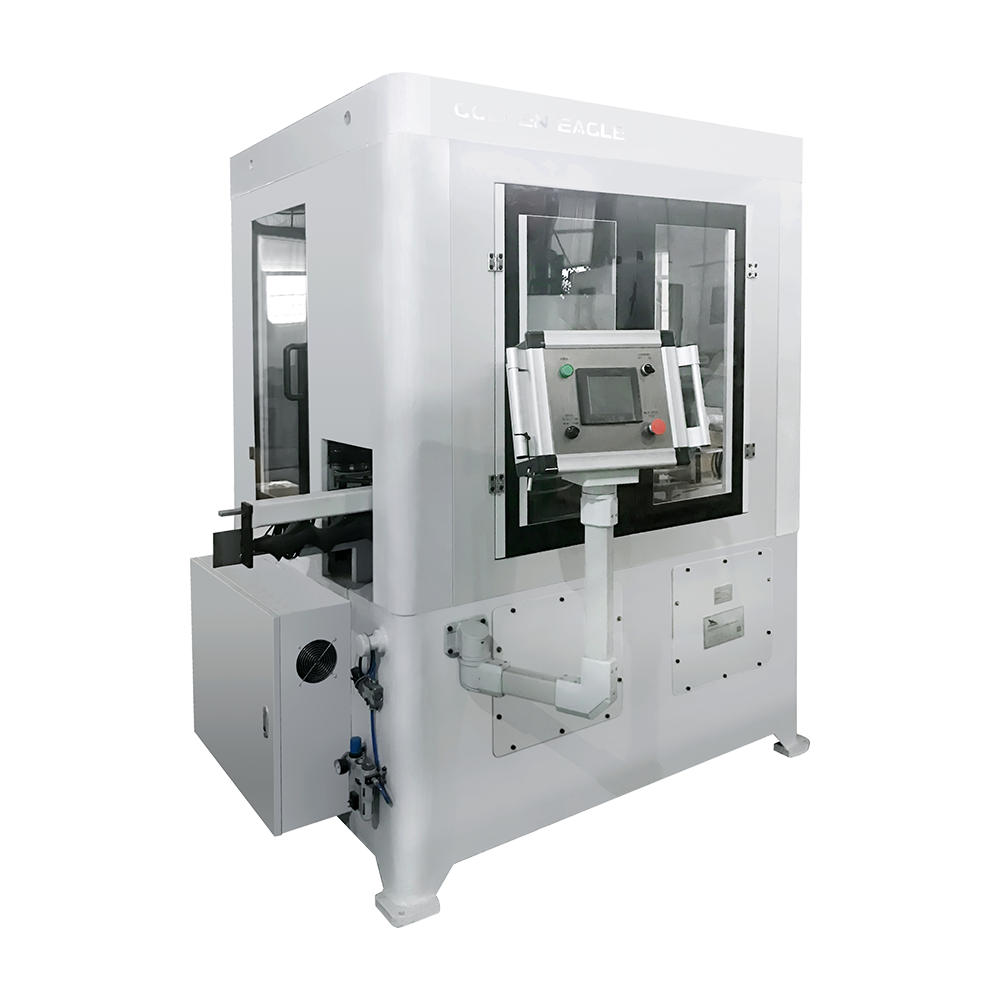
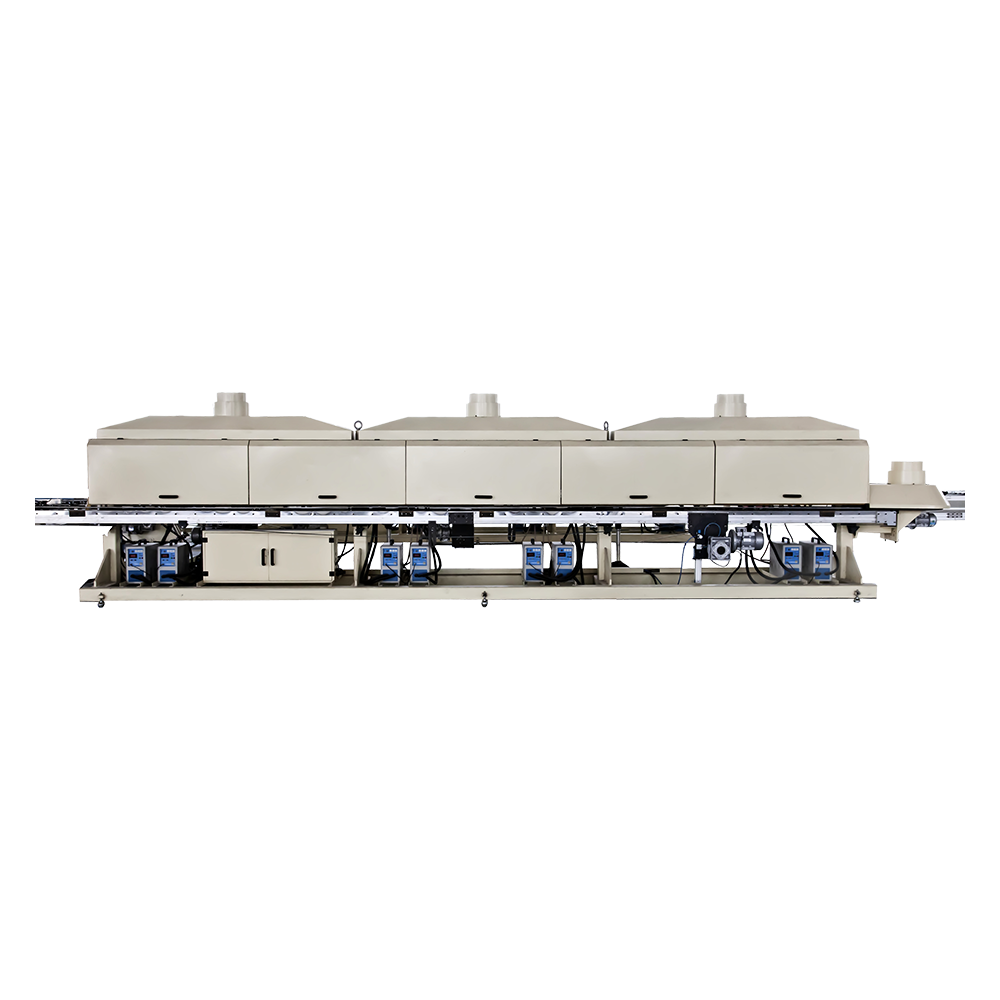
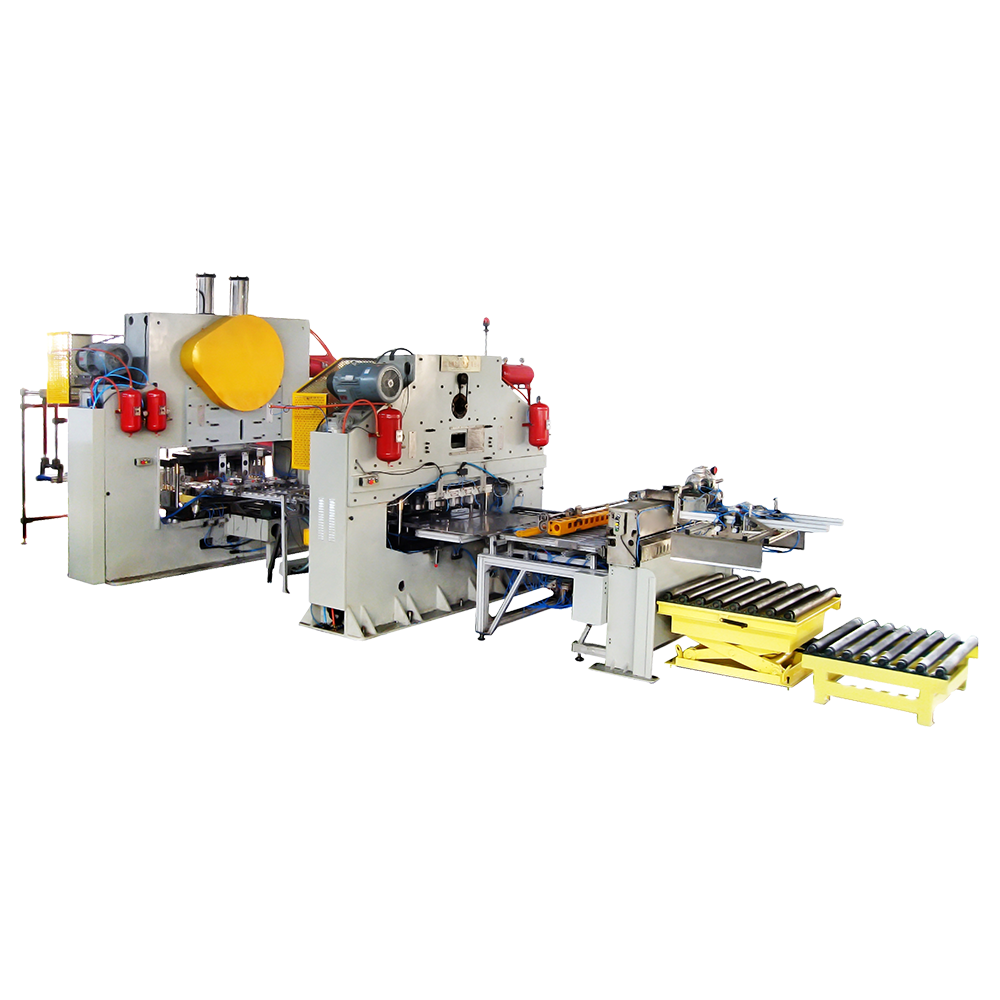
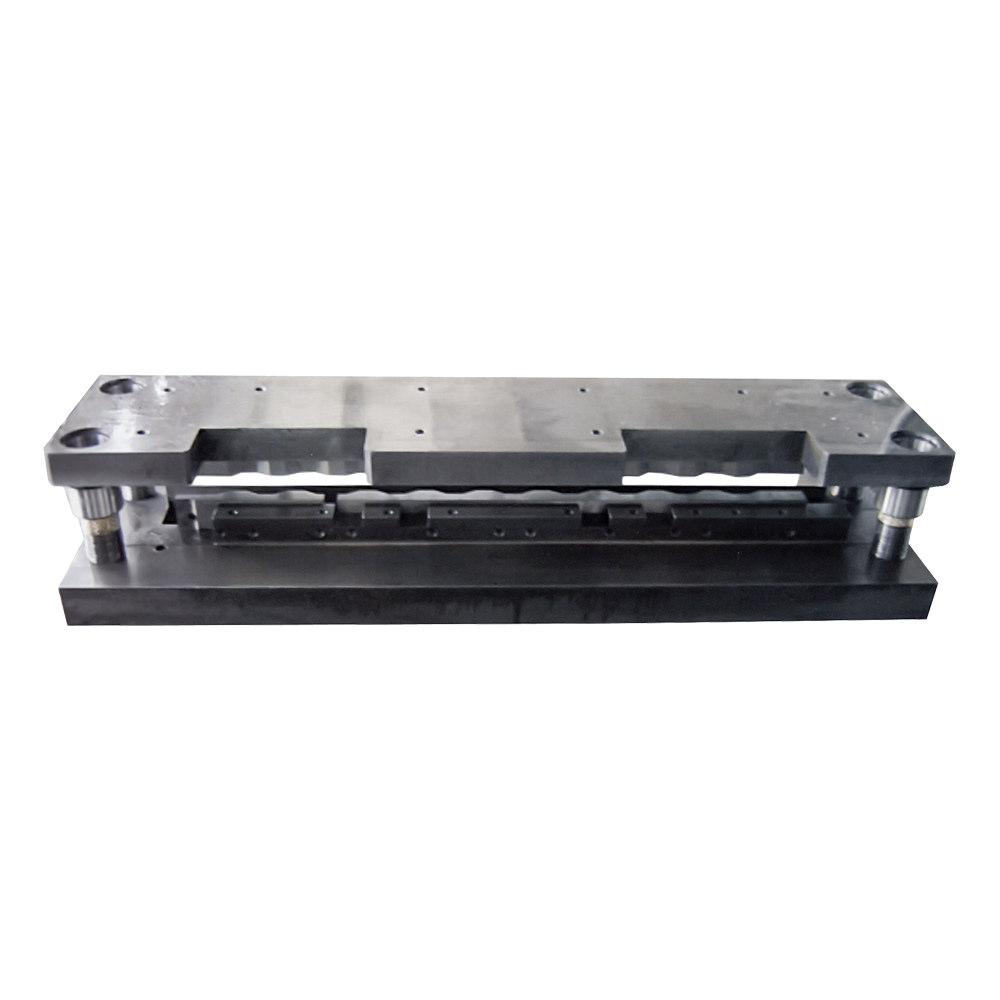
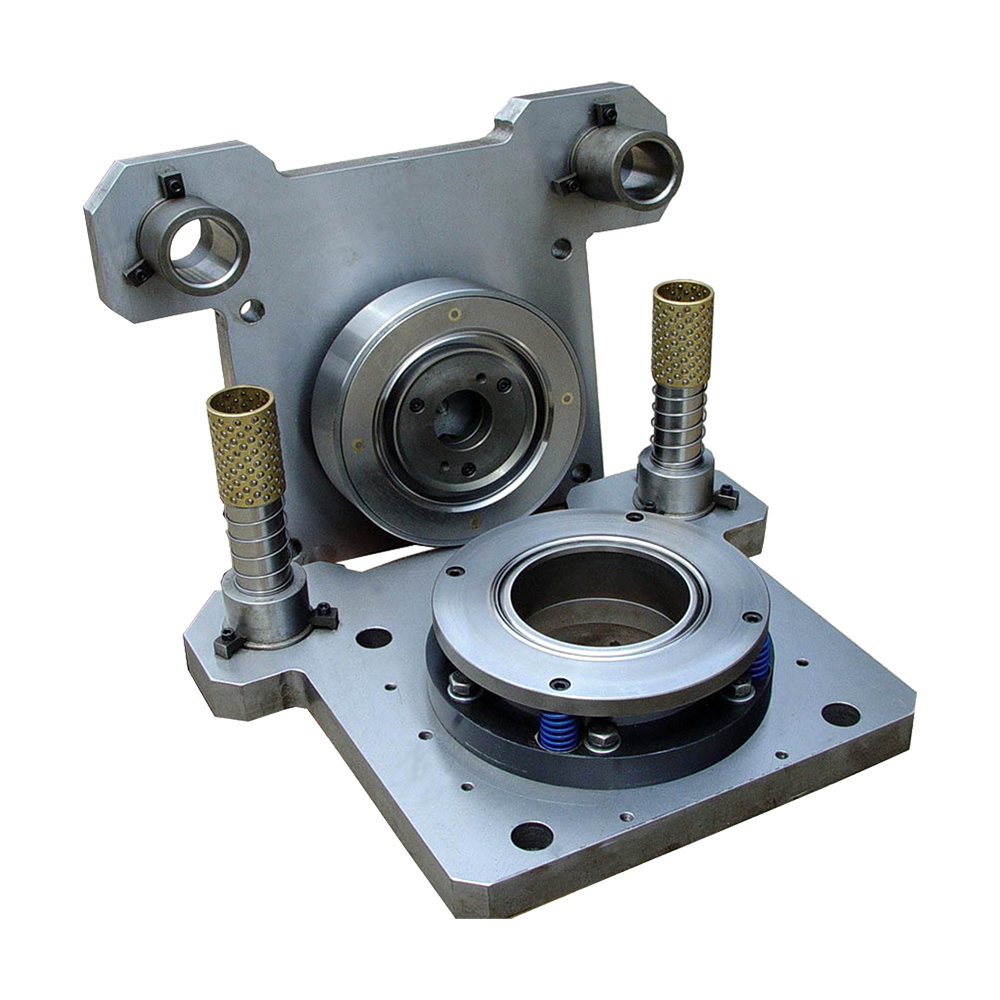
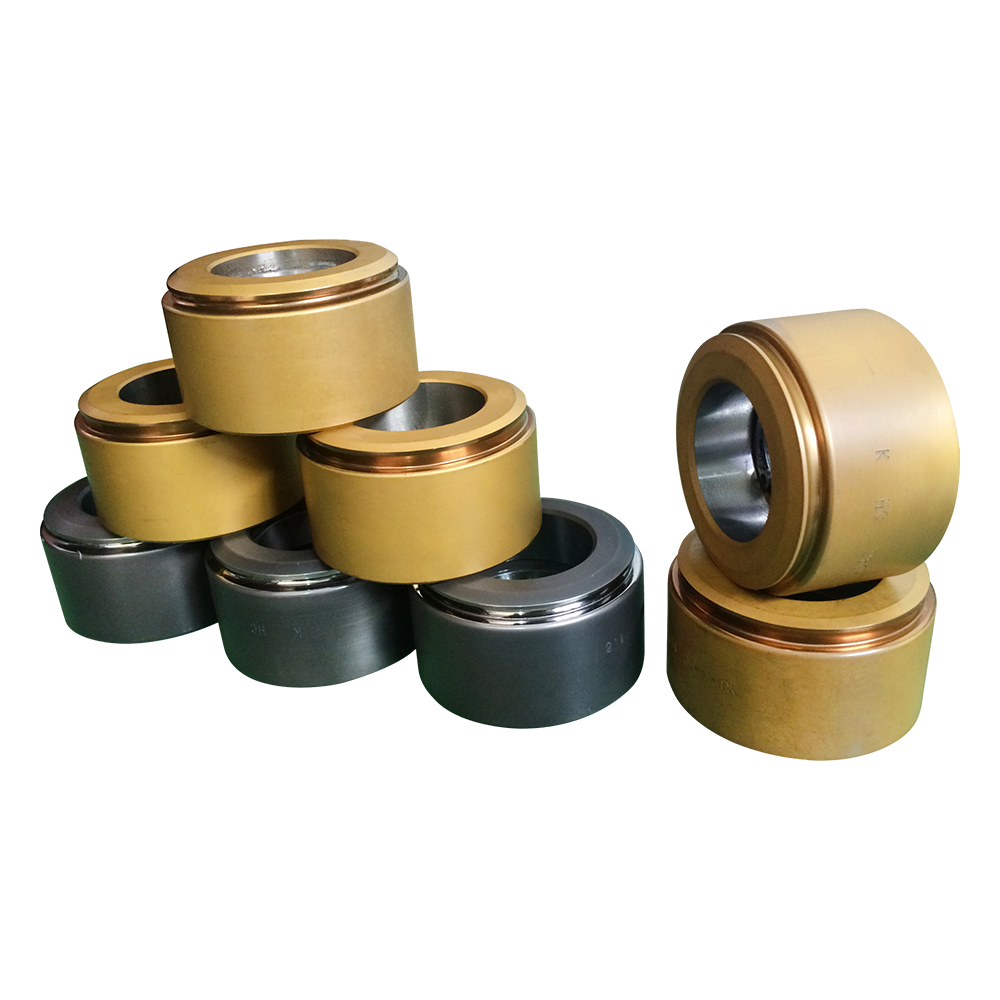
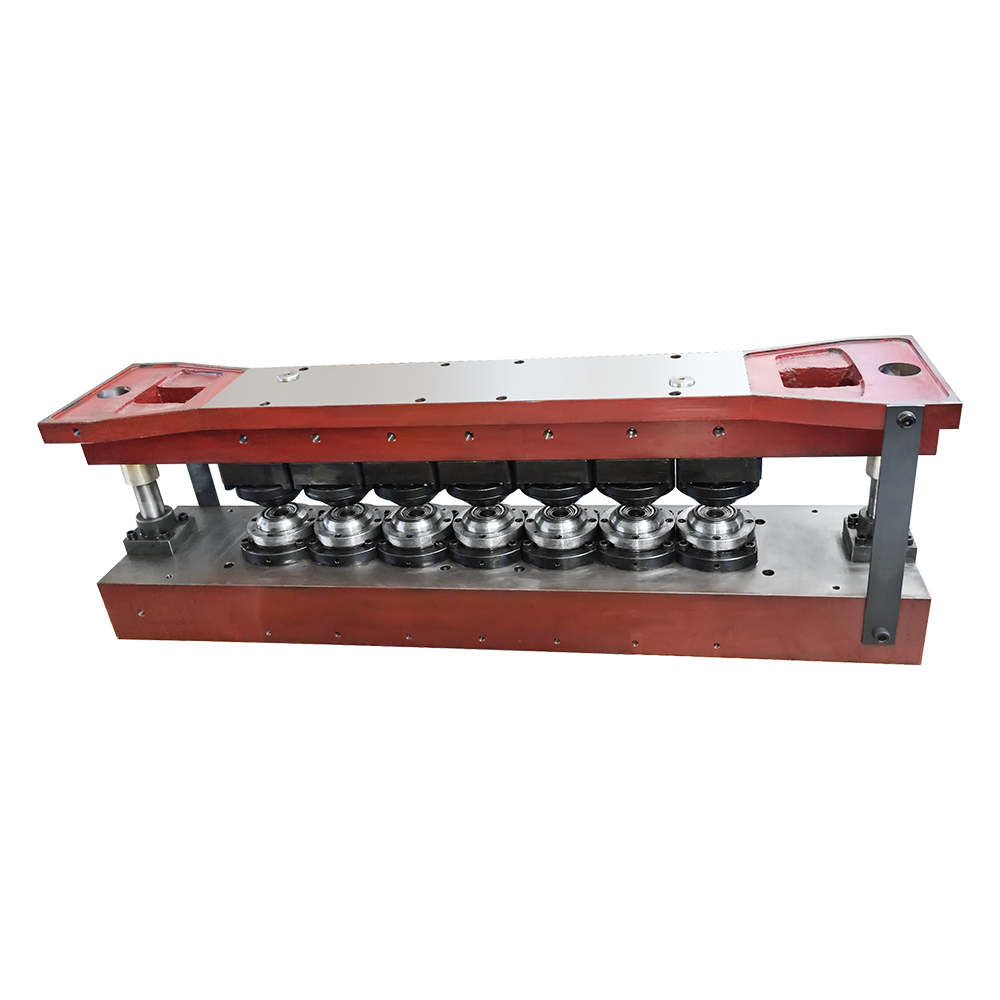
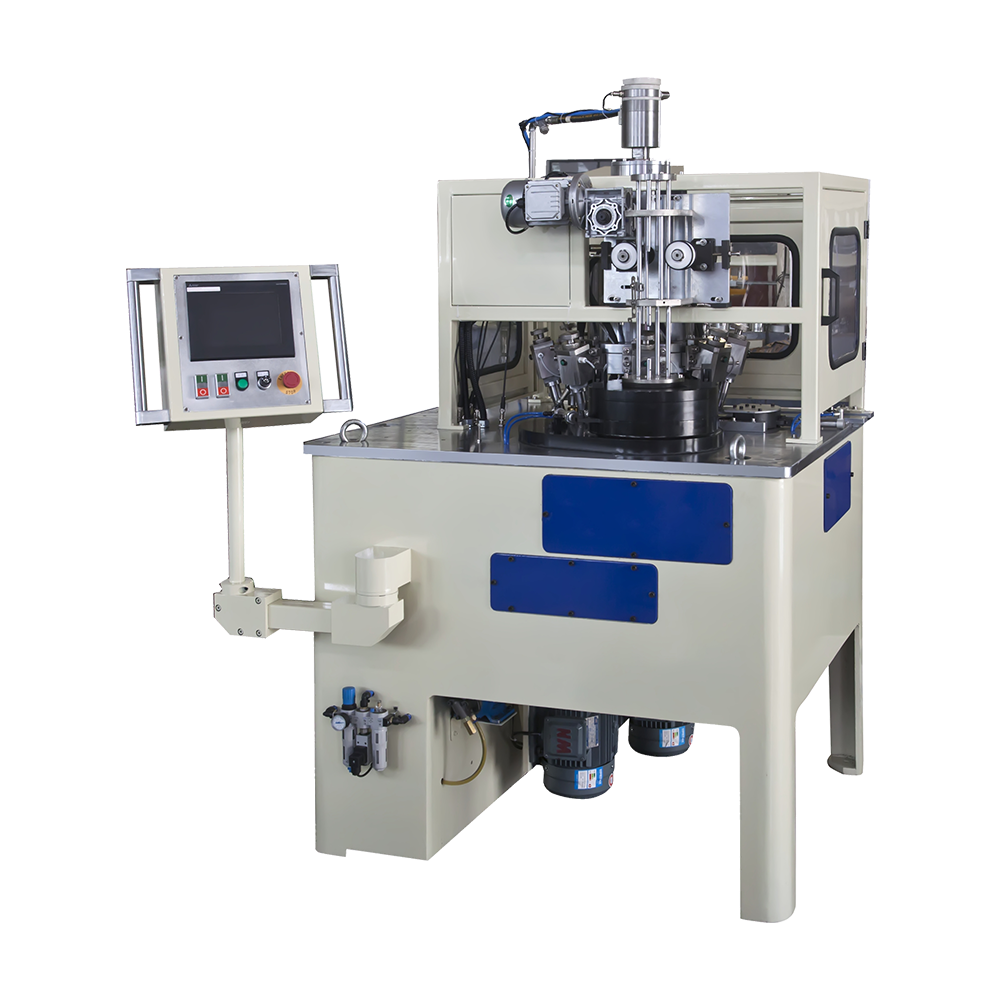
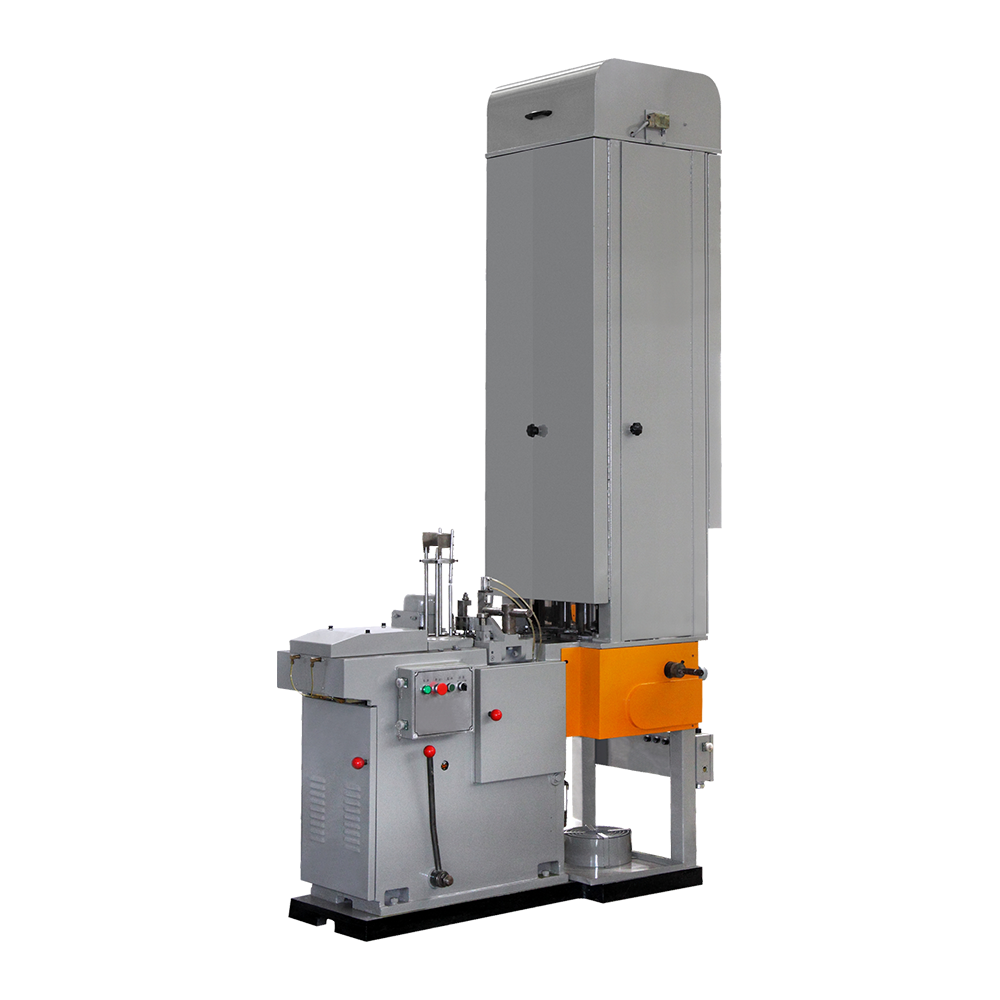
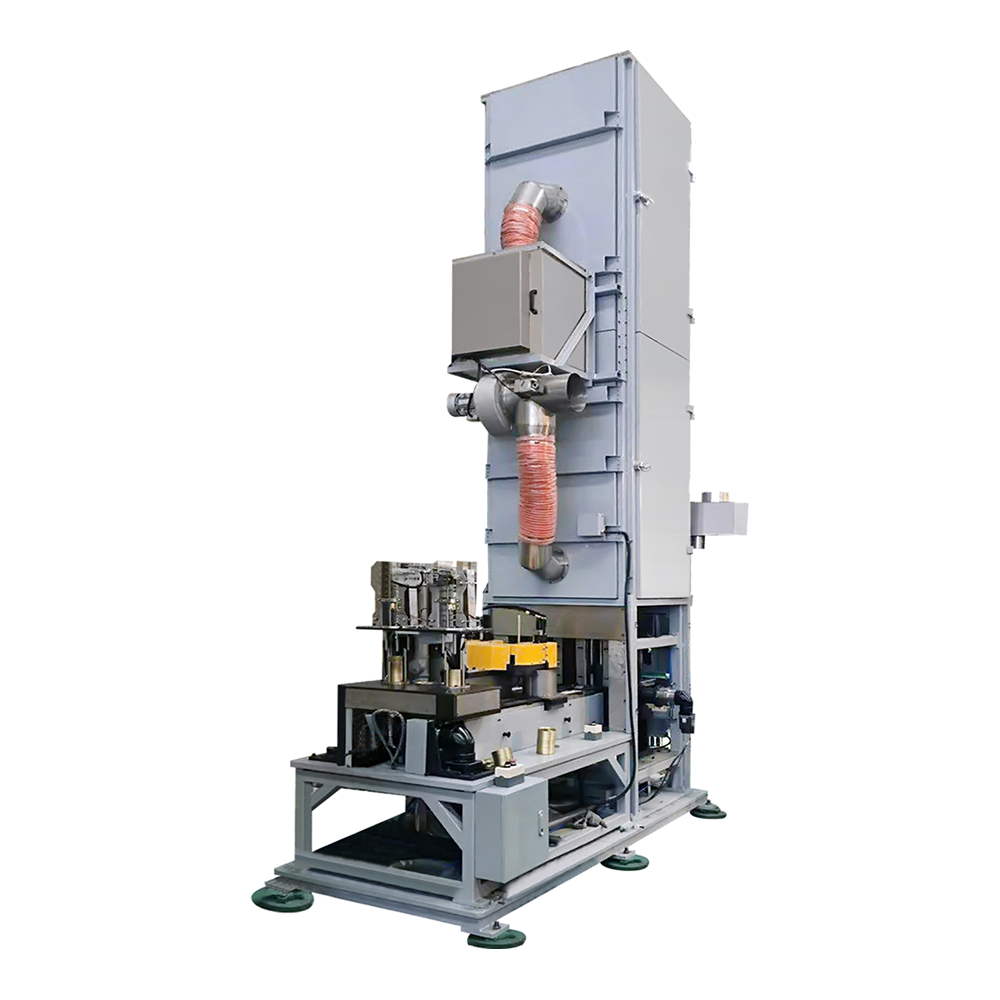
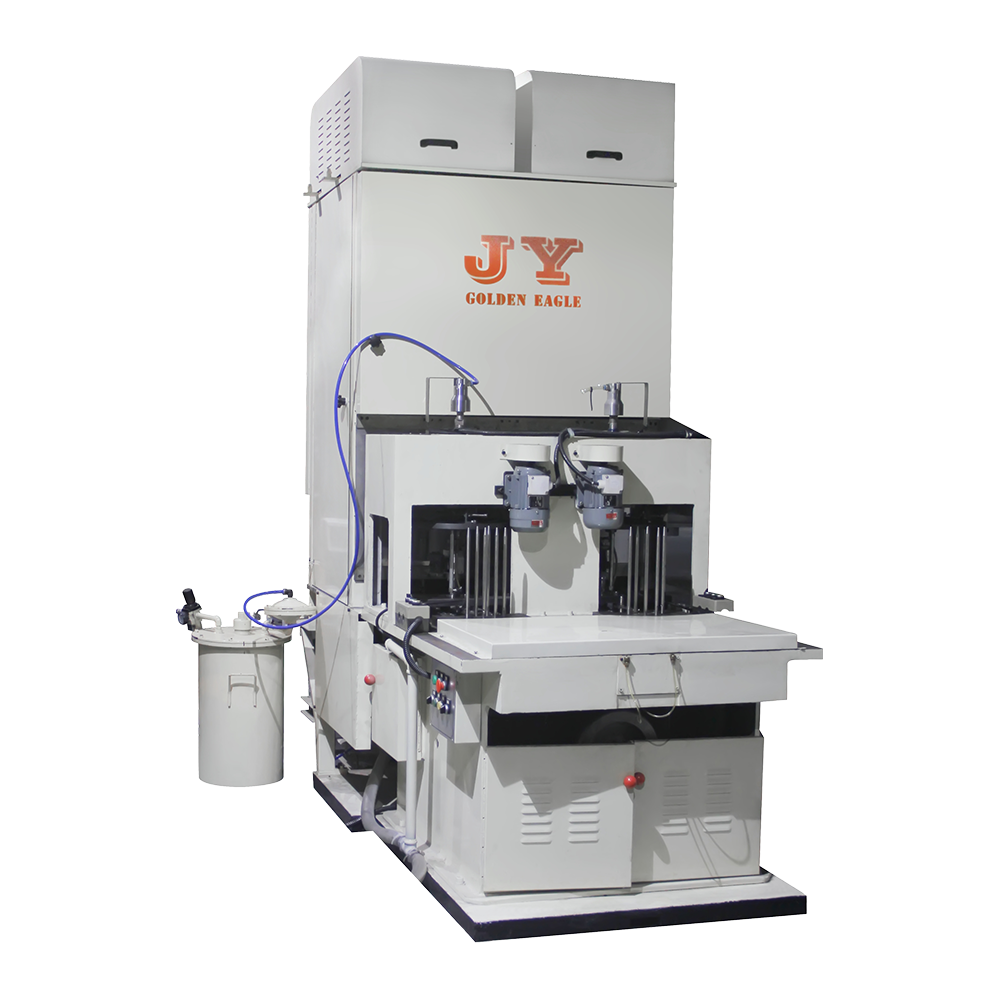
Necking Flanging Beading Seaming Four station Can Making Machine
A tinplate can normally passes through multiple forming stages before it becomes a finished container. The body may first be formed and welded, after which its upper or lower edge must be shaped for the installation of an end. Depending on the can design, the body may require one or more necking reductions, a flange, a bead, and a final seamed closure. Each process affects the next one. For example, an improperly formed neck may prevent the end from fitting correctly, while an uneven flange can produce an unreliable double seam.
The four-station concept organizes these operations into a compact production arrangement. A suitable configuration can reduce the number of separate machines required in a line, simplify transfer between processes, and improve the consistency of can positioning. Instead of relying on several unrelated machines with different adjustment systems, the manufacturer can use a coordinated group of operations designed around compatible can dimensions and production requirements.
The machine family described for this application includes several models. The GT3B21B-T eight-head three-shrinkage model is designed for successive necking operations, including a necking and flanging function. The GT351-N-L four-head model performs top necking. The GT3B54-NNNF four-head model provides three necking operations followed by flanging. The GT3B51-B-L four-head model is used for beading, while the GT3B51-S-C six-head model performs top seaming.
These models can be used as individual process machines or selected as part of a coordinated food and beverage can production line. The appropriate arrangement depends on the can profile, the number of reductions required, the type of end being fitted, the required production rate, and the material specification. This modular approach is important for manufacturers that produce more than one can format or expect their product range to expand over time.
Necking reduces the diameter of a selected section of the can body. It is commonly used to create a smaller top opening, improve the relationship between the body and the can end, or produce a shaped container profile. A can may require one reduction or several successive reductions. Multiple shrinkage stages distribute the forming work and help avoid excessive deformation in a single operation.
The GT351-N-L model is listed as a four-head top-necking machine for can diameters between 52 and 99 millimeters and can heights between 80 and 220 millimeters. Its listed output range is 80 to 150 cans per minute, with total power of 7.5 kilowatts. This configuration is suitable where the can design requires a single top-necking operation and where the manufacturer wants a dedicated machine with a relatively broad height range.
The GT3B21B-T model is listed as an eight-head machine with a three-shrinkage function. Its can diameter range is 52 to 99 millimeters, and its height range is 70 to 160 millimeters. The listed output capacity is 200 to 500 cans per minute, with total power of 7.5 kilowatts. The use of multiple heads and successive reductions makes this configuration suitable for high-throughput applications requiring repeatable neck formation.
Multiple-stage necking can offer technical advantages over attempting to complete the entire reduction in one step. It can distribute material movement, lower the forming load at each stage, and improve control of the final profile. It may also reduce the risk of wrinkles, excessive ovality, and localized stress in the tinplate, provided that the tooling, lubrication, and operating parameters are correctly matched to the material and can design.
Flanging creates the outward edge needed for end attachment and seam formation. The flange must have a controlled width, a consistent circular shape, and a suitable angle. If the flange is too narrow, too wide, uneven, or damaged, the final seam may not contain the correct amount of body and end material. Reliable flanging is therefore essential to the strength, leak resistance, and appearance of the finished can.
The GT3B54-NNNF configuration combines three necking operations with flanging. This arrangement is particularly useful for cans that require a series of diameter reductions before the final flange is formed. The listed diameter range is 52 to 99 millimeters, with a height range of 70 to 220 millimeters. Its listed capacity is 80 to 150 cans per minute, and its total power is 7.5 kilowatts.
Combining necking and flanging in a coordinated sequence can reduce handling and help maintain the relationship between the shaped body and the flange. It also allows the production line designer to plan a more compact process layout. For manufacturers producing containers with demanding top profiles, the ability to complete multiple forming stages in a planned sequence is an important practical benefit.
Beading forms one or more reinforcing rings in the can body. These beads improve structural stiffness and help the container resist external pressure, internal vacuum, or handling loads. Beading can also contribute to the visual identity of a can and may be required by the packaging design.
The GT3B51-B-L is a four-head beading machine for can diameters from 52 to 99 millimeters and can heights from 70 to 220 millimeters. Its listed capacity is 80 to 150 cans per minute, and its total power is 4 kilowatts. The relatively low listed power requirement compared with some multi-stage necking configurations may help manufacturers control energy consumption while maintaining a productive forming process.
Accurate beading depends on coordinated tooling movement, stable can support, and reliable positioning. The bead must be formed at the intended height and with consistent depth around the entire circumference. Variations can affect the can’s strength, appearance, and compatibility with downstream packaging or filling equipment. A purpose-designed beading machine provides a more repeatable solution than manual or loosely controlled forming arrangements.
Top seaming joins the can body and can end to create a closed container. The operation normally requires controlled mechanical forming of the interlocked body and end hooks. Seam quality must be monitored carefully because defects may cause leakage, loss of product, contamination, or failure during transportation and storage.
The GT3B51-S-C is listed as a six-head top-seaming machine. It supports can diameters from 52 to 99 millimeters and can heights from 60 to 220 millimeters. Its listed output capacity is 80 to 150 cans per minute, with total power of 4 kilowatts. The six-head arrangement allows multiple cans to be processed during the machine cycle and can support stable output in a continuous line.
A well-designed seaming machine must provide accurate can and end alignment, controlled forming pressure, repeatable tooling movement, and convenient access for inspection and adjustment. The final seam is influenced by the quality of all previous operations, so the seamer is most effective when it is integrated with reliable necking, flanging, and body-forming equipment.
| Model | Head Configuration | Primary Function | Can Diameter | Can Height | Listed Output | Total Power |
|---|---|---|---|---|---|---|
| GT3B21B-T | Eight-head, three-shrinkage | Multiple necking operations; necking and flanging | 52–99 mm | 70–160 mm | 200–500 cans/min | 7.5 kW |
| GT351-N-L | Four-head | Top necking | 52–99 mm | 80–220 mm | 80–150 cans/min | 7.5 kW |
| GT3B54-NNNF | Four-head, one shrinkage arrangement | Three necking operations and flanging | 52–99 mm | 70–220 mm | 80–150 cans/min | 7.5 kW |
| GT3B51-B-L | Four-head | Beading | 52–99 mm | 70–220 mm | 80–150 cans/min | 4 kW |
| GT3B51-S-C | Six-head | Top seaming | 52–99 mm | 60–220 mm | 80–150 cans/min | 4 kW |
The specification table shows that the equipment family covers a broad range of can sizes. The common diameter range of 52 to 99 millimeters simplifies planning for manufacturers that produce several can diameters. The height range varies by model because each process has different forming requirements. Before ordering, users should confirm the exact can drawing, material thickness, coating, end type, flange dimensions, production speed, and tooling requirements with the supplier.
The listed output figures should be understood as reference production capacities rather than a guarantee for every can design. Actual performance depends on can diameter, can height, tinplate properties, body welding quality, tooling condition, line synchronization, operator skill, product loading, and quality-control standards. A high-speed necking machine may operate at a different practical rate when processing a taller or more complex can than when processing a short, standardized container.
One of the most important advantages of this product family is its modular character. Manufacturers can select a single necking, beading, or seaming machine for a specific process, or combine several models into a broader production line. This is more flexible than purchasing a fixed system that can only handle one can profile.
Modularity is especially valuable for companies serving different food and beverage markets. A factory may produce cans for processed food, sauces, seafood, beverages, powdered products, or other packaged goods. These products may require different heights, neck profiles, bead arrangements, and end specifications. A machine family with shared dimensional coverage allows production planners to select equipment without redesigning the entire factory for every product change.
The listed diameter range of 52 to 99 millimeters covers many commonly used small and medium tinplate can formats. The listed height ranges extend from approximately 60 millimeters to 220 millimeters, depending on the model. This allows the equipment to serve both compact containers and taller formats within the approved operating range.
Broad dimensional coverage can reduce the number of dedicated machines required in a plant. It may also improve return on investment because one machine can support multiple orders. However, dimensional flexibility must always be combined with correct tooling and changeover procedures. The machine should be configured according to the exact can drawing rather than relying only on nominal diameter and height.
The eight-head three-shrinkage model is listed with a production capacity of 200 to 500 cans per minute. This gives high-volume producers an option for increasing throughput without adding an excessive number of individual machines. The four-head and six-head models are listed at 80 to 150 cans per minute, which is suitable for many medium-speed food and beverage can lines.
Multi-head forming systems can improve productivity because several cans are processed during each machine cycle. They can also support smoother material flow when correctly synchronized with conveyors, body welders, end-making equipment, and inspection systems. Higher output is valuable not only because it increases the number of cans produced per hour, but also because it can reduce the labor and floor space required per unit of production.
Necking, flanging, beading, and seaming require controlled mechanical movement. A purpose-built machine provides a stable forming environment that is more repeatable than improvised or manually adjusted equipment. Consistent forming contributes to better dimensional control, lower scrap, and more predictable downstream performance.
In particular, the relationship between the flange and the can end is critical. A consistent flange helps establish a stable seam structure. Similarly, a controlled neck profile ensures that the end fits correctly before seaming. By using dedicated machines for these operations, a manufacturer can establish process parameters, inspection points, and maintenance procedures for each stage.
The listed total power is 7.5 kilowatts for the principal necking and combined necking-flanging models, and 4 kilowatts for the beading and top-seaming models. Actual energy consumption varies with operating conditions, but the listed ratings provide a useful basis for factory utility planning.
Efficient power use is increasingly important as manufacturers seek to reduce operating costs and environmental impact. Lower installed power can simplify electrical infrastructure and reduce the load placed on the plant’s distribution system. Energy efficiency should nevertheless be evaluated together with capacity, duty cycle, compressed-air requirements if applicable, lubrication systems, and the complete production line.
The machine is not limited to an isolated forming operation. It can be incorporated into a broader tinplate can production system that includes sheet preparation, body forming, welding, trimming, necking, flanging, beading, end production, seaming, testing, and packaging. The manufacturer also supplies equipment for food can lines, beverage can lines, can lid production, chemical tank production, aerosol canisters, two-piece cans, and related applications.
This broader product range can simplify project coordination. A customer planning a complete line may obtain several connected machines from one experienced supplier instead of coordinating every stage with unrelated vendors. A single technical contact can help review process sequence, machine interfaces, production speed, spare parts, installation, and operator training.
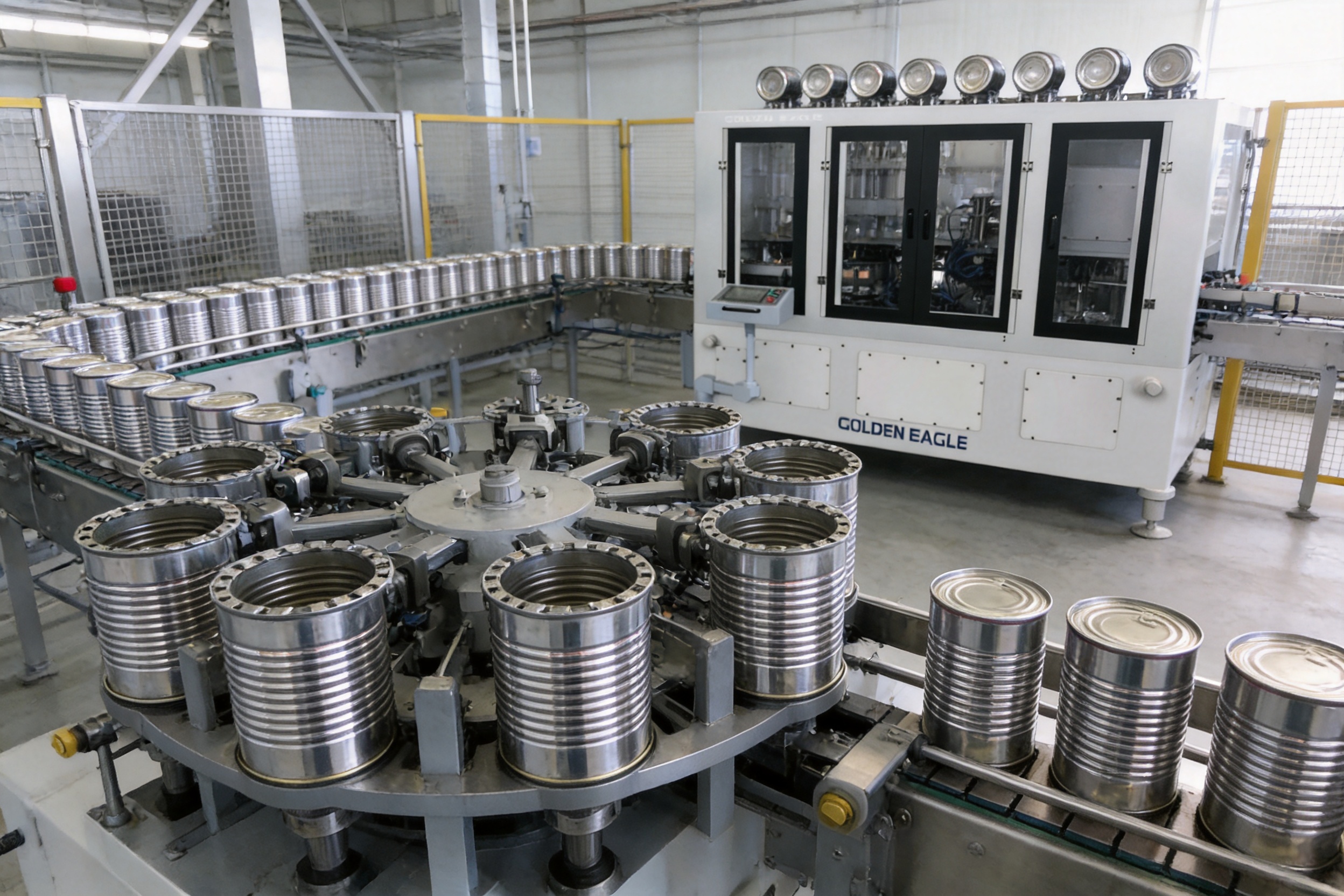
The manufacturer began operating in 1978 and was formerly associated with Zhejiang Food Machinery Factory and Zhoushan Mold Factory. With more than 46 years of development, it has built a specialized focus on can-making machinery and molds. This long experience is relevant because can production equipment combines high-speed mechanical movement, precision tooling, thin-metal forming, and strict dimensional requirements.
The company has a workforce of more than 350 trained personnel, including experienced design and development engineers. A substantial engineering team supports product improvement, application analysis, machine customization, and technical service. Can-making projects often require more than a standard catalog machine. They may involve unusual can heights, special neck profiles, particular end designs, high-speed line integration, or local production standards. Engineering depth helps the supplier respond to these requirements in a structured way.
Advanced manufacturing equipment is central to the quality of forming machinery. The company uses CNC high-precision machining equipment together with complete mechanical machining resources. CNC machining supports the manufacture of components that require accurate dimensions, repeatable geometry, and controlled surface quality.
Precision is especially important for molds, forming tools, guide components, chuck assemblies, and other parts that determine the shape and position of the can. If a tool is inaccurate, the defect may be repeated around thousands of cans. If a guide or support is misaligned, it may create vibration, uneven forming, or excessive wear. Precision machining helps establish the dimensional foundation needed for stable production.
Complete mechanical machining capability also allows the company to control more manufacturing stages internally. Better control over machining, fitting, assembly, and testing can reduce delays caused by dependence on multiple external sources. It can also make it easier to trace technical problems and implement engineering changes when a customer requires a modification.
The company states that its product design principles are similar to those associated with internationally recognized can-making equipment manufacturers such as Krupp, Soudronic, and Alfons Haar. This does not mean that every machine is identical to equipment from those companies. Rather, it indicates that the design approach has been informed by established industrial concepts in mechanical structure, forming sequence, machine stability, and can-line operation.
During practical production, the company has combined engineering knowledge with operating experience and continued to improve its products. This connection between design and production is important. A machine may appear effective in a drawing but reveal adjustment, wear, access, or synchronization issues after long-term use. Feedback from actual can factories can lead to stronger structures, more practical adjustment points, improved tooling, and easier maintenance.
Can-making machinery cannot deliver consistent results without suitable tooling. Necking dies, flanging tools, beading rolls, seam components, guides, and support parts must correspond to the can drawing and material characteristics. The company’s experience in both machinery and can-making molds gives it a valuable ability to consider the machine and tooling as a connected system.
This integrated capability may provide an advantage over suppliers that only assemble general-purpose machinery. Tooling decisions affect machine loading, forming quality, changeover time, and service life. A supplier that understands the complete forming process can provide more coordinated technical recommendations and help reduce compatibility problems between the machine and its tools.
The company has been certified to the ISO 9001 quality management system and ISO 14001 environmental management system. ISO 9001 certification reflects the use of organized quality-management procedures, while ISO 14001 addresses environmental-management practices. Certification alone does not replace product inspection or engineering judgment, but it demonstrates that the company has established formal management frameworks for quality and environmental responsibilities.
For a can-making machine, quality control should cover incoming materials, machined parts, purchased components, assembly accuracy, electrical installation, lubrication, safety functions, trial operation, and final inspection. It should also include documentation of critical dimensions and verification that the machine performs according to the agreed technical specification.
Manufacturing more than 10,000 pieces of can and can-lid equipment has provided the company with a broad base of production experience. Such a large installed base can support the development of standardized components, practical maintenance procedures, and a deeper understanding of common operating conditions. It also gives customers a basis for evaluating the supplier’s history and market presence.
Environmental management is increasingly relevant in metal packaging machinery. Efficient production can help reduce material waste, rejected cans, unnecessary rework, and excessive energy consumption. A machine that maintains stable forming quality contributes indirectly to more responsible use of tinplate and other production resources.
When compared with less specialized or loosely integrated alternatives, the four-station machine family offers several practical advantages. First, the equipment is designed specifically for tinplate can-forming applications rather than being adapted from general metalworking machinery. This specialization supports better consideration of can geometry, forming sequence, flange requirements, and seam preparation.
Second, the available head configurations allow the machine to be matched to the production task. An eight-head system can target higher output for multi-stage necking, while four-head and six-head systems can be selected for top necking, beading, or seaming. This is more appropriate than using one oversized machine for every process, which may increase cost and energy consumption, or one undersized machine that creates a production bottleneck.
Third, the manufacturer’s combined machinery and mold experience can help reduce the risk of purchasing equipment and tooling from incompatible sources. The machine, tool geometry, can dimensions, and process sequence can be evaluated together. This integrated approach may improve commissioning efficiency and reduce the amount of trial-and-error adjustment required at the customer’s factory.
Fourth, the company’s long manufacturing history and international customer base provide evidence of experience across different production environments. Its products have been exported to markets in Europe, Asia, Africa, North America, South America, and Oceania. Exposure to different customer requirements can support broader understanding of electrical standards, factory conditions, packaging products, and line configurations.
Finally, the supplier provides installation, commissioning, technical guidance, operation training, and spare-parts support. These services are important because the purchase of a can-making machine is not complete when the equipment arrives at the factory. Proper installation, alignment, tool adjustment, operator training, and preventive maintenance have a direct impact on output and product quality.
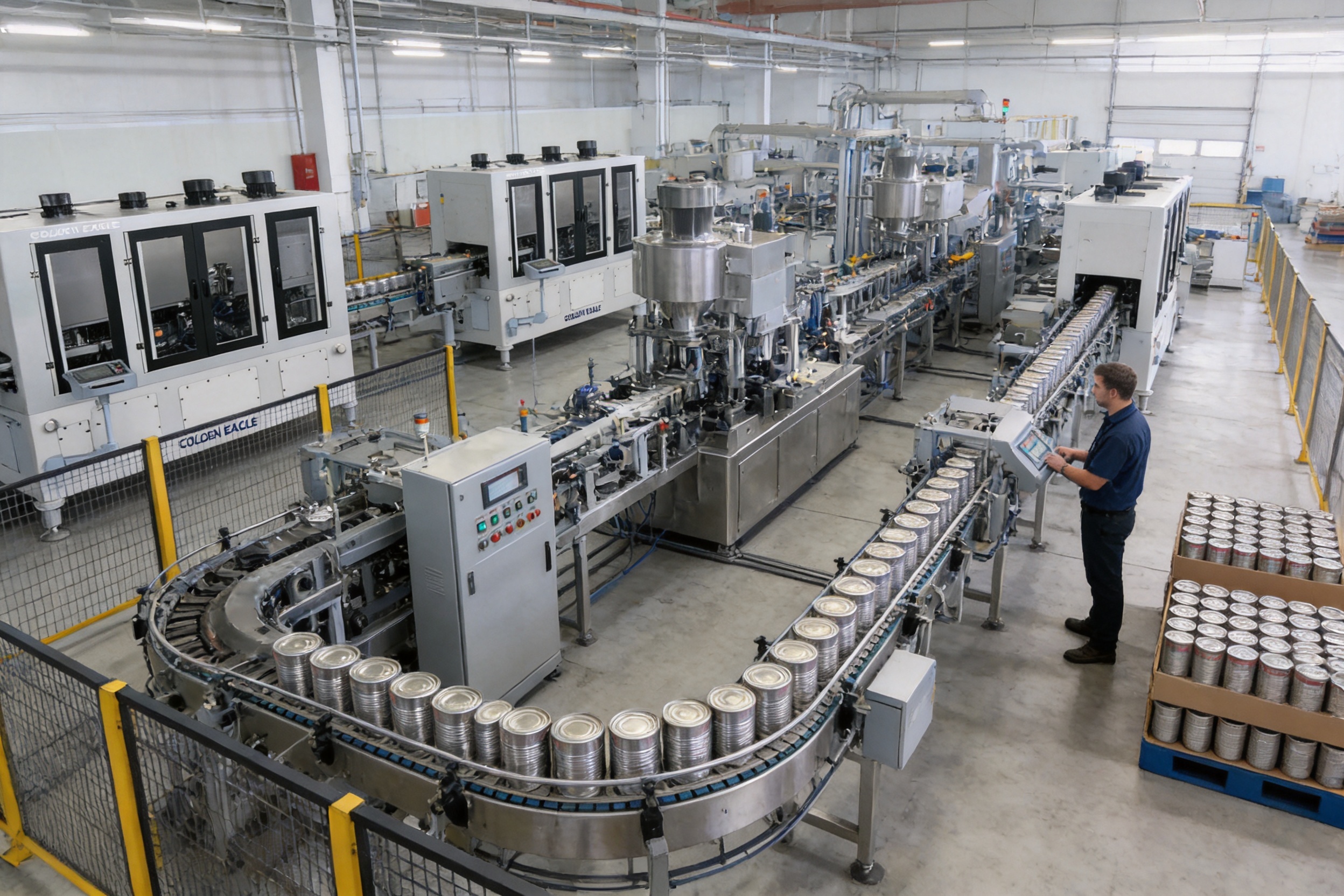
Food and beverage cans must provide mechanical protection, maintain product quality, and support efficient filling and distribution. The can body must withstand handling and stacking, while the end and seam must remain secure throughout filling, sterilization where applicable, storage, and transportation. Necking, flanging, beading, and seaming equipment contributes directly to these requirements.
For food cans, the machine may be used after body welding and trimming to prepare the body for end attachment. The exact process depends on whether the can requires a straight body, a necked opening, reinforcing beads, or a particular end profile. For beverage cans and other products, the selected operation may depend on the closure system, filling line, internal pressure, and required appearance.
Manufacturers may also use the equipment for cans with printed or coated tinplate. In these applications, forming quality must be controlled carefully to avoid scratching, cracking, or damaging the coating. Tool surfaces, alignment, lubrication, and forming speed should be selected to protect the decorative finish while achieving the required shape.
The machine’s dimensional range makes it suitable for a variety of small and medium metal containers. It can support manufacturers that produce standard products in large quantities as well as companies that serve multiple customers with different can specifications. Before production, sample cans should be tested for roundness, height, flange width, neck diameter, bead dimensions, seam quality, and overall appearance.
Correct installation begins with preparation of the factory foundation, floor level, electrical supply, material flow, ventilation, lighting, and safety access. The machine should be positioned so that operators can safely load, inspect, adjust, clean, and service the equipment. Upstream and downstream conveyors should be aligned with the machine’s infeed and discharge points.
During commissioning, technicians normally verify the mechanical alignment, tooling installation, lubrication, drive operation, sensor functions, guarding, emergency stops, and control settings. The machine should first be operated at low speed without production material, followed by controlled trials with sample cans. Gradual speed increases allow the team to identify vibration, feeding, positioning, or forming problems before full production begins.
Tool adjustment is a critical commissioning activity. Necking tools must produce the specified reduction without excessive wrinkling or deformation. Flanging tools must form a consistent edge. Beading tools must create the required ring profile at the correct height. Seaming tools must establish the intended seam dimensions and interlock. Each result should be checked against the approved can drawing and quality standards.
Operator training should include machine start-up and shutdown, normal adjustment, changeover, lubrication, cleaning, inspection, troubleshooting, and emergency procedures. Operators should understand that small changes in material, tool wear, line speed, or can-body quality can affect the final result. Early detection of abnormal noise, vibration, scrap, or seam measurements can prevent larger production problems.
Preventive maintenance is essential for a high-speed can-making machine. Regular inspection should cover forming tools, bearings, guides, drive components, fasteners, lubrication points, sensors, electrical connections, and safety devices. Worn tools should be replaced or refurbished before they create out-of-tolerance cans or damage the body material.
Cleanliness is particularly important in food and beverage can production. Metal particles, lubricant residue, dust, and coating fragments should not accumulate around forming or transfer areas. Cleaning procedures should be performed according to the machine manual and the customer’s factory hygiene requirements. Care should be taken to avoid introducing cleaning materials into sensitive electrical or bearing components.
Maintenance records can help identify recurring problems and predict replacement needs. A record may include operating hours, tool changes, lubrication dates, adjustments, rejected-can causes, and service activities. This information supports more accurate planning of spare parts and reduces unexpected downtime.
The supplier’s ability to provide spare parts and technical support is an important part of equipment ownership. Fast access to suitable replacement components can limit the effect of wear or accidental damage. Customers should clarify the recommended spare-parts list, delivery time, part identification method, warranty conditions, and remote or on-site support arrangements before commissioning.
The first selection question is the required operation. A customer requiring only a top-necked can may select the GT351-N-L configuration. A can requiring three reductions and a flange may require the GT3B54-NNNF or a related multi-stage arrangement. A reinforcing bead requires the GT3B51-B-L, while a final top closure requires the GT3B51-S-C.
The second question is production volume. The eight-head three-shrinkage model has the highest listed output range, from 200 to 500 cans per minute. The four-head and six-head models are listed from 80 to 150 cans per minute. Production planners should compare these figures with actual demand, planned operating hours, expected line efficiency, changeover time, and future growth.
The third question is can geometry. Nominal diameter and height are not enough to finalize a machine. The supplier should review the complete can drawing, including body diameter, neck diameter, flange dimensions, bead profile, end dimensions, material thickness, coating, and allowable tolerances. This technical review helps confirm whether the selected machine and tooling can produce the intended container.
The fourth question is line compatibility. The machine should be evaluated alongside the body welder, trimmer, conveyor, end feeder, seamer, tester, packer, and control system. The slowest process can limit the output of the entire line. A machine with a high nominal capacity may not improve overall production if upstream or downstream equipment cannot maintain the same rate.
The fifth question is changeover. Manufacturers producing multiple can sizes should ask about tooling replacement, adjustment points, setup time, standard accessories, and repeatability after changeover. A machine that is easy to adjust and inspect can provide a significant operational advantage even if its nominal speed is similar to another model.
The supplied data identifies the product as a necking, flanging, beading, and seaming four-station can making machine for the food and beverage can-making category. The listed models are related but are not identical in function, head count, dimensional range, capacity, or power. Customers should therefore avoid treating the data as a single fixed machine specification. Instead, it represents a product series from which the correct process configuration can be selected.
The source material includes an output reference of 20 to 100 cans per minute in the table heading, while the individual model entries list 80 to 150 cans per minute and 200 to 500 cans per minute. For accurate purchasing, the individual model specification and the final technical offer should be confirmed with the manufacturer. This is particularly important when the machine is integrated into a complete production line or when a customer requires a guaranteed production rate.
Power ratings should also be confirmed for the complete machine, including drives, controls, auxiliary systems, lubrication, and any feeding or transfer equipment supplied as part of the project. Electrical voltage, frequency, control language, safety standards, and factory interface requirements should be agreed before production.
Can-making equipment is often installed in factories far from the supplier’s manufacturing base. Clear technical communication is therefore important from the initial inquiry through final acceptance. The customer should receive drawings, utility requirements, foundation information, operating instructions, maintenance recommendations, tooling lists, and quality-check procedures.
The manufacturer provides installation, commissioning, technical guidance, operation training, and spare-parts support. These services can shorten the learning curve for new operators and help the customer achieve stable production more quickly. Training should be adapted to the customer’s actual machine configuration and can products rather than being limited to general theory.
International experience also helps a supplier understand the practical challenges of export projects, including packing, shipping, customs documentation, remote communication, installation scheduling, and local service coordination. The company’s equipment has been supplied to customers in numerous countries across several continents, demonstrating experience with international business and machinery delivery.
A strong after-sales relationship is especially valuable for machines that form, transfer, and seam thin metal at high speed. Customers should maintain regular communication with the supplier regarding production data, maintenance findings, tooling wear, and any quality issues. Early technical support can prevent a small adjustment problem from becoming a major line stoppage.
The value of the four-station can making machine comes from more than its individual speed rating. It combines specialized forming functions, broad dimensional compatibility, multi-head production, precision manufacturing, mold expertise, and after-sales support. These features help address the main concerns of a can producer: output, consistency, flexibility, operating cost, and long-term serviceability.
For a high-volume producer, the eight-head three-shrinkage configuration can support rapid necking operations and reduce the number of machines needed for successive reductions. For a diversified producer, the four-head and six-head models provide practical solutions for top necking, multi-stage necking with flanging, beading, and top seaming. The product family can therefore support both focused and more comprehensive production strategies.
The manufacturer’s experience since 1978, workforce of more than 350 personnel, CNC machining resources, quality and environmental certifications, and production history exceeding 10,000 pieces of can and can-lid equipment provide a strong foundation for industrial supply. Its experience in can-making molds is an additional advantage because forming tools are central to final product quality.
When correctly specified, installed, and maintained, this equipment can help a tinplate can factory achieve stable forming, reliable end preparation, efficient production, and a more organized manufacturing process. It is a suitable solution for manufacturers seeking equipment for food and beverage can lines and for customers planning a larger tinplate can-making machinery production line.
The machine family can perform top necking, multiple necking reductions, flanging, beading, and top seaming. The exact operation depends on the selected model. Some configurations combine several necking stages with flanging, while others are dedicated to beading or seaming.
The listed models support can diameters from 52 to 99 millimeters. The exact usable range depends on the selected model, tooling, can drawing, and material specification.
Listed height ranges extend from approximately 60 to 220 millimeters, depending on the model. The eight-head three-shrinkage model is listed for 70 to 160 millimeters, while several four-head and six-head models support heights up to 220 millimeters.
The GT3B21B-T eight-head three-shrinkage model has the highest listed output, at 200 to 500 cans per minute. Actual production depends on can dimensions, material, tooling, line synchronization, and operating conditions.
The GT351-N-L four-head model is listed for top necking. It supports can diameters from 52 to 99 millimeters, heights from 80 to 220 millimeters, and a listed output of 80 to 150 cans per minute.
The GT3B54-NNNF four-head model is listed for three necking operations followed by flanging. It supports a listed can height range of 70 to 220 millimeters and an output of 80 to 150 cans per minute.
The GT3B51-B-L four-head model is listed as the beading machine. Its listed total power is 4 kilowatts, with a can diameter range of 52 to 99 millimeters and a height range of 70 to 220 millimeters.
The GT3B51-S-C six-head model is listed for top seaming. It supports can diameters from 52 to 99 millimeters, can heights from 60 to 220 millimeters, and a listed output of 80 to 150 cans per minute.
Yes. The equipment can be combined with body-making, welding, trimming, can-end production, feeding, conveying, inspection, and packing equipment. The final line arrangement should be designed according to the can specification and required capacity.
Tooling determines the shape and dimensions of the neck, flange, bead, and seam. Correct tooling is essential for stable forming, low scrap, and reliable end attachment. The manufacturer’s experience in both machinery and can-making molds helps support coordinated equipment and tooling selection.
The customer should provide the can drawing, body diameter, height, neck profile, flange dimensions, bead requirements, end type, material thickness, coating, desired output, electrical requirements, and line arrangement. Sample cans or technical drawings may also be required for testing and tooling design.
The company provides installation, commissioning, technical guidance, operation training, and spare-parts support. The exact scope should be confirmed in the technical agreement and sales contract.
The four-station necking, flanging, beading, and seaming can making machine family provides a practical and scalable solution for tinplate food and beverage can production. Its range of configurations allows manufacturers to select equipment for individual forming operations or combine several models into a coordinated production line. With listed can diameters from 52 to 99 millimeters, height ranges up to 220 millimeters, and output capacities extending to 500 cans per minute for the high-speed eight-head configuration, the series can serve a wide range of industrial requirements.
Its advantages are supported by specialized can-making design, multi-head production, controlled forming processes, precision CNC machining, mold-manufacturing capability, formal quality and environmental management systems, and extensive manufacturing experience. The company’s production history, international export experience, engineering resources, and after-sales services further strengthen its suitability for customers seeking dependable can-making machinery.
Before purchase, users should confirm the exact model, can drawing, tooling, capacity, power, line interfaces, and acceptance standards. With correct specification and professional commissioning, the equipment can help manufacturers improve can quality, reduce process variation, increase production efficiency, and build a reliable foundation for a complete tinplate can production line.
1. Product specification information for necking, flanging, beading, and top-seaming can-making machines, supplied for technical evaluation.
2. Company manufacturing and engineering profile for Zhejiang Golden Eagle Food Machinery Co., Ltd.
3. ISO 9001 quality management system principles for manufacturing organizations.
4. ISO 14001 environmental management system principles for industrial manufacturers.
5. General technical principles of tinplate can body forming, flange preparation, bead forming, and double seaming.
6. Industrial guidance on can-making machinery installation, commissioning, preventive maintenance, and operator training.
Related Products

Founded in 1978, the company is one of the largest can-making machinery well-known companies at home and abroad.
Product Categories
Contact Information
Zhongshatou Shenjiamen Zhoushan Zhejiang China
+86-580-3056646

 English
 中文简体
中文简体
 русский
 عربى
عربى
 Español