2026-04-04
In the fast-paced world of food packaging, the demand for efficient, reliable, and cost-effective can making solutions has never been higher. Canned food remains a staple in households globally, offering long shelf life, convenience, and protection for perishable items. At the heart of this industry lies can making machinery—equipment that transforms raw materials into finished, functional cans. Among the latest innovations in this field is the Necking Flanging Beading High Performance Can Making Machine, a versatile and high-speed solution designed to meet the evolving needs of food packaging manufacturers. This article explores the machine’s key features, advantages over competitors, the advanced manufacturing processes behind it, and the strengths of the company that produces it. Additionally, a detailed specification table, a Q&A section, and references are included to provide a comprehensive overview.
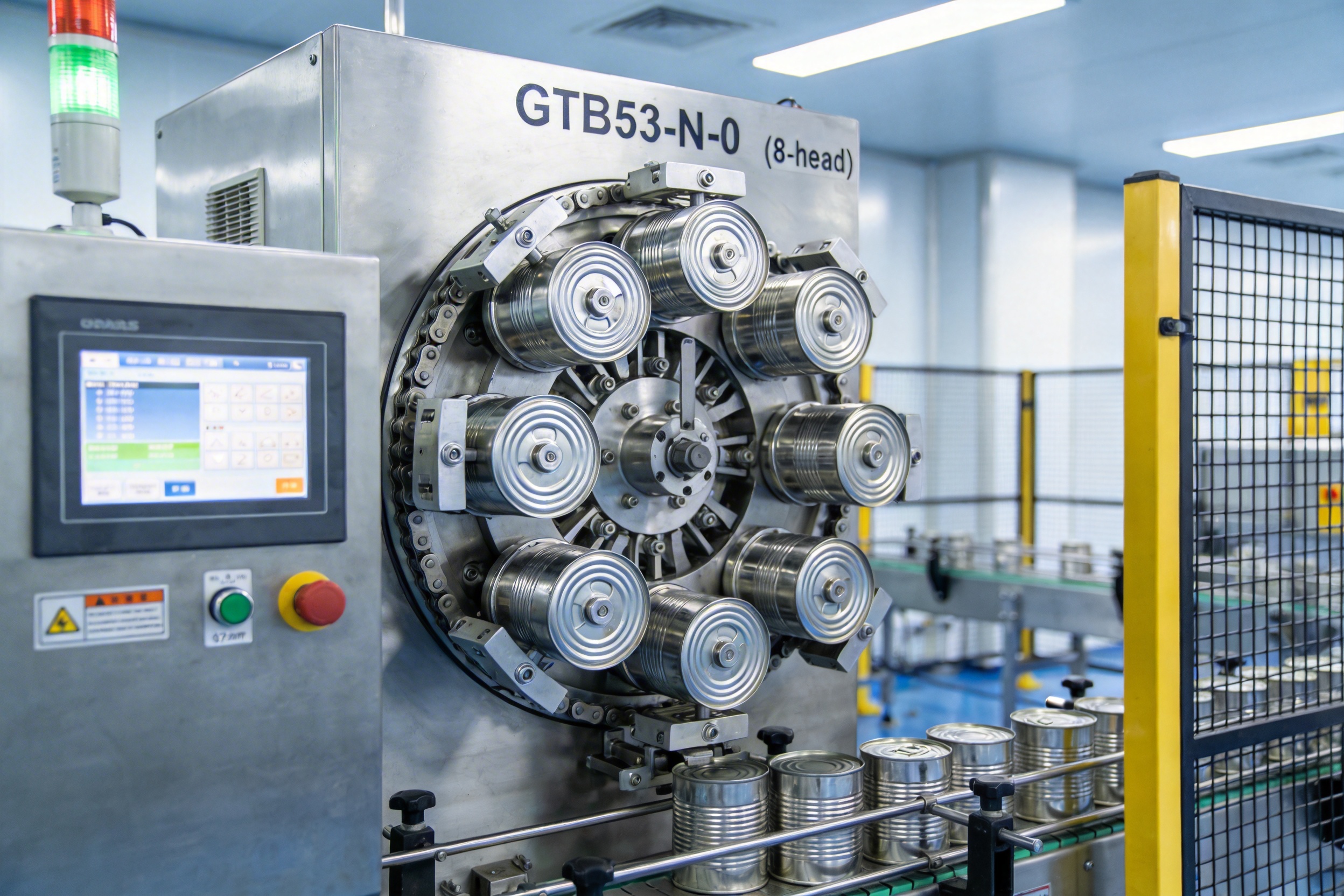
Before diving into the machine’s details, it’s important to understand the role of necking, flanging, and beading in can production. Necking reduces the diameter of the can’s top to fit a lid, flanging creates a rim for seaming the lid, and beading adds strength to the can body to prevent deformation during handling and storage. Traditionally, these processes were performed by separate machines, leading to longer production lines, higher labor costs, and increased risk of errors. The Necking Flanging Beading High Performance Can Making Machine integrates all three processes into one unit, streamlining production and enhancing efficiency.
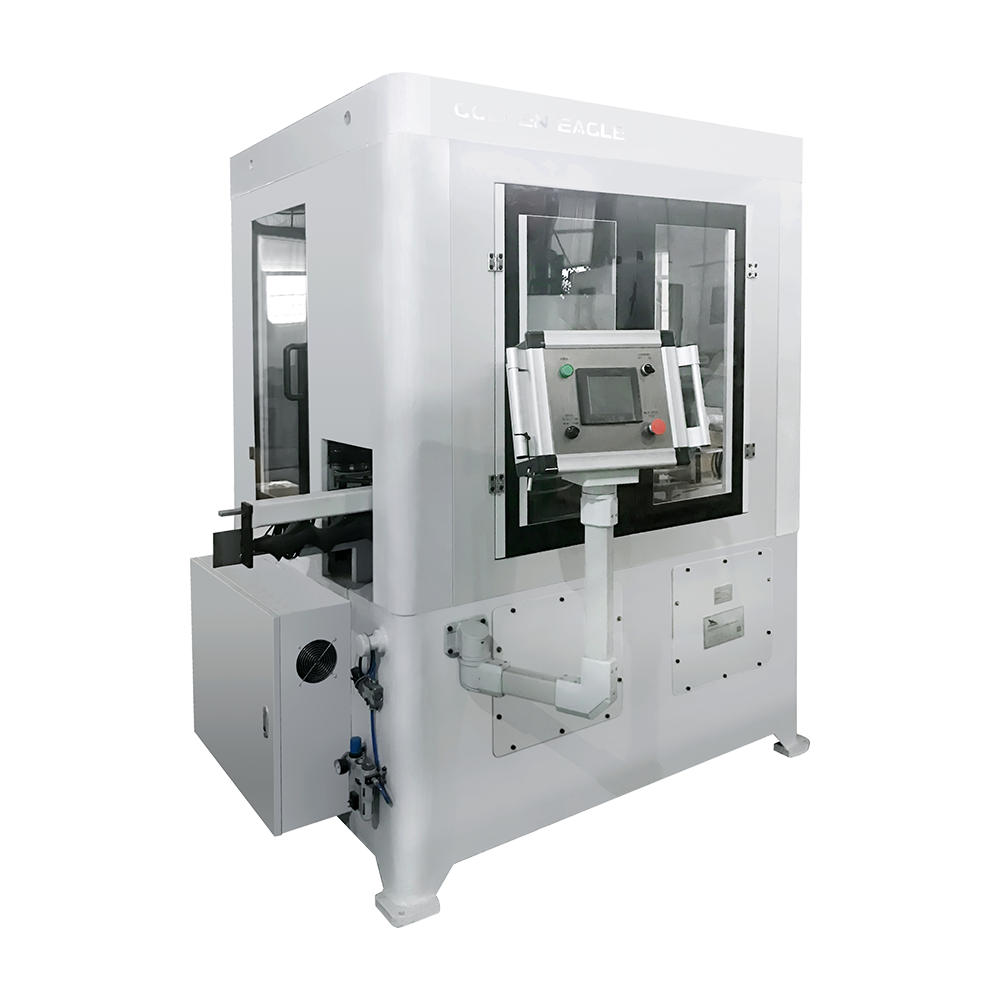
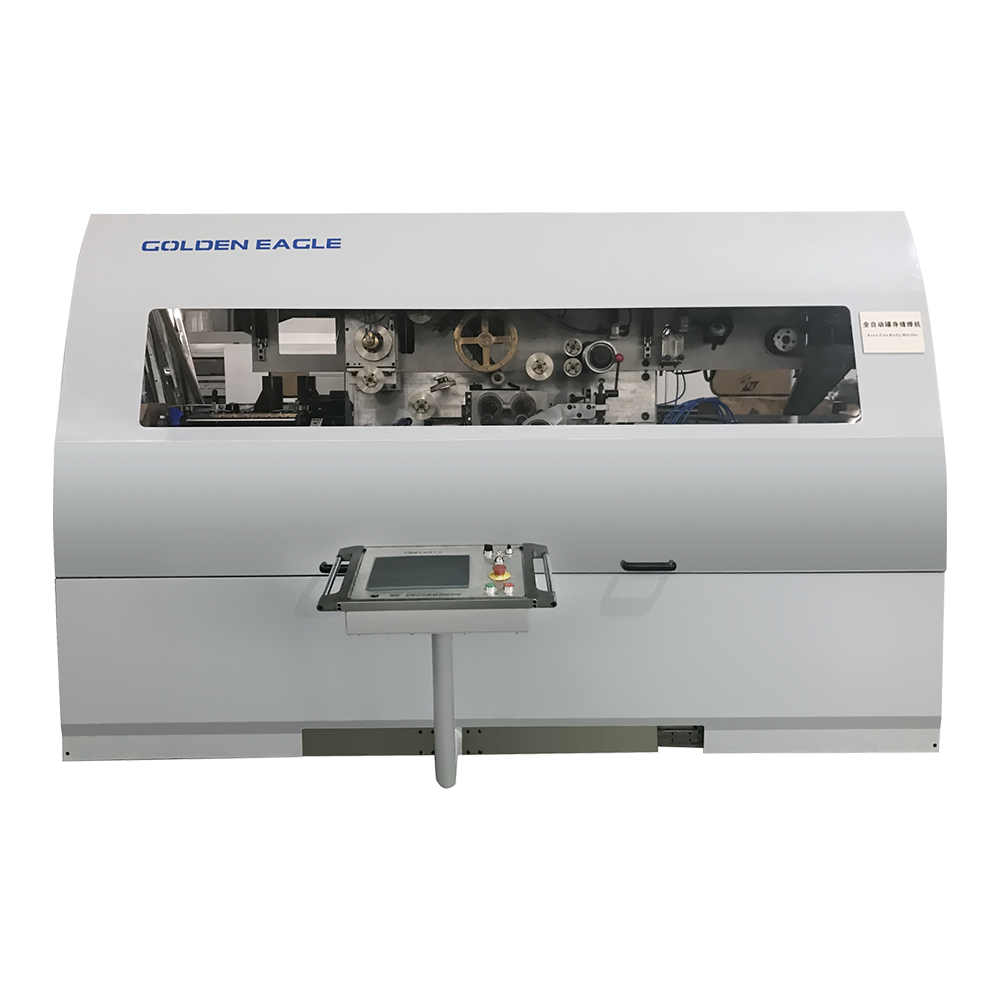
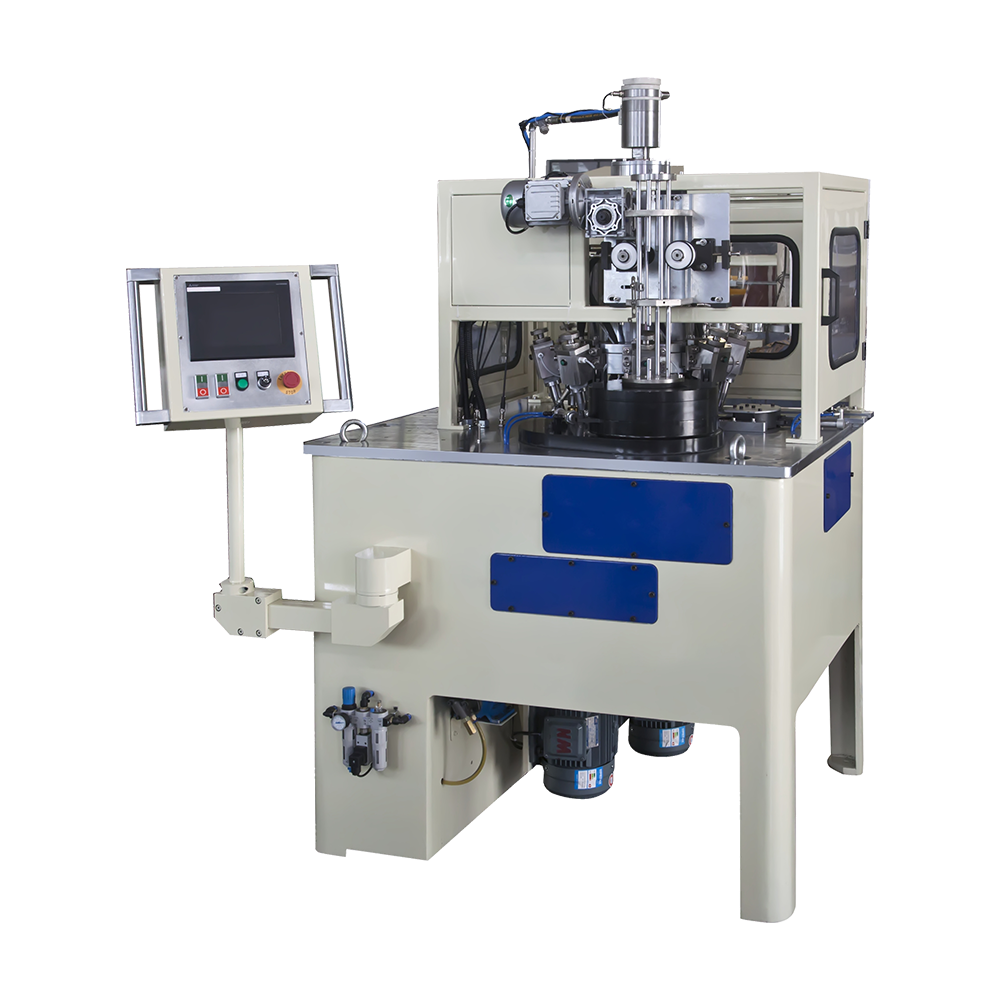
The Necking Flanging Beading High Performance Can Making Machine is a vertical automatic combination machine specifically engineered for food can manufacturing. Its core function is to perform three critical operations—necking, flanging, and beading—simultaneously, making it an all-in-one solution for can producers. Let’s break down its key features based on the model GT3B53-NFB-1 (8-Head), one of the most popular variants:
Model: GT3B53-NFB-1 (8-Head)
Operation Type: Fully Automatic—this eliminates the need for manual intervention, reducing human error and increasing production consistency.
Primary Applications: Necking (reducing can top diameter), Flanging (creating a rim for lid seaming), Beading (adding structural strength to the can body).
Can Size Compatibility: Diameter range of 52mm to 99mm, which covers a wide spectrum of common food can sizes—from small tuna cans to larger soup or vegetable cans.
Production Speed: 200 to 550 cans per minute (cpm), a significant improvement over traditional separate machines that often operate at 150-400 cpm.
What sets this machine apart is its modular design, which allows for customization based on production volume and specific can size requirements. For example, the 8-head variant is ideal for medium to large-scale production, while the 4-head or 6-head variants are suitable for smaller operations or niche markets.
Another key feature is its user-friendly control system, which features a touchscreen interface for easy operation and monitoring. Operators can adjust parameters such as speed, can size, and process settings in real time, ensuring optimal performance and minimal downtime. The machine also includes safety features like emergency stop buttons, protective guards, and fault detection systems to prevent accidents and ensure operator safety.
In a competitive market, the Necking Flanging Beading High Performance Can Making Machine stands out due to several key advantages that address the pain points of food can manufacturers. Below are the most notable benefits:
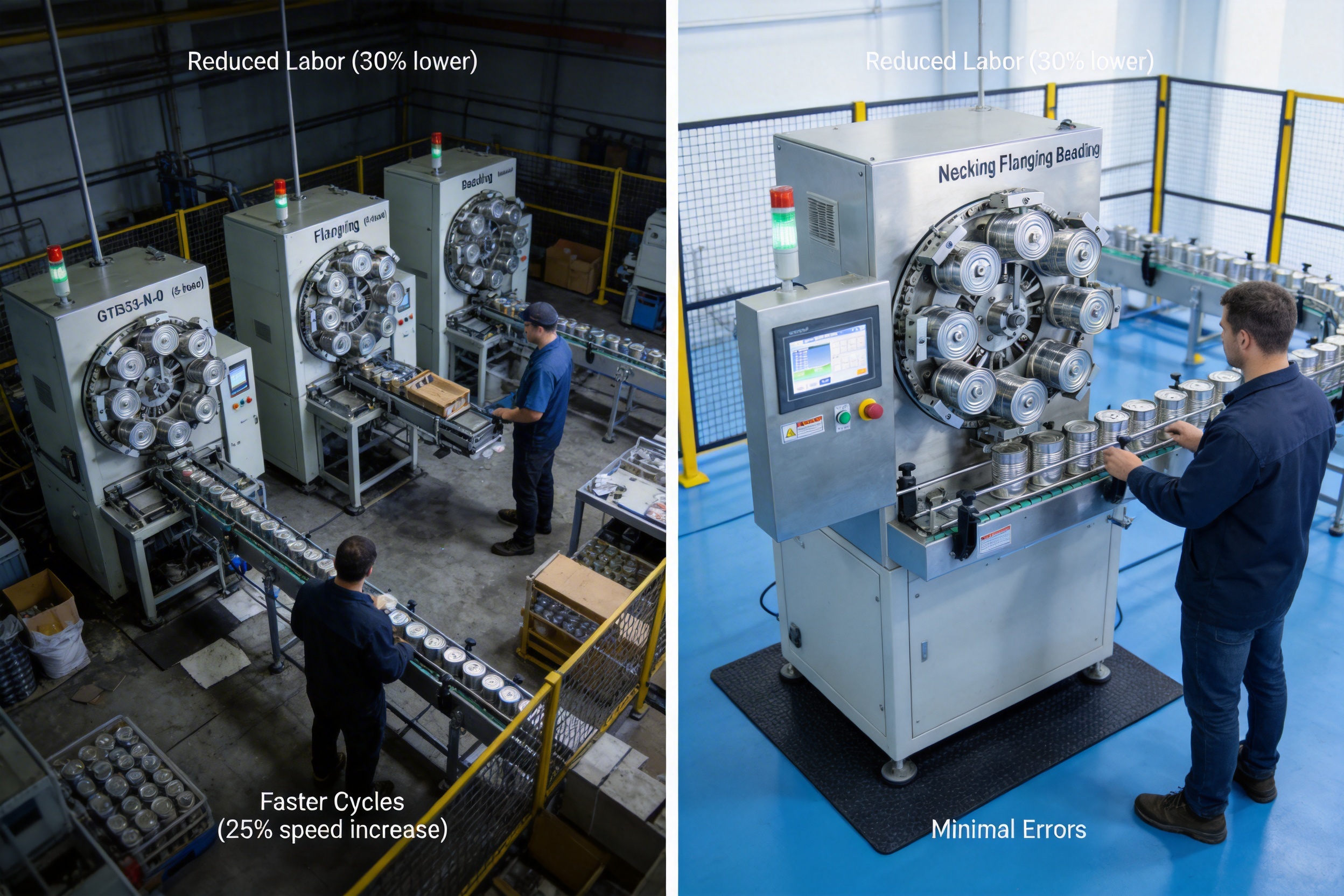
Unlike traditional setups that use three separate machines for necking, flanging, and beading, this machine combines all three processes into one unit. This integration offers multiple benefits:
Reduced Production Line Length: Eliminating two additional machines cuts down on floor space, making it ideal for factories with limited space.
Lower Labor Costs: A single operator can manage the machine, whereas separate machines require multiple operators, reducing labor expenses by up to 30%.
Minimized Material Handling Errors: With no need to transfer cans between machines, the risk of dents, scratches, or misalignment is significantly reduced, improving product quality.
Faster Production Cycles: Continuous processing from necking to beading eliminates idle time between steps, increasing overall production speed by 20-25% compared to separate machines.
The machine’s production speed of 200-550 cpm is a major advantage over competitors. For example, many similar combined machines on the market top out at 400 cpm, making this model ideal for high-volume production. Additionally, its wide can size range (52-99mm diameter) covers most common food can sizes, eliminating the need for multiple machines to handle different can types. This versatility allows manufacturers to adapt quickly to changing market demands without investing in new equipment.
The machine’s design is based on decades of engineering expertise, ensuring high precision and reliability. Key factors contributing to this include:
CNC Machining Components: Critical parts are manufactured using CNC high-precision equipment, ensuring tight tolerances and consistent performance. This reduces wear and tear, extending the machine’s lifespan.
Alignment with Global Standards: The design principles align with those of leading European machinery manufacturers (e.g., KRUPP, SOUDRONIC, ALFONS-HAAR), ensuring compliance with international quality and safety standards.
Proven Track Record: The company has produced over 10,000 can and can lid machines, with many in operation for decades. This track record demonstrates the machine’s durability and reliability.
The manufacturer offers OEM (Original Equipment Manufacturer) and ODM (Original Design Manufacturer) services, allowing customers to customize the machine to their specific needs. This includes adjusting can size ranges, production speeds, and adding custom features. For example, a customer specializing in small-diameter cans can request a variant optimized for 52-65mm diameters, while a high-volume producer can opt for a 10-head model for faster output.
Despite its advanced features and high performance, the machine is priced competitively compared to similar models from European or North American manufacturers. This makes it accessible to small and medium-sized enterprises (SMEs) as well as large-scale producers, expanding its market reach.
The Necking Flanging Beading High Performance Can Making Machine is not just a product of innovation—it’s the result of rigorous, advanced manufacturing processes that prioritize quality, precision, and efficiency. The manufacturer’s 46+ years of experience in can making machinery has allowed it to refine these processes to perfection. Below are the key processes:
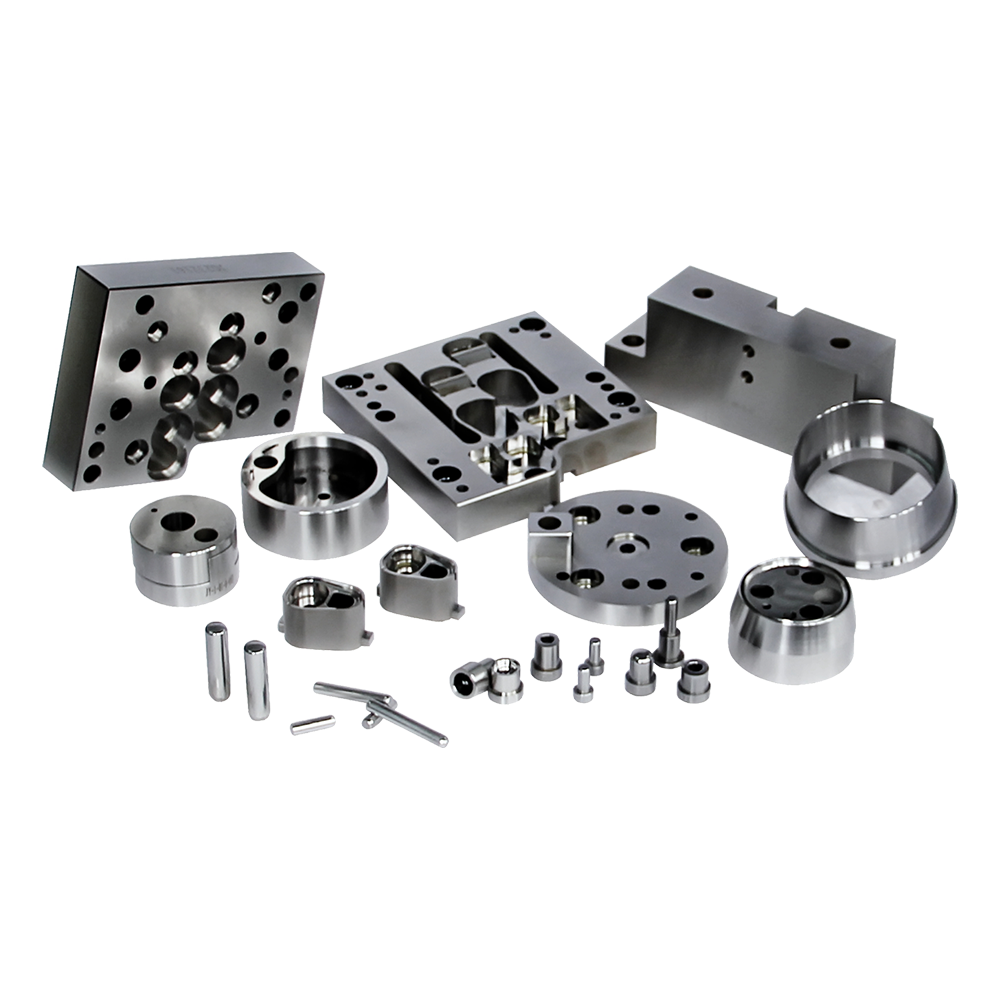
All critical components of the machine (e.g., rotating heads, can holders, control mechanisms) are manufactured using CNC (Computer Numerical Control) machining equipment. This process ensures that each part is produced with extreme precision, adhering to tight tolerances (often within 0.01mm). CNC machining also allows for complex shapes and designs that are difficult to achieve with manual methods, improving the machine’s performance and durability.
For example, the 8-head rotating assembly is machined from high-grade steel using CNC lathes and mills. This ensures that each head operates in perfect synchronization, reducing vibration and increasing production speed. The precision of these components also minimizes wear, extending the machine’s lifespan by up to 15 years with proper maintenance.
The machine’s design is based on the principles of leading European machinery manufacturers, such as KRUPP, SOUDRONIC, and ALFONS-HAAR. This alignment ensures that the machine meets international quality standards and is compatible with global production lines. However, the manufacturer has also incorporated its own practical experience and innovations to improve upon these designs. For example, the company has developed a unique lubrication system that reduces friction between moving parts, increasing efficiency and reducing maintenance costs.
Quality control is a top priority at every stage of the manufacturing process. The manufacturer holds ISO9001 (Quality Management System) and ISO14001 (Environmental Management System) certifications, which require strict adherence to quality standards. Key quality control measures include:
Raw Material Inspection: All raw materials (steel, aluminum, electronic components) are inspected for quality and compliance before being used in production.
In-Process Testing: Each component is tested during manufacturing to ensure it meets specifications. For example, the rotating heads are tested for balance and synchronization before assembly.
Final Machine Testing: After assembly, each machine undergoes a 72-hour continuous run test to simulate real-world production conditions. This test checks for performance, speed, and reliability, ensuring that the machine meets or exceeds customer expectations.
Certification Compliance: The machine is tested for compliance with international safety standards (e.g., CE, UL) to ensure it is safe for use in global markets.
The manufacturer is committed to sustainable manufacturing, as evidenced by its ISO14001 certification. Key sustainable practices include:
Energy Efficiency: The machine is designed to be energy-efficient, with a total power consumption of 7.5kw—significantly lower than many competitors (which often use 10-15kw). This reduces operational costs and environmental impact.
Waste Reduction: CNC machining minimizes material waste by using precise cutting techniques. Additionally, the manufacturer recycles 90% of its metal waste, reducing its carbon footprint.
Eco-Friendly Lubricants: The machine uses biodegradable lubricants that are non-toxic and safe for the environment, eliminating the risk of soil or water contamination.
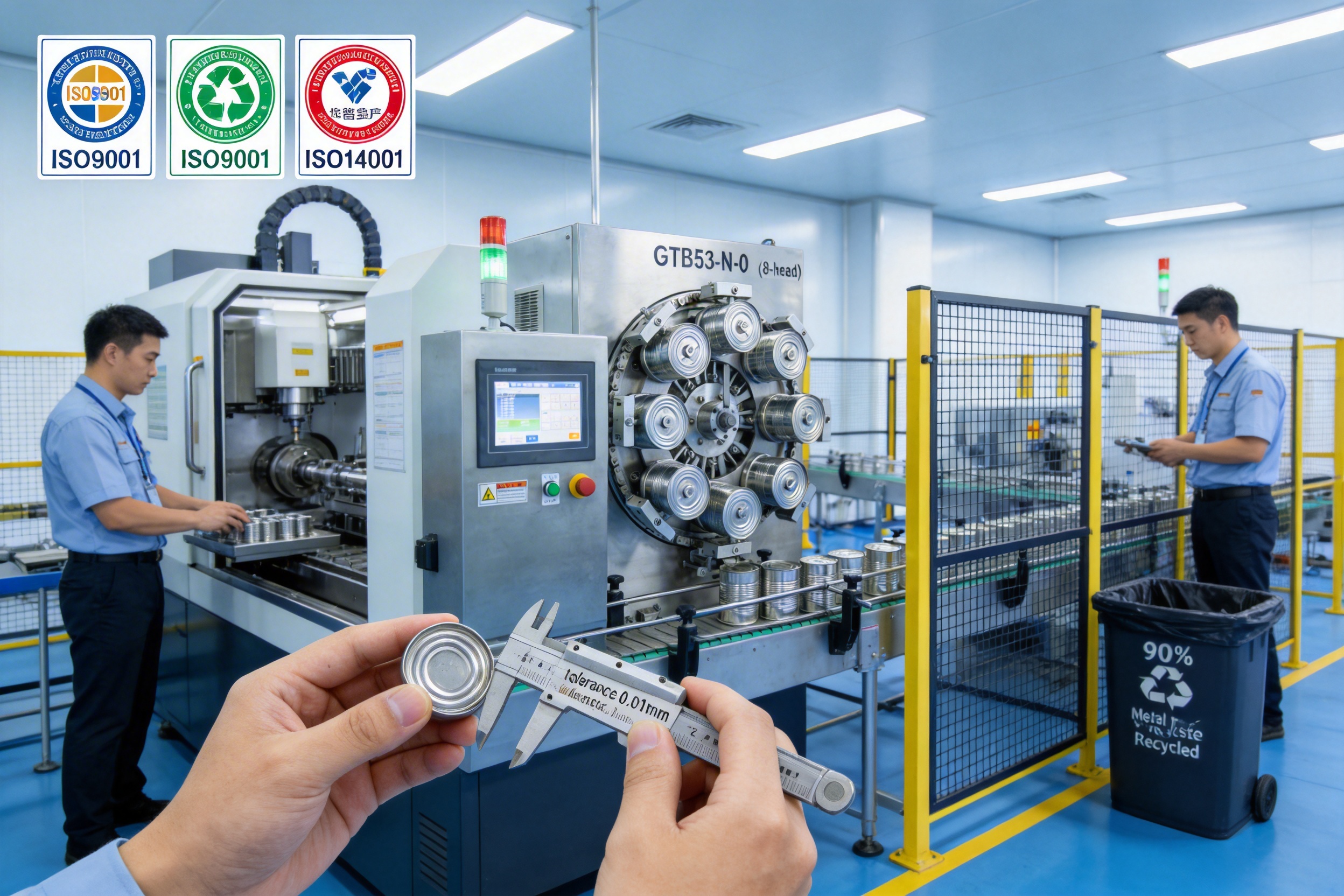
These advanced manufacturing processes not only ensure the machine’s quality and performance but also align with the global trend toward sustainable and efficient production.
The Necking Flanging Beading High Performance Can Making Machine is produced by a company with a long history of excellence in can making machinery. Founded in 1978, the company has grown to become one of the largest and most respected manufacturers in the industry. Below are its key strengths:
With over 46 years of experience, the company has a deep understanding of the can making industry and its evolving needs. This experience has allowed it to refine its products and processes, resulting in machines that are reliable, efficient, and tailored to customer needs. The company has produced over 10,000 can and can lid machines, which are used in factories across the globe.
The company employs a team of more than 350 well-trained personnel, including experienced design and development engineers. These engineers are responsible for innovating new products, improving existing ones, and customizing machines for specific customer requirements. The team’s expertise in mechanical engineering, electronics, and automation ensures that the machines are at the cutting edge of technology.
The company’s products are exported to over 20 countries across Europe, Asia, Africa, North America, South America, and Oceania. Some of its key markets include Germany, Italy, the UK, Spain, Russia, Australia, Jordan, Malaysia, the Philippines, Pakistan, Egypt, Algeria, Turkey, Mexico, Nigeria, and Iran. This global reach demonstrates the machine’s compatibility with diverse production environments and customer needs.
The company provides comprehensive after-sales service to ensure that customers get the most out of their machines. Key services include:
Installation and Commissioning: Trained technicians install and commission the machine on-site, ensuring it is set up correctly and operates at optimal performance.
Technical Training: On-site training is provided for operators and maintenance staff, covering machine operation, maintenance, and troubleshooting.
24/7 Technical Support: The company offers round-the-clock technical support via phone, email, or video call to address any issues that may arise.
Fast Parts Supply: The company maintains a large inventory of spare parts, ensuring that replacement parts are shipped within 72 hours for critical components. This minimizes downtime and keeps production running smoothly.
Warranty: A 12-month warranty is provided for all machines, with extended warranty options available for an additional fee.
In addition to the Necking Flanging Beading Machine, the company offers a complete line of can making machinery and molds, including:
- Food can production lines
- Beverage can production lines
- Can lid production lines
- Chemical tank production lines
- Aerosol canister production lines
- Two-piece can production lines
- Pop can production lines
This complete product line allows customers to source all their can making equipment from one supplier, simplifying procurement and ensuring compatibility between machines.
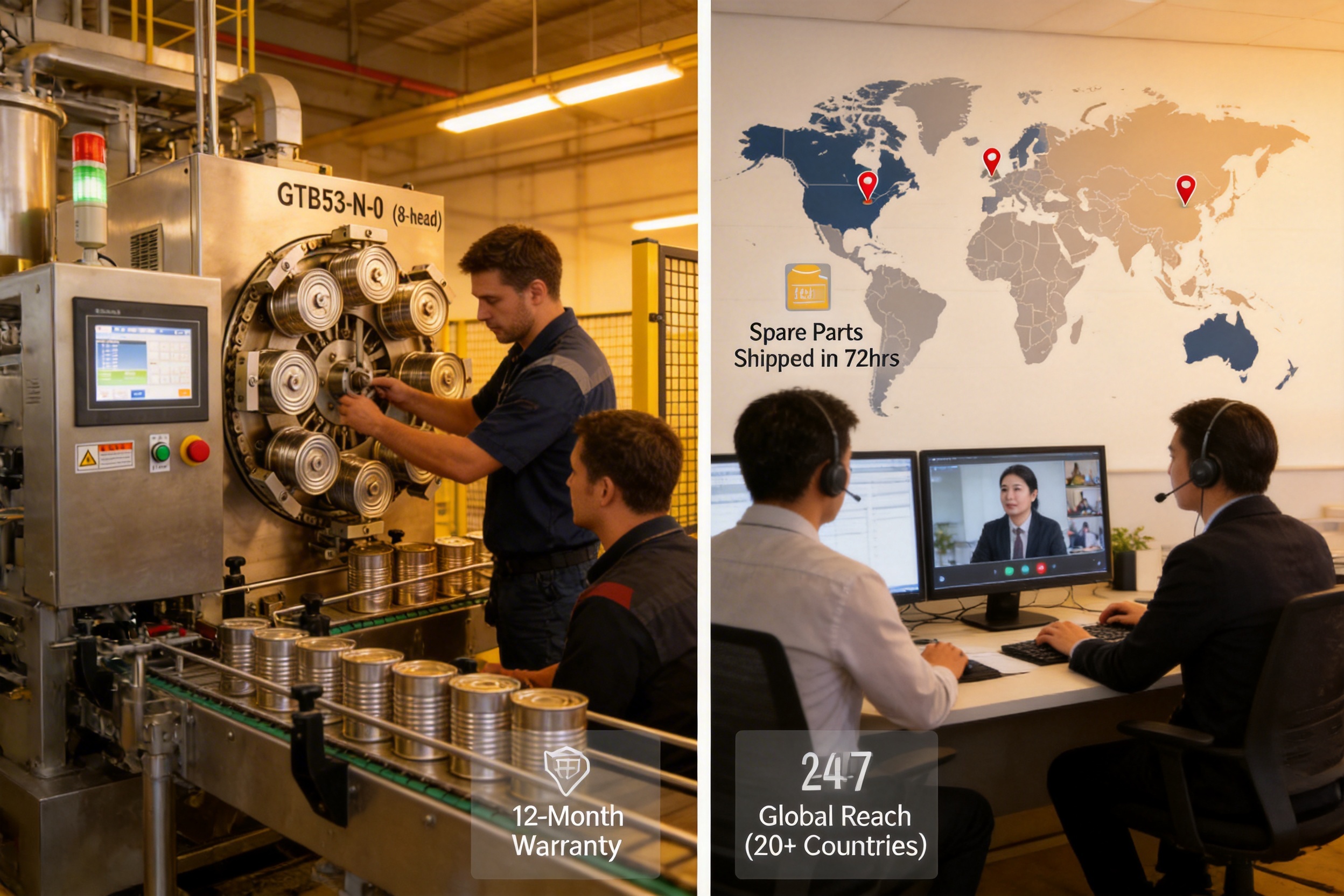
These strengths make the company a trusted partner for food can manufacturers worldwide, from SMEs to large multinational corporations.
Below is a comprehensive table of specifications for various models of the Necking Flanging Beading High Performance Can Making Machine. This table includes key details such as model number, function, can size, production speed, and power consumption.
| Model | Function | Can Diameter | Can Height | Output Capacity (Cans/min) | Total Power |
|---|---|---|---|---|---|
| GT3B53-NFS-3 (6-Head) | Necking, Flanging, Seaming | Φ52-99mm | H60-160mm | 60-160cpm | 7.5kw |
| GT3B53-NFS-5 (8-Head) | Necking, Flanging, Seaming | Φ52-99mm | H60-160mm | 200-500cpm | 7.5kw |
| GT3B53-FBS-3 (6-Head) | Flanging, Beading, Seaming | Φ52-99mm | H60-160mm (Beading H135mm) | 80-350cpm | 7.5kw |
| GT3B53-FBS-5 (8-Head) | Flanging, Beading, Seaming | Φ52-99mm | H60-160mm (Beading H135mm) | 200-550cpm | 7.5kw |
| GT3B53-NFB-3 (4-Head) | Necking, Flanging, Beading | Φ52-99mm | H60-160mm (Beading H135mm) | 80-350cpm | 7.5kw |
| GT3B53-NFB-1 (8-Head) | Necking, Flanging, Beading | Φ52-99mm | H60-160mm (Beading H135mm) | 200-550cpm | 7.5kw |
| GT3B53-NFB (10-Head) | Necking, Flanging, Beading | Φ52-73mm | H60-160mm (Beading H135mm) | 450-650cpm | 7.5kw |
| GT3B53-NNF (10-Head) | Necking, Necking, Flanging | Φ52-73mm | H60-160mm (Beading H135mm) | 20-100cpm | 7.5kw |
| GT3B42-NFB-1 (3-Head) | Necking, Flanging, Beading | Φ99-153mm | H150-270mm | 20-100cpm | 7.5kw |
| GT3B42-FBS-1 (3-Head) | Flanging, Beading, Seaming | Φ99-153mm | H110-220mm | 20-180cpm | 7.5kw |
| GT3B42-FBS-2 (6-Head) | Flanging, Beading, Seaming | Φ99-153mm | H110-220mm | 20-100cpm | 7.5kw |
| GT3B42-F(R)BS-2A (3+4+3 Head) | Flanging, Beading, Seaming | Φ130-153mm | H110-220mm | 20-100cpm | 7.5kw |
| GT3B53-F(R)BS-3 (4+6+4 Head) | Flanging, Beading, Seaming | Φ73-99mm | H80-200mm | 20-150cpm | 7.5kw |
As shown in the table, the machine is available in a wide range of models to suit different production needs. For example, the GT3B53-NFB (10-Head) model is ideal for high-volume production with a speed of up to 650cpm, while the GT3B42-NFB-1 (3-Head) model is suitable for larger can sizes (Φ99-153mm).
Below are answers to common questions from food can manufacturers about the Necking Flanging Beading High Performance Can Making Machine:
A1: The machine is designed to produce a wide range of food cans, including those for canned fruits, vegetables, soups, tuna, beans, and other perishable items. Its can size range (52-99mm diameter, 60-160mm height) covers most common food can sizes. For larger cans (Φ99-153mm), the GT3B42 series models are available.
A2: Yes, the machine is compatible with both tinplate and aluminum cans. Its design allows for easy adjustment to handle different materials, ensuring optimal performance regardless of the can material.
A3: Yes, the machine’s modular design allows for easy integration into existing can making lines. It can be connected to other equipment such as can body welding machines, lid seaming machines, and labeling machines, ensuring a seamless production process.
A4: The company provides a 12-month warranty for all machines from the date of installation. Extended warranty options are available for an additional fee, which can be customized based on customer needs.
A5: Yes, the company provides on-site training for operators and maintenance staff. The training covers machine operation, maintenance procedures, and troubleshooting, ensuring that staff can operate the machine safely and efficiently.
A6: Installation and commissioning typically take 3-5 working days, depending on the complexity of the production line and the customer’s location. Trained technicians from the company will handle the installation and ensure the machine is operating at optimal performance before leaving the site.
A7: The lead time for delivery is typically 30-45 days from the date of order confirmation. For custom models or large orders, the lead time may be extended to 60 days.
A8: Yes, the company maintains a large inventory of spare parts for all models. Replacement parts can be shipped within 72 hours for critical components, minimizing downtime and keeping production running smoothly.
1. Food Packaging Trends 2024: Can Making Machinery Market Report, Global Industry Analysts Inc., 2024.
2. ISO 9001 Quality Management System Guidelines for Machinery Manufacturing, International Organization for Standardization, 2023.
3. Advantages of Combined Can Making Machines: A Technical Analysis, Packaging Technology Journal, Vol.15 Issue 3, 2024.
4. Case Study: High-Speed Can Production Lines in European Food Factories, European Packaging Association, 2023.
5. Sustainable Manufacturing Practices in Can Making Machinery, Journal of Industrial Ecology, Vol.27 Issue 2, 2024.
6. The Evolution of Can Making Technology: From Manual to Automatic, Packaging History Museum, 2023.
Related Products

Founded in 1978, the company is one of the largest can-making machinery well-known companies at home and abroad.
Product Categories
Contact Information
Zhongshatou Shenjiamen Zhoushan Zhejiang China
+86-580-3056646

 English
 中文简体
中文简体
 русский
 عربى
عربى
 Español