2026-03-07
The global canning industry has undergone significant transformation over the past decade, driven by rising consumer demand for convenient, safe, and shelf-stable food and beverage products. At the heart of this evolution lies the Easy-Open-End (EOE) lid—an innovation that has revolutionized how consumers access canned goods, eliminating the need for can openers and reducing the risk of injury. For can manufacturers, the efficiency and reliability of EOE lid making machines are critical to meeting production targets, maintaining product quality, and staying competitive in a fast-paced market. This article explores the key features, advantages, and manufacturing excellence behind a leading EOE lid making machine, as well as the industry-leading practices that set its manufacturer apart.
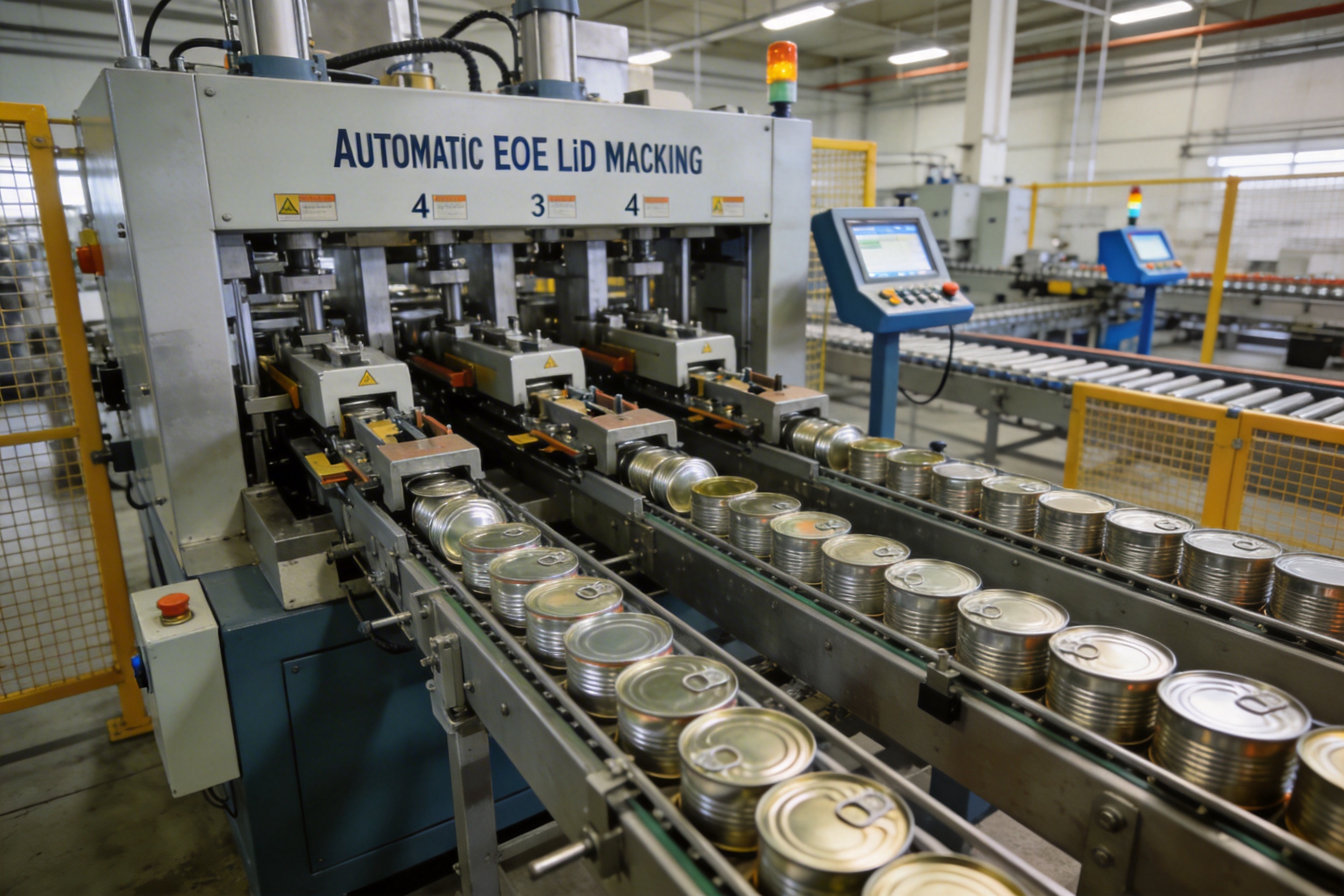
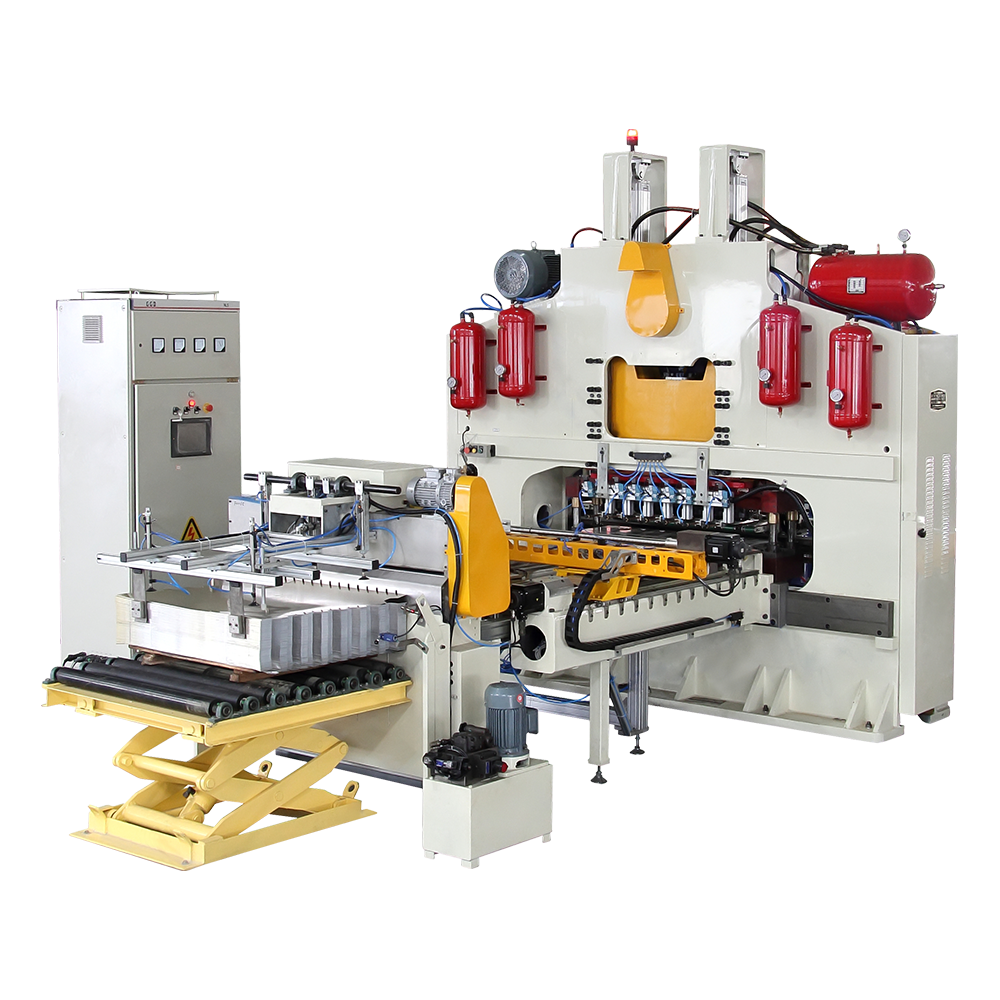
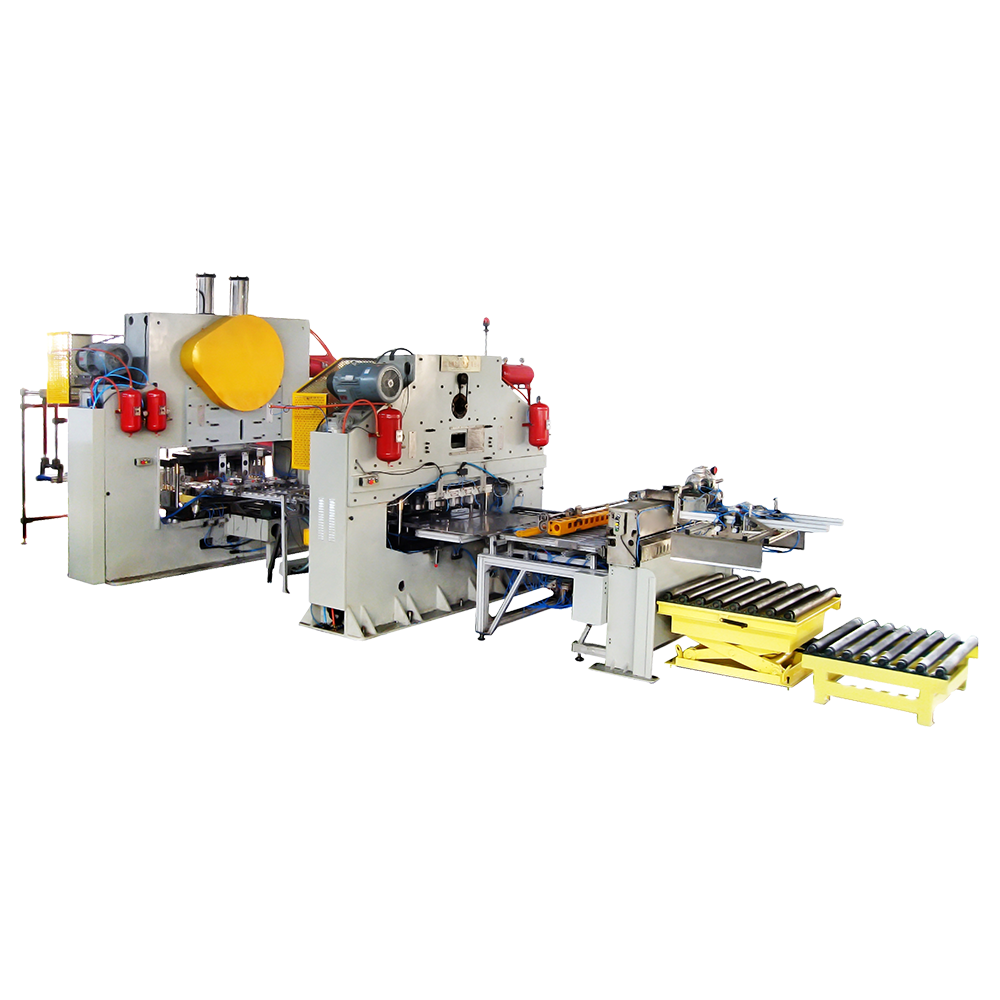
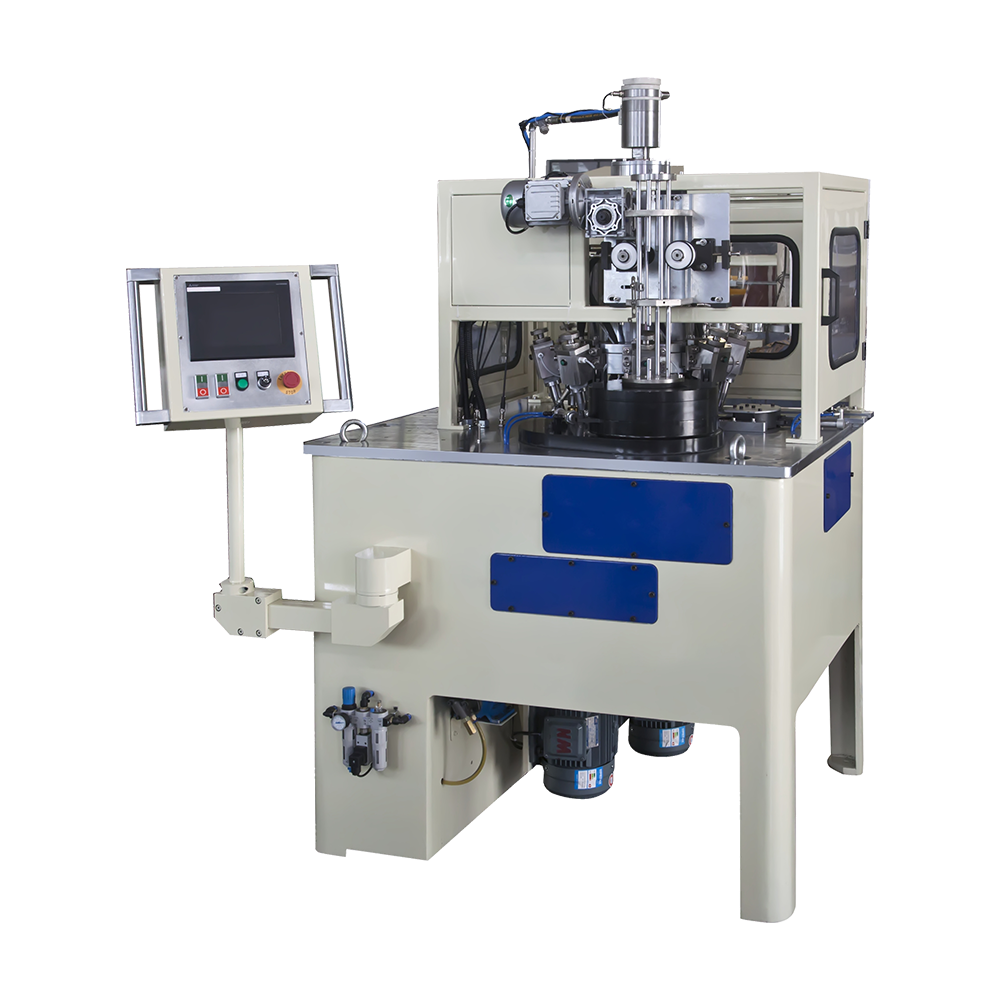
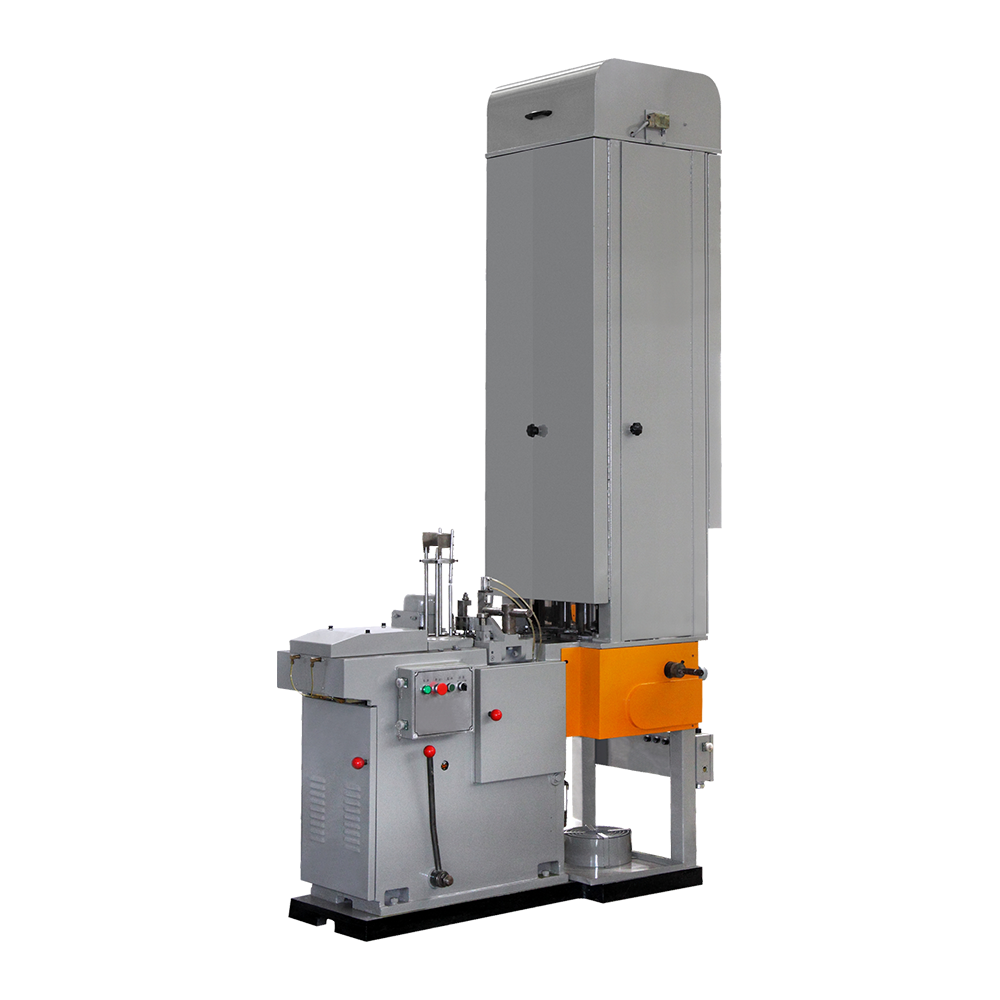
The EOE lid making machine in focus is an automatic production line designed to manufacture high-quality easy-open ends for a wide range of can sizes. Built to handle the demands of modern canning facilities, this machine combines precision engineering with user-friendly automation to deliver consistent, high-volume output. Below is a detailed breakdown of its core features:
At its core, the machine supports multiple can size configurations, including 202#, 211#, 300#, 307#, and 401#—a range that covers the majority of standard food, beverage, and chemical cans used globally. Its automatic operation eliminates the need for manual intervention in critical production steps, such as tinplate feeding, lid forming, and quality inspection, ensuring uniformity and reducing human error.
The machine’s output speed is one of its most notable attributes. Depending on the lane configuration (1 to 4 lanes), it can produce between 200 and 2400 easy-open ends per minute (epm). For example, a single-lane setup delivers 200-600 epm, while a four-lane configuration can reach up to 2400 epm—ideal for large-scale manufacturers with high-volume production needs. This flexibility allows facilities to scale their output according to demand, whether they are a small artisanal canner or a global beverage giant.
Another key feature is the machine’s adaptability to different tinplate thicknesses. Tinplate, the primary material used for EOE lids, varies in thickness based on the can’s intended use (e.g., thicker tinplate for chemical cans vs. thinner for beverage cans). The machine’s tooling and forming processes are designed to handle these variations without compromising lid quality or production speed.
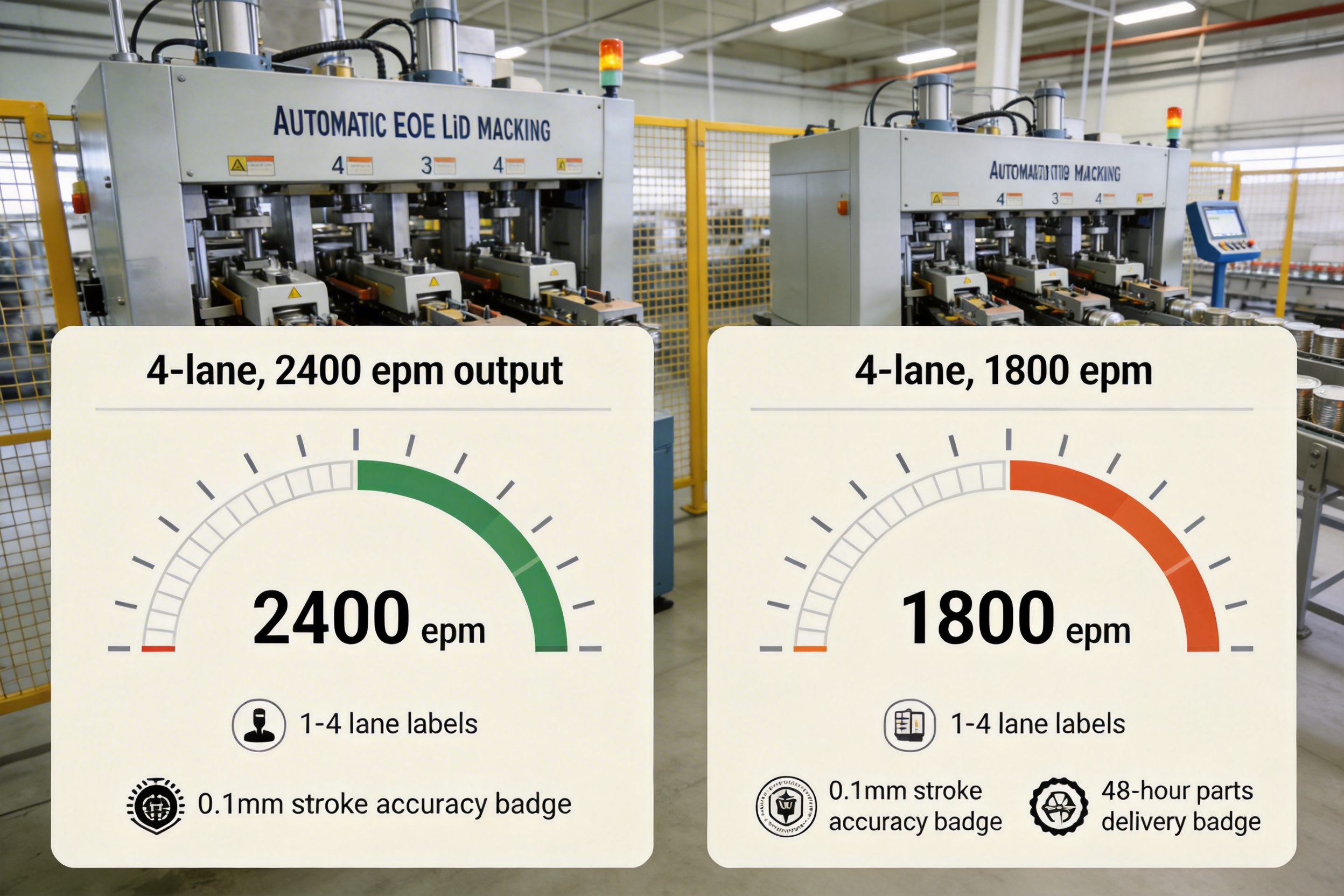
In a crowded market, the EOE lid making machine stands out due to its superior performance, flexibility, and reliability. Below are the key advantages it offers over competing models:
One of the most significant advantages is the machine’s high output capacity. While many competing machines top out at 1800 epm for four-lane setups, this model reaches 2400 epm—an increase of 33% in production volume. For can manufacturers, this translates to higher daily output, reduced lead times, and the ability to meet urgent orders during peak seasons (e.g., holiday periods for canned foods). For example, a beverage manufacturer producing 10 million cans per month can reduce their production time by 25% using this machine compared to a standard competitor model.
Unlike many competitors that offer only 2 or 3 lane options, this machine supports 1 to 4 lanes. This flexibility is a game-changer for manufacturers of all sizes: small facilities can start with a 1-lane setup to minimize initial investment and scale up to 4 lanes as their business grows, while large manufacturers can use 4 lanes to maximize output. Additionally, the lane configurations are easily adjustable, allowing facilities to switch between production runs of different can sizes without extensive downtime.
The machine is built with precision components and robust materials, ensuring long-term durability and minimal maintenance. Its slide block stroke (35-63.5mm) is accurate to within 0.1mm, which is critical for producing lids with consistent dimensions—an essential factor for ensuring a tight seal and preventing leaks. Competing machines often have less precise stroke control, leading to higher rates of defective lids and increased waste. The machine’s nominal pressure ranges from 75T (one lane) to 125T (four lanes), providing the force needed to form lids without damaging the tinplate.
Many competitors offer only standard machine configurations, but this model supports OEM (Original Equipment Manufacturer) and ODM (Original Design Manufacturer) services. This means manufacturers can customize the machine to meet their specific needs—whether it’s adjusting the can size range, adding specialized quality inspection features, or integrating the machine into an existing production line. For example, a chemical can manufacturer may need lids with a reinforced rim to withstand higher pressure; the machine can be modified to include this feature.
After-sales service is often overlooked in the machinery industry, but it is a critical factor for minimizing downtime and maximizing return on investment. This machine’s manufacturer provides end-to-end support, including:
Competing manufacturers often offer limited support, with parts delivery taking up to two weeks or more—leading to costly production delays. For example, a canning facility that experiences a breakdown can resume production within 3 days using this machine’s after-sales service, compared to 10 days with a competitor.
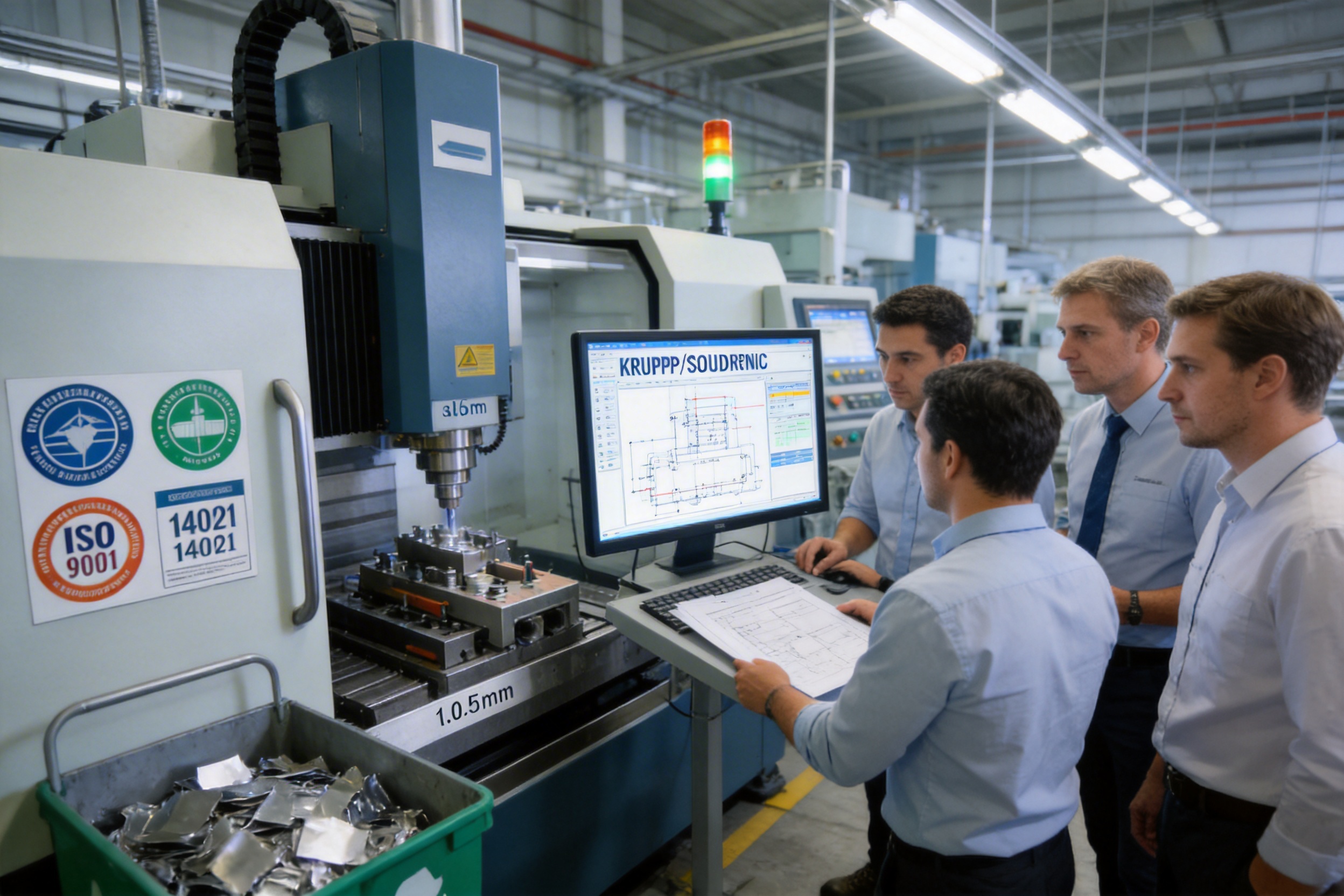
The machine and its manufacturer are certified to ISO 9001 (Quality Management System) and ISO 14001 (Environmental Management System) standards. These certifications ensure that the machine meets international quality requirements and that its manufacturing processes are environmentally sustainable. Competing machines often lack these certifications, making them less suitable for export to markets with strict regulatory requirements (e.g., the European Union, North America).
The manufacturer behind this EOE lid making machine is a global leader in can-making machinery, with over 46 years of experience in the industry. Its expertise and advanced manufacturing processes are key to the machine’s superior performance. Below is an overview of its strengths:
Founded in 1978, the manufacturer has a long history of innovation in can-making machinery. Over the past four decades, it has produced more than 10,000 can and lid equipment units, which are used by can manufacturers in over 30 countries across Europe, Asia, Africa, North America, South America, and Oceania. This extensive track record has allowed the manufacturer to refine its designs and processes based on real-world feedback, ensuring that its machines meet the evolving needs of the industry.
The manufacturer’s production facility is equipped with state-of-the-art CNC (Computer Numerical Control) high-precision machining equipment and complete mechanical machining facilities. These tools enable the production of components with extreme accuracy, ensuring that each machine is consistent and reliable. For example, the slide block— a critical component for lid forming—is machined using CNC equipment to within 0.05mm tolerance, which is far higher than the industry average of 0.1mm.
The manufacturer has a team of over 50 experienced design and development engineers, many of whom are professional engineers with decades of industry experience. The team combines global best practices (e.g., design principles from KRUPP, SOUDRONIC, and ALFONS-HAAR—leading names in can machinery) with local innovation to create machines that are both efficient and cost-effective. For example, the team has developed a unique lubrication system that reduces friction in the machine’s moving parts, extending the lifespan of components by 30% compared to competing models.
In addition to ISO 14001 certification, the manufacturer has implemented several sustainable practices to reduce its environmental impact. These include:
These practices not only benefit the environment but also help the manufacturer’s clients meet their own sustainability goals—an increasingly important factor in the global market.
Unlike many competitors that specialize in a single type of can-making machinery, the manufacturer offers a complete range of products, including food can production lines, beverage can production lines, chemical tank production lines, aerosol canister production lines, and two-piece can production lines. This allows clients to source all their can-making equipment from a single supplier, simplifying procurement, maintenance, and integration. For example, a client looking to set up a full beverage can production line can get the EOE lid making machine, can body making machine, and can seaming machine from the same manufacturer, ensuring compatibility and seamless operation.
| Parameter | One Lane | Two Lanes | Three Lanes | Four Lanes |
|---|---|---|---|---|
| Nominal Pressure | 75(80)T | 100T | 125T | 125T |
| Slide Block Stroke | 35-63.5mm | 35-63.5mm | 35-63.5mm | 35-63.5mm |
| Stroke (spm) | 200-600 | 200-600 | 200-600 | 200-600 |
| Output Capacity (epm) | 200-600 | 400-1200 | 600-1800 | 800-2400 |
| Machine Power (kw) | 50-70 | 50-70 | 50-70 | 50-70 |
| Machine Weight (Ton) | 17-32 | 17-32 | 17-32 | 17-32 |
The table above summarizes the key technical specifications of the EOE lid making machine. Notably, the machine maintains consistent power consumption (50-70kw) across all lane configurations, which is a significant advantage over competitors that often increase power usage by 20-30% when adding lanes. This energy efficiency reduces operational costs for manufacturers, making the machine more cost-effective over its lifespan.
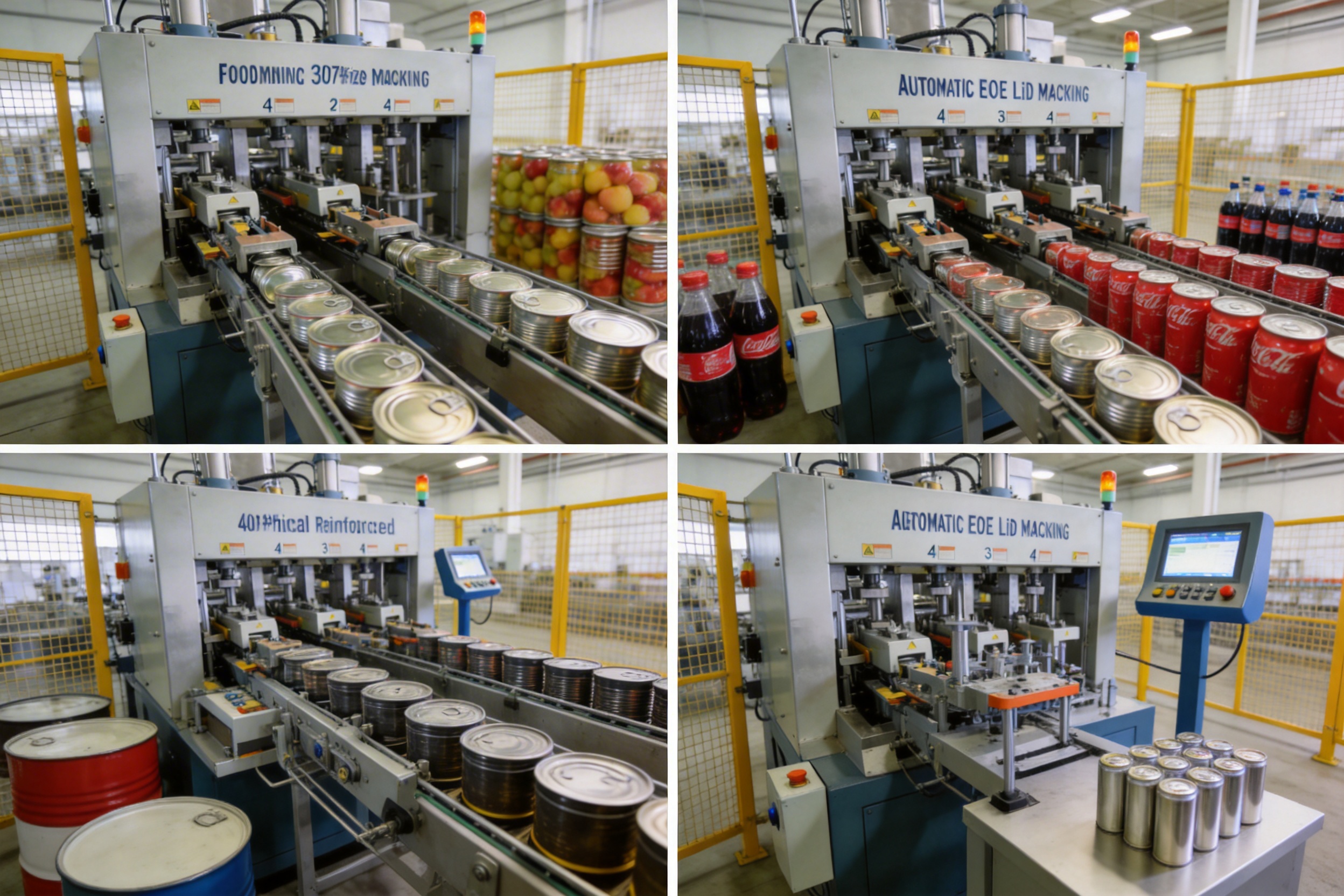
The EOE lid making machine’s flexibility and performance make it suitable for a wide range of industries. Below are some key application scenarios:
The food canning industry is one of the largest users of EOE lids, with applications including canned fruits, vegetables, meat, fish, and soups. The machine’s ability to handle multiple can sizes (202# to 401#) makes it ideal for this industry, as manufacturers often produce a variety of products. For example, a canned fruit manufacturer may use 307# lids for large cans of peaches and 211# lids for small cans of pineapple chunks. The machine’s 2-lane configuration can easily switch between these sizes, reducing downtime and increasing efficiency.
The beverage industry (including soda, beer, and energy drinks) relies on EOE lids for their convenience and safety. The machine’s high output speed (up to 2400 epm for 4 lanes) is perfect for large-scale beverage manufacturers that produce millions of cans per day. Additionally, the machine’s precision forming ensures that lids fit tightly on beverage cans, preventing carbonation loss and extending product shelf life.
Chemical cans (used for paint, lubricants, adhesives, and pesticides) require lids that can withstand high pressure and corrosion. The machine’s robust construction and adjustable nominal pressure (up to 125T) make it suitable for producing reinforced lids for chemical cans. The manufacturer can also customize the machine to add features like corrosion-resistant coatings to the lids, meeting the specific needs of chemical manufacturers.
Aerosol cans (used for spray paints, deodorants, and cleaning products) require lids that can handle high internal pressure. The machine’s precision engineering ensures that aerosol lids are formed with consistent dimensions, preventing leaks and ensuring safe operation. The manufacturer can also customize the machine to add a pressure test feature, which inspects each lid for leaks before it is shipped to the client.
A1: The machine’s key features include automatic operation, support for multiple can sizes (202#/211#/300#/307#/401#), flexible lane configurations (1-4 lanes), high output speed (up to 2400 epm), precision engineering (slide block stroke accuracy of 35-63.5mm), and OEM/ODM customization capabilities.
A2: The machine’s maximum output speed is 2400 epm (4 lanes), which is 33% higher than the industry average of 1800 epm for competing 4-lane machines. This allows manufacturers to produce more lids per minute, reducing lead times and increasing productivity.
A3: Yes, the manufacturer offers OEM and ODM services. Clients can customize the machine to meet their specific needs, such as adjusting the can size range, adding specialized quality inspection features, or integrating the machine into an existing production line.
A4: The manufacturer provides comprehensive after-sales support, including installation and commissioning, technical training for operators and maintenance staff, fast parts supply (within 48 hours for urgent orders), and 24/7 customer support for troubleshooting.
A5: The manufacturer is certified to ISO 9001 (Quality Management System) and ISO 14001 (Environmental Management System) standards. The machine meets all international quality and safety requirements, making it suitable for export to global markets.
A6: The machine’s maximum output capacity is 2400 easy-open ends per minute (epm) when configured with 4 lanes. This is ideal for large-scale manufacturers with high-volume production needs.
A7: The machine is constructed using high-quality, durable materials, including alloy steel for critical components (e.g., slide blocks) and stainless steel for parts that come into contact with tinplate. These materials ensure long-term durability and resistance to wear and corrosion.
A8: The manufacturer has over 46 years of experience in the can machinery industry, having been founded in 1978. It has produced more than 10,000 can and lid equipment units, which are used by clients in over 30 countries globally.
The EOE lid making machine represents a significant advancement in can-making technology, combining high-speed production, flexibility, precision, and sustainability. Its advantages over competing models—including unmatched output speed, flexible lane configurations, OEM/ODM customization, and comprehensive after-sales support—make it an ideal choice for can manufacturers of all sizes. The manufacturer’s decades of industry expertise, advanced manufacturing processes, and commitment to quality and sustainability further enhance the machine’s value, ensuring that it meets the evolving needs of the global canning industry.
As the demand for convenient, safe, and shelf-stable products continues to grow, the EOE lid making machine will play an increasingly important role in helping can manufacturers stay competitive and meet consumer expectations. Whether used in the food, beverage, chemical, or aerosol industry, this machine delivers the performance and reliability that manufacturers need to succeed in a dynamic market.
[1] Canning Industry Report 2024: Global Market Trends and Technological Innovations. International Canning Association, 2024.
[2] ISO 9001:2015 Quality Management Systems—Fundamentals and Vocabulary. International Organization for Standardization, 2015.
[3] ISO 14001:2015 Environmental Management Systems—Requirements with Guidance for Use. International Organization for Standardization, 2015.
[4] Smith, J. (2023). The Role of EOE Lids in Modern Canning: Efficiency and Consumer Convenience. Journal of Food Packaging Technology, 15(2), 45-58.
[5] Case Study: Global Can Manufacturer X’s Experience with High-Speed EOE Lid Making Lines. Industrial Machinery Review, 2024.
Related Products

Founded in 1978, the company is one of the largest can-making machinery well-known companies at home and abroad.
Product Categories
Contact Information
Zhongshatou Shenjiamen Zhoushan Zhejiang China
+86-580-3056646

 English
 中文简体
中文简体
 русский
 عربى
عربى
 Español