2026-10-21
Easy-open ends are among the most demanding components in modern metal packaging. Although an end may appear simple from the outside, its production requires highly accurate forming, cutting, scoring, riveting, tab assembly, separation, feeding, and inspection. Every stage must work in close coordination. A slight deviation in material position, die alignment, forming pressure, or tab placement can affect opening performance, sealing reliability, production speed, and the overall appearance of the finished can.
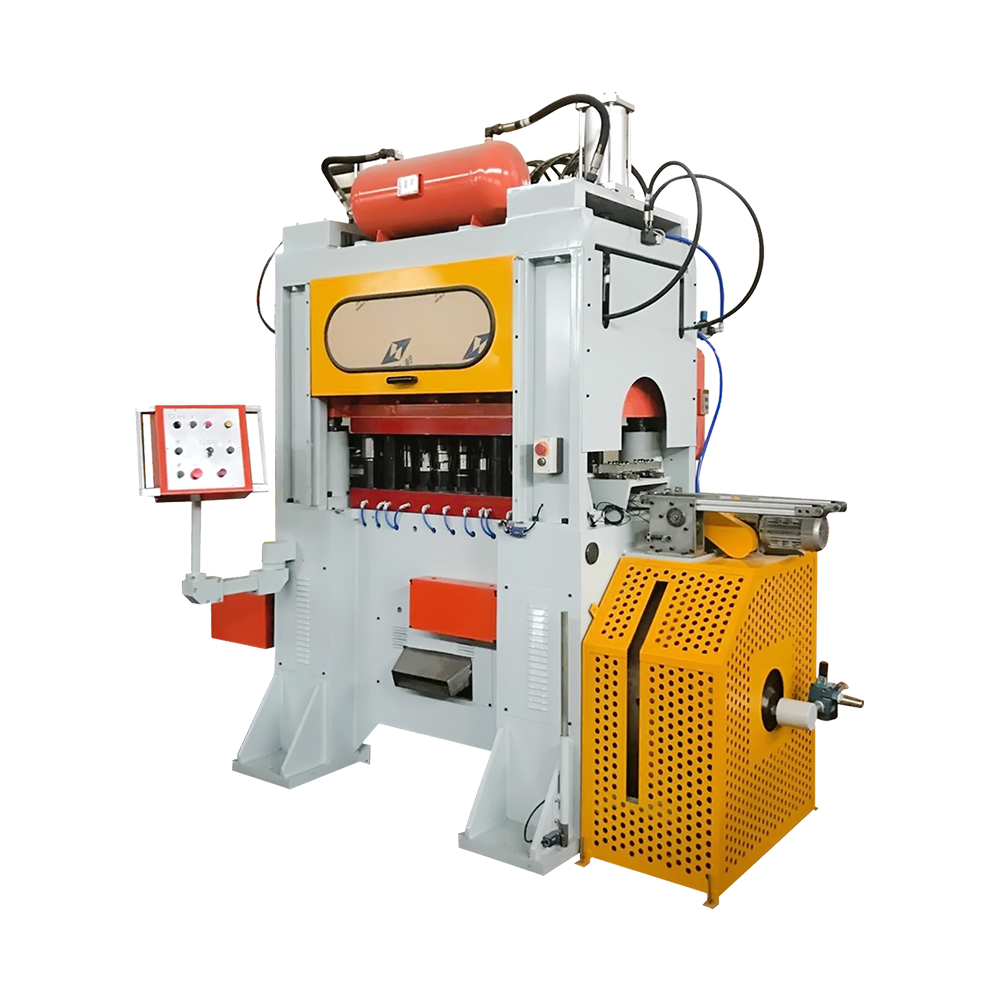
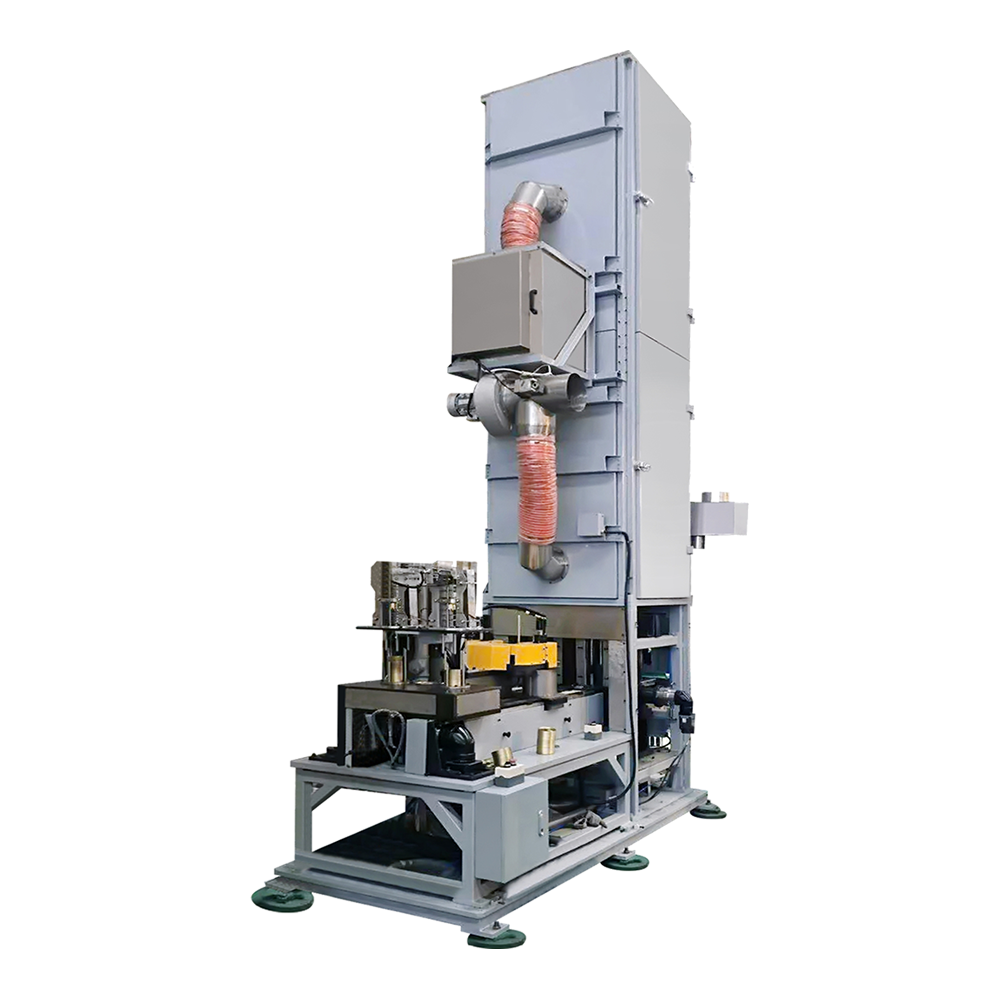
The conversion press is the central machine for transforming prepared end shells and tab materials into functional easy-open ends. It combines a high-speed press with conversion tooling, lane management, tab feeding, pneumatic and vacuum systems, mechanical transmission, safety controls, and automated detection devices. When properly designed and configured, the machine can deliver stable output across multiple lanes while maintaining efficient material usage and consistent product quality.
The conversion press described in this article is designed for manufacturers that require flexible, high-output production of easy-open ends. It can be configured with a USA MINSTER press, a Taiwan INGYU press, or another suitable press platform according to customer requirements. The system can also be equipped with two, three, or four lanes, allowing users to select a configuration that matches their product dimensions, target capacity, available floor space, and investment plan.
Its compact tab layout, efficient use of sheet material, integrated conversion tooling, and comprehensive protection functions make it suitable for demanding can-making environments. Supported by the engineering and manufacturing capabilities of Zhejiang Golden Eagle Food Machinery Co., Ltd., the equipment represents a practical solution for beverage can, food can, and other easy-open-end applications.
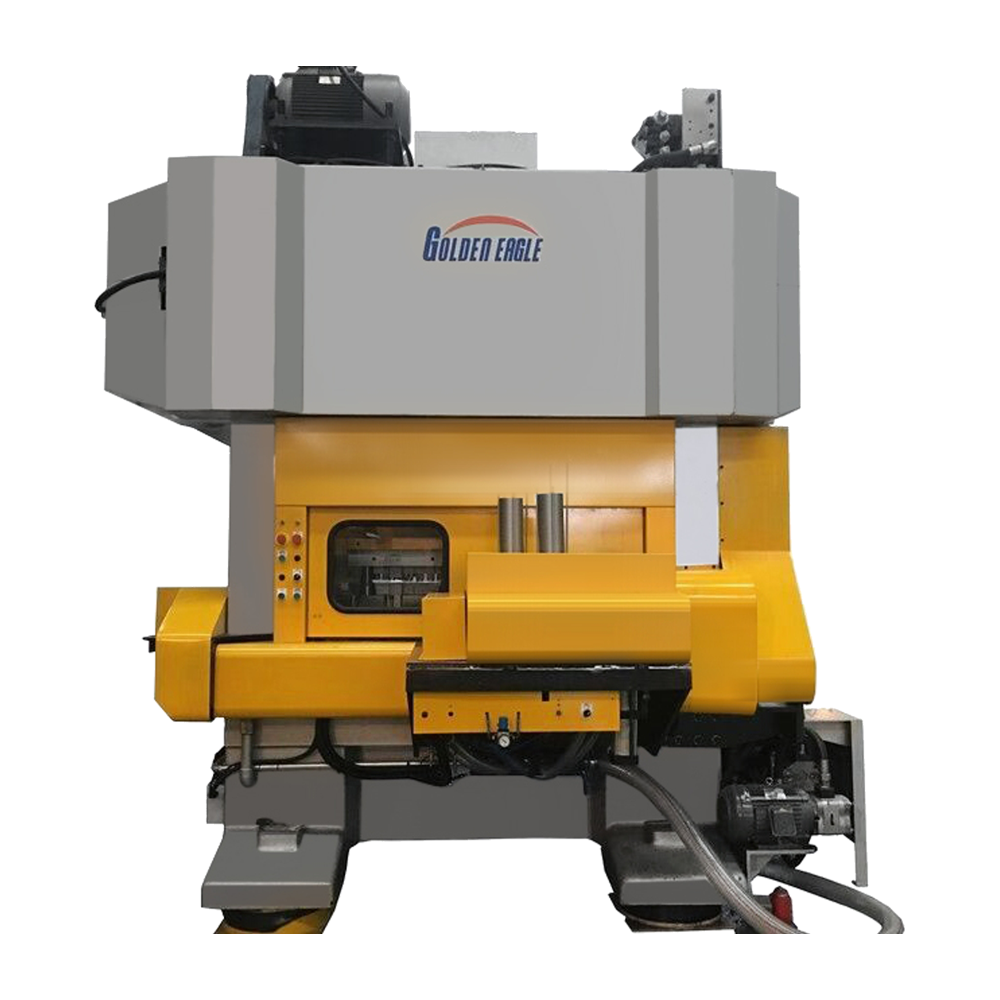
Conversion Press
A conversion press is a specialized production machine used to complete the conversion of a formed metal end into an easy-open end. The process may include tab forming, tab attachment, scoring or related end operations, lane separation, end separation, transfer, and final delivery. The exact process depends on the end design, metal material, tab shape, opening system, and customer requirements.
In a typical easy-open-end production line, the end shell is produced in an earlier operation. It may already include the outside profile, countersink, curl, score line, and other features. The conversion press then performs the operations that turn the shell into a finished opening component. At the same time, tab material is fed into the tab dies, formed into the required shape, and connected with the ends through a controlled sequence.
The machine is therefore more than a conventional stamping press. It is an integrated production system. The main press provides the required tonnage and motion. Conversion dies perform the forming and assembly operations. Lane dies organize the flow of products. Ends separators divide the output into individual channels. A tab material feeder supplies strip material at the correct speed and position. Vacuum and pneumatic systems support transfer and control. Sensors and electrical protection devices monitor the process and react to abnormal conditions.
This integrated structure is important because easy-open-end production involves many consecutive actions. If the press, feeder, tooling, and transfer systems are not synchronized, the line may experience misfeeds, double sheets, missing tabs, incorrect tab positions, damaged ends, or unplanned stoppages. The conversion press is designed to coordinate these functions as one production unit.
The conversion press is available in a range of specifications suitable for different end sizes, materials, and production requirements. Its main technical parameters are summarized below.
| Parameter | Specification | Production Significance |
|---|---|---|
| Tonnage | 75–125 tons | Provides forming and conversion force for a range of end and tab applications |
| Stroke of slide | 38.1–63.5 mm | Supports different tooling requirements and forming sequences |
| Strokes per minute | 200–600 spm | Enables high-speed production when tooling and material conditions permit |
| Number of lanes | 2–4 lanes | Allows capacity and layout flexibility |
| Main power | 38.5–46.5 kW | Supports the press, transmission, feeding, and auxiliary systems |
| Net weight | 20–30 tons | Reflects the robust structure and industrial-duty construction |
The figures represent a configurable range rather than a single fixed machine model. Final specifications should be selected according to end diameter, material thickness, tab geometry, die arrangement, output target, and the customer’s factory conditions. This approach allows the equipment to be adapted to a wider range of production projects without forcing every user into the same configuration.
One of the important advantages of the conversion press is its compatibility with different press platforms. Depending on the customer’s requirements, the machine can use a USA MINSTER press, a Taiwan INGYU press, or another appropriate press brand. This flexibility helps users balance performance, budget, maintenance preferences, and existing factory standards.
Press selection affects the operating characteristics of the entire conversion system. Factors such as frame rigidity, slide movement, crankshaft design, drive stability, control response, service support, and spare-part availability can influence long-term production results. By offering more than one press option, the manufacturer can work with the customer to identify a practical combination of press body, conversion tooling, transmission components, and control systems.
The press must be rigid enough to withstand repeated high-load operation without excessive vibration or deflection. Stable movement is essential because even small changes in die alignment can affect tab shape, end positioning, or the quality of the converted product. The selected press must also provide suitable stroke length and speed for the intended die structure. The available range of 38.1 to 63.5 millimeters for slide stroke and 200 to 600 strokes per minute provides room for different production arrangements.
For manufacturers that already operate a particular press brand or maintain a specific spare-parts inventory, a compatible platform can simplify maintenance and operator training. For new projects, press selection can instead be based on the required capacity, production mix, and total cost of ownership. This customer-oriented approach is more practical than treating one press configuration as suitable for every application.
The conversion system can be arranged with two, three, or four lanes. Multi-lane production increases output by allowing several streams of ends and tabs to pass through the conversion tooling during each operating cycle. The correct number of lanes depends on the required production capacity, product dimensions, material arrangement, press capability, and available plant space.
A two-lane configuration can be suitable for moderate output, product diversification, or facilities that need a more compact installation. It may also provide a balanced solution for manufacturers entering easy-open-end production or producing several specifications in smaller batches. Three-lane and four-lane configurations are more appropriate when capacity is a primary objective and the production plan supports continuous, high-volume operation.
Multi-lane equipment must maintain accurate alignment across every lane. The lane dies, separators, transfer mechanisms, and detection devices must work together so that one lane does not interfere with another. The design of the conversion system addresses this need through coordinated tooling and mechanical transmission. Proper lane control helps reduce product accumulation, crossing, jamming, and inconsistent delivery.
Another benefit of multiple lanes is the ability to make better use of the press cycle. Instead of increasing speed beyond the most stable operating range, manufacturers can increase output through additional lanes. This can help reduce mechanical stress and maintain product quality. In practice, the best production strategy is determined by the relationship between press speed, lane number, tooling life, material characteristics, and downstream packaging capacity.
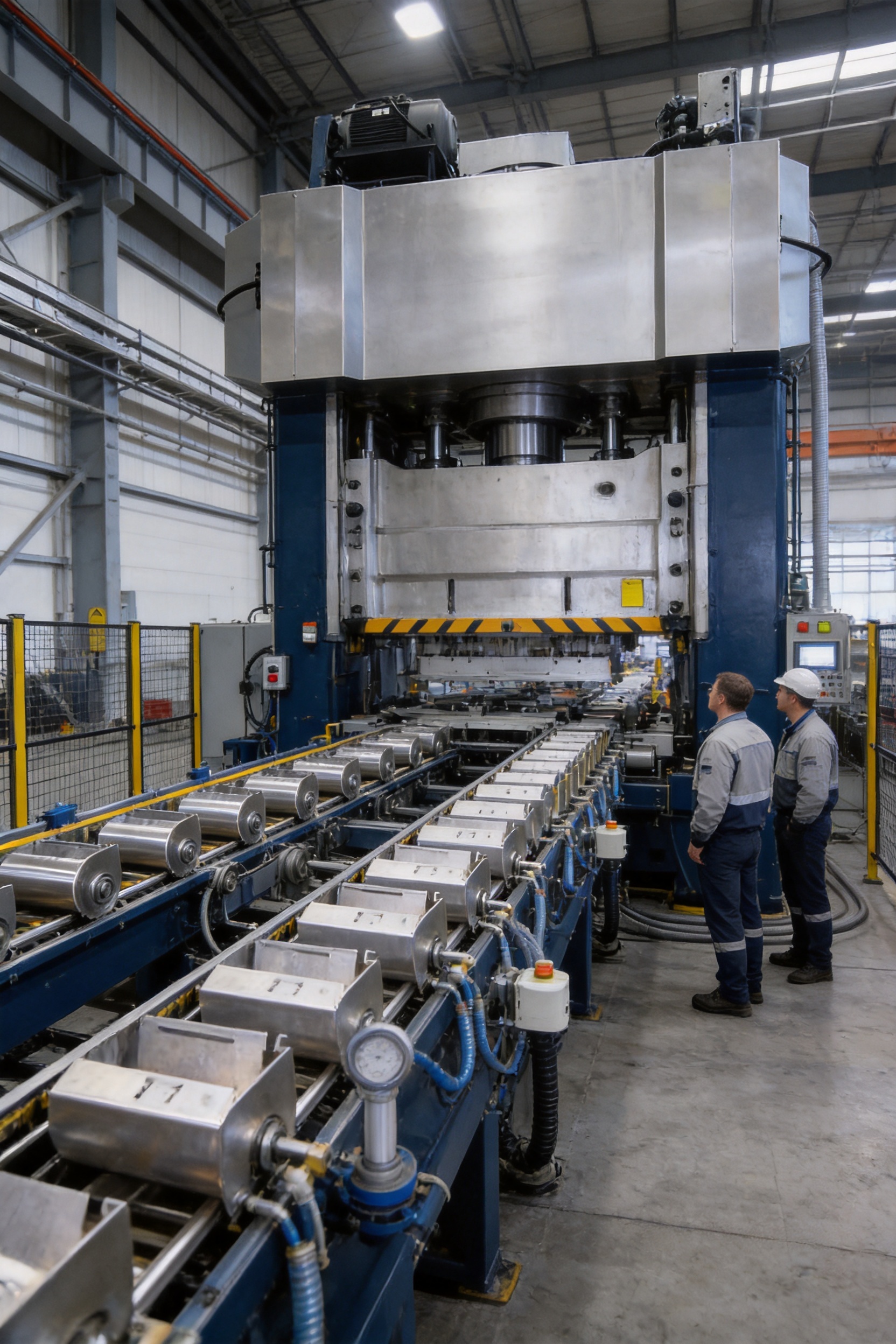
Material efficiency is a major concern in easy-open-end production because tab material represents a significant portion of production cost. A well-designed tab layout can reduce scrap, improve strip utilization, and lower the amount of raw material required for each finished tab. The conversion press uses a compact tab layout intended to make efficient use of the available material width.
High material utilization provides several economic and environmental benefits. It lowers the direct cost of metal consumption, reduces waste-handling requirements, and improves the effective yield from each coil or sheet. Reduced scrap can also make production planning more predictable because a greater percentage of purchased material becomes saleable product.
Material utilization depends on many factors, including tab geometry, strip width, pitch, cutting clearance, material thickness, die design, and the stability of feeding. The compact layout must therefore be supported by a precise tab material feeder. If the strip is not advanced accurately, the theoretical savings of the layout may be lost through misalignment, defective tabs, and frequent stops.
The tab feeder is designed as part of the complete conversion system rather than as an independent accessory. Its movement must be synchronized with the press and tab dies. Accurate feeding helps ensure that each tab is cut and formed at the correct location. It also supports stable operation at higher stroke rates, provided that the material quality and tooling conditions are suitable.
For producers handling different tab specifications, the compact layout and configurable tooling can provide a useful foundation for product changeovers. Changeover procedures must still be carried out according to the specific tooling design and operating instructions, but the overall machine architecture supports a broad range of easy-open-end requirements.
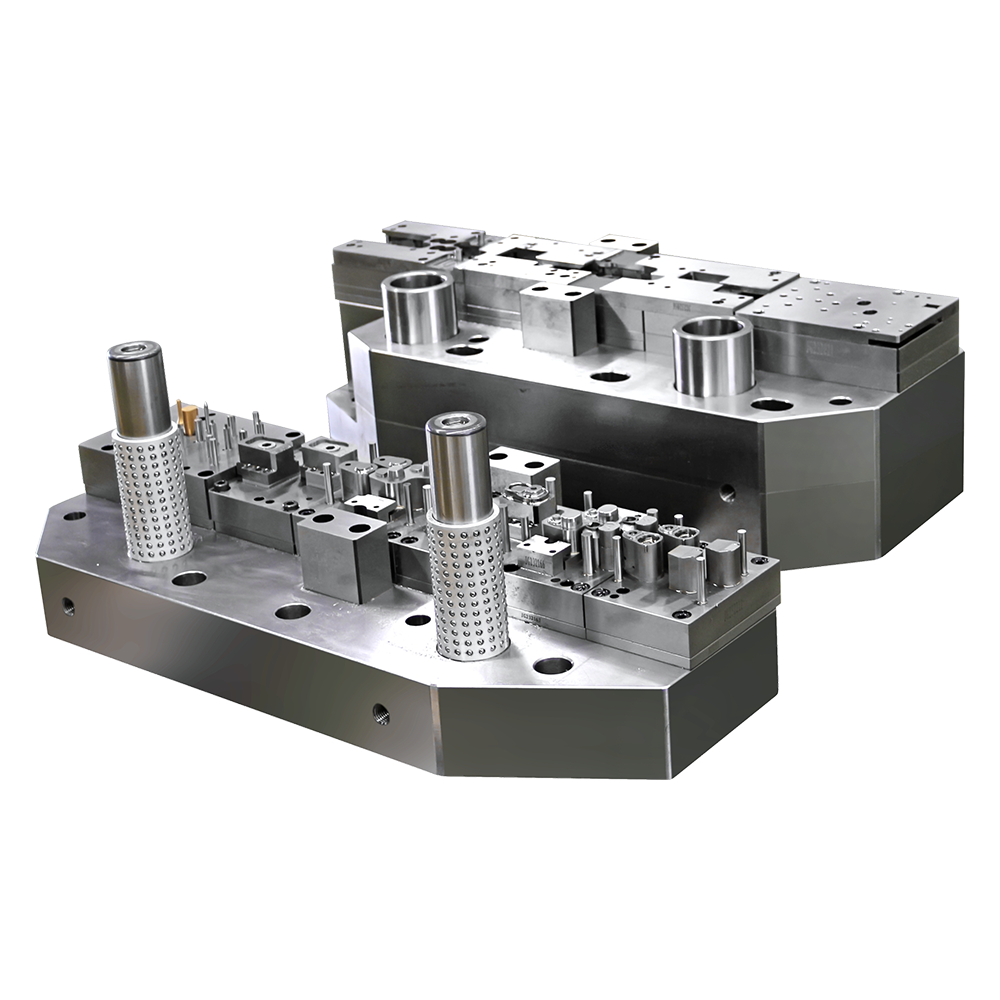
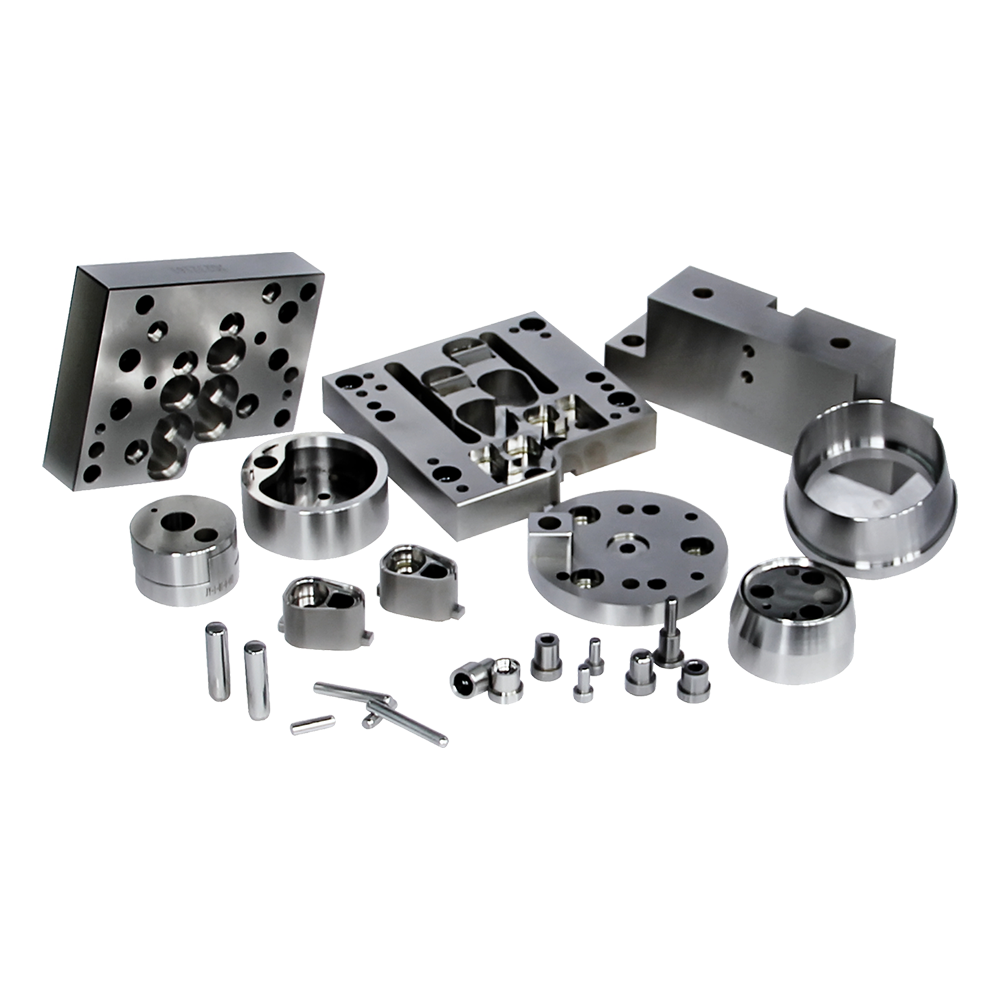
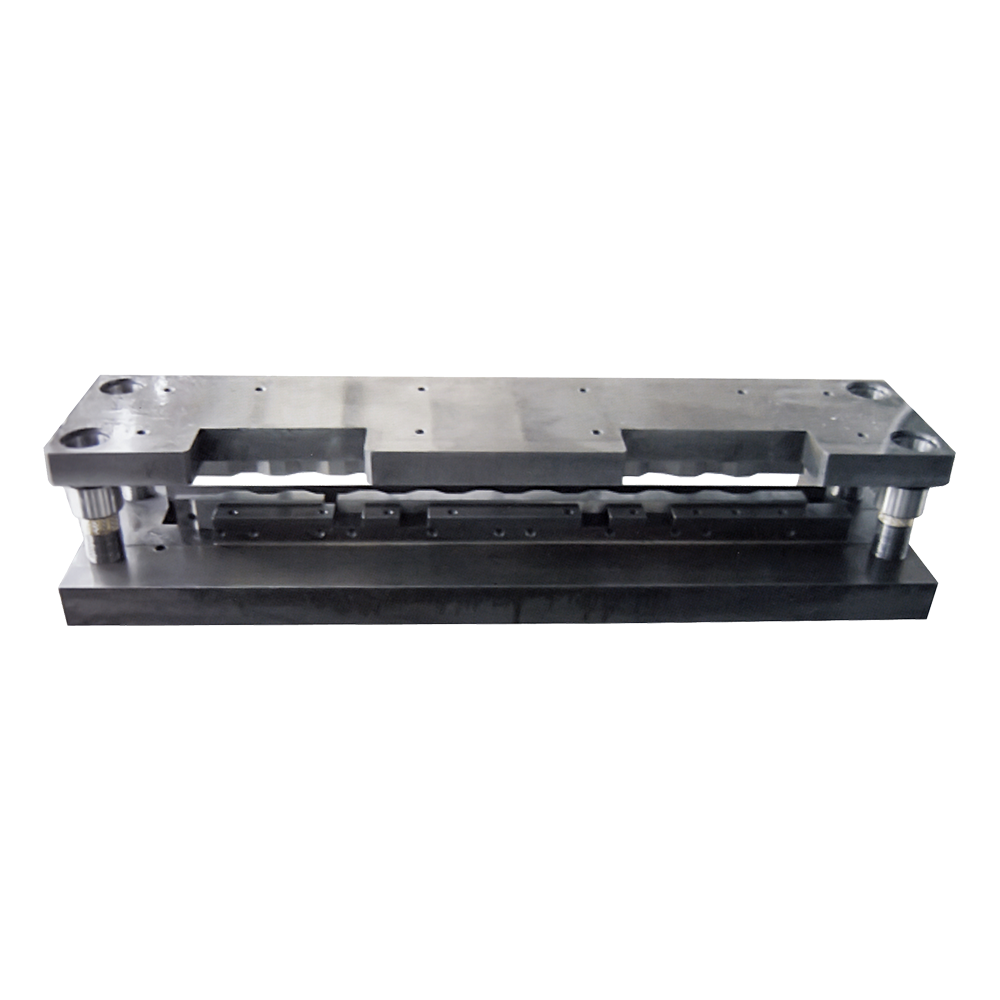
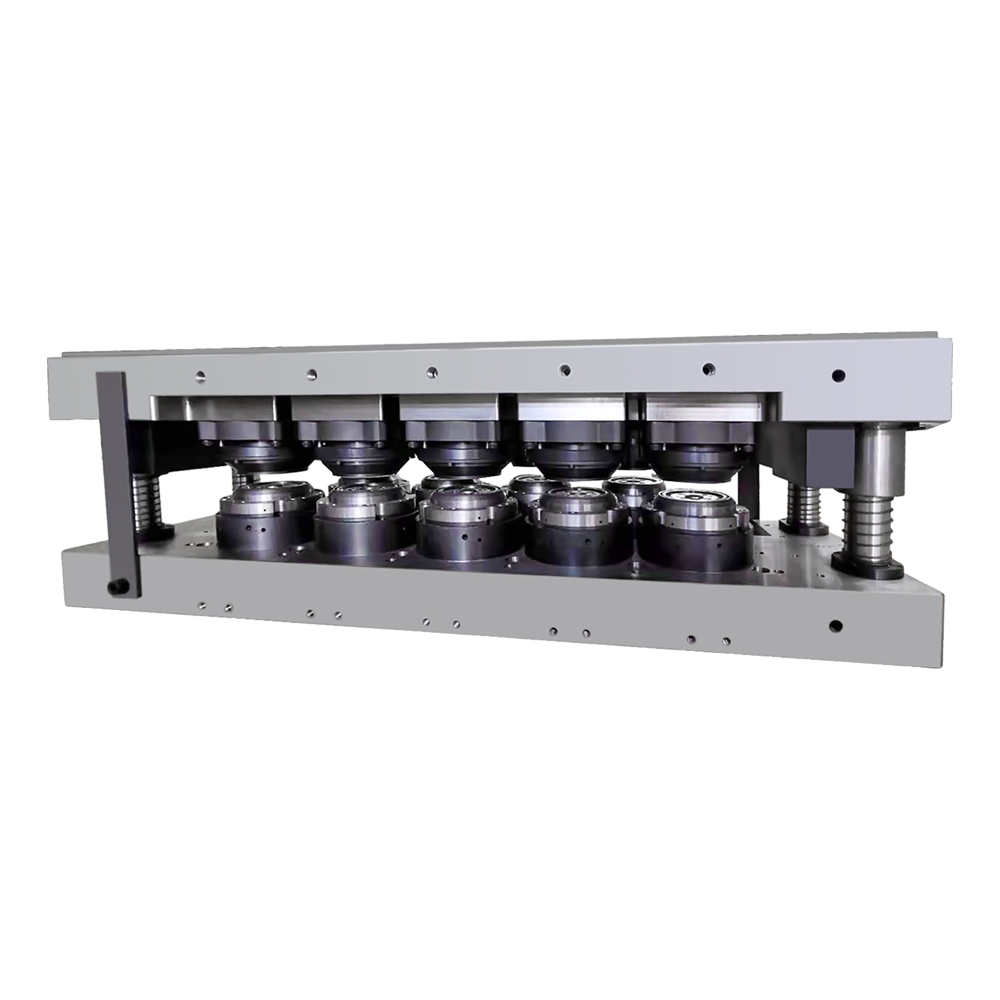
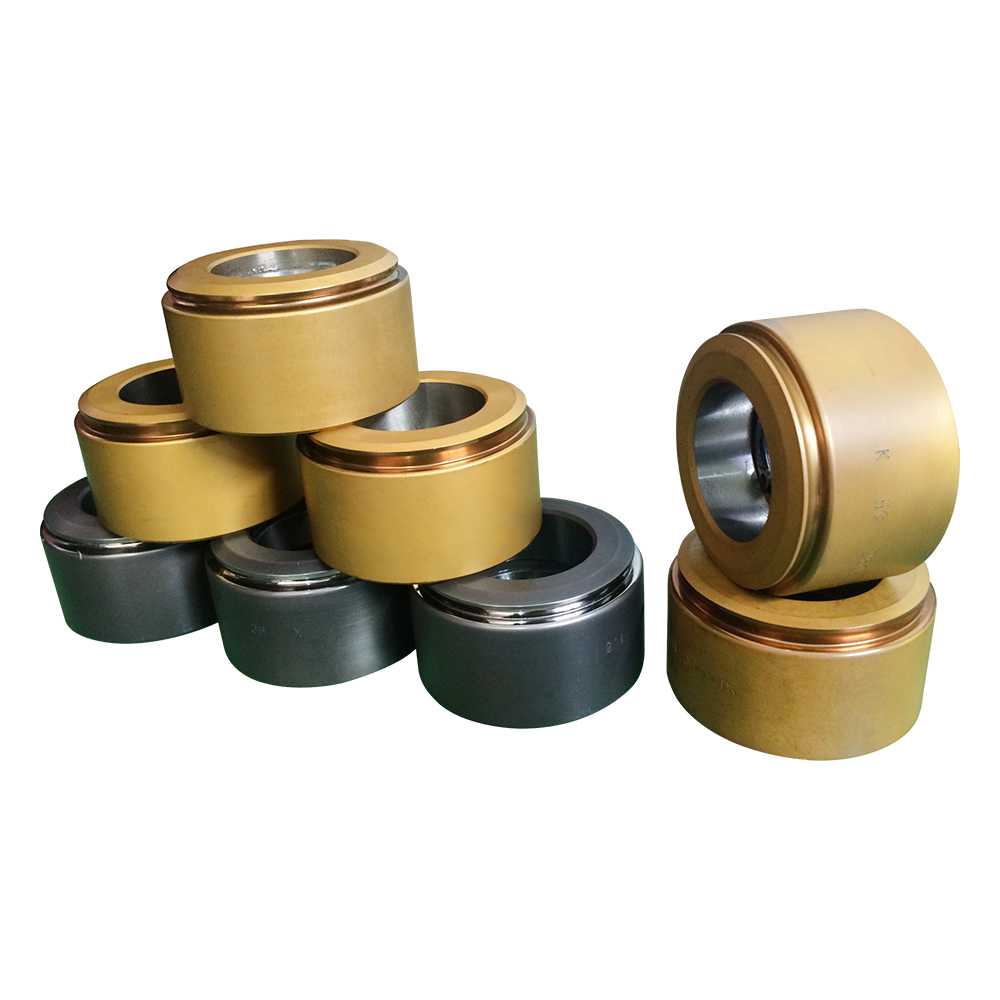
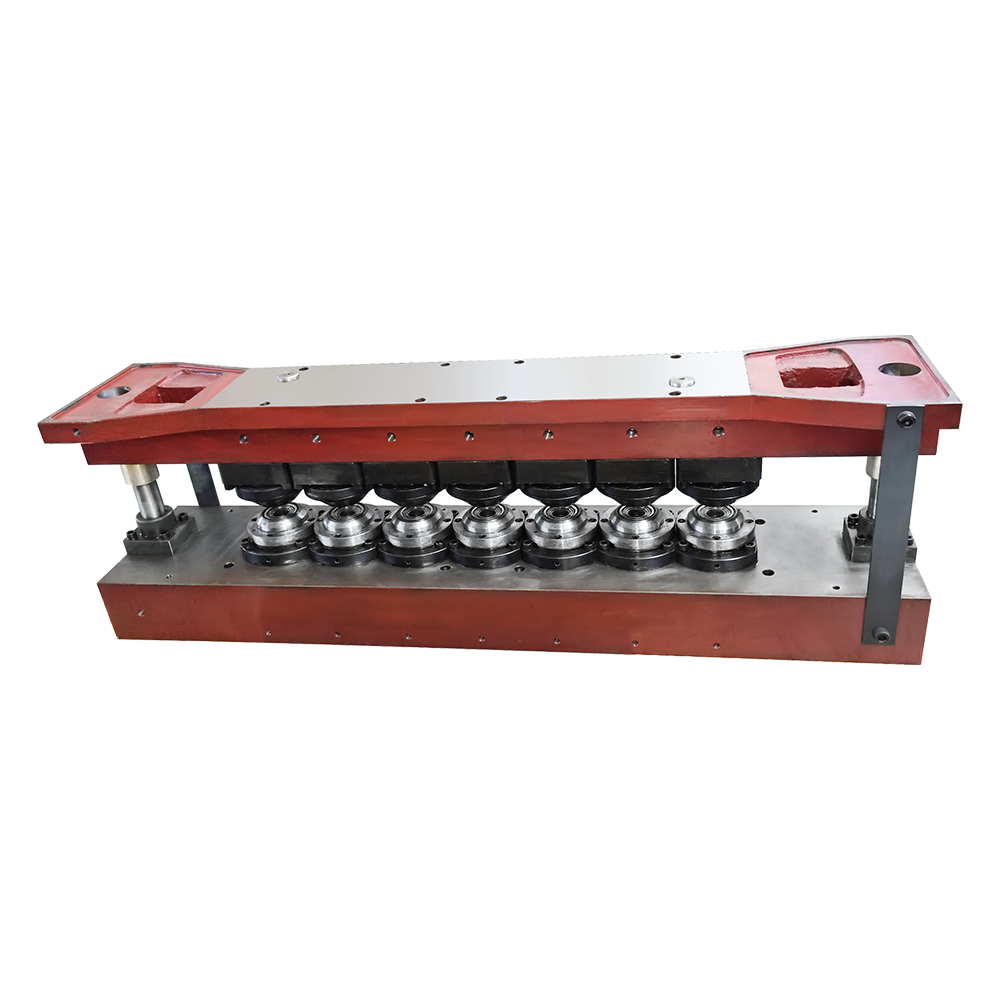
The conversion system includes tab dies, lane dies, ends separators, and other related tooling. These components perform the physical operations required to transform the incoming end shells and tab material into finished easy-open ends.
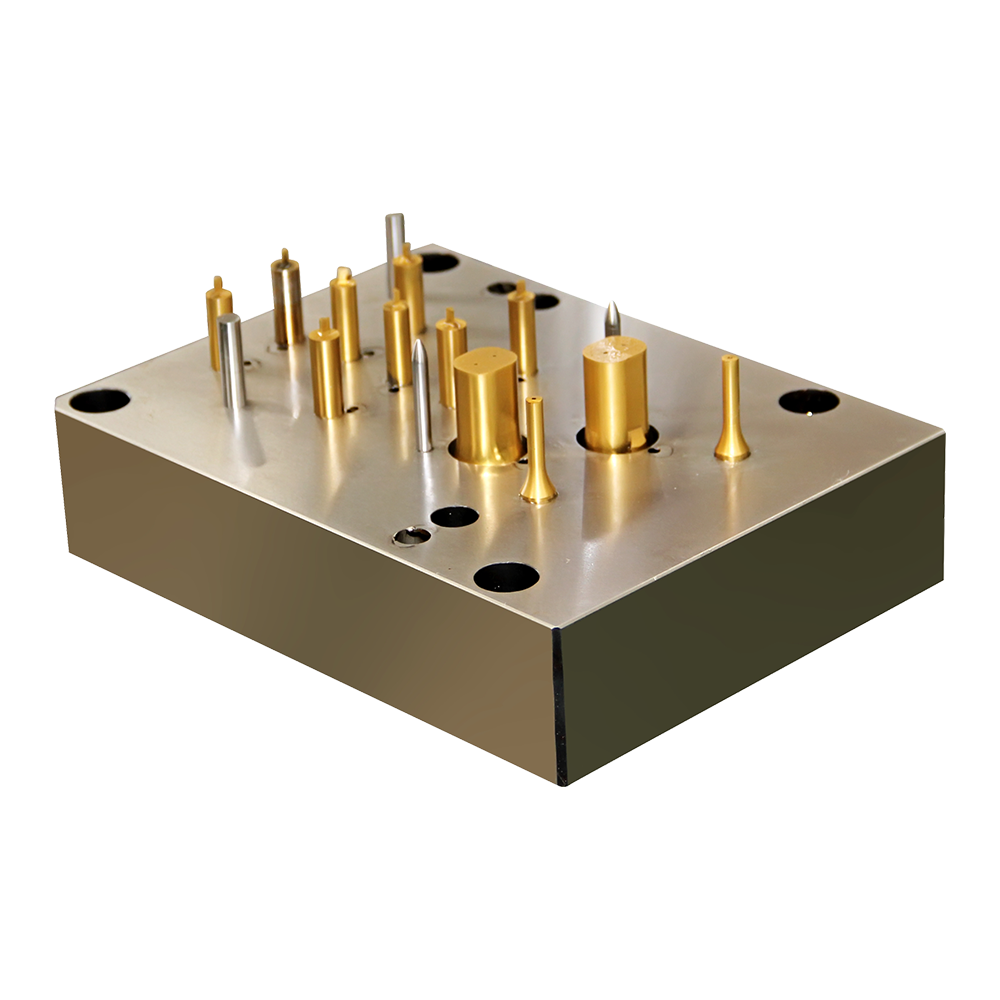
Tab dies shape the tab material into the required profile. Their performance affects tab dimensions, edge condition, forming accuracy, and the connection between the tab and the end. The dies must withstand repeated high-speed operation while maintaining a stable relationship between the upper and lower tool surfaces.
Accurate tab forming is essential for consumer safety and opening convenience. A tab that is too weak, incorrectly shaped, or poorly positioned may make the container difficult to open. A tab with damaged edges or inconsistent geometry may also affect appearance and handling. For these reasons, die precision and maintenance are important parts of production management.
Lane dies guide and organize the ends as they move through the press. In a multi-lane arrangement, they maintain the separation and alignment of each product stream. Consistent lane control improves transfer stability and helps prevent contact between adjacent ends.
Lane dies must be designed for the selected end size, tab arrangement, and production speed. Their surfaces and clearances should be maintained carefully because wear can gradually change the path of the product. Regular inspection helps identify wear before it causes repeated defects or unplanned downtime.
Ends separators divide the converted products into controlled output streams. This function is especially important in multi-lane equipment, where the products must be delivered in an orderly way for inspection, counting, packing, or connection to subsequent equipment.
Stable separation reduces the possibility of overlapping ends, product congestion, and manual intervention. It also creates a more predictable interface between the conversion press and downstream conveying or packaging systems.
The mechanical transmission system transfers power from the main drive to the press and the related operating mechanisms. In a high-speed conversion application, transmission stability is essential. Irregular movement, backlash, excessive vibration, or poor synchronization can affect the quality of forming and feeding.
A robust transmission system supports continuous operation under heavy loads. The machine’s net weight of approximately 20 to 30 tons reflects the substantial structure required for industrial-duty performance. A stable frame and properly supported transmission reduce vibration and help maintain die alignment during repeated press cycles.
Motion stability also contributes to longer tool life. When the press operates smoothly, the dies experience fewer abnormal impacts and less uneven loading. This can reduce premature wear and help preserve the dimensional accuracy of the tooling. Lower vibration may also improve the working environment by reducing noise and mechanical disturbance, although actual noise levels depend on the complete installation and operating conditions.
Maintenance remains necessary even with a robust mechanical structure. Operators should follow the recommended lubrication schedule, inspect fasteners and transmission components, monitor abnormal sound or vibration, and replace worn parts before they affect production. Preventive maintenance is generally more economical than corrective maintenance after a major failure.
The oil system supports the lubrication and operating requirements of the press and its related mechanisms. Proper lubrication reduces friction, helps control heat, and protects moving surfaces from excessive wear. Because the equipment may operate at speeds of up to 600 strokes per minute, lubrication quality and delivery consistency are particularly important.
The pneumatic system supports functions that require controlled air pressure, movement, separation, or product handling. Pneumatic components can provide quick response and simple adjustment for selected auxiliary operations. Stable air pressure is necessary to maintain repeatable performance, especially when several pneumatic functions operate at the same time.
Users should provide clean and appropriately regulated compressed air according to the equipment requirements. Filters, regulators, and drainage arrangements should be checked regularly. Oil contamination, moisture, or pressure fluctuations can reduce the service life of pneumatic components and cause inconsistent operation.
The oil and pneumatic systems are integrated with the electrical control system so that abnormal conditions can be monitored. Depending on the machine configuration, pressure, lubrication, or other operating signals may be used to stop the equipment or issue a warning before product quality or machine safety is affected.
The vacuum system assists with product handling and transfer. Vacuum support can help hold, lift, or move lightweight metal ends and tabs at controlled positions during the conversion cycle. In a fast multi-lane system, reliable transfer is important because products must move quickly without slipping, tilting, or colliding.
Vacuum performance depends on the condition of the pump or source, tubing, valves, seals, filters, and contact surfaces. A small leak may reduce holding force and create intermittent transfer problems. Regular inspection of the vacuum circuit is therefore an important part of routine maintenance.
The vacuum system also contributes to production flexibility. Different end designs may require different transfer conditions, and the system can be adjusted as part of the overall setup. The final settings should be established during commissioning and verified through sample production before the machine is placed into continuous operation.
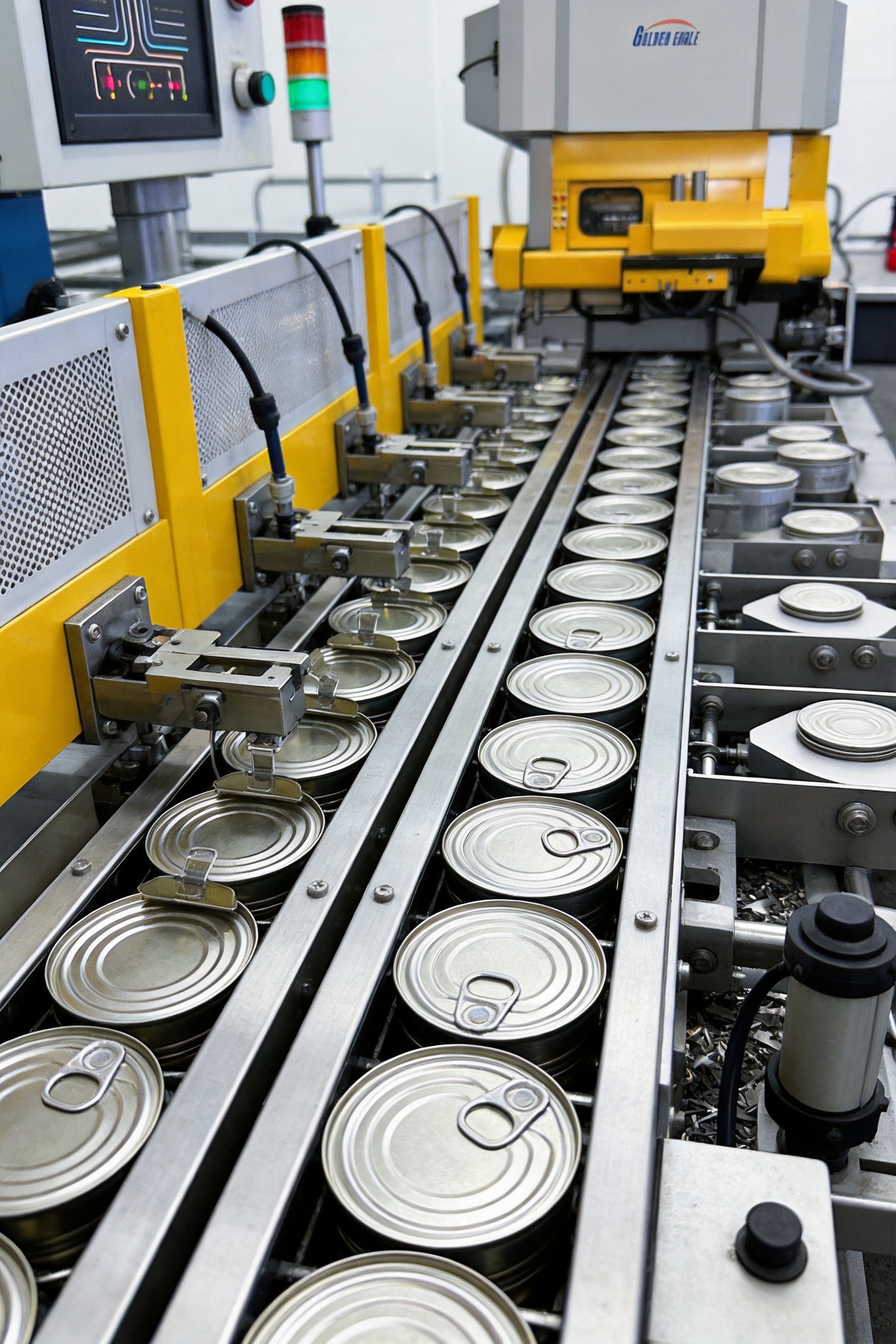
The electrical control system coordinates the press, feeder, transmission, vacuum system, pneumatic system, and protective devices. It provides the operating interface through which the machine is started, stopped, adjusted, monitored, and diagnosed.
A particularly important feature is the inclusion of multiple detection and protection functions. The system can include double-sheet detection, no-ends detection, tab-wrong-position detection, no-tab detection, and multiple safety protection units. These functions help identify abnormal conditions before they result in extensive product damage or mechanical failure.
Double-sheet detection helps identify a condition in which two sheets or ends enter a working position together. A double feed can place excessive load on the dies and may damage the tooling or produce defective products. Detecting the condition early allows the machine to stop or issue an alarm according to the control strategy.
No-ends detection identifies an empty position or missing end in the production sequence. Without this protection, the tab-forming or assembly operation could continue without the correct end present. Detecting the missing product helps prevent wasted tabs and reduces the risk of an incorrect conversion cycle.
Tab-wrong-position detection checks whether the tab has entered the intended location correctly. Position errors may be caused by feeding instability, material deformation, tooling wear, or an obstruction. Detecting the problem helps protect product quality and allows operators to correct the cause before a large quantity of defective ends is produced.
No-tab detection identifies a missing tab during the conversion operation. This is essential because an end without a tab does not meet the requirements of an easy-open product. The detection function helps separate quality control from manual inspection and supports faster response to feeder or material problems.
Safety protection units can include interlocks, emergency stops, guards, overload protection, and other devices appropriate to the machine design. Their purpose is to protect operators, tooling, and the equipment itself. Safety systems should never be bypassed. Operators must be trained to understand the alarms, reset procedures, lockout requirements, and safe access points.
These control functions provide an important advantage over less integrated systems. Instead of relying solely on operator observation, the machine uses sensors and programmed responses to monitor critical production conditions. This improves reaction time and supports more consistent quality management.
Many factors distinguish a complete conversion press from a basic stamping machine or a manually coordinated production arrangement. The first advantage is functional integration. The press, dies, feeder, lane system, separators, vacuum system, pneumatic components, and controls are designed to operate as a coordinated unit.
A basic press may provide adequate force but still require separate systems for feeding, transfer, inspection, and separation. Such an arrangement can increase installation complexity and make synchronization more difficult. The integrated conversion press reduces the number of interfaces that the customer must engineer independently.
The second advantage is production flexibility. Two-, three-, and four-lane configurations allow users to select capacity according to their market needs. The option to use different press platforms also gives customers greater control over investment and maintenance planning.
The third advantage is material efficiency. The compact tab layout is intended to increase material usage and reduce scrap. When combined with accurate feeding and stable die operation, this can improve the cost structure of each finished easy-open end.
The fourth advantage is process protection. Double-sheet, missing-end, wrong-position, and missing-tab detection functions help identify problems during production. A system with comprehensive detection is better equipped to limit the impact of a fault than equipment that depends entirely on periodic manual checks.
The fifth advantage is suitability for industrial production. The 75 to 125 ton press range, high-speed capability, substantial machine weight, and multi-lane design provide a foundation for continuous factory operation. Actual performance depends on material, tooling, product design, operator skill, and maintenance, but the equipment architecture is intended for demanding production environments.
The manufacturer of this conversion press, Zhejiang Golden Eagle Food Machinery Co., Ltd., has specialized in can-making machinery and molds for more than four decades. The company was established in 1978 and has developed a workforce of more than 350 trained personnel, including experienced design and development engineers.
Its manufacturing activities cover a broad range of equipment for the metal packaging industry. These include food can production lines, beverage can production lines, can lid production lines, chemical tank production lines, aerosol canister production lines, two-piece can production lines, and pop can production lines. This broad product range gives the engineering team practical knowledge of different can structures, materials, forming processes, and factory requirements.
Manufacturing capability is supported by CNC high-precision machining equipment and complete mechanical processing facilities. Precision machining is especially important for conversion dies and other tooling because dimensional accuracy directly affects product quality and machine stability. Proper machining can help control clearances, forming profiles, cutting edges, mounting surfaces, and alignment features.
The company states that its product design principles are comparable to those associated with internationally recognized can-making equipment manufacturers such as KRUPP, SOUDRONIC, and ALFONS-HAAR. At the same time, the company combines practical manufacturing experience with continued product development. This combination of established design concepts and application-based improvement helps the equipment respond to actual production conditions rather than theoretical requirements alone.
More than 10,000 pieces of can and can-lid equipment have reportedly been produced. Such accumulated production experience can support improvements in standardization, quality control, assembly procedures, troubleshooting, and spare-parts planning. It also helps the manufacturer understand the operating challenges faced by can producers in different markets.
The company has been certified according to the ISO 9001 quality management system and ISO 14001 environmental management system. ISO 9001 provides a framework for controlled processes, documentation, inspection, corrective action, and continuous improvement. These practices are valuable when producing complex machinery with many interconnected components.
ISO 14001 focuses on environmental management. For a machinery manufacturer, environmental responsibility may involve resource management, waste control, energy use, process monitoring, and compliance with applicable requirements. Although certification alone does not determine the operating performance of an individual machine, it demonstrates that the manufacturer has established formal management processes in these areas.
Quality control for a conversion press should cover material procurement, machining, heat treatment where applicable, component inspection, assembly accuracy, electrical wiring, pneumatic installation, trial operation, and final testing. Each stage contributes to the reliability of the finished system. A defect in a small component can affect the entire production line when the machine operates at high speed.
Factory acceptance testing and commissioning are also important. Before shipment, the machine should be checked for operating sequence, safety functions, sensor response, feeding accuracy, tooling movement, and product transfer. At the customer’s site, installation and trial production provide an opportunity to confirm that the machine performs correctly under local utilities and selected materials.
The conversion press is intended primarily for easy-open-end production. These ends are widely used in beverage cans, food cans, promotional containers, and other metal packaging products that require convenient opening without a separate tool.
In beverage packaging, high output and consistent tab positioning are important because large volumes may be produced continuously. The press must support stable operation and accurate product transfer while maintaining an appearance that meets strict market expectations.
In food packaging, the end may need to match different can diameters, materials, and opening requirements. Product safety and sealing compatibility are especially important. The conversion operation must not damage the end profile or compromise the features required for subsequent filling and sealing.
Other applications may include specialized metal containers and products with different tab shapes or end designs. The feasibility of each application depends on the specific tooling, material, and production parameters. A technical review should be completed before confirming the final machine arrangement.
A conversion press is a large industrial machine, with a typical net weight of 20 to 30 tons. The installation site must therefore be prepared in advance. The factory should confirm floor strength, foundation requirements, access routes, lifting capacity, working clearances, ventilation, lighting, electrical supply, compressed air, and material-handling arrangements.
The machine should be positioned so that operators can safely access inspection points, control panels, tooling areas, lubrication points, and maintenance components. Sufficient space should also be left for raw-material loading, finished-product removal, cleaning, and future service work.
During commissioning, technicians normally verify the mechanical assembly, electrical connections, air and vacuum circuits, lubrication, press movement, safety devices, and sensor signals. Trial production should begin at a controlled speed. The operating speed can then be increased gradually after the tab feeder, end transfer, lane separation, and detection functions have been confirmed.
Sample products should be inspected for tab shape, tab position, end condition, separation quality, surface damage, and consistency across all lanes. If the line is connected to other equipment, the transfer rate and product accumulation should also be checked. Commissioning is complete only when the press and the surrounding production system operate together reliably.
Operators should receive training before using the machine. Training should cover startup and shutdown procedures, normal operating adjustments, alarm interpretation, product inspection, emergency stops, cleaning, lubrication, and safe access. Only authorized personnel should change tooling, modify control parameters, or work inside protected areas.
Before startup, operators should verify that the tooling area is clear, materials are correctly loaded, guards are closed, lubrication is available, air and vacuum conditions are normal, and no alarms are active. The first products should be inspected carefully before the line reaches its planned production rate.
During operation, operators should monitor unusual noise, vibration, temperature, material tracking, tab feeding, lane output, and product quality. Repeated alarms should not simply be reset without identifying the cause. A missing tab, wrong tab position, double sheet, or missing end may indicate a feeder, sensor, material, or tooling issue that requires correction.
Routine maintenance should include cleaning metal particles and debris, checking die surfaces, inspecting cutting edges, verifying fasteners, lubricating moving components, checking pneumatic filters, inspecting vacuum lines, and testing safety devices. Maintenance intervals should be based on operating hours, production conditions, manufacturer recommendations, and observed wear.
Tooling maintenance is particularly important. Dies should be protected from impact, contamination, and improper adjustment. When a die is removed, it should be stored safely and identified clearly. Any replacement or regrinding work should preserve the required dimensions and clearances.
Customers should evaluate several factors before selecting a conversion press configuration. The first is the product range. End diameter, tab design, material type, material thickness, and required opening performance will influence the tooling and press requirements.
The second factor is capacity. Customers should estimate current demand as well as expected future growth. A two-lane machine may be sufficient for moderate production, while three or four lanes may be more economical for high-volume requirements. Capacity should be considered together with downstream equipment so that the complete line remains balanced.
The third factor is press preference. Some customers may already use a USA MINSTER or Taiwan INGYU press and prefer consistency with existing equipment. Others may prioritize initial investment, local service, spare-parts availability, or a specific control architecture.
The fourth factor is factory infrastructure. Power availability, compressed air, foundation conditions, lifting equipment, environmental conditions, and operator resources must all be confirmed. The main power requirement is listed in the range of 38.5 to 46.5 kilowatts, but the complete factory electrical design should account for all connected equipment and starting conditions.
The fifth factor is service support. A supplier should be able to provide installation, commissioning, technical guidance, operator training, troubleshooting support, and spare parts. These services can reduce the time required to achieve stable production and help protect the customer’s investment over the working life of the machine.
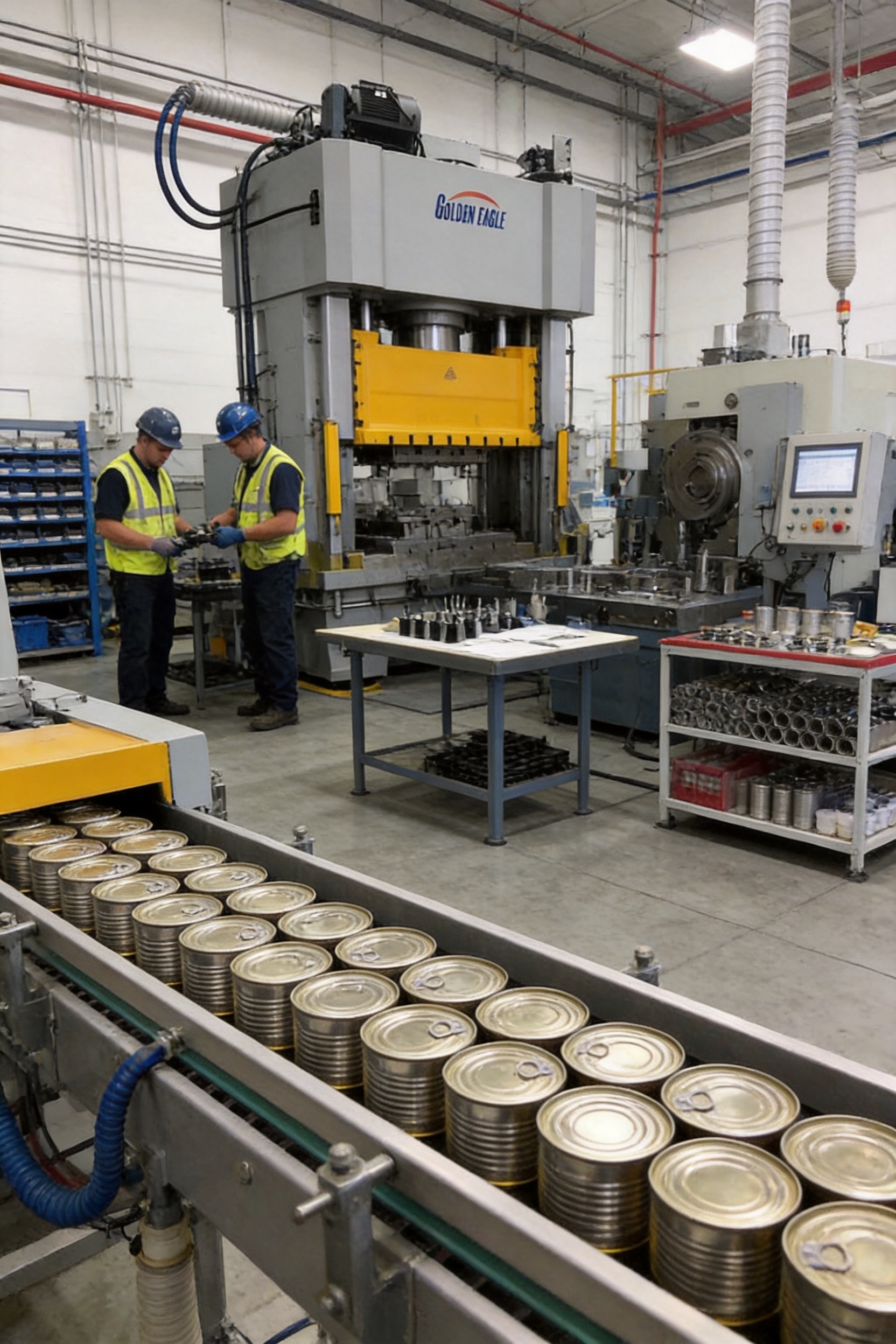
Zhejiang Golden Eagle Food Machinery Co., Ltd. provides after-sales services that include installation, commissioning, technical guidance, and operation training. The company also supplies parts to support maintenance and repair requirements.
Installation support helps ensure that the press is assembled, aligned, connected, and tested correctly. Commissioning support focuses on bringing the machine into stable operation with the customer’s selected materials and tooling. Technical guidance can address production settings, troubleshooting, maintenance, and integration with other equipment. Operator training helps the customer build internal capability rather than relying entirely on external technicians.
Spare-parts availability is an important consideration for high-speed production equipment. Wear parts, sensors, pneumatic components, electrical devices, and tooling-related components may eventually require replacement. Timely parts support can reduce downtime and help maintain production continuity.
The company’s equipment has been exported to markets across Europe, Asia, Africa, North America, South America, and Oceania. Its reported export experience includes countries such as Germany, Italy, the United Kingdom, Spain, Hungary, Russia, Australia, Jordan, Malaysia, the Philippines, Pakistan, Egypt, Algeria, Turkey, Mexico, Nigeria, and Iran. International experience can be useful when addressing different electrical standards, factory layouts, shipping conditions, and customer expectations.
The conversion press transforms prepared metal ends and tab material into finished easy-open ends. It combines tab forming, lane management, end separation, feeding, transfer, and related conversion operations in one coordinated system.
The machine can be configured with two, three, or four lanes. The appropriate configuration depends on the required output, product size, material arrangement, press selection, and factory layout.
According to customer requirements, the system can use a USA MINSTER press, a Taiwan INGYU press, or another suitable press platform. The final choice should be based on production needs, budget, maintenance preferences, and service considerations.
The listed operating range is 200 to 600 strokes per minute. The practical production speed depends on end design, material properties, tooling condition, lane configuration, feeding stability, and quality requirements.
The tab layout is compact and designed to make efficient use of the available material. Accurate tab feeding and stable die operation help convert more raw material into finished products and reduce unnecessary scrap.
The electrical control system can include double-sheet detection, no-ends detection, tab-wrong-position detection, no-tab detection, and multiple safety protection units. These features help detect abnormal conditions and protect the equipment and products.
The conversion press is available in a range of approximately 75 to 125 tons. The required tonnage should be selected according to the end design, tab material, tooling structure, and production conditions.
The listed main power range is 38.5 to 46.5 kilowatts. The final electrical specification should be confirmed for the selected configuration and considered together with the customer’s complete plant power system.
Installation, commissioning, technical guidance, operation training, and spare-parts support are available as part of the manufacturer’s after-sales service program.
Customers should provide information about end dimensions, tab design, material type and thickness, target capacity, preferred press platform, lane number, factory utilities, automation requirements, and expected production schedule. This information allows the machine to be configured more accurately.
The conversion press is a key machine for manufacturers seeking efficient and reliable easy-open-end production. Its configurable press platform, two- to four-lane structure, 75- to 125-ton force range, high-speed capability, compact tab layout, and integrated conversion tooling provide a strong basis for industrial production.
Its advantages are not limited to press capacity. The system also integrates tab dies, lane dies, ends separators, mechanical transmission, oil and pneumatic systems, vacuum transfer, tab feeding, and electrical protection. Detection functions for double sheets, missing ends, incorrect tab positions, and missing tabs help support product consistency and reduce the risk of avoidable damage.
The manufacturer’s long-term specialization in can-making machinery, engineering experience, CNC precision machining, broad product range, quality and environmental management systems, and international service experience further strengthen the value of the equipment. With suitable configuration, installation, training, and maintenance, the conversion press can support stable production for beverage, food, and other metal packaging applications.
For manufacturers planning a new easy-open-end line or upgrading existing capacity, the most effective approach is to evaluate the entire production requirement rather than selecting a press in isolation. Product design, material utilization, lane capacity, tooling, factory infrastructure, safety, maintenance, and after-sales support should all be considered together. A properly configured conversion press can then become the central platform for efficient, high-quality, and scalable end production.
1. Technical specification sheet for the Conversion Press, Zhejiang Golden Eagle Food Machinery Co., Ltd.
2. ISO 9001, Quality Management Systems—Requirements.
3. ISO 14001, Environmental Management Systems—Requirements with Guidance for Use.
4. General principles of metal forming, stamping, die design, and high-speed press operation.
5. Industrial guidance on easy-open-end manufacturing, tab feeding, product transfer, and production-line safety.
6. Manufacturer information concerning can-making machinery, can-lid production equipment, precision machining, installation, commissioning, and after-sales service.
Related Products

Founded in 1978, the company is one of the largest can-making machinery well-known companies at home and abroad.
Product Categories
Contact Information
Zhongshatou Shenjiamen Zhoushan Zhejiang China
+86-580-3056646

 English
 中文简体
 русский
 عربى
 Español