2026-06-01
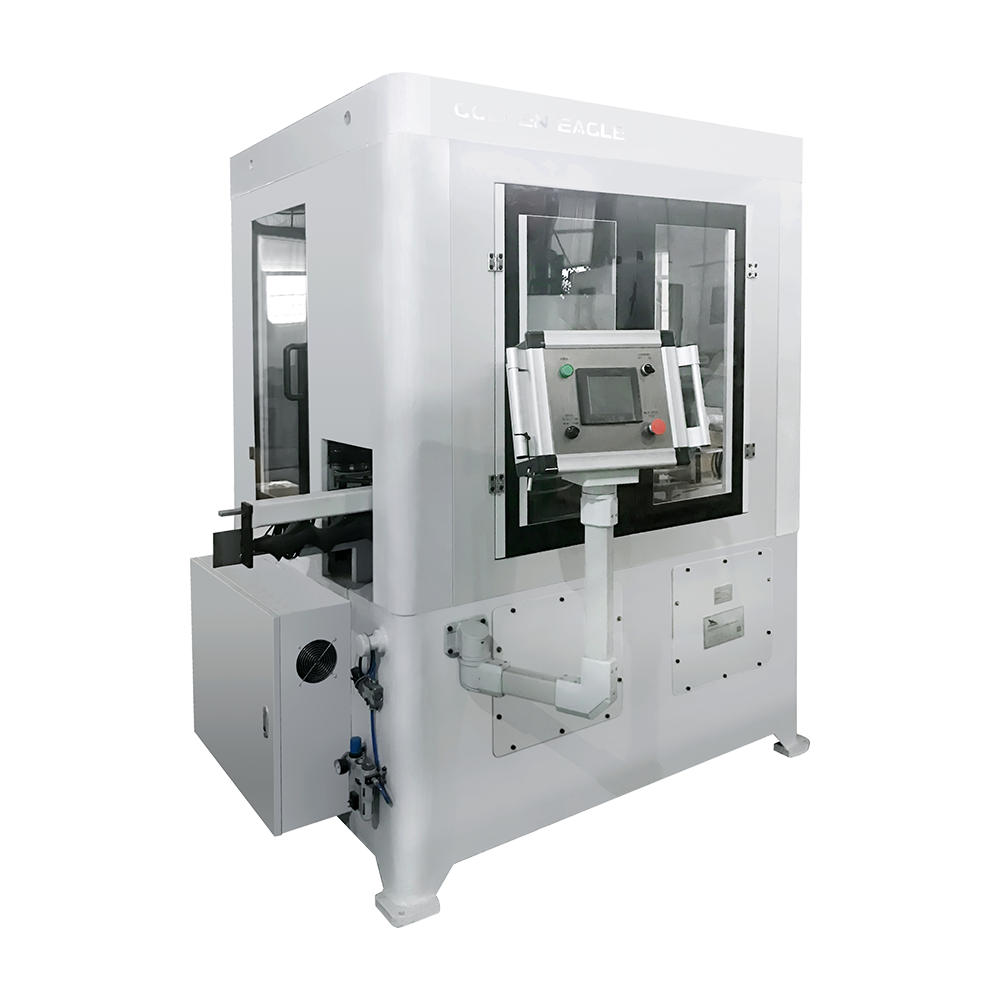
The CNC Automatic Digital Controlling Punch is designed for modern tin can lid and end manufacturing, especially for factories that need stable output, accurate sheet pressing, flexible mold configuration, reliable safety protection, and efficient material utilization. In can-making production, the end or lid is not a simple accessory; it is a critical sealing component that affects product safety, shelf life, appearance, and downstream production efficiency. A press used for lid and end production must therefore combine mechanical strength, feeding accuracy, die compatibility, automation, and process repeatability. This product responds to those demands with automatic sheet pressing, PLC-based control, multiple model options, and a practical structure for different end sizes.
The machine is suitable for tin can lid end making, bottom cover production, base cover production, large tank cover processing, chemical tank cover forming, and special screw cap applications depending on model configuration. It supports a wide range of production needs by offering different working pressures, strokes, die-loading capacities, and installation sizes. For factories producing food cans, beverage cans, milk powder cans, aerosol cans, chemical tanks, or related tinplate containers, this machine provides a strong foundation for a controlled and scalable lid production line.
CNC Automatic digital controlling punch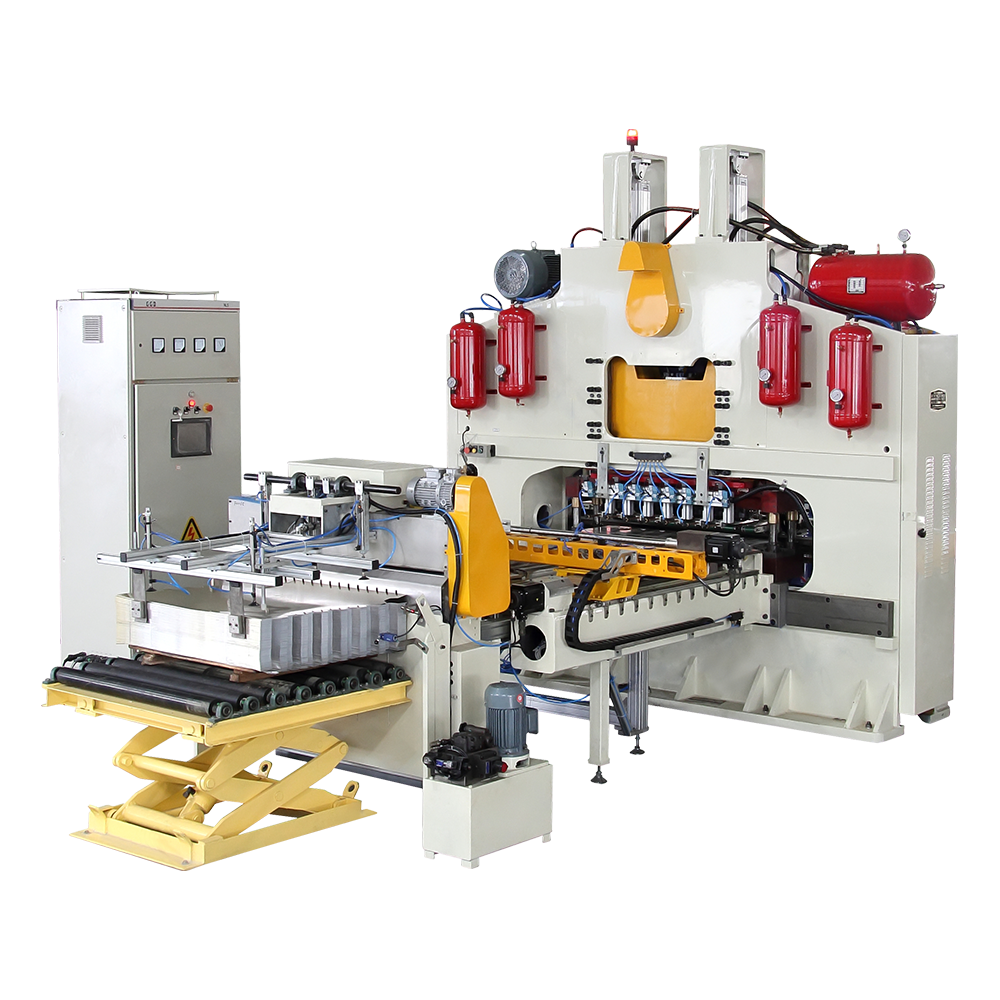
The CNC Automatic Digital Controlling Punch realizes sheet pressing through an automatic process. Its complete production procedure is designed to reduce manual intervention, increase working efficiency, and save material. The machine can be equipped with one to fifteen mold heads according to production requirements, making it suitable for both standard output lines and higher-capacity lid production systems. A double sheet detector helps prevent two sheets from entering the pressing area at the same time, while overload protection contributes to safer and more stable operation.
In practical production, sheet pressing quality depends on coordinated control of feeding, positioning, pressing force, mold matching, stroke, and safety logic. This equipment integrates those elements into a controlled production platform. The PLC controller supports automatic operation and consistent process execution. Compared with ordinary mechanical presses that depend heavily on manual adjustment and operator experience, the digital control system provides clearer parameter control and helps factories maintain repeatable performance across long production shifts.
The machine is particularly valuable for manufacturers that process different end sizes. Instead of being limited to one narrow range of lids, the series offers multiple models and configurations to cover common diameters, larger covers, and specialized parts. This flexibility is an important advantage for factories serving multiple customers or producing several can formats. By changing molds and selecting suitable settings, the production line can respond more quickly to market requirements.
A tin can end must be dimensionally accurate, cleanly formed, and suitable for downstream sealing operations. Any defect in lid geometry can cause seaming problems, leakage, increased scrap, or reduced shelf stability of packed products. For food, beverage, chemical, and aerosol packaging, these defects can create quality risks and unnecessary production costs. Therefore, lid end making equipment must be strong enough to press tinplate accurately while gentle enough to avoid unnecessary deformation, scratches, or material waste.
The CNC Automatic Digital Controlling Punch is engineered for this industrial reality. Its automatic sheet pressing process improves consistency. Its protection systems reduce the chance of severe mechanical accidents. Its multiple model choices allow factories to select a press according to capacity, product type, and die requirements. It is not only a single press machine; it is a central processing unit in a lid end production workflow.
For competitive can-making companies, efficiency is no longer measured only by cycle speed. It also includes changeover flexibility, tooling compatibility, safety, maintenance accessibility, energy balance, scrap reduction, and long-term reliability. This machine addresses these points through strong machine frames, defined working pressures, adjustable closed height, practical plate width capacity, and automatic control logic. The result is a production solution that supports both productivity and quality control.
One of the most important advantages of this machine is its automatic production procedure. Many conventional presses rely on more frequent manual handling, which increases labor intensity, reduces consistency, and raises the possibility of positioning errors. By using automatic sheet pressing and PLC control, this machine helps create a smoother workflow. Operators can focus on supervision, quality checks, die maintenance, and production planning rather than repetitive manual intervention.
Automation also supports higher line stability. When a machine runs with controlled timing and defined parameters, the production rhythm is easier to maintain. This is valuable in factories where lid output must match can body production, coating processes, or final assembly schedules. Stable output reduces production bottlenecks and helps managers plan capacity more accurately.
The product description highlights that the machine saves a lot of material. In metal packaging manufacturing, material cost is a major part of total production cost. Tinplate sheets are valuable, and even a small reduction in waste can create significant long-term savings. Accurate feeding, controlled pressing, and suitable mold configuration help improve sheet utilization and reduce scrap generated by misfeeds or inconsistent forming.
Compared with simpler machines that may cause higher rejection rates due to unstable feeding or less precise operation, the CNC automatic control approach supports better production discipline. When material saving is combined with high efficiency, the machine contributes not only to production performance but also to profitability and environmental responsibility.
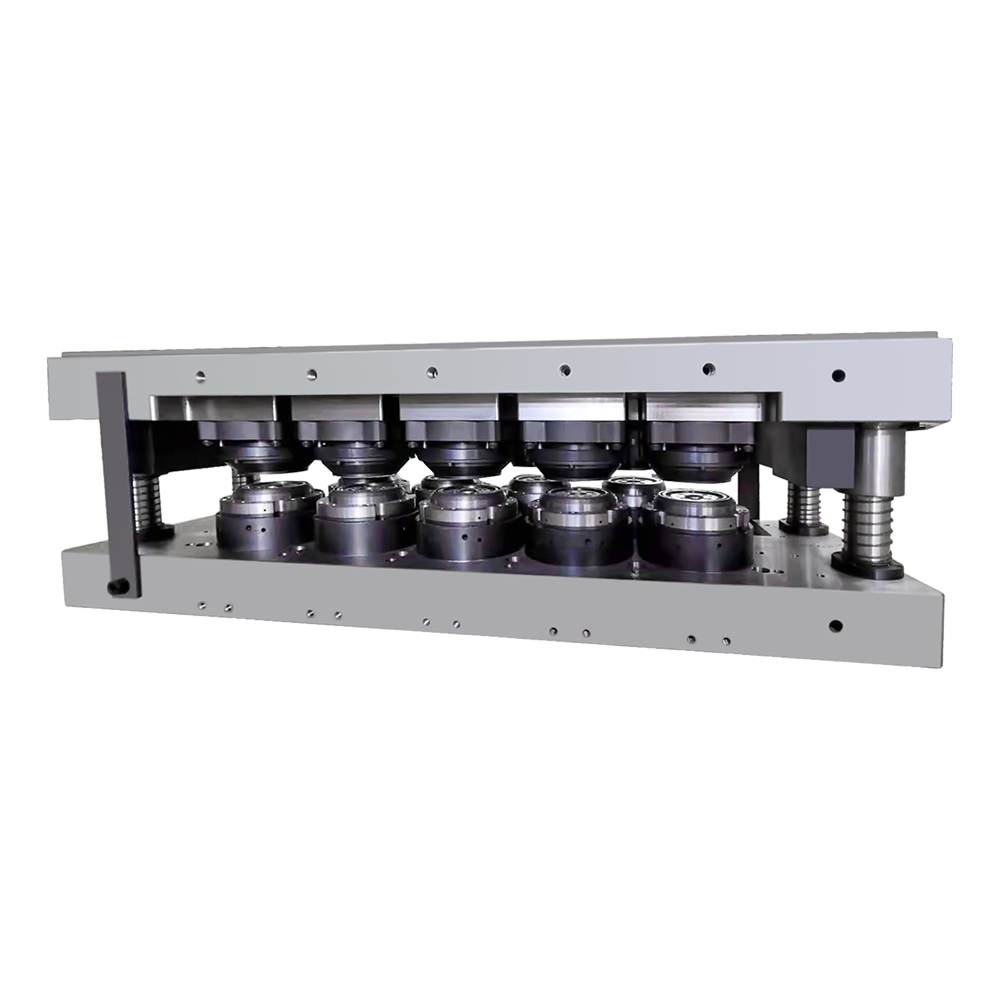
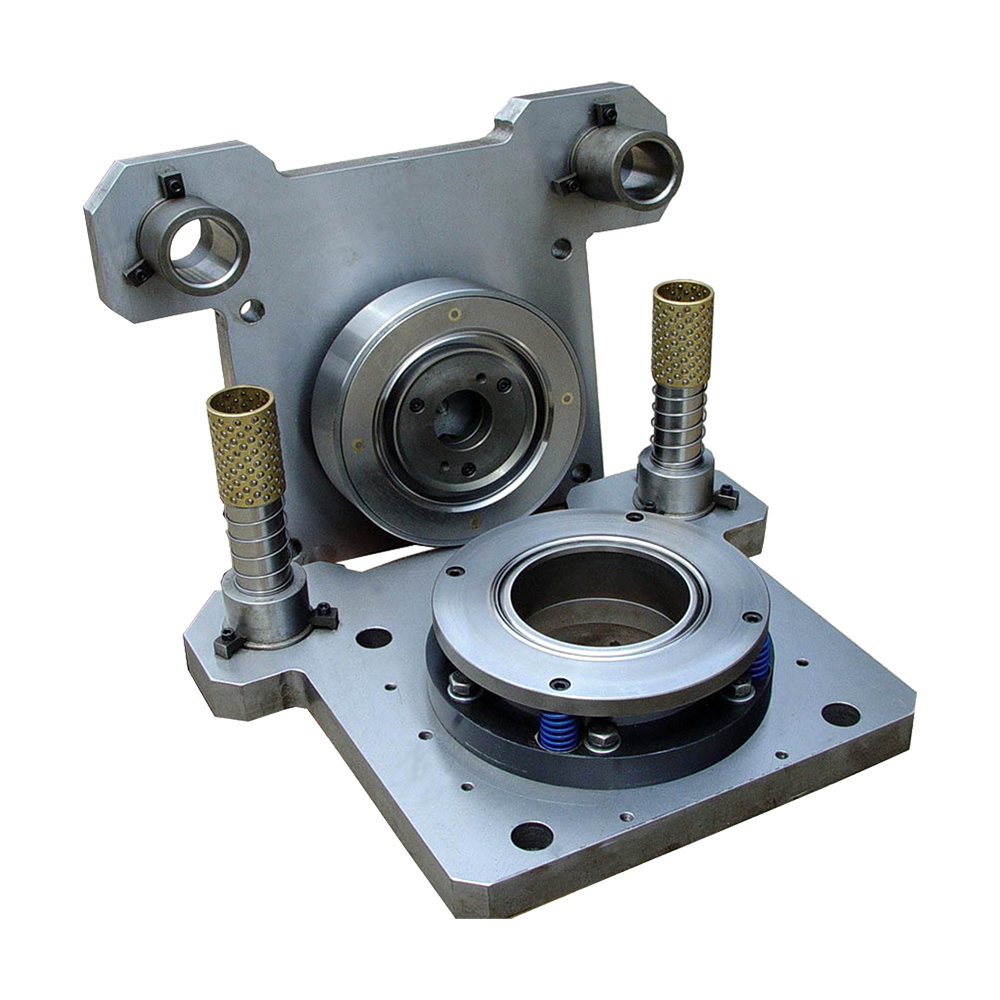
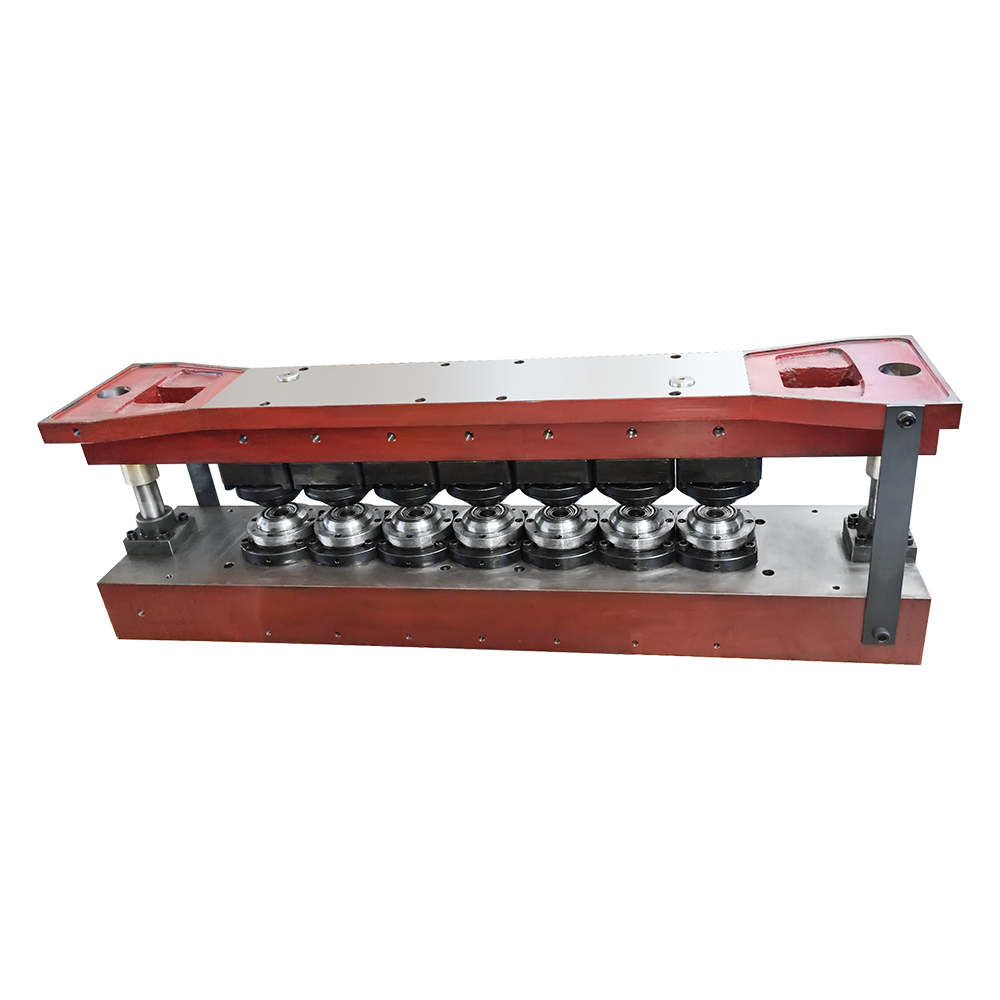
The number of molds can range from 1 to 15 heads depending on the model and application. This flexibility gives factories practical choices. A lower-head configuration may be appropriate for special products, smaller production runs, or large covers. A higher-head configuration may support large-volume production of standard bottom covers and base covers. The ability to select model and mold loading capacity according to product diameter and production volume is a major advantage over less flexible competitor equipment.
This flexibility is especially important for factories producing multiple end sizes. Market demand may change, customer orders may require different lid diameters, and seasonal production may shift product mix. A machine series with several configurations allows can makers to invest in equipment that matches present requirements while leaving room for future expansion.
The double sheet detector is a practical safety and quality feature. If two sheets enter the die area together, the press can experience abnormal load, mold damage, product defects, or production stoppage. Detecting this condition helps prevent serious problems before they occur. This gives the equipment an advantage over basic presses without integrated double sheet protection.
In high-volume lid production, even rare feeding errors can become costly if they damage tooling or interrupt production. A double sheet detector reduces this risk and improves operator confidence. It also supports more stable production when processing coated tinplate or sheet stacks that may occasionally stick together.
The machine is equipped with overload protection. This feature protects the press structure, molds, and production line from abnormal load conditions. Overload may result from incorrect material thickness, double feeding, poor alignment, die obstruction, improper setting, or unexpected mechanical resistance. By adding overload protection, the equipment helps reduce the likelihood of costly damage.
Competitor machines that lack adequate protection may appear economical at first, but a single severe overload event can result in mold repair, bearing damage, frame stress, long downtime, and delivery delays. Protection features contribute to lower lifetime operating risk, which is often more important than initial machine price.
The PLC controller gives the machine a controlled logic system for automatic operation. PLC-based systems are widely recognized in industrial automation because they are stable, programmable, and suitable for demanding production environments. With PLC control, machine actions can be coordinated more reliably than with purely manual or less integrated control systems.
For operators, the benefit is easier process management. For maintenance teams, the benefit is clearer troubleshooting logic. For production managers, the benefit is repeatable output. These advantages improve the total user experience and help factories maintain consistent production quality.
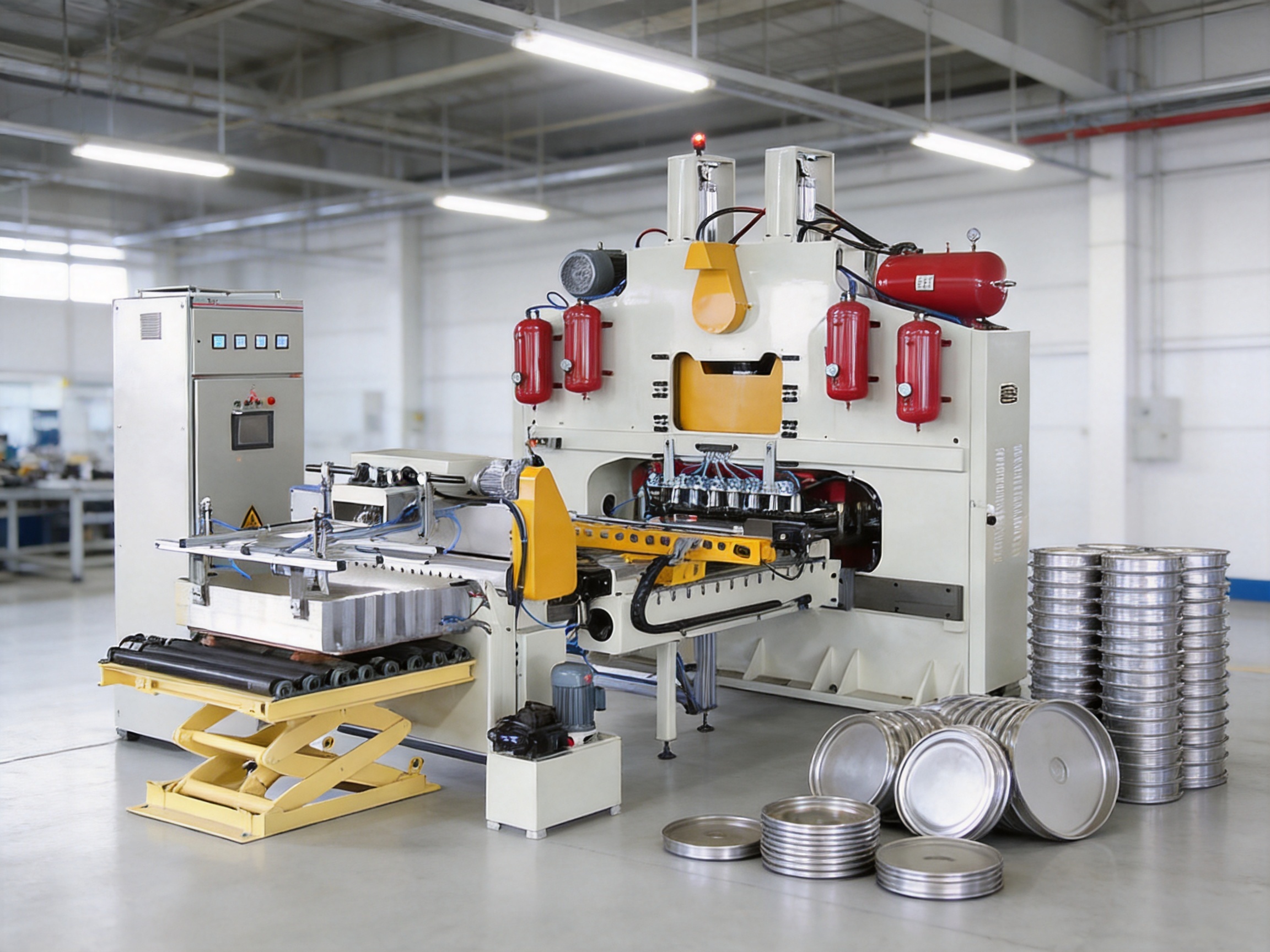
The CNC Automatic Digital Controlling Punch series includes multiple models for different production requirements. The models vary in working pressure, stroke, loading module capacity, closed height, power, weight, and installation dimensions. This range enables users to choose a machine according to required end size, die configuration, floor space, and production intensity.
| Model | Working Pressure | Stroke | Maximum Loading Module | Main Power | Main Application |
| CNC-C1B | 900 KN | 105 mm | Up to 7 modules for smaller diameters; up to 2 modules for larger diameter applications | 7.5 kW | Bottom cover and base cover production |
| CNC-C1H | 900 KN | 140 mm | Single-module configuration | 11 kW | Large tank covers and chemical tank covers |
| CNC-C2 | 450 KN | 100 mm | Up to 2 modules for smaller diameters; one module for larger diameter applications | 5.5 kW | Bottom cover and base cover production |
| CNC-C12 | 2500 KN | 80 mm | Up to 15 modules | 22 kW | High-capacity bottom cover and base cover production with double-row die configuration |
| CNC-C6 | 1200 KN | 105 mm | Up to 8 modules for smaller diameters; up to 3 modules for larger diameter applications | 15 kW | Bottom cover and base cover production |
| CNC-C8 | 120 KN | 190 mm | Single-module configuration | 4 kW | Four screw cap production |
These specifications show that the series is not limited to a single narrow task. It can support compact and specialized production as well as heavy-duty, high-capacity output. For example, CNC-C12 provides 2500 KN working pressure and can support up to 15 modules, making it suitable for intensive production of bottom covers and base covers. CNC-C1H is oriented toward large tank covers and chemical tank covers. CNC-C8 is designed mainly for four screw cap production. This diversity is a significant strength for buyers who want a reliable equipment supplier capable of serving an entire can-making system.
Selecting the right model requires understanding production goals. A factory producing high volumes of standard tin can ends may prioritize module capacity and line speed. A factory producing larger covers may prioritize working pressure, stroke, and mold compatibility. A factory producing several different products may prioritize flexible changeover and a balanced configuration.
For standard bottom cover and base cover production, models such as CNC-C1B, CNC-C1D, CNC-C1W, CNC-C2, CNC-C6, CNC-C6D, and CNC-C6W offer practical choices. They provide defined working pressure, suitable stroke, and large plate width capacity. For high-capacity production, CNC-C12 stands out with 2500 KN working pressure, 22 kW main power, 35 kW total power, and a host weight of about 30 tons. Its heavy structure and high module capacity are suitable for demanding production environments.
For large tank covers and chemical tank covers, CNC-C1H provides a specific functional orientation. It offers 900 KN working pressure, 140 mm stroke, and a configuration suited to larger cover requirements. For four screw cap production, CNC-C8 provides a specialized solution with 190 mm stroke and installation dimensions of 5400 x 4000 x 2500 mm, making it distinct from the larger end-cover models.
The availability of different models allows buyers to match machine investment with production reality. Instead of forcing every factory to use one standard press, the series provides a structured selection. This reduces unnecessary power consumption, avoids underutilized equipment, and improves the return on investment.
The manufacturer has long experience in can-making machinery and mold production. Since 1978, the company has focused on can-making machinery, can-making molds, and complete production lines. More than four decades of development create deep knowledge of material behavior, forming technology, production rhythm, and factory maintenance needs. This experience is reflected in equipment that is practical, robust, and adaptable.
The company has a team of more than 350 trained personnel, including experienced design and development engineers. Such a team structure supports product design, machining, assembly, quality inspection, commissioning, and after-sales service. In machinery manufacturing, engineering strength is not only about making a machine that works once; it is about making equipment that performs reliably through years of production. Skilled personnel and mature manufacturing procedures are essential to that goal.
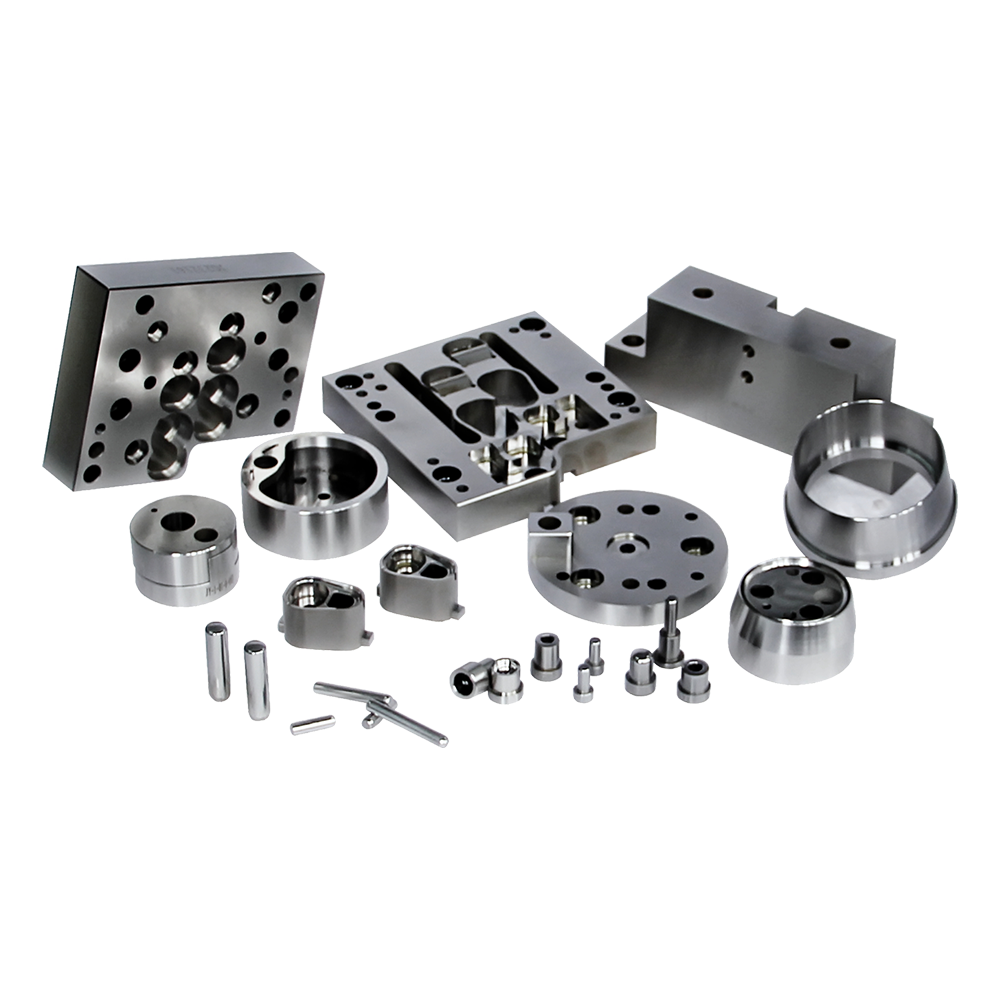
The company uses advanced manufacturing equipment, including CNC high-precision machining equipment and complete mechanical machining resources. Precision machining is especially important for press machines because frame accuracy, guide accuracy, mold seat precision, and component alignment influence product quality and machine life. When core parts are processed with high-precision equipment, the final machine can achieve better assembly accuracy and more stable operation.
The enterprise has also obtained ISO9001 quality management system certification and ISO14001 environmental management system certification. These certifications indicate structured quality control and environmental management practices. For international buyers, certified management systems provide additional confidence that production, inspection, and management are performed according to recognized standards.
CNC high-precision machining is a key manufacturing advantage. Press equipment requires large and accurate parts. If key surfaces are not machined correctly, the machine may suffer from vibration, uneven force distribution, die misalignment, or premature wear. CNC machining helps control dimensional accuracy and repeatability in critical parts.
High-precision machining also supports better mold installation and adjustment. Since lid end production depends heavily on tooling alignment, accurate machine components reduce setup complexity. Operators and maintenance personnel benefit from a machine structure that holds alignment and supports repeatable die performance.
The company maintains complete mechanical machining equipment. This means major production steps can be controlled internally rather than relying excessively on scattered external processing. Integrated processing capability improves schedule control, quality traceability, and component consistency. It also allows engineering improvements to be applied more quickly during product development.
For customers, this translates into more reliable delivery, better spare parts support, and a stronger ability to customize machinery or molds. A supplier with complete processing capability can respond better to technical requirements than a supplier that only assembles outsourced components.
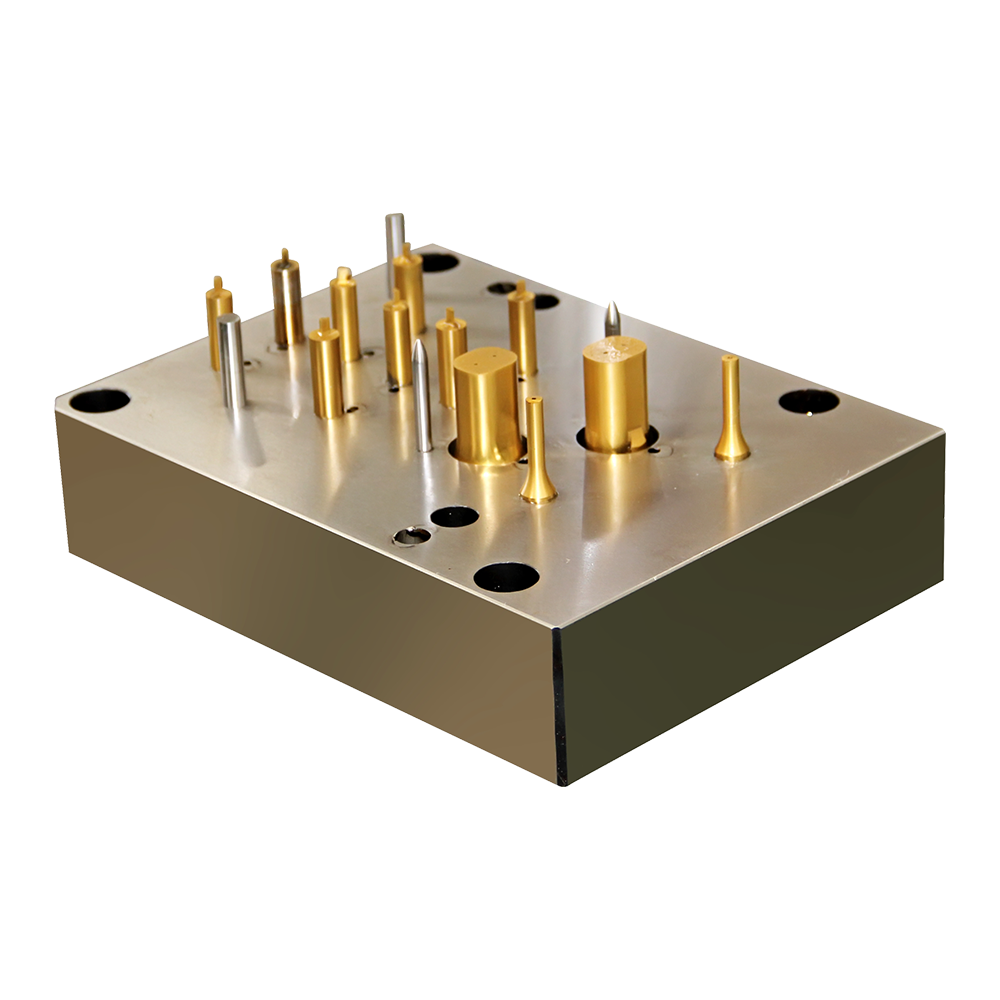
The company has long-term experience in both can-making machinery and can-making molds. This combination is highly valuable. In lid end production, the press and the mold must work together as a system. A machine manufacturer without mold knowledge may focus only on mechanical motion, while a mold supplier without machine knowledge may not fully understand press dynamics. Integrated knowledge of both sides helps produce equipment that is better matched to real forming conditions.
This integration supports faster debugging, better product forming quality, and more efficient troubleshooting. When users need to produce a new end size, the supplier can consider mold configuration, machine stroke, closed height, module capacity, and material behavior together. This system-level approach is a strong advantage over competitors with narrower capabilities.
Quality control is essential for machinery that will operate in demanding industrial conditions. The manufacturer’s ISO9001 quality management system supports structured inspection, process control, and continuous improvement. For the CNC Automatic Digital Controlling Punch, quality inspection may involve machining accuracy checks, assembly verification, electrical control testing, safety system testing, running tests, and final performance confirmation.
A controlled quality process reduces the risk of hidden defects. It also supports consistency across different machine models. When a buyer orders multiple presses or a complete production line, consistent manufacturing quality helps simplify installation, commissioning, and operator training.
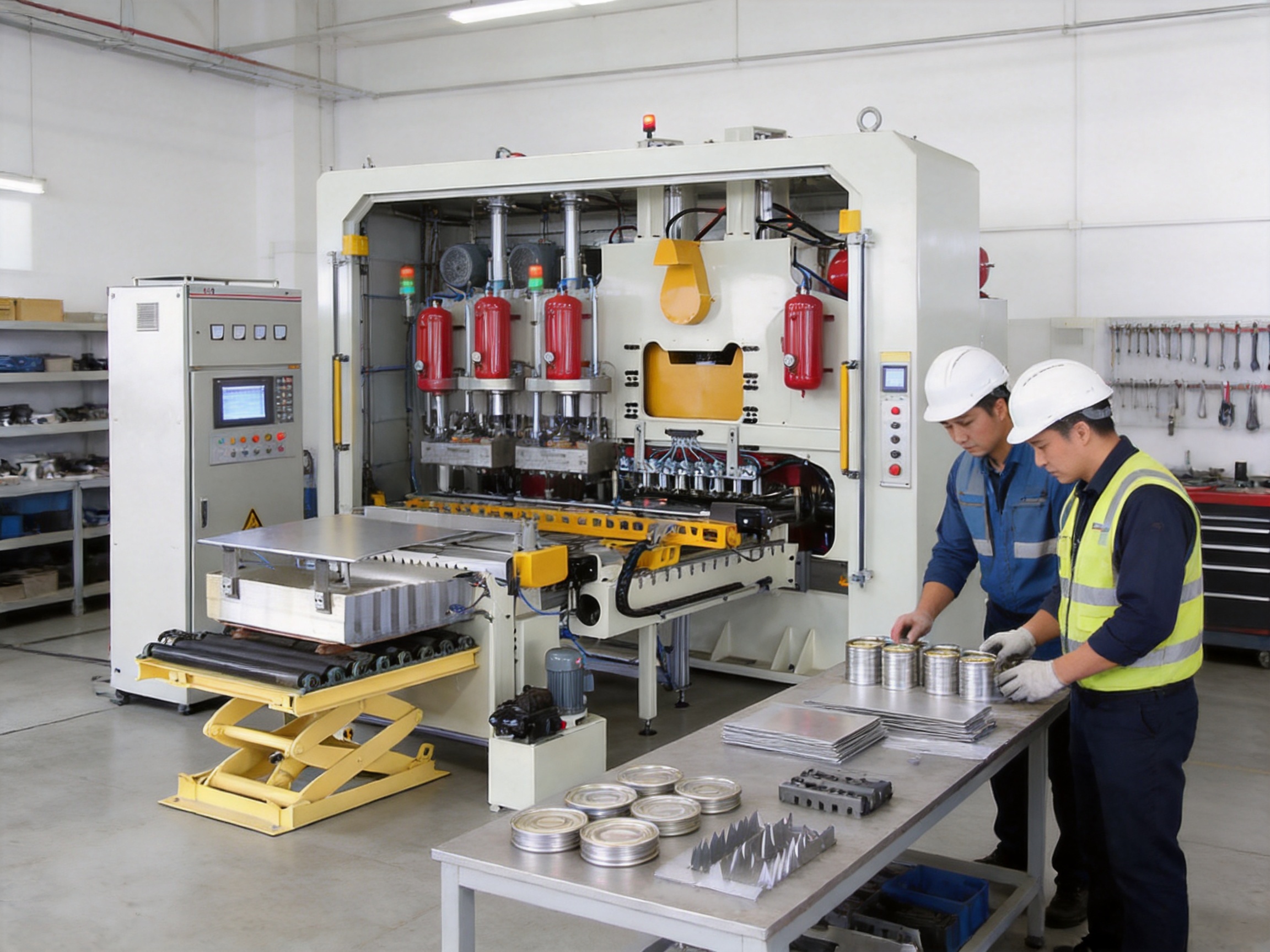
The machine belongs to the tin can lid end making equipment category, but its applications extend across multiple packaging sectors. It can be used in food can production, beverage can production, milk powder can production, chemical tank production, aerosol can production, and other metal packaging systems. The product is particularly suitable for producing bottom covers and base covers, and some models are specialized for large tank covers, chemical tank covers, or four screw caps.
In food can production, lid quality directly affects sealing safety and product preservation. In beverage can or related end production, consistency and high output are essential. In milk powder can manufacturing, end appearance and sealing performance are important because packaging quality influences customer confidence. In chemical tank and aerosol can production, structural reliability is especially important due to pressure, safety, or chemical compatibility requirements. The machine’s strong pressing capability and automatic control help support these varied needs.
Safety is a core concern in press operation. A press machine applies large force, and improper feeding or mechanical abnormality can create serious risk. This equipment addresses safety through double sheet detection, overload protection, and controlled automation. These systems help reduce accidents, protect molds, and maintain production stability.
Reliability also comes from robust mechanical design. Model weights range from several tons to about 30 tons depending on configuration, reflecting strong structural construction for industrial operation. Closed height adjustment, large plate width capacity, and defined installation dimensions show that the series is designed as production equipment rather than light-duty machinery. A strong host structure contributes to vibration resistance, forming consistency, and longer service life.
For factory owners, reliable machinery means fewer unexpected stoppages, lower maintenance pressure, and more predictable delivery schedules. For operators, it means safer daily work. For maintenance teams, it means easier planning and lower emergency repair frequency. These advantages combine to make the machine a practical choice for serious can-making production.
The total value of a lid end press is measured by more than its purchase cost. A high-quality machine reduces cost through stable output, lower scrap, better mold protection, efficient labor use, and long service life. The CNC Automatic Digital Controlling Punch supports these cost-saving goals through automatic operation and material-saving performance.
Labor cost reduction is achieved by reducing manual handling and simplifying operation supervision. Material cost reduction comes from improved sheet utilization and fewer defective products. Maintenance cost reduction comes from protection systems and strong structure. Production planning cost is reduced because stable automation makes output easier to predict.
When compared with low-cost presses that lack automatic control or protection functions, this machine offers better long-term value. A cheaper competitor machine may require more manual labor, generate more waste, stop more frequently, or damage molds more easily. Over several years of operation, those hidden costs can exceed the initial price difference. Therefore, this equipment should be evaluated as a long-term productivity asset.
The company supplies whole-set series products, including food can production lines, beverage can production lines, can lid production lines, chemical tank production lines, aerosol canister production lines, two-piece can production lines, and pop can production lines. This background makes the CNC Automatic Digital Controlling Punch easier to integrate into a complete production environment. Buyers who need more than a single machine can benefit from coordinated equipment planning.
In a complete can lid production line, the press must coordinate with feeding equipment, sheet handling systems, molds, inspection points, collection systems, and downstream processing. A manufacturer experienced in full production lines understands the relationship between each section. This reduces integration risk and improves commissioning efficiency.
For international buyers, complete-line capability is important because it reduces the need to coordinate multiple unrelated suppliers. When equipment comes from a supplier with broad can-making expertise, technical communication becomes clearer. Line layout, installation dimensions, power requirements, production capacity, and after-sales support can be considered as one system.
Good after-sales service is a major strength. The company provides installation, commissioning, technical guidance, operation training, and spare parts supply. For industrial machinery, after-sales service is not optional; it is part of the product value. Even a well-designed machine must be installed correctly, adjusted properly, and operated by trained personnel.
Installation support helps ensure that the machine is placed, leveled, connected, and prepared correctly. Commissioning verifies that mechanical systems, electrical control, feeding, pressing, and safety devices perform as expected. Technical guidance helps customer teams understand operation procedures and maintenance points. Operation training improves safety and reduces errors. Spare parts support reduces downtime and extends equipment life.
This service capability provides an advantage over competitors that only sell equipment without strong technical support. Buyers investing in lid end production need confidence that the supplier can assist not only before purchase but also during installation and throughout operation.
The company’s equipment has been exported to many countries across Europe, Asia, Africa, North America, South America, and Oceania. Markets include countries such as Germany, Italy, the United Kingdom, Spain, Hungary, Russia, Australia, Jordan, Malaysia, the Philippines, Pakistan, Egypt, Algeria, Turkey, Mexico, Nigeria, and Iran. This international experience demonstrates that the equipment can serve diverse production environments, user habits, technical requirements, and market standards.
Export experience is valuable because different countries often have different voltage standards, installation practices, environmental conditions, operator skill levels, and maintenance resources. A manufacturer with broad export history is more likely to understand the documentation, packaging, commissioning, and communication needs of overseas customers. This reduces risk for buyers who import can-making machinery.
The company has produced more than 10,000 pieces of can and can lid equipment. This production history indicates mature manufacturing experience and broad user feedback. Continuous improvement based on real-world use helps strengthen equipment performance over time.
The CNC Automatic Digital Controlling Punch competes in a field where buyers compare capacity, precision, durability, automation, service, and price-performance ratio. Its competitive strength comes from combining automatic control, flexible model selection, strong safety systems, mold-machine knowledge, and an experienced manufacturing background.
Compared with basic mechanical presses, it offers better automation and protection. Compared with suppliers focused only on machines, it benefits from mold expertise. Compared with small workshops, it benefits from advanced manufacturing equipment, ISO-certified systems, and a large trained team. Compared with single-product suppliers, it benefits from complete production line capability. These strengths create a balanced competitive profile suitable for factories seeking dependable long-term equipment.
The product is especially suitable for customers who want to improve productivity while controlling material waste. It is also suitable for customers planning to expand product variety because the series includes multiple models for different lids, covers, and caps. In industries where packaging quality affects brand reputation and product safety, dependable lid end production equipment is a strategic investment.
Factory managers typically evaluate equipment according to productivity, labor requirement, defect rate, downtime risk, energy use, maintenance burden, and supplier support. The CNC Automatic Digital Controlling Punch answers these concerns directly. Automatic operation improves productivity and reduces labor dependence. Material-saving performance reduces tinplate waste. Double sheet detection and overload protection reduce downtime risk. PLC control improves repeatability and process management. Model selection allows power and capacity to be matched to actual demand.
Another practical benefit is production standardization. When a factory uses controlled equipment with defined settings and stable operation, it becomes easier to train operators, document procedures, and maintain quality systems. This is important for factories serving international brands or regulated markets where process consistency is expected.
For maintenance managers, the machine’s robust construction and protection systems help reduce emergency repair frequency. For financial managers, the long-term reduction in scrap, labor, and downtime supports return on investment. For quality managers, stable pressing and mold compatibility help maintain lid dimensional accuracy.
Material saving is also an environmental advantage. Tinplate production consumes energy and resources, so reducing scrap helps lower the environmental footprint of packaging manufacturing. The company’s ISO14001 environmental management certification further supports responsible production management. In modern industry, sustainability is increasingly connected to cost control and customer expectations. Equipment that saves material and supports efficient production helps factories meet both economic and environmental goals.
Efficient machinery can also contribute to better energy use by matching model selection to production requirements. Instead of using an oversized machine for every application, buyers can select a suitable model with appropriate working pressure and power. This practical approach helps optimize energy consumption across the production line.
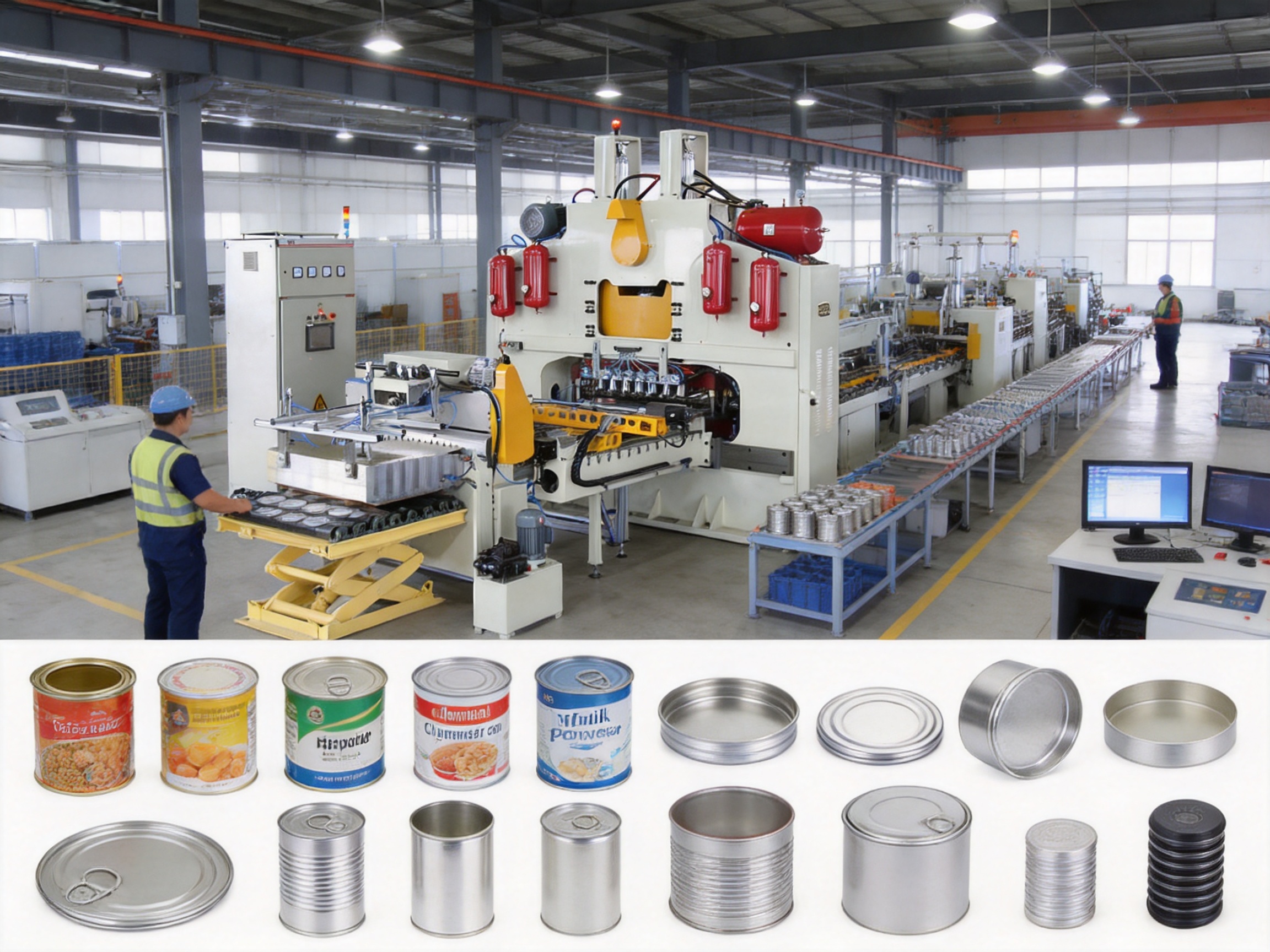
It is mainly used for automatic sheet pressing in tin can lid and end production. Depending on the model, it can produce bottom covers, base covers, large tank covers, chemical tank covers, and four screw caps.
PLC control helps coordinate automatic operation, improve process repeatability, simplify operation management, and support stable production over long shifts. It is more reliable and easier to manage than purely manual control methods.
The machine supports accurate sheet pressing and controlled production, reducing misfeeds, defective pressing, and scrap. Better material utilization is especially valuable because tinplate is a major production cost.
The machine includes a double sheet detector and overload protection system. These features help prevent abnormal feeding, protect molds and machine components, and improve operational safety.
The series can support from 1 to 15 mold heads depending on the model and application. This allows users to select equipment for small-batch, specialized, or high-volume production.
CNC-C12 is suitable for high-capacity production because it offers 2500 KN working pressure and up to 15 loading modules. It is mainly used for bottom cover and base cover production with a double-row die configuration.
Yes. CNC-C1H is mainly designed for large tank covers and chemical tank covers. It provides a configuration suitable for larger and heavier cover applications.
The manufacturer has been engaged in can-making machinery and mold production since 1978, has more than 350 trained personnel, uses CNC high-precision machining equipment, holds ISO9001 and ISO14001 certifications, and has produced more than 10,000 pieces of can and can lid equipment.
Yes. The manufacturer supplies complete production lines for food cans, beverage cans, can lids, chemical tanks, aerosol canisters, two-piece cans, and pop cans. This experience supports smooth integration of the press into broader production systems.
After-sales services include installation, commissioning, technical guidance, operation training, and spare parts supply. These services help users start production smoothly and maintain reliable operation over time.
The CNC Automatic Digital Controlling Punch is a strong solution for tin can lid and end production because it combines automatic operation, PLC control, material-saving performance, flexible mold configuration, double sheet detection, overload protection, and multiple model choices. It is suitable for factories that need efficient and stable production of bottom covers, base covers, large tank covers, chemical tank covers, and specialized caps.
Its advantages over conventional competitor equipment are clear. It reduces manual dependence, improves production consistency, protects molds, supports different end sizes, and offers scalable module options. Behind the product is a manufacturer with decades of industry experience, advanced CNC machining capability, complete mechanical processing resources, mold-machine integration knowledge, certified management systems, global export experience, and practical after-sales support.
For can-making factories planning to improve production efficiency, reduce material waste, enhance safety, and build a reliable lid end manufacturing process, this machine is a valuable long-term investment. It is not only a press; it is an integrated productivity platform for modern metal packaging manufacturing.
1. Industrial Metal Packaging Manufacturing Handbook, Can Forming and End-Making Processes.
2. Press Machine Safety and Automation Practices in Sheet Metal Production.
3. Tinplate Packaging Production Technology and Quality Control Guidelines.
4. ISO9001 Quality Management Systems: Principles for Manufacturing Control.
5. ISO14001 Environmental Management Systems: Industrial Resource Efficiency Practices.
6. PLC-Based Automation in Modern Can-Making Machinery.
Related Products

Founded in 1978, the company is one of the largest can-making machinery well-known companies at home and abroad.
Product Categories
Contact Information
Zhongshatou Shenjiamen Zhoushan Zhejiang China
+86-580-3056646

 English
 中文简体
中文简体
 русский
 عربى
عربى
 Español