2026-04-26
In the global metal packaging industry, the production of high-quality can bodies depends on one critical step: precision slitting of metal sheets into uniform blanks. Any inconsistency in this process—from burrs on edges to uneven widths—can lead to leaks, structural defects, or even safety issues in the final product. For can manufacturers, finding a cutting machine that balances speed, accuracy, durability, and cost-effectiveness is non-negotiable. Enter the GT10A8 Automatic Compound Cutting Machine: a game-changing solution that has redefined standards in canbody blank slitting, outperforming competitors in key areas while leveraging advanced manufacturing processes from a seasoned industry leader.
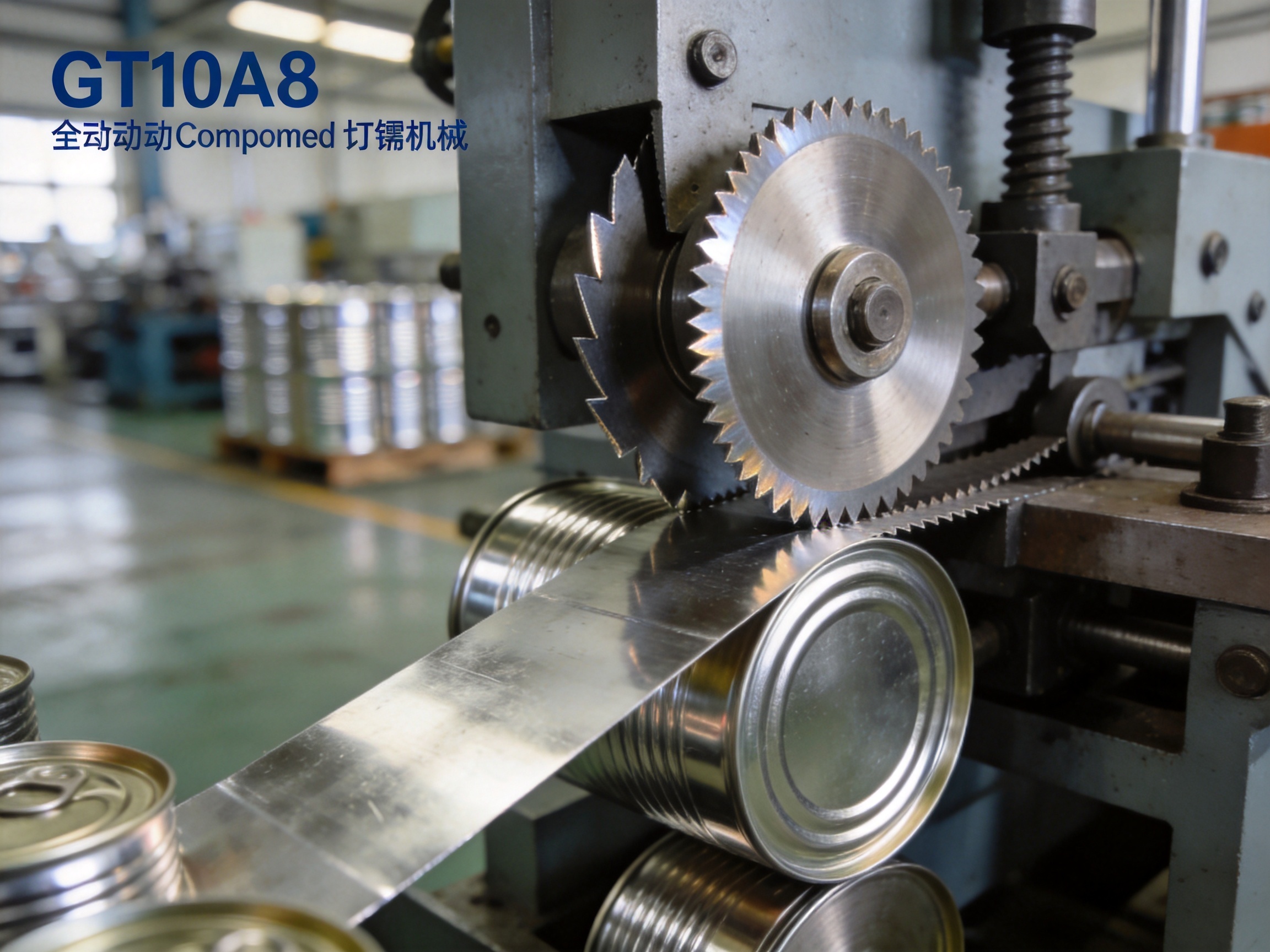
Designed specifically for the food and beverage can manufacturing sector, the GT10A8 addresses the most pressing pain points of modern can producers: frequent knife replacements, inconsistent cuts, slow production speeds, and limited versatility. By combining alloy steel cutting components, automatic operation, and a robust design rooted in decades of engineering expertise, this machine has become a go-to choice for factories seeking to optimize their production lines and enhance product quality.
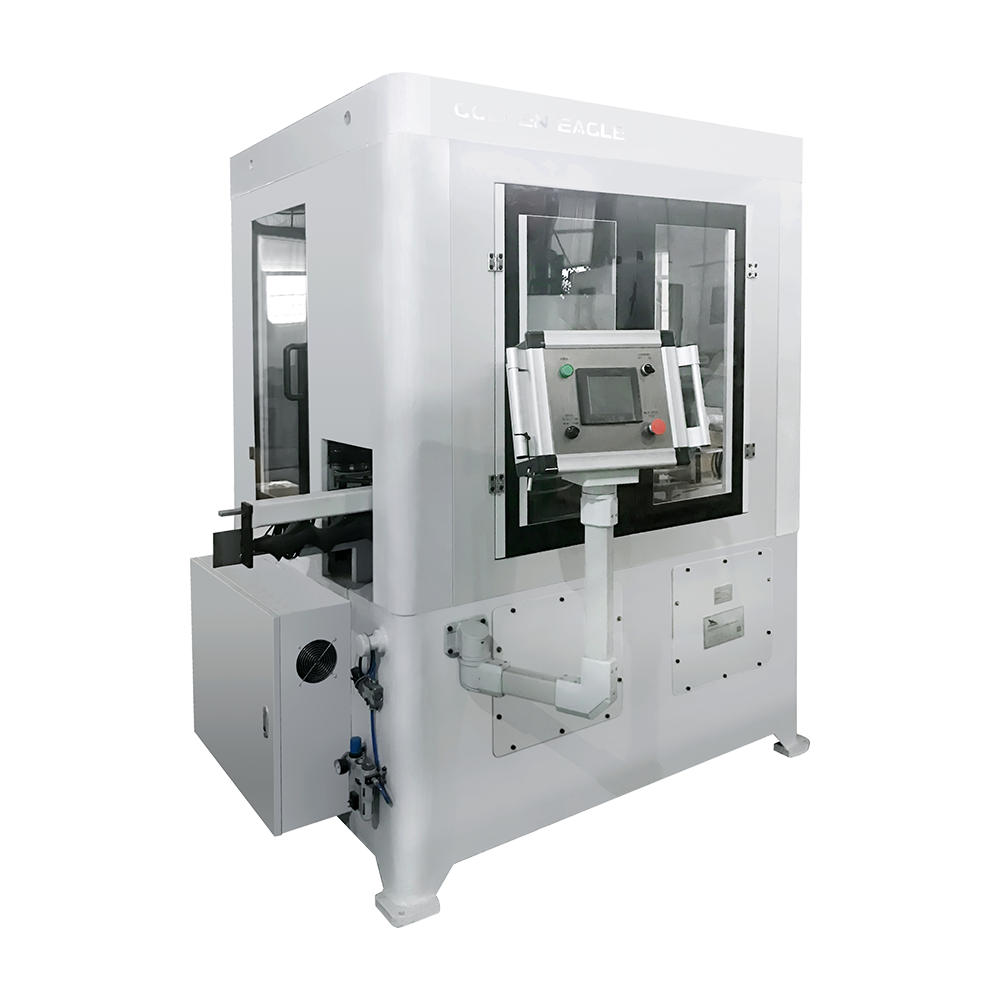
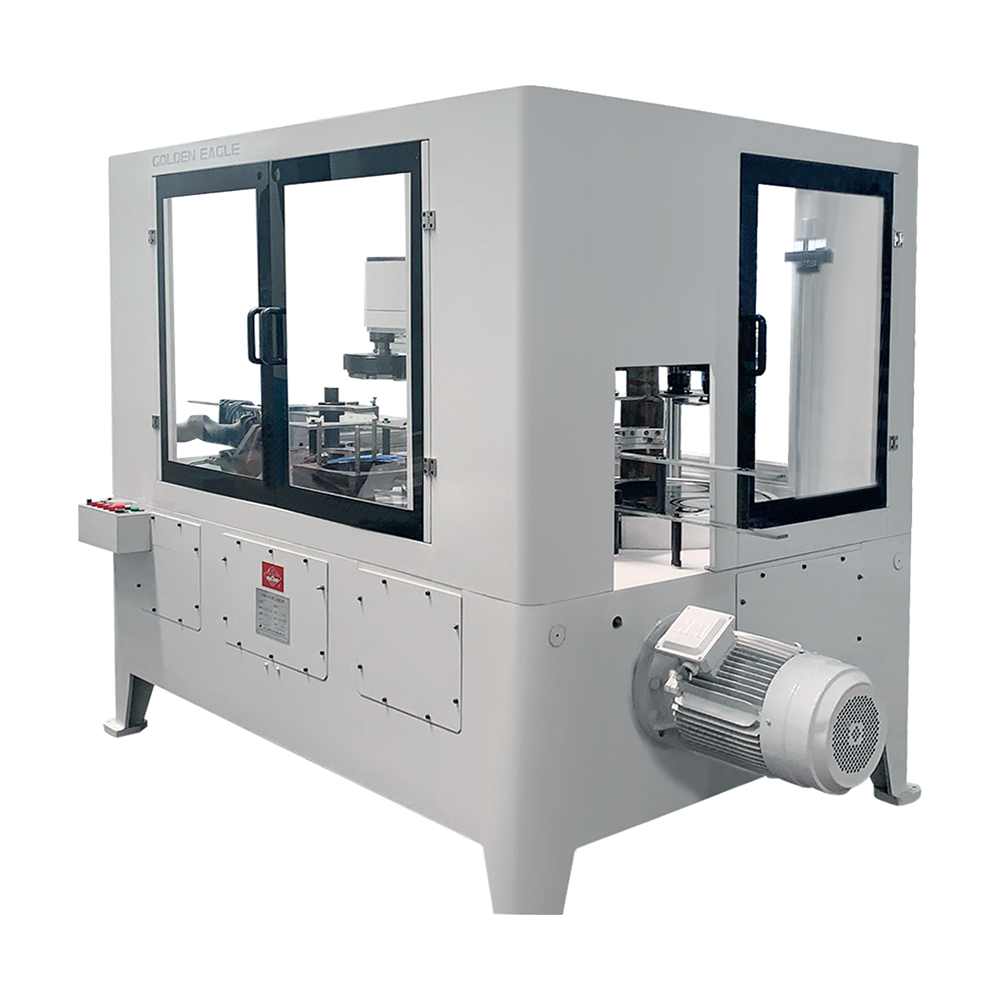
The GT10A8 is an automatic metal sheet slitting machine engineered exclusively for producing canbody blanks. Unlike general-purpose slitting equipment, it is tailored to the unique requirements of tinplate and tin can manufacturing—materials that demand precise, burr-free cuts to ensure structural integrity. At its core, the machine uses circular knives to slice large metal sheets into smaller, uniform blanks that are then formed into can bodies. Its automatic operation eliminates manual intervention, allowing for continuous, consistent production with minimal human error.
Key features of the GT10A8 include: - Alloy steel circular knives for enhanced durability and cutting precision - Automatic feeding and cutting systems for uninterrupted production - Versatile compatibility with various can sizes (from small beverage cans to large food containers) - High-speed performance (up to 40 sheets per minute) - User-friendly controls for easy adjustment of cutting parameters
For can manufacturers, the GT10A8 is more than just a piece of equipment—it’s a productivity multiplier. It streamlines the slitting process, reduces waste, and ensures that every blank meets the strict quality standards required for food and beverage packaging.
To understand why the GT10A8 stands out in the crowded can-making machinery market, it’s essential to compare it to competing models. Below are the core advantages that set it apart:
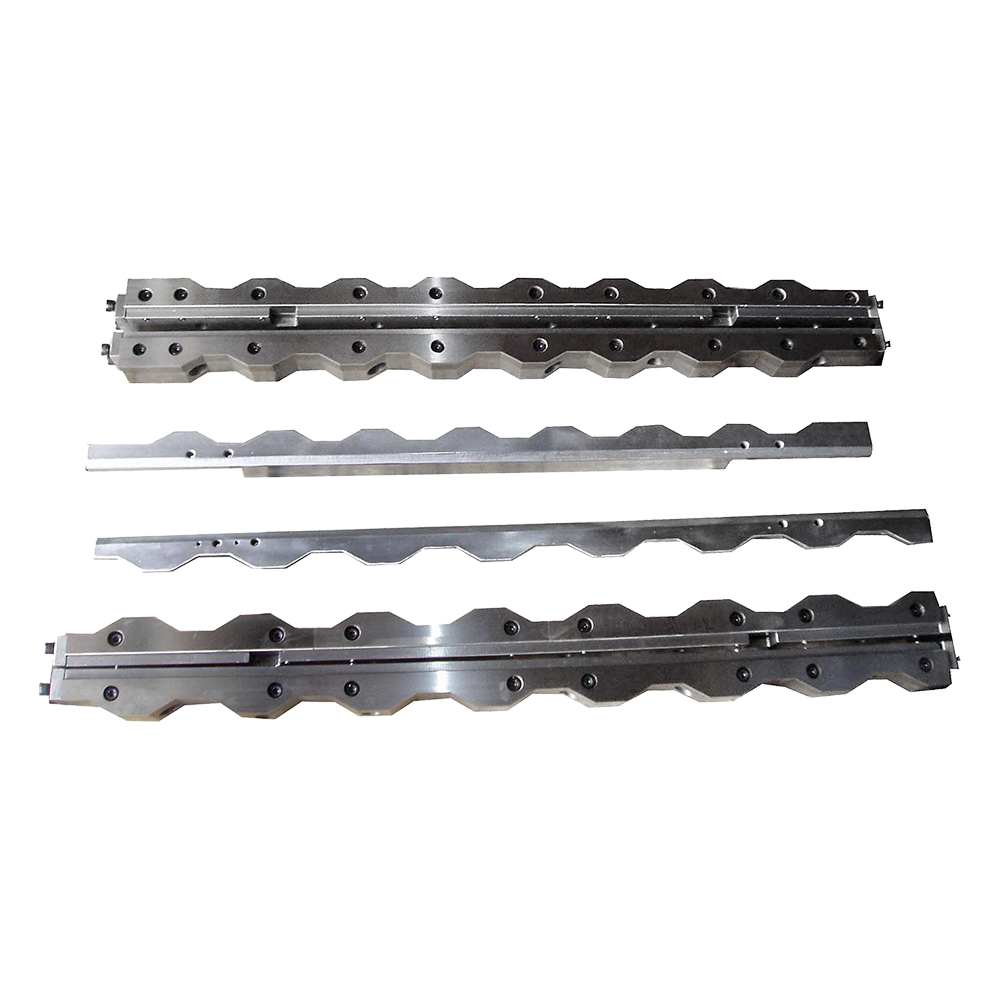
One of the most critical components of any slitting machine is its cutting knives. Competitors typically use high-carbon steel knives, which are prone to wear and require frequent replacement—often every 2–3 weeks under heavy use. The GT10A8, however, uses knives made from high-grade alloy steel, a material engineered for exceptional hardness and wear resistance.
Alloy steel knives in the GT10A8 have a Rockwell hardness rating of 62–65 HRC, compared to 55–58 HRC for standard high-carbon steel knives. This higher hardness means the knives retain their sharp edge for 4–6 times longer, reducing replacement frequency to once every 2–3 months. For manufacturers, this translates to significant cost savings: fewer knife purchases, less downtime for replacements, and lower maintenance labor costs.
Beyond durability, the alloy steel knives deliver superior cutting precision. They produce burr-free edges on tinplate sheets, a critical requirement for can bodies. Burrs can cause leaks when the can is sealed, or even pose a safety risk if they come into contact with food. Competitors’ knives often leave small burrs, which require additional deburring steps—adding time and cost to the production line. The GT10A8 eliminates this need, as its clean cuts meet or exceed industry standards for canbody blank quality.
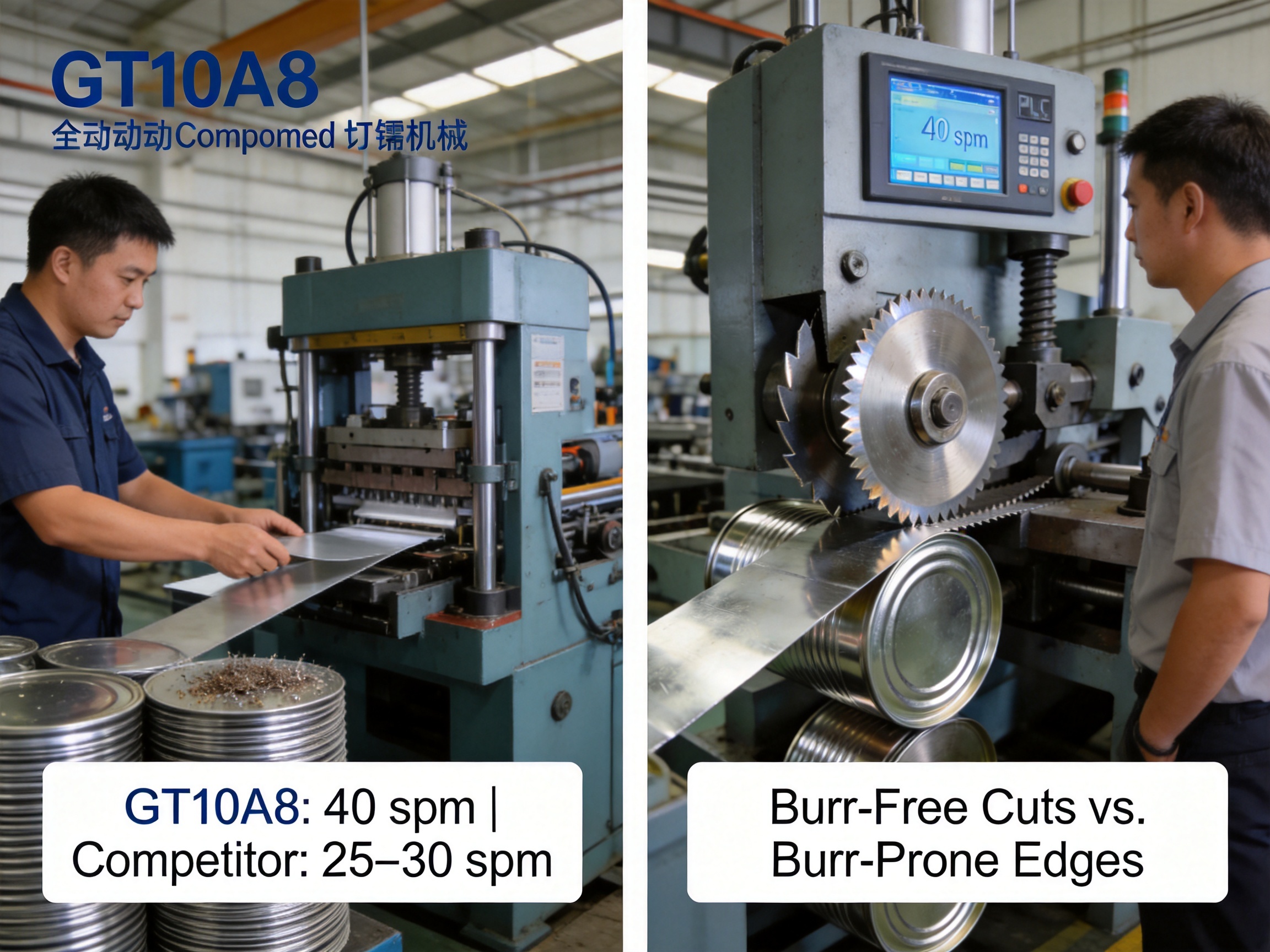
Many competing slitting machines are semi-automatic or manual, relying on workers to feed sheets, adjust cutting parameters, and monitor the process. This manual intervention leads to inconsistencies: one operator may feed sheets at a slightly different speed than another, resulting in uneven cuts. Semi-automatic machines also require frequent pauses for reloading, reducing overall production output.
The GT10A8’s fully automatic operation solves these problems. It features a continuous feeding system that handles metal sheets from start to finish without human intervention. The machine’s programmable logic controller (PLC) ensures that cutting parameters—including width, speed, and pressure—are consistent for every sheet. This eliminates human error and ensures that all blanks are identical, regardless of operator skill or shift changes.
Automatic operation also boosts production efficiency. Competitors’ semi-automatic machines typically produce 25–30 sheets per minute (spm), while the GT10A8 reaches up to 40 spm—an increase of 33–60%. For a factory producing 10,000 can bodies per day, this speed difference translates to 2–3 hours of saved production time daily, or 500–750 additional can bodies per shift.
Can manufacturers often produce multiple can sizes to meet the needs of different clients—from 330ml beverage cans to 5-liter food containers. Competing slitting machines often have narrow size ranges, requiring factories to invest in multiple machines or spend hours reconfiguring one machine for different sizes. This is not only costly but also reduces production flexibility.
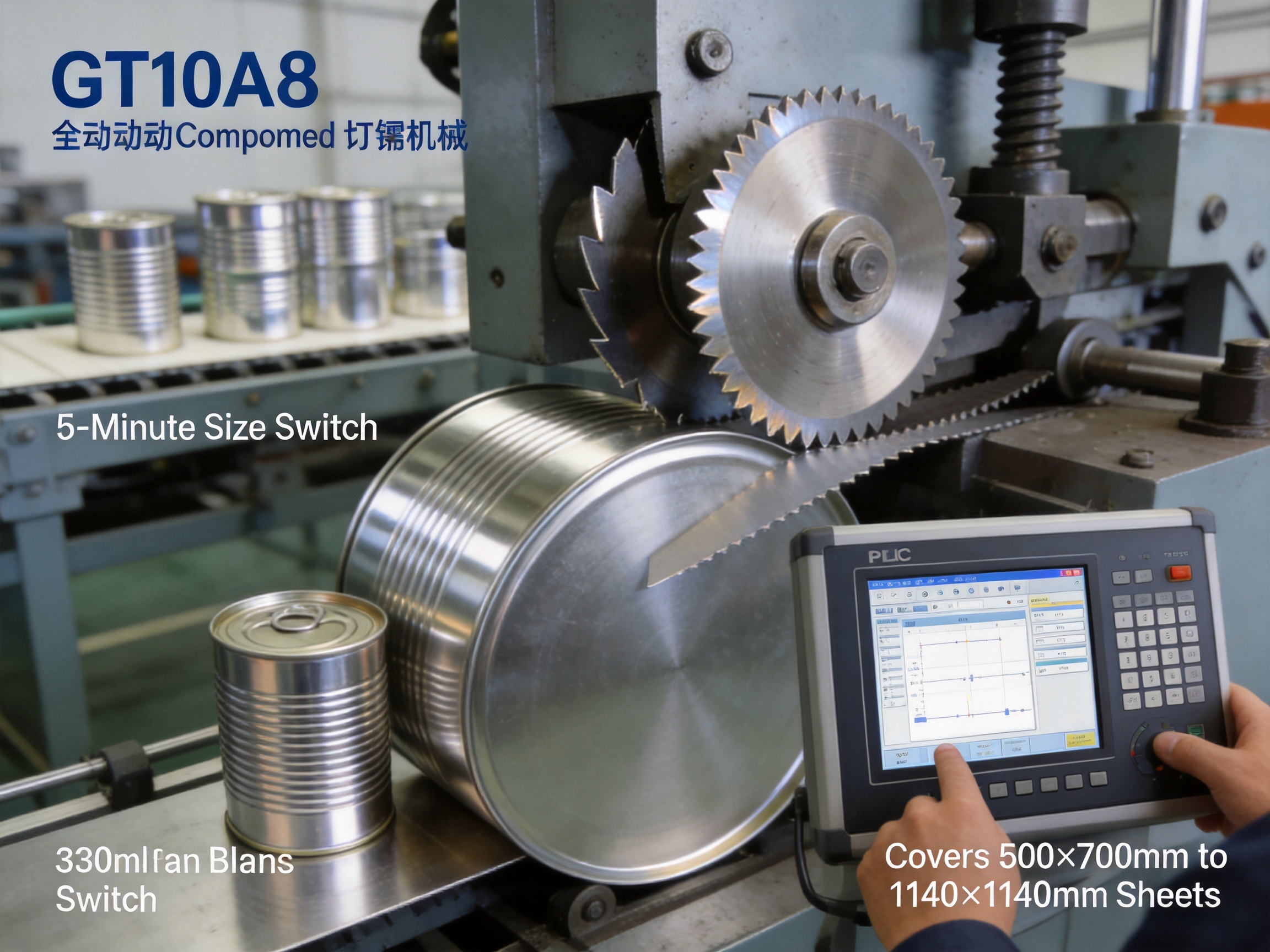
The GT10A8 is designed for maximum versatility. It can handle metal sheets ranging from 500×700mm (minimum) to 1140×1140mm (maximum), covering the full spectrum of can sizes used in the food and beverage industry. Adjusting the machine for different sizes takes just minutes: operators simply input the desired dimensions into the PLC, and the machine automatically adjusts the knife positions and feeding speed. This flexibility allows manufacturers to switch between product lines quickly, without significant downtime or additional equipment costs.
For example, a beverage can manufacturer in Australia uses the GT10A8 to produce both 330ml and 500ml cans. Previously, they used two separate semi-automatic machines, which required 30 minutes of reconfiguration between sizes. With the GT10A8, reconfiguration takes just 5 minutes, saving 25 minutes per switch and increasing monthly output by 1,200 can bodies.
Speed is critical in can manufacturing, but it should not come at the expense of energy efficiency. Competing high-speed machines often consume 8–10kW of power, increasing operational costs for factories. The GT10A8, however, delivers its 40 spm speed with a total power consumption of just 6kW—25–40% lower than competitors.
This energy efficiency is achieved through several design optimizations: - A high-torque, low-RPM motor that reduces energy waste - A regenerative braking system that recycles energy during deceleration - Efficient gearbox design that minimizes friction and power loss
For a factory operating 8 hours per day, 5 days per week, the GT10A8’s lower power consumption translates to annual savings of approximately $1,500–$2,000 (based on average industrial electricity rates). Over the machine’s 10-year lifespan, this adds up to $15,000–$20,000 in cost savings—enough to offset a significant portion of the machine’s initial purchase price.
The GT10A8’s superior performance is not accidental—it is the result of decades of engineering expertise and advanced manufacturing processes from its parent company, a leading global supplier of can-making machinery. With over 46 years of experience, the company has refined its production methods to ensure every machine meets the highest standards of quality, durability, and efficiency.
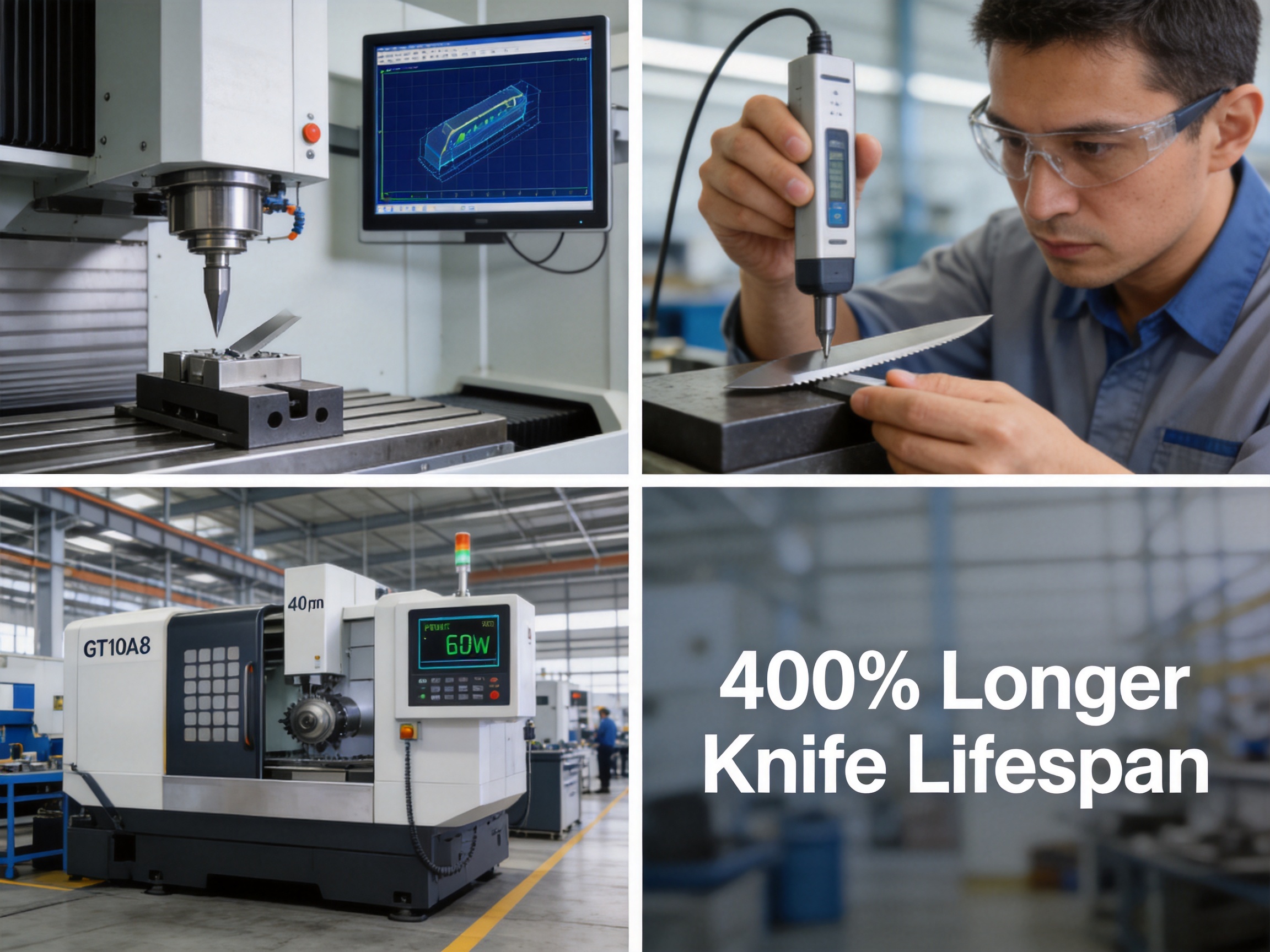
Every component of the GT10A8 is manufactured using computer numerical control (CNC) machining—an advanced technology that ensures exact tolerances and consistent quality. CNC machines use digital instructions to cut, drill, and shape metal parts with precision down to 0.01mm, far beyond the capabilities of manual machining.
For example, the machine’s knife holders—critical for maintaining alignment and precision—are CNC-machined from solid steel. This ensures that each holder is identical, so knives are positioned perfectly every time. Without CNC machining, even minor variations in holder dimensions could lead to uneven cuts or increased knife wear.
The company’s CNC facility is equipped with state-of-the-art equipment from leading manufacturers, including Haas and DMG Mori. Each machine is calibrated daily to ensure accuracy, and every component undergoes a 3D scan before assembly to verify its dimensions.
The GT10A8’s durability starts with the materials used in its construction. The company sources only high-grade materials from certified suppliers, including: - Alloy steel for cutting knives (tested for hardness and wear resistance) - High-strength steel for the machine frame (tested for tensile strength) - Food-grade lubricants for moving parts (compliant with FDA regulations)
Every material batch undergoes strict quality control tests before being used in production. For alloy steel knives, tests include: - Hardness testing (Rockwell scale) - Tensile strength testing - Impact resistance testing - Microstructure analysis (to ensure uniform alloy distribution)
Once components are manufactured, they undergo a second round of quality control: - Visual inspection for defects (scratches, cracks, or uneven surfaces) - Dimensional verification (using coordinate measuring machines) - Functional testing (to ensure components work as intended)
This multi-stage quality control process ensures that only the highest-quality components are used in the GT10A8, reducing the risk of breakdowns and extending the machine’s lifespan.
The GT10A8’s design is rooted in global engineering standards, with influences from leading can-making machinery manufacturers like KRUPP, SOUDRONIC, and ALFONS-HAAR. However, the company has adapted these standards to address the unique needs of its customers—including small and medium-sized can manufacturers who require cost-effective, flexible solutions.
For example, the machine’s automatic feeding system was redesigned to handle the varying sheet thicknesses common in Asian and African can manufacturing markets. Competitors’ machines often struggle with sheets thicker than 0.3mm, but the GT10A8 can handle up to 0.4mm—making it suitable for a wider range of applications.
The company’s design team includes over 50 professional engineers with decades of experience in can-making machinery. They work closely with customers to identify pain points and incorporate feedback into new designs. For instance, the GT10A8’s user-friendly PLC interface was developed based on feedback from operators who found competing machines’ interfaces too complex.
The company’s commitment to quality is reflected in its certifications: - ISO 9001:2015 (Quality Management System) - ISO 14001:2015 (Environmental Management System)
ISO 9001 certification ensures that the company’s production processes are standardized and consistent, with a focus on continuous improvement. ISO 14001 certification means the company follows environmentally friendly practices, including: - Reducing waste (e.g., recycling metal shavings from machining) - Using energy-efficient equipment (like CNC machines with low power consumption) - Minimizing emissions (e.g., using water-based lubricants instead of oil-based ones)
These certifications are not just badges of honor—they are a testament to the company’s commitment to producing high-quality, sustainable machinery that meets global standards.
Below is a detailed breakdown of the GT10A8’s technical specifications, which highlight its performance capabilities and compatibility with can manufacturing lines:
| Specification | Details |
|---|---|
| Model | GT10A8 |
| Biggest Plate Width | 1140×1140mm |
| Min Plate Width | 500×700mm |
| Max Thickness | 0.4mm |
| Output Capacity (spm) | Up to 40 Pieces of Sheet/min |
| Max Cutting Speed | 1330mm per second |
| Total Power | 6kW |
| Machine Dimension | 4500×2600×2800mm |
| Weight | 6000kg |
The GT10A8 has been adopted by can manufacturers across the globe, from Europe to Asia to Africa. Below are two real-world examples of how the machine has transformed production lines:
A leading food can manufacturer in Germany was struggling with frequent knife replacements and inconsistent cuts from its semi-automatic slitting machine. After switching to the GT10A8, the company reported: - A 400% increase in knife lifespan (from 2 weeks to 8 weeks) - A 15% reduction in production waste (from burrs and uneven cuts) - A 20% increase in output (from 30 spm to 36 spm) - A 10% reduction in labor costs (from reduced manual intervention)
The company’s production manager noted: “The GT10A8 has been a game-changer for our line. We no longer have to stop production every two weeks to change knives, and our canbody quality has improved significantly. Our clients are happier, and our bottom line is healthier.”
A beverage can manufacturer in Nigeria was looking to expand its product line to include 500ml cans, but its existing slitting machine could only handle up to 330ml. After purchasing the GT10A8, the company was able to: - Add 500ml cans to its product line without investing in a second machine - Switch between 330ml and 500ml cans in 5 minutes (vs 30 minutes previously) - Increase monthly output by 1,200 can bodies - Reduce energy costs by 30% (from 8kW to 6kW)
The company’s CEO said: “The GT10A8’s versatility was the key factor in our decision. We didn’t have the budget for a second machine, so being able to switch between sizes quickly was essential. The machine has exceeded our expectations in terms of speed and quality.”
Below are answers to common questions about the GT10A8 Automatic Compound Cutting Machine:
A: The GT10A8 is designed exclusively for tinplate and tin sheets—materials commonly used in food and beverage can manufacturing. It can handle sheets up to 0.4mm thick, which covers the full range of can sizes used in the industry.
A: Installation typically takes 3–5 days, depending on the factory’s existing infrastructure. Commissioning (including testing and calibration) takes an additional 2–3 days. The company provides trained technicians to handle the entire process, ensuring the machine is operational as quickly as possible.
A: The company offers comprehensive after-sales support, including: - 1-year warranty on all components - 24/7 technical support (via phone, email, or video call) - Fast delivery of spare parts (usually within 7–10 days for most regions) - On-site maintenance check-ups (every 6 months) - Operator training (on-site or online)
A: Yes. The machine is designed to be compatible with most can-making production lines. The company’s engineering team can customize the machine’s interface to work seamlessly with existing equipment, including can forming machines and sealing machines.
A: With proper maintenance, the GT10A8 can last 10–15 years. The company’s robust manufacturing processes and high-quality components ensure that the machine retains its performance capabilities for years.
The GT10A8 Automatic Compound Cutting Machine is more than just a slitting machine—it’s a testament to the power of engineering innovation and customer-centric design. By addressing the key pain points of can manufacturers (durability, precision, speed, and versatility), it has become a leading solution in the global can-making industry. Backed by a company with 46 years of experience and advanced manufacturing processes, the GT10A8 delivers unmatched value, helping factories optimize their production lines, reduce costs, and produce high-quality can bodies.
As the global demand for metal packaging continues to grow (projected to reach $35 billion by 2028, according to the International Tin Association), the GT10A8 will play an increasingly important role in meeting the needs of can manufacturers. Its combination of performance, efficiency, and durability makes it a smart investment for any factory looking to stay competitive in the modern market.
Related Products

Founded in 1978, the company is one of the largest can-making machinery well-known companies at home and abroad.
Product Categories
Contact Information
Zhongshatou Shenjiamen Zhoushan Zhejiang China
+86-580-3056646

 English
 中文简体
中文简体
 русский
 عربى
عربى
 Español