2026-10-19
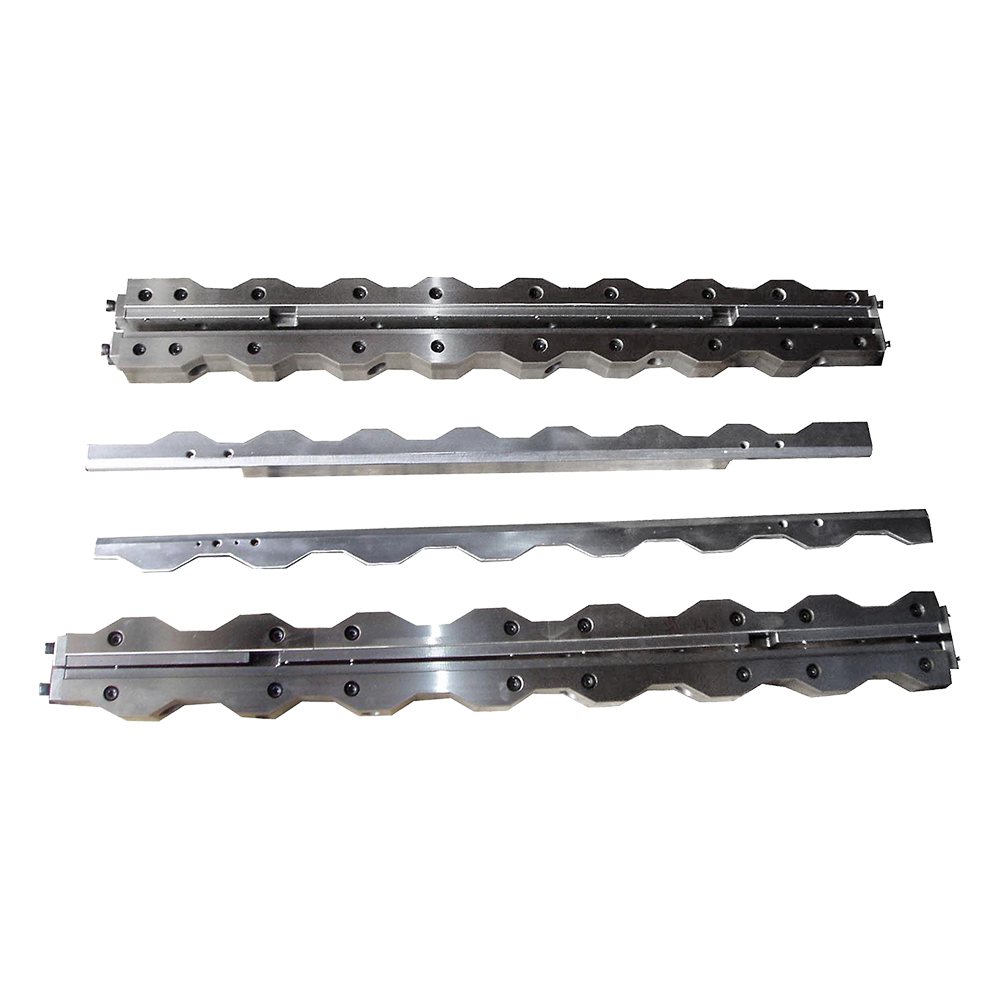
In modern metal packaging production, the quality of the die directly influences the consistency, efficiency, and commercial value of the finished can lid. A conversion press channel die is a specialized tooling assembly used in can-making operations to form, shape, cut, or otherwise process metal components during the conversion stage. It supports the transformation of accurately prepared tinplate or other suitable sheet material into precise end components for food cans, beverage cans, aerosol containers, chemical tanks, and related packaging products.
Although a die may appear to be a relatively small part of a complete production line, its performance affects nearly every major production target. Dimensional accuracy, press speed, material utilization, edge quality, forming stability, tool life, and changeover efficiency all depend on the structure and manufacturing quality of the die. A well-designed channel die helps the press maintain a repeatable forming path while controlling the position and movement of the workpiece throughout the operating cycle.
The conversion press channel die presented by Zhejiang Golden Eagle Food Machinery Co., Ltd. is developed for professional can-making applications. The company has manufactured can-making machinery and molds since 1978 and has accumulated extensive practical experience in tooling design, mechanical processing, production-line integration, and after-sales technical support. Its product range includes food and beverage can equipment, tin can lid machinery, cutting machines, milk powder can machinery, easy-open-end equipment, tin can welding machines, aerosol can machinery, chemical tank production equipment, automatic feeding machines, two-piece can lines, and specialized molds.
This article explains the function, design value, manufacturing advantages, application areas, maintenance requirements, and selection considerations associated with a conversion press channel die. It also examines how advanced machining capabilities, engineering experience, quality systems, and production-line knowledge can provide advantages over generic or poorly integrated tooling alternatives.
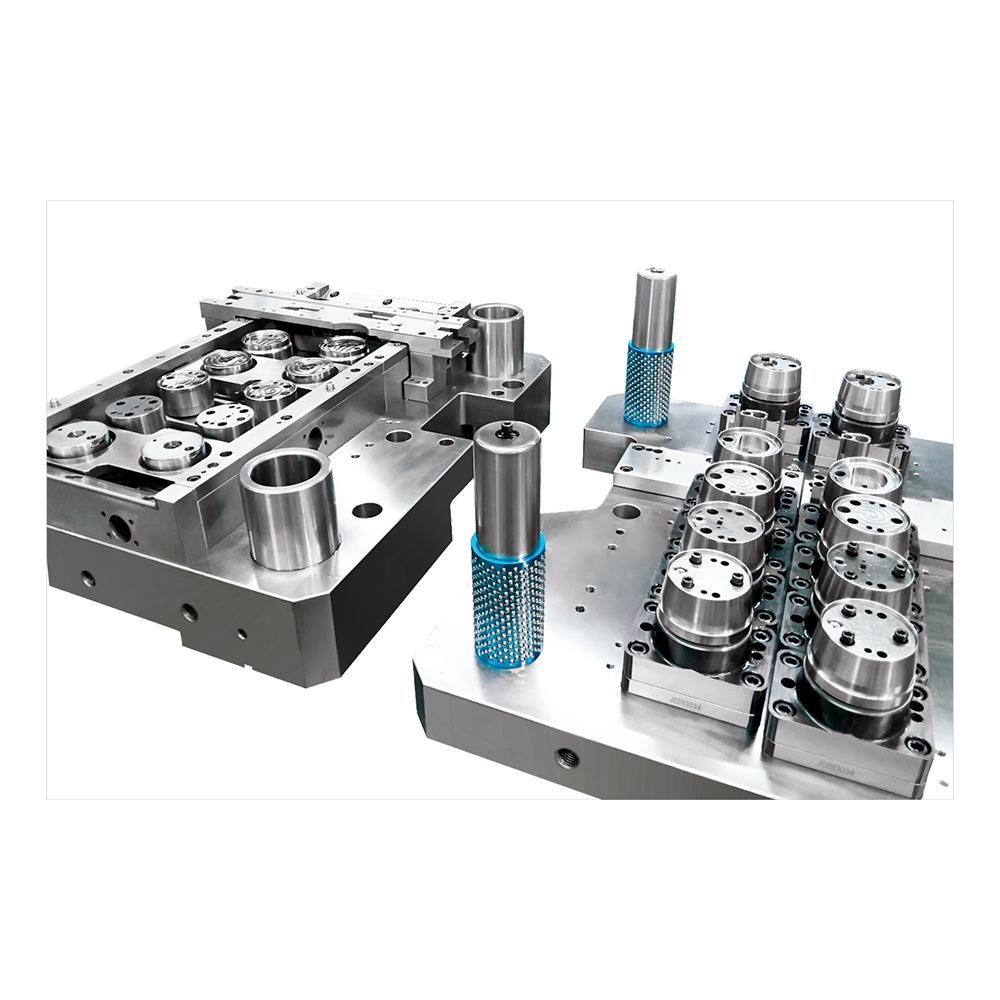
Conversion Press Channel Die
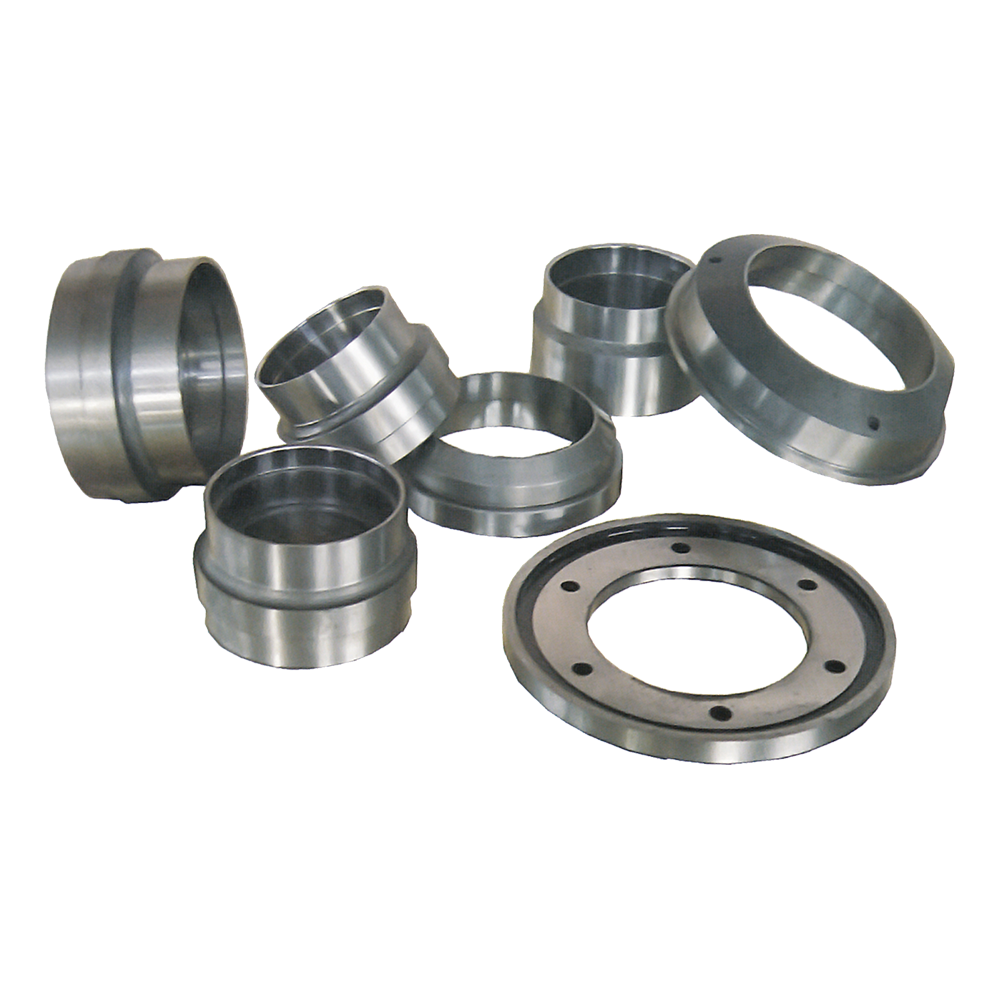
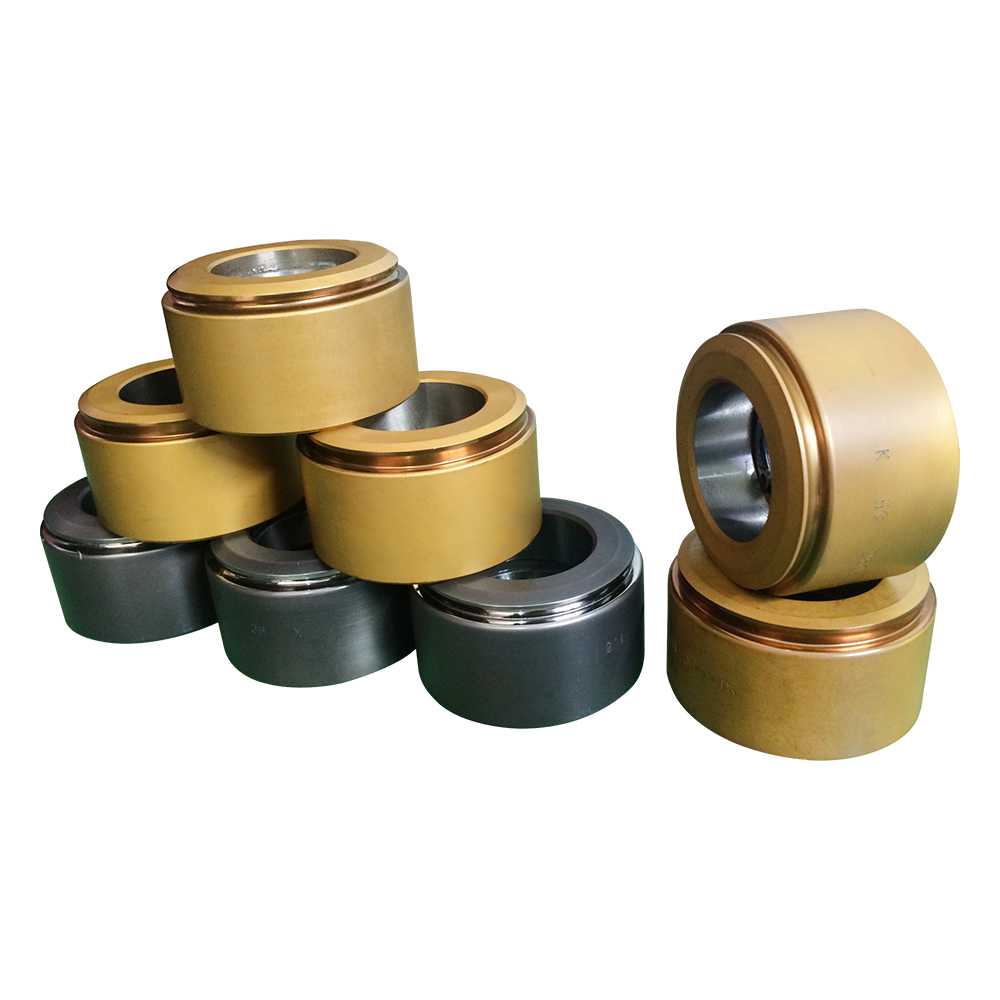
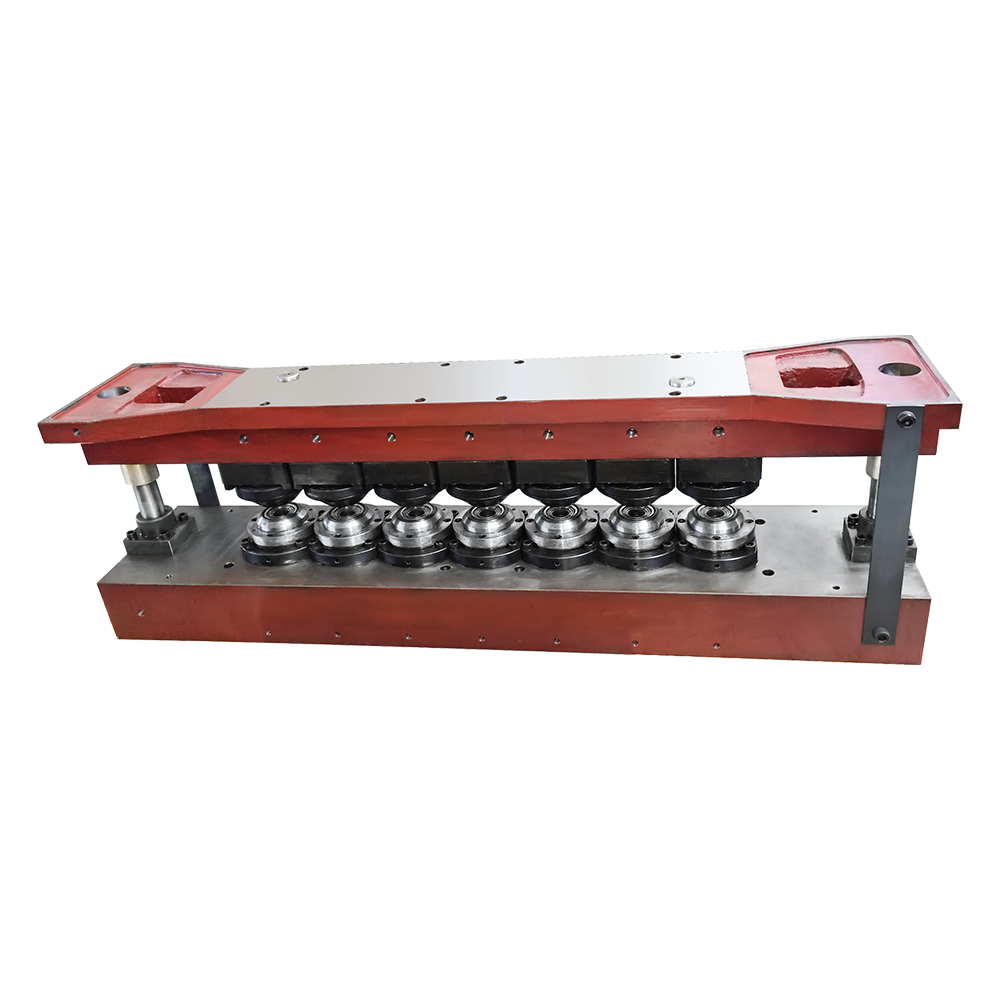
A conversion press channel die is a precision tooling component or tooling set installed in a conversion press to guide and shape metal parts during a can-making operation. Depending on the press configuration and product specification, the die may participate in one or more processes, including forming, drawing, curling, beading, embossing, trimming, punching, or controlled transfer between stations.
The word “channel” generally relates to the guided passage or forming geometry through which the workpiece travels. This channel must maintain the correct relationship between the material, punch, die surface, guide elements, and adjacent tooling components. Even a small deviation in this relationship can produce variation in the final part, increase scrap, accelerate wear, or create an unstable production process.
In a high-speed can-making environment, a channel die must do more than create a particular shape. It must also operate reliably over long production cycles. The die must resist deformation, maintain its working geometry, support repeatable positioning, and accommodate the mechanical forces generated by the press. It must be compatible with the selected material thickness, coating condition, press stroke, production speed, lubrication method, and finished-product tolerances.
The die is therefore both a forming tool and a production-control element. Its geometry determines how the material is restrained and guided, while its surface quality influences friction, material flow, and the appearance of the finished component. Its compatibility with feeding and transfer equipment also affects whether the overall line runs smoothly or experiences frequent interruptions.
Can-making production lines are made up of interconnected operations. Sheet material may first be slit, cut, fed, punched, formed, curled, seamed, welded, or inspected. The conversion press is often responsible for transforming prepared blanks or semi-finished components into parts with the dimensions and profiles required for later assembly.
A channel die supports this conversion process by defining the working path and controlling the forming conditions. It can help ensure that every cycle produces a component with a consistent outer diameter, inner diameter, height, edge profile, bead, curl, or other required feature. Where the component must later be seamed to a can body, a stable die is especially important because dimensional inconsistency can affect seam quality and package integrity.
For food and beverage containers, the die may contribute to the manufacture of ends or other components requiring clean edges and repeatable profiles. For aerosol cans, it may be incorporated into tooling used for domes, cones, or related formed parts. For chemical tanks and larger containers, the die must be selected according to the material grade, component size, forming force, and application requirements.
The same general tooling principle can be adapted to different production conditions, but a die should not be treated as a universal component. Product dimensions, metal characteristics, press design, production volume, and finishing requirements all influence the correct tooling solution. A professional manufacturer can evaluate these conditions and develop or configure the die accordingly.
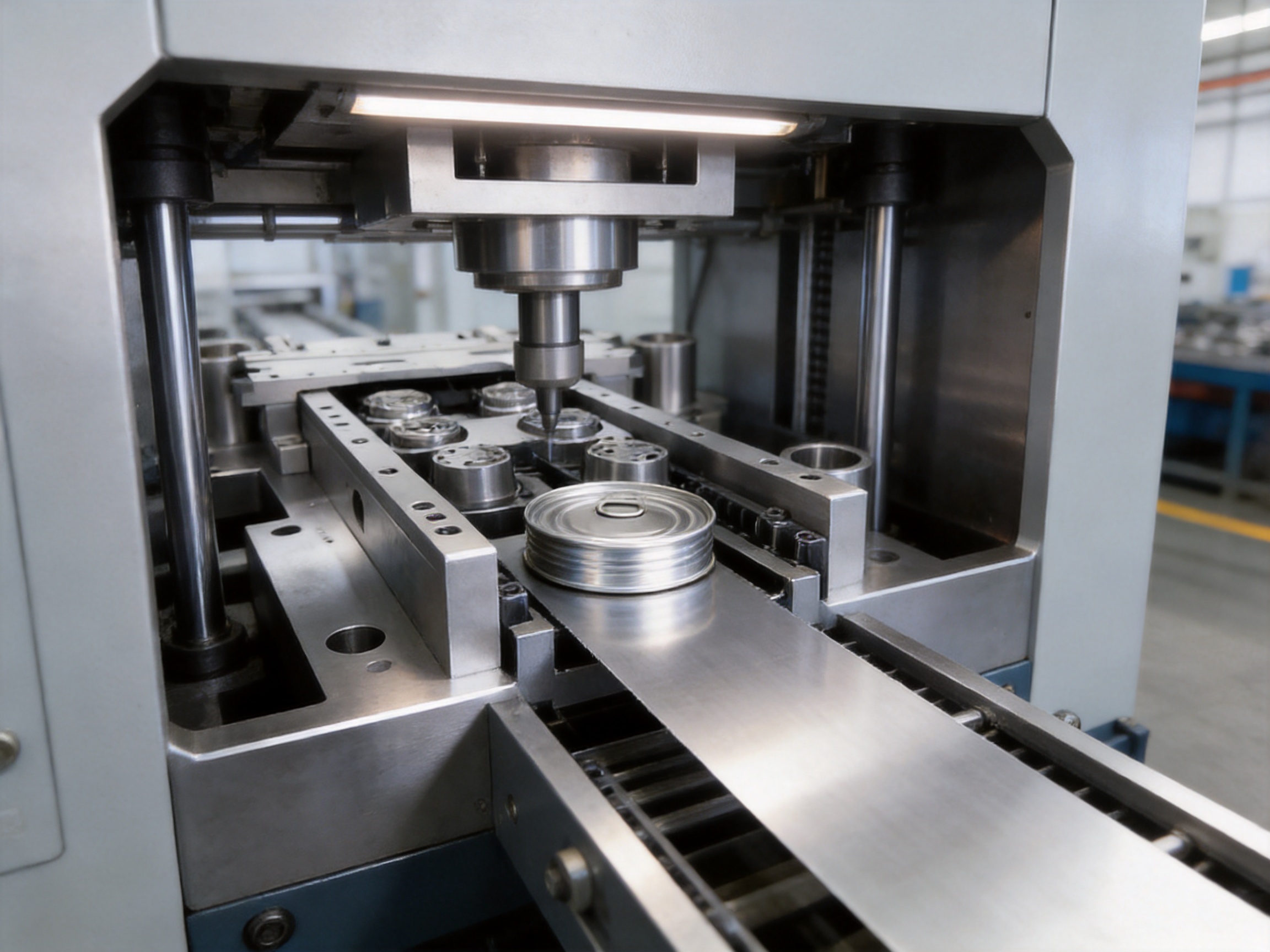
The most important feature of a conversion press channel die is the accuracy of its forming geometry. The working surfaces must correspond closely to the intended product profile. This includes the channel width, forming radius, transition area, clearance, guiding surfaces, and relationship between opposing tooling elements.
Accurate geometry helps prevent common production problems such as wrinkles, uneven forming, excessive thinning, tearing, edge deformation, incomplete forming, or variation between cavities. It also allows the conversion press to operate at a stable speed without requiring excessive manual adjustment.
Metal sheet does not simply move through a die as a rigid object. It flows, stretches, compresses, and changes direction under pressure. The channel die must be designed to control this movement without creating unnecessary stress concentrations. Appropriate radii and transition zones can support smoother material flow and reduce the risk of cracks or distortion.
Controlled flow is especially important when the material has a protective coating, printed surface, or strict appearance requirement. Abrupt transitions, rough surfaces, or incorrect clearances may mark the material or damage the coating. A carefully processed die surface can reduce friction and help protect the appearance of the finished part.
Repeated accuracy depends on maintaining the correct position of the workpiece during every press cycle. The channel die works with guide elements, locating surfaces, punches, feeders, and transfer mechanisms to keep the material aligned. Stable guidance reduces variation and helps the press maintain a consistent relationship between each operation.
In automated production, reliable positioning also supports efficient feeding. When a die is properly integrated with an automatic feeding system, the line can reduce manual intervention and maintain a more predictable production rhythm. This is valuable for factories seeking higher output, lower labor requirements, and more consistent product quality.
Can-making dies operate under repeated mechanical loading. Friction between the tooling and the material can gradually change the working surfaces. If wear occurs unevenly, the finished component may drift out of tolerance. For this reason, working areas should be manufactured from appropriate materials and processed to achieve suitable hardness, dimensional stability, and surface quality.
The correct material and treatment depend on the application. A professional tooling manufacturer considers the expected production volume, material grade, press speed, forming force, lubrication conditions, and maintenance approach when determining the appropriate construction. Wear-resistant surfaces can increase service life and reduce the frequency of unplanned replacement.
A well-designed channel die should not only perform well when new; it should also be practical to inspect, clean, adjust, repair, and replace when required. Accessible components, identifiable wear areas, and logical assembly can simplify maintenance. This reduces downtime and allows production personnel to respond more quickly when tooling performance changes.
Serviceability is a significant advantage over low-cost tooling that may have limited documentation, poor interchangeability, or difficult adjustment procedures. In a production environment, the total cost of ownership includes maintenance time, replacement parts, setup labor, and lost production. A service-friendly die can provide value beyond its initial purchase price.
Generic tooling may be produced for a broad range of applications without sufficient attention to the specific press, material, and product profile. Such tooling can sometimes function adequately at low speed, but it may show instability when production requirements become more demanding. A conversion press channel die designed for the actual application is more likely to maintain consistent dimensions and forming results.
Consistency is essential in can manufacturing because individual components must fit together during subsequent operations. A lid, end, or formed body component with slight dimensional variation may cause feeding problems, seam defects, leakage risks, or additional inspection requirements. Precision tooling helps reduce these issues at their source.
Metal packaging production is highly sensitive to scrap. Tinplate and other sheet materials represent a significant portion of manufacturing cost, and defective components may also consume labor, energy, and machine time. Accurate die geometry and stable material guidance can reduce the probability of defects caused by misalignment, poor forming, or inconsistent trimming.
Lower scrap does not mean that every defect can be eliminated. Material quality, press condition, operator practice, lubrication, and upstream processes also influence results. However, a properly manufactured die provides a strong foundation for improving material utilization and maintaining a predictable production process.
Production stability is different from maximum theoretical speed. A press may be capable of a high stroke rate, but frequent stoppages, adjustments, and rejected parts can make the actual output much lower. A stable channel die supports continuous operation by maintaining its geometry and cooperating with feeders, punches, and downstream equipment.
For factories operating multiple shifts, this advantage is particularly important. Stable tooling helps production planners estimate capacity more accurately, while maintenance teams can schedule inspections and replacement activities instead of responding only to unexpected failures.
Tool life is influenced by design accuracy, material selection, heat treatment, surface finish, lubrication, alignment, and operating practice. A die manufactured with precision machining and suitable materials can generally withstand repeated operation more effectively than tooling with rough surfaces or inconsistent dimensions.
Longer tool life can reduce replacement frequency and help maintain product quality over a greater number of production cycles. It can also reduce the risk that a worn tool will damage other press components or create a sudden interruption in a production order.
A tooling supplier with experience in complete can-making machinery can understand how a die interacts with the wider production system. This is an important advantage over a supplier that produces isolated components without considering feeding, transfer, forming, inspection, and downstream assembly.
Zhejiang Golden Eagle Food Machinery Co., Ltd. supplies equipment and molds for multiple types of can-making operations. Its broader product knowledge supports the development of tooling that can be considered in relation to automatic feeding machines, lid-making equipment, cutting systems, welding machines, aerosol equipment, two-piece can lines, and other production-line components.
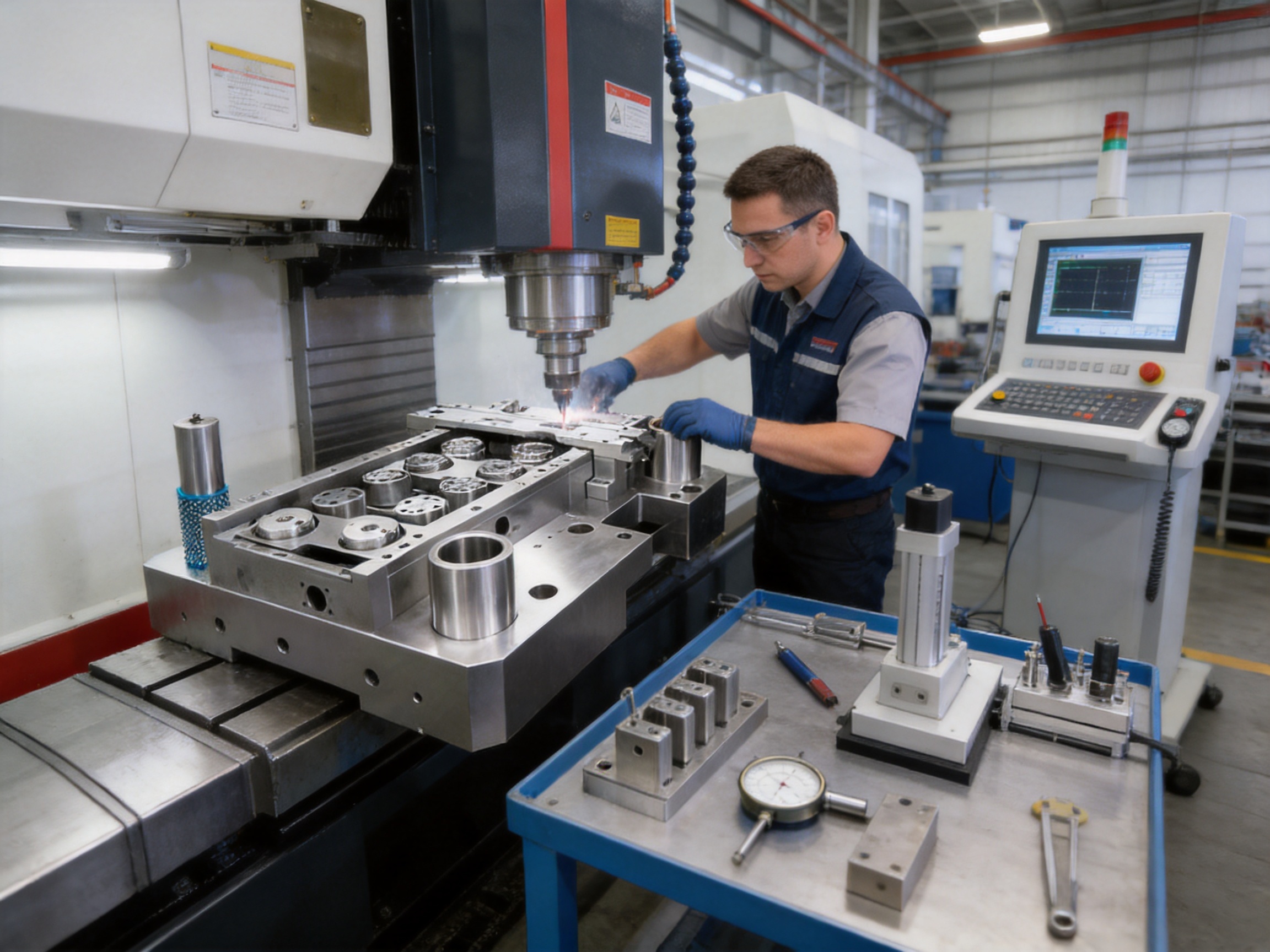
The manufacturing process begins with a clear understanding of the customer’s application. Important information may include the product drawing, material type, material thickness, press model, stroke conditions, target speed, production volume, forming sequence, and required tolerances. The tooling design should be based on verified technical information rather than assumptions.
During technical confirmation, the manufacturer can identify potential interference points, clarify the relationship between the die and existing machine components, and determine whether special guide elements, interchangeable inserts, or adjustment features are required. This stage is also useful for confirming packaging, installation, spare-part, and after-sales requirements.
After the application requirements have been confirmed, engineers develop the tooling structure and working geometry. Professional design considers the load path, material flow, press motion, clearance, access for maintenance, and expected wear. The design should also account for manufacturing feasibility so that the final parts can be machined and inspected accurately.
Engineering experience is particularly valuable when a tooling solution must be adapted to an existing machine. The die may need to match the mounting pattern, working height, transfer position, or press capacity of equipment already installed at the customer’s factory. Proper design coordination reduces installation difficulties and helps avoid expensive modifications later.
Zhejiang Golden Eagle Food Machinery Co., Ltd. uses CNC high-precision machining equipment together with complete mechanical processing equipment. CNC machining supports repeatable production of complex die surfaces, mounting features, guide locations, cavities, and inserts. It also helps reduce the variation that can occur when critical surfaces are produced through less controlled manual processes.
High-precision machining is important because a die often contains several surfaces that must remain in a carefully defined relationship. A small dimensional error in one surface can affect the movement of the material or the alignment of another component. CNC processing, combined with suitable inspection procedures, helps maintain the required geometry.
In addition to CNC operations, a complete mechanical processing capability allows the manufacturer to produce and finish supporting components, structural parts, guide elements, holders, inserts, and other tooling components. Coordinated processing can improve assembly accuracy and simplify communication between design, production, and quality teams.
When the tooling is produced within an integrated manufacturing environment, the manufacturer can more readily manage dimensional relationships across the complete assembly. This is beneficial for channel dies because the performance of the final tool depends not only on one machined surface but on the interaction of multiple components.
After machining, critical working surfaces should be finished and inspected according to their function. Surface quality influences friction, material flow, product appearance, and wear. Inspection may include dimensional measurement, surface examination, fit verification, and checking of the die against approved drawings or technical specifications.
A disciplined verification process helps identify errors before shipment. It also creates a basis for future maintenance and replacement. When tooling components are documented correctly, replacement parts can be produced more efficiently and with a lower risk of mismatch.
Where appropriate, the die assembly can be checked for movement, fit, alignment, and interaction between components. Trial evaluation may help confirm that the tooling can be installed and adjusted as intended. Depending on the project, testing may involve the use of representative materials or cooperation with the customer’s production equipment.
Trial evaluation is especially valuable for customized tooling. It can reveal practical details that may not be obvious from drawings alone, such as access for adjustment, clearance during press motion, or the most convenient method for replacing a wear insert.
The company has been certified to the ISO9001 quality management system and ISO14001 environmental management system. ISO9001 supports an organized approach to quality management, documentation, process control, and continual improvement. ISO14001 reflects attention to environmental management practices and responsible operational control.
Certification alone does not replace technical judgment or proper inspection, but it demonstrates that manufacturing activities are managed within recognized systems. Combined with experienced personnel, modern processing equipment, and practical production knowledge, this provides a strong foundation for reliable tooling manufacture.
Zhejiang Golden Eagle Food Machinery Co., Ltd. was formerly known as Zhejiang Food Machinery Factory and Zhoushan Mold Factory. Located in Zhoushan City, Zhejiang Province, the company has focused on can-making machinery and molds for more than four decades. Its history began in 1978, giving it extensive experience with changes in packaging materials, production methods, automation requirements, and international market expectations.
The company has a workforce of more than 350 trained personnel, including experienced design and development engineers. This combination of manufacturing capacity and engineering capability is important for tooling projects because customers often require more than a standard catalog item. They may need a die to match a particular press, container dimension, metal grade, production speed, or existing production line.
Over its operating history, the company has produced more than 10,000 pieces of can and can-lid equipment. This record indicates broad exposure to different can-making applications and production conditions. It also supports the company’s ability to understand the practical relationship between molds, presses, feeding systems, forming equipment, and finished-package requirements.
The company’s product design principles are similar to those associated with internationally recognized equipment manufacturers such as KRUPP, SOUDRONIC, and ALFONS-HAAR. At the same time, the company combines these design references with practical experience gained from manufacturing and production use. This approach allows it to improve products through continued engineering development rather than relying solely on copied designs.
Its machinery and molds have been supplied to customers in Europe, Asia, Africa, North America, South America, and Oceania. Export experience requires attention to technical communication, documentation, packaging, installation, commissioning, spare parts, and customer training. These capabilities are useful when supplying conversion press channel dies to international can-making factories.
| Capability Area | Value for Conversion Press Channel Dies | Customer Benefit |
|---|---|---|
| Long-term industry experience | Practical knowledge of can-making machinery and molds | More suitable tooling recommendations and fewer integration risks |
| Engineering and development team | Ability to review drawings, press conditions, and customized requirements | Better adaptation to specific production applications |
| CNC high-precision machining | Accurate production of critical die surfaces and mounting features | Improved dimensional consistency and repeatability |
| Complete mechanical processing | Coordinated manufacture of die bodies, inserts, guides, and related parts | More reliable assembly and component compatibility |
| ISO9001 quality management | Structured process control and quality documentation | Greater confidence in manufacturing consistency |
| ISO14001 environmental management | Managed environmental practices within production operations | Support for responsible supplier evaluation |
| Complete can-making product range | Understanding of feeding, cutting, forming, welding, and lid production | Better consideration of the die’s role in the whole line |
| International supply experience | Familiarity with export coordination and technical support | Smoother overseas procurement and installation |
Food cans require dependable dimensional accuracy because the finished components must support safe closure, transport, storage, and processing. A conversion press channel die can be used in tooling systems associated with ends, lids, formed components, or other can parts. Stable forming helps reduce defects that could affect sealing or create difficulties during later operations.
Food packaging also places importance on surface condition and cleanliness. Tooling should be maintained properly to prevent the accumulation of metal particles, lubricant residue, or production debris. The correct die finish and maintenance program can help support clean, consistent manufacturing conditions.
Beverage containers are produced in high volumes and often require fast, highly repeatable operations. Even small variations may become significant when multiplied across large production quantities. Conversion tooling must therefore support precise positioning, smooth material movement, and stable performance at the required operating rate.
The die should be selected in relation to the beverage container design, alloy or tinplate specification, press model, and downstream assembly process. A tooling solution from a manufacturer familiar with beverage can production can help address these interconnected requirements.
Lid and end components may include features such as curls, countersinks, beads, score lines, tabs, or other profiles. Each feature requires controlled tooling geometry and appropriate process sequencing. A channel die may form part of the conversion tooling used to create or guide these features.
When the end must later be seamed to a can body, dimensional accuracy is critical. The tooling should support repeatable results across the production run and be designed for efficient inspection and maintenance.
Aerosol can production may involve formed cones, domes, ends, and other components with demanding shape and appearance requirements. Forming operations can place considerable stress on the material and tooling. A suitable channel die helps control the movement of the workpiece and contributes to a more stable forming process.
Because aerosol containers may be subject to pressure-related performance requirements, production quality must be managed carefully. Tooling accuracy is one part of a larger quality system that also includes material control, welding, forming, inspection, and testing.
Chemical tanks and industrial containers may use different dimensions, materials, and forming forces from conventional food or beverage cans. The die must be selected according to the intended application and the properties of the workpiece. Larger or heavier components may require stronger structures, different clearances, and more robust wear protection.
Manufacturers with experience across food, beverage, aerosol, and chemical container machinery can offer broader engineering perspectives when developing tooling for specialized industrial packaging.
Two-piece can lines involve forming processes that differ from traditional multi-piece can production. The tooling must be compatible with the relevant drawing, ironing, shaping, trimming, or end-forming sequence. A channel die may support one stage of the process or be integrated into a specialized conversion system.
The exact construction depends on the machine design and product specification. Technical confirmation is therefore necessary before ordering, particularly when the die is intended to replace an existing tool or operate with equipment from another supplier.
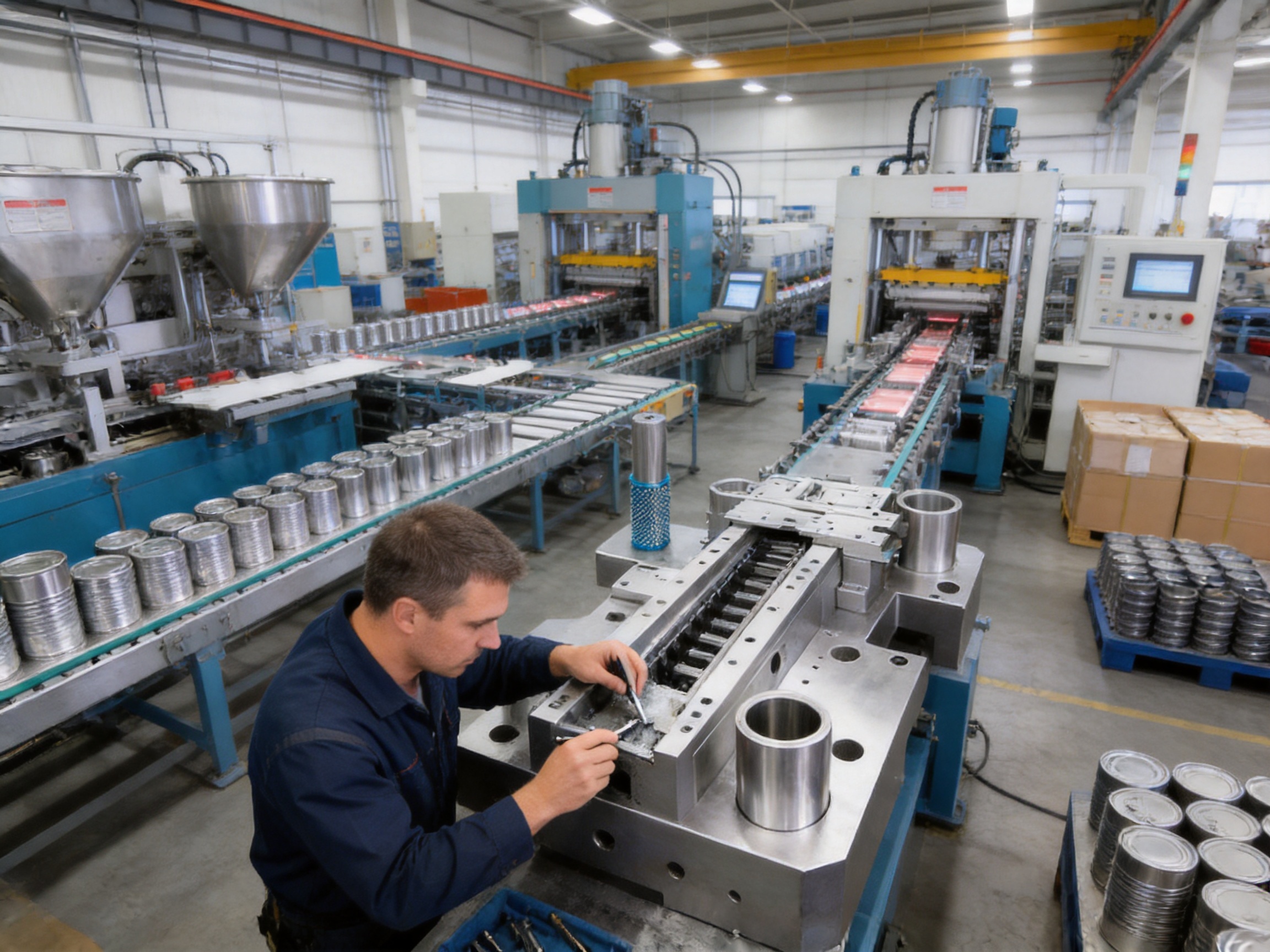
Before purchasing a conversion press channel die, the buyer should provide accurate product drawings or samples. Important dimensions include the overall profile, internal and external diameters, height, edge details, forming radii, and any special features. The required tolerance should be stated wherever possible.
If the tooling will be used for a lid, end, cone, dome, or tank component, the buyer should also identify the downstream operation. A part that will be seamed, welded, pressure-tested, or assembled with a separate component may require different dimensional priorities.
Material type and thickness affect forming behavior, required clearance, wear, and tooling load. Tinplate, coated steel, aluminum, and other materials do not behave identically. Surface coatings and printed finishes may also influence friction and appearance.
The buyer should provide the material grade, nominal thickness, thickness tolerance, coating information, and any special surface requirements. This information enables the manufacturer to develop more suitable working geometry and surface treatment recommendations.
The tooling must match the conversion press. Buyers should identify the press manufacturer, model, nominal capacity, stroke, working height, mounting dimensions, production speed, and existing die arrangement. Photographs, machine drawings, and installation dimensions can be useful when direct inspection is not possible.
When replacing a die, the buyer should explain which parts are being retained and which parts will be replaced. This helps the manufacturer determine whether the new tooling should match existing guides, holders, punches, feeders, or transfer components.
Expected production volume influences material selection, wear protection, spare-part planning, and service recommendations. A tool used occasionally may require a different cost balance from a tool intended to operate continuously across several shifts.
The buyer should also discuss the preferred maintenance method. Some factories value replaceable inserts and rapid adjustment, while others prefer a simpler integrated construction. The best design is the one that meets the production objective and can be maintained effectively by the available technical team.
A tooling supplier should be able to provide technical clarification before production, installation guidance during commissioning, and support after delivery. For overseas customers, clear documentation and responsive communication are particularly important.
Zhejiang Golden Eagle Food Machinery Co., Ltd. provides after-sales services including installation, commissioning, technical guidance, operation training, and parts supply. These services can help customers bring new tooling into operation more efficiently and maintain stable performance over time.
Before installation, the press and surrounding equipment should be cleaned and inspected. Mounting surfaces must be free from burrs, contamination, and damage. The die should be checked against the installation drawings, and all required fasteners, guides, spacers, and adjustment components should be available.
Alignment should be performed carefully. The tooling must move through the press stroke without interference, and the relationship between the die, punch, feed path, and transfer equipment should be confirmed at slow speed before normal operation. Improper alignment can produce rapid wear even when the die itself has been manufactured correctly.
Initial commissioning should begin with conservative operating conditions. Operators can check feeding accuracy, material movement, forming results, edge quality, noise, vibration, and evidence of contact outside the intended working surfaces. Any abnormal condition should be investigated before production speed is increased.
Lubrication should follow the technical recommendations for the tooling, material, and press. Excessive lubrication can contaminate components or affect later processes, while insufficient lubrication can increase friction and wear. The correct practice depends on the specific production system.
After the first production run, the die should be inspected and the finished components should be measured. Recording these initial results provides a useful baseline for future maintenance. It also helps operators recognize gradual changes before they become major quality problems.
Metal particles, coating residue, lubricant, and dust should be removed from the tooling at suitable intervals. Accumulated debris can affect material positioning, increase friction, and damage finished surfaces. Cleaning methods should be compatible with the die material, surface finish, and factory safety requirements.
Operators should regularly inspect forming channels, guide surfaces, cutting edges, radii, inserts, and contact areas. They should look for scoring, pitting, cracks, unusual polishing, deformation, or material buildup. Changes in the appearance of a working surface may indicate wear, misalignment, lubrication problems, or unsuitable operating conditions.
Tooling condition should be evaluated together with product measurements. Periodic checks of critical dimensions can identify gradual drift. If a dimension changes consistently, the cause may be die wear, press movement, feeder variation, material changes, or incorrect adjustment.
Measurement records help maintenance teams make decisions based on evidence. They also allow the factory to compare performance before and after servicing or replacement.
Vibration and repeated loading can affect fasteners, mounting interfaces, and alignment components. These should be checked according to the maintenance schedule. Loose or damaged parts should be corrected promptly because a small movement can lead to larger tooling damage.
Where the design includes replaceable wear parts, replacement should be planned before failure occurs. Keeping suitable spare parts available can reduce downtime and protect the main die body. Spare parts should be ordered using the correct identification and technical specification to ensure compatibility.
The purchase price of a die is only one part of its economic value. A lower-cost tool may become more expensive if it produces higher scrap, requires frequent adjustment, wears quickly, or causes repeated production stoppages. Conversely, a precisely manufactured die may provide a stronger return through stable output and lower maintenance requirements.
Important cost factors include tool life, production speed, rejected parts, setup time, replacement-part availability, maintenance labor, energy consumption during unstable operation, and the potential cost of delayed orders. A complete evaluation should consider the expected service period rather than only the initial quotation.
Tooling supplied by an experienced can-making machinery manufacturer may also reduce integration costs. When the supplier understands the press, feeder, forming operation, and downstream process, it can help prevent design mismatches that might otherwise require modifications after delivery.
For international customers, after-sales support is another economic factor. Installation guidance, commissioning assistance, training, and timely spare-part supply can reduce the time required to achieve normal production. These services are especially valuable when the factory is introducing a new product or replacing tooling from another source.
A conversion press channel die is most effective when it is treated as part of a complete production system. An integrated manufacturer can evaluate the die in relation to machine structure, feeding accuracy, forming sequence, operator practice, inspection standards, and final package requirements.
Zhejiang Golden Eagle Food Machinery Co., Ltd. combines mold production with the manufacture of can-making equipment. This gives the company a practical understanding of the conditions under which dies are installed and used. Its engineering team can work with customers on standard and customized requirements, while its manufacturing facilities support precision machining and mechanical processing.
The company’s long history, workforce of more than 350 personnel, experience with more than 10,000 pieces of can and can-lid equipment, and international supply background provide a broad foundation for customer cooperation. Its certified quality and environmental management systems further support controlled production and responsible manufacturing.
For buyers seeking a conversion press channel die, these strengths can translate into more than a machined component. They can provide a complete technical solution that includes design review, manufacturing, inspection, installation, commissioning, training, maintenance guidance, and spare-parts support.
Its main purpose is to guide and shape metal material during a conversion press operation. It helps control material flow, positioning, forming geometry, and repeatability as a blank or semi-finished component is converted into a can-related part.
Yes. Customization may be necessary to match the press model, mounting dimensions, stroke, working height, product profile, material thickness, and existing tooling arrangement. Technical drawings and machine information should be provided before design confirmation.
Applications may include food can ends, beverage can components, tin can lids, aerosol cones and domes, chemical tank components, two-piece can parts, and other formed metal packaging components. The exact application depends on the die structure and press configuration.
Precision machining helps maintain the dimensional relationship between critical working surfaces, guides, mounting areas, and inserts. This supports consistent material movement, reduces variation, improves product repeatability, and can extend tooling life when combined with correct operation and maintenance.
An inquiry should include product drawings or samples, material type, thickness, production speed, target output, press model, mounting dimensions, existing tooling information, required tolerances, and any special surface or forming requirements.
A suitable die can reduce scrap by improving alignment, stabilizing material flow, maintaining consistent forming geometry, and reducing defects such as wrinkles, tears, incomplete forming, edge deformation, and dimensional variation. Other production factors must also be controlled for the best result.
Maintenance frequency depends on production volume, material, press speed, lubrication, operating conditions, and die construction. Routine cleaning and visual inspection should be performed regularly, while dimensional checks and detailed inspections should follow a documented maintenance schedule.
Zhejiang Golden Eagle Food Machinery Co., Ltd. provides services including installation, commissioning, technical guidance, operation training, and parts supply. The exact support arrangement should be confirmed according to the project and customer requirements.
A standard die is based on an established design and defined application conditions. A customized die is adapted to a particular product, press, material, forming sequence, or installation requirement. Customized tooling may provide better integration when the customer’s conditions differ from standard specifications.
Supplier experience helps connect tooling design with actual production conditions. A manufacturer familiar with can-making machinery can better understand the relationship between the die, feeder, press, transfer system, downstream assembly, quality control, and maintenance process.
A conversion press channel die is a critical precision component for stable and efficient can-making production. Its design influences material flow, forming accuracy, product consistency, tool life, production speed, and scrap levels. Selecting a die based only on price or general appearance can create unnecessary risks if the tooling is not correctly matched to the press, material, and product.
The strongest tooling solution combines precise geometry, suitable materials, wear-resistant working surfaces, reliable guidance, maintainable construction, accurate machining, and practical integration with the production line. These characteristics help manufacturers improve output quality while controlling operating costs and reducing avoidable downtime.
Zhejiang Golden Eagle Food Machinery Co., Ltd. offers the advantages of long-term industry experience, advanced CNC high-precision machining equipment, complete mechanical processing capabilities, experienced design and development personnel, ISO9001 and ISO14001 management systems, and broad knowledge of can-making machinery and molds. Its experience in food, beverage, lid, aerosol, chemical tank, two-piece can, and related production equipment supports a comprehensive approach to tooling development.
For factories requiring dependable conversion tooling, a properly engineered channel die can become an important investment in production stability and long-term competitiveness. By confirming the technical requirements carefully, selecting an experienced manufacturer, following correct installation procedures, and maintaining the die systematically, can makers can obtain reliable performance across demanding production cycles.
1. International Organization for Standardization. Quality Management Systems: ISO 9001 Principles and Process Requirements.
2. International Organization for Standardization. Environmental Management Systems: ISO 14001 Guidelines and General Principles.
3. Metal Packaging Manufacturers Association. General Principles of Metal Can Forming, End Making, and Seam Preparation.
4. European Committee for Standardization. General Guidance on Packaging Materials, Dimensional Control, and Production Quality.
5. American Society of Mechanical Engineers. General Practices for Precision Tooling Design, Inspection, and Maintenance.
6. Packaging Machinery Engineering Publications. Technical Principles of Press Tooling, Feeding Systems, and Metal Forming Operations.
7. Zhejiang Golden Eagle Food Machinery Co., Ltd. Product and Manufacturing Information for Can-Making Machinery and Molds.
Related Products

Founded in 1978, the company is one of the largest can-making machinery well-known companies at home and abroad.
Product Categories
Contact Information
Zhongshatou Shenjiamen Zhoushan Zhejiang China
+86-580-3056646

 English
 中文简体
 русский
 عربى
 Español