2026-07-27
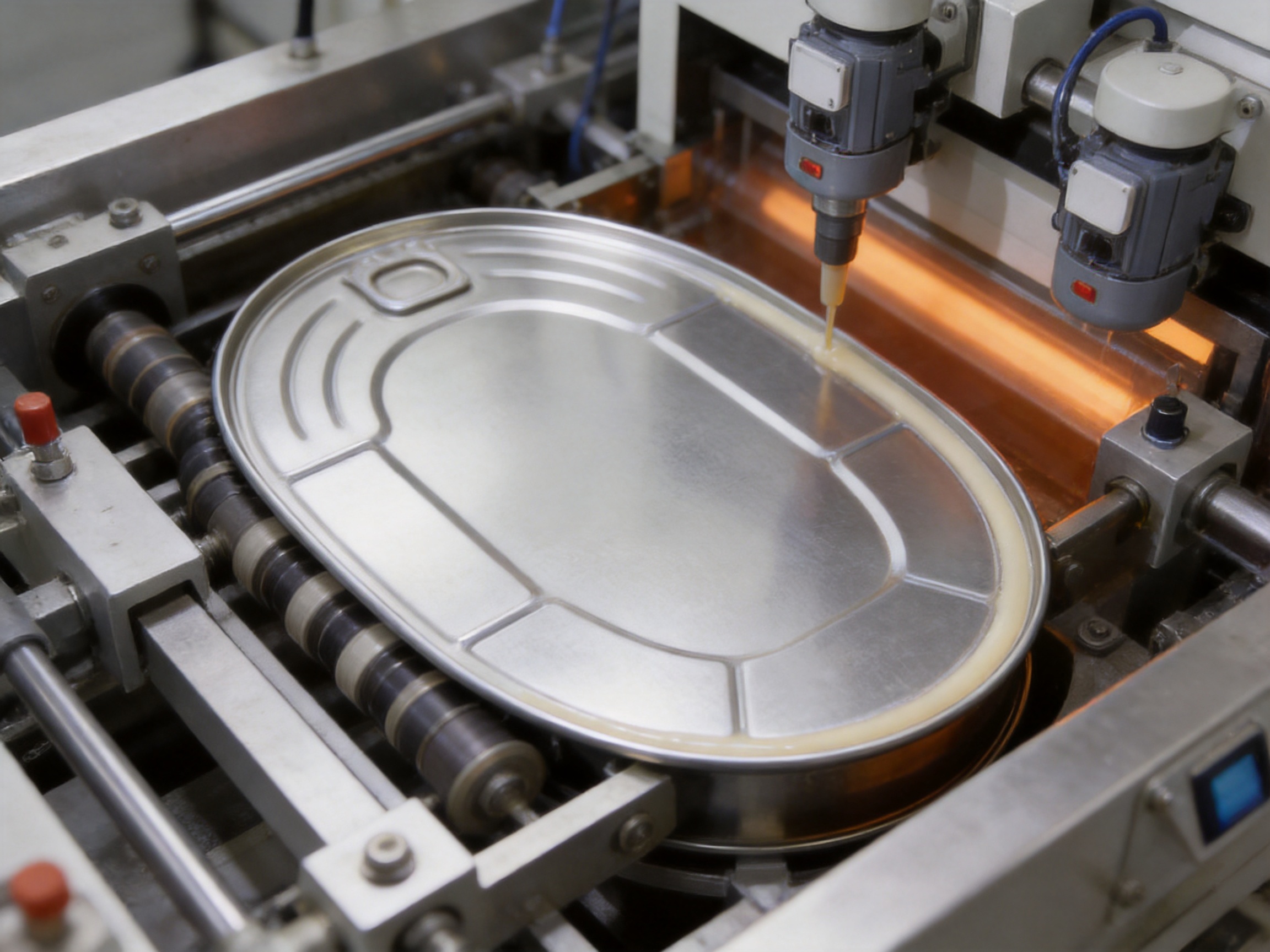
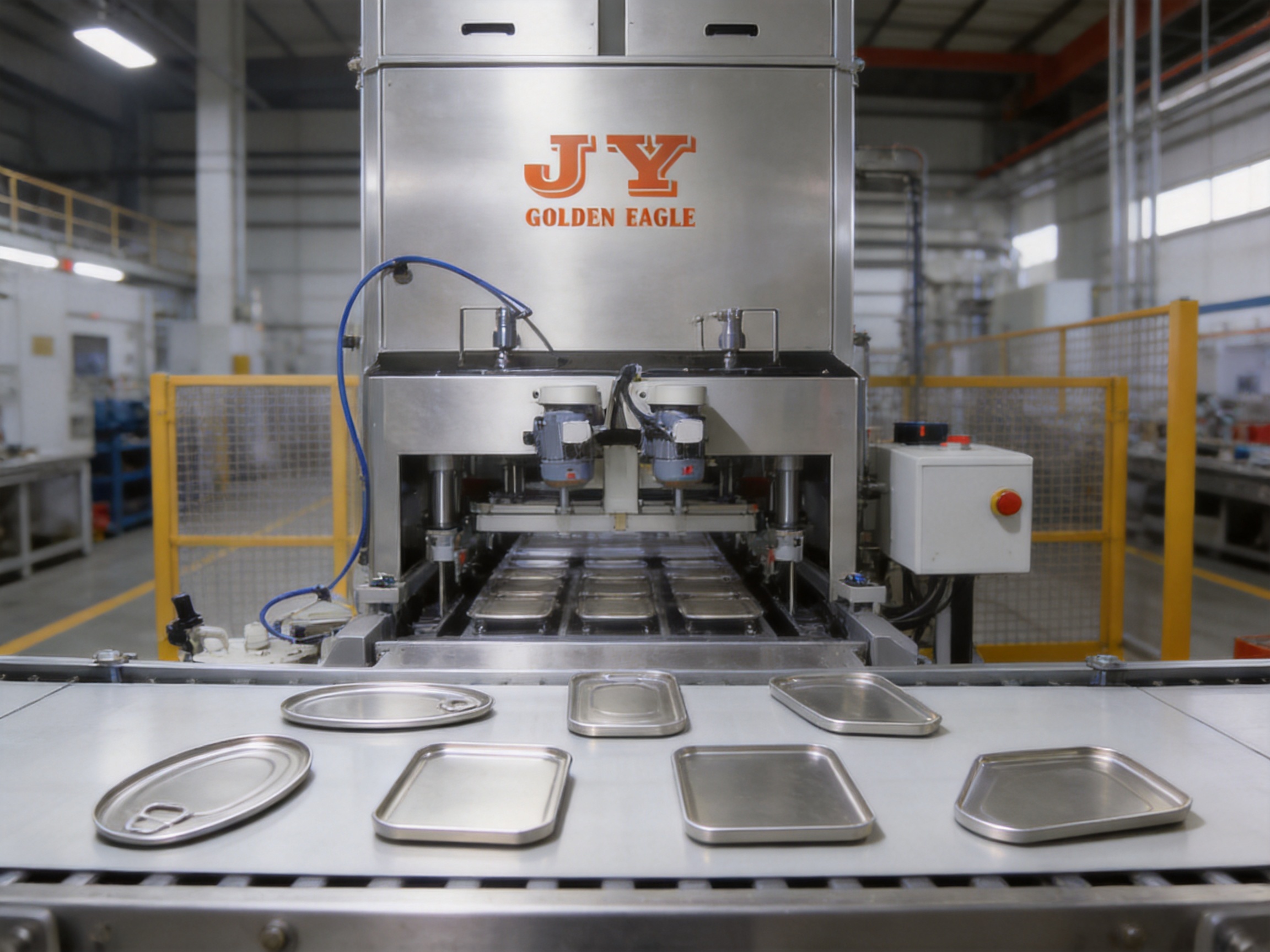
Irregularly shaped metal containers are increasingly important in food, beverage, chemical, promotional, and specialty packaging markets. Oval, square, rectangular, trapezoidal, and other non-circular containers create distinctive shelf appeal and can provide practical advantages for stacking, branding, and product differentiation. However, producing reliable lids for these containers is considerably more demanding than manufacturing conventional round can ends. The lid must follow a complex perimeter while maintaining consistent edge dimensions, strong mechanical structure, and dependable sealing performance.
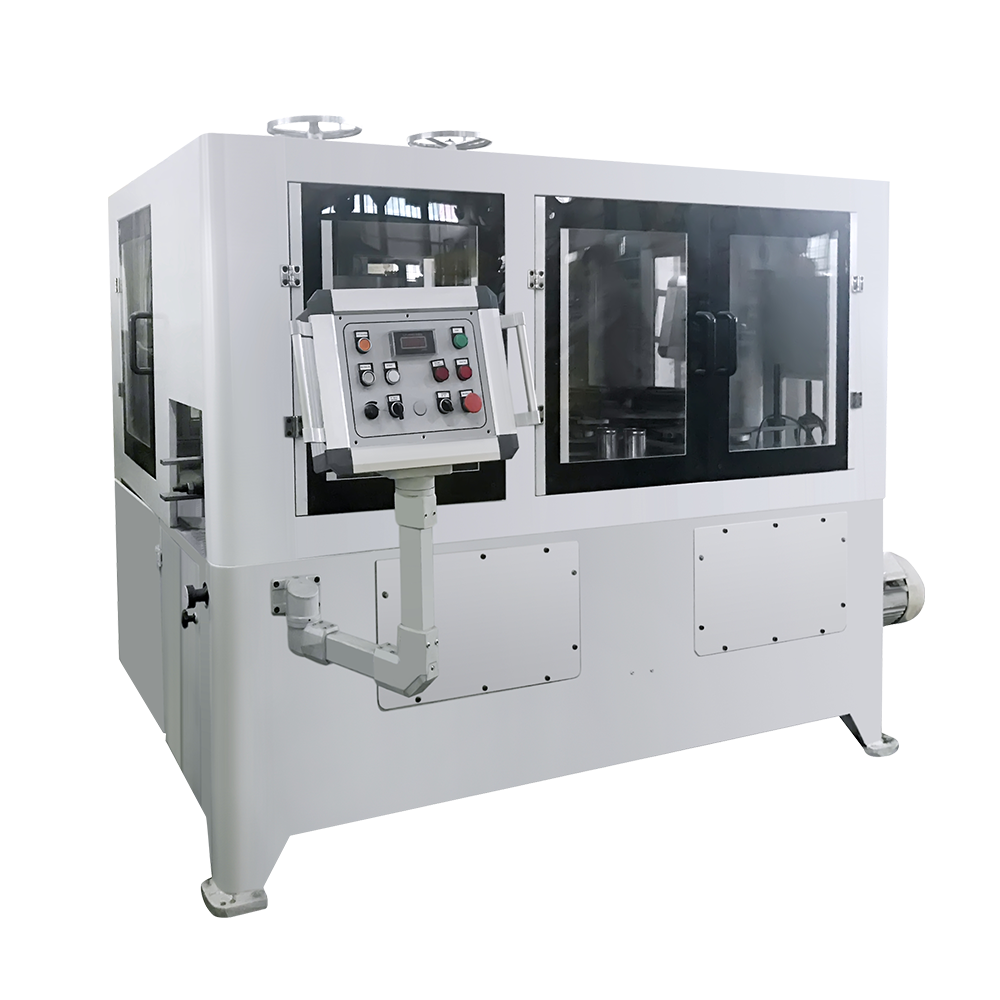
The Irregular-shape Edge Making and Lining Machine is designed for this demanding stage of metal packaging production. It integrates edge forming, lining application, and controlled drying in a compact vertical structure. By combining these processes within one coordinated machine, the equipment helps can manufacturers improve dimensional consistency, reduce manual handling, stabilize production quality, and create a more efficient workflow for non-circular can lids.
This type of equipment is particularly valuable for manufacturers that produce specialty food cans, decorative tins, chemical containers, gift packaging, and other metal packages that cannot be processed efficiently on standard round-can machinery. Its central advantage is the ability to process irregular edges with controlled precision rather than relying on generalized forming movements designed for circular products.
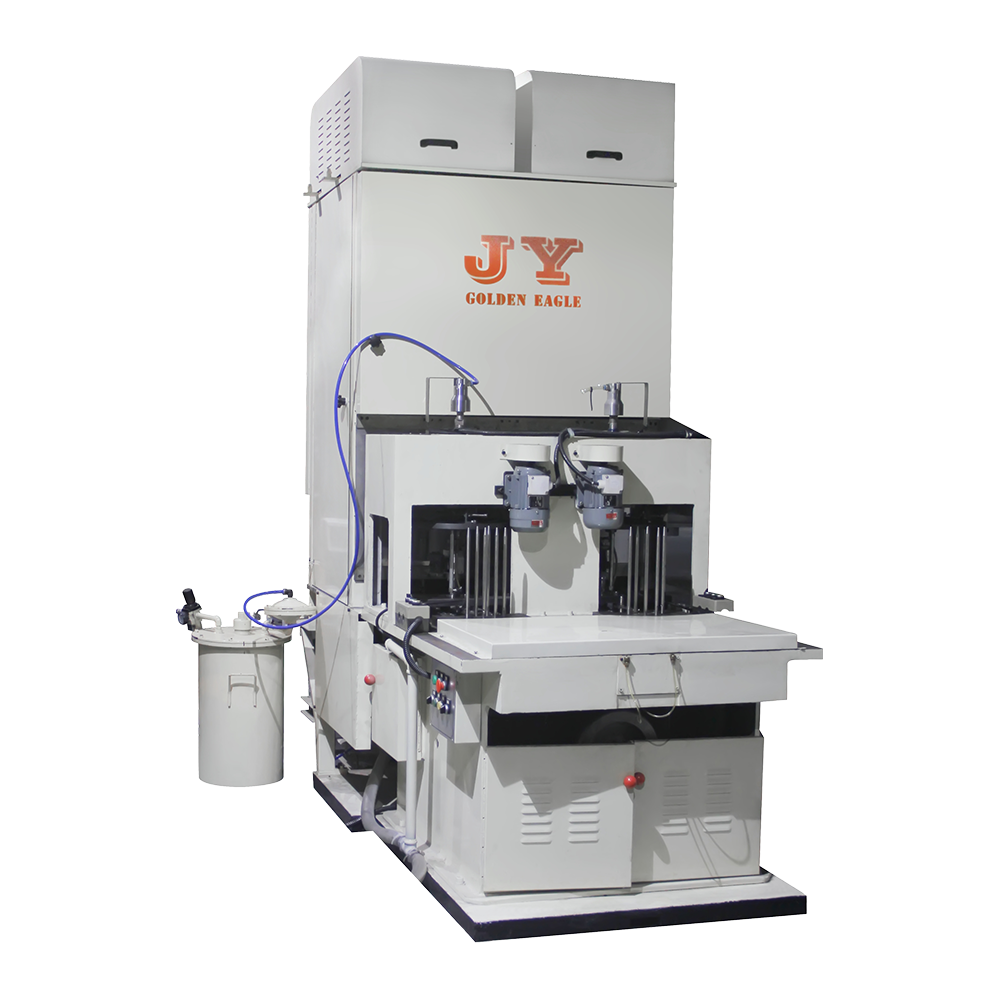
Irregular-shape Edge Making and Lining Machine
Round can lids are comparatively straightforward to process because the distance from the center of the lid to the edge remains constant. Forming rollers, curling tools, lining applicators, and other mechanisms can operate through predictable rotational movements. The tooling and control logic are therefore relatively uniform around the entire circumference.
Non-circular lids present a different engineering challenge. An oval lid contains continuously changing curvature. A square or rectangular lid includes straight sections, corners, and transitions between them. A trapezoidal or customized lid may contain several different edge angles and radius combinations. During forming, the processing tools must maintain contact with the perimeter while responding to these changes without creating wrinkles, cracks, uneven edge heights, or excessive material stress.
The lid edge is not merely a cosmetic feature. It contributes directly to the strength and sealing behavior of the finished package. If the edge is too low, too wide, distorted, or inconsistent, the lid may not fit correctly with the container body. If the lining compound is applied unevenly, the finished can may experience leakage, poor pressure resistance, or reduced shelf life.
A specialized irregular-shape machine must therefore coordinate several functions at the same time:
• Accurate positioning of the lid before processing.
• Stable transportation or clamping during edge forming.
• Synchronized movement of forming rollers or tools.
• Compensation for changing edge curvature and corner geometry.
• Even application of lining material around the complete perimeter.
• Controlled drying or curing of the applied compound.
• Protection of the product surface from scratches, contamination, and deformation.
These requirements explain why equipment developed specifically for irregular lids can offer a significant advantage over general-purpose machinery adapted from round-can applications.
The principal design concept of the machine is an integrated production sequence. Edge making, lining, and drying are arranged as connected operations rather than isolated processes that require repeated manual transfer. This arrangement supports a more stable production rhythm and reduces the risk that a lid will be damaged or contaminated between stages.
During edge making, the lid is positioned and held so that the processing tools can follow its perimeter. A complex cam mechanism, servo-driven arrangement, or similar synchronized control system guides the forming elements. The exact configuration may vary according to the lid shape, tooling design, and production requirements, but the objective remains the same: to create a consistent edge profile along the entire non-circular outline.
After forming, the lining process applies a sealing compound to the appropriate area of the lid. The lining material may be selected according to the contents of the package, the metal substrate, the required sealing method, and the operating conditions of the final container. Precise application helps establish a continuous seal when the lid is joined to the container body.
The drying section then supports controlled stabilization of the lining compound. A properly managed drying stage can improve process continuity and reduce the possibility of handling marks, incomplete curing, or transfer of compound to downstream equipment. Integrating drying into the equipment concept also simplifies the production layout and reduces unnecessary intermediate storage.
Edge accuracy is one of the most important performance factors for an irregular-shape lid machine. The edge must maintain a suitable height and width throughout the perimeter, including curved areas, straight sections, and corners. Inconsistent forming may lead to poor fit, variation in the sealing interface, or difficulty during subsequent assembly.
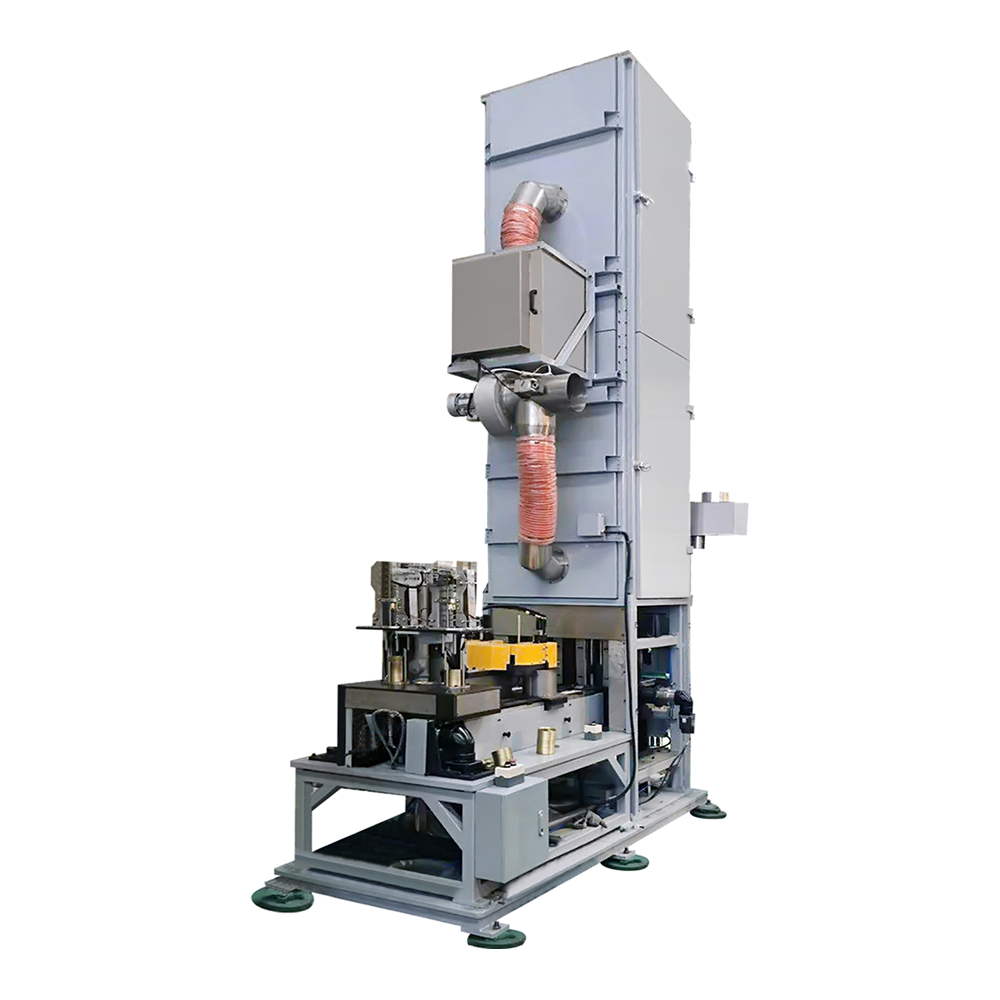
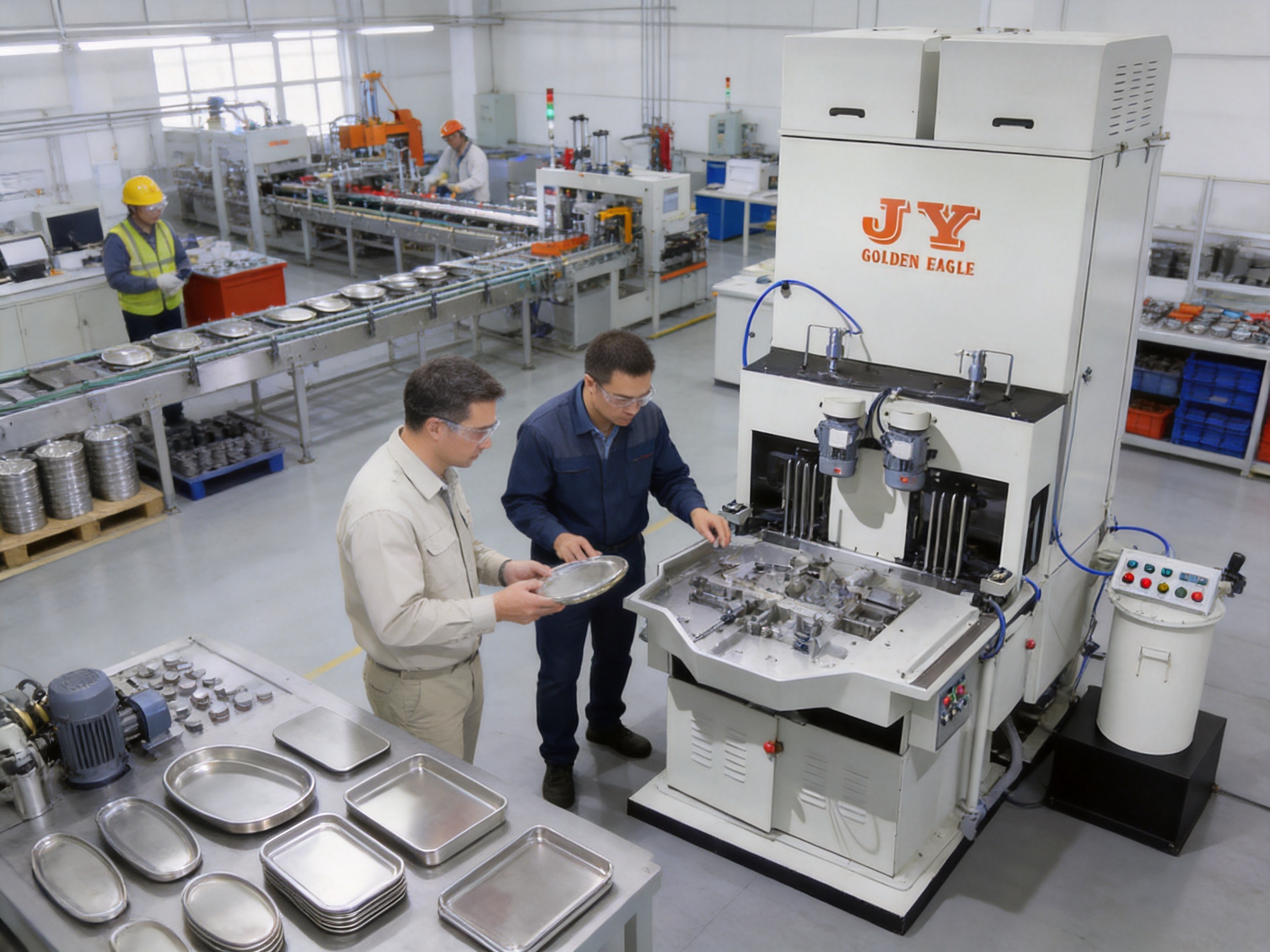
The machine’s forming system is designed to provide controlled mechanical contact with the lid. The two independently controlled power motor modules visible at the front of the equipment typically support a dual-station synchronous operating principle. Independent control allows the machine to coordinate the movement of separate working sections while adapting the forming action to the product geometry.
This arrangement can be more flexible than a single undifferentiated drive system. It enables engineers to manage the timing and force of the forming operation more accurately and supports adjustments when different lid formats are introduced. With properly designed tooling and settings, the system can help maintain stable edge geometry across production batches.
The lining operation is critical because the compound forms part of the final sealing system. The objective is not simply to deposit material on the lid, but to apply it at the correct location, in a continuous pattern, and with suitable thickness. An excessive quantity may create contamination, uneven closure, or prolonged drying. An insufficient quantity may result in incomplete sealing or reduced protection against leakage.
Integrated lining equipment helps reduce the variation associated with manual application. The operator can use controlled machine parameters, repeatable positioning, and standardized tooling to establish a more consistent process. This is especially important for high-volume production, where minor variation repeated across thousands of lids can become a major quality issue.
Stable lining also supports cleaner production. When the compound is deposited accurately, less material is wasted outside the intended sealing area. Reduced overspray, dripping, or excess material can improve housekeeping and limit the need for frequent cleaning.
Drying is often treated as a secondary operation, but it has a direct influence on the reliability of the finished lid. The lining compound must reach a suitable condition before the lid is packed, stacked, or transferred to another machine. If drying is incomplete, lids may stick together or mark one another. If drying is excessive or poorly controlled, the compound may lose desirable properties or the production process may consume unnecessary energy.
The integrated drying concept allows the machine layout to connect the application stage with the stabilization stage. This can reduce handling and create a more orderly material flow. Depending on the process specification, the drying system can be configured around the required compound, throughput, temperature conditions, and product dimensions.
Manufacturers often compare specialized irregular-lid equipment with three alternatives: manual processing, machinery designed primarily for round lids, and a series of separate machines connected through manual transfer. Each alternative may be suitable in a limited situation, but the integrated machine offers several practical advantages for regular production.
Equipment designed specifically for irregular edges is built around the changing geometry of the product. Its forming movement, tooling, and control method are intended to follow non-circular outlines. By contrast, a machine optimized for round lids may provide limited control when it reaches corners, straight sections, or rapidly changing radii.
This specialized approach helps manufacturers process products that would otherwise require extensive modification or manual correction. It is particularly useful when a package design contains a distinctive shape that is central to the product’s marketing identity.
Manual transfer between edge forming, lining, and drying operations increases labor requirements and introduces additional opportunities for damage. Operators may place lids incorrectly, touch wet lining compound, mix product batches, or create delays between process stages.
An integrated machine reduces the number of manual interventions. This does not eliminate the need for skilled operators, maintenance personnel, or quality inspectors, but it allows those employees to focus on process supervision, adjustment, inspection, and preventive maintenance rather than repetitive handling.
Repeatable machine movements generally provide more uniform results than manual operations. Once the correct tooling, speed, pressure, and lining parameters have been established, the process can be repeated across a production batch. This supports more consistent edge dimensions and lining coverage.
Stable quality is especially important for customers that supply multiple container sizes or sell products into markets with strict packaging requirements. Consistency reduces rejected components, rework, and the risk of downstream assembly problems.
Combining multiple operations in one machine can reduce intermediate storage and simplify the factory layout. Lids can move through a logical sequence with fewer interruptions. A shorter process path can also make it easier to identify the source of a quality issue because each stage is organized within a clearly defined production system.
The vertical integrated structure is intended to make effective use of plant space. Compared with several independent machines arranged in separate areas, a consolidated configuration can reduce the required footprint. This may be valuable for factories that need to expand capacity without moving to a larger facility.
Specialized equipment enables manufacturers to produce packaging shapes that are difficult for less flexible lines. This creates opportunities for premium packaging, promotional tins, seasonal products, and branded containers with unusual silhouettes. The machine is therefore not only a production asset but also a tool that supports product development and market differentiation.
The operating principle begins with accurate lid feeding and positioning. Each lid must arrive at the working station in a consistent orientation. For asymmetrical products, orientation is particularly important because a lid that is rotated or displaced may not align correctly with the forming tools.
Once positioned, the lid is supported by a suitable holding or clamping arrangement. The support must be strong enough to prevent movement but controlled enough to avoid dents or surface damage. The machine then initiates the edge-making cycle. Forming rollers or equivalent tools travel along the lid perimeter under the direction of the mechanical or servo-controlled system.
The forming movement is synchronized with the lid profile. At a curved section, the tools follow a continuously changing path. At a corner, the control system and tooling must manage the transition without excessive impact. Along a straight section, the forming action must remain stable and parallel to the edge. The resulting profile should be continuous and suitable for the following lining and closing operations.
After edge forming, the lid enters the lining stage. The application system places sealing compound along the designated area. The process can be adjusted according to the dimensions of the lid and the requirements of the final package. Careful positioning helps prevent the compound from reaching decorative surfaces or non-sealing areas.
The lid then proceeds to the drying section. Here, the applied lining compound is stabilized under controlled process conditions. Finished lids can subsequently be collected, inspected, stacked, or transferred to another part of the can-making line.
The equipment’s two independently controlled motor modules are an important part of the described configuration. Their coordinated operation supports the dual-station working concept and helps divide or synchronize the forming action. Independent drive control can also provide useful flexibility during setup, maintenance, and product changeover.
| Production Aspect | Specialized Irregular-Shape Machine | Manual or General-Purpose Alternative | Practical Benefit |
|---|---|---|---|
| Edge following | Designed for changing curves, straight sections, and corners | May require manual correction or limited adaptation | More consistent edge geometry |
| Lining application | Integrated and repeatable application process | Separate or partially manual operation | Improved sealing consistency and reduced waste |
| Material handling | Connected process sequence | Repeated manual transfers | Lower handling risk and cleaner workflow |
| Production layout | Compact vertical integration | Several independent workstations | More efficient use of factory space |
| Product development | Suitable for non-circular and customized lid profiles | Primarily optimized for standard shapes | Greater packaging design flexibility |
| Process repeatability | Controlled mechanical or servo movement | Dependent on operator technique | More stable batch-to-batch quality |
The machine is suitable for a wide range of metal packaging applications in which the lid shape is not circular. Food packaging is one of the most important fields. Specialty foods, seafood, confectionery, biscuits, snacks, processed foods, and gift products frequently use decorative or shaped tins to attract attention and create a premium presentation.
In the beverage-related packaging sector, certain promotional or specialty packages may use customized forms that require non-standard lid processing. Although the exact machine configuration depends on the container design, the ability to manage irregular edges provides manufacturers with additional options for product development.
Chemical packaging is another relevant application. Chemical tanks and containers must maintain reliable sealing and structural integrity, while their dimensions and shapes may vary according to capacity, handling requirements, and end-user expectations. Specialized edge making and lining can support the production of lids for selected non-circular chemical packages.
Aerosol and industrial packaging manufacturers may also benefit when a component requires a customized outline or specialized sealing surface. The specific suitability of the machine depends on the material, lid design, lining compound, and required performance standards, but the underlying forming capability is relevant to many metal packaging projects.
Decorative tins and promotional containers represent a particularly strong application. Retail brands often seek packaging that stands out on shelves, communicates a unique product identity, or can be reused after the original contents have been consumed. Irregular shapes can provide this differentiation, but only when the production process can deliver reliable quality at commercial volumes.
The equipment is supplied by Zhejiang Golden Eagle Food Machinery Co., Ltd., a Chinese manufacturer with a long history in can-making machinery and can-making molds. The company was established in 1978 and was formerly known as Zhejiang Food Machinery Factory and Zhoushan Mold Factory. Its long operating history provides a substantial base of manufacturing experience in metal packaging equipment.
The company has more than 350 trained personnel, including experienced design and development engineers. This combination of production staff, mechanical specialists, and engineering personnel supports the development of equipment for different container types, production capacities, and customer requirements.
A major strength is the company’s combined experience in can-making machinery and can-making molds. Machinery performance depends strongly on the quality of the tooling that shapes the metal. By maintaining capabilities in both areas, the manufacturer can coordinate machine design and mold requirements more effectively than a supplier that only assembles general equipment while outsourcing all tooling work.
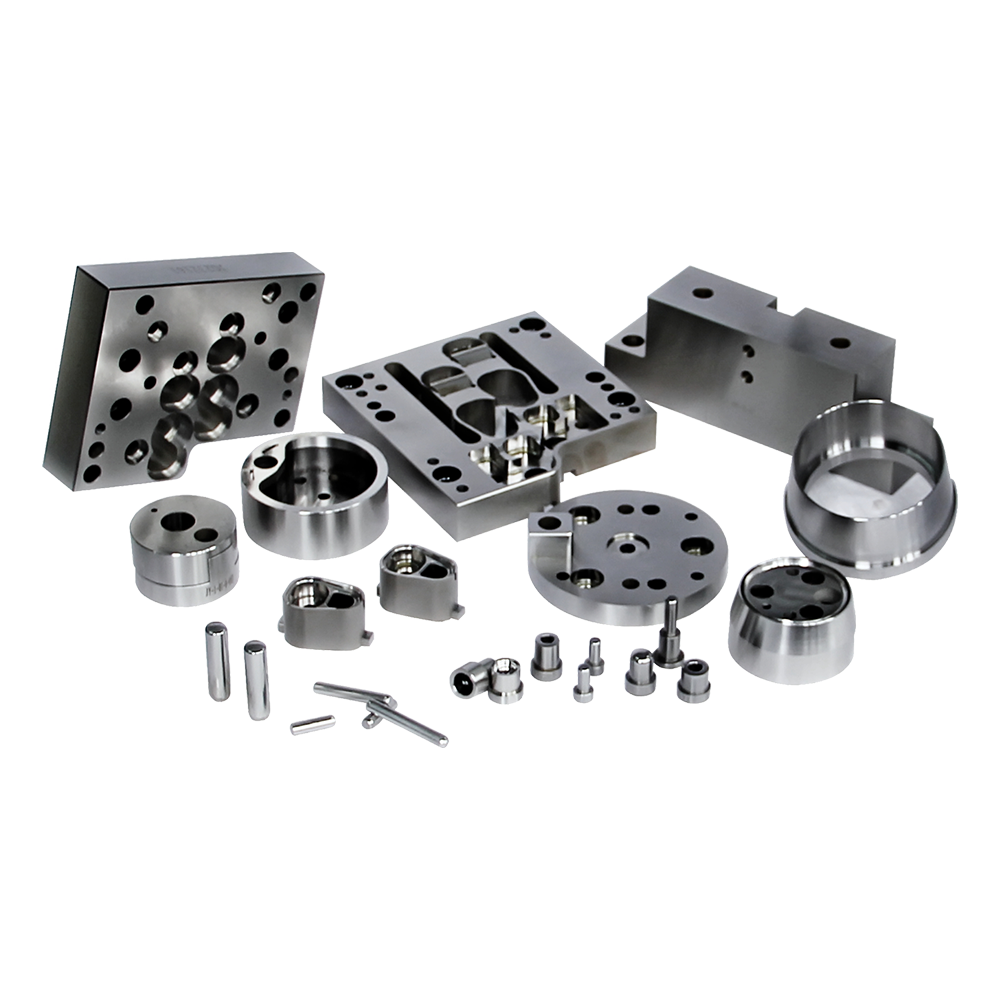
The company uses CNC high-precision machining equipment together with a complete range of mechanical processing equipment. Precision machining is important for forming stations, roller assemblies, guide components, mold parts, shafts, fixtures, and other components that must maintain accurate alignment during operation.
For irregular-shape products, machining accuracy is particularly important because the tooling must correspond closely to the designed lid profile. Small inaccuracies may become visible as changes in edge height, corner behavior, or lining position. CNC-based production helps support repeatable component dimensions and more controlled assembly.
Precision manufacturing also contributes to maintainability. When replacement parts are produced according to consistent drawings and machining standards, service teams can replace worn components more efficiently. This can help reduce extended downtime and support the long-term use of the equipment.
The company states that its product design principles are similar to those associated with established European machinery manufacturers such as KRUPP, SOUDRONIC, and ALFONS-HAAR. At the same time, the manufacturer has combined these design principles with practical production experience and continuous improvement based on actual operating conditions.
This experience-based approach is valuable because can-making equipment must perform in real factories, not only in engineering models. Operators need accessible adjustments, maintenance personnel need practical service points, and production managers need stable output under changing workloads. Continuous improvement based on field experience can help address these operational requirements.
Zhejiang Golden Eagle Food Machinery Co., Ltd. has been certified to the ISO9001 quality management system and ISO14001 environmental management system. ISO9001 supports structured quality procedures across design, purchasing, manufacturing, inspection, and service. ISO14001 provides a framework for environmental management and the systematic control of relevant environmental responsibilities.
These certifications do not replace product-specific testing or customer acceptance procedures, but they demonstrate that the company operates within established management systems. For international customers, documented quality and environmental practices can be an important part of supplier evaluation.
The manufacturer reports that it has produced more than 10,000 pieces of can and can-lid equipment. This installed production experience provides a broad reference base for understanding different packaging applications, machine configurations, operating conditions, and service requirements.
Equipment used by can manufacturers and canning factories must cope with practical factors such as material variation, operator skill levels, production scheduling, maintenance intervals, and product changeovers. A large installed base can help a manufacturer identify recurring challenges and incorporate improvements into later designs.
Reliable equipment quality begins before fabrication. The process starts with product analysis, including lid dimensions, material thickness, profile geometry, lining requirements, target speed, and connection with upstream or downstream machinery. For irregular lids, the geometry must be evaluated carefully because the design affects tooling, drive movement, clamping, and lining application.
Engineering drawings and production specifications establish the dimensions of important components. CNC machining and mechanical processing then produce the parts according to these requirements. During assembly, alignment is essential. Forming rollers, guides, holders, motors, sensors, and application devices must work together without unnecessary vibration or offset.
Inspection should cover both individual components and the assembled machine. Dimensional checks can confirm the accuracy of manufactured parts. Functional tests can evaluate movement, synchronization, feeding, forming, lining, and drying. Trial production with representative lids is especially useful because a machine may appear mechanically correct while still requiring process adjustment to achieve the desired finished profile.
Final acceptance should consider the complete production result. Important inspection points may include edge height, edge width, corner quality, lid flatness, lining position, lining continuity, drying condition, surface cleanliness, and compatibility with the container body. Establishing a clear acceptance standard helps both the manufacturer and the customer verify that the machine meets the intended application.
Correct operation begins with proper setup. The operator should confirm that the correct tooling is installed for the selected lid profile and that the lid orientation is consistent. Guides, holders, forming elements, and lining devices should be adjusted according to the approved process parameters.
Before production begins, the machine should be checked for cleanliness, lubrication, fastener security, electrical readiness, and the condition of wear components. Lining material should be stored and prepared according to its technical requirements. Incorrect viscosity, contamination, or unsuitable storage conditions can affect application quality even when the machine is correctly adjusted.
During production, operators should monitor the first pieces after startup and after every product changeover. They should inspect the edge profile, look for wrinkles or cracks, confirm the lining path, and check whether the drying result is suitable. Early detection of a deviation helps prevent a large quantity of nonconforming lids.
Preventive maintenance should include regular inspection of forming rollers, cams, guides, bearings, shafts, clamps, sensors, pumps, lining nozzles, and drying components. Wear can change the relationship between the tool and the lid, leading to gradual deterioration in quality. Cleaning is also important because accumulated lining compound or metal debris may interfere with movement and contaminate finished products.
Maintenance schedules should be based on operating hours, production volume, material conditions, and the manufacturer’s recommendations. Lubricants must be selected correctly, and electrical or control-system work should be performed by qualified personnel. When replacement parts are required, using correctly specified components helps preserve the original machine performance.
Metal packaging manufacturers often need to produce several lid sizes or shapes on the same general line. Changeover efficiency therefore affects both productivity and profitability. A machine designed with accessible tooling and clear adjustment procedures can reduce downtime between product batches.
Changeover normally involves replacing or adjusting profile-specific tooling, guides, holders, forming elements, and lining parameters. The exact procedure depends on the machine configuration, but the objective is to make product conversion systematic and repeatable. Reference marks, documented settings, and standardized checklists can help operators return to a known production condition.
Irregular-shape products may require more setup attention than round products because each profile has its own forming path. However, a specialized machine can make these adjustments more manageable by providing a suitable mechanical structure and coordinated control system. Flexibility should be evaluated not only by the number of shapes the machine can process, but also by the time and skill required to switch between them.
For manufacturers planning future product expansion, it is advisable to discuss the complete range of intended lid profiles before purchasing. This allows the supplier to consider tooling compatibility, drive capacity, process limits, lining requirements, and potential future upgrades.
Production efficiency is influenced by more than nominal machine speed. A useful evaluation should consider uptime, changeover time, rejection rate, labor requirements, material waste, maintenance access, and the coordination of connected processes.
The integrated vertical design can help reduce the floor area required for edge making, lining, and drying. A smaller production footprint may lower internal transportation requirements and leave more space for inspection, storage, or additional equipment.
Reduced handling can also improve efficiency. When lids move through connected stages, operators spend less time transferring components and more time supervising the line. Fewer transfers can reduce the probability of scratches, contamination, misalignment, and accidental mixing of different product specifications.
Material efficiency is supported by accurate forming and lining. Stable edge making helps reduce scrapped lids caused by profile defects, while controlled lining application can reduce excess compound. The actual savings depend on product design, operating conditions, and production volume, but these factors should be included in a full cost analysis.
Energy performance depends on the motor system, drying requirements, operating schedule, and factory conditions. A customer should assess the complete energy demand of the machine and compare it with the labor and material savings achieved through integration. Proper insulation, regular maintenance, suitable drying settings, and efficient production planning can support responsible energy use.
Successful installation requires more than placing the machine on the factory floor. The customer should prepare a suitable foundation or support structure, electrical supply, ventilation, material storage area, safety zone, and connections to related equipment. The production environment should also provide sufficient space for operators and maintenance personnel to work safely.
Commissioning normally includes mechanical inspection, electrical connection, control-system verification, tooling installation, dry running, material testing, and trial production. The machine should be evaluated with the customer’s actual lid material and lining compound whenever possible. This allows the final settings to reflect real production conditions rather than only factory test samples.
Training is an important part of commissioning. Operators should understand machine startup, normal operation, product changeover, inspection points, emergency procedures, and basic troubleshooting. Maintenance personnel should receive guidance on lubrication, wear-part replacement, alignment, cleaning, and scheduled service.
Zhejiang Golden Eagle Food Machinery Co., Ltd. provides after-sales services including installation, commissioning, technical guidance, operation training, and parts supply. Access to these services can help customers reduce the learning period and establish a more stable production process after delivery.
Any machine with moving forming tools, rollers, motors, electrical components, and drying equipment requires appropriate safety management. Guards should remain in position during operation, and operators should not reach into working areas while the machine is running. Emergency stops must be accessible and tested according to the factory’s safety procedures.
Lockout and tagout procedures should be used before maintenance, cleaning inside guarded areas, or removal of jammed material. Electrical work should be performed only by qualified technicians. Hot surfaces and drying sections should be identified, and suitable protective measures should be provided where necessary.
Operators should also be trained to recognize abnormal noise, vibration, smell, temperature, or product movement. These signs may indicate a mechanical, electrical, or process problem. Stopping the machine early can prevent further damage and reduce the risk of producing a large quantity of defective lids.
Good housekeeping supports both safety and product quality. Metal scraps, lining compound, packaging debris, and lubricants should be managed promptly. A clean working environment makes it easier to identify leaks, wear, contamination, and other abnormal conditions.
Before ordering an irregular-shape edge making and lining machine, buyers should prepare complete product information. Important data includes lid length, width, corner radius, perimeter shape, metal material, thickness, surface finish, edge dimensions, lining compound, target output, and the required connection with other equipment.
Customers should provide drawings or representative samples whenever possible. A physical sample can help engineers understand tolerances, surface characteristics, and the relationship between the lid and container body. If several shapes are planned, each one should be included in the technical discussion.
The evaluation should also consider factory conditions. Available floor space, power supply, compressed air, exhaust requirements, ambient temperature, operator access, and material flow can affect installation and operation. A machine that is technically suitable but difficult to integrate into the existing factory may not deliver the expected business benefit.
Performance acceptance should be based on measurable criteria. These may include dimensional tolerances, lining coverage, drying condition, production capacity, rejection rate, changeover time, and continuous running duration. A clear acceptance plan helps prevent misunderstandings and provides a practical basis for commissioning.
The main competitive value of this machine lies in specialization. Many metal packaging lines are optimized for common round products, while irregular-shaped containers require different forming logic and tooling. A supplier with experience in both machinery and molds can offer a more coordinated solution for these applications.
The integrated design also provides a practical alternative to purchasing separate equipment for each operation. Separate machines may offer flexibility, but they can increase floor-space requirements, transfer labor, synchronization challenges, and maintenance points. For manufacturers with regular production of irregular lids, an integrated structure can provide a more coherent process.
Another competitive advantage is the manufacturer’s combination of long-term industry experience and modern machining capability. Experience since 1978 provides historical knowledge of can-making processes, while CNC equipment and contemporary engineering practices support the production of accurate components. This combination is useful when customers need equipment that is both technically capable and practical to operate.
The company’s broad product portfolio further supports complete-line planning. Its product categories include food and beverage can-making machines, tin can lid end-making machines, duplex slitting and cutting machines, milk powder can-making machines, easy-open-end lid machinery, tin can automatic welding machines, aerosol cone and dome-making machines, chemical tank-making machines, automatic feeding machines, aerosol can-making machines, two-piece can-making machines, and molds.
This range allows customers to discuss individual equipment and complete production systems with a supplier that understands multiple stages of metal packaging manufacture. The company supplies complete series for food can production lines, beverage can production lines, can lid production lines, chemical tank production lines, aerosol canister production lines, two-piece can production lines, and pop can production lines.
Metal packaging manufacturers operate under different market conditions, material standards, labor structures, and regulatory expectations. Export experience can help a machinery supplier understand the importance of documentation, packaging for shipment, commissioning support, spare parts, and communication across different time zones.
Zhejiang Golden Eagle Food Machinery Co., Ltd. reports that its equipment has been exported to countries and regions in Europe, Asia, Africa, North America, South America, and Oceania. Its stated export markets include Germany, Italy, the United Kingdom, Spain, Hungary, Russia, Australia, Jordan, Malaysia, the Philippines, Pakistan, Egypt, Algeria, Turkey, Mexico, Nigeria, Iran, and others.
International customers typically evaluate more than the initial machine price. They also consider delivery reliability, service response, spare-parts availability, installation support, documentation, training, and the supplier’s ability to understand the customer’s complete production process. The company’s stated after-sales services are therefore an important part of the overall equipment offering.
The machine is intended for irregular-shape metal can lids, including oval, square, trapezoidal, rectangular, and other customized non-circular profiles. The actual range depends on the tooling, dimensions, metal material, edge design, and technical configuration agreed for the project.
The equipment integrates edge making, lining application, and drying. This creates a connected workflow for shaping the lid edge, applying sealing compound, and stabilizing the lining before further handling or assembly.
A round lid has a constant radius, while an irregular lid may include changing curves, straight sections, corners, and transitions. The forming tools must follow these variations while maintaining consistent edge dimensions and avoiding wrinkles, cracks, deformation, or excessive stress.
The two motor modules typically support a dual-station synchronous operating arrangement. Independent control allows the forming sections to coordinate their movements and provides greater flexibility for managing the geometry and timing of the edge-making process.
It may be configured for multiple lid profiles when suitable tooling and process parameters are provided. Customers should discuss all intended shapes before ordering so that the manufacturer can evaluate changeover requirements, tooling compatibility, and production limits.
Integrated lining provides a more repeatable method of applying sealing compound and reduces manual transfer between edge forming and lining. It can support more consistent lining position, reduce material waste, and lower the risk of contamination or handling damage.
Drying stabilizes the lining compound before the lids are stacked, packed, or transferred. Proper drying helps prevent sticking, surface marks, incomplete curing, and problems during subsequent container assembly.
The supplier has experience in can-making machinery and molds, more than 350 trained personnel, professional design and development engineers, CNC high-precision machining equipment, and complete mechanical processing capabilities. The company also reports production of more than 10,000 pieces of can and can-lid equipment.
The company provides after-sales services including installation, commissioning, technical guidance, operation training, and parts supply. The exact scope and schedule should be confirmed in the equipment contract and project plan.
Customers should provide lid drawings or samples, dimensions, material type and thickness, edge profile, lining compound, required output, product range, factory conditions, and connection requirements with other machines. Complete information allows the supplier to recommend a more accurate configuration.
The equipment can form part of a broader metal packaging project. The supplier offers machinery for food cans, beverage cans, can lids, chemical tanks, aerosol containers, two-piece cans, pop cans, and related molds. System integration should be assessed according to the customer’s products and production capacity.
The Irregular-shape Edge Making and Lining Machine addresses one of the most technically demanding operations in customized metal packaging production. Its purpose is to form accurate edges on non-circular lids, apply sealing compound consistently, and support controlled drying within one integrated production structure.
Compared with manual processing, round-lid machinery adapted to unusual shapes, or several disconnected workstations, the machine offers meaningful advantages in geometric adaptability, process consistency, labor efficiency, material handling, factory-space utilization, and product development flexibility. These benefits are especially relevant to manufacturers producing premium food tins, decorative containers, specialty packages, chemical containers, and other products that require distinctive lid profiles.
The equipment is supported by Zhejiang Golden Eagle Food Machinery Co., Ltd., a manufacturer established in 1978 with experience in can-making machinery and molds. Its engineering personnel, CNC precision machining capability, ISO9001 and ISO14001 management certifications, broad product portfolio, reported production of more than 10,000 units, and international service experience provide a strong foundation for supplying specialized metal packaging equipment.
For manufacturers seeking to expand beyond standard round containers, the machine provides a practical route toward more flexible and automated production. The final performance will depend on correct tooling, suitable materials, accurate process parameters, operator training, and regular maintenance. When these factors are managed as a complete system, irregular-shape lid processing can become a reliable part of a modern can-making production line rather than a labor-intensive specialty operation.
1. Product information supplied for the Irregular-shape Edge Making and Lining Machine.
2. Company information supplied for Zhejiang Golden Eagle Food Machinery Co., Ltd.
3. ISO 9001, Quality Management Systems — Requirements.
4. ISO 14001, Environmental Management Systems — Requirements with Guidance for Use.
5. General principles of metal can manufacturing, lid forming, sealing compound application, and industrial packaging-line integration.
6. General engineering practices for CNC machining, mechanical alignment, preventive maintenance, and automated production equipment.
Related Products

Founded in 1978, the company is one of the largest can-making machinery well-known companies at home and abroad.
Product Categories
Contact Information
Zhongshatou Shenjiamen Zhoushan Zhejiang China
+86-580-3056646

 English
 中文简体
中文简体
 русский
 عربى
عربى
 Español