2026-09-11
In modern metal packaging production, the conversion press is one of the most demanding machines on the line. It performs repeated forming, cutting, drawing, bending, and shaping operations at high speed, often for many hours without interruption. Every individual die component must therefore withstand severe mechanical stress while maintaining exact dimensions and surface quality. A small amount of wear, friction, misalignment, or deformation can affect the appearance, strength, and sealing performance of thousands of metal components.
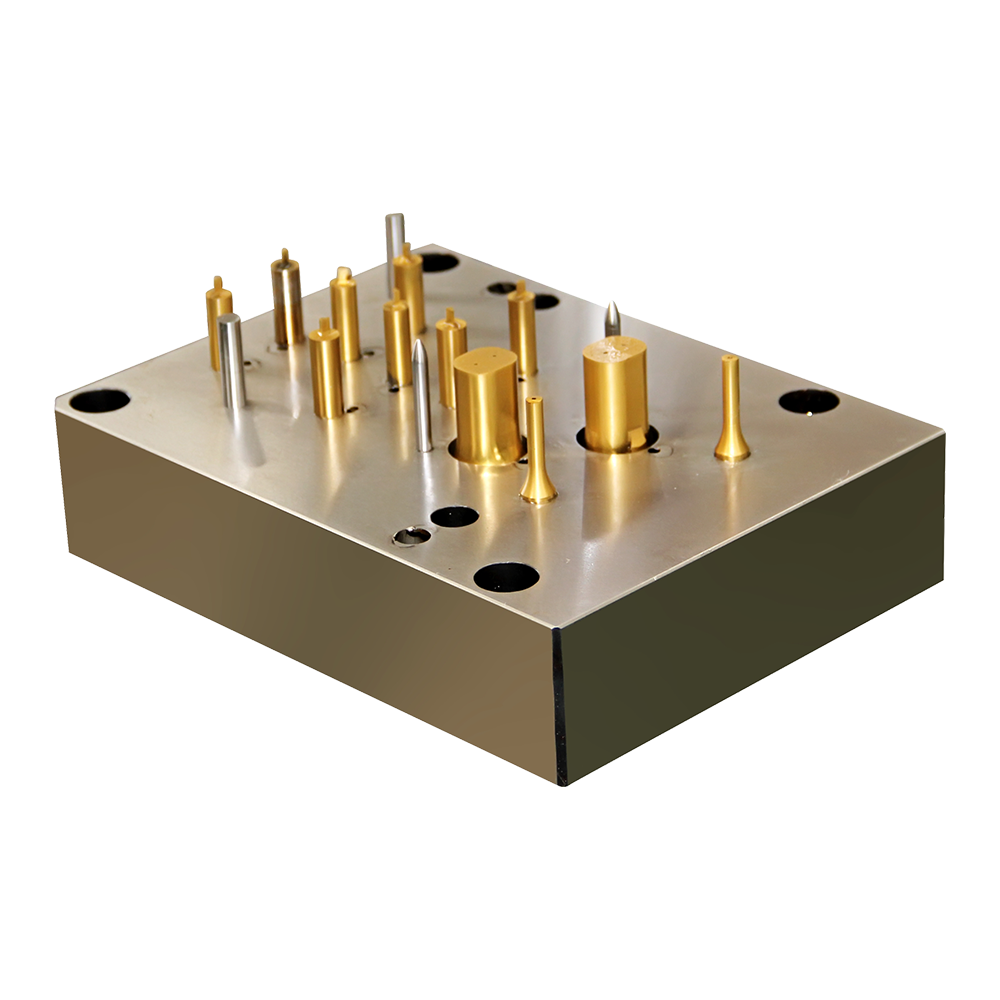
The Conversion Press Tab Die (Bulk) is designed to provide reliable tooling support for high-precision conversion press operations. Supplied in bulk, this die assembly gives can-making factories the flexibility to replace individual worn parts or prepare multiple workstations with essential spare components. Instead of replacing a complete die set when only one section has reached the end of its service life, users can selectively change the affected unit. This approach reduces maintenance costs, shortens downtime, and helps production lines maintain a stable overall equipment effectiveness level.
Developed for demanding metal forming applications, the die is manufactured from a high-hardness industrial alloy selected for fatigue strength, dimensional stability, and resistance to abrasive wear. Precision vacuum heat treatment improves the internal structure of the material, while nano-level grinding creates a highly refined working surface. These processes contribute to low friction, smooth material movement, reduced heat generation, and consistent forming results under high-frequency press operation.
This article examines the structure, working principles, manufacturing advantages, application value, maintenance benefits, and purchasing considerations associated with the Conversion Press Tab Die (Bulk). It also explains how the product supports food can, beverage can, aerosol container, chemical container, and other tinplate packaging production lines.
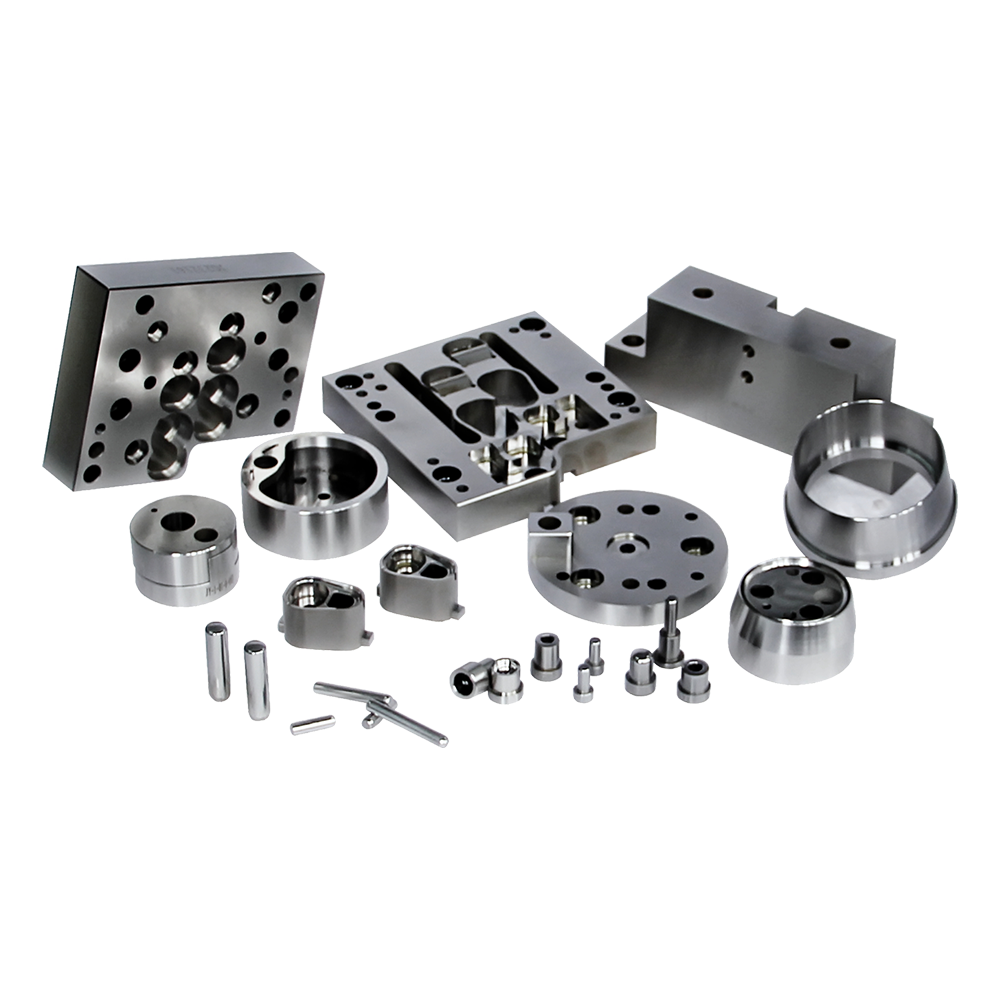
Conversion Press Tab Die(Bulk)
A conversion press is a specialized production machine that transforms prepared metal components into accurately shaped parts through a sequence of carefully controlled operations. Depending on the product, these operations may include embossing, scoring, curling, drawing, piercing, forming, and final trimming. The die is the component that determines how the material is guided, constrained, and shaped during each press stroke.
A tab die is particularly important where a metal end, lid, or related component requires a precisely formed tab area. The tab must meet strict requirements for position, geometry, edge condition, strength, and appearance. If the tab is too short, too weak, incorrectly positioned, or poorly formed, the finished lid may fail to perform correctly during opening or use. In packaging applications, even minor defects can lead to rejected products, customer complaints, or difficulties during downstream filling and sealing.
During operation, the die is exposed to repeated impact and sliding contact. The press may complete hundreds of reciprocating strokes every minute. At each stroke, the die must absorb mechanical loading, maintain its alignment, and guide the metal accurately. The working surfaces also come into continuous contact with metal strip or preformed components. This creates friction, heat, and gradual wear.
For this reason, a conversion press die cannot be evaluated only by its initial dimensional accuracy. Long-term performance is equally important. A high-quality die must retain its shape over extended production cycles, resist chipping and cracking, prevent excessive galling, and allow stable operation as production speed increases. The Conversion Press Tab Die (Bulk) is developed around these requirements.
The geometry of a tab affects both the appearance and function of a finished metal lid. The forming cavity, punch interface, cutting edge, and supporting surfaces must work together with a high degree of precision. If one area is incorrectly machined or begins to wear unevenly, the tab may show irregular edges, surface marks, dimensional variation, or incomplete forming.
The tab die provides the controlled working profile required for repeatable forming. Its precision-ground surfaces help create uniform contact conditions between the die and the metal material. This contributes to consistent tab dimensions across production batches and helps reduce process variation between different operating shifts.
High-output can-making factories depend on equipment that can operate continuously. A die that performs well only at moderate speed may become unsuitable when the line is optimized for higher output. Increased speed raises the number of impacts per hour and intensifies frictional heat. It can also magnify the effects of minor alignment errors or surface imperfections.
The die’s high-hardness alloy base, heat-treated structure, and finely finished working surfaces are intended to support reliable performance during high-frequency operation. Improved wear resistance helps preserve the original die profile, while low friction helps reduce heat accumulation and the risk of material scratching.
Tinplate and other thin metal materials are sensitive to scratches, dents, burrs, and deformation. A die with rough or damaged working surfaces can mark the metal as it passes through the press. Such defects may affect the visual appearance of the package or expose the material to corrosion-related risks if the protective coating is damaged.
The Conversion Press Tab Die (Bulk) uses precision grinding to create a smooth contact surface. When correctly installed, lubricated, and aligned, the die supports controlled material movement and helps reduce unnecessary surface damage. This is especially valuable for visible packaging components, where appearance and consistency are important to brand owners and consumers.
The performance of a conversion press die depends strongly on its material composition and internal structure. A die must be hard enough to resist wear but not so brittle that it fails under repeated impact. It must also maintain dimensional stability when exposed to frictional heat and mechanical stress.
The Conversion Press Tab Die (Bulk) uses a high-hardness industrial alloy selected for demanding metal forming conditions. The alloy is intended to provide a balance of hardness, toughness, fatigue strength, and machinability. This balance is essential because a die that is extremely hard but insufficiently tough may be vulnerable to cracking, while a softer material may wear rapidly and lose its geometry.
Wear occurs when two surfaces move against one another under pressure. In a conversion press, wear may be accelerated by high operating frequency, inadequate lubrication, metal particles, or slight misalignment. As wear progresses, the die profile can change. This may cause variations in the tab form and eventually lead to production defects.
The high-hardness alloy helps the die resist abrasive and adhesive wear. It allows the working surfaces to maintain their profile for longer periods, extending the useful service interval between maintenance operations. Longer service life is particularly valuable in automated lines where frequent die changes can interrupt multiple connected machines.
Fatigue is a major concern in press tooling. Unlike a single overload failure, fatigue develops gradually through repeated stress cycles. The die may experience compression, impact, bending, and vibration during every stroke. Even when each individual load is within the design limit, millions of cycles can eventually cause cracks or permanent deformation if the material and heat treatment are not properly selected.
The die material and manufacturing process are designed to support repeated loading. A stable internal structure helps distribute stress throughout the component. This improves resistance to fatigue-related damage and supports dependable operation over long production periods.
Dimensional stability is essential because the die must remain compatible with the press, punch, guide system, and adjacent tooling. Excessive dimensional change can cause uneven loading, poor forming, or interference between components. It may also increase setup time because operators must compensate for changing tool conditions.
Controlled heat treatment and precision finishing help the die retain its designed dimensions. Proper processing minimizes internal stresses and improves the consistency of the finished component. This allows users to install replacement parts with greater confidence and reduce the need for extensive adjustment.
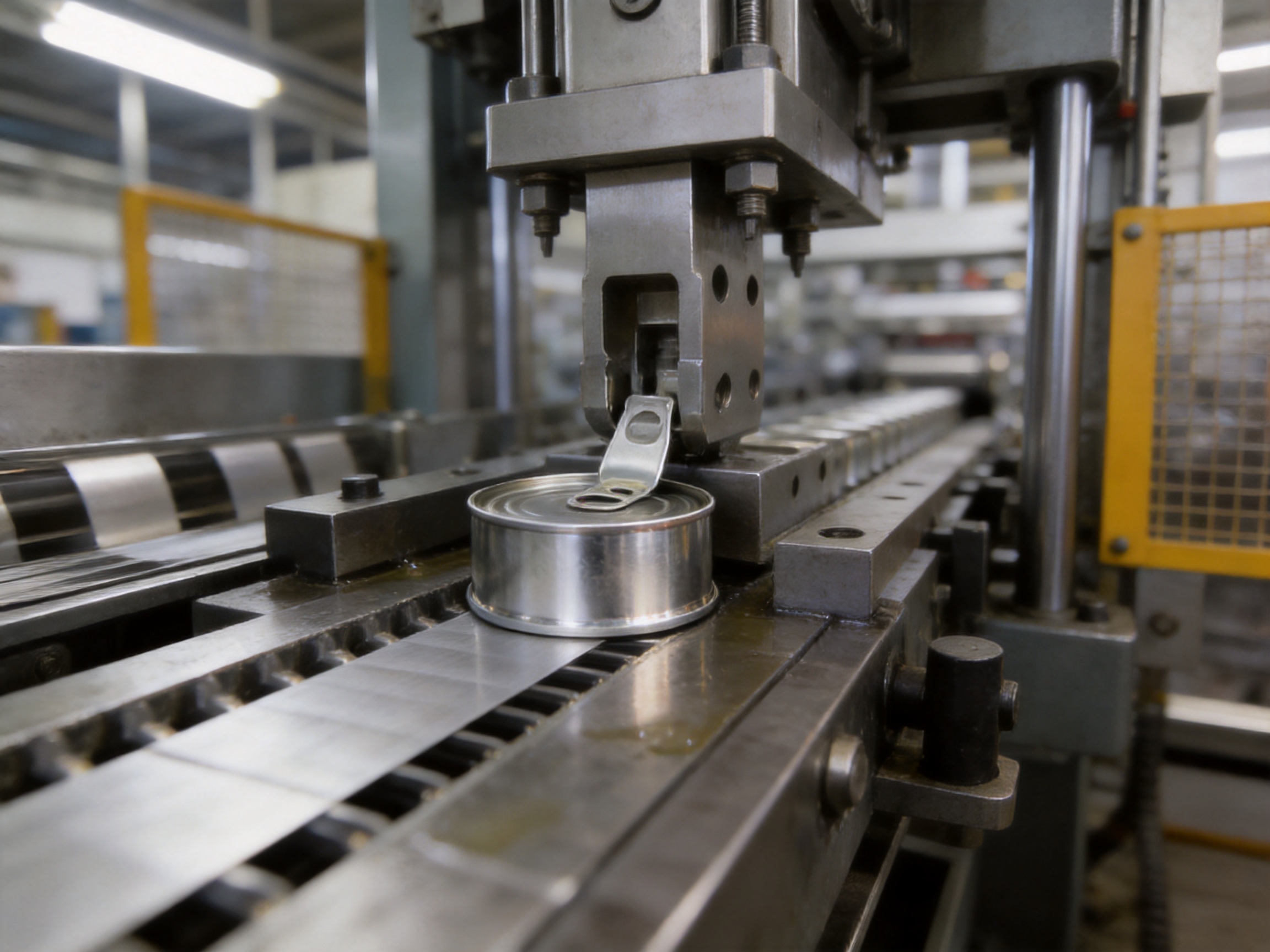
Two important manufacturing processes contribute to the performance of the Conversion Press Tab Die (Bulk): precision vacuum heat treatment and nano-level grinding. These processes are not simply cosmetic finishing steps. They directly affect hardness, wear behavior, friction, surface quality, and operating stability.
Heat treatment changes the physical and mechanical properties of the alloy. The component is heated and cooled according to a controlled process so that the material develops the desired hardness and internal structure. Vacuum treatment reduces exposure to oxygen and helps limit oxidation, discoloration, and surface contamination during heating.
For precision tooling, process control is especially important. Uneven heating or cooling can create distortion, residual stress, or inconsistent hardness. These defects may not be obvious during a simple visual inspection, but they can reduce service life once the die enters high-speed production.
Precision vacuum heat treatment offers several practical benefits:
• It improves the hardness and wear resistance of the working material.
• It helps reduce oxidation and unwanted surface reactions during processing.
• It supports more uniform material properties throughout the die.
• It helps control distortion and preserve dimensional accuracy.
• It contributes to improved fatigue resistance under repeated press loading.
• It creates a stable foundation for subsequent precision grinding.
The result is a die body with a more reliable balance between hardness and toughness. This balance is necessary for a component that must endure both impact and sliding contact.
After heat treatment, the die is subjected to highly accurate grinding. Nano-level grinding refers to a very fine finishing process capable of producing an exceptionally smooth and controlled surface. The purpose is to remove microscopic irregularities, achieve the required profile, and reduce resistance at the metal contact interface.
A smoother die surface provides several advantages. First, it reduces friction during the forming stroke. Lower friction can decrease heat generation and reduce the force required for material movement. Second, it helps prevent small surface defects from being transferred to the metal. Third, it limits the locations where particles, lubricants, or debris can accumulate. Fourth, it supports more consistent release of the formed component after each press cycle.
The coefficient of friction is a significant factor in high-speed forming. When friction is excessive, the press may consume more energy and generate more heat. Heat can affect lubrication, material behavior, and dimensional stability. By refining the working surface, nano-level grinding helps create a more favorable operating environment.
Heat treatment and grinding provide complementary benefits. Heat treatment strengthens the material beneath the surface, while grinding refines the surface that directly contacts the metal. A hard die with a poor surface finish may still cause scratching or unstable forming. A smooth die made from insufficiently durable material may wear quickly. The combination of both processes is therefore more effective than relying on either one alone.
This integrated manufacturing approach is one of the product’s main technical strengths. It supports stable tooling performance from the internal material structure to the final working surface.
The word “bulk” in the product name reflects an important supply and maintenance concept. The die assembly is provided in a form that allows factories to purchase and stock multiple units or selected quantities for their production requirements. This is particularly useful for plants operating several conversion presses or multiple workstations with similar tooling configurations.
Traditional maintenance can become expensive when an entire die set must be replaced even though only one component has suffered wear. Complete die sets are often large, costly, and time-consuming to remove and reinstall. Replacing the entire assembly may also require a long recalibration process.
With a modular bulk-supplied die arrangement, the factory can identify the worn station or component and replace it selectively. The remaining tooling can continue in service if it is still within acceptable condition. This lowers spare-parts expenditure and makes maintenance more targeted.
Unplanned downtime has a direct effect on production output. When a conversion press stops, upstream and downstream equipment may also need to pause. Operators may have to remove guards, disassemble tooling, inspect components, clean the work area, install replacements, and restart the line. Each additional step increases lost production time.
Keeping bulk replacement units in inventory allows maintenance personnel to respond quickly. Instead of waiting for a complete die assembly to arrive, the factory can use a prepared replacement part. This shortens the interval between fault identification and production restart.
Bulk supply also supports preventive maintenance. A factory can monitor die wear, establish replacement intervals, and keep a controlled stock of critical components. Planned replacement during scheduled maintenance is generally more efficient than emergency replacement after a failure.
Maintenance planning becomes easier when replacement units have consistent dimensions and manufacturing quality. Standardized parts can be inspected, labeled, and stored according to station or machine type. This helps technicians reduce searching time and avoid installing unsuitable components.
Large can-making facilities may operate several production lines for different container sizes or product categories. A bulk supply arrangement can help these facilities maintain common spare-part strategies. Depending on tooling specifications, compatible die units may be allocated across lines, or dedicated stock may be prepared for each press.
This flexibility is useful for factories producing food cans, beverage ends, aerosol components, chemical containers, and other metal packaging products. It enables the tooling inventory to be managed as part of a wider production system rather than as isolated machine accessories.
Many die products may appear similar when viewed only from the outside. However, differences in material, heat treatment, machining precision, inspection, and supply support can strongly influence their performance. The Conversion Press Tab Die (Bulk) offers several advantages over conventional tooling that uses less controlled manufacturing methods or non-modular replacement practices.
The combination of a high-hardness alloy and controlled heat treatment improves resistance to wear and fatigue. A longer working life means fewer replacement events over the operating life of the press. This may reduce direct tooling expenditure as well as indirect costs related to maintenance labor and lost production.
Precision machining and nano-level grinding help maintain the designed tab profile. Consistent tooling geometry supports stable product dimensions and reduces variation between batches. This is important for automated packaging lines, where small dimensional differences can affect feeding, stacking, sealing, or opening performance.
Low-friction working surfaces help reduce scratching and deformation of the metal. This is a valuable advantage when producing visible lids or ends with strict appearance requirements. Reduced surface damage can also lower the number of products rejected during visual inspection.
Friction is converted into heat during sliding contact. Excessive heat can degrade lubricant performance and accelerate tool wear. The finely finished surface of the die helps reduce frictional heat, while the material structure provides a stable base for high-speed operation. Better heat management contributes to more consistent production conditions.
The bulk and modular supply concept allows factories to replace individual units rather than complete assemblies whenever appropriate. This can reduce maintenance time and simplify spare-parts management. It also gives plant managers greater control over the timing and scope of repairs.
Purchase price is only one part of tooling cost. A die that appears inexpensive may become costly if it wears rapidly, damages metal, causes frequent adjustments, or requires long replacement shutdowns. The total cost of ownership includes service life, maintenance frequency, downtime, rejected products, energy consumption, and inventory requirements.
By addressing these factors, the Conversion Press Tab Die (Bulk) can provide a more economical long-term solution than lower-quality dies, even when the initial purchase price is not the lowest available.
| Evaluation Factor | Conventional Low-Control Tooling | Conversion Press Tab Die (Bulk) | Production Benefit |
|---|---|---|---|
| Base material | May use general-purpose steel with inconsistent properties | High-hardness industrial alloy selected for press applications | Improved wear and fatigue resistance |
| Heat treatment | May have limited process control | Precision vacuum heat treatment | More stable hardness and dimensional behavior |
| Surface finish | Standard grinding or uneven finishing | Nano-level grinding for refined working surfaces | Lower friction and reduced metal marking |
| Replacement method | Complete die set may need replacement | Bulk modular units support selective replacement | Lower maintenance cost and shorter downtime |
| High-speed suitability | Performance may decline as speed increases | Designed for repeated high-frequency press strokes | More stable output during extended operation |
| Inventory flexibility | Limited ability to stock individual parts | Multiple replacement units can be stocked by station | Faster response to wear or unexpected damage |
| Long-term value | May generate hidden costs through wear and rejects | Designed to support lower total operating cost | Improved production efficiency and OEE |
The Conversion Press Tab Die (Bulk) is suitable for factories that use conversion presses as part of metal container or metal end production. Its primary role is associated with tab-forming operations, but its value extends to the overall performance of the connected production line.
Food cans require reliable lids and ends that can withstand filling, sealing, sterilization, transportation, and storage. The tab area must be formed accurately so that it remains functional and visually acceptable. Stable die performance helps manufacturers maintain consistent production quality across large volumes.
Food packaging plants often operate under strict hygiene and quality requirements. Although the die itself is not a food ingredient or filling component, its ability to reduce burrs, scratches, and deformed parts can support better control of the finished packaging process.
Beverage can production is characterized by high speed, large quantities, and strict dimensional requirements. Ends and tabs must be compatible with automated filling and seaming equipment. A small variation in tab location or shape may affect handling, stacking, or consumer opening performance.
Because beverage lines frequently run continuously, tooling durability and rapid maintenance are especially important. Bulk die supply allows operators to keep replacement components ready and minimize the effect of wear-related interruptions.
Aerosol packaging requires accurate metal forming and dependable component strength. The dies used in aerosol-related production must maintain their profile under repeated loads and support clean, consistent forming. Depending on the specific press configuration, tab-related or end-forming tooling may be used alongside other dies for cones, domes, ends, and container components.
Chemical containers and industrial metal tanks may use thicker or specially coated materials. These materials can place significant loads on forming tools. A robust die with high wear resistance can help manufacturers maintain production stability when processing demanding material grades.
Two-piece can production uses different forming principles from conventional three-piece cans, but precision tooling remains essential. The Conversion Press Tab Die (Bulk) can serve as part of a broader tooling strategy where accurate end or component formation is required. Its modular replacement characteristics are useful wherever the line depends on repeatable high-speed press work.
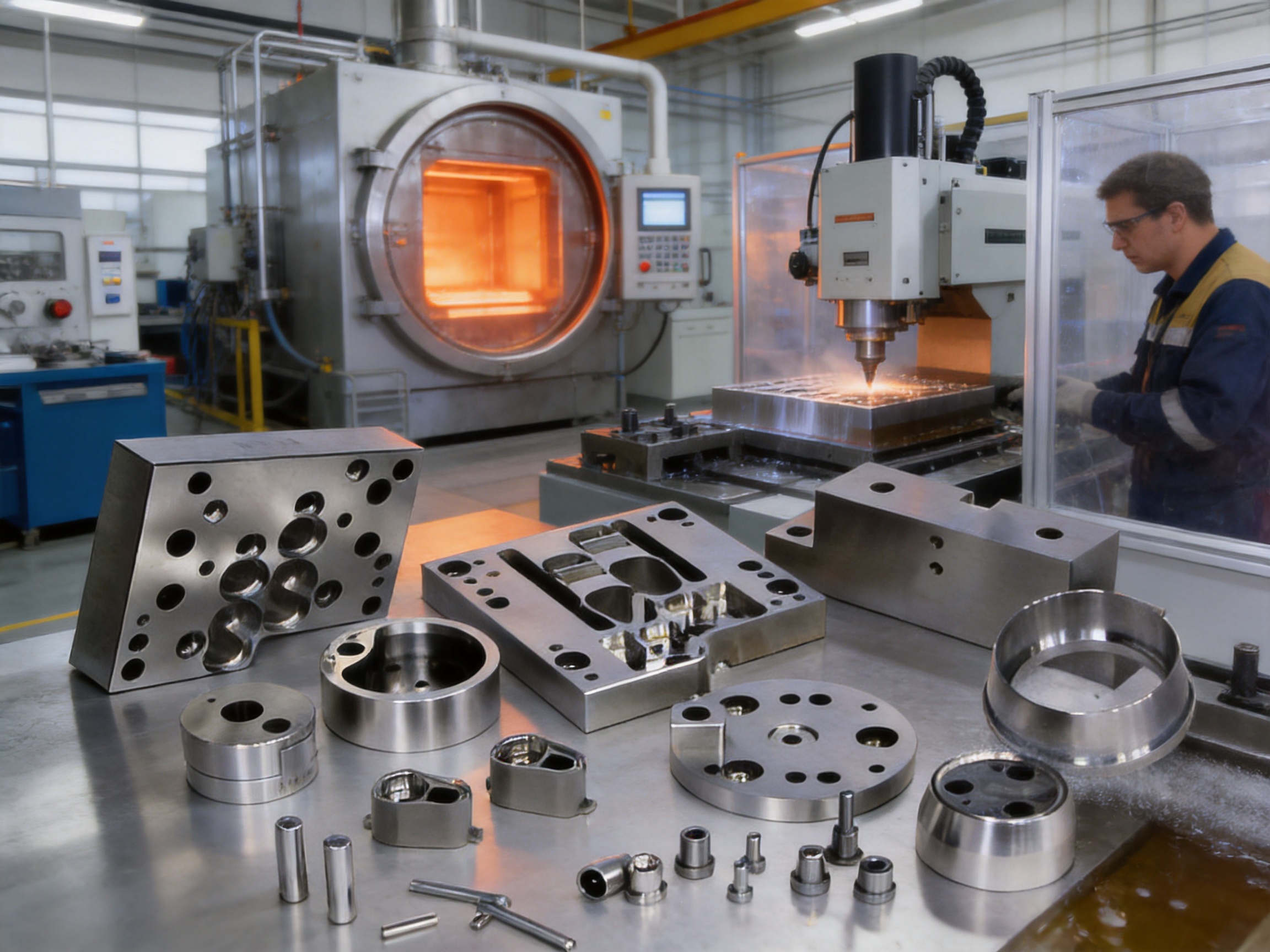
The performance of a die is closely connected to the capabilities of the manufacturer. Advanced equipment, experienced engineers, process control, and knowledge of actual can-making conditions all influence the final result. Zhejiang Golden Eagle Food Machinery Co., Ltd. has specialized in can-making machinery and can-making molds for more than four decades.
The company was established in 1978 and was formerly associated with Zhejiang Food Machinery Factory and Zhoushan Mold Factory. Over its development, it has built experience in both complete can-making systems and individual mold components. This combination is valuable because tooling designers can understand how a die performs within a complete production line rather than treating it as an isolated part.
The company has a workforce of more than 350 trained personnel, including experienced design and development engineers. Such a team supports the complete product cycle, from technical planning and material selection to machining, inspection, delivery, and after-sales assistance.
Engineering experience is especially important for conversion press tooling because the die must match the press structure, stroke characteristics, material thickness, production speed, and product geometry. Practical experience helps engineers identify possible sources of wear, vibration, friction, and misalignment before they become production problems.
Manufacturing precision dies requires more than basic mechanical processing. The company uses CNC high-precision machining equipment together with complete mechanical machining facilities. CNC processing improves repeatability and allows complex profiles to be produced according to controlled digital specifications.
Precision machining also supports the production of replacement components with consistent dimensions. When a factory orders bulk die units, dimensional consistency between batches is essential. Replacement parts must fit the existing press and tooling arrangement without excessive manual modification.
The company’s product design principles are similar to those associated with established European can-making equipment manufacturers, including KRUPP, SOUDRONIC, and ALFONS-HAAR. At the same time, the company has combined these design principles with its own production experience and continuous product development.
This practical approach is important because a die that performs well in theory may require adjustment when exposed to actual factory conditions. Material variation, lubrication practices, operator routines, press vibration, and maintenance schedules all affect tool performance. Experience gained from production practice helps the manufacturer refine the design for real-world use.
The company has been certified according to the ISO9001 quality management system and ISO14001 environmental management system. ISO9001 supports systematic control of product quality, documentation, process consistency, and corrective action. ISO14001 reflects attention to environmental management, resource use, waste control, and responsible production practices.
For industrial buyers, these management systems provide an additional indication that manufacturing is organized according to documented procedures rather than relying only on individual operator experience. Consistent management is particularly valuable for bulk orders and repeat purchases.
More than 10,000 pieces of can and can-lid equipment have been produced by the company. Its products are used by can manufacturers and canning factories in Europe, Asia, Africa, North America, South America, and Oceania. This international experience exposes the company to different production requirements, technical standards, material specifications, and operating environments.
A manufacturer with broad delivery experience is better positioned to support customers that require export-quality packaging machinery or tooling. It also demonstrates the ability to coordinate production, inspection, packaging, and shipment for customers located far from the manufacturing facility.
Quality control for a conversion press die should cover the complete manufacturing sequence. Final visual inspection alone is not sufficient because many important properties, such as internal hardness and dimensional stability, are established during earlier stages.
The alloy should be selected according to the expected press load, material type, production speed, and service-life requirements. Material verification helps ensure that the die is made from the specified grade and that the supplied batch is traceable.
Critical dimensions include the die profile, mounting interfaces, guide relationships, working clearances, and alignment features. These dimensions should be checked with suitable precision instruments. Consistent dimensional inspection reduces the risk of installation problems and helps ensure compatibility with existing tooling.
Hardness testing verifies whether the heat treatment produced the intended material condition. Excessive hardness may increase brittleness, while insufficient hardness may shorten service life. Inspection procedures should therefore confirm that the die achieves an appropriate balance of hardness and toughness.
The working surface should be checked for scratches, grinding marks, pits, burrs, and other irregularities. A fine and uniform surface finish is important for reducing friction and preventing damage to the metal strip or component.
Where appropriate, sample fitting or functional verification can confirm that the die works correctly with the associated press components. This may include checking clearance, movement, contact pattern, and forming results. Such verification is especially important for bulk orders intended for different stations or machine configurations.
Even a high-quality die requires correct installation and operation. Improper setup can produce abnormal wear and may reduce the advantages of the material and surface treatment.
Before installation, users should verify the press model, tooling dimensions, product specification, material thickness, stroke rate, and mounting arrangement. The die should be matched to the correct workstation and production application.
Mounting surfaces, guide areas, and adjacent tooling should be cleaned before installation. Metal chips, dust, old lubricant, or other particles can prevent accurate seating and create uneven loading. Clean contact surfaces help preserve alignment and reduce the possibility of premature wear.
The die must be aligned with the punch and associated forming components. Incorrect alignment may cause one side of the die to carry more load than the other. It can also create scraping, excessive friction, and uneven tab geometry. Clearance should be checked according to the press and material requirements.
Lubrication helps control friction and heat during operation. The lubricant must be suitable for the metal material, production speed, and process requirements. Excessive lubricant can create contamination or affect downstream processes, while insufficient lubricant can accelerate wear.
After installation, the press should be started at a controlled speed. Operators should inspect the first production pieces for tab position, edge condition, surface marks, deformation, and overall dimensional consistency. If the results are satisfactory, the machine can gradually return to normal operating speed.
The first operating period after replacement is an important observation stage. Operators should listen for unusual sounds, watch for vibration, check temperature, and examine the formed parts. Early detection of a setup issue can prevent serious damage to the die and connected equipment.
Regular maintenance helps factories obtain the full value of the Conversion Press Tab Die (Bulk). Maintenance should not be limited to replacing a component after failure. A planned program can identify gradual wear and allow parts to be changed during scheduled downtime.
Metal particles and residue should be removed from the die and surrounding area. Accumulated debris can act as an abrasive and may interfere with smooth movement. Cleaning also makes it easier for technicians to observe cracks, burrs, discoloration, or unusual contact marks.
Inspection should focus on the working profile, cutting or forming edges, contact areas, mounting interfaces, and guide surfaces. Wear should be compared with approved limits rather than judged only by appearance. A component that still looks usable may already be affecting product consistency.
Lubrication systems should be checked for correct flow, cleanliness, and application location. Changes in lubricant condition can affect friction and heat. Operators should also verify that the lubricant is compatible with the metal material and downstream cleaning or coating procedures.
Factories should record installation dates, production quantities, operating speeds, maintenance events, and observed defects. These records help identify service-life patterns and support better spare-parts planning. When bulk units are stocked, each part can be labeled with its station, batch, installation date, and inspection status.
When a die unit approaches its wear limit, it should be replaced before it causes secondary damage. Continuing to operate a severely worn component may overload the punch, guide system, or neighboring die sections. Selective replacement is most effective when it is performed at the right time and accompanied by an inspection of related tooling.
Overall equipment effectiveness, commonly known as OEE, is influenced by availability, performance, and quality. Tooling has a direct or indirect effect on all three factors.
Availability improves when die replacement is fast and planned. Bulk supply reduces the time needed to obtain replacement units, while modular construction limits the scope of maintenance work. Performance improves when the die supports stable high-speed operation with low friction and reduced heat. Quality improves when the die maintains accurate tab geometry and minimizes scratches, deformation, and dimensional variation.
These benefits can reinforce one another. A die that wears slowly is less likely to create quality defects. A die that creates fewer defects requires fewer stoppages for adjustment. A die that can be replaced selectively reduces the duration of planned and unplanned maintenance. Together, these effects help the production line operate closer to its intended capacity.
For factories producing millions of cans or lids, even a small improvement in uptime or rejection rate can have a significant financial impact. The value of the Conversion Press Tab Die (Bulk) should therefore be evaluated in relation to the complete production line, not only as an individual metal component.
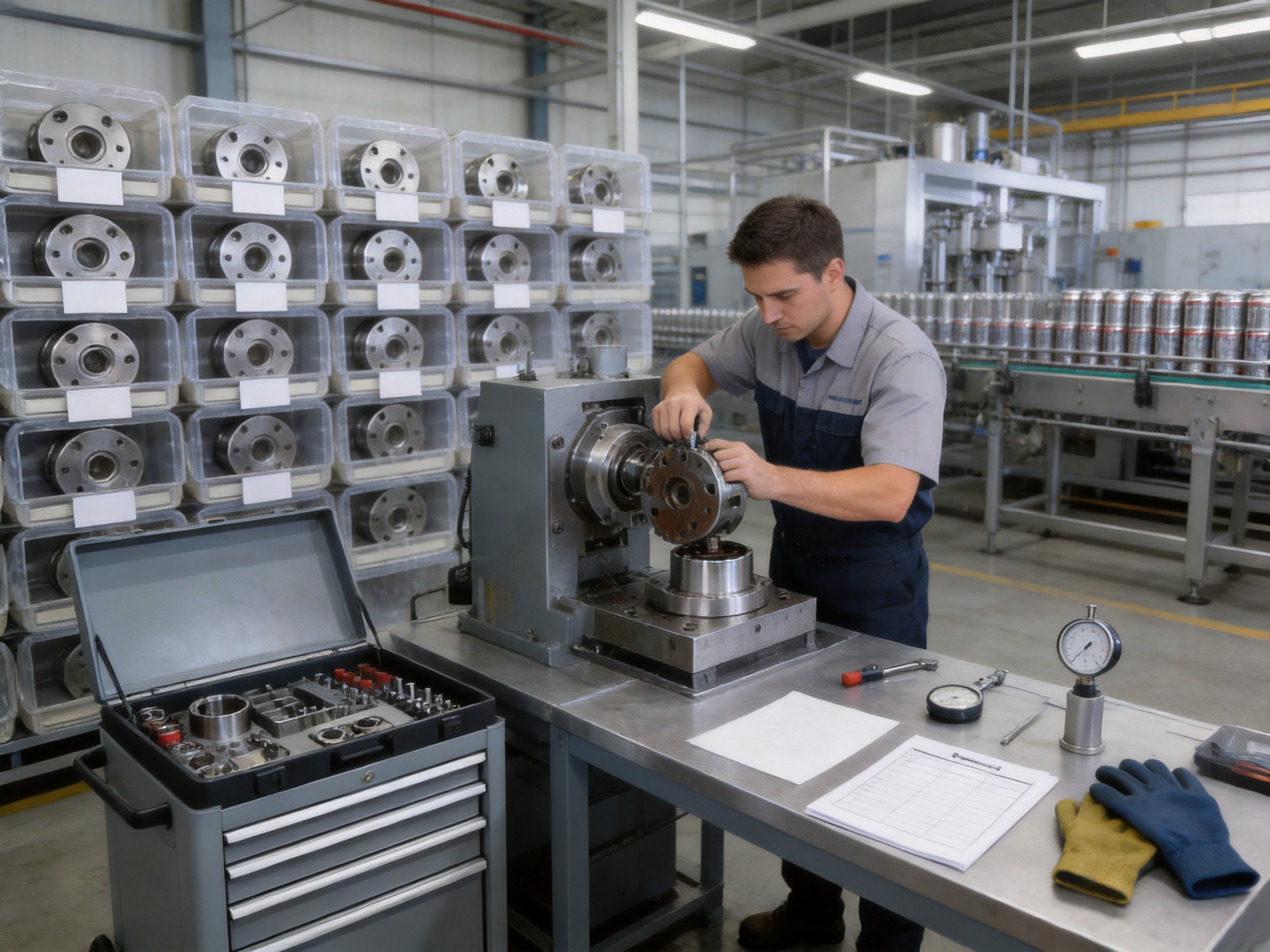
Before ordering a conversion press tab die, buyers should provide sufficient technical information. The correct specification depends on the machine, product, material, and operating conditions.
Important information may include the conversion press model, workstation location, part drawing, material type, material thickness, production speed, tab dimensions, mounting dimensions, and existing tooling references. Photographs of the installed die and press interface may also help engineers understand the application.
Different packaging products may require different tab shapes, forming depths, edge profiles, or surface treatments. Food cans, beverage ends, aerosol components, and chemical containers may not use identical tooling. Accurate product information helps the manufacturer select the appropriate design and material condition.
The ideal bulk quantity depends on the number of presses, expected production volume, historical wear rate, maintenance policy, and delivery lead time. Some factories may require only a small emergency stock, while large plants may need dedicated inventories for several production lines.
Buyers should balance inventory cost with the risk of production interruption. A well-planned stock of critical die units can provide protection against unexpected wear, accidental damage, or urgent customer orders.
Clear communication between the factory and tooling supplier is important during the design and ordering process. Questions about tolerances, heat treatment, surface finish, replacement compatibility, packaging, inspection documentation, and installation should be addressed before production begins.
Tooling performance depends not only on the supplied product but also on installation, commissioning, operation, and maintenance. The manufacturer provides after-sales support that may include installation assistance, commissioning, technical guidance, operational training, and parts supply.
Installation support can help customers verify press compatibility and setup conditions. Commissioning assistance can help confirm that the die produces acceptable parts at the required operating speed. Technical guidance can help operators establish maintenance routines and identify early signs of abnormal wear.
Operational training is valuable for factories with new personnel or new production lines. Operators who understand alignment, lubrication, inspection, and safe handling are more likely to protect the tooling and maintain stable production.
Rapid parts supply is another important service advantage. In an international production environment, the availability of replacement components can influence the total cost of a tooling problem. A supplier that can coordinate spare-part production and delivery efficiently helps reduce the risk of extended downtime.
The manufacturer’s product range covers more than individual conversion press components. Its capabilities include food and beverage can-making machines, tin can lid and end-making machines, duplex slitting and cutting machines, milk powder can-making machines, easy-open-end lid machinery, automatic welding machines, aerosol cone and dome equipment, chemical tank-making machines, automatic feeding systems, aerosol can-making machines, two-piece can-making machines, and molds.
This broad range allows customers to discuss tooling requirements with a company that understands multiple sections of the can-making process. A die may affect feeding, forming, welding, sealing, stacking, and inspection operations. A supplier with complete-line knowledge can better consider these relationships when recommending a tooling solution.
The company also supplies complete production lines for food cans, beverage cans, can lids, chemical tanks, aerosol containers, two-piece cans, and pop cans. This experience provides an engineering foundation for supporting both individual replacement tooling and larger production projects.
A spare die should not be viewed as a passive warehouse item. It is a production continuity tool. When a critical forming component is available in stock, the factory gains the ability to respond to maintenance needs immediately. This improves scheduling flexibility and reduces dependence on emergency procurement.
The bulk format is particularly strategic for plants with high production volumes. Such plants cannot always wait for a complete die set to be manufactured and shipped. A selected stock of ready-to-install units can protect the line from unexpected events.
Bulk purchasing may also improve standardization. When replacement parts are supplied from a consistent manufacturing source, the factory can reduce variation between old and new tooling. Standardized replacement units simplify technician training, inspection procedures, and maintenance documentation.
In addition, bulk supply can support production expansion. When a factory adds another press or increases output, it may already have suitable replacement units available. This can help shorten the preparation period for a new line or additional shift.
Tooling efficiency has an environmental dimension as well as a financial one. A longer-lasting die requires fewer replacement parts over time. Fewer replacements can reduce material consumption, machining demand, packaging requirements, and transportation activity.
Reduced friction may also contribute to lower energy consumption during press operation, although the actual effect depends on the machine, production speed, lubricant condition, and overall process design. More stable forming can reduce scrap and the resources used to produce rejected components.
The ISO14001 environmental management system provides a structured framework for controlling environmental aspects of manufacturing. For customers seeking suppliers with documented environmental practices, this certification is an additional strength.
The actual service life and performance of any conversion press die depend on several factors. These include the processed metal grade, material thickness, press speed, stroke frequency, lubrication, alignment, cleanliness, maintenance quality, and the design of the complete tooling system.
The Conversion Press Tab Die (Bulk) is engineered to provide a strong foundation for demanding applications, but correct use remains essential. No die can compensate indefinitely for incorrect clearance, poor lubrication, excessive vibration, contaminated material, or improper installation.
Users should therefore evaluate performance through measurable indicators such as product rejection rate, tab dimensional consistency, surface condition, press noise, operating temperature, maintenance frequency, and die wear. These indicators provide a more reliable assessment than service life estimates based only on general assumptions.
A Conversion Press Tab Die is a precision tooling component used in a conversion press to form or support the tab area of a metal lid, end, or related packaging component. It controls the shape and position of the metal during a high-speed forming operation.
“Bulk” indicates that the die units are supplied in quantities suitable for spare-parts stocking, multiple workstations, or production-line maintenance. The format allows factories to purchase and replace selected units rather than always ordering a complete die set.
The die uses a high-hardness industrial alloy selected for resistance to wear, fatigue, and repeated impact. The specific material grade should be confirmed according to the press model, product design, material thickness, and operating conditions.
Vacuum heat treatment helps develop the required hardness and internal structure while reducing oxidation and contamination during heating. It also supports dimensional stability and fatigue resistance, both of which are important in high-frequency press tooling.
Nano-level grinding refines the working surface and helps achieve the required profile and smoothness. A highly finished surface can reduce friction, heat generation, scratches, and deformation during metal forming.
No. Die compatibility depends on the press model, mounting dimensions, workstation configuration, product design, material specifications, and forming process. Buyers should provide technical drawings or machine information before ordering.
Modular replacement allows technicians to change only the worn or damaged unit instead of removing and replacing the entire die assembly. If spare units are kept in stock, the replacement can be completed more quickly during scheduled or emergency maintenance.
It can be suitable for beverage-related metal end production when its specifications match the conversion press and product requirements. Beverage lines benefit from durable tooling because they often operate at high speed and large volume.
It may be used in food can production where the press and lid design require a compatible tab-forming die. The complete application should be reviewed to confirm dimensions, material, forming conditions, and quality requirements.
Useful information includes the press manufacturer and model, part drawing, tab dimensions, material type and thickness, production speed, mounting dimensions, required quantity, and photographs of the current tooling. This information helps engineers recommend the correct specification.
Maintenance should include regular cleaning, lubrication checks, alignment inspection, surface examination, wear measurement, and timely replacement. Operators should also record production quantity and maintenance history to identify service-life trends.
The company provides services that may include installation, commissioning, technical guidance, operating training, and spare-parts supply. The exact support arrangement should be confirmed according to the project and customer requirements.
It can support OEE by reducing maintenance time, improving high-speed stability, lowering surface defects, and helping maintain consistent product quality. The actual improvement depends on the complete press setup and operating practices.
The Conversion Press Tab Die (Bulk) is a precision tooling solution developed for the demanding conditions of modern metal packaging production. Its high-hardness industrial alloy provides a durable foundation for repeated press impacts, while precision vacuum heat treatment improves material stability and fatigue performance. Nano-level grinding refines the working surfaces, reducing friction, heat, scratches, and deformation during forming.
Its bulk modular supply format provides an important operational advantage. Factories can stock replacement units, change only the worn components, reduce spare-parts expenditure, and shorten unplanned downtime. This approach is especially valuable for high-volume food can, beverage can, aerosol, chemical container, and specialized metal packaging lines.
The product is supported by a manufacturer with experience dating back to 1978, a workforce of more than 350 personnel, precision CNC machining capabilities, complete mechanical processing equipment, international delivery experience, and certified quality and environmental management systems. The company’s knowledge of both can-making machinery and can-making molds allows it to address tooling requirements within the context of complete production systems.
For factories seeking stable tab forming, longer tooling life, reduced maintenance disruption, and improved production efficiency, the Conversion Press Tab Die (Bulk) offers a practical and technically focused solution. Its value lies not only in the die’s material and surface quality but also in the modular maintenance strategy, manufacturing expertise, and technical support behind the product.
1. Industrial Press Tooling Principles: Materials, Heat Treatment, and Wear Resistance.
2. Metal Packaging Manufacturing Practices: Forming, Cutting, and Conversion Press Operations.
3. Precision Machining and Surface Finishing Guidelines for High-Speed Dies.
4. Quality Management Systems for Machinery and Tooling Manufacturing.
5. Environmental Management Principles for Industrial Equipment Production.
6. Maintenance Planning and Overall Equipment Effectiveness in Automated Production Lines.
7. Technical product information supplied for the Conversion Press Tab Die (Bulk).
8. Manufacturer background and production capability information supplied by Zhejiang Golden Eagle Food Machinery Co., Ltd.
Related Products

Founded in 1978, the company is one of the largest can-making machinery well-known companies at home and abroad.
Product Categories
Contact Information
Zhongshatou Shenjiamen Zhoushan Zhejiang China
+86-580-3056646

 English
 中文简体
中文简体
 русский
 عربى
عربى
 Español