2026-07-23
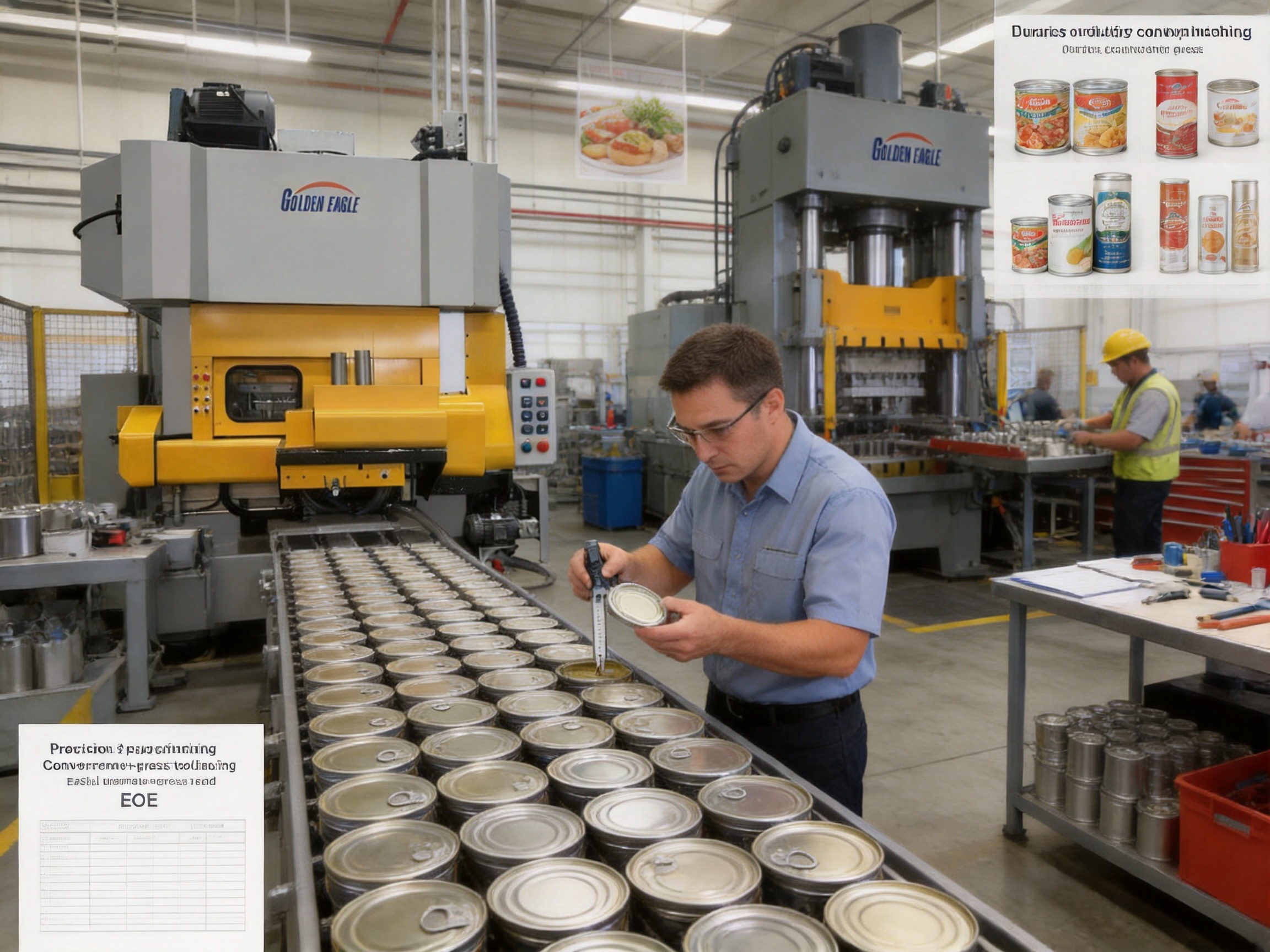
Easy-open ends, commonly known as EOE lids, are essential components of modern food cans, beverage cans, aerosol containers, and other metal packaging products. Although an EOE lid is compact, its production requires highly accurate forming, scoring, tab assembly, separation, feeding, and inspection operations. Every stage must be coordinated to ensure that the finished lid opens smoothly, remains secure during transportation, and meets the dimensional and safety requirements of the packaging industry.
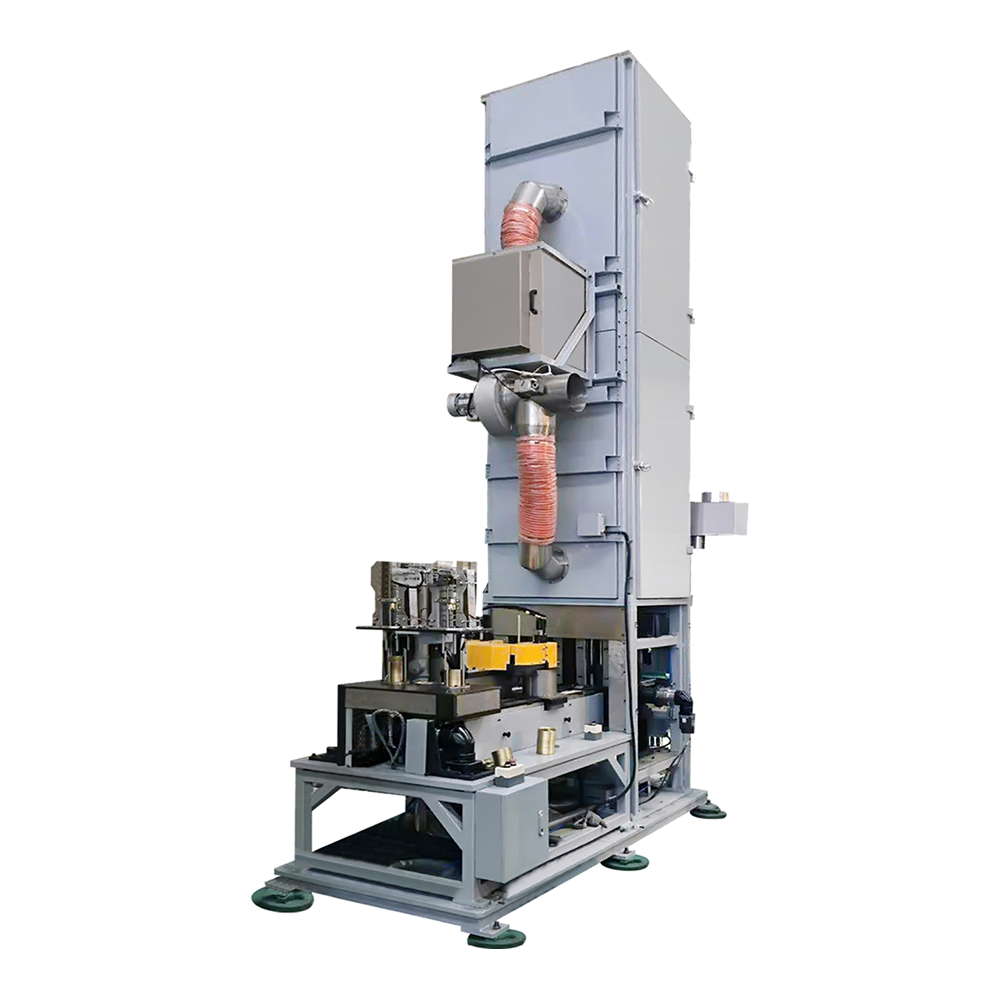
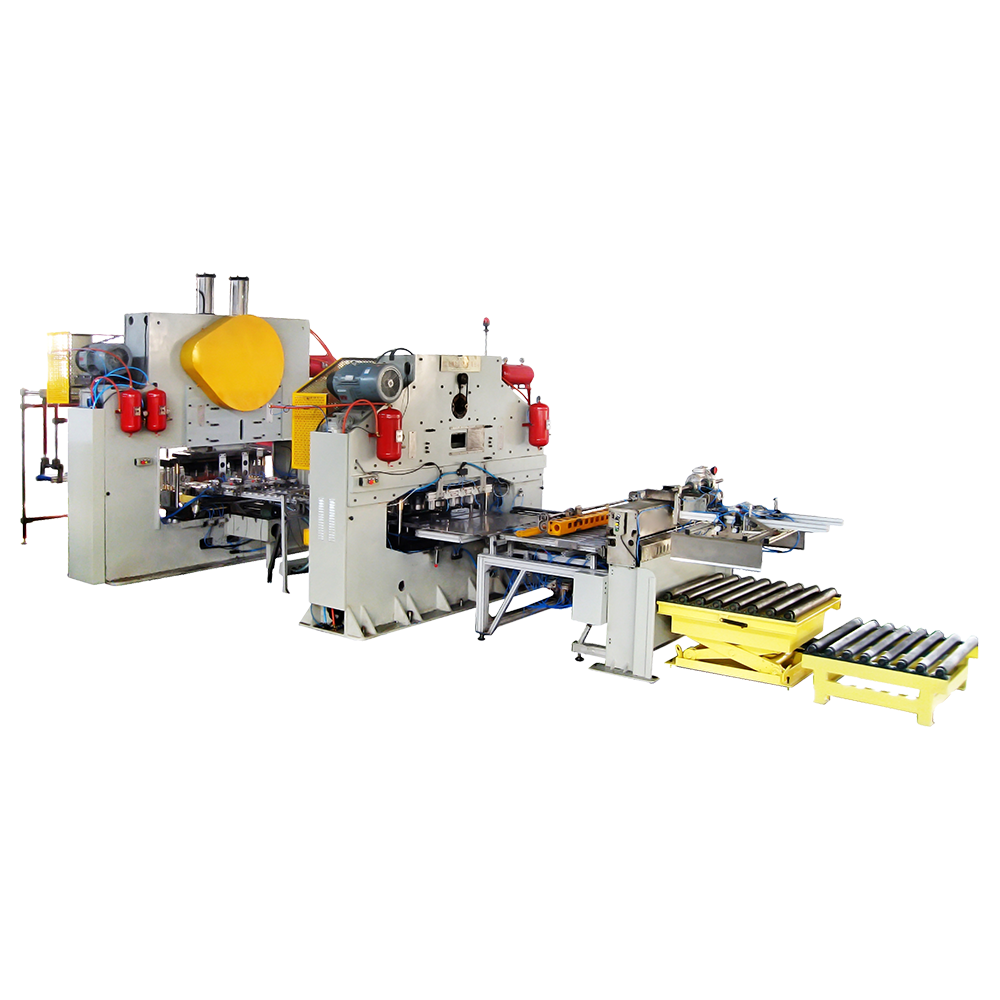
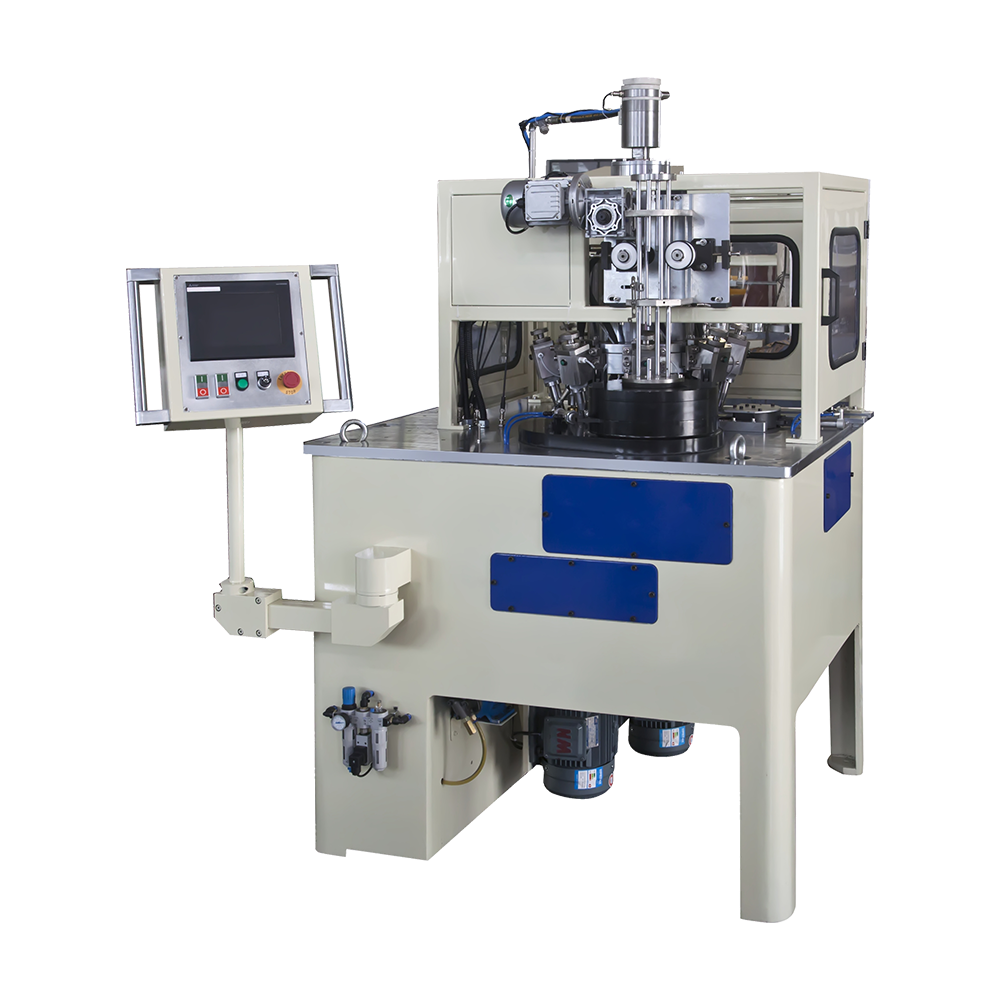
The conversion press is the central machine in this production process. It transforms pre-formed end shells and tab materials into completed easy-open ends through a series of synchronized operations. Its performance directly influences production capacity, material utilization, dimensional consistency, labor requirements, maintenance costs, and overall line efficiency. For manufacturers seeking to improve EOE lid output, selecting a reliable and accurately engineered conversion press is therefore a strategic investment rather than a simple equipment purchase.
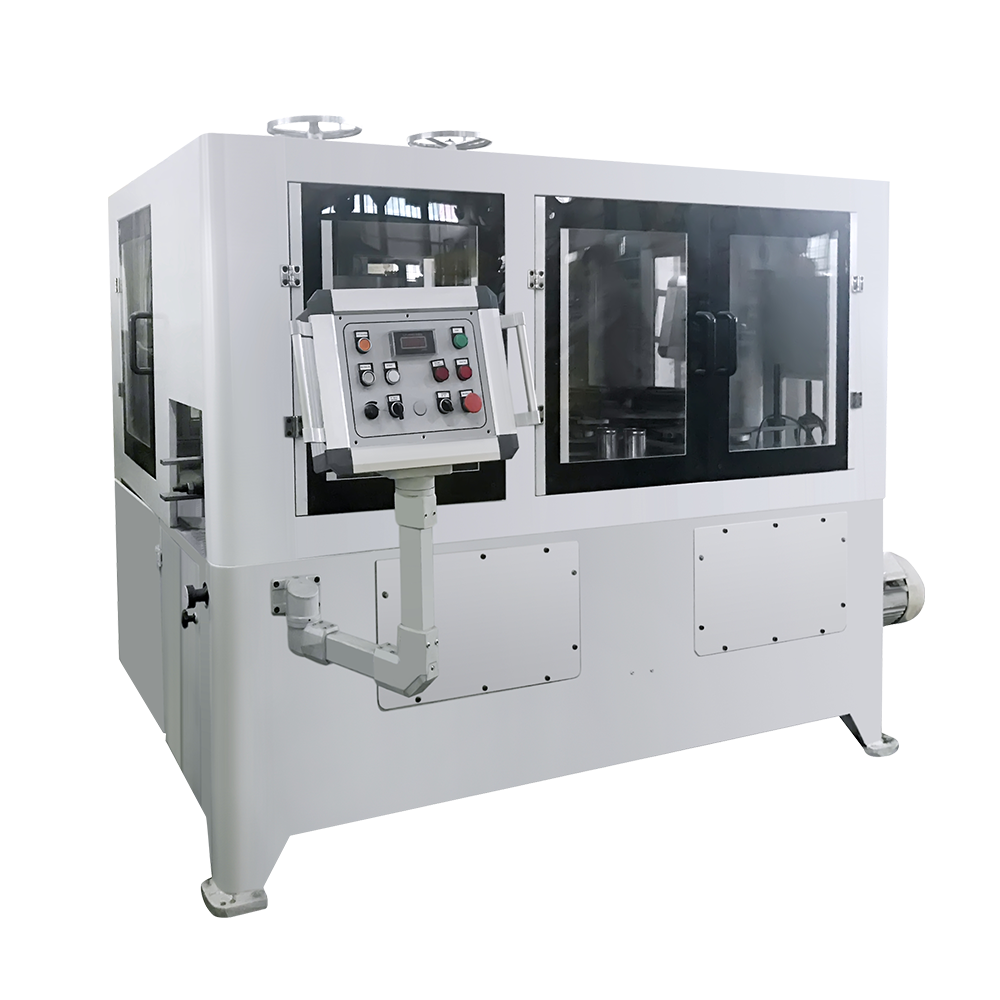
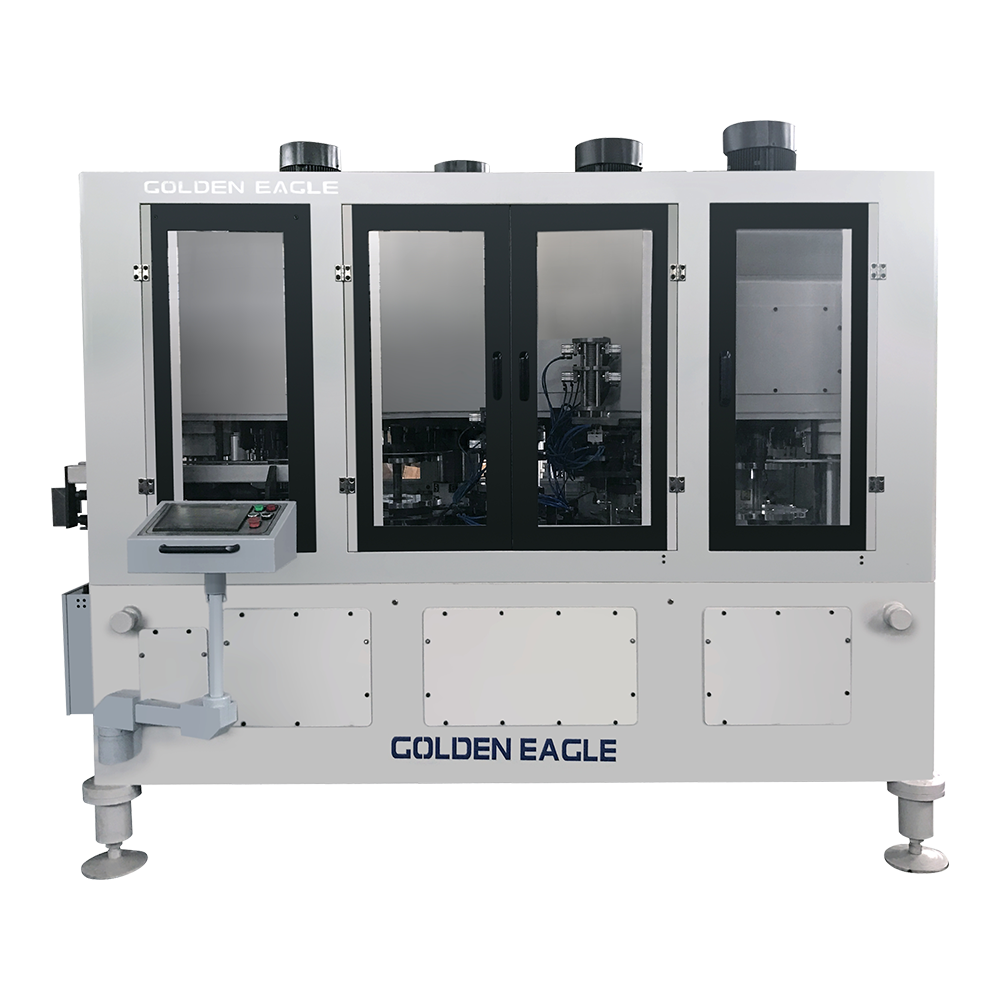
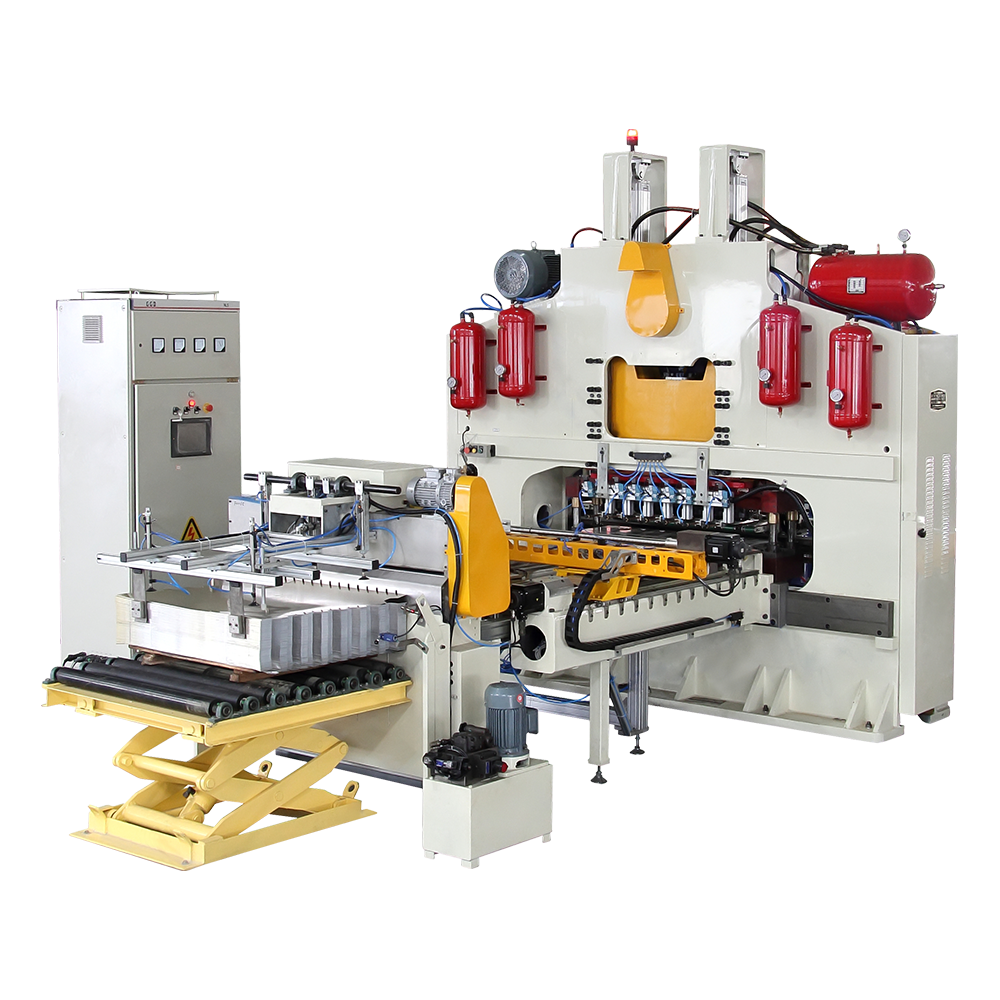
The conversion press supplied by Zhejiang Golden Eagle Food Machinery Co., Ltd. is designed for demanding EOE lid manufacturing applications. Based on customer requirements, the machine can be configured with a USA MINSTER press, a Taiwan INGYU press, or another suitable press platform. It can also be equipped with two, three, or four lanes, allowing manufacturers to select a configuration that matches their product specifications, factory layout, production volume, and investment plan.
With a tonnage range of 75 to 125 tons, a slide stroke range of 38.1 to 63.5 millimeters, and a production speed of 200 to 600 strokes per minute, this conversion press provides a flexible foundation for high-volume EOE lid production. Its multi-lane architecture, compact tab layout, integrated control systems, and comprehensive tooling design help manufacturers achieve reliable output while controlling raw material consumption and operational costs.
An EOE lid is manufactured from a metal end shell and a pull tab. The end shell generally includes a scored opening panel, a rivet area, and other formed features. The tab is attached to the shell through a controlled riveting or forming operation. The finished lid must satisfy strict requirements for opening force, sealing performance, pressure resistance, appearance, and dimensional accuracy.
A conversion press performs the operations required to convert the shell and tab components into a finished lid. Depending on the product design, the process may include tab forming, tab positioning, riveting, shaping, separation, feeding, transfer, and inspection. These operations must occur in a carefully controlled sequence. If the tab is displaced, if two sheets enter the tooling at the same time, or if a shell is missing from a station, the resulting product may be defective or the tooling may be damaged.
For this reason, the conversion press is more than a conventional stamping machine. It is an integrated production system combining a precision press, specialized dies, mechanical transmission, tab feeding, end separation, pneumatic and oil systems, vacuum assistance, electric controls, and multiple safety protection functions. The coordination of these subsystems determines the machine’s real production value.
The conversion press described in this article is engineered around that integrated concept. Instead of treating every component as an isolated unit, the design combines the press body, tooling, drive system, feeding system, detection system, and control cabinet into a coordinated platform. This approach supports stable operation and makes it easier to configure the equipment for different EOE lid formats and production requirements.
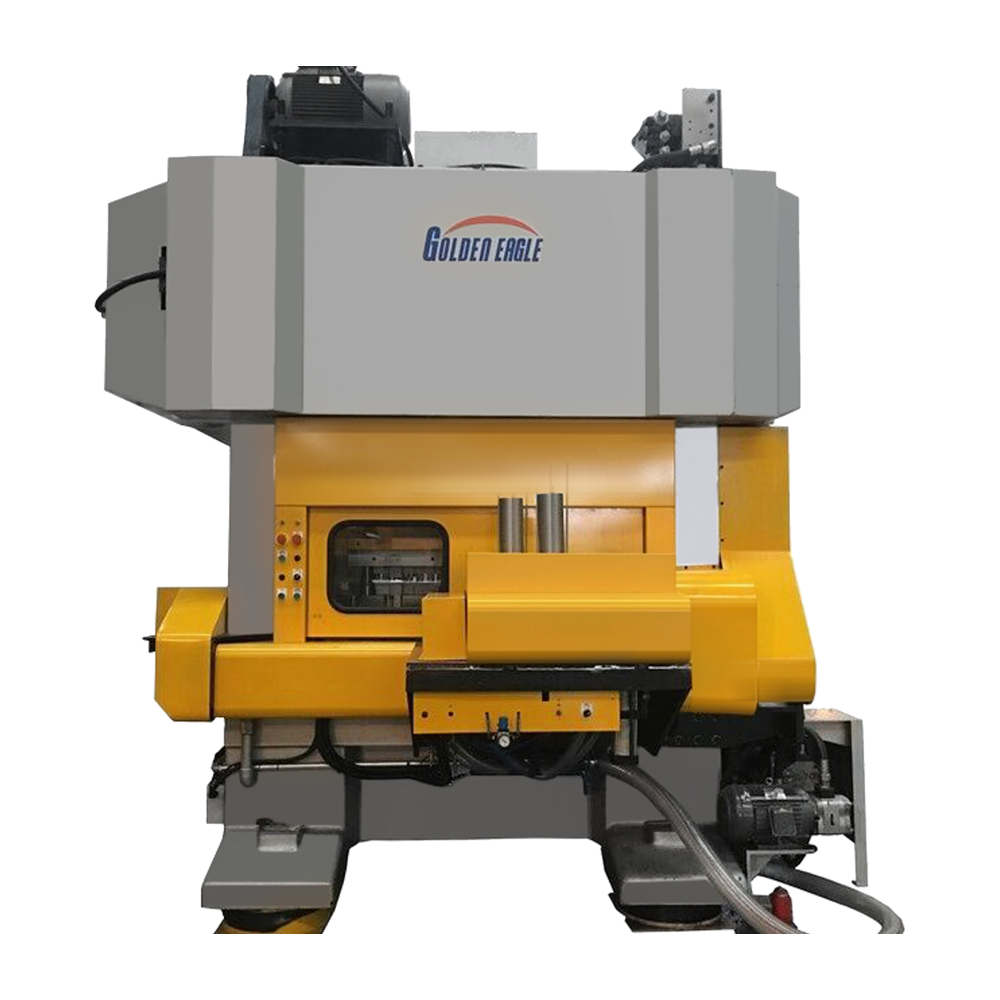
Conversion Press
The available machine parameters allow the conversion press to serve both medium-scale and high-volume can-making operations. The press can be selected according to the required forming force, product design, lane quantity, and production rate. The following table summarizes the principal specifications.
| Parameter | Specification | Production Significance |
|---|---|---|
| Tonnage | 75–125 tons | Provides forming force for different EOE lid designs and tooling arrangements. |
| Slide stroke | 38.1–63.5 mm | Allows the press movement to be matched with the selected conversion tooling. |
| Strokes per minute | 200–600 spm | Supports high-speed production when material, tooling, and operating conditions are suitable. |
| Number of lanes | 2–4 lanes | Enables multi-lane production and increases output from a compact installation footprint. |
| Main power | 38.5–46.5 kW | Provides the drive capacity required for the press and integrated operating systems. |
| Net weight | 20–30 tons | Reflects a robust machine structure designed for stable high-speed operation. |
The stated parameters are not intended to represent a single fixed configuration for every customer. Instead, they describe a configurable equipment range. A manufacturer producing a specific lid diameter or tab design can select the appropriate tooling, lane arrangement, press brand, and operating conditions. This flexibility is especially valuable for companies that produce several lid sizes or expect their product portfolio to expand.
The 75-to-125-ton press range provides a practical balance between forming capability and equipment investment. A properly selected press should have sufficient capacity for the required operations without unnecessary oversizing. The available range allows the machine to be adapted to different tooling loads and production targets while maintaining a stable operating margin.
The slide stroke range of 38.1 to 63.5 millimeters supports the movement requirements of different conversion systems. Stroke selection affects the relationship between die movement, forming depth, feeding timing, and cycle speed. By matching the stroke to the tooling design, the manufacturer can help reduce mechanical stress and maintain consistent forming behavior.
At up to 600 strokes per minute, the press is intended for demanding industrial production. Actual output depends on the number of lanes, lid design, material thickness, tooling configuration, press setting, operator skill, and line conditions. Nevertheless, the high-speed range gives manufacturers the opportunity to achieve substantial output without relying solely on a larger number of individual machines.
One of the most important advantages of the conversion press is its ability to operate with two, three, or four lanes. A multi-lane arrangement allows several streams of components to pass through the tooling during each press cycle. This increases production capacity while keeping the overall equipment arrangement relatively compact.
Compared with a single-lane machine, a multi-lane conversion press can provide higher output from the same basic press platform. This may reduce the number of machines required to meet a specific production target. Fewer machines can simplify factory planning, material handling, operator allocation, maintenance scheduling, and quality management.
The appropriate lane configuration depends on the customer’s production volume and product specifications. Two lanes may be suitable for a manufacturer seeking moderate capacity, product flexibility, or a lower initial investment. Three or four lanes may be more suitable for high-volume production where the priority is maximum output and efficient use of factory space.
Multi-lane production also requires accurate synchronization. Every lane must receive the correct component at the correct time, and the transfer system must maintain consistent spacing and orientation. The conversion press addresses this requirement through dedicated lane dies, coordinated mechanical transmission, tab feeding, end separation, and control functions. These systems work together to reduce the risk of lane interference and product misalignment.
Another benefit of multi-lane production is the potential for improved labor productivity. When the feeding and transfer operations are automated, one operator can supervise a larger amount of output than would normally be possible with multiple independent manual operations. The operator can focus on machine monitoring, quality checks, material replenishment, and preventive maintenance rather than repetitive component placement.
Material cost is a major consideration in metal packaging production. Tinplate and other metal materials represent a significant part of the total manufacturing cost of an EOE lid. Even a small improvement in material utilization can create meaningful savings when production volumes are high.
The conversion press uses a compact tab layout designed to make efficient use of tab material. A compact arrangement reduces unnecessary spacing and helps maximize the number of tabs obtained from the available strip or sheet. The exact layout depends on tab geometry, material width, tab orientation, tooling design, and the requirements of the finished lid.
Improved material utilization offers several advantages. It can reduce scrap generation, lower raw material consumption, decrease waste handling requirements, and support more predictable production costs. It may also contribute to a more sustainable manufacturing process by reducing the amount of metal that must be processed, transported, and recycled.
Material efficiency must not compromise product quality. The tab layout must preserve sufficient clearance for cutting, forming, feeding, and separation. Tooling must also maintain the required dimensional accuracy and edge quality. The conversion press is designed to balance these objectives by combining compact layout planning with specialized tab dies and stable transmission systems.
For manufacturers comparing equipment options, it is important to evaluate material utilization rather than focusing only on nominal press speed. A machine that operates quickly but produces excessive scrap may have a higher operating cost than a machine with a slightly lower nominal rate but better material efficiency and more stable quality. The compact tab layout is therefore a significant practical advantage of this conversion system.
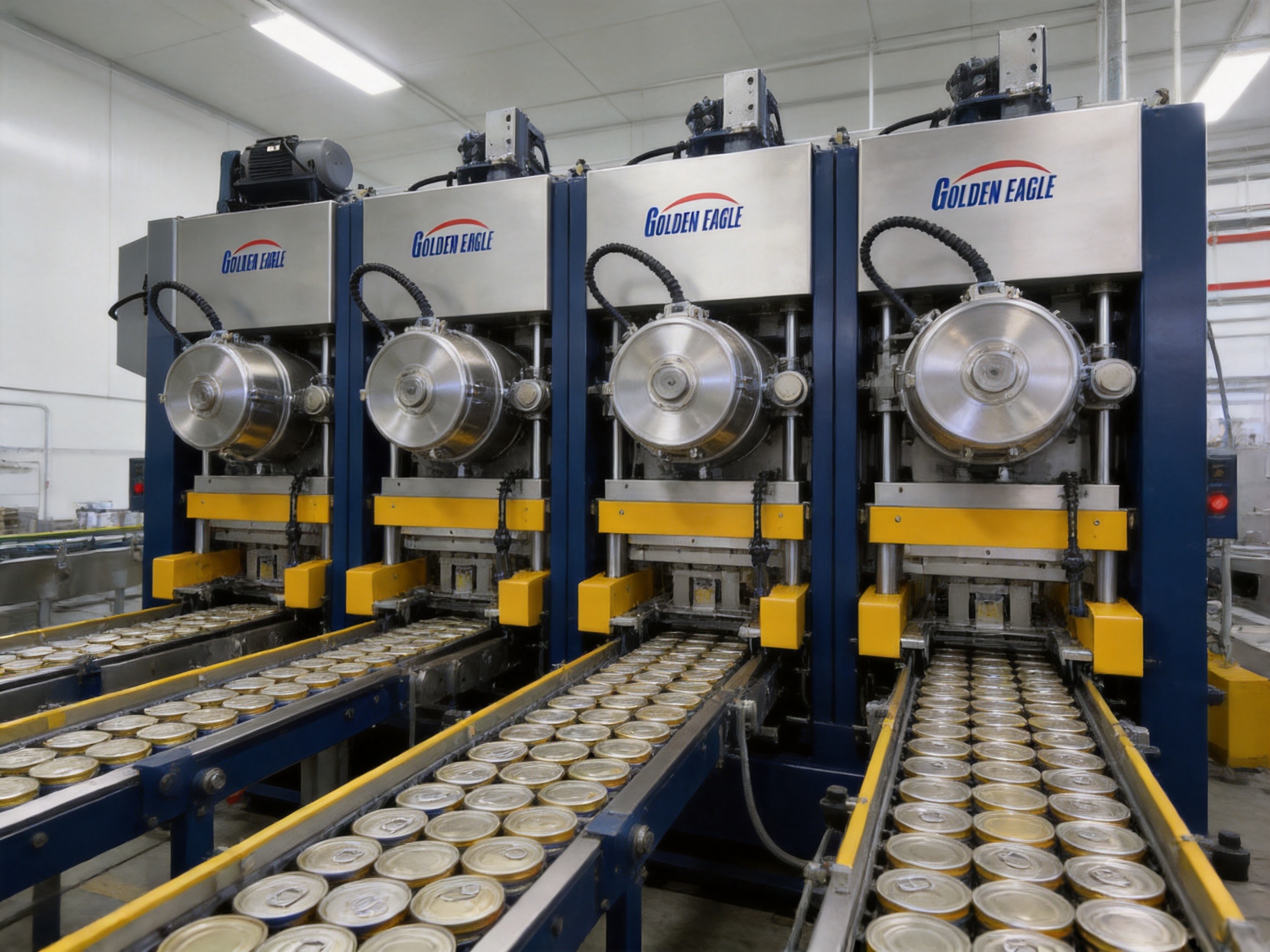
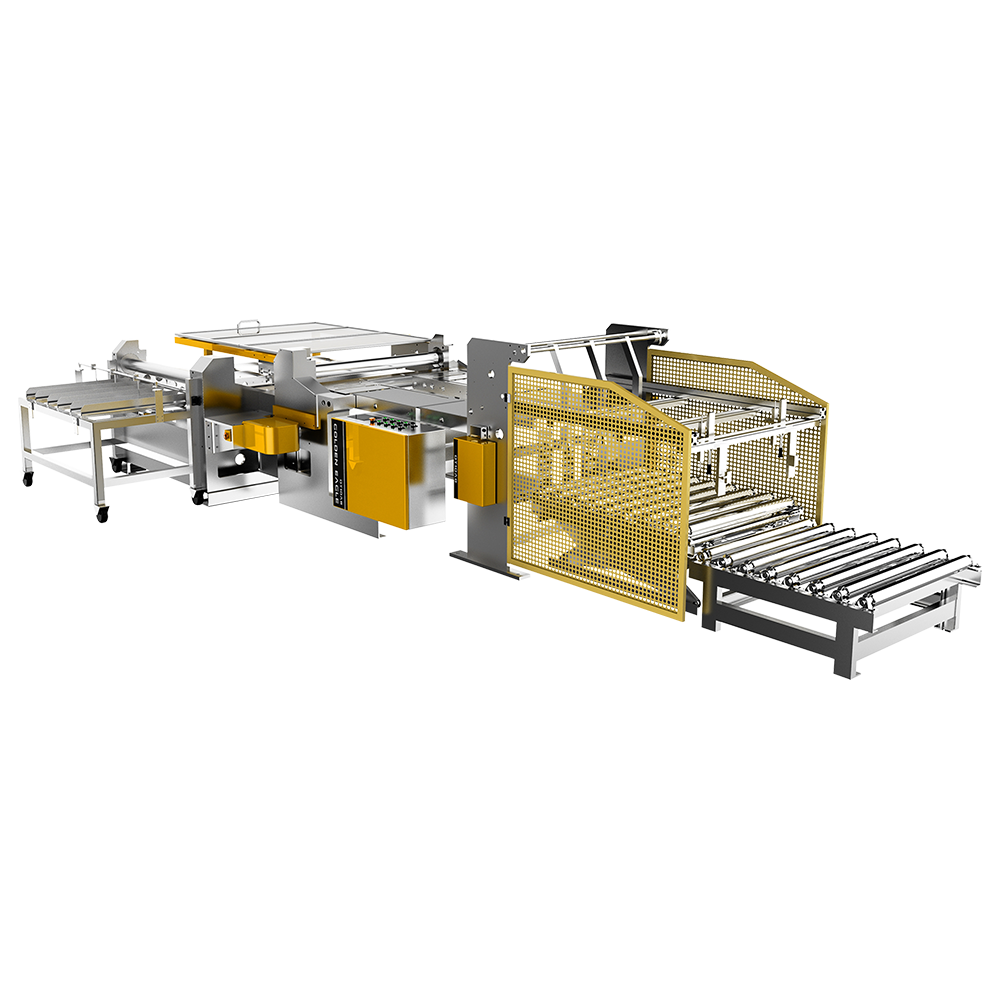
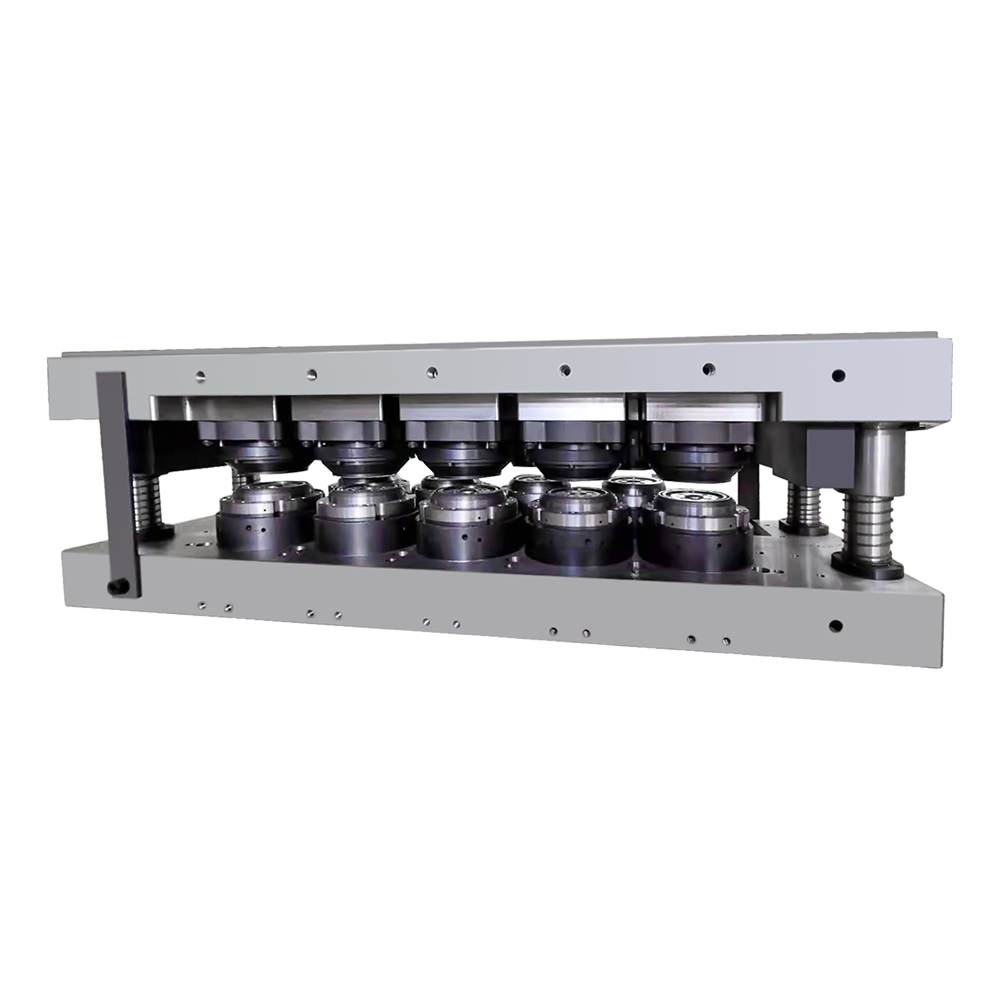
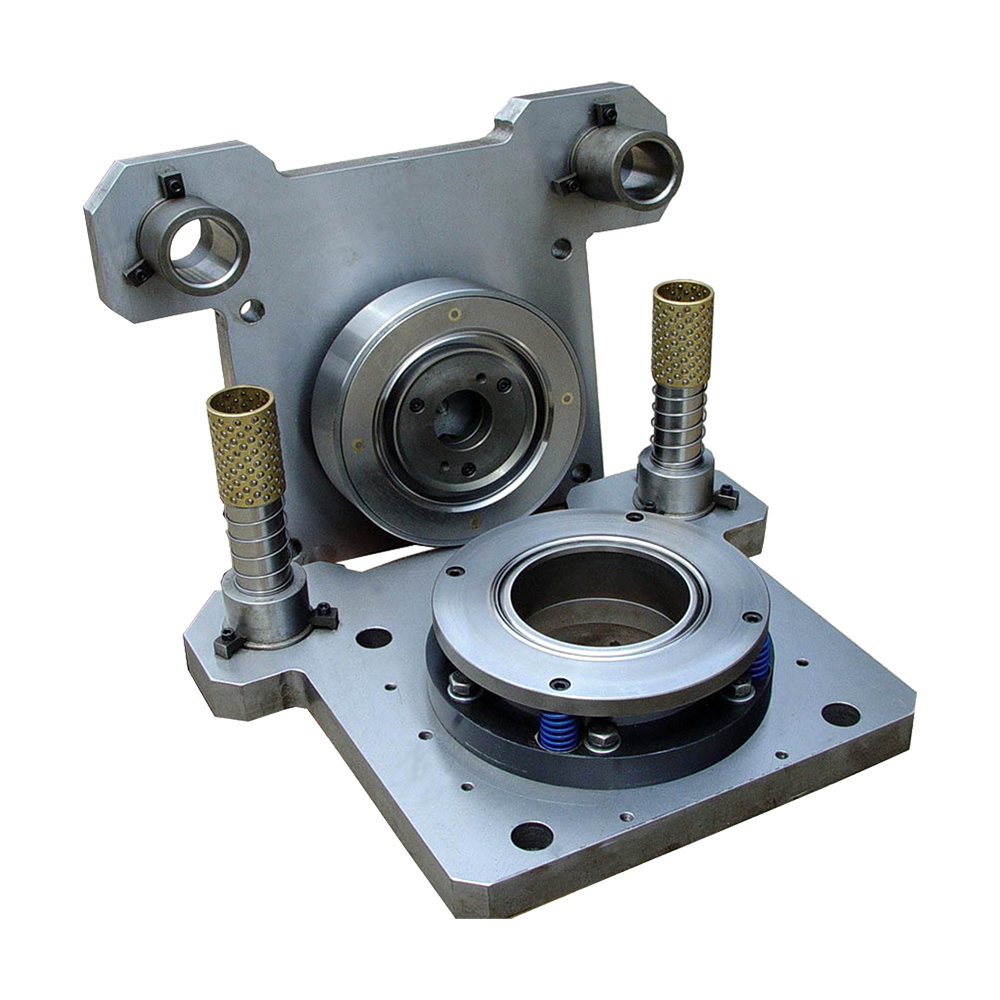
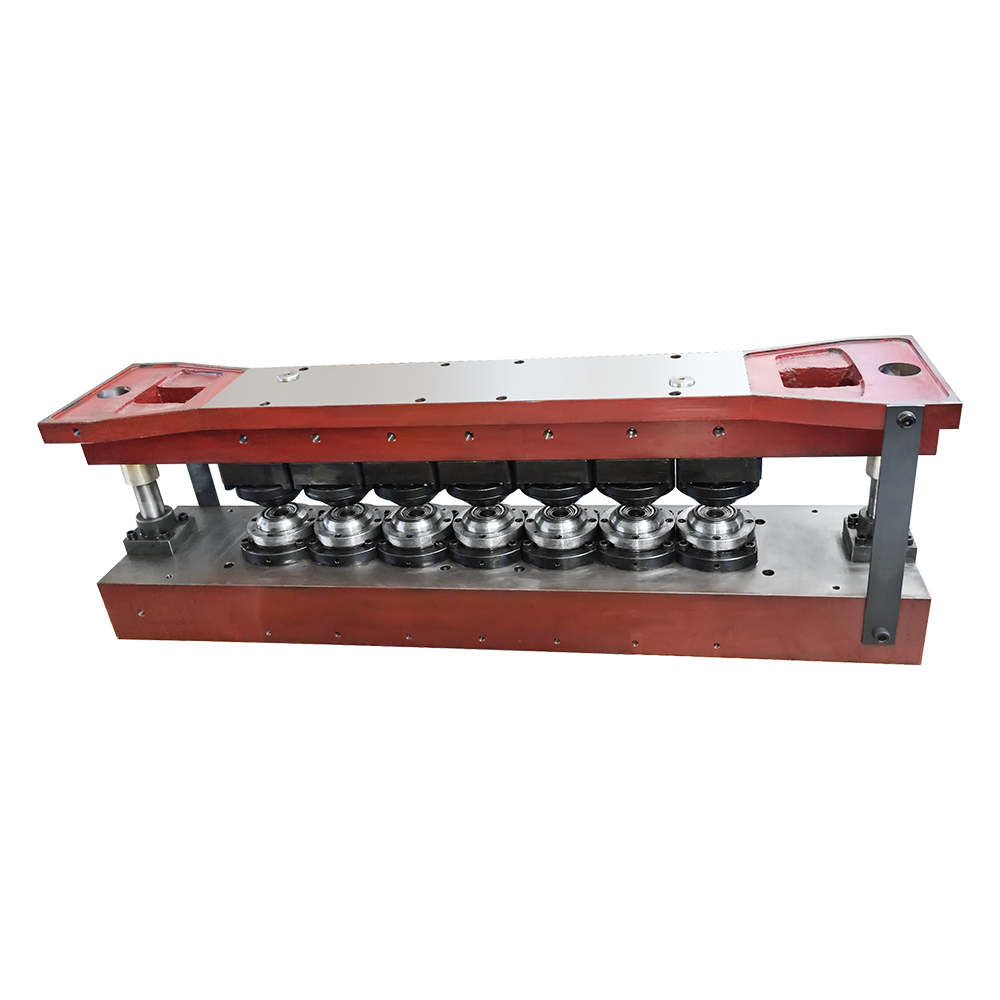
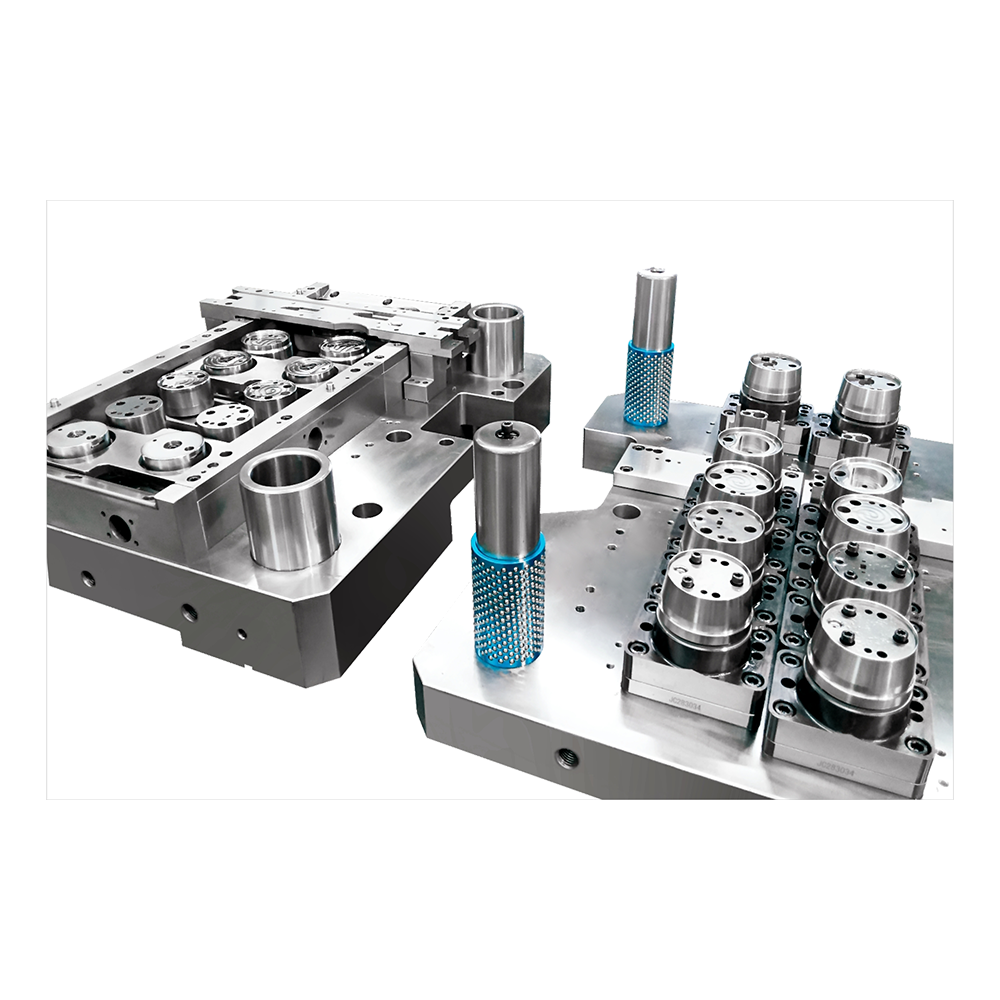
The conversion system consists of tab dies, lane dies, end separators, and other related tooling. These elements define the shape, position, movement, and final arrangement of the EOE components. Their accuracy and durability influence the repeatability of the entire production process.
Tab dies are responsible for forming and processing the pull tab according to the required product design. A tab may include a finger opening, a reinforcing area, a nose, a hinge region, and other features. Each feature must be produced with controlled geometry so that the tab can be attached correctly and operated safely by the consumer.
The tab die must also work in synchronization with the feeding system and the end shell. If the tab arrives too early, too late, or in the wrong orientation, the press may produce an incorrectly positioned tab. The conversion press therefore combines tab tooling with controlled feeding and detection functions to support stable assembly.
Lane dies guide and process the components in their respective production lanes. In a multi-lane machine, lane dies help maintain consistent spacing and prevent components from crossing into neighboring lanes. Their design is especially important at high speed, where even a small positional error can become a repeated production problem.
Accurate lane control supports uniform product flow and reduces the likelihood of jams. It also makes it easier for operators to identify the location of a problem if a fault occurs. The machine’s electrical and mechanical systems are designed to work together so that lane operation remains coordinated throughout the press cycle.
End separators organize and separate the shells or ends before they enter the conversion section. Reliable separation is essential because overlapping ends can cause double-sheet feeding, tool damage, production stoppage, or defective products.
The end separation system is supported by double-sheet detection and no-ends detection. These functions provide additional protection by monitoring whether the correct number of components is entering the relevant process area. Such protection is particularly valuable in high-speed production, where a feeding error can otherwise result in a long sequence of defective products before the problem is noticed.
In addition to the main tab dies, lane dies, and end separators, the conversion system includes other tooling required for transfer, forming, positioning, and discharge. These components must be manufactured and assembled with appropriate precision. Proper tooling design helps ensure that the finished lid maintains consistent appearance and functional performance.
Tooling can be adapted to customer requirements, including the product format, tab profile, number of lanes, and press selection. This makes the machine suitable for manufacturers with different product portfolios rather than restricting it to a single standardized lid design.
High-speed stamping and conversion require a mechanical transmission system capable of transferring motion accurately and consistently. The transmission system coordinates the press slide, dies, feeding mechanisms, separators, and other moving parts. Any timing error between these elements can lead to misfeeds, poor forming, excessive wear, or tooling damage.
The conversion press includes a mechanical transmission system designed for continuous industrial operation. Its robust structure and substantial net weight help provide stability during repeated high-speed cycles. A stable machine base can reduce vibration and support accurate movement, which is particularly important when the equipment operates at several hundred strokes per minute.
Mechanical stability also affects maintenance. Excessive vibration can accelerate wear on bearings, fasteners, guide components, and tooling. By maintaining a rigid structure and properly coordinated transmission, the press can help reduce unnecessary mechanical stress. Regular lubrication, inspection, alignment checks, and scheduled replacement of wear parts remain essential for long-term performance.
The transmission division unit contributes to coordinated power distribution and motion control within the system. It supports the relationship between the primary press drive and the conversion components. This integrated arrangement helps the machine maintain a consistent operating rhythm and allows the customer to manage the production process through a unified equipment platform.
Modern conversion presses rely on several auxiliary systems to achieve reliable operation. The oil system supports lubrication and helps protect moving components from excessive friction. Proper lubrication is critical in high-speed equipment because insufficient or contaminated oil can increase temperature, accelerate wear, and cause unexpected downtime.
The pneumatic system supports operations that require controlled air movement, actuation, or protection. Pneumatic components can be used for product handling, positioning, discharge, or safety-related functions depending on the final machine configuration. Stable air pressure and clean compressed air are important for consistent operation.
The vacuum system assists with material handling and transfer. Vacuum support can help control thin metal components, improve pick-up and release behavior, and maintain correct orientation during movement. Reliable vacuum performance is particularly important when the machine operates with several lanes and high cycle rates.
Integrating these systems into the conversion press provides a more coordinated operating environment. Instead of requiring separate, loosely connected devices, the machine is supplied as a structured production system. This can simplify installation, commissioning, troubleshooting, and operator training.
Although the auxiliary systems are designed for dependable operation, they should be included in the customer’s preventive maintenance program. Filters, hoses, seals, valves, vacuum lines, oil levels, and pressure settings should be checked according to the operating schedule. Routine maintenance helps preserve the performance of the machine and prevents minor issues from developing into major stoppages.
The tab material feeder is a key part of the conversion press. It delivers tab material to the tooling in a controlled and repeatable manner. Because the tab must be positioned accurately relative to the end shell, the feeder must maintain stable timing, speed, tension, and alignment.
Automatic feeding reduces the dependence on manual handling. This can improve production consistency, reduce labor requirements, and lower the risk of contamination or accidental damage to the material. It also enables the press to operate at high speed without requiring an operator to place each tab individually.
A well-coordinated feeder helps prevent common problems such as material skew, inconsistent pitch, missed feeding, overlapping material, and incorrect tab orientation. The control system can monitor the feeding process and stop the machine when an abnormal condition is detected. This protects the tooling and helps prevent large quantities of defective lids.
Automatic feeding also contributes to safer operation. Operators can replenish material and monitor the machine from designated access areas rather than working directly inside the active conversion zone. Appropriate guarding, interlocks, and emergency stop devices should always be used together with the automatic feeder.
The electrical control system is responsible for coordinating the press, feeding operations, detection devices, pneumatic elements, vacuum functions, and safety circuits. It provides the operating interface through which production parameters can be set, machine status can be monitored, and faults can be identified.
The conversion press includes several protection and detection functions designed to improve production reliability. These include double-sheet detection, no-ends detection, tab wrong-position detection, no-tab detection, and multiple safety protection units.
Double-sheet detection identifies the presence of two or more end shells entering a process position when only one should be present. This is an important protection function because double feeding can overload the tooling, damage dies, and create deformed products.
By detecting a double sheet at an early stage, the machine can stop or initiate an appropriate protective response. This reduces the potential severity of the fault and supports faster troubleshooting.
No-ends detection monitors whether an end shell is present at the required position. If the shell is missing, the machine can prevent a conversion operation from taking place under unsuitable conditions. This helps reduce empty cycles and prevents incorrect tab assembly or other process errors.
Tab wrong-position detection checks whether the tab has arrived in the correct location and orientation. An incorrectly positioned tab may reduce opening performance, affect appearance, or cause the finished lid to fail customer specifications. Early detection helps prevent repeated defects and supports more consistent product quality.
No-tab detection identifies a missing tab before the product proceeds through the relevant process. This function is particularly useful in automated production because it helps distinguish a complete EOE lid from an incomplete assembly. It also assists in protecting subsequent equipment from irregular material flow.
Multiple safety protection units help protect operators, tooling, and the press itself. Depending on the final configuration, safety functions may include guarding, emergency stops, interlocks, overload protection, access monitoring, and abnormal-condition shutdown. These functions are essential for responsible industrial operation and should be maintained and tested regularly.
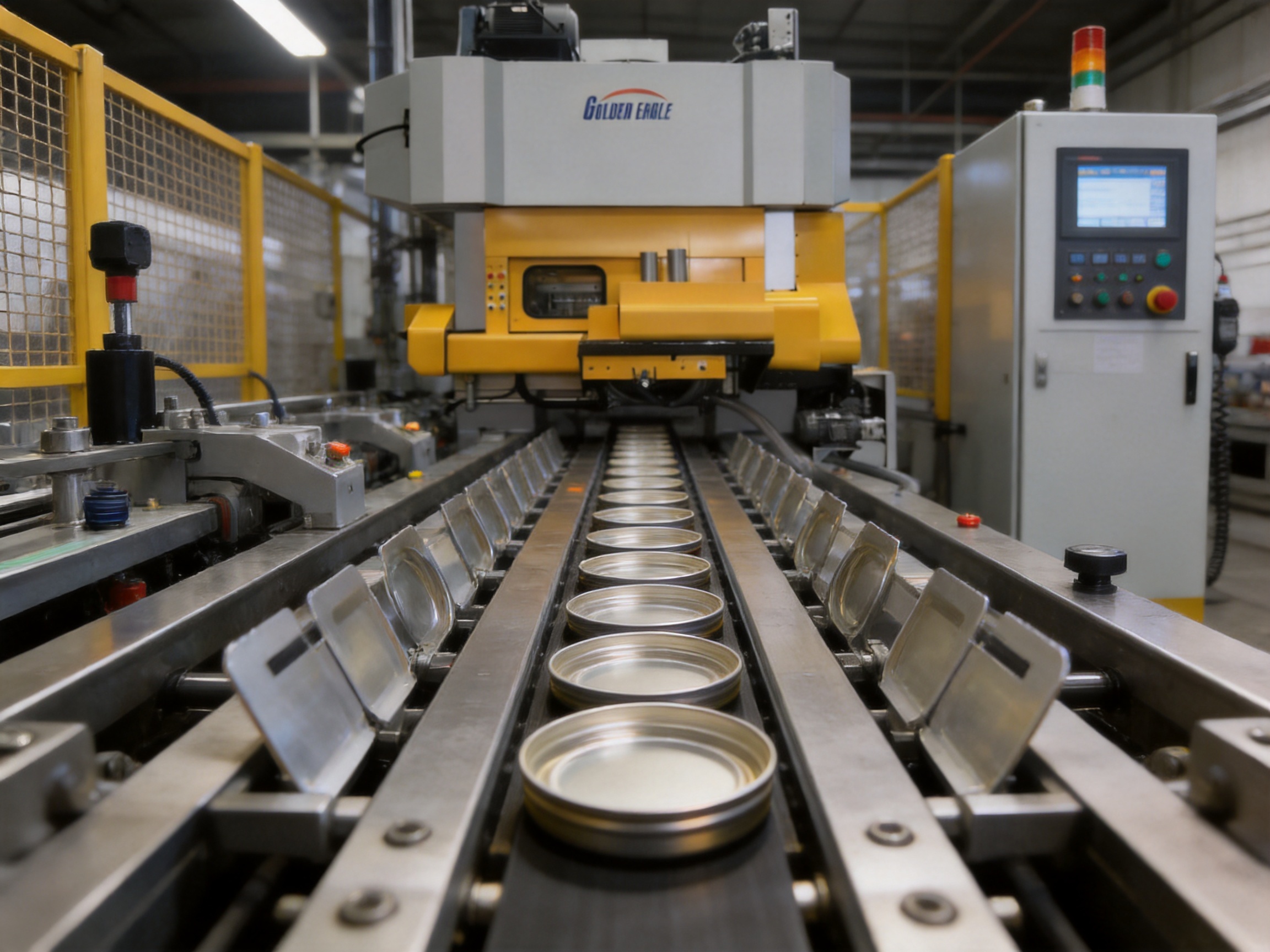
Manufacturers comparing conversion press suppliers should assess the complete production system rather than looking at a single specification. Press tonnage and strokes per minute are important, but they do not fully define practical productivity. Tooling quality, feeding stability, detection functions, lane synchronization, material utilization, and technical support can have an equally significant effect on operating results.
The integrated conversion press offers several advantages over less coordinated or more manually dependent solutions.
The combination of high-speed press operation and two-to-four-lane production can significantly increase output. Multi-lane operation allows the manufacturer to produce more lids per cycle and make better use of the press platform. Automatic feeding and coordinated transfer reduce interruptions caused by manual component handling.
The compact tab layout is designed to increase material usage efficiency. Reducing unnecessary spacing and scrap can help lower the cost per finished lid. This benefit becomes increasingly important as material prices rise and production volumes grow.
Precision tooling, controlled feeding, synchronized transmission, and automatic detection help maintain repeatable product conditions. Consistent tab position, reliable separation, and controlled conversion are important for achieving uniform EOE lid performance.
Double-sheet detection, no-ends detection, and other protective functions help prevent abnormal material conditions from reaching the tooling. This can reduce the risk of severe die damage and minimize the cost and duration of unplanned repairs.
The machine can use a USA MINSTER press, a Taiwan INGYU press, or another press selected according to customer requirements. The two-, three-, or four-lane option also allows the machine to be matched to different capacity targets. This level of configuration is valuable for manufacturers with varying product specifications or expansion plans.
A multi-lane machine can provide substantial capacity within a relatively concentrated installation area. This may help reduce the amount of floor space required per unit of output. More efficient factory utilization can simplify material flow and create room for additional equipment, inspection areas, or finished-product storage.
Because the feeding, detection, transmission, and conversion operations are coordinated through one system, production management can be more straightforward. Operators can monitor the machine from a central control interface, while maintenance personnel can inspect related systems through an organized equipment structure.
The performance of a conversion press depends not only on its design but also on the manufacturing process used to produce it. Zhejiang Golden Eagle Food Machinery Co., Ltd. has specialized in can-making machinery and can-making molds since 1978. The company has developed experience in the design and manufacture of equipment for food cans, beverage cans, can lids, chemical tanks, aerosol containers, two-piece cans, and other metal packaging applications.
The company employs more than 350 trained personnel, including experienced design and development engineers. This combination of manufacturing staff and engineering expertise supports the development of complete equipment systems rather than isolated machine components. It also provides a foundation for adapting equipment to customer requirements.
Advanced CNC high-precision machining equipment is used together with comprehensive mechanical processing equipment. CNC machining supports the accurate production of press components, tooling parts, guide elements, and other precision assemblies. Stable machining processes are important because even small dimensional deviations can affect the performance of high-speed conversion tooling.
Precision machining also helps improve repeatability between replacement components. When a wear part or tooling component must be replaced, consistent manufacturing tolerances can simplify installation and reduce the need for extensive adjustment. This supports shorter maintenance intervals and more predictable machine performance.
The company’s product design principles are similar to those associated with established international manufacturers such as KRUPP, SOUDRONIC, and ALFONS-HAAR. At the same time, the company has combined those design principles with practical manufacturing experience and continuous product improvement. This approach allows the equipment to reflect both established engineering concepts and operating experience gained from real production environments.
More than 10,000 pieces of can and can-lid equipment have been produced by the company. This large installed production base provides opportunities to learn from diverse operating conditions, customer requirements, material specifications, and product formats. Such experience can be valuable when configuring a conversion press for a new project or upgrading an existing line.
Quality management is essential in the manufacture of heavy industrial equipment. A conversion press includes numerous precision components, and its reliability depends on the consistency of design, machining, assembly, testing, and commissioning. Zhejiang Golden Eagle Food Machinery Co., Ltd. has been certified according to the ISO9001 quality management system.
ISO9001-based processes support structured quality planning, documentation, inspection, corrective action, and continuous improvement. For equipment buyers, this provides a framework for evaluating how a machine supplier manages manufacturing consistency and customer requirements.
The company has also been certified according to the ISO14001 environmental management system. Environmental management is increasingly important in industrial equipment manufacturing and metal packaging production. Efficient material utilization, responsible manufacturing practices, controlled waste management, and attention to energy use can all contribute to a more sustainable factory operation.
For the end user, environmental responsibility is not limited to certification. The compact tab layout and efficient production arrangement can help reduce material waste during EOE lid manufacturing. A durable press with stable operation may also reduce the environmental impact associated with frequent replacement, repair, and rejected products.
The conversion press is primarily intended for EOE lid production, but its application value extends across several sectors of the metal packaging industry. Easy-open ends are widely used for food products such as canned vegetables, fruit, meat, seafood, sauces, and prepared meals. They are also used in beverage packaging and selected industrial containers.
Food can manufacturers require EOE lids that combine reliable sealing with convenient opening. The lid must withstand filling, processing, stacking, transportation, and storage before opening smoothly for the consumer. Consistent tab positioning and accurate forming are therefore essential.
Beverage can production places strong emphasis on high speed, dimensional consistency, appearance, and reliable integration with filling and seaming operations. A multi-lane conversion press can support the high production rates required by beverage packaging manufacturers, provided that the tooling and material specifications are correctly matched to the product.
Industrial and chemical packaging applications may require different lid designs, material thicknesses, or performance characteristics. The configurable tonnage, stroke, lane, and tooling options allow the conversion press to be considered for a range of applications. The final suitability should always be confirmed through engineering review, product samples, and customer-specific testing.
Proper installation is essential for achieving the expected performance of a high-speed conversion press. The machine’s substantial weight, power requirements, compressed-air needs, vacuum system, foundation conditions, and surrounding material-handling equipment must be considered during factory planning.
Before installation, the customer should prepare a suitable foundation, electrical supply, compressed-air source, ventilation arrangement, material storage area, maintenance access, and safety perimeter. Adequate space should be provided around the press for tooling changes, inspection, lubrication, cleaning, and service work.
Commissioning verifies that the machine has been installed correctly and that the press, tooling, feeder, separator, sensors, pneumatic functions, vacuum system, and control system operate together as intended. Initial trials should be conducted with appropriate materials and under controlled conditions. The operating speed can then be increased progressively after the production team confirms stable feeding and acceptable product quality.
Operator training is another important part of successful commissioning. Operators should understand start-up and shutdown procedures, material loading, tooling checks, alarm interpretation, emergency stop use, routine cleaning, lubrication requirements, and basic fault recovery. Maintenance personnel should receive additional instruction in alignment, component replacement, sensor adjustment, and preventive maintenance.
Zhejiang Golden Eagle Food Machinery Co., Ltd. provides after-sales services including installation, commissioning, technical guidance, operation training, and parts supply. These services help the customer move from equipment delivery to stable production more efficiently.
Preventive maintenance protects the investment in the conversion press and helps maintain product consistency. Maintenance requirements vary according to operating hours, material type, production speed, environmental conditions, and tooling configuration. However, several general practices are important for all installations.
Daily inspections should include checking for unusual noise, vibration, oil leakage, air leakage, vacuum loss, loose fasteners, abnormal temperature, and visible tooling damage. Operators should also check whether tabs and end shells are feeding smoothly and whether the detection system responds correctly to test conditions.
Regular cleaning helps prevent metal particles, lubricant residue, dust, and production debris from interfering with sensors, guides, dies, and feeding components. Cleaning should be performed according to approved procedures, with the machine isolated and secured before personnel enter protected areas.
Lubrication points should be serviced using the correct oil or lubricant at the recommended intervals. Over-lubrication can be as undesirable as insufficient lubrication because excess lubricant may contaminate products or attract debris. Maintenance personnel should record lubrication activities and investigate any abnormal consumption.
Tooling should be inspected for wear, cracks, burrs, deformation, and changes in forming quality. Worn tooling can increase scrap and place additional loads on the press. Timely replacement or refurbishment helps preserve product accuracy and reduces the risk of sudden failure.
Sensors and safety devices should be tested regularly. A detection function is only valuable if it remains correctly adjusted and operational. The double-sheet detector, no-ends detector, tab-position detector, no-tab detector, emergency stops, guards, and interlocks should be included in the preventive maintenance schedule.
Customers should evaluate several factors before ordering a conversion press. The first is the required product format. Lid diameter, shell geometry, tab profile, material thickness, and opening design determine the tooling and press requirements.
The second factor is target production volume. A two-lane system may be sufficient for a moderate production plan, while a three- or four-lane system may be justified for a large-scale factory. The expected operating schedule, future expansion, and available floor space should also be considered.
The third factor is material utilization. Customers should request an assessment of tab layout, expected scrap rate, material width, and production yield. A compact layout can deliver significant savings over the full service life of the machine.
The fourth factor is the desired level of automation and protection. Automatic tab feeding, vacuum assistance, end separation, and detection systems can improve productivity and reduce risk. The customer should ensure that the proposed configuration includes the necessary sensors, controls, guarding, and safety functions for the intended application.
The fifth factor is service support. Installation, commissioning, operator training, technical guidance, spare parts, and response time can influence the total cost of ownership. A machine supplier with broad product experience and a large installed base may be better positioned to support long-term operation.
Finally, the customer should consider compatibility with the existing production line. The conversion press may need to connect with shell-making equipment, tab-material preparation equipment, inspection systems, conveyors, packaging systems, or other downstream machinery. Early technical communication helps ensure that dimensions, speeds, controls, and material flow are compatible.
EOE lid production combines high-speed mechanical movement with precision tooling and strict product requirements. A supplier’s experience in related can-making equipment can therefore be an important advantage. Zhejiang Golden Eagle Food Machinery Co., Ltd. has been engaged in the can-making machinery and mold industry for more than four decades.
Its product range includes food can production lines, beverage can production lines, can lid production lines, chemical tank production lines, aerosol canister production lines, two-piece can production lines, and pop can production lines. This broad range gives the company experience with multiple types of metal packaging processes and production environments.
Experience across complete production lines can also help the supplier understand how a conversion press interacts with upstream and downstream equipment. This is useful when customers require a complete line, a replacement machine, a capacity expansion, or integration with an existing factory.
The company’s international customer base includes users in Europe, Asia, Africa, North America, South America, and Oceania. Exposure to different markets can provide experience with varied electrical standards, factory conditions, product specifications, quality expectations, and service requirements.
For customers, this background may reduce the uncertainty involved in selecting and commissioning specialized equipment. It does not replace project-specific engineering, but it provides a strong foundation for practical recommendations and customized configuration.
The purchase price of a conversion press is only one part of the investment decision. Total cost of ownership includes raw material consumption, energy use, labor, maintenance, spare parts, tooling life, downtime, rejected products, and service requirements.
The conversion press can support improved economics in several ways. Multi-lane production increases potential output per press cycle. Automatic feeding reduces repetitive labor. Compact tab layouts can reduce material waste. Integrated detection systems can help limit defective production and prevent major tooling damage. Robust construction can support long-term use when the machine is properly maintained.
Energy consumption is influenced by the selected press, operating speed, production schedule, motor configuration, auxiliary systems, and factory conditions. Customers should evaluate power requirements alongside expected output to understand energy consumption per finished lid. The available main power range is 38.5 to 46.5 kilowatts, depending on the selected configuration.
Downtime can have a significant financial impact in high-volume production. A short stoppage may interrupt material flow, reduce line efficiency, and require additional labor to restore normal operation. Reliable feeding, detection, and transmission systems can help reduce avoidable downtime. Access to technical support and replacement parts further contributes to operational continuity.
Finished EOE lids should be evaluated through appropriate inspection and testing procedures. Important quality characteristics may include external appearance, tab position, rivet or attachment quality, scoring accuracy, dimensional tolerances, edge condition, opening force, and resistance to deformation.
The conversion press contributes to these characteristics through controlled tooling movement, stable feeding, accurate lane management, and integrated detection. However, the final quality also depends on the material, shell-making process, tab material, coating, tooling condition, press adjustment, and downstream handling.
Manufacturers should establish inspection standards appropriate to their products and markets. Sampling frequency and test methods should be defined before production begins. Inspection records can help identify trends such as gradual tooling wear, feeder misalignment, sensor drift, or material variation.
Consistent process control is generally more effective than relying solely on final inspection. By identifying double sheets, missing ends, incorrectly positioned tabs, and missing tabs during production, the conversion press helps operators address problems close to their source.
A conversion press is used to convert end shells and tab material into finished easy-open ends. It performs coordinated operations such as tab processing, positioning, attachment, separation, transfer, and related forming functions.
The machine can be configured with two, three, or four lanes. The appropriate selection depends on the customer’s required output, product specifications, available space, and investment plan.
Based on customer requirements, the system can use a USA MINSTER press, a Taiwan INGYU press, or another suitable press platform. The final choice should be based on production requirements, tooling compatibility, service considerations, and project budget.
The specified range is 200 to 600 strokes per minute. Actual production speed depends on the lid design, material, tooling, lane configuration, press settings, feeding stability, and quality requirements.
The tab layout is designed to be compact, allowing more efficient use of tab material. A well-planned layout can reduce unnecessary spacing and scrap while maintaining the clearances required for cutting, forming, feeding, and separation.
The electrical control system includes double-sheet detection, no-ends detection, tab wrong-position detection, no-tab detection, and multiple safety protection units. These functions help reduce defects and protect the tooling and equipment from abnormal conditions.
The conversion press has a tonnage range of 75 to 125 tons, a slide stroke range of 38.1 to 63.5 millimeters, a speed range of 200 to 600 strokes per minute, two to four lanes, main power of 38.5 to 46.5 kilowatts, and a net weight of approximately 20 to 30 tons.
The machine is configurable with different tooling and lane arrangements, making it suitable for various EOE lid requirements. Product dimensions, tab geometry, material specifications, and required output should be reviewed before final equipment selection.
After-sales support includes installation, commissioning, technical guidance, operation training, and parts supply. These services are intended to help customers establish stable production after delivery.
The customer should prepare a suitable foundation, electrical supply, compressed-air source, vacuum requirements, material storage area, maintenance access, safety perimeter, and compatible upstream and downstream equipment. Detailed requirements should be confirmed during the project planning stage.
Maintenance should include regular cleaning, lubrication, tooling inspection, sensor testing, safety-device checks, air and vacuum system inspection, fastener checks, and examination of unusual vibration or noise. The exact schedule should be based on operating hours and the supplier’s technical recommendations.
The conversion press is a critical investment for manufacturers of easy-open ends. Its performance affects output, material utilization, product quality, safety, maintenance, and production costs. A machine that combines high-speed pressing with multi-lane operation, compact tab layout, automatic feeding, integrated tooling, stable transmission, and intelligent detection can provide a strong foundation for efficient EOE lid production.
The configurable system described here offers two-, three-, and four-lane options, a 75-to-125-ton press range, operating speeds of up to 600 strokes per minute, and a complete group of mechanical, pneumatic, vacuum, electrical, and safety functions. These features allow the equipment to be matched to different customer requirements rather than forcing every manufacturer into one fixed configuration.
Its advantages are supported by the manufacturing capabilities of Zhejiang Golden Eagle Food Machinery Co., Ltd., a company with a history dating back to 1978, more than 350 trained personnel, advanced CNC machining equipment, ISO9001 and ISO14001 certifications, and experience in producing more than 10,000 pieces of can and can-lid equipment. The company’s broad product portfolio and international service experience further support its ability to provide complete production solutions.
For manufacturers planning a new EOE lid line, expanding an existing factory, or replacing aging equipment, the conversion press should be evaluated as part of the complete production system. Careful consideration of product design, lane quantity, material utilization, operating speed, tooling requirements, safety functions, maintenance, and after-sales support will help ensure that the selected machine delivers reliable value throughout its service life.
1. Zhejiang Golden Eagle Food Machinery Co., Ltd., Conversion Press Product Specifications and Technical Description.
2. Zhejiang Golden Eagle Food Machinery Co., Ltd., Corporate Manufacturing and Product Information.
3. ISO 9001, Quality Management Systems—Requirements.
4. ISO 14001, Environmental Management Systems—Requirements with Guidance for Use.
5. General principles of metal forming, stamping press operation, and industrial tooling maintenance.
6. General production practices for easy-open ends and metal packaging components.
Related Products

Founded in 1978, the company is one of the largest can-making machinery well-known companies at home and abroad.
Product Categories
Contact Information
Zhongshatou Shenjiamen Zhoushan Zhejiang China
+86-580-3056646

 English
 中文简体
中文简体
 русский
 عربى
عربى
 Español