2026-08-24
Modern can manufacturing depends on more than accurate forming, reliable welding, and efficient material handling. The interior treatment of a can is equally important because the lining protects the metal container, helps preserve the packed product, and supports consistent quality throughout the canning process. A poorly applied compound lining may lead to uneven coverage, insufficient protection, excessive material consumption, or production interruptions. For this reason, manufacturers require lining equipment that combines precise application, dependable drying, stable conveying, and compatibility with a wide range of can diameters.
The GT10B1 Vertical Compound Lining Machine is designed for this purpose. It is an automatic machine used for compound lining and drying in can production. The equipment is suitable for can diameters from approximately 45 to 153 millimeters, depending on the selected configuration, and can achieve output rates of up to 600 containers per minute according to the supplied product information. Its vertical construction, two-head nozzle arrangement, controlled oven temperature, and compact integrated layout make it suitable for high-volume tinplate can production environments.
More than an individual machine, the GT10B1 represents an important process stage in a complete can-making line. It is intended to work with upstream forming, welding, flanging, beading, or body-making equipment and with downstream inspection, packing, or filling operations. Its role is to apply a compound lining to the appropriate area of the can and then dry or cure the applied material under controlled conditions. This combination helps manufacturers maintain a repeatable coating process while reducing the need for separate manual handling stages.
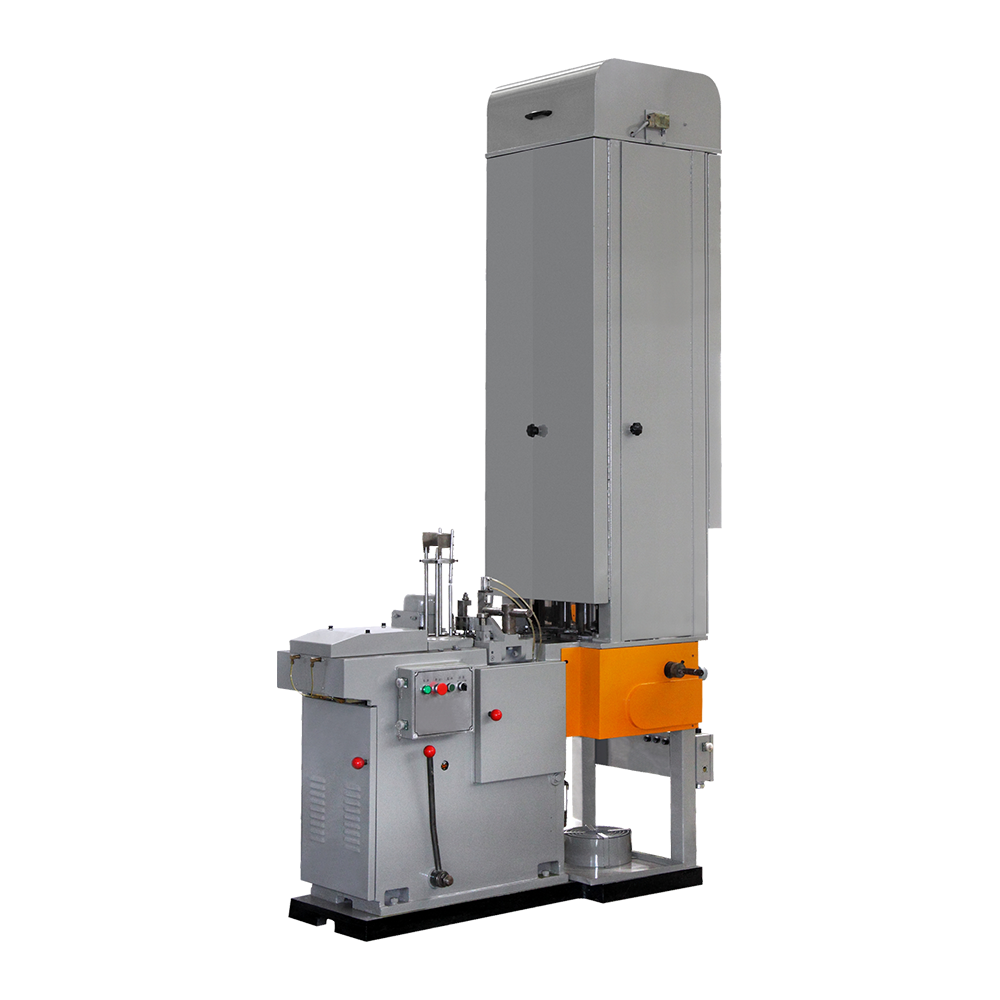
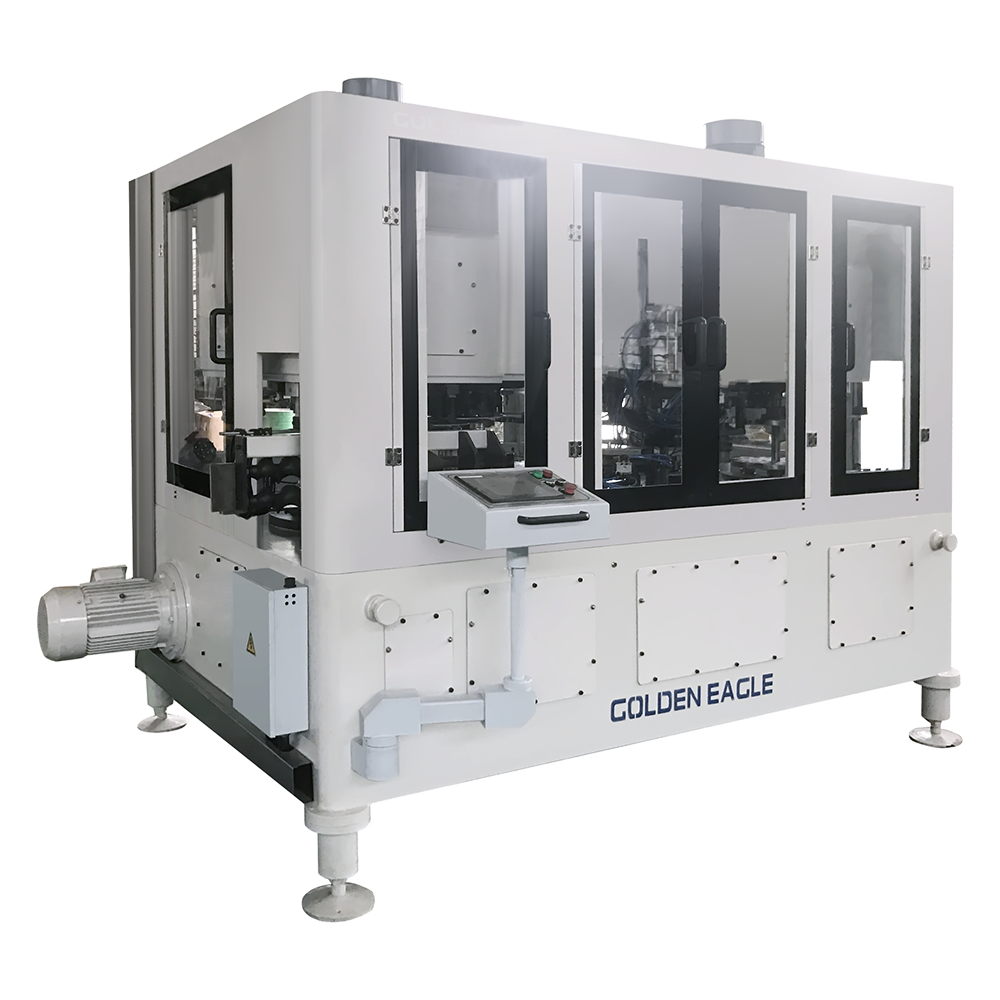
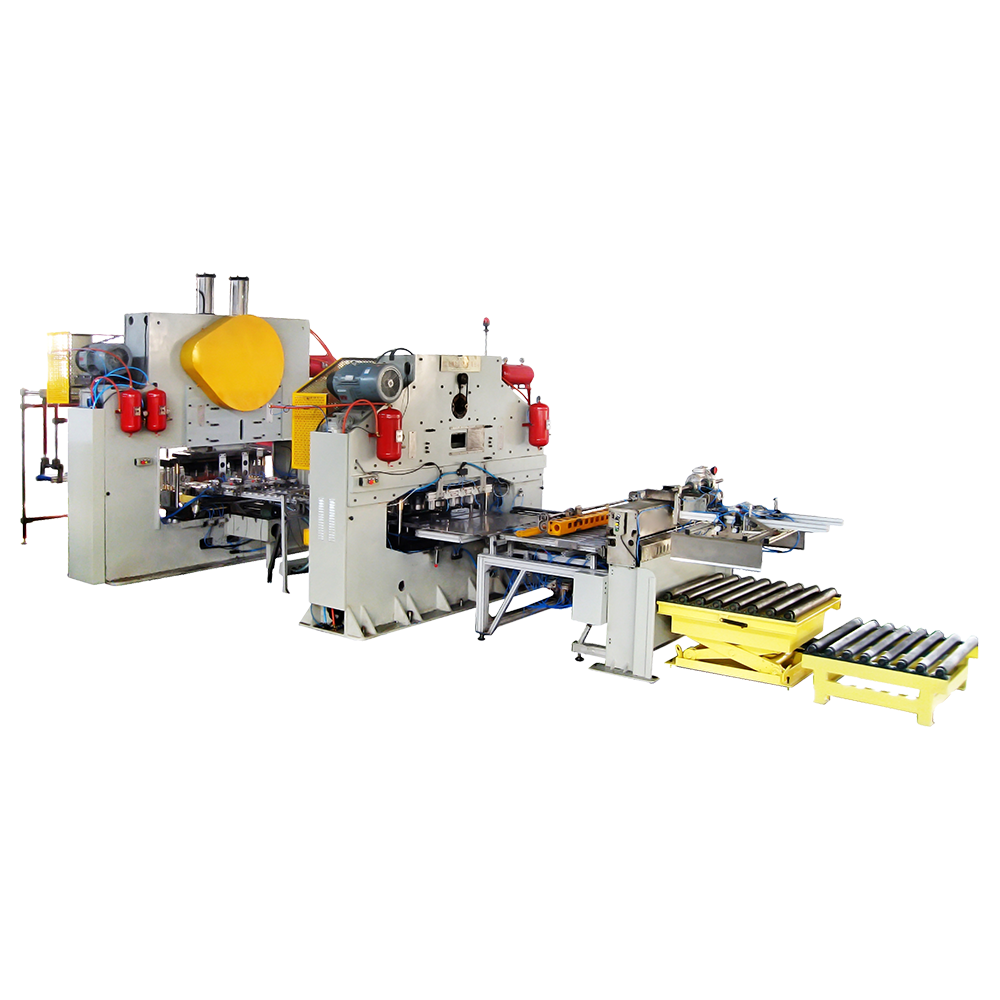
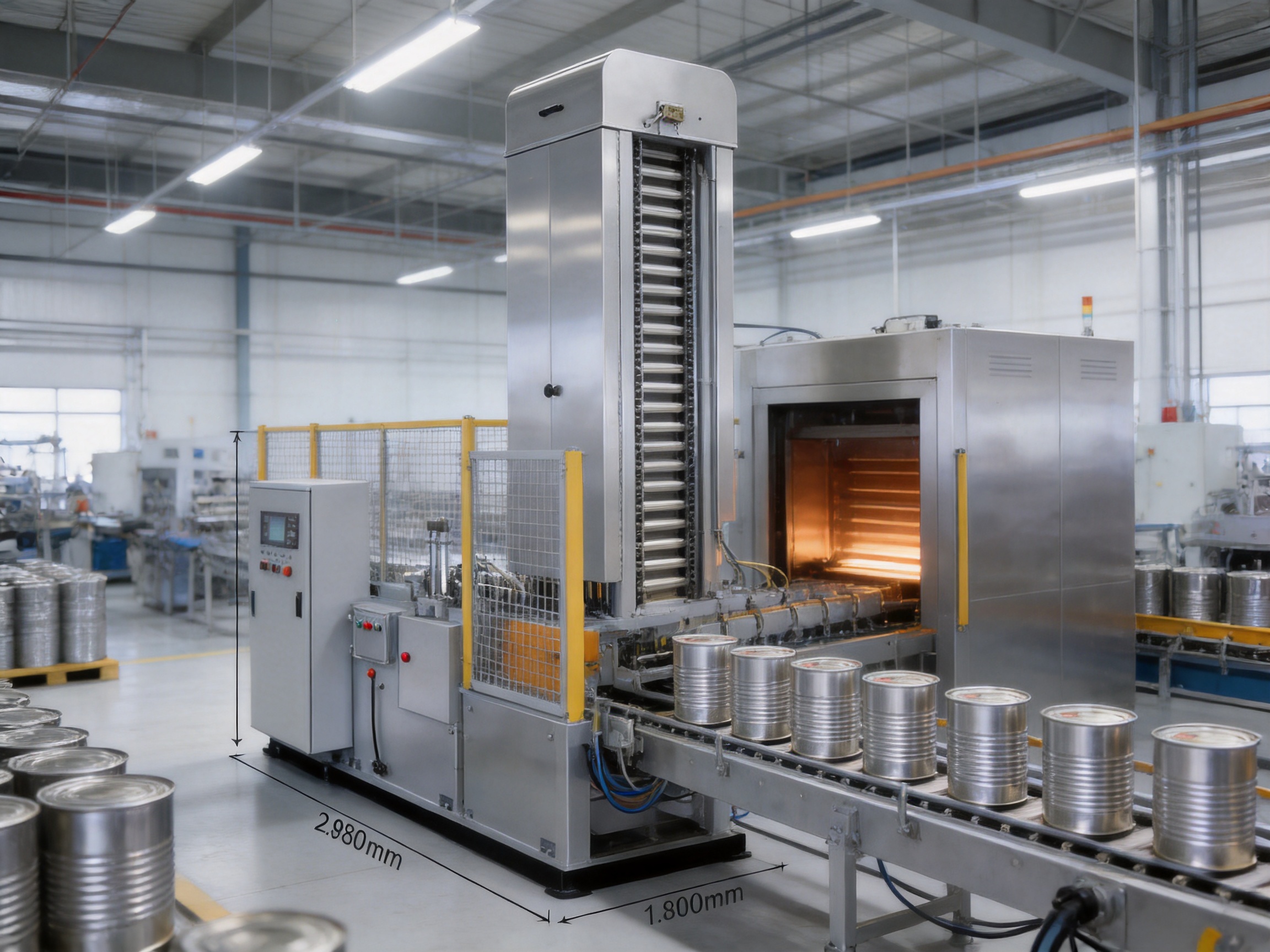
GT10B1 Vertical Compound Lining Machine for lining and drying
Tinplate and other metal packaging materials provide strength, dimensional stability, and efficient protection during transportation. However, the metal surface may not always be suitable for direct contact with the packed product. Food, beverages, powders, chemicals, aerosols, and other contents can interact with exposed metal or with a damaged protective surface. An internal compound lining creates an additional barrier between the container wall and its contents.
The lining can serve several functions. It may help reduce corrosion, prevent metallic contamination, protect the packed product from contact with the substrate, and improve the service life of the container. In some applications, the compound also supports sealing or contributes to the performance of a closure system. The precise compound, coating thickness, curing conditions, and application area depend on the can design and the product being packed.
Consistency is essential. If the lining is too thin, the protective function may be reduced. If it is too thick, material costs can increase and drying may become more difficult. An uneven application can create weak points, while excessive compound may interfere with later forming or closure operations. A specialized automatic lining machine therefore provides important advantages over manual or improvised application methods.
The vertical compound lining process is particularly useful where the can body must be positioned accurately while the compound is applied and then transferred through a drying section. The machine must coordinate can feeding, positioning, nozzle movement or activation, compound delivery, and drying time. When these stages are synchronized, production quality becomes more stable and operators can focus on monitoring the process rather than performing repetitive manual tasks.
The GT10B1 is an automatic vertical compound lining machine for lining and drying. Its design is centered on a two-head compound application system and an integrated heated drying process. The product information identifies a general operating range of Φ45–153 millimeters, while the detailed technical data separates the range into configurations for smaller, medium, and larger can sizes.
The principal configuration information supplied for the machine is summarized below.
| Item | GT10B1-2 | GT10B1-2 | GT10B1-2A |
| Output Capacity | 600 cpm | 240 cpm | 200–350 cpm |
| Number of Nozzles | 2-head | 2-head | 2-head |
| Can Size | Φ52–99 mm | Φ45–73 mm | Φ99–153 mm |
| Oven Temperature | 110°C | 110°C | 110°C |
| Drying Time | 3.5–7 minutes | 3.5–7 minutes | 3.5–7 minutes |
| Machine Power | 12 kW | 12 kW | 12 kW |
| Machine Weight | 2,000 kg | 2,000 kg | 1,500 kg |
| Machine Dimensions | 1,800 × 1,250 × 2,980 mm | 1,800 × 1,250 × 2,980 mm | 1,800 × 1,250 × 2,980 mm |
The source data uses both “cpm” in the technical table and “epm” in the general product description. These terms should be confirmed during technical discussions because manufacturers may use different abbreviations for containers per minute, ends per minute, or equipment output. Actual production capacity can also depend on can dimensions, compound characteristics, drying requirements, line synchronization, and operating conditions.
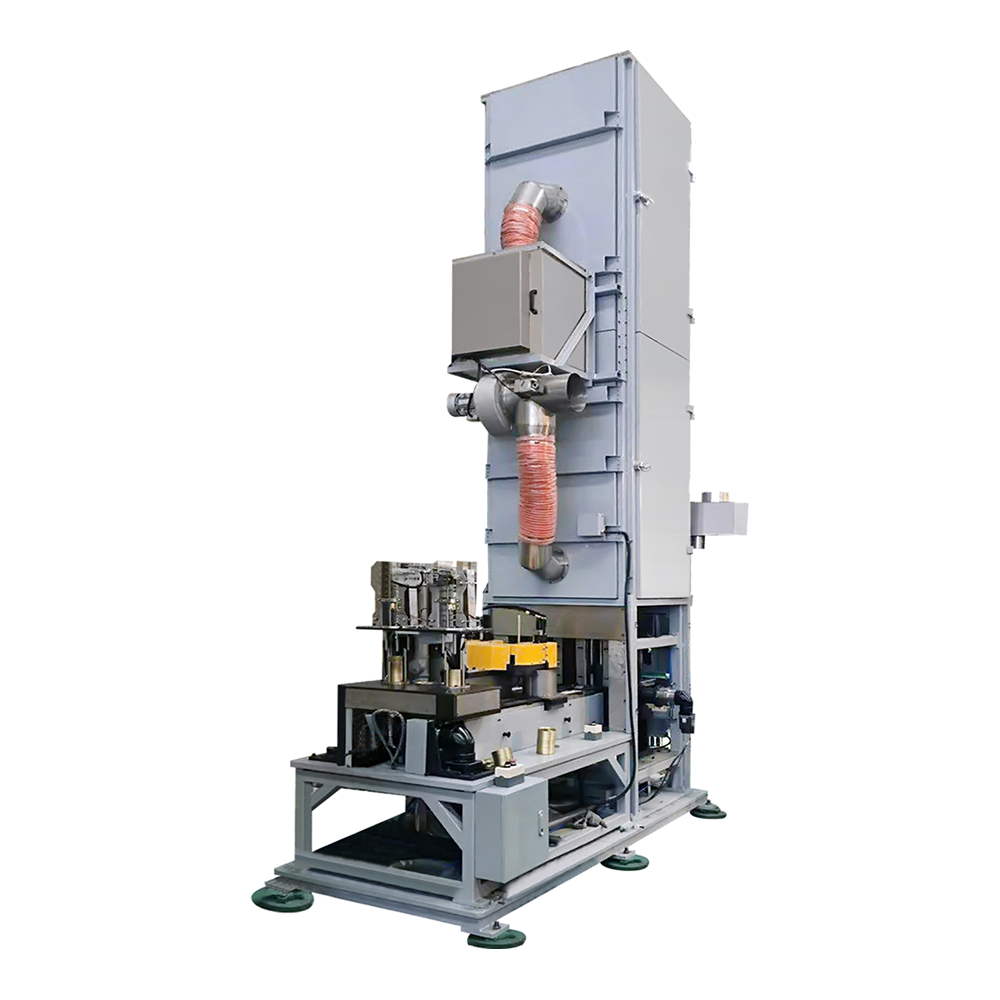
One of the most visible features of the GT10B1 is its vertical structure. The machine has a listed height of approximately 2,980 millimeters, allowing the process path and drying section to be arranged upward rather than occupying a long horizontal floor area. This arrangement can be valuable in factories where production capacity must be increased without substantially expanding the equipment footprint.
A vertical layout may also support a continuous transfer path between application and drying. Instead of moving partly lined cans through several separate stations, the machine can integrate the treatment sequence within one coordinated structure. Fewer transfers can reduce handling requirements and help protect wet or partially cured lining from accidental contact.
Space efficiency is not only a question of floor area. A well-planned vertical machine can help organize production zones, separate wet-process areas from finished-product handling, and make it easier to connect the equipment with neighboring machines. The listed dimensions of 1,800 millimeters in length and 1,250 millimeters in width provide a relatively compact base for equipment that includes automatic lining and heated drying functions.
Before installation, the factory should evaluate ceiling height, access for transportation and maintenance, ventilation, electrical supply, and the position of upstream and downstream conveyors. The vertical form is advantageous when the building can accommodate the height, but proper planning remains essential for safe access to the upper portions of the machine.
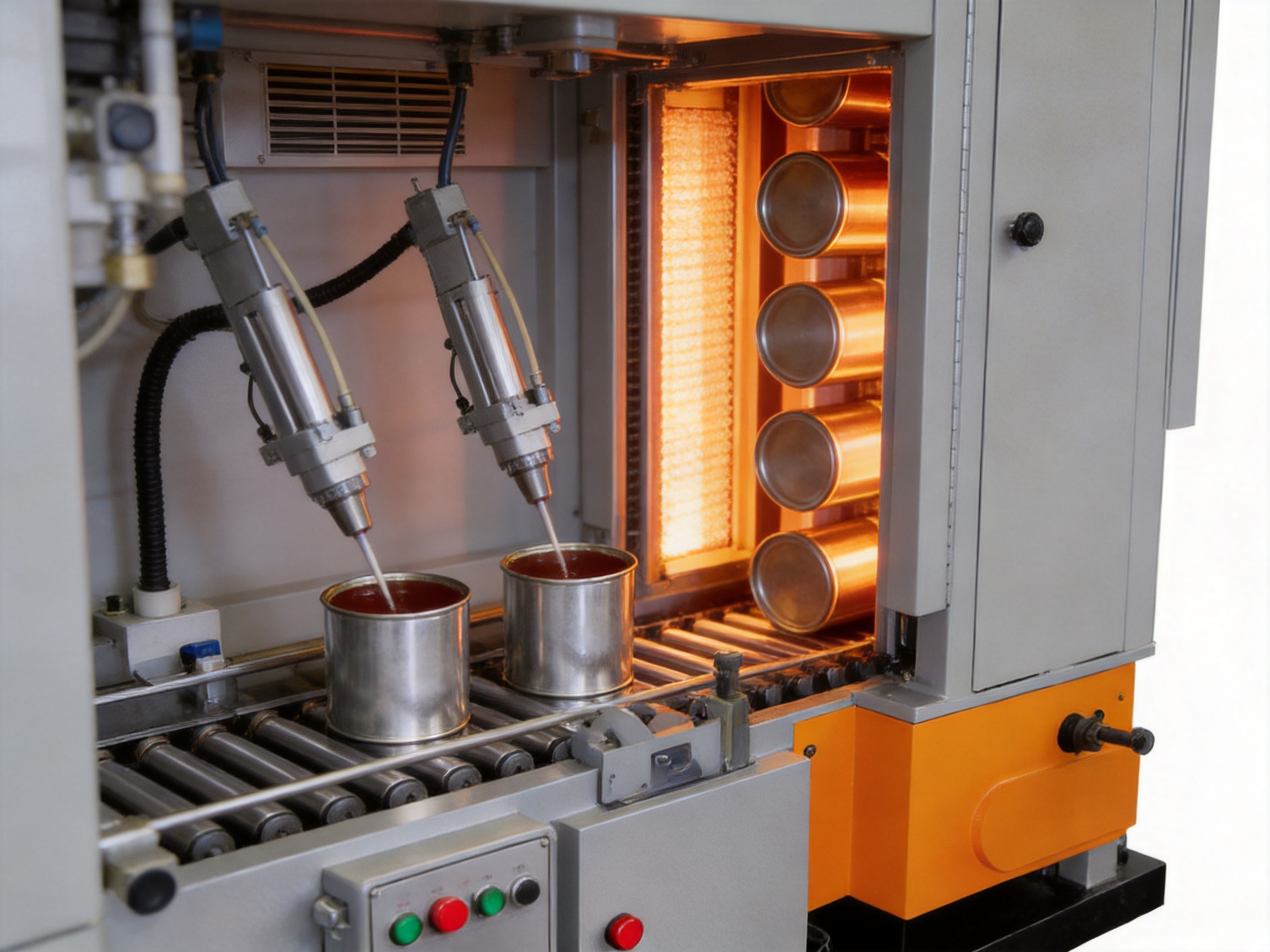
The GT10B1 is equipped with a two-head nozzle arrangement. Multiple application heads can improve process productivity by allowing the machine to treat cans in a coordinated manner rather than relying on a single application point for all production work. The two-head design is also consistent across the listed machine configurations, including the medium-diameter and large-diameter versions.
A nozzle system must deliver compound in a controlled and repeatable pattern. The result depends on the compound’s viscosity, pressure, temperature, nozzle condition, application speed, and the position of the can. A properly adjusted two-head system can help maintain uniform lining while supporting the required production rate. It can also reduce the likelihood that one application point becomes a bottleneck in a high-speed line.
The exact nozzle settings should be selected according to the compound supplied by the user and the geometry of the can. Different materials may require different flow rates, cleaning schedules, and operating parameters. The machine’s automatic operation provides a platform for repeatable settings, but operators still need to verify coating quality through regular inspection and process control.
For manufacturers producing several can sizes, the nozzle area should be treated as a key changeover zone. Guides, positioning components, nozzle height, application timing, and compound volume may require adjustment when moving from one diameter range to another. The availability of clearly documented setup procedures can reduce changeover time and help prevent incorrect settings.
Applying a compound is only one part of the lining process. The material must also reach the required condition before the can moves to later operations or packaging. The GT10B1 includes a drying oven specified at 110°C, with a listed process time of approximately 3.5 to 7 minutes. This integrated drying capability allows the lining and drying stages to be coordinated within the same machine.
Controlled temperature is important because insufficient heat may leave the compound partially dried, while excessive heat may damage the compound, affect the metal, increase energy consumption, or create undesirable fumes. A stable oven environment helps support repeatable results. The actual temperature and residence time should always be checked against the technical requirements of the selected lining compound and the can manufacturer’s process specification.
The stated drying time range gives the operator some flexibility for different product conditions. Larger cans, heavier applications, or compounds with different curing behavior may require a longer residence time. Smaller cans or lower coating volumes may pass through the process more quickly. The production line should be balanced so that the drying section provides adequate treatment without becoming a restriction on the upstream forming equipment.
Integrated drying offers several practical benefits over a separate, manually managed oven. It reduces the number of transfers, simplifies process coordination, and can make production planning easier. It also helps create a clearer relationship between application speed and drying capacity. When both functions are designed as part of one machine, the manufacturer can evaluate the complete treatment cycle rather than optimizing only the spraying or lining step.
Can manufacturers often produce more than one diameter for different markets and filling applications. Equipment that supports only one narrow size can force a factory to purchase additional machines or accept frequent production limitations. The GT10B1 is offered in configurations covering can diameters from approximately 45 millimeters to 153 millimeters.
The smaller configuration is identified for can sizes of Φ45–73 millimeters, with a listed output capacity of 240 cpm. The medium configuration covers Φ52–99 millimeters and is listed at up to 600 cpm. The larger configuration, identified as GT10B1-2A, covers Φ99–153 millimeters, with an output range of 200–350 cpm. These ranges allow the equipment family to serve several types of metal packaging applications.
The different capacities are understandable because larger cans require different handling conditions, and their size can affect the number of containers that fit within a given process path or drying arrangement. The lower output range for the larger configuration does not necessarily indicate inferior performance. Instead, it reflects the physical requirements of handling larger-diameter bodies and maintaining an adequate lining and drying process.
Manufacturers should select the configuration based on the actual can diameter, compound, desired output, available floor space, and connection requirements. If a factory expects to introduce new sizes in the future, it is useful to discuss changeover capability, tooling, guides, spare nozzles, and control settings before placing an order.
A specialized automatic lining and drying machine can provide several advantages over manual application, independent coating equipment, or a basic single-purpose drying station.
Manual lining depends heavily on operator skill, attention, and working speed. Variations in compound quantity or application position can occur as production continues. Automatic feeding and controlled nozzle operation help reduce these variations. Consistency is especially important when the lining is part of a food, beverage, chemical, or aerosol container specification.
The listed capacity of up to 600 cpm for one configuration demonstrates the machine’s suitability for high-volume production. Automatic operation reduces repetitive manual handling and allows the equipment to work as part of a continuous line. The improvement in efficiency becomes more significant when the machine replaces several separate manual steps.
Combining compound application and drying in one machine simplifies the process route. Operators do not need to transfer wet-lined cans between unrelated pieces of equipment, and the factory can manage one integrated operating sequence. This can reduce handling damage, save floor space, and simplify production supervision.
The available configurations cover small, medium, and large can diameters. This provides more flexibility than equipment designed for only one size. A can manufacturer can select the version that matches its product portfolio while using a common machine concept across different production lines.
The vertical design makes efficient use of floor space. For factories with limited horizontal room, this may be a significant advantage. The machine’s compact footprint can also support a more organized production layout when combined with automatic feeders and downstream conveying equipment.
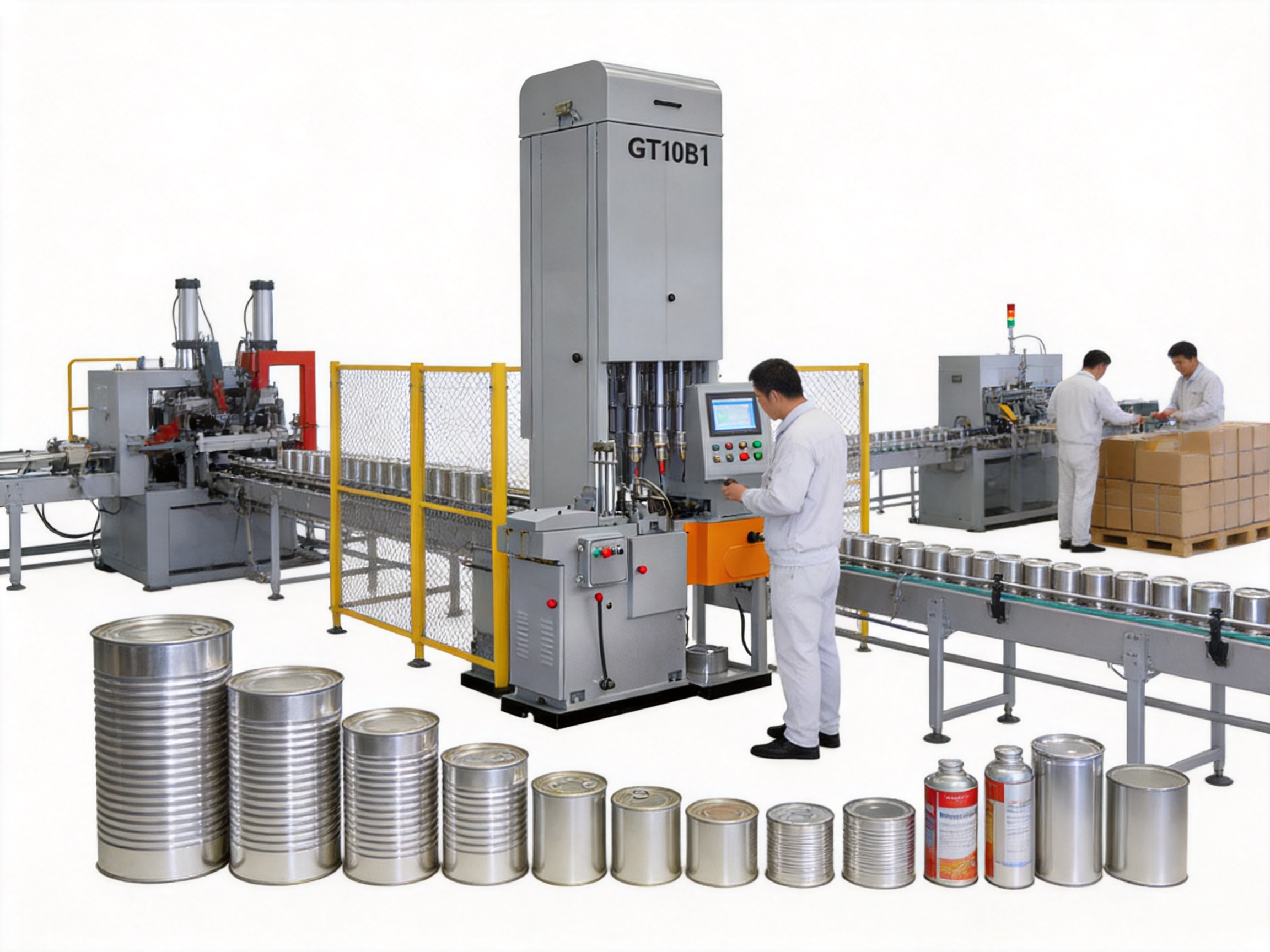
As an automatic machine, the GT10B1 can be planned as part of a larger can-making production line. It may be connected to feeding, body forming, welding, inspection, and conveying systems. This enables the user to build a coordinated process rather than operate the lining stage as an isolated workstation.
The company responsible for the machine, Zhejiang Golden Eagle Food Machinery Co., Ltd., has a long history in can-making machinery and can-making molds. The company was established in 1978 and was formerly associated with Zhejiang Food Machinery Factory and Zhoushan Mold Factory. More than four decades of industrial experience provide a broad foundation for developing equipment used in demanding metal packaging applications.
According to the supplied company information, the manufacturer has more than 350 trained employees, including experienced design and development personnel and professional engineers. This combination of production personnel and engineering staff is important for a machine such as the GT10B1, because performance depends on the interaction between mechanical design, compound delivery, can handling, thermal processing, and control systems.
The company states that it has produced more than 10,000 pieces of can and can-lid equipment. This installed experience can help inform future machine development. Repeated manufacturing and field use expose equipment builders to practical issues such as material wear, alignment, maintenance access, changeover requirements, operator training, and integration with different plant layouts.
The manufacturer also supplies equipment for a wide range of applications, including food can production lines, beverage can production lines, can-lid production lines, chemical tank production lines, aerosol canister production lines, two-piece can production lines, and pop-can production lines. This broad product range is relevant because compound lining requirements vary between industries. Experience with multiple container types can support more informed design and application discussions.
Reliable can-making equipment requires accurate machining and controlled assembly. The company reports the use of CNC high-precision machining equipment together with complete mechanical machining equipment. CNC machining can help produce repeatable dimensions for shafts, guides, mounting surfaces, nozzle supports, rollers, and other parts that influence alignment and movement.
Precision is especially important in a vertical lining machine. If a can is not positioned consistently, the compound may be applied outside the intended area. If guides or transfer components are not aligned, the can may vibrate, tilt, or experience unnecessary contact. Accurate machining of the relevant parts supports smooth movement and repeatable application conditions.
High-precision production also assists with replacement and maintenance. When parts are manufactured to controlled dimensions, spare components can be fitted with less adjustment. This can reduce service time and help the machine return to operation more quickly after scheduled maintenance.
The company indicates that its product design principles are similar to those associated with established European can-making equipment manufacturers, including KRUPP, SOUDRONIC, and ALFONS-HAAR. This statement reflects the manufacturer’s intention to follow recognized principles of mechanical design and can-production engineering. The company also reports that it combines practical production experience with continuous improvement, adapting equipment through manufacturing practice rather than relying only on theoretical design.
Continuous improvement is particularly valuable for lining machinery because compound behavior, container materials, and production expectations can change. A machine must remain mechanically stable while accommodating new requirements for energy efficiency, automation, production speed, and product quality. Manufacturing experience provides a foundation for making those improvements in a practical way.
The company reports certification to the ISO9001 quality management system and the ISO14001 environmental management system. ISO9001 provides a structured approach to quality management, documentation, process control, corrective action, and customer-focused improvement. For industrial equipment, these practices can support more consistent manufacturing and clearer handling of nonconformities.
ISO14001 addresses environmental management. Although certification does not by itself determine the energy performance of a particular machine, it indicates that the organization has a formal framework for identifying and managing environmental responsibilities. This is increasingly relevant to can manufacturers seeking to reduce waste, control energy use, and meet the environmental requirements of their own customers.
For the GT10B1, quality management may influence the selection of materials, machining control, assembly inspection, electrical testing, and final machine verification. Environmental management may support responsible handling of manufacturing waste, energy usage, and production processes. Customers should request the current certificates and applicable scope when documentation is required for procurement or audit purposes.
The machine’s compound lining function can support multiple types of metal packaging, provided that the selected compound and process settings are suitable for the application.
Food cans require reliable internal protection because the contents may contain moisture, salt, acids, oils, or other ingredients that can affect exposed metal. A controlled lining process helps create a consistent internal barrier before filling and closure. The appropriate lining must comply with the requirements of the intended food-contact application.
Beverage packaging may require high-speed production and stable internal protection. The output capability of the GT10B1 makes it relevant to lines where container volume is high. The final compound, drying temperature, and inspection method must be selected according to the beverage product and the applicable packaging standards.
Powder and chemical containers may use internal lining to protect the container or preserve the contents. Chemical resistance requirements can be different from those of food packaging, so the coating material and curing process require careful technical evaluation. The machine provides the application and drying platform, while the user must validate the compound for the specific product.
Aerosol and specialty containers can require precise internal treatment because pressure, propellant compatibility, and product stability may be important. Any use of a lining machine for such containers should be verified against the container design, material specification, and regulatory requirements. The machine’s available large-diameter configurations may be considered where dimensions fall within the stated range.
A typical operating sequence begins with the delivery of formed can bodies or other suitable container components to the feeding section. The automatic feeding mechanism organizes the containers and presents them to the lining station. Stable feeding is important because the application heads must operate at a consistent rhythm.
The container is then positioned for compound application. The two-head nozzle system applies the compound according to the selected operating parameters. The application area may vary depending on the can structure and customer specification. At this stage, the operator should monitor compound supply, nozzle condition, pressure, and the appearance of the applied lining.
After application, the lined containers enter the vertical drying or oven section. The listed oven temperature is 110°C, and the listed residence time is 3.5 to 7 minutes. During this stage, the compound develops the required dry or cured condition. The exact result should be checked using the compound supplier’s technical requirements and the can manufacturer’s quality-control procedure.
Once the drying stage is complete, the containers can be transferred to downstream equipment. Depending on the line design, this may include inspection, additional forming, sealing preparation, packing, or transfer to a filling line. The machine should be synchronized with the surrounding equipment so that neither the lining station nor the adjacent machines operate under unnecessary accumulation or shortage conditions.
Installation begins with a review of the production layout. The machine’s approximate dimensions are 1,800 millimeters long, 1,250 millimeters wide, and 2,980 millimeters high. Adequate clearance should be provided around the equipment for inspection, maintenance, cleaning, electrical access, and safe operator movement. The factory should also confirm that the building can accommodate the machine’s height and installation route.
Because the listed machine power is 12 kW, the electrical supply must be checked before installation. Voltage, frequency, protective devices, grounding, cable routing, and control-panel requirements should be confirmed with the supplier. Heating equipment may have particular electrical and ventilation requirements, and the final installation should comply with local regulations.
Compound handling must also be planned. The factory should provide suitable storage, transfer, and replenishment arrangements for the selected compound. Operators need access to technical information concerning viscosity, storage temperature, shelf life, cleaning materials, and safe handling. The lining machine cannot compensate for compound that has been improperly stored or mixed outside its specification.
Integration with upstream and downstream equipment requires attention to speed matching. Although the machine has a stated maximum output, the practical line speed may be determined by the slowest connected machine. Automatic feeders, conveyors, sensors, and controls should be tested together to confirm that cans enter and leave the machine without tipping, jamming, or excessive spacing.
Regular maintenance helps preserve application accuracy and production availability. The nozzle system should be inspected for buildup, blockage, wear, and changes in spray or delivery pattern. Compound residue can alter the effective opening of a nozzle and lead to inconsistent lining. Cleaning intervals should follow the compound manufacturer’s recommendations and the machine supplier’s operating instructions.
Guides and transfer components should be kept clean and correctly aligned. Even a small accumulation of compound or metal debris can influence can movement. Operators should inspect contact surfaces, fasteners, bearings, chains, belts, and other moving elements according to a documented maintenance schedule.
The drying section requires particular attention to temperature control, air movement, insulation, and cleanliness. Temperature sensors should be checked periodically, and any abnormal fluctuation should be investigated. If the oven is not reaching or maintaining the specified temperature, the lining may not dry correctly and energy consumption may increase.
Electrical and control components should be inspected by qualified personnel. Emergency stops, protective devices, sensors, and interlocks must remain functional. Maintenance work should follow an appropriate lockout and isolation procedure, especially when the machine contains heated areas or moving mechanisms.
Preventive maintenance is generally less disruptive than corrective repair after a failure. A planned schedule can include daily cleaning, weekly inspection, periodic lubrication, nozzle servicing, temperature verification, and replacement of wear parts. The exact interval depends on operating hours, compound type, production environment, and manufacturer instructions.
Automatic operation does not eliminate the need for trained personnel. Operators must understand the machine’s control interface, startup and shutdown sequence, safe access procedures, compound handling, changeover process, and response to alarms. Training should also cover the signs of poor lining quality, such as missed areas, excessive coating, streaking, incomplete drying, or unstable can transfer.
Process control should begin with a defined production recipe. The recipe may include can diameter, feeding speed, nozzle settings, compound supply conditions, oven temperature, residence time, and inspection requirements. Once a suitable recipe has been validated, recording and repeating the settings can improve consistency between production shifts.
Quality checks may include visual inspection, coating coverage verification, dry or cure assessment, adhesion testing, dimensional checks, and compatibility testing with the packed product. The appropriate tests depend on the application. Food, beverage, chemical, and aerosol packaging may each require different validation procedures.
Operators should record production abnormalities rather than simply correcting them without documentation. Information about nozzle cleaning, temperature variation, material changes, stoppages, and rejected containers can help engineers identify recurring causes. Over time, these records can support improved preventive maintenance and more efficient operation.
The machine’s listed power is 12 kW, although actual energy consumption depends on operating conditions, heating demand, production rate, ambient temperature, insulation, startup time, and utilization. Efficient operation begins with correct line planning. Running the machine at a stable output can be more efficient than frequent starting and stopping, provided that product demand and safety requirements permit.
Material efficiency is also important. Accurate nozzle application can help reduce overuse of compound while maintaining the required coverage. Excessive compound may increase cost and lengthen drying time. Regular inspection of nozzle performance, pressure, and application settings can help keep material usage within the intended range.
Drying efficiency depends on temperature control and proper residence time. Operating at an unnecessarily high temperature may waste energy without improving product quality. Conversely, insufficient temperature or time may create rejected containers and additional rework. The most efficient process is one that meets the required lining specification with the minimum validated energy and material input.
Can-making machinery operates in a demanding environment. Production lines may run continuously, materials may change between orders, and the cost of an unplanned stoppage can be significant. A machine supplier with experience in can bodies, lids, molds, welding, feeding, and complete production lines can better understand the relationship between individual equipment stages.
The manufacturer’s history in can-making machinery and molds gives it experience across several parts of the container production process. This can be valuable when the customer needs assistance with line arrangement, machine matching, tooling, output balancing, or future expansion. A supplier familiar with the complete production sequence can evaluate the lining machine in relation to the entire plant rather than treating it as an isolated unit.
The company reports exports to Europe, Asia, Africa, North America, South America, and Oceania. International operation exposes equipment to different installation conditions, electrical standards, factory layouts, maintenance practices, and customer expectations. Customers should still confirm the specific export documentation and compliance requirements for their destination, but broad international experience can support communication and project coordination.
The company also states that it provides installation, commissioning, technical guidance, operation training, and parts supply. These services are important because the value of a machine depends not only on its initial construction but also on how effectively it is installed, adjusted, operated, and maintained throughout its service life.
Before purchasing a vertical compound lining machine, buyers should provide detailed information about their containers and production objectives. The most important starting point is the can diameter and body design. The selected configuration must accommodate the complete dimensional range without compromising positioning accuracy or lining quality.
Output requirements should be discussed in practical terms. Buyers should distinguish between theoretical maximum speed and the expected sustained production rate. The final rate may depend on the compound, drying time, operator practices, upstream supply, downstream demand, and planned changeovers. It is advisable to define the required output under actual production conditions rather than relying only on a headline capacity.
The compound specification is equally important. Buyers should identify the compound type, viscosity range, application method, curing requirements, compatibility restrictions, and cleaning procedure. If a new compound will be introduced, testing should be completed before final production approval.
Factory conditions should be reviewed as well. The buyer should confirm floor loading, ceiling height, ventilation, electrical capacity, material storage, compressed-air requirements if applicable, access for maintenance, and the location of safety equipment. These factors can affect installation cost and commissioning time.
Finally, the buyer should clarify the scope of supply. Questions may include whether feeders, conveyors, control interfaces, spare parts, tooling, installation, commissioning, operator training, and technical documentation are included. A clear scope helps prevent misunderstandings and supports more accurate project planning.
Uneven coverage may result from a blocked or worn nozzle, unstable compound pressure, incorrect can positioning, unsuitable viscosity, or incorrect application timing. The operator should first check the nozzle and compound supply, then confirm that the guides and positioning components are aligned with the selected can size.
Incomplete drying may be associated with insufficient oven temperature, excessive compound application, inadequate residence time, poor airflow, or a compound condition outside its specification. The temperature should be verified using an appropriate instrument, and the production recipe should be checked against the validated process conditions.
Jamming can be caused by incorrect guides, damaged containers, unsuitable spacing, debris, or a speed mismatch between the machine and adjacent conveyors. The line should be stopped safely before the operator attempts to clear the problem. Repeated jams should be investigated rather than treated as isolated incidents.
High compound consumption may indicate excessive nozzle flow, incorrect pressure, a worn application component, poor timing, or repeated overspray. Measuring material usage against production output can help identify changes in process performance.
Temperature variation may result from sensor problems, heater control issues, insulation damage, airflow restrictions, or unstable electrical supply. Because drying quality depends on stable thermal conditions, abnormal temperature should be addressed before normal production resumes.
Operators should receive training before working with the machine. The vertical structure may contain elevated components, moving transfer mechanisms, heated surfaces, and areas where compound residue can accumulate. Guards and access doors should remain in their intended position during operation.
Hot surfaces and oven areas require appropriate warning labels and safe access procedures. Operators should use suitable personal protective equipment when handling compounds, cleaning materials, or recently processed components. The compound supplier’s safety data should be available in the working area.
Ventilation should be evaluated according to the compound and drying process. Any vapors, odors, or emissions must be managed in accordance with local workplace and environmental requirements. Electrical work, control-panel service, and modifications to safety circuits should be performed only by qualified personnel.
Emergency stops should be tested according to the plant’s safety schedule. A restart after an emergency stop should require a deliberate reset and confirmation that the cause of the stop has been addressed. Good housekeeping around the machine is also essential because compound spills, metal scraps, and packaging debris can create slip, fire, or equipment-performance risks.
The long-term value of a machine depends on more than its purchase price. Availability of technical advice, replacement parts, maintenance information, and operator support can have a major effect on total ownership cost. A lining machine that is easy to clean, inspect, adjust, and repair can reduce downtime over its working life.
The manufacturer reports that it supplies parts and provides after-sales services including installation, commissioning, technical guidance, and operation training. These services can help the customer establish a stable process more quickly. They are particularly useful when the machine is integrated into a new production line or when operators have limited experience with automatic compound lining.
Spare-parts planning should focus on components exposed to compound, heat, friction, and continuous movement. Nozzles, seals, sensors, bearings, belts, and other wear items may require periodic replacement depending on operating conditions. Keeping essential parts available can shorten recovery time after a failure.
Documentation should include operating instructions, electrical diagrams, maintenance schedules, recommended spare parts, safety information, and changeover procedures. Clear documentation supports training and reduces dependence on individual employees’ personal knowledge.
The GT10B1 Vertical Compound Lining Machine combines automatic compound application with controlled drying in a vertical, space-conscious structure. Its two-head nozzle system, 110°C oven specification, 3.5–7 minute drying period, 12 kW listed power, and multiple diameter configurations make it suitable for a range of tinplate and metal can production applications.
Its strongest advantages are process integration, automatic operation, high potential output, broad can-size coverage, and efficient use of factory space. These features can make it more practical than manual lining methods or separate, poorly coordinated application and drying arrangements. The machine is particularly relevant to manufacturers seeking to improve repeatability while connecting the lining stage to a larger automatic production line.
The manufacturer’s long experience in can-making equipment, reported production of more than 10,000 pieces of can and can-lid machinery, CNC-based manufacturing capabilities, engineering personnel, quality and environmental certifications, and international service experience provide additional support for the product. These strengths can be valuable when the customer requires not only a machine but also assistance with installation, commissioning, operation, and long-term maintenance.
Final performance will depend on correct configuration, compound selection, installation, operating settings, and line integration. Buyers should confirm all output figures, can dimensions, utilities, safety requirements, and process parameters with the supplier before ordering. When properly selected and maintained, the GT10B1 can serve as a productive and reliable component in food, beverage, chemical, aerosol, and other metal packaging production lines.
The GT10B1 is an automatic vertical compound lining machine used to apply compound lining to cans and dry the applied material in an integrated oven section.
The general product range is approximately Φ45–153 millimeters. Specific configurations cover Φ45–73 millimeters, Φ52–99 millimeters, and Φ99–153 millimeters.
The medium-diameter configuration is listed at up to 600 cpm. The smaller configuration is listed at 240 cpm, while the larger configuration is listed at 200–350 cpm. The meaning of the source abbreviations should be confirmed during technical discussions.
The listed configurations use a two-head nozzle arrangement.
The technical information specifies an oven temperature of 110°C. The correct operating temperature must be validated against the compound supplier’s requirements and the customer’s process specification.
The listed drying time is approximately 3.5 to 7 minutes. The actual time may vary according to can size, compound thickness, material properties, and production settings.
Yes. The equipment family includes configurations for small, medium, and large can diameters. Changeover requirements and the precise adjustment range should be confirmed for the intended products.
The listed machine power is 12 kW for each configuration in the supplied technical table.
The listed dimensions are 1,800 millimeters long, 1,250 millimeters wide, and 2,980 millimeters high.
The vertical design can reduce the required floor area and arrange the lining and drying path efficiently within a compact base. It is especially useful when horizontal factory space is limited, although ceiling height and maintenance access must be checked.
Potential applications include food cans, beverage cans, powder containers, chemical containers, aerosol containers, and other metal packaging products that require a suitable internal compound lining.
No. The user must select a compound suitable for the product, can material, and intended application. The machine provides controlled application and drying, but compound compatibility and process validation remain the customer’s responsibility.
The buyer should check building height, floor space, floor loading, electrical supply, ventilation, compound handling, access for maintenance, conveyor alignment, and connection with upstream and downstream equipment.
Important maintenance activities include nozzle cleaning, compound-system inspection, guide and conveyor alignment, oven-temperature verification, lubrication, inspection of wear components, electrical checks, and routine cleaning.
The supplied company information states that the manufacturer provides installation, commissioning, technical guidance, operation training, and parts supply.
The company reports more than 350 trained employees, experienced engineering personnel, CNC high-precision machining equipment, complete mechanical machining capabilities, ISO9001 quality certification, ISO14001 environmental certification, and extensive production experience in can-making machinery and molds.
Not necessarily. Maximum output depends on can dimensions, compound properties, drying requirements, machine configuration, upstream supply, downstream capacity, changeovers, and operating conditions. A sustained production trial is the best way to confirm actual performance.
Verification may include visual inspection, coverage checks, dry or cure assessment, adhesion testing, coating evaluation, and compatibility testing. The exact quality-control program should be based on the product and applicable packaging requirements.
1. Supplied GT10B1 product description and technical specification sheet.
2. Supplied company profile for Zhejiang Golden Eagle Food Machinery Co., Ltd.
3. ISO 9001 quality management system principles and implementation guidance.
4. ISO 14001 environmental management system principles and implementation guidance.
5. General technical guidance for internal coatings and compound lining in metal packaging.
6. General maintenance and safety practices for automatic can-making and heated processing machinery.
Related Products

Founded in 1978, the company is one of the largest can-making machinery well-known companies at home and abroad.
Product Categories
Contact Information
Zhongshatou Shenjiamen Zhoushan Zhejiang China
+86-580-3056646

 English
 中文简体
中文简体
 русский
 عربى
عربى
 Español